
Translated material
Trump grabbed Maduro
The United States attacked Venezuela and took the president and his wife out of the country. What is known about the US military operation and how is the world reacting to it?
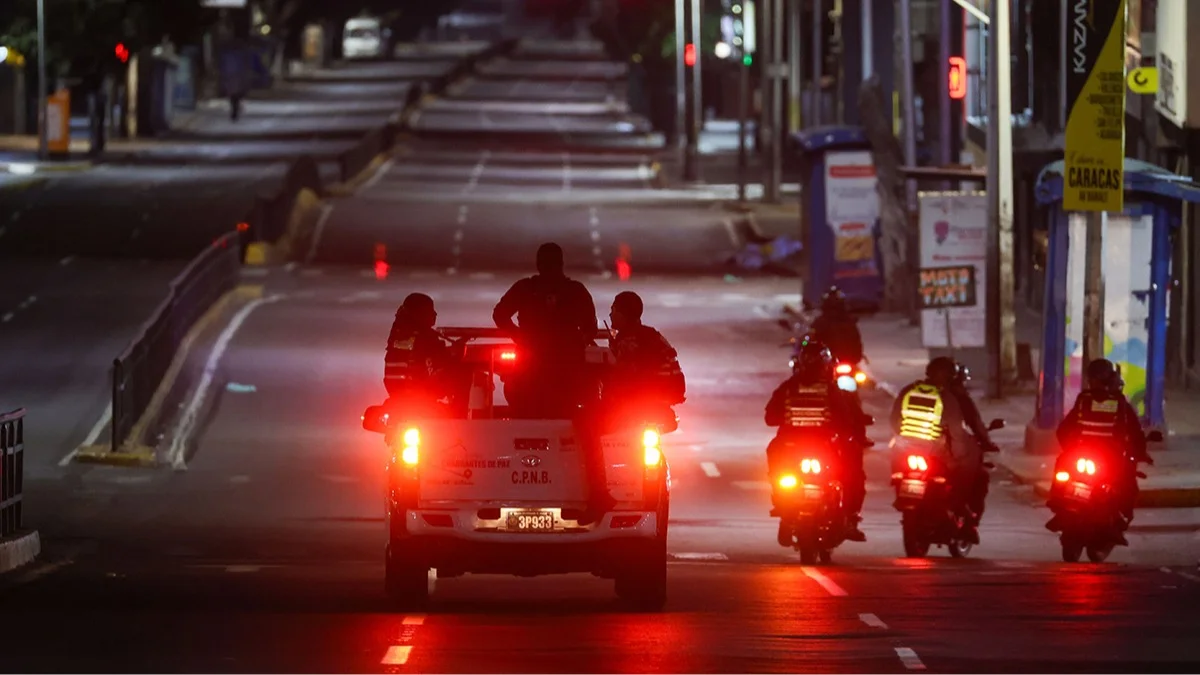
Soldiers guard the perimeter of the Miraflores presidential palace in Caracas, Venezuela, January 3, 2026. Photo: Miguel Gutierrez/EPA
On the night of January 3, the American army carried out several attacks on military targets in the capital of Venezuela, as well as in nearby regions of the country. It is not known for sure whether there were any dead or injured. A few hours later, US President Donald Trump announced that his country had carried out a “successful special operation” and captured Venezuelan President Nicolas Maduro. It is also reported that the country's vice president, Delcy Rodriguez, fled to Russia. Novaya Gazeta Europe tells what is known about the US attack on Venezuela.
Attack at night, on the second day of the year
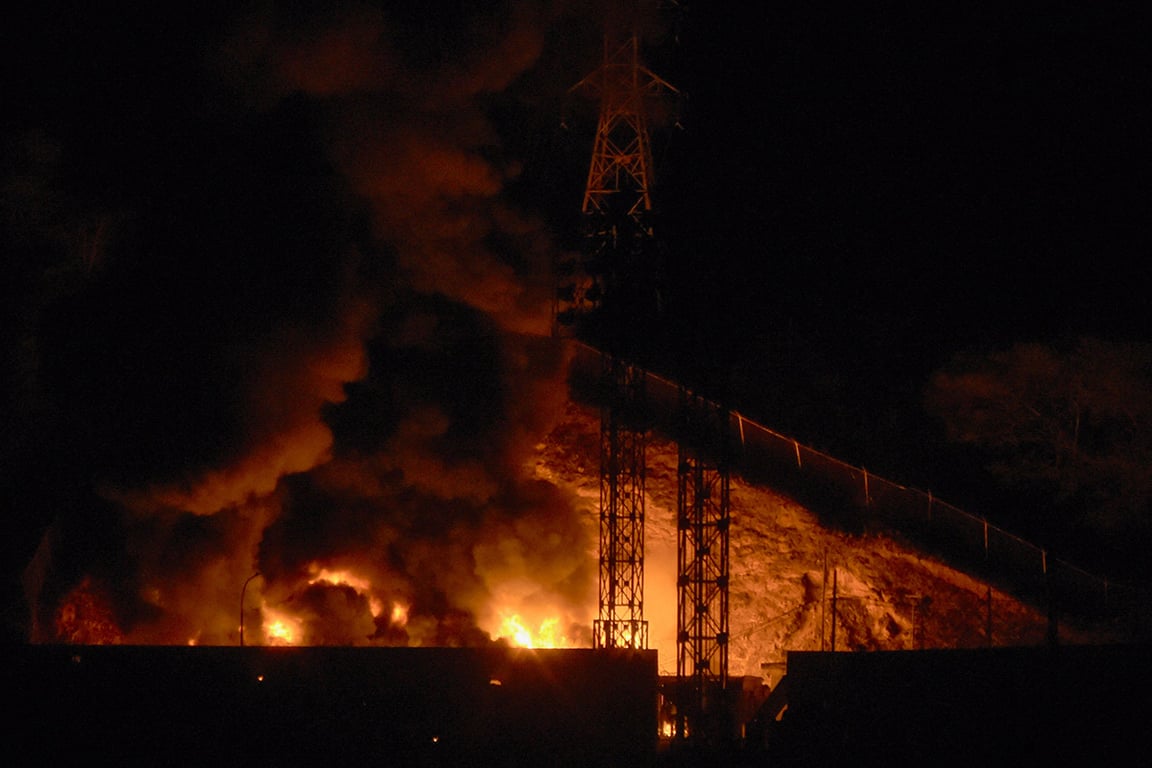
Residents of Caracas told Novaya Gazeta Europe that they heard the first explosions at about two in the morning local time. This is confirmed by eyewitness videos on social networks.
The attack, according to the Venezuelan authorities, took place in the capital of the country and the states of Miranda, Aragua and La Guaira. Fort Tiuna, which is located just south of Caracas and serves as the country’s main military base, came under attack. Key targets in the capital also included the private La Carlota airport, which is used by the military and government officials.
Political science professor in New York Alexandra Panzarelli tells Novaya Gazeta Europe that she woke up at night to a call from her aunt, who still lives in Caracas.
“She told me that the power went out in their area and she heard explosions very close to her house. After that, I called several of my friends, and they said that drone attacks had taken place on several military installations.
People were very scared, but we are very much looking forward to the good news that power will be taken away from Maduro and he will be convicted,
- says Panzarelli.
The Venezuelan authorities have not yet commented on the losses during the US attack on the country's capital and surrounding regions. At the same time, according to Colombian President Gustavo Petro, the attack by the American military led to civilian casualties.
For several hours, the United States refused to comment on its involvement in the strikes, but later Fox News, citing the White House, confirmed that it was the American military that carried out the night strike.
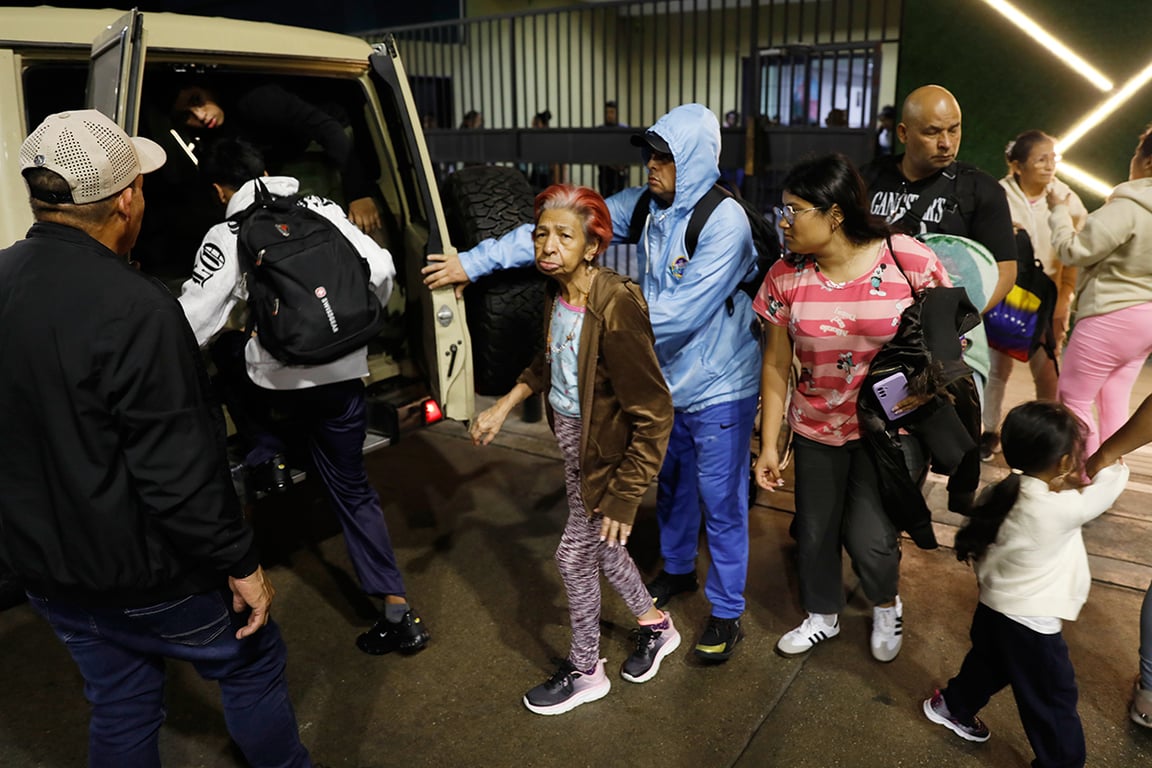
Maduro captured by Delta Force
The first official comment from the White House appeared three hours after the first reports of explosions in Caracas. Trump on his social network Truth Social said that the US army managed to capture Nicolas Maduro and his wife Celia Flores and take them out of the country. The kidnapping occurred while the president and his wife were sleeping, CNN claims , citing sources.
CBS News, citing sources, reported that Maduro was captured by members of the Delta special forces, a unit known for its participation in the US invasion of Grenada in 1983 and the operation to capture Panamanian dictator Manuel Noriega in 1989. In recent years, according to CBS, Delta participated in the destruction of the head of the Islamic State organization Abu Bakr al-Baghdadi in Syria in 2019.
The US military did not suffer any casualties during the operation, The New York Times reported , citing an unnamed US official. As CNN found out , the attack was approved by the US President a few days ago.
Trump also announced a press conference at 11 a.m. local time (7 p.m. Moscow time) at Mar-a-Lago, where his private residence is located. In comments to The New York Times, the US president called the capture of Nicolas Maduro a “brilliant operation” and added that it required a lot of “excellent planning.”
Why is the US attacking Venezuela?
The conflict between the US and Venezuela escalated in September 2025. The Trump administration repeatedly called for the resignation of dictator Nicolás Maduro, but he remained in power, and then the US army began striking boats flying the Venezuelan flag in the Caribbean.
The official reason was the fight against drug trafficking. However, Venezuela is responsible for only a very small share of both the production and transportation of drugs into the United States.
According to many experts, the main reason for the US attacks was Trump’s desire to gain control over Venezuelan oil deposits. The South American country has the largest reserves of “black gold” in the world.
Over several rounds of negotiations between representatives of the United States and Venezuela, the situation has not changed. Then Donald Trump ordered the seizure of oil tankers that enter Venezuelan ports.
If Maduro is brought to the United States, then according to American laws he should be tried for narco-terrorism. He was convicted in absentia under this article in 2020 during Donald Trump’s first presidential term. US Attorney General Pam Bondi confirmed that Maduro and his wife are accused of “narco-terrorism, conspiracy to import cocaine, possession of machine guns and explosive devices.”
US Deputy Secretary of State Christopher Landau said in a post on social media X that Maduro “will finally face justice for his crimes.”
Republican Senator from Utah Mike Lee made a similar message. According to him, after a conversation with Secretary of State Mark Rubio, he learned that Maduro would indeed be brought to the United States for trial. The attack on military targets in Caracas took place to cover the military who captured Maduro and his wife.
“This action (attack on Venezuela. - Editor’s note) is likely within the scope of the President’s powers under Article 2 of the Constitution to protect US personnel from actual or imminent attack,”
Lee added.
It is not yet known whether anyone from Maduro’s entourage was injured or captured. At the beginning of the attack, the Sky News Arabia channel reported that the house of the head of the Venezuelan Ministry of Defense, Vladimir Padrino Lopez, came under fire. However, hours later he addressed the nation, saying the invasion was the “biggest attack” on his country. Lopez also linked the US military operation to Venezuela's "insatiable thirst for strategic resources."
Lopez confirmed that the attack on Caracas was carried out from helicopters, but did not specify whether the Venezuelan army plans to carry out a retaliatory operation. According to local media, fighting in the city stopped several hours after the first explosions.
Maduro's allies in the Kremlin and around the world
The Kremlin has long maintained close relations with Venezuela, both with Nicolas Maduro and previously with Hugo Chavez. Russia has been supplying arms to Caracas and buying sanctioned Venezuelan oil for years. In response, the Venezuelan authorities openly supported Russia's war against Ukraine.
At the end of October, Vladimir Putin signed a strategic partnership agreement with Caracas. And a few hours after the start of the US invasion and the announcement of Maduro’s capture, the Russian authorities expectedly supported the South American dictator.
Thus, the Russian Foreign Ministry called the US attack on Venezuela “an act of armed aggression.” “This is deeply concerning and condemnable. The pretexts given to justify such actions are untenable. Ideologized hostility has prevailed over business pragmatism and a willingness to build relationships of trust and predictability,” the department says. The Russian Foreign Ministry also called for “clarification” of the information about Maduro’s kidnapping, but did not announce any real actions to protect its ally.
The department also stated that the building of the Russian Embassy in Caracas was not damaged as a result of the attacks. The diplomatic mission has no information about wounded or dead Russian citizens in Venezuela. There are no Russian tourists at Venezuelan resorts now either, the Association of Russian Tour Operators reported : the last organized group left the country back in December. The next flight was scheduled for January 5, but its fate remains unknown.
Belarus also “categorically condemned” the US attack. “Alexander Lukashenko spoke about the consequences quite recently inan interview with American journalists. In particular, that
“This will be the second Vietnam.” And the Americans don’t need him,”
- said his press secretary Natalya Eismont.
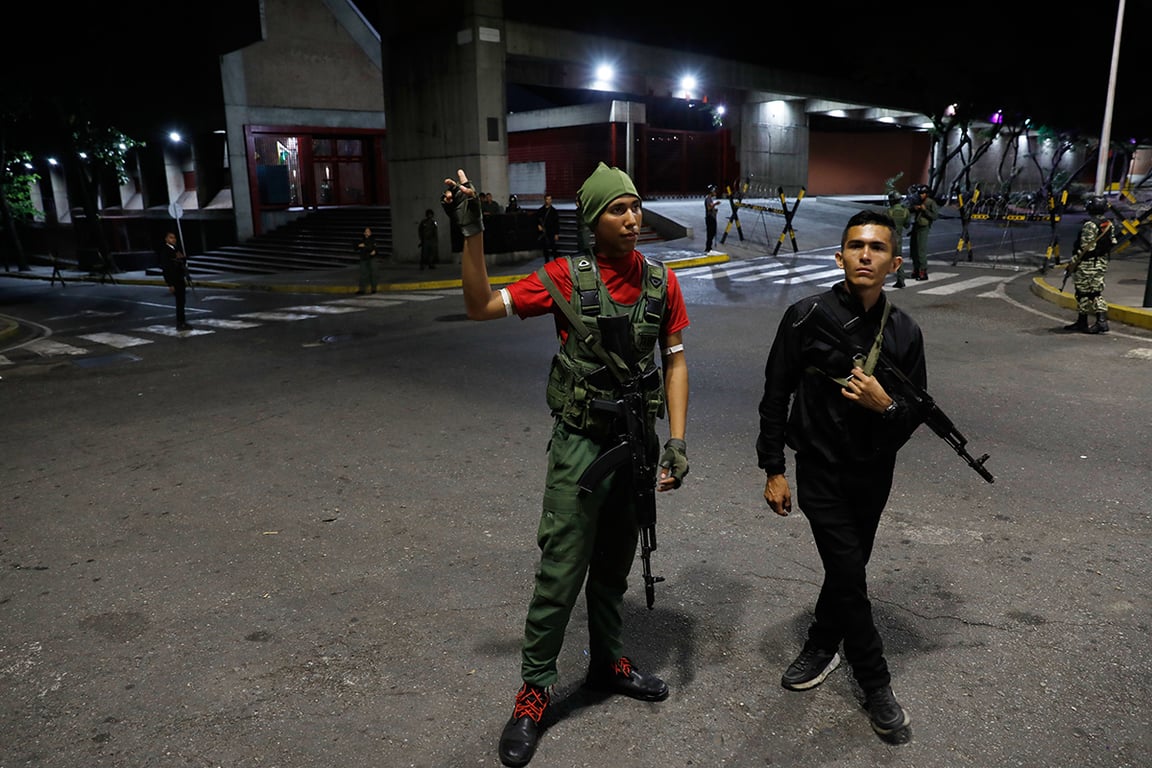
Several countries in the region condemned the US attack on Venezuela. Cuban President Miguel Diaz-Canel said in X that his country “condemns the criminal attack by the United States” on Caracas and “demands an URGENT response from the international community.”
The Colombian government also condemned Washington's attack. The country's President Gustavo Petro said that his country "rejects any unilateral military action that could worsen the situation or endanger the civilian population. Colombia takes a position focused on preserving regional peace and urges de-escalation.”
Tehran also accused the United States of violating UN principles. Iranian authorities, one of the Maduro regime's main allies, condemned Trump's invasion and called on other countries to follow suit.
In Europe as a whole, they were more likely to support the US attack, although they called for restraint in methods. The head of EU diplomacy, Kaja Kallas, said that the European Union did not recognize the legitimacy of Nicolas Maduro, and called on the United States to comply with the principles of international law.
The Ukrainian Foreign Ministry also responded to the capture of the Venezuelan president. The head of the department, Andrei Sibiga, said that the “Maduro regime” violated democratic principles and “the people of Venezuela should be able to live a normal life.”
The future of Venezuela
If the information about the capture of Nicolas Maduro turns out to be true, then power in the country, according to the Venezuelan constitution, passes to the vice president and the dictator’s closest ally, Delcy Rodriguez. She stated that she demanded that the United States provide evidence that Maduro and his wife are alive.
“Early this morning, the United States government made a mistake, which Venezuela condemned, and carried out a brutal airstrike, violating all international law,” Rodriguez said during a state television appearance.
The whereabouts of the country's president were unknown to the Venezuelan authorities. On the afternoon of January 3, Reuters sources reported that Rodriguez was in Russia. However, later The New York Times, citing interlocutors close to the politician, said that she did not leave Caracas. The Russian Foreign Ministry also rejected information about the arrival of the vice president of the South American country in Moscow.
The opposition in Venezuela does not recognize the results of the last presidential elections, held in July 2024. According to the authorities, Nicolas Maduro won 52% of the vote and was ahead of the opposition candidate Edmundo Gonzalez Urrutia. Maduro's opponents reject these data and point to other figures - 67% for Gonzalez and only 30% for Maduro. They cite ballots taken out of the country as proof.
Due to fear of prosecution, Gonzalez left for Spain after the elections. The real opposition leader, Maria Corina Machado, was not allowed to participate in the last elections and is now underground in Venezuela. So far she has not commented on the US attack.