
Translated material
Tricks of War
The transfer of Ukraine's chief intelligence officer Kirill Budanov to Zelensky's office as an experience in the “demilitarization” of the country
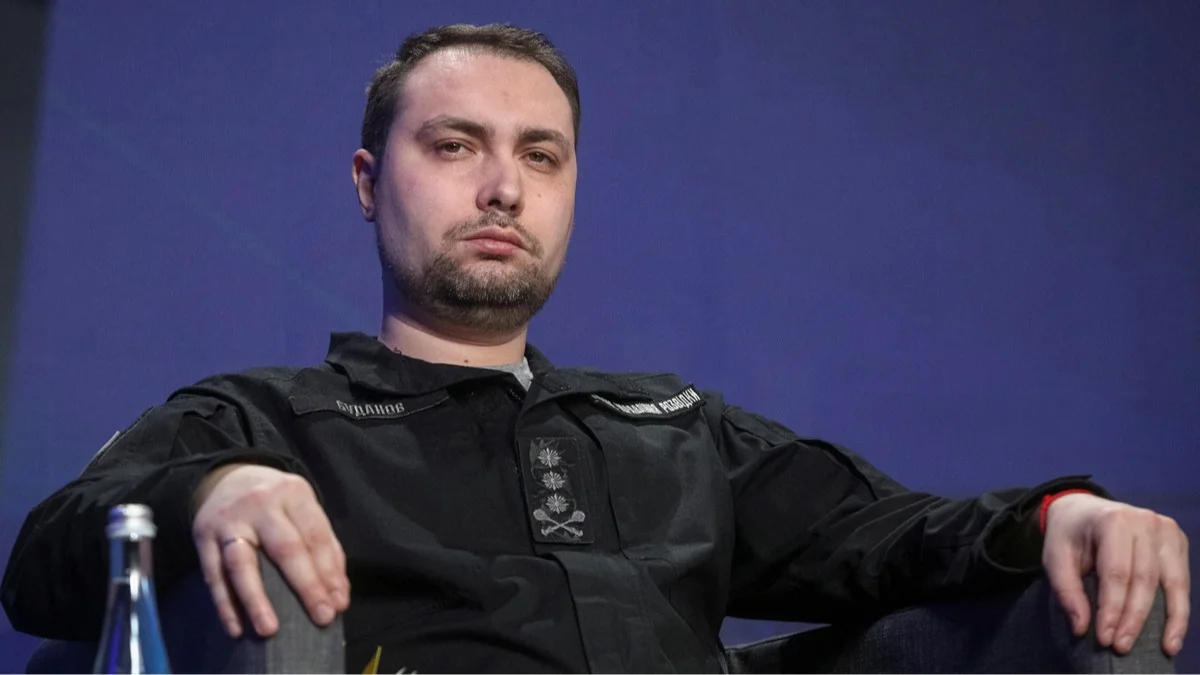
Kirill Budanov. Photo: Anatolii Stepanov / Reuters / Scanpix / LETA
The position of the head of the presidential administration (since 2005 - the secretariat, again the administration, since 2019 - the office) has always had a specific weight in Ukraine that is not comparable with the functionality.
If I start to remember the activities of Leonid Kuchma’s “administrator” Dmitry Tabachnik during the period when his patron was building an oligarchic state in the country in the image and likeness of Russia, the note will grow to the point of indecency. A young, educated, ambitious, cynical man, quietly despising those in power, the opposition, and even his own boss, Tabachnik was the king of intrigue. And he enjoyed how members of the government, deputies, famous or rich people, each with their own problem, slowly lost their poker face, realizing: it was unrealistic to bypass Dima on the way to Danilych, and it would cost more to quarrel.
Under Kuchma, Putin's godfather Viktor Medvedchuk, in a certain sense, was like Tabachnik (minus the intelligence). But he saw himself not just as an eminence grise, but as the legitimate viceroy of the Russian president in pro-Russian Ukraine.
After the “Orange Revolution”, Viktor Yushchenko tried to break the tradition when he publicly compared his “secretary” Viktor Baloga with a plumber. Yushchenko first of all reminded his obstinate partners on the Maidan that the duties of the head of the secretariat are technical, he is neither an elected official nor a civil servant, but simply carries out the instructions of the head of state. And if it clears, so to speak, the clogs in the political system, and not just brings paper clips, then that means it’s necessary. “Any complaints? Exhibit them to the president. Baloha is me!”
Time will pass, and without flattery, the devoted “secretary-plumber”, who did not forget about his own benefit, “decided”, will write a letter of resignation as a sign of disagreement with Viktor Yushchenko and will report a lot of unflattering things about him, who decided to run for a second term.
Yanukovych's cunning, tough apparatchiks had influence, including on key opposition figures, much greater than the political figures of the regime. The heads of administration during the time of Petro Poroshenko viewed the appointment as a business project with all the opportunities that flowed from it.
The full-scale invasion of Vladimir Putin’s Russia with Vladimir Zelensky at the head of Ukraine should, in theory, tightly close the door behind which the old approaches to governing the state remained.
During the war, the office of the president-supreme commander-in-chief could not help but acquire a new semantic and military load. But long-standing acquaintance and a reliable shoulder replaced both for quite a long time.
Andrei Ermak - according to Zelensky's definition, a powerful manager (the phrase in the mouth of the rumor had an abusive connotation) - had to leave his post, among other things, because of his annoying activity. The head of the office, that is, a permanent auxiliary body, carrying out the will of the president, stood up for the flags every now and then. In fact, it looked like an interception of powers either from the Ministry of Defense, then from the Ministry of Foreign Affairs, or from the Rada.
“Nobody with a capital N! On what basis does the head of the office lead the delegation at international negotiations?” — the opposition and Facebook experts were indignant. It has become a rule of good manners to remember in vain in Ukrainian society, where it is customary to desacralize any power, about Ermak, who is already commanding Zelensky, as if he had changed places with him. In addition, anti-corruption authorities announced suspicions and conducted searches at the head of the office’s home.
The Americans stimulate the sharpness of NABU and SAP (National Anti-Corruption Bureau and Specialized Anti-Corruption Prosecutor's Office) as the main condition for Ukraine to receive investments. That’s why in the United States they also reacted with tension to Andrei Ermak.
One way or another, a vacancy has arisen. And the excitement that gripped everyone involved and not so involved in the discussion of candidates for the position of head of the office confirmed: this is a truly important area, almost a key one. And when the news appeared that the chief of the Main Intelligence Directorate, General Kirill Budanov, agreed to Zelensky’s proposal, there was almost no doubt left.
Well, wasn’t the country’s most public intelligence officer tempted, especially immediately after another brilliant operation with the “dead and resurrected” RDK commander, into the role of paper clip bearer? This means that tasks still need to be reformatted. And, taking into account reality, not so much for negotiation tracks related to the prospects of a truce, but for the continuation of military operations. Russia is gradually transforming them into a chain of provocations, sabotage and terrorist attacks - the foreseeable future for Ukraine.
According to The New York Times sources , 39-year-old Budanov, long before the full-scale invasion, was integrated into the processes of cooperation with American intelligence and received professional training under special programs under the auspices of the CIA. After being wounded in the Donetsk region, Budanov underwent rehabilitation in the USA, at the Walter Reed National Military Medical Center. NYT journalists emphasize the extraordinary nature of the situation:
for a foreign military man this could only be possible with direct assistance from the American government. Only a few have this level of access.
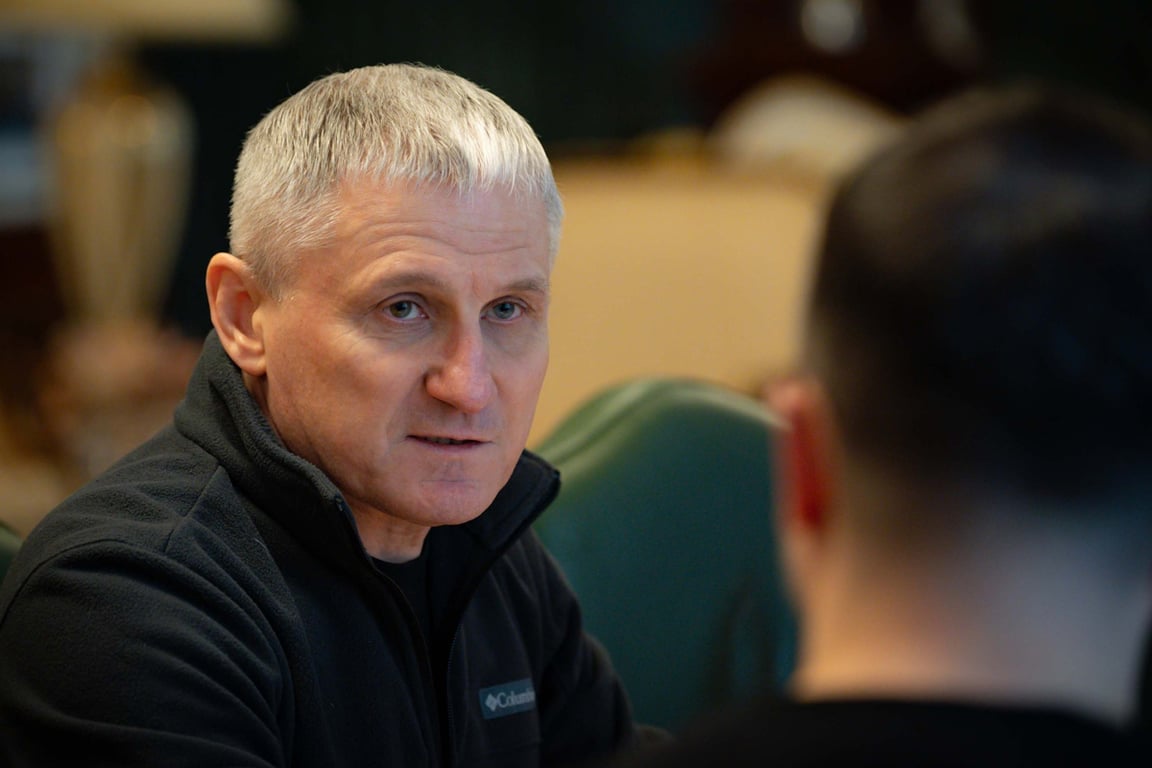
The general starts his new job on January 3: the corresponding decree has been signed and published . Oleg Ivashchenko, until this day the head of the Foreign Intelligence Service, was appointed head of the Main Intelligence Directorate. The SVR was headed by Alexander Kononenko, he dealt with the issues of releasing civilians from captivity. This is where the internal rotations in the presidential office and the security bloc have ended for now. The fog around Vasily Malyuk remains: they say Zelensky wants to transfer him from the SBU to the NSDC, the National Security and Defense Council. The puzzle becomes more exciting.
On the eve of the New Year, Ukrainian sociologists, in particular the SOCIS company, published a new survey regarding possible presidential elections. According to them, Budanov, whose authority is on the rise, would beat Zelensky if both were in the second round. The founder of the sociological group “Rating”, Alexey Antipovich, asserted in an interview that the greatest trust of Ukrainians is now enjoyed by the Ukrainian Ambassador to Great Britain Valery Zaluzhny, the ex-commander-in-chief, and the head of the Main Intelligence Directorate of the Ministry of Defense Kirill Budanov. The authority of the military is understandably high. Both potentially compete with Vladimir Zelensky, he is also in the top three.
Although so far none of those listed has clearly stated their intentions to run for office. Therefore, according to one version, Budanov’s appearance in the president’s office is the first phase of the “Successor that the States Like” operation; according to another, Zelensky’s attempt to neutralize his opponent in a friendly embrace; according to the third, the strengthening of the vertical. For some reason, the third version is the least popular.
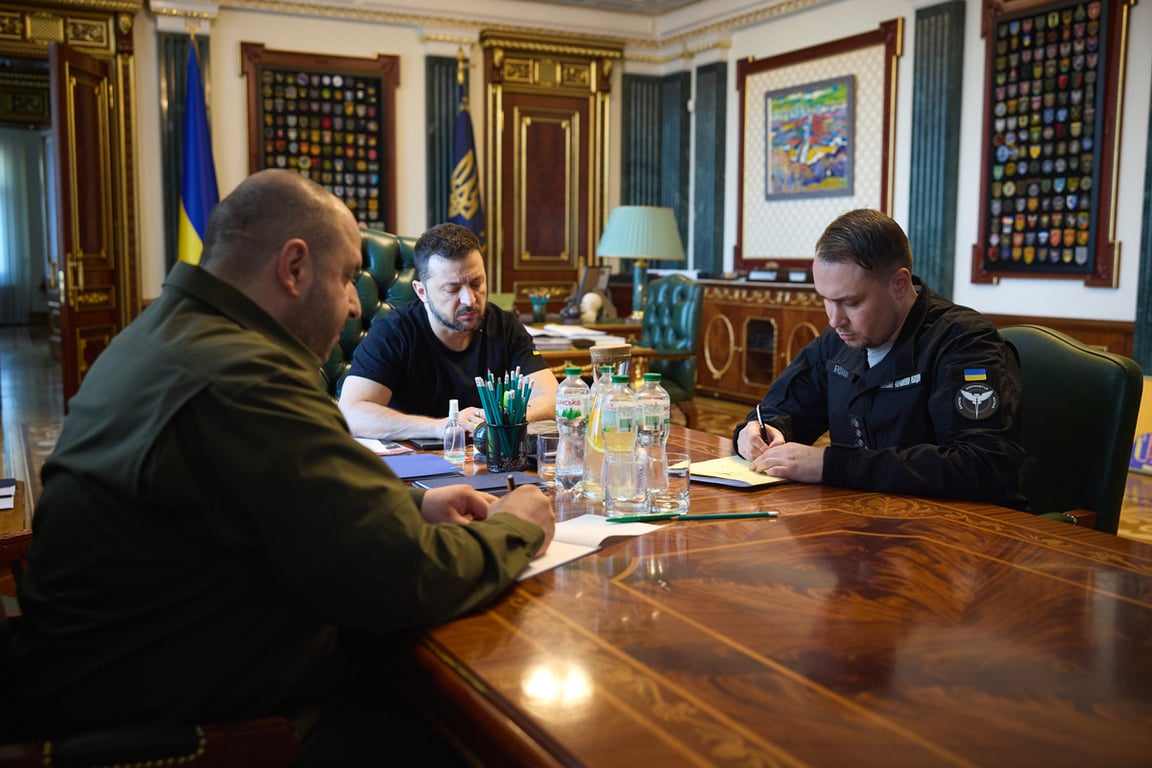
In the traditional evening television address, Zelensky said that a “significant reset” has begun in Ukraine, aimed at increasing the stability of the state. Thus, the president announced that the post of Minister of Defense instead of Denis Shmygal was offered to the current Deputy Prime Minister, Minister of Digital Transformation of Ukraine Mikhail Fedorov. Observers expect that Shmygal will remain on the team and, most likely, will work on the Ministry of Energy, another area at the forefront. In addition, Zelensky announced the appointment of a new head of the border service. At the same time, he instructed the deputy head of the office, Pavel Palisa, until recently the commander of combat units, to establish direct communication with combat brigades “to determine what decisions can strengthen Ukrainian positions.”
Perhaps another military trick is encrypted here: Zelensky has finally decided on such a mobilization that can bring down the presidential rating, but bring success to the Supreme Commander-in-Chief.
Kyiv