
Translated material
Paramonovs and Nekrasovs
No one can defeat us. Someday we will defeat ourselves

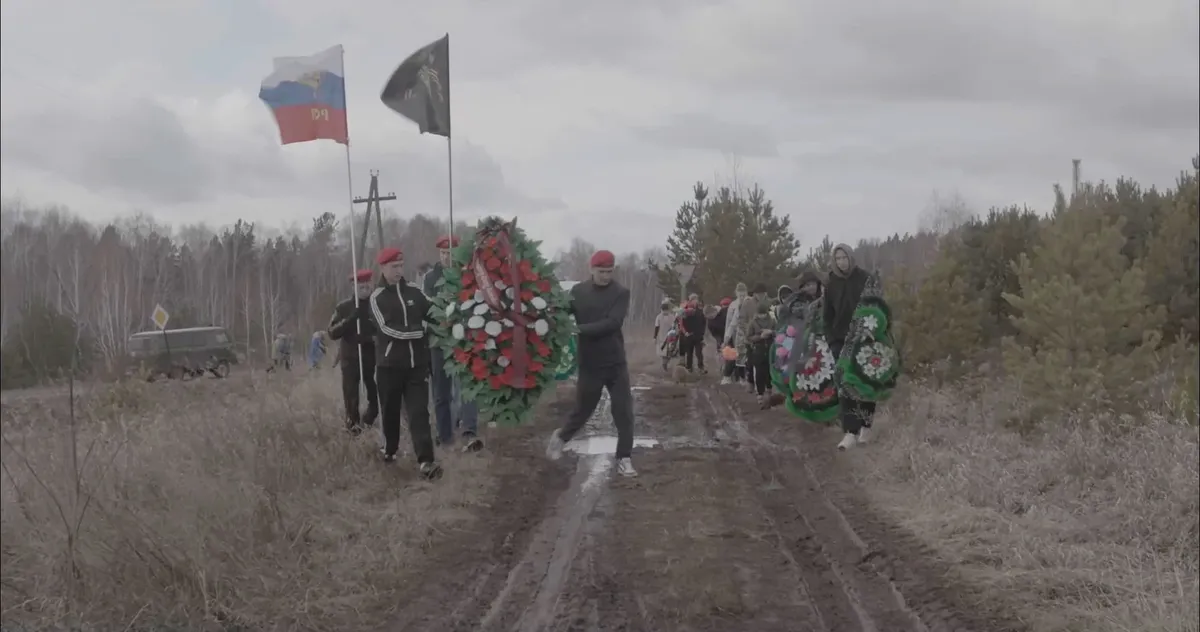
Soldier's funeral, 2024, Russia. Photo: archive
The Great Patriotic War lasted 1418 days and nights. On the morning of January 12, 2026, the 1419th day will begin from the beginning of the North American War. AND?
There have always been many Sergei Paramonovs in Russia. Previously, especially: the name was popular, the surname was not rare. These were and are completely different people, like, say, the Viktor Kuznetsovs. Moscow boy Seryozha Paramonov, our Robertino Loreti, in 1972–1975, soloist of the Big Children's Choir of the All-Union Radio and Central Television under the direction of Viktor Popov: “sunny voice”; "sang like an angel." His crystal clear treble rose through the darkness, through the thickening darkness, upward, into the dense layers of the atmosphere, into the near-earth space, and it seemed that all of us, Soviet children (after all, he was not alone on the stage, there was a choir behind him), had a future, there was light ahead... But - physiology. Serezha undergoes a voice mutation.
Or another Sergei Paramonov, from Yekaterinburg. They are almost the same age (born in 1961 and 1963). From the 90s of the last century to the tenths of this century, he raped girls and delicate women who did not look like adults. The maniac was diagnosed with terminal brain cancer, which is why he was released early or not admitted to the pre-trial detention center at all. But he still did not die and continued.
Ekaterinburg E1.Ru spoke with former investigator Ekaterina Gerlach - she sent Paramonov to prison for the last time in 2011: “He had about 100 hospitalizations for oncology. The medical card was huge. And the doctors could not understand why he was still alive. And even in this state he was hefty and very strong. Although, I repeat, he has a hole in his head. Moreover, what’s interesting is that after he committed crimes, his cancer seemed to subside. Something to do with the psyche. It seems to me that he could be studied like Chikatilo. He apparently had some kind of psychosomatic cancer growing. After he committed a crime and lost his anger, his tumor shrank, he went into remission, and he felt better. He was sent to prison, where he sat until the moment his tumor grew over his entire head. He was released with the words:
“You only have until Monday to live,” and he would go out and immediately start robbing and raping girls. And he never died.”
The wife (who met by correspondence, did not know that he was a rapist) answered Gerlach’s questions and said that he could not have had sexual intercourse with her. Gerlach: “At the same time, during the rapes everything worked perfectly for him. Like Chikatilo (he experienced an orgasm at the time of the murders). She defended him to the last. I think it was love. She didn't believe he was capable of such a thing. I was waiting for him. Then they separated."
The adult life of the Moscow boy Seryozha Paramonov did not work out. The light that seemed to be ahead turned out to be the same darkness, just briefly snatched and illuminated. His wife and son left, he died at the age of 36 - in 1998 (the standard newspaper formula “failures were filled with alcohol” is useless, because it does not explain anything). Ekaterinburg Paramonov with brain cancer seems to still be alive. Man-metaphor. A metaphor for something more. E1.Ru spoke with Gerlach in 2022 and found out that by that time he had been released again, he was 59, “and could live at Uralmash.”
And is it necessary to clarify that all this may be directly related to what is happening in 2022? Just one of the comments to the article in E1.Ru: “And someone wrote to me, like Chikatilo is a product of Russia, I answered: Chikatilo was just a Ukrainian, and at the end of his life he was generally a Ukrainian nationalist. He also talked nonsense, like the Ukrainians now, about some kind of famine. Oh, I can’t))))) The product of Europe and Hitler, so what? And in Russia there were and are petty maniacs, so what?))))"
The worst thing happened to Russia not during the Northern Military District. All the worst things happened to Russia before the “special operation”; it is a consequence, not a cause, it is a way out. In every sense.
And those who suffer that one cannot utter one terrible word, who say that there is nothing more terrible than it, perhaps did not know or did not want to know how Russia lived in the previous years. They closed their eyes. They talked about anything but this.
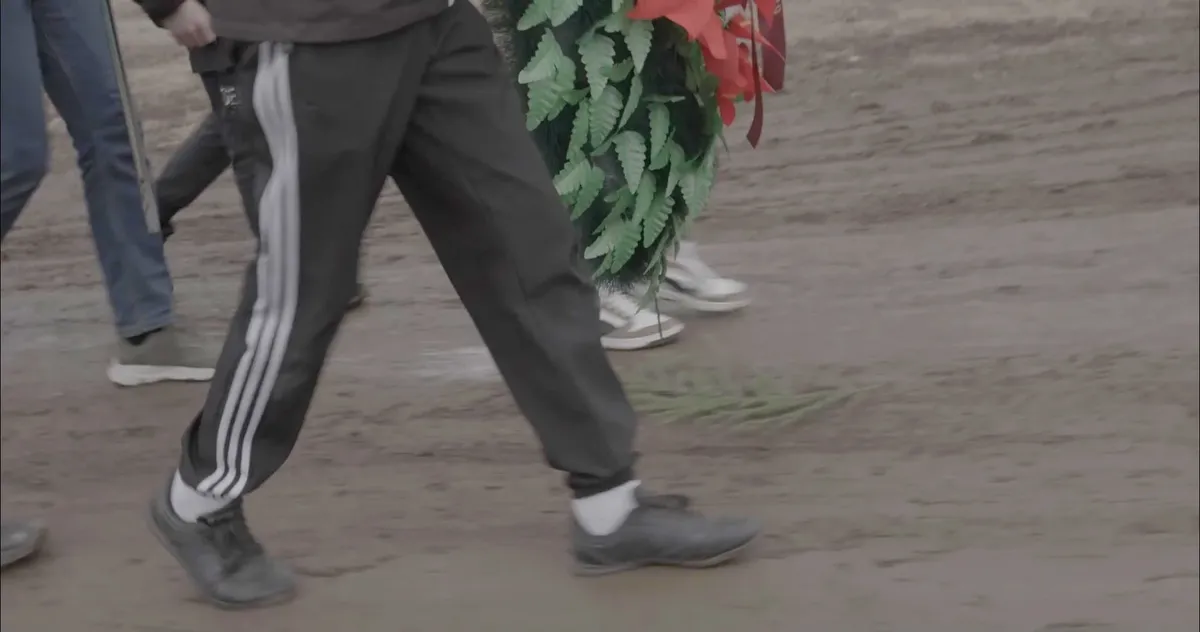
I’m not talking about the devastation and depression of the province; material things were just getting connected and getting better. The lies are different. The fact is that all the Soviets were saying “if only there was no war.” This is Toma, performed by Lyudmila Gurchenko, a Kharkov native, who repeats this in Mikhalkov’s “Five Evenings” (1978) like a prayer. But it was not an unconditional pattern. “Even if it’s war,” I heard more than once from adults in those years. I heard from my father.
It sounded, of course, completely different from the “we can repeat” of the 2000s and 1900s, nothing like it, then it was uttered in the hearts from all that rottenness, from the severity of “peaceful life”, its unbearability and deceit. And not because there is more truth in war - only those who have never smelled it can argue this way, but only because of the eternal Russian fervor - “and burn it all with a blue flame.” If only there was a change of plans. Change of boring background.
And now there is the same recklessness. But there is something else. Sober and purely rational. It seems like the Ural Paramonov: his “success” was directly linked to his atrocities. The tumor subsided, and he still did not die. Visual - here and now - contact with otherworldly evil, ancient and swirling (like in the movies), and - immediate benefit from this. Apparently, there is still something causeless in the world - this is evil. Everything ends, is processed, only it is always with us, always here, nearby, it wants to be let in.
Since those “Five Evenings,” the Soviets and Russians, no matter how they went to war, essentially never stopped. Afghanistan began in 1979. Then - overlapping - Karabakh, Abkhazia, and other Caucasian war series. Privatization as an episode of the civil war. There were no more significant gaps, even in the relatively calm 2000s there were always stands of district military registration and enlistment offices in the provinces, advertisements on store doors inviting soldiers to sign up for a contract. They proposed the Tajik-Afghan border and the Caucasus.
Yes, those clashes and the current NWO are incomparable. But
for remote villages and towns many thousands of miles deep into Russia, all these conflicts, including the Northern Military District, were equally distant, and they all always drew life primarily from here.
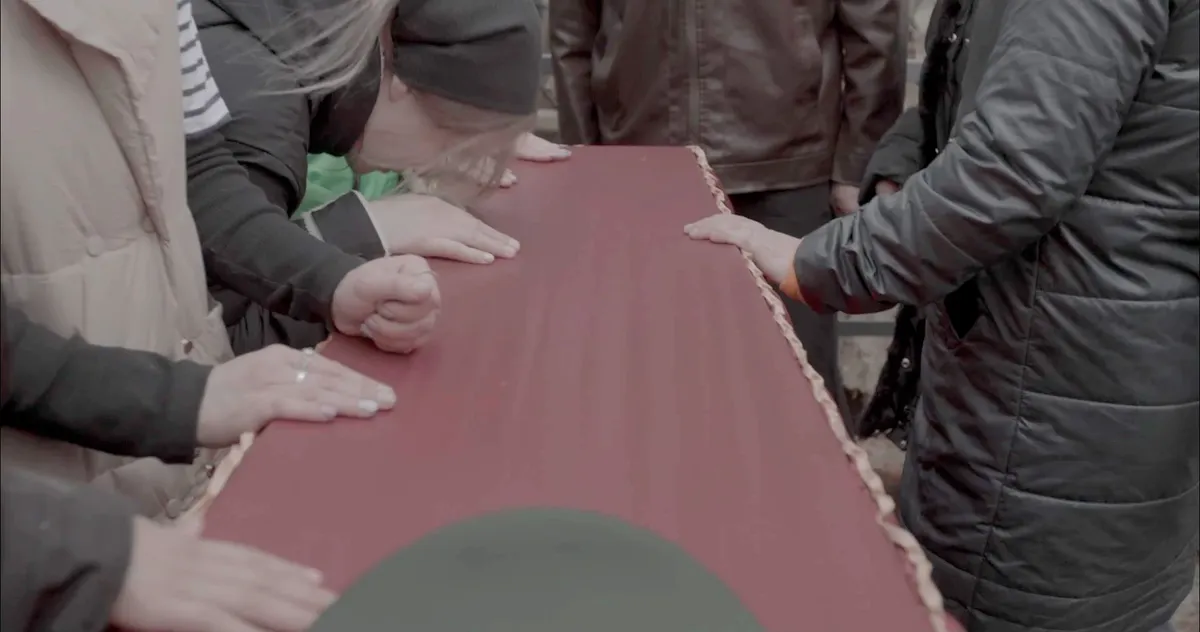
...I don’t call the East Siberian village - it’s typical. Radishchev, passing through this area back in 1791 (following exile), wrote about all of it, for many hundreds of miles, “all the men are poor, they live poorly, there are few industries, and the bread will be born poorly.” Nothing has changed. The village is still dying, but it won’t die. And so the boy from here goes into the army, after taking the oath, immediately signs a contract and dies near Avdeevka. The body is brought back four months later and buried. The mother receives 12 million for him. The younger children, the brother and sisters of the deceased, are growing up, one of them already has a child of her own. The most lively, older sister would like to study, go to the city... But the relatively serious thing they bought with this money was a house in the neighborhood for 500 thousand. The rest of the 11.5 million were skipped by the entire village - it temporarily stopped dying and perked up. I went shopping by taxi. But not for long - they managed it, in general, quickly. There, only the mother and only her own 9 brothers and sisters. Well, in general, the village, although depressive, has a collective consciousness. And this unity is invested.
For Russia, it seems, all major victories are possible only within it, not outside. But these victories over oneself are in the foggy distance.
***
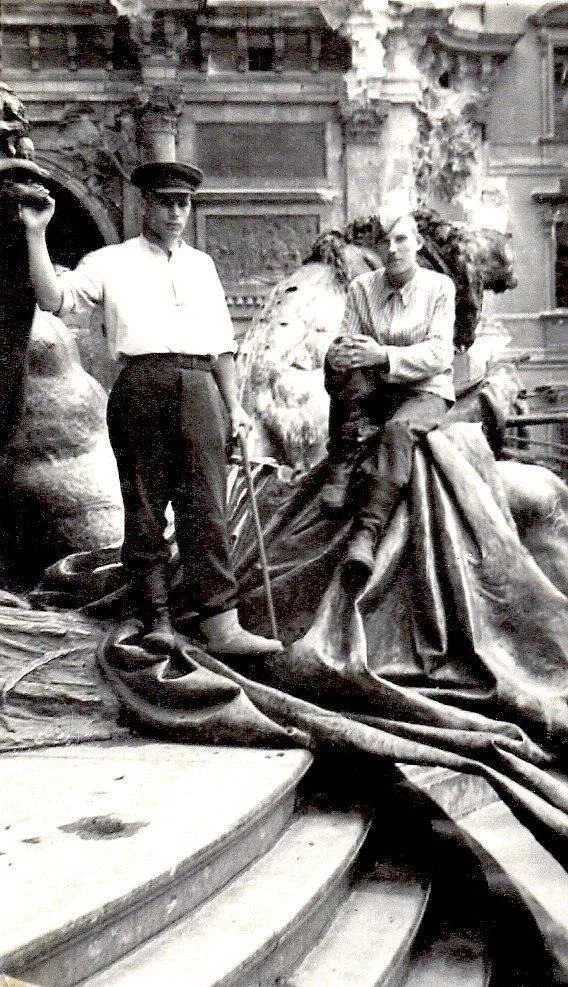
There are many Nekrasovs in Russia. In a photograph from Berlin in 1945, against the background of the monument to Kaiser Wilhelm, Grigory Osipovich Nekrasov is on the left, with a plastered leg and a stick (a photo of his grandfather from a family album was provided to Novaya by Kristina Fedorova). Nekrasov ended the war as a sergeant, but in a cap, not a cap - because he was a border guard. Shortly before this, on the outskirts of Berlin, he and a friend disarmed and captured 13 Fritz who hid under a steep river bank.
Born in 1918, from a family of Altai peasants exiled to the disastrous swamps of Narym. He was allowed to escape and graduate from the teacher's college. I had a reservation and volunteered. After the war, the sergeant graduated from the Novosibirsk Pedagogical Institute and taught history. Then he moved to Kurgan and died in 1998.
From Novosibirsk, Lidiya Nekrasova, the mother of a man mobilized to the Northern Military District, was wounded, but was not returned home. On the three-year anniversary of the announcement of partial mobilization, she was the only one who came to the Ministry of Defense building in Moscow with a poster. She was detained and fined 33 thousand, found guilty of “discrediting” the army and failing to comply with police demands.
What can be compared here? It seems like there is one people, the same surnames... My grandmother Polya, my father’s mother, Tarasova (Razvalova) Pelageya Stepanovna, was dragged to the NKVD in Volokolamsk for letting her son Vitya go to war.
He left the foundry and mechanical plant at the age of 15; his two older brothers were already at the front (my father was the youngest, born in 1940, while he remained with his mother and sisters). Victor was not brought back miraculously, which is a different story. And many were returned - the same ones. And others. For a variety of reasons. (Of course, not in 1941 and 1942.) They brought back specialists, already thinking about their future life - after the victory. They returned the wounded. They returned those who had no place in the army.
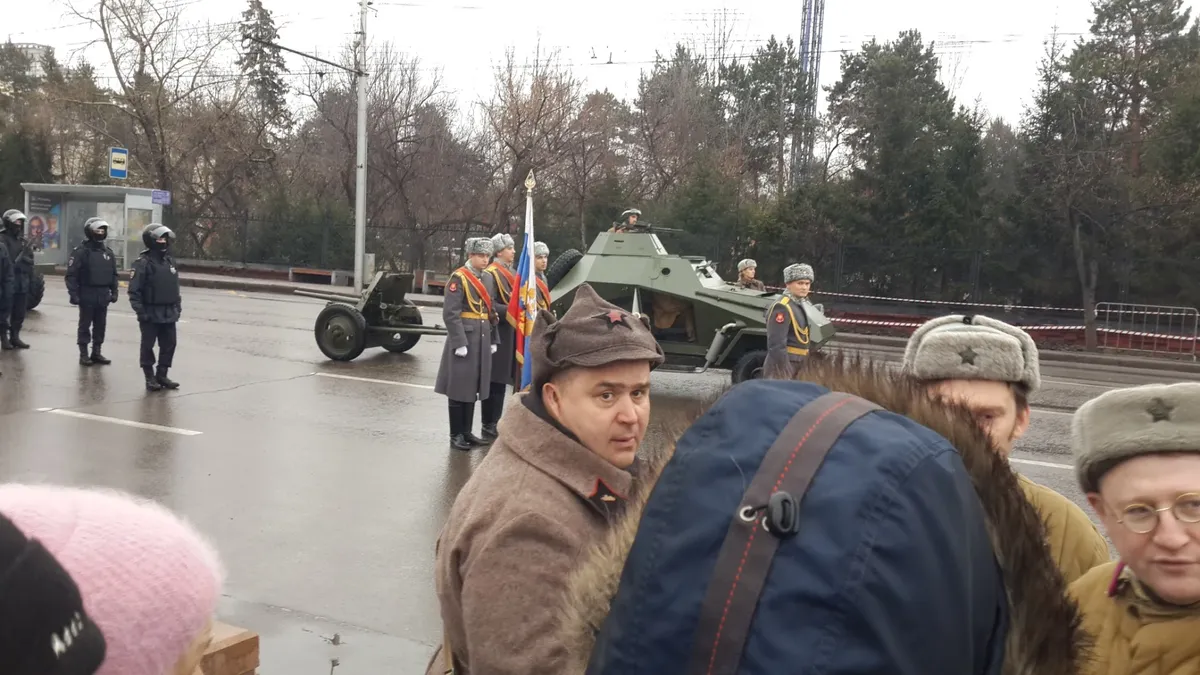
What a dissonance this is with today's chronicles. Then you bet on victory, now you bet on the continuation? Of course not. But where can one get away from the impression, albeit certainly deceptive, that none of the powers that be are in a hurry and are not horrified by what is happening. This is exactly the norm. The order of things. “There is no peace. It is natural to live in conditions of war. There is no need to wait for the apocalypse - we need to understand that we are already living in it,” - this is Laszlo Krasznahorkai (the favorite living prose writer; the very awarding of the Nobel to him refutes his melancholy - his visions are understandable and in demand in Europe, and not only in it).
Many places have adapted to the apocalypse; the Russians are certainly geniuses of adaptability. This order of things is full of beneficiaries. On all floors, in all villages, on earth and in heaven. Downstairs they used to joke casually when the money ran out: “Well, what about the SVO?”; It's no longer a joke. For those at the top, the SVO is a support, this is what cements. Well, she is the explanation for everything that happens. You can blame everything on her. And it’s always others who die. She lets those who remain live.
Andrei Platonov is not a foreign agent, and he did not write about the SVO at all, since he lived and died before, but the observation is accurate: “if you cannot unite people on the basis of kinship, then you can unite them on the basis of torment.” Whatever Platonov recorded this for (a phrase from his notebooks), apply it to any historical phenomenon. Yes, even to school bullying.
At that funeral of the deceased, the district military commissar spoke for Avdeevka: “[...] And like millions of our ancestors, who gave their lives for the existence of Rus', Russia, the Russian land, he laid down his life on the altar of victory.”
Where is it, victory? Everyone knows where the altar is, where they put it, but where is she herself? Where is the Reichstag, the most impatient ask.
But this is not the Great Patriotic War. And it had beneficiaries, but not in the warring USSR. It was then that Victory that would become the main event for the Soviet people. And the beneficiaries of SVO and its continuation are here and now.
What is four years? It would be necessary to measure by other periods. Let's say, the year five hundred and sixteen of Bosch's triptych "The Garden of Earthly Delights." Isn't that where we live? All the characters there, judging by the news feeds, are real, including a crazy sparrow with a pot on his head (this is Satan), swallowing a sinner. Black birds in turn fly out of his backside. They are flying to peck out our eyes. Everything was captured by an honored and national artist (of course, not just in the Russian Federation), everything is extremely modern. Why not count from him? And after all, inside the triptych no one asks: how long will this last?
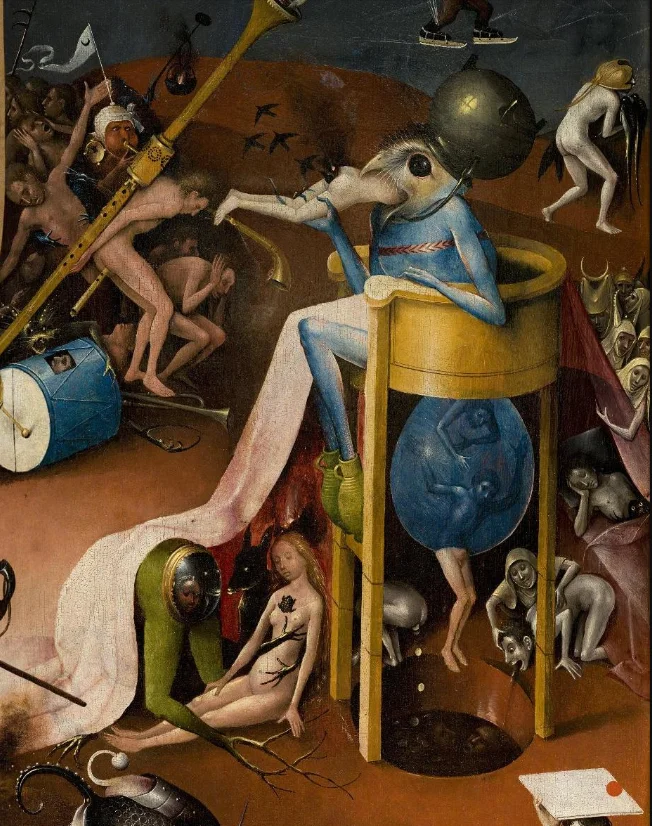
The demons were invited: come into us. “Right here where the check mark is, sign it.” Well, yes, then ask when the end is.
About all the wars that were and are, stopped by Trump and not: they do not arise on their own - they are started. Just like worms, rats, flies - these are the real beneficiaries of all wars in the history of mankind - are not born from dirt and discarded intestines. Although it seems that right from them - here is already a zone of ancient evil, its laws.
And yet, in our world there is not only evil, and an effect always has a cause. We should study Paramonov's brain. (“This is not ethics, this is anthropology,” said one of the heroes of Alexei Ivanov’s novel “Vegetation.”) How, from where does this electricity flow into a new circuit, how does it close so directly that these supra-moral creatures in sweatshirts, already hardened, begin to emerge directly from the rich depths, and they go...
From muzzle and alienation to bitterness. And further to macabre enthusiasm and dancing.
Well, then black swallows fly out of the backside.
***
One of the main propagandists of the North Military District and the current government: “On February 24, 2022, I died. The man who was a man of peace has died. Cheerful, plump, regularly losing weight, who loved to travel to Italy, America, and England. Who thought that everything would be fine... This man then died. And a new man was born - a man of war."
Also a man-metaphor. But in this case it must be understood, it seems, literally. Everything today is a posthumous existence. And this applies not only to him. Perhaps the same as everyone. But no: here he is, not much different from himself on February 23, 2022. He says about the same thing, looks about the same and in the same direction. And we all haven’t stopped recognizing ourselves in the mirror. But it’s as if they are only reminiscent of us, similar to us, but not us. And everything seems to be from a different angle, as if a little different from you. It’s like you’re going to a Balabanov movie. Or in a film by St. Petersburg necrorealists (and even a Hollywood one) about mutants. Here ordinary people are walking, but you’re in a movie, you understand that they are not really people. (For example, reviews of Nadezhda Kadysheva’s recent concert in Novosibirsk: “look, the audience hasn’t left even after, a full metro car is happily singing: a stream flows, a stream runs…”; “what did they pump us all up with? Why do you want to cry from the first notes?”)
It’s okay, we’ll come to terms with it, we’ll get used to it. This is what we can do. The geniuses of adaptability (our advantage over the rest of the world) - we can explain everything to ourselves.
And why is this a victory? And why we need to continue. A world only similar to the human one.
So victory is a relative concept. Who over whom... Evangelist of the Northern Military District Alexander Dugin, October of this year: “We have had an entire foreign agent liberal class operating openly for three decades. Eradicating it at this rate will take many years, which we simply don’t have. We need Victory in the foreseeable future. This requires new efforts. And sometimes fast and even lightning fast.” Dugin laments the lack of horror: the acute shortage of it at the moment is leading Russia straight into the abyss.
Still the same village, unchanged since Radishchev’s times, the same terrible depression and struggle with internal enemies. Despite all the investments in unity. AND?
No one can defeat us. We always defeat ourselves.
This material was published in the fifteenth issue of Novaya Gazeta. Magazine". You can buy it in the online store of our partners.