
Translated material
Brave new "Igromir"
At the end of the past year, the pop culture festival Comic Con Igromir returned to Moscow.

A visitor to the pop culture festival Comic Con Igromir at the Timiryazev Center exhibition complex. Photo: Arina Antonova / TASS
The return of the largest pop culture festival after a long pause, or, rather, its rebirth in a new form - simply because in the new realities the old Igromir, which many miss, is hardly possible anymore - is a significant event in itself. For many, it became a reason to feel nostalgic for pre-Covid times and provided space for collective escapism. This time, the festival was organized by Yandex, which bought the rights to the brand, and it took place in the Timiryazev Center, built just a year ago, attracting more than 53 thousand visitors in three days, which, however, cannot be compared with 180 thousand back in 2019.
Overall impressions of the festival remained rather mixed. On the one hand, it, of course, brought the joy of a long-awaited community meeting: crowds of cosplayers, chance meetings with industry idols and the atmosphere of a geek party. On the other hand, visitors faced long queues at the entrance in freezing weather, in which they could spend half the time of the entire festival. We were also faced with the lack of a normal wardrobe (personal belongings were often simply dumped in heaps) and extremely weak internet, which made it difficult to participate in activities at the festival and even buy anything. All this, of course, in many ways is already turning into an almost integral feature of any large-scale events, but shouldn’t we praise them for this? And in general, the active life of the festival died down before the official closing time, following the departure of the game developers.
The content of the festival program clearly reflected the current state of the Russian computer games market:
in the context of sanctions and limited access to major Western game releases, the main focus on Igromir was on Russian developers and, rather, not even on games, but on the ecosystems of large companies.
So, “Pyaterochka” had a quest about shopping and a lottery for checks, “Rosatom” presented a “quantum helmet” that shows who you are in a parallel Universe, and “Avto.ru” made a simulation of a pit stop. At the same time, the festival actively presented the new digital platform Rostelecom Gaming, presented as an ecosystem for purchasing games, in-game currency and subscriptions for PCs and consoles. Its promotion as a whole can be called part of the general trend towards creating closed digital ecosystems, independent of Western services, such as VK Play or Plus Gaming from Yandex. Speaking of Yandex: there was a lot of it at the festival. From him there were “Store”, and “Education”, and “Alice” with “Kinopoisk”. But is this what gamers and fans came to the festival for? Probably not after all.
However, there were also projects from independent studios. There, visitors were able to test demos in person and interact with the creators, a rarity at large conventions. Of the interesting projects that caught my eye, one can recall the game “Dogkistan” about a totalitarian world inhabited by anthropomorphic dogs, where even the simplest decisions lead to arrest; “The Northern Path” is about survival in the Yakut taiga with elements of Slavic mysticism, or “The Princess” is a ballet slasher film inspired by the fairy tales of Alexander Pushkin, but in a dark fantasy setting.
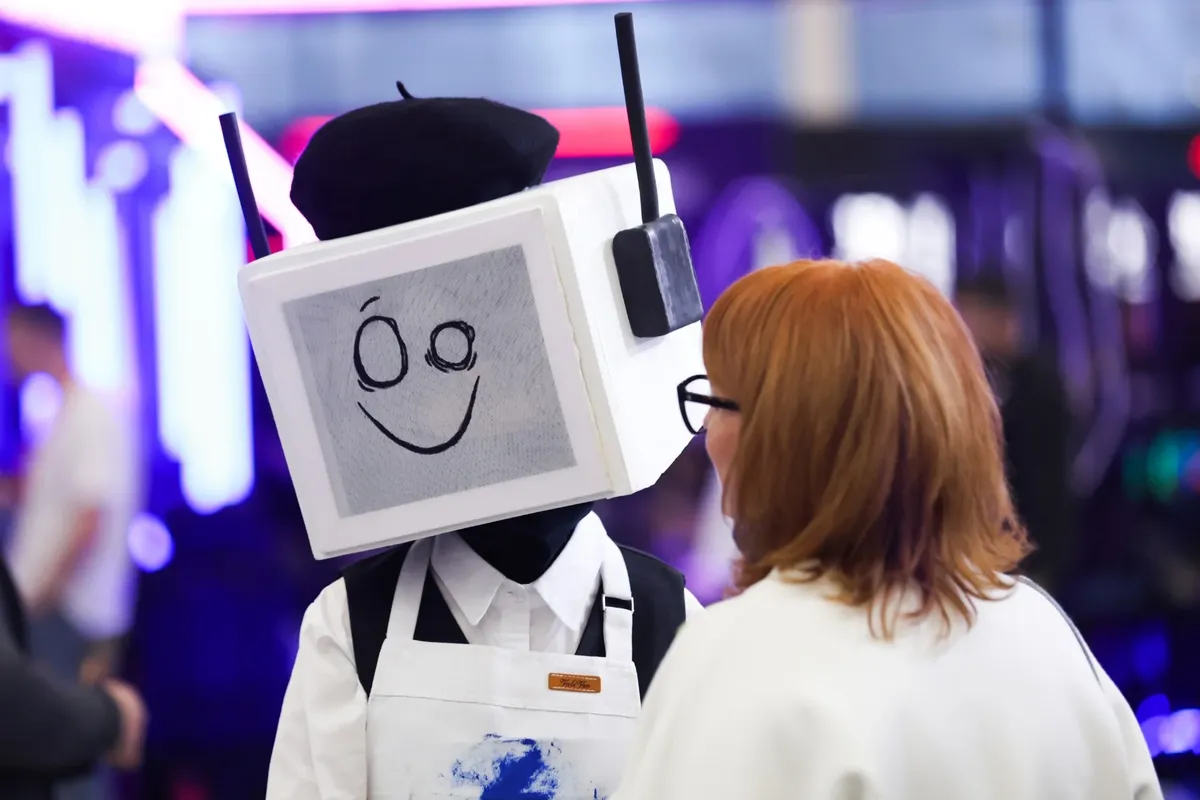
Here, it seems, there is a tendency to turn to narratives that are largely recognizable among Russians, although noticeably pre-invented. We notice the same trend in the already quite sensational, but not yet released game Cyberslav: Eclipse, which is scheduled for release in 2027. This project, based on the animated series of the same name, combines cyberpunk and Slavic folklore, with all the archetypal plots and heroes - including the hero, personifying the good force, and his opponents. Such projects that promote a certain narrative through local mythologies can be seen as a tool of “soft power” in promoting patriotism - but at the same time, one can also see in this decoloniality and a rethinking of stable symbols in the person of the same Pushkin.
The only question is what came of it consciously and what didn’t. Here, unfortunately, nothing concrete can be said until the full release of the game, when we will all see what narrative the developers have chosen. Igromir showed that so far the demo versions of these games have turned out to be quite weak, and the opportunity to play them rather spoiled the impression than fueled the anticipation of the official release.
However, not all is well with the representation of indie games at the festival: the high cost of renting stands (about 300-400 thousand rubles) made participation inaccessible to many small developers. The presented games either had already appeared in many places and could afford to rent a stand, or they got to the festival, as they say, through acquaintance with the organizers. This, together with the abundance of essentially non-gaming companies at the festival, led to the fact that Igromir from a geek gathering in many ways turned into a large advertising platform for large corporations.
Among the foreign games whose stands could easily be recognized by a much larger number of people around, it is worth mentioning the obvious headliner in this regard, Arknights: Endfield, a Chinese game based on the already popular Arknights universe. Another stand that attracted attention was the multiplayer battle royale game PUBG Mobile, which is familiar to almost everyone who has heard of this genre at least once. And that’s probably all.
Compared to previous festivals, this one looks very modest: there are almost no foreign games, and those that exist are obviously Asian game development, and even then in a very meager form.
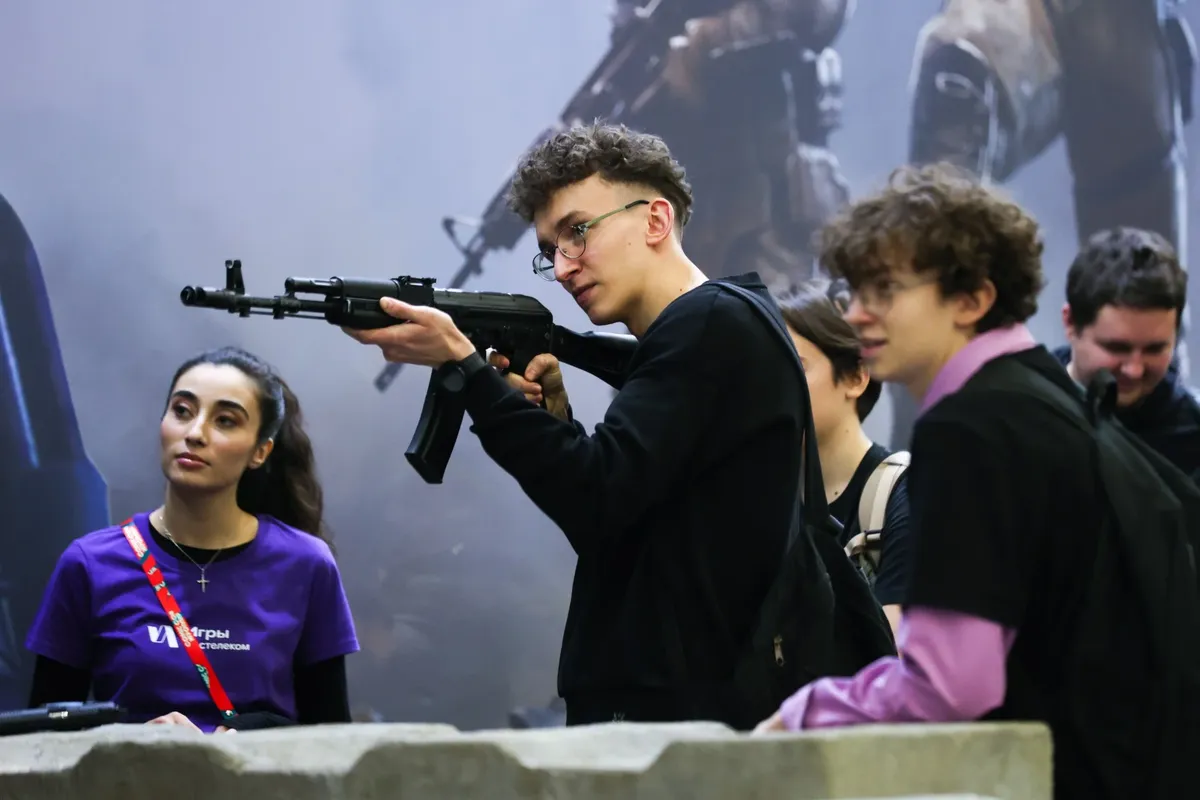
But what has traditionally been one of the most spectacular parts of the festival - cosplay - this year found itself at the center of a rather unpleasant scandal. The organizers introduced new strict regulations, published back in October 2025 in the official VKontakte festival community. This list of prohibitions, in particular, included military-themed costumes, including images from the popular games STALKER and Call of Duty, uniforms of government services in Russia and other countries, “revealing” outfits, music of “foreign agents,” as well as the sounds of gunshots, explosions and alarms.
The introduction of these measures was explained by security considerations - and at the same time highlighted both the paranoid mood of the organizers and an attempt to disguise the reality in which we all find ourselves. In comparison with the 2019 regulations, you can notice a radical tightening of the rules. Previously, they concerned mainly the technical readiness of the suit and general safety standards, without ideological restrictions. The new bans turned out to be a form of censorship that regulates not only the content, but also the self-expression of fans, because of which representatives of some fandoms simply lost the opportunity to actively participate in the festival - and were terribly outraged.
What can we ultimately say about Comic Con Igromir? For many people, it became an opportunity to briefly get into 2019, to get away from the surrounding problems, and the organizers obviously relied on this,
using both a well-known brand and rules that exclude any triggers from the festival field, even if these triggers unexpectedly turn out to be entire fan communities.
At the same time, the festival itself is moving towards simply turning into a very bright and expensive advertisement for certain companies or a fair where you can buy games, books, comics, and new products from Yandex. Of course, it also has some of the atmosphere inherent in the old Igromirs, but in many respects this is the merit not of the organizers, but of those people who came to the festival. However, considering that the number of visitors has decreased by more than three times compared to 2019, and the festival itself is obviously aimed at a slightly different audience, the answer to the question about the future of Comic Con Igromir seems rather sad.
Evgeniy Gavrilin