
Translated material
150 years ago, the streets in the center of St. Petersburg were cleaned as if spring had already arrived
How do you remove snow with a “strong hand”? Once upon a time, the streets in the center of St. Petersburg were cleaned as if spring had already arrived - and not everyone was happy about it
“It was a special, St. Petersburg sound - loudly thumping snow blocks!” - described winter cleaning in the capital under Alexander II. He appointed General Fyodor Trepov, the one who was shot at by Vera Zasulich, to lead the city.
“Paper” tells what the expression “Trepovskaya spring”, popular at the end of the 19th century, meant, what the first melting points in the city were - snow melters and why the jury acquitted Zasulich.
Until the mid-19th century, cleaning St. Petersburg in winter, as in the 21st century, often left much to be desired. In 1864, the authorities published an “Instruction on the Duties of Janitors” that was mandatory for both private and public cleaners, but it had no real effect. Order in the city was restored only after 1866, when Tsar Alexander II, after another attempt on his life, liquidated the civil administration in the capital and gave all power in the city to the police. The Emperor appointed a gendarme, Fyodor Fedorovich Trepov, as Chief of Police of St. Petersburg.
The townspeople retold a rumor that Trepov, who was urgently promoted to a new position as a general, was the illegitimate brother of the Tsar, the illegitimate son of Nicholas I. Another rumor, cited by the researcher of St. Petersburg folklore Naum Sindalovsky, is even more fantastic - allegedly the father of the police chief was Prince Wilhelm of Prussia, the future first Kaiser of a united Germany. In fact, Trepov most likely had more humble origins. He was the illegitimate son of the hereditary nobleman and military leader Fyodor Shtenger, who ruled the cities of Pavlovsk and Gatchina.
Removing garbage in summer and snow in winter became one of the first household tasks that Trepov paid attention to. The texts of his personal orders have been preserved, in which he requires homeowners to clear the sidewalks along the facades of buildings within 72 hours after heavy snowfalls.
“In the struggle, the public was on Trepov’s side, since the sanitary condition of the capital was terrible. Under Trepov, only St. Petersburg began to be accurately illuminated, the pavement was corrected, bridges across the Neva began to be built on time, the streets began to be properly cleared of snow, recalled the official and at the same time publicist of the 19th century, Konstantin Skalkovsky. “Of course, this was not without its excesses: it happened that the streets were cleared of snow precisely at the moment when a sudden thaw required, on the contrary, to preserve the snow as quickly as possible.”
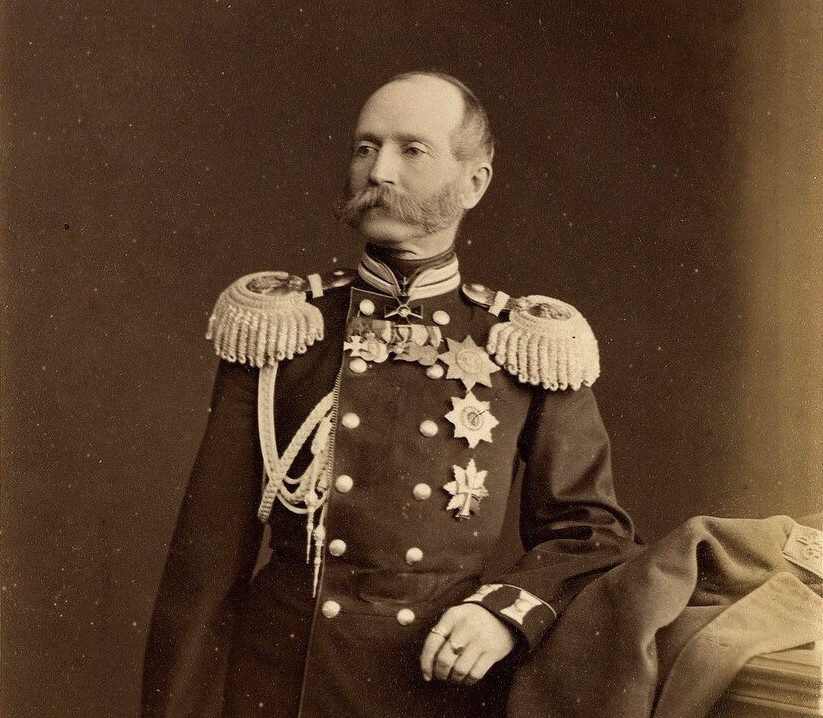
The general gave the order at the first signs of warming not only to remove snow and ice from the central streets, but to clean them down to the stone sidewalks and pavements. Because of this, Nevsky, Morskaya, Liteiny Prospekt and other most important streets became impassable for sleighs. On secondary streets and alleys, however, the snow continued to lie - on the contrary, it was impossible to drive there on wheels.
“The cab drivers ironically laughed that “Trepov was planning to fight with God” regarding the weather. Even a special expression appeared - “Trepov spring”, which was used to describe the state of the streets when it was impossible to drive along them in any carriage,” writes Skalkovsky.”
The minimum and maximum thickness of the layer of compacted snow on the street was set - from 17 to 35 centimeters. “In the event of drifts during strong winds and snowstorms, the resulting snowdrifts must be leveled, and holes and potholes filled in; for this purpose, it is also allowed to use snow thrown from the roofs,” the instructions read. If the thickness of the snow cover becomes less than 17 cm, then it’s time for the wipers to remove the snow completely. As a result, the “Trepov spring” entered the dictionaries as “spring caused artificially, contrary to the calendar.”
Trepov led St. Petersburg first in 1866-1873 as chief of police, and then until 1878 as mayor. Under him, city officials approved other rules for handling snow. For example, janitors were required to level snowdrifts with shovels and prevent the appearance of snow mountains. When cleaning, it was forbidden to throw snow into rivers and canals. The cleaners were required to melt it in special boxes under which fires were burning - snow melters, or take it to special snow dumps. At the same time, the city opened only a few free landfills each winter; they quickly filled up, and homeowners were forced to send snow to paid landfills or break the rules.
“The sidewalks were cleaned by scraping, with the obligatory sprinkling of sand. Excess snow from the streets was shoveled with large wooden shovels into piles and shafts along the sidewalks, wrote memoirists Dmitry Zasosov and Vladimir Pyzin. — Streets were cleared of snow early in the morning, and during heavy snowfalls, several times a day. All this was done, of course, only in the city center. On the outskirts the snow lay in drifts until spring.”
“In winter, I watched with envy as street cleaners used special jagged blades to chip away the ice on the sidewalks, and it bounced off in delicious plates,” artist Mstislav Dobuzhinsky recalled St. Petersburg at the turn of the 1870s and 1880s. “Sometimes the panel was blocked by slingshots - the wipers were throwing snow off the roof, and then we had to turn into the middle of the street, and what a special, St. Petersburg sound it was - loudly thumping blocks of snow! When the snow fell too deep, it was intensively cleared away, and piles of it, some with a shovel or broom stuck in, stretched along all the sidewalks. In the spring, whole regiments of street cleaners in white aprons quickly removed snow from the streets (they liked to joke that street cleaners do spring in St. Petersburg).”
There were far from only positive reviews about Trepov’s work as the head of the city. “The city has become cleaner and more convenient; “Trepov’s spring” and Trepov’s orders became proverbial and became an object of fashion and imitation for governors and police chiefs throughout Great Russia,” wrote the publicist and publisher Grigory Gradovsky, “But thousands of people were expelled administratively; homeowners, factories and factories, traders and cab drivers, janitors and artisans groaned and complained. Bribes intensified; Instead of prunes and a loaf of sugar, which Skvoznik-Dmukhanovsky was content with ( the mayor from “The Inspector General” - approx. “Paper” ), the inhabitants had to pay with all kinds of goods, holiday and emergency. Everything required prior permission... Only special acquaintances, connections and patronage saved us from this oppression and tyranny.”
The order given in 1877 by Fyodor Trepov to flog the populist prisoner Alexei Bogolyubov, who did not take off his hat at the sight of the mayor, became the reason for the assassination attempt on the general. On January 24, 1878, at 2 Gorokhovaya Street, he was wounded by revolutionary Vera Zasulich with a pistol. The jury unexpectedly acquitted Zasulich, not so much because of sympathy for her, but because of antipathy towards Trepov and the arbitrariness of power in general. Soon the jury's verdict was overturned, and trials of political terrorists were transferred to military tribunals - with the right to impose death sentences. But Zasulich, with the help of her revolutionary friends, had already managed to go abroad.
In 1879, Fyodor Trepov left his position, but the cleaning rules he had established largely continued to apply until the winter of 1916-1917.
Cover photo: Karl Bulla / TsGAKFFD
Let's find out what's really going on
Make a payment in favor of the editorial office of Bumaga
What else to read:
- How young Nekrasov and the future governor of St. Petersburg walked on their last legs at Christmas and stoked the stove with a chair.
- Seven new books about St. Petersburg . Ancient baths, tiled stoves and cinema during the siege.