
Translated material
Vladislav Baumgertner disappeared in Cyprus
This is the top manager who turned Uralkali into an international company. But most of all he is known as the “hostage” of Alexander Lukashenko in the “potassium war”
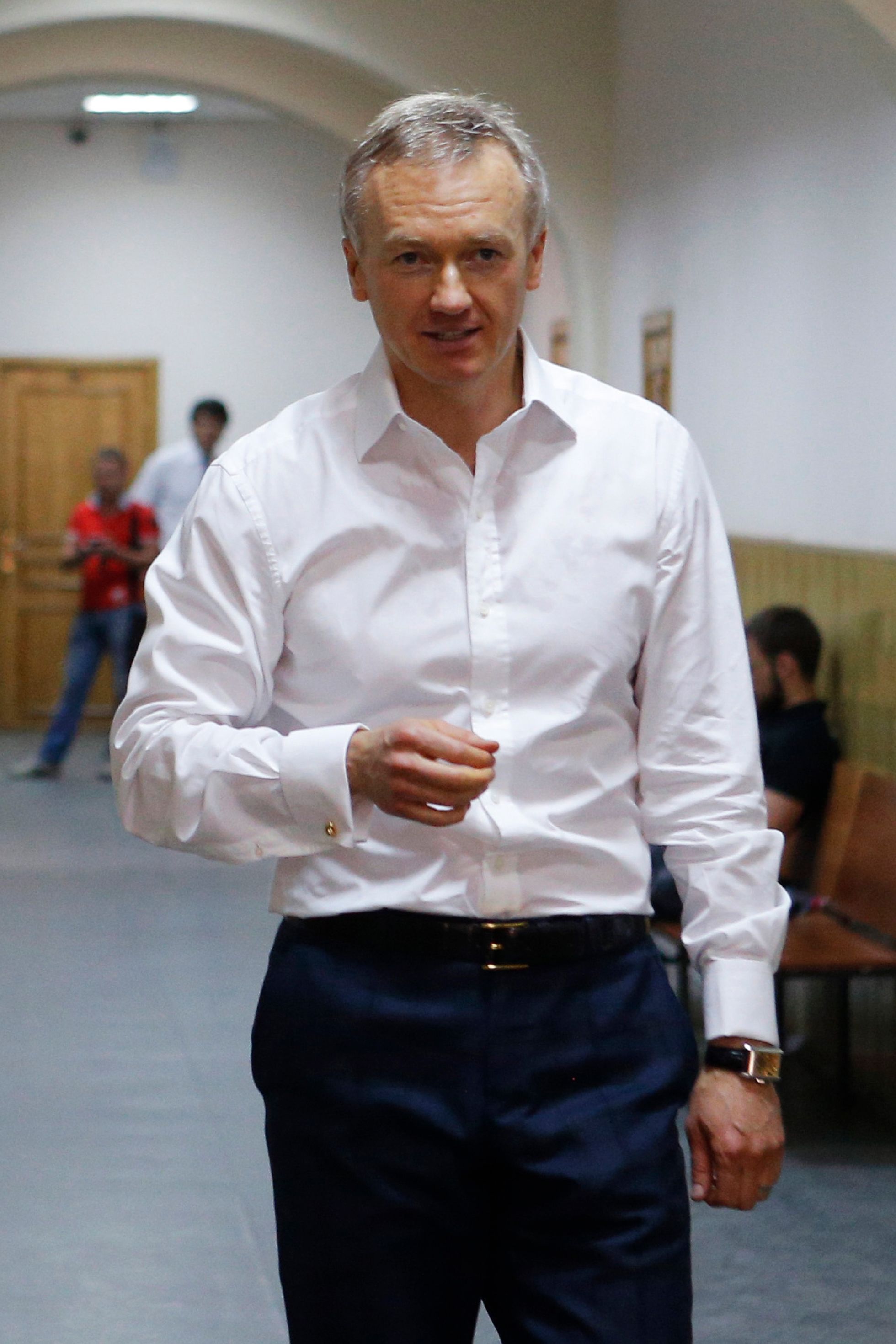
Vladislav Baumgertner, one of the most famous Russian top managers of the 2010s, disappeared in Cyprus. As CEO of Uralkali, Baumgertner broke off his partnership with Belaruskali and became Alexander Lukashenko’s hostage in the “potash war” that followed. "Medusa" looks back at this conflict and tells what Baumgertner did before and after it - and what is known about the circumstances of his disappearance.
"The Ideal Manager"
On January 11, Cyprus police reported the disappearance of 53-year-old Russian Vladislav Baumgertner. He left his home in Limassol on January 7, wearing black shorts and a black T-shirt. Since then, he has not answered calls or returned home. The search began on January 10. Search and rescue, police and volunteers were involved, and a police helicopter and drones were used. They searched for Baumgertner in a remote area near the village of Pissouri, where his mobile phone signal was last recorded.
A graduate of the Ural Technical University, Baumgertner began his career at the energy sales company Uralenergo. In the early 2000s, he completed MBA and financial management degrees in the UK. After that, he was hired by Uralkali, which was then owned by entrepreneur Dmitry Rybolovlev. In 2003, Baumgertner became commercial, and in 2005, general director and president of Uralkali. According to former colleagues, Rybolovlev chose him because investors liked him and did not give any reason to suspect himself of theft.
Baumgertner introduced electronic document management and KPI at Uralkali, brought the company to the London Stock Exchange and merged it with Silvinit, another potash fertilizer producer. “Baumgaertner is straightforward and rational. <…> He acts only in the interests of business, definitely and clearly. And it gives a good business result, although sometimes it does not take into account people's emotions and turns them against itself. Baumgertner is an ideal regular manager, sometimes too ideal,” Mark Rozin, head of Ecopsy Consulting, which collaborated with Uralkali, told Forbes in 2013.
"Potash War"
In the same 2005, Uralkali, together with Belaruskali, created the Belarusian Potash Company (BPK) - a single sales channel for potash fertilizers, within which the partners regulated production and coordinated sales volumes. BPC controlled more than 40% of global potassium exports. But by 2013, against the backdrop of falling prices, disagreements began to grow between Uralkali and Belaruskali. The partners could not agree on a strategy - to maintain the price by limiting supplies through BPC, or to retain revenue by increasing them - and began to accuse each other of trading “to the left.”
At the end of July 2013, Baumgertner announced that Uralkali was leaving BPC. It was one of the world's two largest potash cartels, and its collapse caused a downturn in the market as a whole. “It’s the same as if Saudi Arabia decided to leave OPEC. Oil prices would immediately fall,” Dmitry Ryzhkov, a trader at the investment company Renaissance Capital, explained to Reuters the market reaction.
The exit of Uralkali from BPC turned out to be painful for Alexander Lukashenko. “The blow dealt by the Russian side sharply crippled Belaruskali, the main supplier of foreign currency to the treasury. This means that this is a blow to the economic stability and well-being declared by Lukashenko. And Lukashenko took the bit between his teeth…” Belarusian political analyst Alexander Klaskovsky told the BBC.
At the end of August 2013, a month after Uralkali left BPC, Baumgertner arrived in Minsk for negotiations with the then head of the government of Belarus, Mikhail Myasnikovich. The negotiations ended in nothing, and Baumgertner was detained at the airport, from where he was about to fly home. No one doubted that Lukashenko personally gave the order for this.
“He has arrived, the brat, the Prime Minister is inviting him. He sat cross-legged and declared: this won’t happen, this won’t happen. He came out, spat at the government house and at the airport, laughing. And there he is…” Lukashenko later said . Mark Rozin told Forbes that the behavior that outraged Lukashenko was “quite Vlad’s style”: “He often lashed out at the fact that his rational approach did not take into account factors that were impossible to predict. He should not have been allowed into such negotiations, especially with officials.”
Lukashenko was indignant at the behavior of not only Baumgertner, but also his boss, the owner of Uralkali, Suleiman Kerimov, who, together with his partners, bought the enterprise from Dmitry Rybolovlev. Lukashenko stated that Kerimov “does what he wants,” and openly advised the Russian leadership to use force to force the businessman to sell the company: “I would lock Kerimov and the other owners in one cell, and they would sell all the assets at the highest price. I would find a buyer for them.”
Belarusian security forces accused Baumgertner of abuse of power and sent him to a KGB pre-trial detention center. His arrest caused a full-fledged interstate crisis. First Deputy Prime Minister of the Russian Federation Igor Shuvalov said that what happened was “very strange, inadequate and not like a partnership.” A ban was introduced on the import of Belarusian pork and oil supplies to Belarus were reduced. However, things did not come to an open conflict at the level of heads of state. According to Lukashenko, he and Putin agreed that “ Gertner and Kerimov are not worth it if we ruin the relationship.”
Baumgertner spent a month in custody. He was kept in solitary confinement, at first in the same suit that he wore to the meeting with the Prime Minister of Belarus, Forbes wrote . According to the magazine's sources, in prison, Baumgertner "drastically revised his views on life." At the end of September 2013, he was transferred to house arrest (in a rented apartment in Minsk), and at the end of November he was extradited to Russia. There, a case of abuse of power was also opened against Baumgertner - in order to “drag him back to his homeland,” an anonymous official explained to Forbes.
What happened next
Uralkali and Belaruskali survived the divorce relatively well: having recovered from the initial shocks (Uralkali shares fell by 19% in one day, and Belaruskali stopped half of its mines in search of new sales channels), both companies increased production the following year. Kerimov, as Lukashenko demanded, left the capital of Uralkali. According to the Project, Putin protected Kerimov from criminal prosecution, which Lukashenko tried to initiate, and in return, Kerimov transferred $100 million to the needs of the Sirius children's center, supervised by Putin.
The criminal case against Baumgertner was closed and he returned to business. The former director of Uralkali led one of Russia's largest port operators, Global Ports , and headed the lithium-ion battery manufacturer Alevo , in which Rybolovlev invested. Baumgertner is now listed as the director of the family office operator HeadOffice, created in Cyprus in 2020.
The day after Baumgertner disappeared, the third secretary of the Russian embassy, Alexey Panov, was found dead in Cyprus. According to SigmaLive, embassy officials handed over his body to the Cypriot police, saying it was a suicide and that Panov had left a suicide note. However, the note itself was not given to the police, citing the fact that it would be sent to Moscow. They were also not allowed to examine Panov’s office, where his body was found. It is not yet known whether this death is related to Baumgertner's disappearance.