
Translated material
Shovel
Excerpt from a book being prepared for publication

(18+) THIS MATERIAL (INFORMATION) IS PRODUCED, DISTRIBUTED AND (OR) SENT BY FOREIGN AGENT GORDEEVA KATERINA VLADIMIROVNA OR CONCERNES THE ACTIVITIES OF FOREIGN AGENT GORDEEVA KATERINA VLADIMIROVNA.
A fly is flying around the room. Or a midge. Or something in between. But definitely not a mosquito. He would squeak, but she would buzz, and disgustingly so.
Galina Prokopyevna tries to catch an insect with her free hand. The hook fingers paddle the air, but everything somehow misses.
The fly escapes. Galina Prokopyevna gets angry: “Ugh, damned.” He lowers his hand, slobbers his finger, turns the page of the psalter lying on his lap. Reading.
Reads, reads, reads.
He mumbles with only his lips.
Distracted.
Thinking about it.
He looks ahead at nothing.
I am sitting to her left on a bow-legged chair: one leg is shorter than three. I really want to swing, but I try to sit straight. I look at Galina Prokopyevna. The resulting silence is penetrated by the sounds of a television show in which a female and male voice are sorting things out, everything is interrupted by advertising.
Galina Prokopyevna comes out of her stupor. The gaze stops at the iron plate in the corner. It’s not about where the icon is, it’s about the opposite. There, all the trash from the room has been hastily collected and rises in a shapeless garbage heap, supported by a blue iron plate. The blue paint has peeled off in places and rust is visible.
Galina Prokopyevna nods:
- And then, you see, there’s a plate, so iron, I’m spinning on it. This is the “Health” disc. I’ve had it since 1983, it was given to me on March 8th from the team, that is, from our entire workshop, and I’ve been rocking it ever since. They used to say, and the instructions say that this is good for the waist, but I don’t know if it’s good for the waist or not, but it loosens the intestines. Since I've been spinning, I'm not familiar with constipation. I advise you too. Do you have one? No? Well, now you probably won’t be able to buy it anywhere, but look for it.
Look...
I used to jump rope before, I could do up to a hundred jumps a day! But that winter I gave up and this summer, consider it the first time I haven’t jumped. There's a jump rope somewhere on the street, don't you want it?
Take it, take it!
Take it.
Movement helps, I’m here, you see how long I’ve lived and I can do everything. But because sport.
Sport!..
And no laziness. I get up at half past five, and sometimes at five, and immediately do gymnastics, showering and then doing housework, and at about fifteen to seven I run to work. Now, of course, it’s not like before, I’m sitting on shift, working as a checkpoint controller. But everyone knows me, everyone greets me. And regarding public concerns - this has always come to me from time immemorial, I sat on the Council for the third term as chairman, they are unanimously elected, without me they can’t do anything: they collected candles for the trenches last month - I collected them, weaved nets - I supervised. And when I had to ask a local businessman for eight hundred thousand to purchase a quadcopter for the fighters from our village, I also went to the city... And I also went for the second one, for a quadcopter. Everyone says: “Prokopyevna, go, they won’t refuse you.” And that's true. Yes.
They respect me.
Respect...
Yes, they respect me!
And there is a reason for it. I didn’t live my life in vain, I always worked, I gave everything to my homeland, all of myself. And the homeland did not remain in debt. I have nothing to complain about. I have always been in good standing... And that’s also important, my dear, how are you, Katya? Now, Katya, it is important that you always, every day, live with faith in the good. That everything will be fine, that everything will be right.
Galina Prokopyevna slobbers her finger and turns the page of the psalter.
“I’m not a believer myself.” I usually go to church for social reasons. It’s easiest to talk to people there... it’s too late for me to re-educate. I was raised to believe that there is no God. But now is a different time. And so - well... his mother asked him, and the women all say that he should read it. That's what I read. So, I only saw holy books in my childhood at my grandmother’s, but then they hid them more, they learned to live without God, with their own minds, and they learned! That's how we were raised. And raised! Now is a different time, religion is back in motion. But do you believe?
I nod.
Galina Prokopyevna shrugs. Examines the psalter. He's the same. The fly that was bothering Galina Prokopyevna hits the quarter window of her hut with all its might, flies off twenty centimeters and rams the glass again. A fly vibrates on the window with an unpleasant sound. It's like they're drilling.
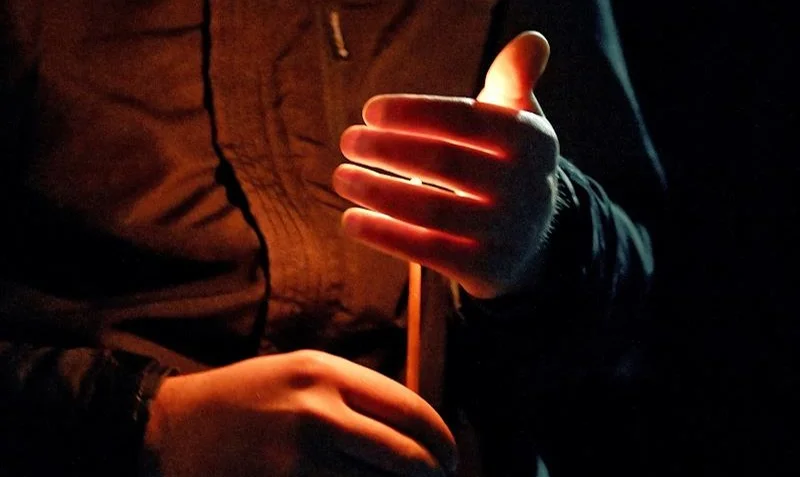
But Galina Prokopyevna doesn’t hear. She lowered her head and read the psalm under her breath. Freezes. It seems to me that he is falling asleep. But she raises her head again and, as if there was no pause, continues:
- So I’m not particularly religious, I don’t pray, I don’t bow in church, but while I’m running to work, I look at how beautiful it is all around, how well we’ve begun to live! And I am happy and grateful to fate that my life has turned out this way. But I had no time to think, and it was always like this: to work, from work, feed the chickens, give it to the pig, while I was holding the pig, bring firewood. It’s good now that there’s water in the house, otherwise I had to run to the river... Well, then in the winter you can be lazy in the evening watching TV, and in the summer you can stay until late in the beds and vegetable garden: weed everything, fertilize it. Gena helped me, now Vitalka will... Oh, how Genka repaired my shovel that summer! I got a full-time job as a janitor: the money will come in handy, and the work is so physical and demanding. I say, they took me to the village council for a position. There are three of us, all pensioners! And they pay us at the expense of self-government, and all this equipment - who knows what, it’s us ourselves: felt boots, and a sheepskin coat, and brooms, and here’s a shovel...
You always need a shovel.
A shovel is useful in any situation.
Shovel. Yes.
So what am I saying? The handle of my shovel broke off, I went to Gennady - grandson, help me out. And his hands are golden, golden! He cut the handle himself, polished it... He says: it’s smooth, grandma, you’ll never get a splinter in your life. And it’s true: I shoveled so much snow with this shovel in the winter. I couldn’t be happier, I thanked Genka for everything... Well, mentally. He was taken away for mobilization in October... And now here he is. Only Vitalka remained with us.
She strokes the page of the psalter with her hand, brown in balls of swollen joints. He takes a deep, shaky breath. He folds his hands one on top of the other on the psalter. I look at them. Large hands, crushed by many years of work: an earthen rim under the nails that has grown into the skin, fingers scrunched up, the thumb on the left hand has bent upward and instead of a nail, a yellow growth, nameless on the right, is tightly intercepted by a thick silver wedding ring, which, it seems, can now only be removed with the finger. Along with life.
-Is your life hard?
— I wouldn’t say it’s heavy. It's a habit. Those who move little are lazy to live, as here in our neighborhood there is Alevtina alone: she retired at the age of 50 and didn’t move anything else. She has become fat, firstly, and secondly, she can barely move her feet. She can't get to the store. And I walk with sticks in my hands, and I’m 34 years older... I was born in 1940, we had a small village not far from the village. My parents are simple peasants. The mother was illiterate, did not finish one grade, and somehow scratched her last name. And my father graduated from parochial school and was considered a very literate man for that time. They pulled and pulled us, but not alone, together with the state, of course. Just imagine: my father and mother had five of us, we all survived - this is, firstly, and secondly, we all have higher education! Incredible!
Oh, how we fought for him, this is not how I now heard in families, parents jumping in front of their offspring with a tambourine and an accordion: learn, baby, I’ll give you candy. We knew that our country needed educated people, there was no other way! Our elementary school was three kilometers from home, and from the fifth grade we had to travel fifteen kilometers to school. Well, we didn’t go every day. We left on Monday, went home on Saturday, slept with good people, some on the stove, some in the hallway. So my brother and sister were sheltered by my grandfather and grandmother, stepchildren, not acquaintances at all, but it was all the same - they let us in and we slept on the beds, side by side: we filled the bags with hay, or straw, or grass, there were no blankets, there were no pillows, there were no sheets or duvet covers, or pillowcases, especially, there was nothing of that. They slept on sacks filled with straw. And they wrapped themselves up in some kind of sheepskin coat, a sweatshirt, or something else: you put your legs up, you cover yourself - grace. Yes, everyone was immensely happy, we lived for our future!
We were glad that our parents did not have such an opportunity, but we did... Such, my dear, were the prospects we saw, such opportunities! And everything came true, everything was accomplished. And all with my own labor...
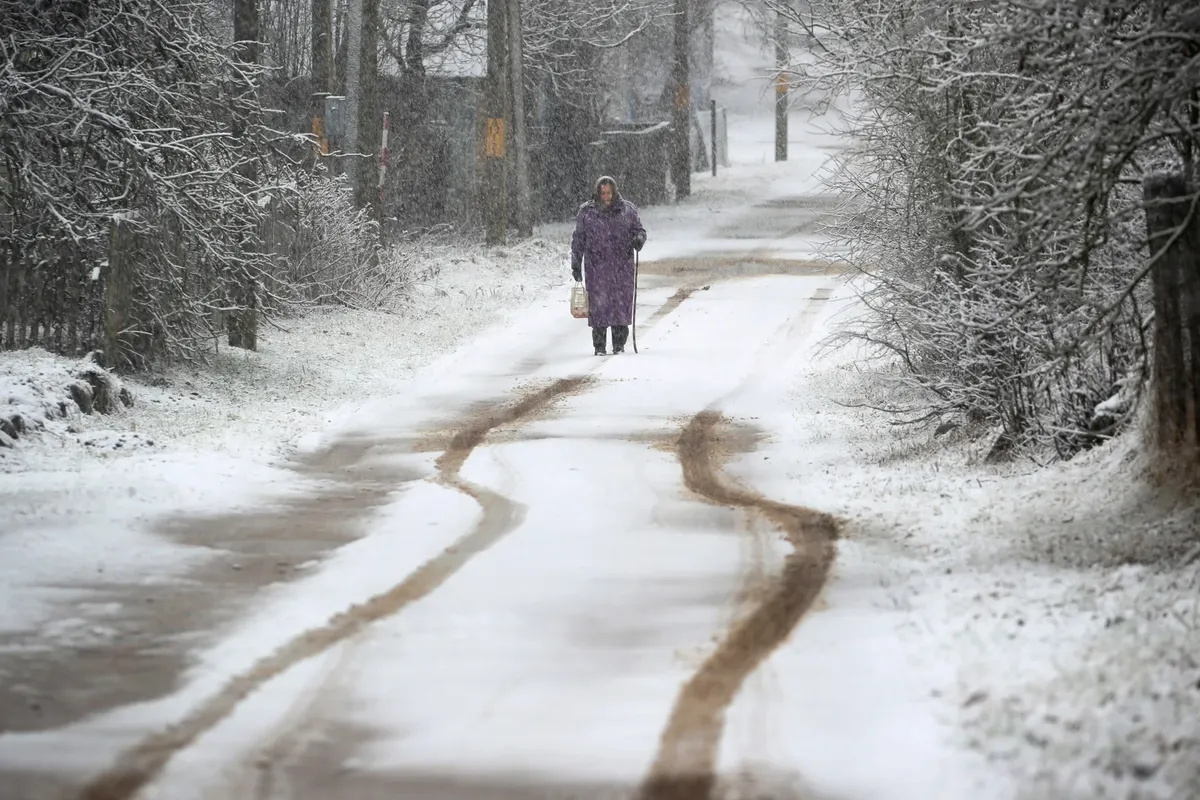
Galina Prokopyevna automatically turns the page of the psalter. The news beat is heard from an invisible TV, the announcer says hello. Voices are heard in the far part of the house. Some people look into the room, leave, someone outside the door checks the time and asks when the car will arrive.
“Yes, soon,” Galina Prokopyevna answers on an exhale. And he looks out the window on which the fly is sitting. And behind which a branch of an apple tree with several soft pink apples sways in the wind. For some reason I really want to go out, pick and bite this apple. Or shake the branch so that the apples fall, and then you will definitely find something sweet and sweet. For some reason, I think that Galina Prokopyevna would definitely not refuse an apple. If, for example, I cut it for her. Or baked it like my grandmother did: cut off the top, scrape out the core, and add honey. You put it in the microwave and bake it.
I look around. There is definitely no microwave in this room. Is she in the house?
“Yes, soon,” says Galina Prokopyevna and closes the psalter. And then he says:
- What am I talking about?
- About life...
— It’s a long time to talk about life. I forgot again, how are you?
- Kate.
- I’ll tell you, Katya, in general terms about us, about the generation that built your country, which knew how to rejoice, and not just consume. Just imagine: I went to first grade barefoot and had nothing to wear. And the whole month of September went by barefoot, and the teacher sat me on the first desk, and I was so happy! I looked at her like that with adoration. Her name was Nina Vasilievna, I still remember and remember the verse she read to us:
*In a wide open space
Before dawn
Scarlet dawns have risen
Over the native country.*
*More and more beautiful every year
Dear countries...
Better than our Motherland
Not in the world, friends!*
And so my heart skipped a beat, almost to the point of tears, when she said in her ringing voice: there is no better Motherland in the world, friends!
She was so beautiful at that moment, and I also wanted to become like her! Become a teacher, tell children about the Motherland, carry your faith, your dream! But at the technical school I still followed the Komsomol line and headed a cell, but at the institute they called me into the party, I didn’t manage to work at school, it didn’t come to this, there were other challenges! And the responsibility is different, the party, wow, it was such a test, such an advance was given to you, only the most there, the most, how can I explain it to you, responsible, impeccable people were taken, oh, how I was afraid of not measuring up... but am I worthy? Now I already understand: yes, everything worked out well, it’s worthy, it justified, it didn’t let me down...
But my sister has been a teacher all her life... Her, Tanya’s, personal life did not work out, and she gave all of herself to the children. Although as a child she was the most prominent in the family. Mother always said this: “You, Gal, will probably stay behind to take care of the housework, but Tanka is a prominent girl, she won’t stay on her neck.” But you see how?.. I got married while still in technical school, I was lucky: my friend and I came to the club, and my Fyodor played the harmonica there, and he played it well! Oh... So we met. He was a tractor driver, he could use any equipment, he worked for more than 20 years at the DRSU, not sparing himself. Nine years since he died, we did not live to see the golden wedding one month.
- Did you love him?
- We lived well. He wasn't a drinker. Not like others. Didn't hit me, no, no. Didn't walk. He carried money into the house, he won’t say a word against him, he’s a normal husband, but what else do you need? We lived normally, well, I, one might say, miss it. But I don’t feel particularly bored, I’m already used to it: I’m always with people, always in the midst of people. Just one night, at home, alone. Previously, Genka used to come over for the night. And now here's what...
Galina Prokopyevna pats the psalter with her hand. With visible effort, he raises his hand from the psalter, lifts it higher, freezes, and then carefully strokes the coffin, as if checking whether it is possible to splinter on it. The coffin, near which we are sitting, but which we try not to look into. In it, very white, covered with a blanket below the waist, lies her 23-year-old grandson Gennady. Of course, you won’t get your hands splintered on the coffin: it is lined with velvet. At the top, near Gennady’s head, there is white pleating. And his hair is black. At the first moment it even seemed to me that it was Gennady who had a kokoshnik on his head. But the light fell just like that.
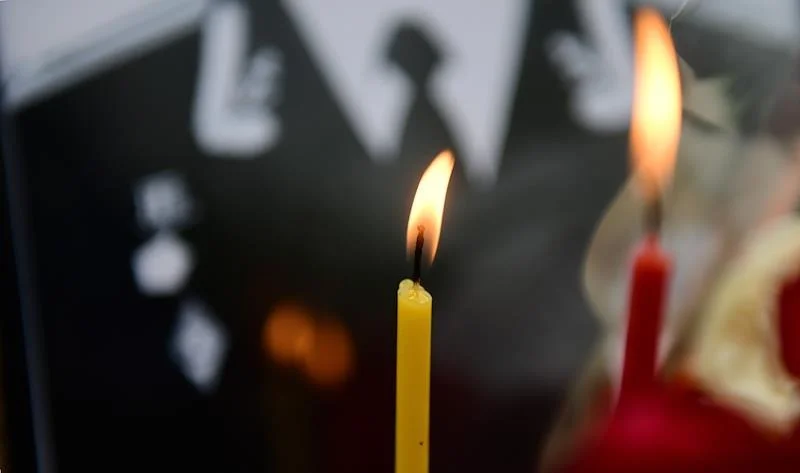
Outside the window, a train rumbles past. The glass shakes and rattles, frightening the silent fly. To get to the station—I got off at it early this morning and will get back on around midnight—it’s less than half an hour’s walk from Galina Prokopyevna’s house. The train stops here for one minute: a long steep staircase is thrown out of the carriage, and the traveler must have time to throw in his suitcase, pull himself up by the handrails, and climb into the carriage. Those who get off the train often first throw their suitcases onto the embankment and then get down themselves, thus saving time and effort. But the train that is now rumbling outside the window does not stop: it is passing. Apparently, commercial, long. It goes and roars. And its roar drowns out the words of Galina Prokopyevna.
When the train passes I hear:
-...and our Tanka is so beautiful because she’s post-war. She was always plump, like a bun. I didn’t like her as a child, because if not at school, then Tanya is always on me: the kids will run to the river to swim, and I’ll run, holding her hand. She will run down the hill, but up the hill, do whatever you want, she will roar, sit down, and won’t go. But I don’t have the strength to drag her. I had to wash in the bathhouse. She was still a child, but she had to keep an eye on a smaller child - keep an eye out! But that was already a happy post-war time... Although, if Tanka needed to be reproached with something, we always told her: you didn’t see the war, where are you! In comparison with her, we considered ourselves big-time, experienced. But what should I remember there? I was a year old when the war began. From this beginning I won’t be able to remember anything for you; I don’t have any specific memories about this. Just one segment of the war is well remembered: evacuees from Karelia lived with us; a family came here during the war: mother, son and daughter. She was little, about a year old, maybe four. My son's name was Misha, he was older than me. And this is the picture before my eyes: they are sitting in this very room with a torch, and I help them hold it, because back then there was no kerosene. Here they shined like a torch. It was a wooden trough, they poured water into it, stuck a piece of iron in it, and a splinter into the piece of iron. When it was burning, the coals fell into the water and hissed, this is my memory of the war.
Do you need this?
I also remember that it was cold all the time. Now tell me - “war”, I will say - cold and dark. It was as if spring had never come those years. Could this be? And the memory, you see, retained this.
I remember very well how my father came home from the war. November 6, 1945. My brother and I sat on the stove with our legs crossed: again, it was cold, and we were without shoes. And then there’s a knock on the door. Scary! It was not customary for us to knock then: they came in, said hello, and that was it. We're heading for the pipe. And my mother was sewing, or something, by the stove, I don’t remember, and she froze, raised her head, and became all tense. “Open,” he says. And then a man comes in, all black clothes, black hat, all black. We look, mom has given up sewing and runs to hug him, it means he’s a good man if mom hugs him. And then he lowered us from the stove, me on one knee, my brother on the other... He said: that’s it, children, the war is over, and I am your father. Right here, not far from us, there was a barnyard, a cowshed, milkmaids, women from the village came running, some were crying, some were crying, because some of their husbands had died, some of their sons had died, everyone began to envy my mother, but before they pitied us that our mother was without a father and there was such poverty and heaviness. And then envy began to set in, you know?
The women at that time were fiercely, fiercely jealous, terribly hungry for the man...
We were always hungry.
But then - especially.
How did the father survive? He served in the Baltic, on a mine boat, which means he carried mines. And this boat was hit by a shell, the boat was torn apart, and everyone who was there ended up in the water, my father was shell-shocked. He woke up, he said, and there were bodies floating around, some missing a leg, some missing an arm. One woman there, she says, she was there as a nurse, her stomach was torn, but she was still alive, screaming. Well, how can you help her? War.
War.
You understand, war, what it’s like!
The father and other survivors—there weren’t many of them there, just a few people—were picked up by other boats. In the hospital, one lonely woman followed him in and out. I don’t know exactly how it was there, but many years after that one person wrote to me that he was my father’s son, that is, my brother. But I didn't answer. You never know what was there, it doesn’t concern us. Here, too, there were rumors in the village that the father would feel sorry for this old woman, then for the other, but the mother did not raise an eyebrow: it’s mine. And that times are hard, everyone understands, and so it was. His mother gave him leniency on this issue.
And the father was very handsome. He served as a sailor in the Baltic and came wearing black bell-bottoms. And I remember, you know, how he walks around in these pants, and I hold on to the leg of my pants. And such happiness overcomes me: father! Not every person in my generation had a father, you need to understand this!
Galina Prokopyevna looks at me and smiles.
Somewhere in the depths of her house, strangers are bustling and stomping around, a tireless television monotonously cuts time between news broadcasts and advertising blocks. Galina Prokopyevna does not hear or see this.
She does not see the room in which she is sitting, nor the fly, which again stuck to the window and calmed down, nor the coffin of her grandson Gennady, who died in Kleshcheevka in August 2023. Nobody told Galina Prokopyevna the exact date of his death, because it doesn’t exist. According to his colleagues, Gennady was blown up by a mine on August 4, but was still alive for some time and, having tied his leg above the thigh with a tourniquet, waited for evacuation in the forest, where he died from blood loss.
The August sun frantically burns through the glass.
It's stuffy.
I want to get up, open the window, let in fresh air and finally let the fly out.
But I'm afraid this will distract Galina Prokopyevna and she will stop talking to me. Or he will forget who I am again, and everything will have to start all over again.
Galina Prokopyevna does not look at the coffin or at her grandson.
Pictures of her past life appear before her eyes:
“And after the war, a completely terrible famine came, my brother and I in the spring went to the collective farm field to collect frozen potatoes: they spent the winter, frozen there, in the ground, since that war year, and when the snow melted, they became visible. And we go and collect these potatoes, mom washes them, puts them in the oven in cast iron, such a big cast iron, the potatoes will be boiled, she will peel the skins, crush them…. And he sighs. Because if only you could pour milk over these potatoes. But there’s no milk!
— Didn’t you have a cow?
- There was a cow, but we handed over all the milk to the state, and they gave us the return, this is white water that flows down when the sour cream is separated from the milk. The taste of the skim milk is terrible, I’ll remember it for the rest of my life. But my mother salted this mixture, added more water... She sighed again - I should have added more flour! But there is no flour. She mixed this water with potatoes and pushed dried clover into it, rolled it into koloboks, and into the oven. And we’re all hanging around, waiting to see if mom will get these koloboks soon, I’m hungry to eat, I’m hungry to eat, you’re a child, you’re growing up! And there’s nothing to eat.
There's nothing to eat.
Hunger.
Do you understand what hunger is?
Where are you going? And don't. It's a different time now, different. And those koloboks seemed so tasty to me... And I still remember that taste, the way I talk, it seems to me, I still remember that taste. Let's eat these koloboks, that's all. I was hungry, very hungry.
- How can you be hungry when you have your own cow?
-Are you stupid, or what? I’m telling you, they gave the milk to the state. And milk and eggs. And the meat... you can’t keep the skin either, hand it over too. This was all a tax from the state. They gave away food and money also had to be added.
- You were like serfs, it turns out?
- Why serfs? Free. It was simply necessary to help the state, this was the duty of all people in the country then, so that the country could get up from its knees, so that it would rise up.
To increase efficiency, we were transferred from a state farm to a collective farm, this is a different system. This is more convenient for the state: there is money on the state farm, there are workdays on the collective farm, there is no vacation on the state farm. You work a day, they give you a workday. And for this workday, one year, it turned out like that - one kopeck per workday. So it turns out that even if every day is a workday, 366 days is 366 kopecks. How many rubles? 3 rubles? What can these 3 rubles buy for a family? But everyone lived like this, who would be indignant? We had to be patient, and we understood it and endured it.
It was necessary to restore the economy after the war, but we didn’t complain. We, you understand, were brought up this way or something, there was such an attitude that we need to help our native state, improve the economy, the state needs this, the state needs this. And no one was indignant. They handed over everything, carried everything, everything. To this day, if they tell me: “That’s what I need,” I don’t have that, I want it, I don’t want it, I won’t, I need it, so I need it.
- Is this good or bad?
- This is called patriotism, haven’t you heard of it? I think this is good. This is your duty to the Motherland, to the state. And this disciplines a person, and this is good.
We never used anything at home. My father is a front-line soldier, a hero, he had orders all over his chest, there were even outlandish ones, for service in the Pacific Ocean, when after the war they fought against Japan and finished off the allies of our enemy. That’s why he only returned in November, we didn’t even hope, well, maybe only his mother...
His mother was always waiting for him.
This is our female lot: to wait, to endure.
It is written in our nature to be strong and strong, because otherwise who will withstand it all. That’s how the mother deserved her happiness, it turns out: the father came and returned. We only had three houses in the entire village where the men returned. And to have all his limbs healthy - only our father was like that. Mother was lucky, she never tired of thanking her for it.
Father, I’m telling you, he didn’t use anything, not any of his past exploits, he in all his glory, with all the orders, only came out on May 9: he would sit on a bench with the chairman, he was also a front-line soldier, he had no leg, they would drink vodka, sniff bread. And they’re sitting there, squinting in the sun, silent. We had no privileges, no rations. Now, through the village council, we are encouraging all veterans who were born before 1932 for Victory Day: each with a food package worth about seven hundred rubles. Understood? And we congratulate you on your birthdays, and under the “Last Path” program we allocate money from the village council, twelve thousand - this goes to the morgue, and from the morgue, and for household expenses.
Galina Prokopyevna pats the psalter with her hand, calling it to witness the expenses. I want to ask Galina Prokopyevna why they collect money for the elderly in the village, but I don’t have time.
A man enters the room and places a coffin lid and two wreaths against the wall. On one it is written: “To my beloved son and grandson”, on the other - “Bowing our heads, we give thanks for the peaceful sky.”
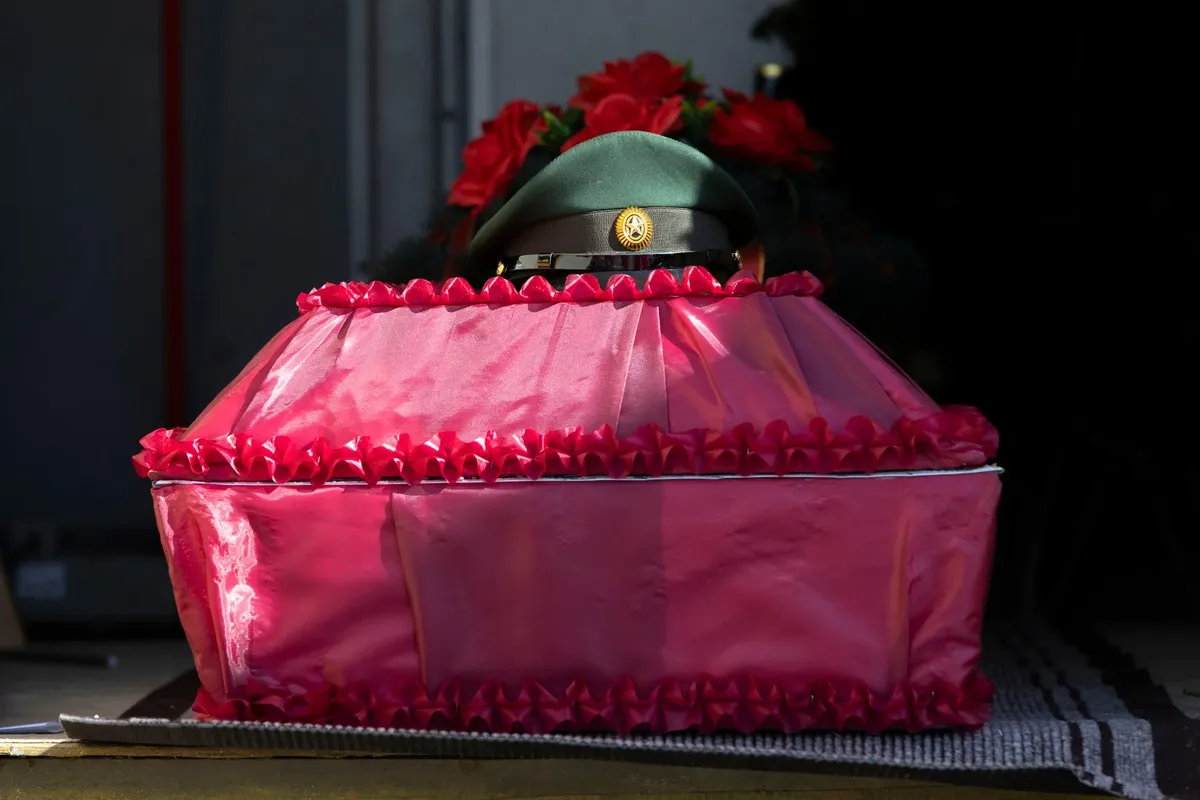
Galina Prokopyevna explains: “They sent this from the military registration and enlistment office in the city. They all pay for the funeral and the administration, we don’t spend anything, we are so grateful to them for this, well done! And wreaths too... And twenty thousand were given for the funeral. There was a form in the social security service; you had to choose how to write: to your dear one or to your beloved one. I somehow hesitated. She called his mother and didn’t pick up. She works a lot, she’s very busy, she’s in a leadership position at the Police School, with the rank of major, you know? It’s a pride to raise such a daughter, yes... So what am I talking about?
I also don’t understand where we lost the thread of the conversation and I ask:
- Are you happy?
“I’m a very, very happy person,” Galina Prokopyevna answers.
- What about Gena?
- And Gena is now forever a pain, of course. But what can you do, it's a duty. The duty of every person. Vitalka will grow up and take revenge for Gena.
- Is this your brother?
- Brother, brother, who is smaller, my second grandson from my daughter.
- How old is he now?
— Seventeen in October. He will grow up, go, like a brother, to defend the Motherland and take revenge on all our enemies. Yes, son? - Galina Prokopyevna asks the coffin and suddenly, letting go of the psalter, strokes her dead grandson’s head with both of her yellow hands. Speaks:
“It’s such a duty to defend one’s fatherland from enemies, it’s written for all of us.” It has always been like this - everyone attacked us, our Russia, and we defended ourselves. The men walked forward, and we women stayed here and guarded, guarded, cried our tears for them, but moved life forward and took care of the rear, this is all for the future... And we must bear this burden and be proud.
- What to be proud of?
— Russia, don’t you understand?
- No.
— Do you love Russia? This is your homeland, you must love. Where you were born is where you are. And to live for Russia, to die for it, for your beloved Fatherland - this is the meaning and purpose of the life of every Russian person. Do you understand this? Don't you feel it? Don't you feel that way?
I’ll tell you now: we had an incident in childhood with my friend alone. We finished the fourth grade and were preparing for the fifth. And before school started, Katya, what’s your name, and I went to graze the horses: there was such a corral in the forest, their mother fed them, and we grazed them. And around us there is passion like so many wolves, and they are not fools: while day and mother are with us, they are afraid, but like night they pull themselves up, howl and breathe, they breathe, Lord, how loudly! And so Katya and I once, out of fear, climbed onto a bird cherry tree and sang songs. The tree is thin, swaying under me, and our horses are huddling against it: the foals have been pushed into the middle, and the elders are around. And the wolves are approaching. And we screamed songs as loud as we could, and the foals wailed and babbled, but became silent... And my heart sank: well, how are the wolves sporting the herd now...
Fear of God.
And then you know what happened? The adult horses stood up at once: their heads in the center and their hindquarters out, they kicked once, kicked again, and the wolves ran away!
They howled and ran away.
Wow!
Our horses have recaptured their foals!
And Katka and I, one on one bird cherry tree, the other on another, were trembling, screaming, shouting with joy, of course. That's how it is now...
- What?
— Wolves surround Russia. And we must serve our sovereign again, as we have served many times. Do you know what kind of dream I have? I want to see Vladimir Vladimirovich Putin before I die. That’s how I like him: smart, smart, he cares so much about us, I support him, I voted for him and would vote again if there were elections now. I believe that he is pursuing the right policy, and so far I see no alternative to him. When Medvedev replaced him, I was indignant. Because Medvedev is not a president. He never looked like a president, he doesn’t look like a man, you understand me! We were unlucky before Putin: either Gorbachev is this marked one, or Yeltsin is a drunken fool, half of our villages like that died in the 90s from acetone, and Putin is as different as heaven from earth from Yeltsin.
He is always smart, always neat. He clearly expresses his thoughts and speaks clearly, so I would like to shake his hand and thank him. When I agreed to talk to you, I thought maybe it would work through you, no?
Galina Prokopyevna touches my hand and looks into my eyes, as if I could really solve the problem of meeting with Putin.
I'm looking for a fly to distract myself. I don't know how to argue with an 84-year-old woman at her grandson's coffin. I ask:
— Why do you think Gena died?
- So such is fate. He fulfilled his duty. He died for us, for our future life.
— When he was mobilized, could you say “no”?
- Who should I tell?
- The military registration and enlistment office, the state.
- To the state? But you can’t say “no” to the state. If everyone argues with the state, what will happen? Chaos! But I don't want chaos. I lived a good, worthy life. I have something to be proud of. I am an honorary citizen of the village, by the way. They gave me a ribbon last year. It's there, hanging behind the TV, I'll show you. There is no such law that if I want, I’ll let him go, but if I don’t want, I won’t let him go to defend the Motherland. Who will protect us if everyone discusses government decisions in their own way?
- And from whom to protect?
- From whom?
From whom?
From the one from whom they say.
Such are the things. Why are you provoking me? There is no need to provoke me.
The wind, having cleared up, opens the window with a ringing sound, blowing away the fly, bringing at least some coolness into the room.
- Will there be a thunderstorm? - Galina Prokopyevna asks either me or the wind.
A guy with red cheeks, sweating from efforts, looks into the room:
- Prokopyevna, come on, it’s time. I wish I could make it before it rains.
The coffin, sitting next to which we talked with Galina Prokopyevna, is surrounded by women. Everyone stands awkwardly. Someone is sobbing. Galina Prokopyevna slaps her knees and stands up easily, picking up the psalter. Standing over the coffin, he says:
- It's time, Genochka! Goodbye.
And covering his mouth with his hand, he cries.
Men enter the room. Dry dirt falls from their sneakers onto the wooden floor. Wreaths are carried in front of the coffin with Gennady.
You can walk to the cemetery in about fifteen minutes. But the administration provided a bus. Everyone loads up and leaves, leaving an unturned TV in the house. There begins a children's program in which the presenter quickly asks the children intellectual questions.
What quantity was measured in buckets in Rus'?
What is the capital of the Central African Republic?
Which of these animals cannot stick out its tongue from its mouth: lion, rhinoceros, crocodile, python….
Really, which one?
It begins to rain in small quiet drops.
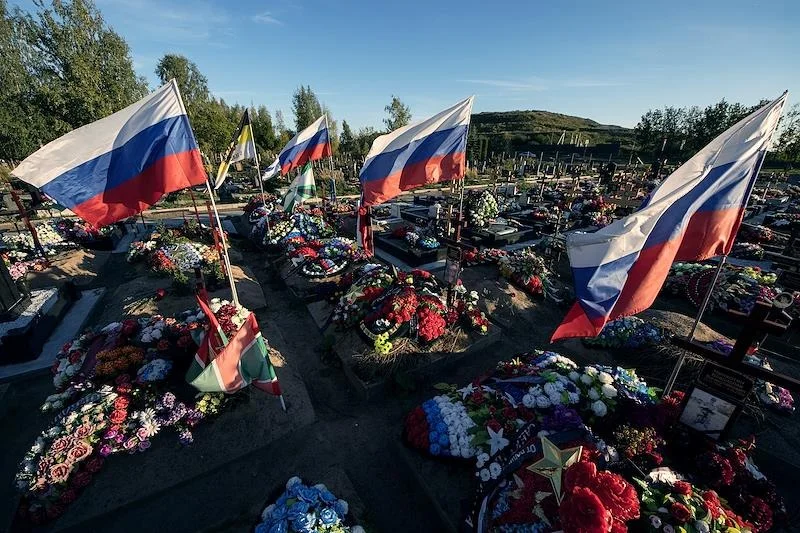
There is not enough room for me on the bus, and I walk to a hillock, under which there is a river, on which there is a cemetery.
A rented yellow bus brings life to the gray landscape. People sit in it and don’t leave. They are waiting for Galina Prokopyevna to finish talking on the phone.
She energetically walks back and forth in front of the bus, flapping her arms like wings. The conversation is finally over.
Galina Prokopyevna gives the bus driver a sign, everyone gets out, Gena is taken out of the rectangular compartment at the back of the bus, the men put the coffin with him inside on their shoulders. When everything is ready, a car with the sign “Police” drives up to the cemetery, in the front seat is a woman in a black headscarf. A priest comes out from the back. The woman hastily kisses Galina Prokopyevna past her cheek, somewhere in her ear: “Mom, I barely escaped, I’m up to my neck in work. Well, sorry, sorry. Well, let's go, let's go."
Went.
Went.
“Come on, let’s go,” echoes through the cemetery.
Everyone is coming.
With the arrival of Gennady’s mother, everything somehow accelerated and, so to speak, was systematized: between the blue and black fences, people walk in an organized manner to the center of the cemetery, where the brown hole for the coffin is already ready.
Gennady will be buried next to his grandfather, whose portrait in the oval is looking at our procession with obvious interest.
-Where is father? — I ask the tear-stained woman in a crimson sweater next to me.
- Who knows? I went to the North on shifts to earn money... And I didn’t return, and Svetka and the boys were left alone... Woe.
Sigh.
Sigh.
"Such fate."
Sigh.
A military man spoke quickly at the coffin, hugged Gennady’s mother and handed her something small and rectangular. She stood until the end at the grave with this box in her hands, not knowing where to put it.
Then the director of the school where Gennady studied spoke and praised him for his success in mathematics. The priest was the last to sing.
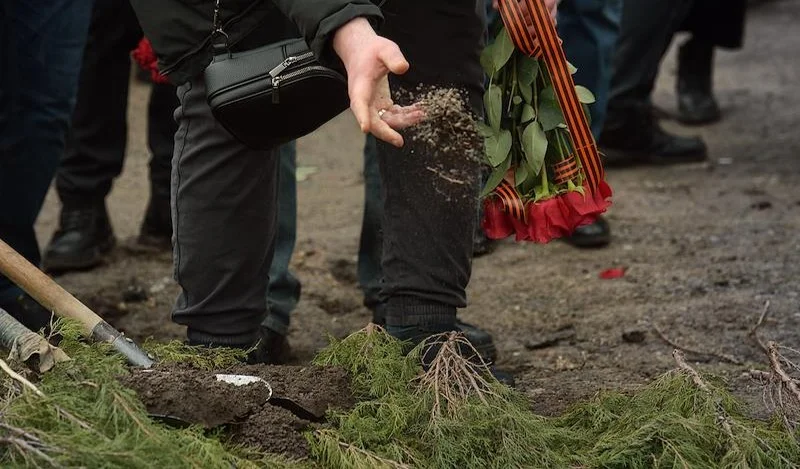
When they began to throw earth on the coffin, the rain intensified.
“It’s the Lord who is crying for our Gene,” a woman in a crimson jacket told me.
I was returning home in the Police car: there was a place between Gena’s mother and the priest, Galina Prokopyevna was in front.
We arrived in silence.
Already at the house the priest asked:
—Whose correspondent are you?
— It would probably be more correct to say that it’s no one’s.
“It doesn’t happen like that,” the priest said confidently, and we entered the house.
There was a cozy smell of fresh baked goods, everyone was bustling about, walking from the kitchen to the room and back. Somewhere in the back room an invisible television was playing the evening news.
“It’s seven o’clock,” the priest sighed, “how time flies.”
Women, the likes of whom were not present in the cemetery, were fussing about, setting the table, curved like a “P” along the walls in the room where until recently only Galina Prokopyevna and I were sitting at Gena’s coffin.
Galina Prokopyevna brought her daughter into the room by the arm and sat her down on a chair next to a pile of rubbish pressed against the wall with a “Health” disk.
- Sit here for now, we can manage without you. Rest.
During the funeral, Galina Prokopyevna became haggard, tired and as if she had aged.
With inattentive eyes she watches the strangers running her house.
I sit down next to you. I nod at the woman in black:
- Do you have one daughter?
“No, there is another one, but with that one we... Oh, I don’t want to, I don’t want to talk about it,” she waves her hand at me, as if I were the same fly that haunted us in the morning, “I now regret it, it happens that I never gave birth again.” The doctors said it was dangerous: I had three abortions, two cesareans, and I was always on my feet, in charge, you understand. And now I regret it... There should be more children, so that instead of us they stay here, so that we take root here, to spite our enemies.
— Do you believe in enemies?
- Why should I believe in them? I know for sure. And the president spoke, and they say in the news, and now we have our own, personal grief: our grandson Gennady died defending us from enemies, from NATO advancing on us, of which we are all... to whom rich and strong Russia is at the throat, for which our revival, our prosperity, is death. And people like Gennady, my grandson, laid down their heads, defending our peace and the peaceful sky above us.
- What if it turns out that this is not so?
-Who are you to doubt my words?
I don't answer. It gets very quiet. And even the TV does not fill this resulting silence.
Galina Prokopyevna runs her hands over her knees: the holds on her powerful hands rustle along her skirt.
Galina Prokopyevna looks me in the eye and says:
- Come on, get out of here. Who are you to doubt? I laid down my life, I lived such a life, people respect me, my father is a veteran, my grandson died at the front, and she... and you...
Why are you doing these provocations? Go away, go away, at such a moment... I believed you in vain, everyone told me, there is no need to let strangers into the house at such a moment, this is all machinations, a provocation. Go away, I don't want to see you. *******! Enough. We talked enough. You won't understand anything.
I push my way between the people, of whom there are now many in Galina Prokopyevna’s house, looking for a bag and sneakers, I want to leave quickly and unnoticed. In the hallway I run into Gennady’s mother.
“As you go, remember our Gena... the innocently murdered servant of God Gennady,” she says, holding out a full bag of pies.
Adds: this is with cabbage.
With a package in my hands, I sit on a station bench and wait for the train. The lopsided moon rises above the forest and climbs to the very zenith of the sky.
The train is coming.
The only luggage I have is pies, and it’s easy for me to climb the stairs. I sit down on the shelf in my compartment. And I put pies on the table.
“Lord, they smell so delicious,” says my travel companion, “like grandma’s.” And I have wine... Homemade. From near Novorossiysk. I’m taking my daughter and son-in-law to Moscow. Don't want to? Can we have a little drink together and snack on your pies, like in childhood?
The train is rushing.
The wheels are knocking.
They knock.
They knock.
Lanterns flicker.
They knock.
Bridge over the river.
They knock.
Clearing.
They knock.
Poorly lit village.
Moon.
I eat pies with cabbage in memory of Gennady and drink sweet and very boozy homemade wine from near Novorossiysk. The fellow traveler says.
This material was published in the fifteenth issue of Novaya Gazeta. Magazine". You can buy it in the online store of our partners.