
Translated material
Timothy Gorgeous
On January 15, the film by Joosh Safdie, already awarded the Golden Globe for Best Actor in a Comedy Role, will be released.

Still from the film “Marty the Magnificent”
When talking about an exciting conversation with an interlocutor, they compare it to playing tennis. The film is an unpredictable, explosive game, a sensual odyssey. Director Jush Safdie flies and hurries in a slalom between the hackneyed clichés of sports dramas: “lost, lost and by the end - won!” It seems that “Marty is Magnificent” is about something else altogether.
New York, 1952. A 24-hour scammer, slick 23-year-old Marty Mauser ( Timothée Chalamet ) is determined to break out of the family business - a shoe store. From the captivity of a life he did not choose. Although only he knows how to sell anything, deceive a customer by handing her an expensive pair, and fool his uncle (Larry Ratso Sloman), the owner of the store, around his finger. Smuggle married Rachel (Odessa A'zion), who is in love with him like a cat, into the back room for risky sex between boxes of shoes. However, the ambitious Jewish scoundrel from the Lower East Side is talented as hell - he plays table tennis masterfully. He is obsessed with a fixed idea: to become a champion, the first US racket in a sport that is still gaining popularity, to demonstrate that he, Marty, is the best. Table tennis is his religion, the strength, the spring that can take him to Olympus. You just need to get money to participate in international tournaments. A lot of money. How?
Anyone. Lie, steal, seduce, gamble, participate in criminal adventures, manipulate others, swallow public humiliation, cheat, manipulate. Participate in entertainment shows - a circus with seals, dozens of balls... He has a mission - a willingness to go to the end.
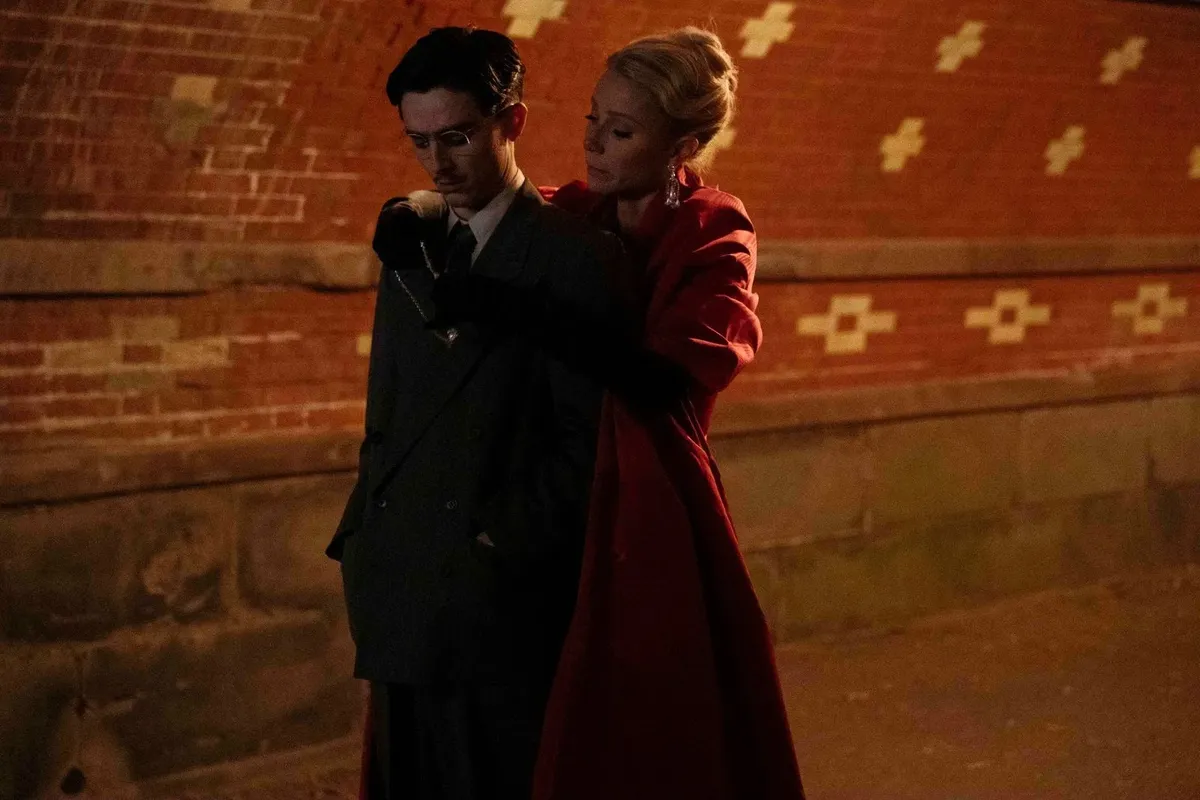
He is ready to pay any price. Finally, to convince the skeptics that pathetic ping pong is a real sport. Marty patents his own brand of orange balls, called Marty Supreme. He gets money by hook or by crook to go to the UK for the table tennis championship at Wembley Stadium. And then aim for a rematch in distant Japan. And take the help of a rival, the smug, cynical husband of millionaire star Milton Rockwell (in this role the amazing Kevin O'Leary, businessman, TV presenter, participant in the show Shark Tank). People like him will become the faces of the victorious “realpolitik” in America.
Marty the Great is Safdie's best film. The recognizable directorial style of Josh Safdie (with his brother Benjamin Safdie they shot the loud crime thrillers “Good Time” and “Uncut Gems”) - overwhelming emotion, driving rhythm. He moves the action from the poor neighborhoods of New York to a luxurious suite at the Ritz in London, to an open stage in post-war Tokyo, traumatized by defeat.
The story is immersed in a gloomy coffee-emerald with splashes of warm light of retro fifties, shrouded in the music of Daniel Lopatin, who creates complex soundscapes.
In the darkness of the hall, the tennis table is lit like a stage. And every match is played out like a performance. In the middle of the film, the action clearly sags, but the ending makes up for all the “temporary difficulties”.
It is curious that a movie about table tennis, which is not the most winning game for the screen, seems more energetic and inventive than films about dynamic sports like football or figure skating. Because Safdie is not filming about sports, this is the same story of a loser - as in “Uncut Diamonds” - who breaks, tears the line of fate drawn for him. All the films of the Safdie brothers are about people who, willingly or unwillingly, become balls on the “tennis table”, intending to become players. And behind the story of the talented rogue prodigy, the complex process of the post-war transformation of a disparate country into a world superpower obviously “looms,” and the engine of development is the national pride of individual characters, the values of capitalism (not only competition, but individual initiative) and the madness of the brave, not constrained by the slightest self-doubt.
The charismatic Chalamet plays a narcissistic, ambitious loser fixated on a super idea. A hero with negative charm.
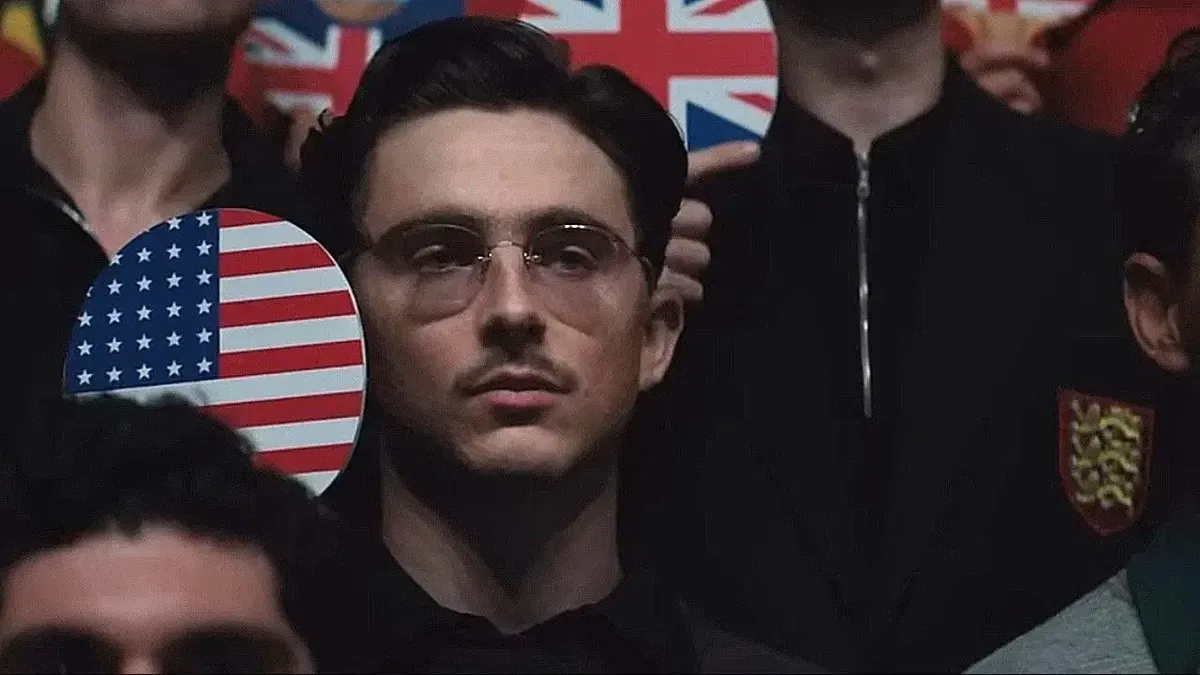
Character is like a boiling mixture: ingenuity with inexperience, pride, youthful narcissism and readiness for any sacrifice, even public humiliation. His eyes glow under his dark unibrow, freckles and pockmarks do not detract from his charisma, explosive energy, fast speech, instant unpredictable reactions that bring him to the surface from the bottom of his failures.
He vitally needs a rematch with the Japanese champion Koto Endo (Koto Kawaguchi) - his complete opposite: cold-blooded discipline and concentration, horizontal lightning movements of a ghost racket, unstoppable serves. Chalamet, like his hero, was ready to do a lot for the role: he wore contact lenses from +10 to –10. He trained for months with table tennis expert Diego Schaaf, and by the time filming began he was practically a professional.
Marty has many predecessors in cinema. First of all, Howard Ratner, obsessed with "Snatch" and gambling genius of risky schemes ("Uncut Diamonds"); young Ferris Bueller - manipulator, hedonist and rebel; Jerry Maguire, drawn into the world of big money and intrigue; charming con artist Frank Abagnale from Catch Me If You Can. But we also see Marty's inner growth. In fact, the film is a dedication to the ambitious; its slogan could be Seneca’s testament “He who walks will master the road” (“Viam supervadet vadens”).
MORE ABOUT CINEMA
Larisa Malyukova runs a telegram channel about cinema and more. Subscribe here .