
Translated material
About the female non/priesthood
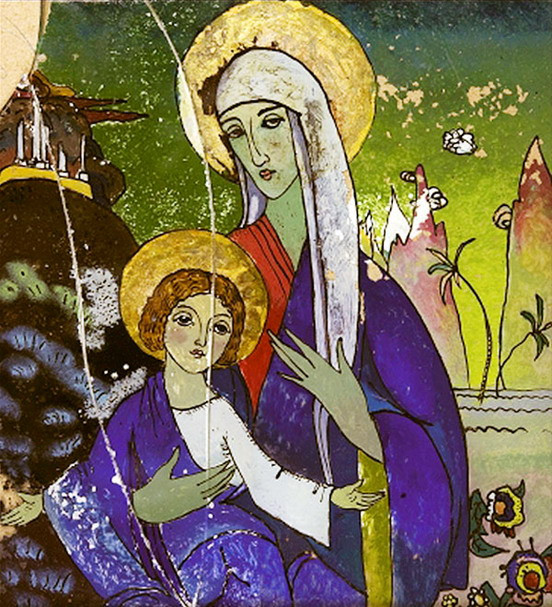
I would like to reflect on the female priesthood in the Orthodox Church and the issues that arise in this regard. Speaking about the problem of the female priesthood in Orthodoxy, we do not find many arguments against it. Basically, all the arguments were expressed by Metropolitan Callistus Ware, which can be found in the collection of articles “The Ordination of Women in the Orthodox Church” (authors Callistus (Ware), Ber-Sigel Elizabeth). In turn, Callistus Ware repeats the arguments of the papal declaration “Inter Insigniores” (Declaration on the Admission of Women to the Priesthood of 1976).
I will briefly recall these arguments, their strengths and weaknesses. I will add my argument and, most importantly, I will try to show the range of problems that arise in connection with the ordination of women, which are usually not paid attention to.
Main Arguments Against Women's Priesthood
Biblical text
The most important and most convincing argument that all fundamentalists give is the biblical texts themselves, which prohibit a woman from teaching or preaching in church, for example: “it is indecent for a woman to speak in church” (1 Corinthians 14:35) or “but I do not allow a woman to teach, nor to have authority over her husband, but to be silent” (1 Timothy 2:12).
These are the most iron-clad arguments, but such a literal understanding of biblical texts has its problems, as, in fact, does all biblical literalism. If we literally interpret these scriptures about women, why don't we so literally interpret the passages about “if your eye causes you to sin, pluck it out and throw it away from you: it is better for you to enter into life with one eye, than with two eyes to be cast into hell” (Matthew 18:9). And the places where it says to give away your property and give to the poor, we almost always interpret allegorically; even the greatest literalist sees only metaphors in them. I will not touch on other problems associated with the literal interpretation of Scripture. This selective interpretation suggests that literalism is not a reasonable solution here.
Fortunately, both Catholics and Orthodox Christians understood these problems. Therefore, in the papal declaration and among the arguments of Metropolitan. There are no references to these quotes.
Argument from tradition
The next argument, which can hardly be called an argument at all, is a reference to tradition. Simply put, it can be described as follows: “this has not happened before and will not happen now.” However, previously there was a lot that was not in church practice that has now appeared.
The "election of male apostles" argument
This argument is that Christ chose only men as apostles. There were women around Him, but He chose men, and this means that only men can be the heirs of the apostles (that is, bishops and priests). This is a simple version of the argument. More complex, which was voiced by Rev. Thomas Hopko, developing the teaching of theologian Pavel Evdokimov, is as follows. Christ chose men because there is a division of the sexes, and each sex has its own supposedly “natural” function: the man is the leader and head, and the woman is always the helper of the man, although, undoubtedly, she is endowed with many great gifts, etc. These theologians favor the archetypal yin-yang binary opposition of male and female, but Christian monistic rationalism is not an ally of such views.
As can be seen with the naked eye, such essentialism of masculine and feminine is directly determined by the patriarchal structure of ancient society. The patriarchal culture in which the Bible was written simply could not describe a woman in any other way. Christ did not call women to be apostles simply because in that society women were in a position of neglect. The women's testimony was not accepted in court. Therefore, any testimony about the Messiah from a woman would be frivolous.
The same applies to the words of the ap. Paul about women in the church. He gives instructions that are consistent with the patriarchal culture of the time, so as not to shock others and to maintain order and approval from outsiders. Therefore, when reading all these scriptures, we must take into account the patriarchal cultural context.
To clarify this issue, one must ask: is patriarchy part of Revelation or is it just a cultural concomitant epiphenomenon? If we answer that patriarchy is not part of Revelation, which seems true to me, then the argument of the male apostles loses its meaning. It turns out that in another historical time, for example in a matriarchal culture, Jesus could have chosen women as apostles.
However, the choice of the apostles in itself (no matter what gender they are) does not tell us about the role of the priest and does not clarify why a woman cannot perform this function. The apostles are still not the priesthood that we have now.
At this point, having discovered the influence of patriarchy, we denounced “false essentialism” and doubted that a woman should always only be a helper to a man, but meanwhile there is a real essentialism, which says that there are still differences between the sexes at different levels and we need to understand at which of these levels lies the boundary that separates women from the priesthood. More on this below.
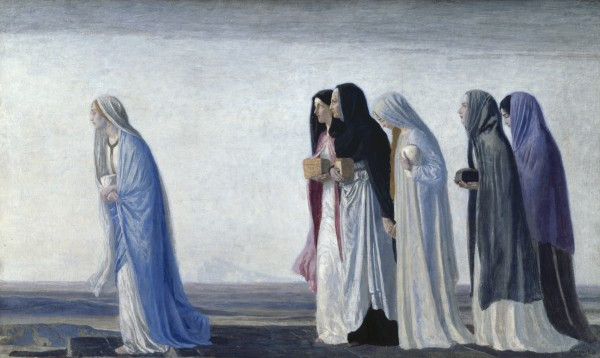
The argument is liturgical or "iconic"
The iconic argument is based on the role of the male priest in the structure of the liturgy.
The man is the icon of Christ in the liturgy. This argument is described in detail by Bishop Callistus. I will mention here the most key, in my opinion, points.
The Christian liturgy has a well-established structure and symbolism. The priest, in addition to performing the liturgy through action, also has a symbolic function. He is a symbol or icon of Christ in the space of liturgical action. In the symbolic acts of proskomedia and liturgy, he goes through all the stages of Golgotha and the resurrection. That is, this is a symbolization not of a metaphysical idea, but of real historical events: the beating of Christ, the interrogation, the piercing of the side with the spear of the centurion Longinus, etc. If these are real historical events, then the priest portraying Christ must correspond to the “realism” of the story and be a man, just as Jesus was a man. That is, gender is important here; it is included in the structure of the symbol itself.
If we speak in very simple language and compare it with cinema, we can say this: Cinderella should be played by a young girl, and not an old black old man. Of course, a progressive director can dress an old man up as Cinderella, but not a single child will believe it. This will be a false symbol that speaks only of the progressive, original position of the director.
The comparison with cinema or theater is not accidental. After all, liturgy is also a kind of theater or, better said, a mystery. This mystery has its own rules and the male priest plays a significant role there. Therefore, Christ must be played by a male priest.
This iconic argument is truly the “strongest” argument. However, it also has a weak point. It only works in modern liturgy. As we know, the form of the liturgy has changed over time, and may change in the future. Even now we have two approaches to understanding the symbolism of the liturgy: Orthodox - Calvary, sacrifice, shedding of blood, and Catholic - where the symbolism of the Last Supper with the breaking of bread prevails. In the future, the structure of the liturgy and its symbolism may change even more.
Argument from the Old Testament Priesthood
Some argue that the New Testament priesthood is derived from the Old Testament priesthood under the order of Aaron. Only men from the clan of Aaron could be priests in Israel. The Christian church has borrowed much from Old Testament practices, including the priesthood. Therefore, priests can only be men. However, this argument is a special case of patriarchy, that is, the cultural situation of that time.
In addition, app. Paul, in his letter to the Hebrews in chapters 7 and 8, describes in great detail why the Old Testament priesthood according to the order of Aaron is abolished and a new one according to the order of Melchizedek is introduced.
Christ is the only High Priest of the New Testament. The Epistle to the Hebrews clearly speaks about this: “So Christ did not appropriate to Himself the glory of being a high priest, but He who said to Him: “You are My Son, today I have begotten You”... being forever perfect, became for all those who obey Him the author of eternal salvation, having been called by God a High Priest after the order of Melchizedek” (Heb. 5:5-10) and further: “So, if perfection were achieved through the Levitical priesthood - for the law of the people is connected with it - then what other need would there be for another priest to rise up according to the order of Melchizedek, and not be called according to the order of Aaron? Because with the change of the priesthood there must be a change of the law.” (Hebrews 7:11–12)
It is obvious that despite the fact that the church borrowed a lot from the Old Testament tradition, the New Testament priesthood is not a continuation of the Old Testament priesthood. Meanwhile, the theme of the bloody sacrifice for sin does not disappear in the New Testament church, but concentrates on the one-time but eternal sacrifice of Christ, the Lamb of God. Therefore, the priesthood of the New Testament is necessarily associated with sacrifice and the shedding of blood, albeit symbolically. But we'll talk about this a little lower.
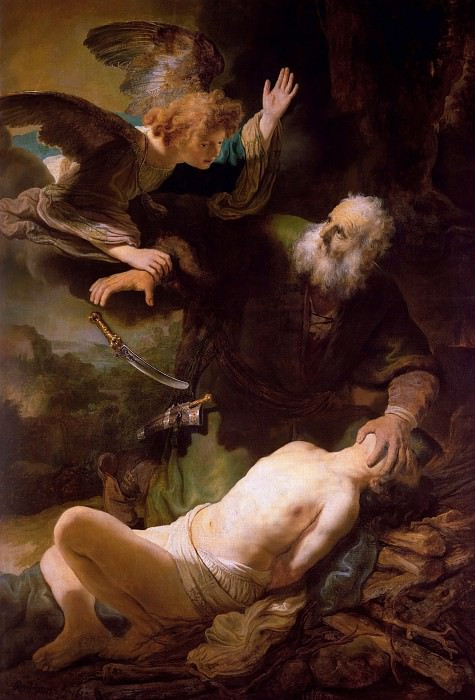
Mytho-archetypal argument
In addition to the above arguments, I offer my own. This argument really slows me down on the issue of accepting the female priesthood, so I can’t get past it. This is a general religious argument. It is based on general religious intuitions and deep archetypes.
Let's go back a little to the mythological binary opposition “male-female”, yin-yang. No matter how much we want to get away from essentialism, there are still differences between the masculine and feminine principles. The question is what? At what level should we look for them? We know the patriarchal solution: the male is power, leadership, and the female is help and submission. This understanding is characteristic of all dualistic mythologies, the Jungian description of anima and animus, and many religious models.
However, such a patriarchal interpretation of the differences between the masculine and feminine principles seems to me to be just a consequence, that is, this is not the beginning, not a vision of the cause, but the understanding by the patriarchal consciousness of some consequences and conclusions following from the cause, but the cause itself is hidden deeper. That is, the assertion of patriarchy that a woman is an eternal helper is not an initial statement, a self-evident dogma of patriarchy, but a kind of rational conclusion from another basis that is not accessible to us now or accessible, but not taken into account by us due to its archaism and savagery. That is, this is not self-evidence for the patriarchal consciousness, but its rational conclusion, a conclusion from a mythological syllogism in which one premise or predicate is not clear to us. I wondered how to get to him.
I'll say the same thing, but differently. The stereotype of a woman’s subordination, passivity and weakness is not a self-evident fact. For example, if you put me in the ring with a female boxer, then most likely I will lose. This means that the stereotype of a weak woman is not rooted in the physical superiority of men, but in some other reason. Which? The stereotype of a woman being “weak” is a second-level stereotype, but it has a deeper source, at the first level. We are looking for patient zero of female stereotyping.
Obvious differences between male and female are visible in the biology and physiology of the human body. However, genital differences in themselves do not form the spiritual basis for distinguishing between male and female. In addition, the mechanism of conception and the functionality of organs was very difficult to understand. Therefore, sexual function began to acquire mythology. In other words, the presence of a sexual organ does not create mythology. Only an organ in combination with its function can create mythology.
And besides, it must be a terrifying organ or a function terrifying in its mystery and ambiguity. For example, the organ of the nose with the function of smell can create a fairy tale, but it is not so terrifying and mysterious as to create a foundational myth. We don't have mythologies where the nose plays a cosmic role. But we have a lot of myths, almost all of them, where the genitals and conception have a cosmic creative function.
What is terrible and mysterious about the genitals and this entire sexual sphere? There is one fundamental complex that combines genitality, birth, desire and blood. This is a woman's menstrual blood. Menstruation is one of the most ambivalent, mysterious and powerful phenomena, endowed with enormous symbolic power. Its perception was almost universally dual, combining sacred horror (taboo) and sacred awe (gift).
For the mythological consciousness, it is a self-opening bleeding wound that self-heals and passes without a trace. In other words, it is a bloody wound without violence. Note that in the world of men, a wound is the result of violence or struggle. In the women's world, a wound is possible without violence, it appears on its own and heals itself, moreover, it is a prologue to a new life. This is a truly terrifying and mysterious process, especially associated with blood, which in itself has always been considered a powerful magical substance. These processes became the basis of all cosmogonies.
Why is menstrual blood both a gift and a taboo? It is a gift because it makes a woman closer to the spiritual world, marks the beginning of a new life and fertility in general. Menstrual blood is blood without wound, blood associated with the potential of life, but not with its loss. This made her magically powerful and frightening. It is associated with childbirth, and not with death, as is usually the case in nature. Why taboo? As we know, in almost all religions this blood is considered “unclean”, “bad”. The concept of “defilement” is very important not only in primitive religions, but also in Judaism and Orthodoxy, where it was often inherited mechanically, without always being interpreted religiously.
What is “uncleanness and defilement”? Not in its sinfulness, but in the fact that this blood neutralizes any other magic, it nullifies all the protective mechanisms that a magician or shaman or priest creates. It nullifies sacred spaces and objects that were created to order the world. That is, this blood is not sinful, as some mistakenly think, it is entropic, it brings the ritual-structured world to the primordial state of pure unformed matter, ready for a new birth. Therefore, it is clear that on menstrual days a woman became magically active and found herself in opposition to the male priest, who ordered the world through sacrifices and created protective magical walls. With her touch, she could accidentally destroy these walls. Therefore, in these days, women were tabooed: they were forbidden to go out or participate in rituals, etc., or they were forbidden to enter the altar, as is now the case in Orthodoxy.
You can read more about these issues in Mary Douglas's books Purity and Danger, 1966) and Blood Magic: The Anthropology of Menstruation, 1988 by Alma Gottlieb, Thomass Buckley.
It seems to me that we have found the level at which masculine and feminine differ in the most fundamental way, of course meaning religious importance. This is a distinction that has implications for religion. For mythological consciousness, the difference between male and female lies in the difference in shedding blood: a man sheds blood through violence, a woman - peacefully. This is our “patient zero”, the starting point from which patriarchal consciousness begins to draw its conclusions.
It was from this point that the patriarchal consciousness began to interpret this difference (perhaps erroneously or, let’s say in religious language: “under the influence of sinfulness”) in other terms: in terms of female submission, oppression, passivity, dominance, etc. Why peacefulness began to be perceived as weakness and passivity is another complex question, of course connected with the Fall and Cain, but we will not deal with it here. This is a question about the beginning of patriarchy.
Shedding Blood in Christianity
Why did I remember these magical and mythological stories now? In order to look through them at the female priesthood in the Christian church, namely in historical churches that preserve ancient mythological intuitions.
At all times, women have been associated with spiritual work in one way or another. Women have always been doctors. There were witches and herbalists in every village. In Judaism and early Christianity they were prophetesses. The prophetess and judge Deborah ruled Israel for many years in the Judges. The Acts of the Apostles also mentions prophetesses. In other words, spiritual activity for women is not prohibited, but quite natural. The problem arises when, out of all the variety of spiritual activities, only the priesthood remains. And women, feeling a spiritual movement within themselves, begin to claim this priesthood, since there are no other forms of realization.
The priesthood is a special path. The priest, first of all, is the one who makes sacrifices, and sacrifices are murder, blood and death. Это сейчас священник ходит в симпатичной рясе, а во времена Соломона священники ходили по колено в крови и были похожи скорее на мясников, чем на нынешних пастырей. Священник связан с жертвой и смертью. То есть с насильственным пролитием крови.
Даже христианский священник совершает пусть и бескровную, но жертву. А архетип женского начала связан с мирной жертвой, с жизнью и плодородием. Это рождение и поддержание жизни. Женское начало — это рождающее начало, оно связано с плодородием, началом жизни.
В этом фундаментальное религиозное различие мужского и женского начала. Под словом «религиозное» я имею в виду именно суть любой религии — а именно жертвоприношение, то есть пролитие крови. Так вот мужское пролитие крови — это всегда убийство и насилие под каким бы символическим покровом это ни было. Женское пролитие крови — это всегда возрождение и новая жизнь. И эти два пролития крови не могут пересекаться или изменяться.
Именно из-за этих мифологических и мистических оснований я против женского священства. Если же таких оснований нет, если мы не верим в таинства и исключаем жертвоприношение из нашего религиозного дискурса, и понимаем это только рационально (как у протестантов), то тогда можно женщине быть и пастором, и священником. Но в этом случае мистическая суть священства уничтожается, остается только социальная функция.
Мужчина священник — это всегда образ убийцы. Но не простой. Он символизирует бога, который есть властитель жизни и смерти. В обряде жертвоприношения он забирает жизнь. Для возвращения жизни всегда существовали женские богини плодородия. Поэтому если женщина забирала жизнь в обряде, это было черной магией даже в тех культурах, где черное и белое не вполне четко различались.
Если предложить христианское осмысление жертвоприношения, то церковь не изобрела ничего нового. Жертвоприношение строится по такому же принципу, как и в древности. Только меняется форма. Фигура Иисуса Христа поглощает или объединяет в Себе всех участников жертвоприншения. В послании к Евреям Павел подробно описывает это изменение и называет Христа вечным священником («Ибо засвидетельствовано: Ты священник вовек по чину Мелхиседека» /К Евреям 7:17/), который приносит одну вечную жертву: «Он же, принеся одну жертву за грехи, навсегда воссел одесную Бога,» (К Евреям 10:12). Да, единственная вечная жертва Христа вбирает в себя все жертвы и становится прототипом жертвы вообще. That's true. Но жертва Христа — это все то же пролитие крови, причем насильственное. Христианский священник перенимает всю эту сложную символику на себя и одновременно является и убийцей Христа, и Христом и сотником Лонгином, и народом (предстоятелем от народа), ангелом и церковью.
Священник после эпиклезы раздробляет хлеб, который символизирует Агнца. При этом священник произносит: "Раздробляется и разделяется Агнец Божий, раздробляемый и неразделяемый, всегда ядомый, и никогдаже иждиваемый, но причащающыяся освящаяй." Разве это не символическое убийство? Для любого исследователя мифологии это так.
Я не хочу углубляться в литургику и мистику. Все эти доводы я привел только для того, чтобы дать понять разницу между мужским и женским пролитием крови. Священник — это мужское пролитие крови. Поэтому женщина не может быть священником, приносящим кровавые жертвы.
Однако, на практике мы имеем только одно Таинство в церкви, в котором есть жертвопринощение — это Евхаристия. Допустим, женщина не будет севершать Евхаристию и оставит это мужчинам, может ли она совершать другие таинства? Разберем это подробнее.
Женское лидерство
Кроме вышеперечисленных аргументов, которые не всем могут показаться убедительными, есть еще круг вопросов, которые появляются, когда мы затрагиваем проблему женского священства. Это лидерство, таинство и священная иерархия.
Выше я показал специфику священнического служения — это принесение кровавой жертвы. Однако в современном мире не все так понимают роль христианского священника. В наш рациональный век, древние архаические символы ушли на задний план. На первый план вышла социальная функция священника. Его рассматривают как лидера, политика или как религиозного функционера. В древности, как мы уже увидели, было много религиозных типов и служений. Были священники, левиты, пророки и пророчицы, судьи, праведники, девы, апостолы — то есть было большое разнообразие религиозных призваний. Священники не всегда были лидерами, например во времена Судей лидерами были совсем иные люди с особым призванием — судьи. Во времена пророков люди больше слушали и доверяли пророкам, нежели священникам. Только после существенной деградации религиозного сознания все эти роли, функции и служения слились в одно — в священство. И это привело к большим проблемам в церковной жизни. Это создало условия для концентрации власти у иерархии, выделения клира, особенно епископов, в особую касту посвященных, полное исключение женщин из церковной жизни и ограничение активности мирян вообще, что в свою очередь привело к атеизму и секуляризму.
Если мы проведем мысленную дисперсию священства наподобие того, как физики производят разложение белого света на спектральные цвета (радугу), то увидим интересную картину. Сейчас священник совмещает в себе роли иерея, духовного лидера, психотерапевта, психолога, председателя НКО, волонтера, социального работника, директора фирмы по зарабатыванию денег, массовика-затейника. Но так не должно быть. Лидерство священника — это случайный эпифеномен, оно не обязательно для священника. Священник не обязан быть лидером церковной группы и не обязан быть социально активным и быть директором. Он должен заниматься Таинством и Словом. Все остальное должны делать диаконы и миряне. Поэтому женщины могут быть церковными лидерами, будь то в форме диаконии или пророческой или любой другой форме.
Таинство и иерархия
Когда встает вопрос о женском священстве, мы всегда смотрим на него через призму трехчастной иерархии «епископ-священник-диакон». Понятно, что это традиционное понимание, внесенное в церковь Псевдо-Дионисием Ареопагитом, которое почти в точности повторяет неоплатоническое учение о небесных эманациях Единого и его иерархиях. Это казалось красивым и было модным в средние века, но никак не соотносилось с жизнью реальной апостольской доимперской церкви и тем более с жизнью ветхозаветной церкви с ее децентрализацией духовной власти.
Развитие учения от Таинствах происходило параллельно с формированием священства. Разделение «клир — миряне» формировалось параллельно сакраментальной системе, которая перешла в собственность клира. Харизматический элемент, позволявший в ранней церкви совершать Евахирстию не только священникам, но и пророкам, которые не имели сана, к концу 4 века исчез. В позднем средневековье произошла полная «клерикализация» таинств, за исключением крещения, которое как рудимент древней церкви напоминает о всеобщем священстве верных.
Священная иерархия: не лестница, а хаб
Мы привыкли, что в церкви священная иерархия подобна военной, то есть лестничного типа. Например, полковник подчиняется генералу, полковнику подчиняется майор, майору — лейтинант и тд. То есть нижний чин подчиняется высшему. Тот еще более высшему, и нижний чин не может перескочить через голову и обратиться сразу к генералу. Мы считаем, что дьякон подчиняется священнику, священник епископу, епископ митрополиту, а тот патриарху. Такую вполне аристотелевскую модель в церковь ввел Псевдо-Дионисий Ареопагит в своем трактате «О церковной иерархии». Это стало эффективным и своевременным средством для встраивания средневековой церкви в государственную имперскую структуру. Возможно, это было нужно в то время, однако даже в средние века были очевидны нестыковки, тем более сейчас. Самая главная нестыковка — это зачем нужен дьякон? Или так вопрос можно поставить: почему дьякон входит в эту иерархию, почему он считается священным чином, а вот чтец или певец не считается, ведь диакон не совершает никаких танств, как и чтец и часто выполняет функции чтеца?
Если оценивать ступени священства не с иерархической абстрактной позиции, а со стороны функционала, то диакон — это та ступень священства, которая не участвует в совершении таинств. Если диакон не совершает таинств, тогда почему он священный чин?
Священник считается помощником епископа в производстве таинств, это понятно, а дьякон считается помощником священника, но в чем? В том, что он держит чашу или произносит пару молитв? Очевидно, что роль диакона в литургии искуственна, неестественна ему. Без него легко можно обойтись. Он лишний на литургии. Кстати, видимо поэтому католическая церковь почти отказалась от диаконата. У них почти не осталось диаконов. This is understandable. Потому что роль диакона предназначена не для литургии, а для социальной работы. Он помощник не священника непонятно в чем, а епископа в большой социальной работе. Если так взглянуть, то мы увидим совсем иную картину.
Священная иерархия предстваляет собой не лестницу, а хаб. В сетевой архитектуре есть такой вид структуры как hub-and-spoke model (центр и спицы) или центр + два полюса, связанные не иерархически. Или иначе можно сравнить с молеклой воды: один атом кислорода и два атома водорода по разные стороны. Епископ является не верхней ступенькой лестницы, а ядром, раздающим совершенно разные полномочия своим лучам-помощникам — диакону и священнику, которые между собой не находятся в иерархической связи вообще. Диакон не помощник священника подержать чашу, а помощник епископа в социальной работе церкви, которая не менее важна, чем литургическая часть.
По сути, единственным подлинным священником является епископ. Он содержит в себе всю полноту священства, даров и харизм. Он единственный может совершать все Таинства церкви. Он раздает полномочия помощникам: священнику дает полномочия совершать евхаристию — основное регулярное таинство, а диакону дает полномочия вести гуманитарную деятельность, которая является неотъемлимой частью подлинной церковной жизни.
Женщина и таинства
Вернемся к вопросу: может ли женщина совершать таинства, не связанные с пролитием крови? Да может. Мало того, это уже давно происходит, причем и в православии, и в католицизме. В церкви есть Таинство, которое не подчинено священникам вообще, его может совершать любой крещенный человек мужчина или женщина — это Крещение. Женщины могут крестить. Мы помним, как в СССР после закрытия храмов и запретов бабушки тайно крестили детей. И потом эти крещения принимались церковью как действительные.
Если мы видим специфику священства только в совершении Таинств, то у нас есть две проблемы — это диакон, который не совершает таинств и женщины, которые могут совершать таинство Крещения. Диакон тоже может совершать Крещение, но этим он не отличается от женщины. Очевидно, что здесь мы выходим к вопросу о диакониссах, женщинах-диаконах. Не буду здесь делать ретроспективу исследований по истории диаконисс. Об этом много написано. Скажу только, что диакониссы были в церкви и должны быть в будущем.
Как мы помним из истории, таинства в церкви не появились в один момент. Только Крещение и Евхаристия упоянуты в Евангелии, остальные таинства появлялись постепенно в течение веков, причем некоторые практики становились таинствами (последним в 12 века стало Венчание), а некоторые из списка таинств удалялись (как например монашество и помазание царя или погребение). Поэтому список из семи таинств — это довольно условное явление. Вполне возможно этот список изменится в будущем, что-то добавится или что-то убавится. Вопрос: если женщина может крестить, то почему она не может совершать другие таинства (кроме Евхаристии)? Аргумента против этого у меня нет.
На каком основании таинство исповедь или елеопомазание были отданы во владение священникам? Ведь в Писании сказано, исповедуйтесь друг другу и любой может молиться об исцелении другого. Почему эти практики приписали только священникам? Ответ простой — просто потому, что в то время священник был единственным актором священного действа. То есть все, что было связано с религией стало вотчиной священника. На мой взгляд, это свидетельствует только о деградации религии и духовности, я бы даже сказал, о ранней секуляризации. Мы не должны воспринимать эти искажения церковной жизни как норму.
Чтобы в правильном ключе говорить о женском священстве, нам просто нужно пересмотреть свои взгляды на священную иерархию и таинства. Пока мы воспринимаем их как вечный догмат, хотя в них нет ничего догматического, мы не увидим многообразия церковной жизни и его перспектив. Священство как носитель и производитель таинств — это всего лишь исторический стереотип, отражающий концентрацию духовной власти в клире, желательно монашеском. Реально для такого понимания нет никаких библейских или духовных и исторических оснований.
Мой вывод
Выскажу личное мнение по этому вопросу. Я понимаю, что я могу находиться под влиянием патриархальных установок. Я всего лишь постосоветский человек, и такое вполне возможно. Но все же я выскажу свое видение проблемы.
После такой деконструкции понятия священства и таинств мы должны понять, что нет никакой лестничной иерархии епископ-священник-диакон. Такой военный тип иерархии — это вырождение подлинного священства, которое, к сожалению, на протяжении сотен лет считалось нормой. Правильная иерархия выглядит иначе. Это епископ как центр апостольской активности, которую он делегирует священнику — литургию, а точнее Евхаристию, диакону — социальное служение. Иначе говоря, есть только один священник — это епископ, у которого две руки: священник и диакон. Женщина при таком раскладе не может совершать только кровавую жертву Евхаристию, но может делать все остальное. Поэтому нужно расширить полномочия женского диаконата. Считаю вполне нормальным, что женщина-диакон может быть настоятелем прихода или миссии, не вижу препятствий для того, чтобы женщина-диакон принимала исповедь или проводила елеопомазание или венчание брака, не говоря уже о крещении. Вполне допускаю, что женщина-диакон может совершать литургию преждеосвященных даров, в которой используются уже заранее освященные дары.
Вопрос в том, пойдут ли на такой пересмотр священства канонические церкви. Ведь им придется отказаться от части властных полномочий. А искушение властью, как мы знаем, очень трудно преодолеть.
женское священство феминизм и христианство иерархия жертвоприношение архетипы кровь власть