
Translated material
Budanov instead of Ermak, the USA against the “shadow fleet”: the New Year’s phase of the Ukrainian war in Nikolai Mitrokhin’s report*
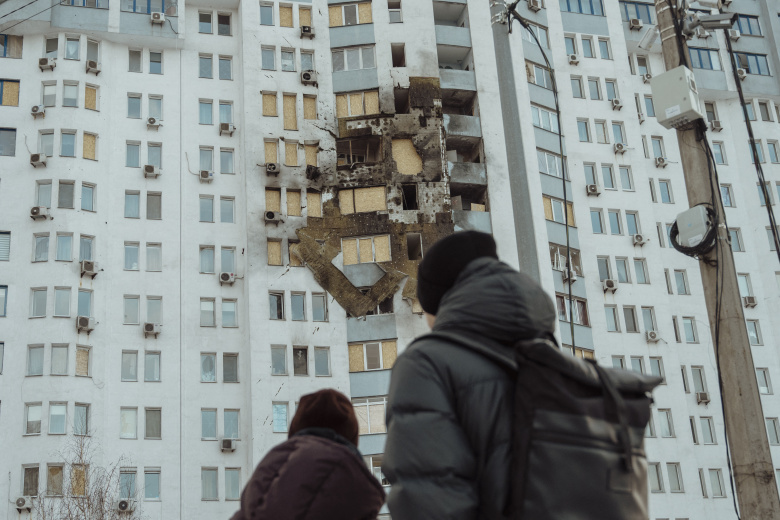
Two people inspect a damaged residential building after the Russian attack on Kyiv in the early morning of January 10, 2026.
Photo by FREDERIC DIDES / HANS LUCAS / HANS LUCAS VIA AFP
The year 2026 began with a sharp escalation on all fronts - from the diplomatic halls of Paris to the oil routes of the Black Sea. While President Zelensky convinces the “Coalition of the Willing” to organize peacekeepers, and the United States strikes at the “shadow fleet” of the Russian Federation and Russian influence in Latin America, in Ukraine itself people are barely surviving - in the cold without heat and light. In the latest report by Nikolai Mitrokhin* - about the key events of the Russian-Ukrainian war.
Political and diplomatic situation around the war and negotiations
International politics around war is developing on three related, but operating in different directions, platforms.
On the one hand, Ukrainian President Vladimir Zelensky managed to achieve another diplomatic victory, once again consolidating his Western allies. On January 6, the next meeting of the “Coalition of the Willing” was held in Paris, at which the introduction of a contingent of 15–20 thousand Western “peacekeepers” into Ukraine after the end of the war was substantively discussed (mainly British and French troops with logistical support from Turkey and the creation of an additional Bundeswehr contingent bordering Ukraine, which, apparently, will occupy positions in Poland). Ukraine is once again guaranteed major investment in support, including agreed European-British peacetime funding for its 700,000-strong army.
Subscribe to read in full
Subscribe to Redefine.Media to read Republic
Subscribe [You can pay with a Russian or foreign card. The subscription is renewed automatically. You can unsubscribe at any time.]
Where does the subscribers' money go?