
Translated material
The last day of Sergei Bodrov
How an avalanche took one of the main Russian actors and why they were looking for him for many years
On September 20, 2002, the Kolka glacier disappeared in North Ossetia. A huge mass of ice, stones and dirt swept through the Karmadon Gorge in a matter of minutes, destroying everything in its path. Local residents, tourists and the film crew of the film, which was filmed by 30-year-old Sergei Bodrov Jr., were trapped under the rubble. Despite the fact that rescuers immediately said that it was impossible to survive under the rubble, the search continued for many months. According to official data, at least 125 people were killed or missing. The disaster in the gorge - in the material "Cold" .
One of the most popular actors in the 2000s, Sergei Bodrov Jr., flew to Vladikavkaz to film the film “Svyaznoy,” where he was a screenwriter, director and one of the main actors. Filming started on September 19, 2002 in a colony on the outskirts of the city. The next day the team was supposed to go to the Karmadon Gorge, located 28 kilometers from Vladikavkaz. There it was necessary to film the scene of the return from the army of one of the main characters of the film, Ilyas, whose role was played by the Ossetian actor Khazbi Galazov.
At six in the morning on September 20, the film crew had to be ready to leave for the mountains. But due to the fact that Bodrov and the operators stayed up almost all night discussing the coming day, they were late in the morning. The director of the film, Timofey Nosik, reprimanded them for this.
At about eight in the morning, Bodrov and his team arrived at the entrance to the Karmadon Gorge, but they were delayed there too: the buses that were supposed to take the group up did not arrive on time. Because of this, the shooting day began not at nine, as planned, but at one in the afternoon.
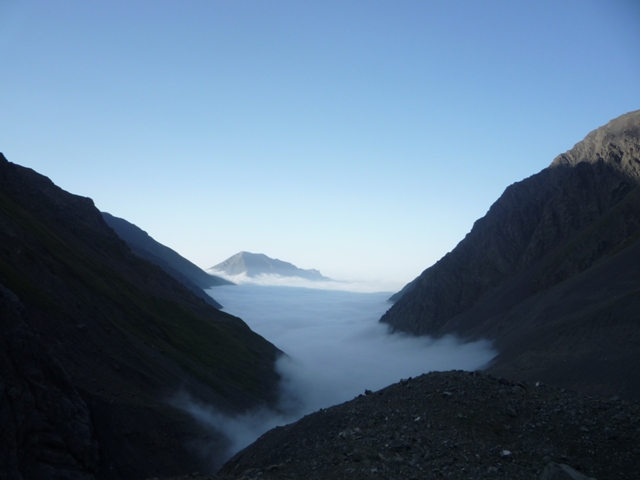
By evening the weather began to change, the sky became cloudy. Due to poor lighting, Bodrov decided to postpone the remaining shooting to the next day. Local residents, citing bad weather, suggested that the group not go to Vladikavkaz and spend the night with them. Bodrov agreed, but some group members began to insist that they need to go to a hotel.
So everyone quickly got ready and went down to the road where the cars were waiting for them. Film crew assistant Soslan Makiev said that due to the rush, Bodrov did not even eat the Ossetian pies that were prepared especially for the film crew. Niva was the first to leave with Sergei Bodrov, director of photography Daniil Gurevich and makeup artist Olga Zhukova.
At about 20:08 local time, the Kolka glacier began to disappear. A huge flow of ice and stones covered the Karmadon Gorge in a matter of minutes. Just at this time, the film crew found itself in the very epicenter of events.
The same place
Sergei Bodrov was born on December 27, 1971 in Moscow in the family of director Sergei Bodrov Sr. and art critic Valentina Bodrova. Already in 1986, at the age of 14, he made his film debut, playing a cameo role in his father’s television film “I Hate You.” Bodrov gained wide popularity in the second half of the 1990s, when he became a co-host of the “Vzglyad” program and starred in his father’s film “Prisoner of the Caucasus.” For this role he received prizes from the Kinotavr film festival and the Nika award.
Where did Sergei Bodrov study and what was his family like? Bodrov studied at the history department of Moscow State University. During his student days, he worked as a school teacher, a pastry chef in a factory, a journalist, and even a lifeguard on a beach in Italy, where he went to study art. After graduating from the university in 1994 with honors, Bodrov decided to continue his studies in graduate school. Already a popular actor and TV presenter, he defended his dissertation on “Architecture in Venetian Renaissance Painting” and received a Ph.D.
In 1997, Sergei Bodrovmet television director Svetlana Mikhailova in Cuba during a work trip. Since then they have practically never separated and got married the same year. In 1998, their daughter Olga was born.
In 1997, Bodrov starred in the cult film “Brother” by Alexei Balabanov. Then he played in the films “Stringer” by Pavel Pawlikowski, “East-West” by Regis Warnier and in “Brother 2” by Balabanov. And in 2001, he tried himself as a director for the first time - his film “Sisters” won the Kinotavr prize for best debut.
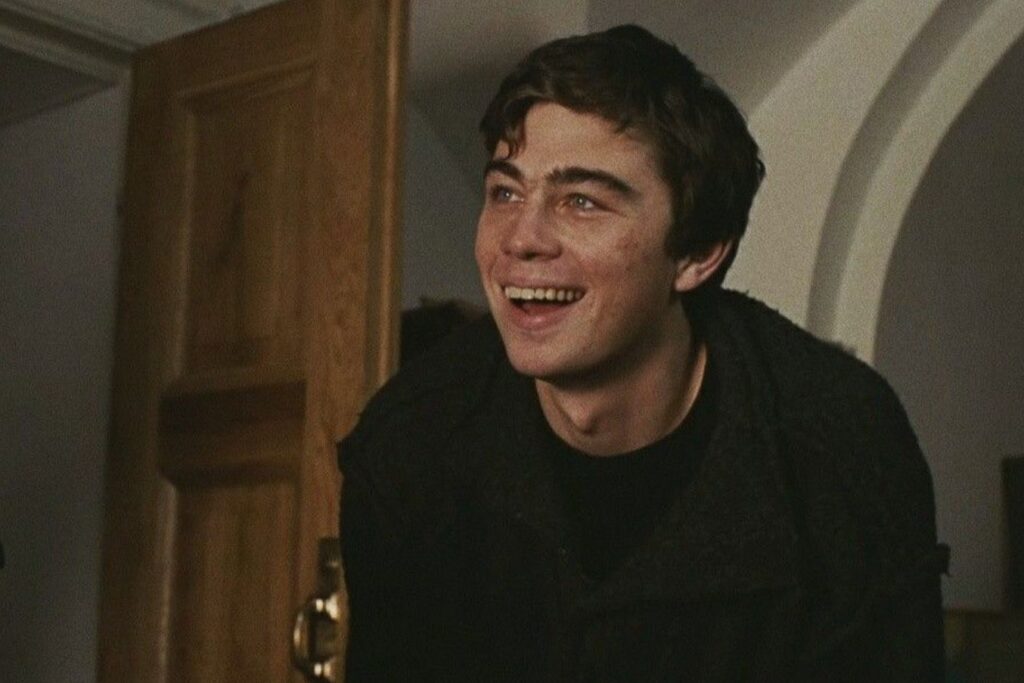
“Svyaznoy” was Bodrov’s second directorial project - for the sake of it he flew to North Ossetia. He called the future picture a “philosophical and mystical parable.” At the center of the script is a girl with superpowers, Katya, and three men in love with her: a special forces soldier, a drug dealer and a director. Bodrov himself was supposed to play special forces soldier Lesha.
Bodrov called himself “coffee in a bag,” since in “Svyaznoy” he became the author of the script, the director, and the actor. As Anastasia Kavunovskaya, the widow of the film’s director Timofey Nosik, later said , they chose North Ossetia for filming because the Ossetian director Soslan Makiev, who in the future became the administrator of the film’s crew, promised to show them places from which they “won’t want to leave.” According to other sources , the Karmadon Gorge was advised to Bodrov by Balabanov, who was filming the film “War” in North Ossetia.
Bodrov first flew to the republic in the summer of 2002. Then he and his team went on a small expedition to the Karmadon Gorge. Soslan Makiev said that he and the group were “in all the gorges and stopped right there.” According to him, Bodrov described exactly such a gorge in his script even before his trip there, so the place was considered ideal.
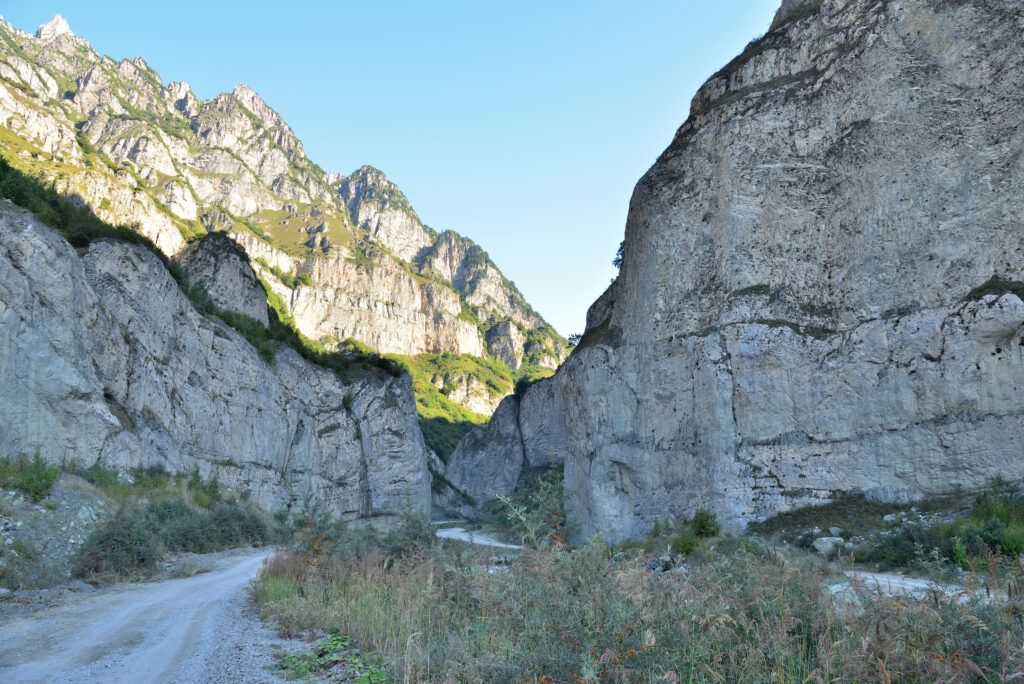
According to Sergei Bodrov Sr., “it was a perfect decoration, correct for this picture.” “He behaved like a real artist. He saw it, he was there, he liked it, he realized that he should only film there. It really makes an impression: powerful nature, canyon, mountains. This is the right decision for the director,” he said.
According to his father, Bodrov wanted to start filming as quickly as possible, and he was in a hurry, since he had to do it before the cold weather set in. “I saw a rush that, in principle, should not exist,” he said. But filming had to be postponed to September: in August 2002, Bodrov’s son Alexander was born.
Avalanche in 10 minutes
At the moment of the collapse of the Kolka glacier, eyewitnesses did not understand what was happening, since it was dark. Local resident Zarema Pukhova recalled that the noise was so strong that “her ears were blocked.” “There was such a wind, four of them held each other’s hands and rested their feet,” another resident of the Karmadon Gorge, Elbrus Zhukaev, described what happened that evening.
What is the Kolka glacier? The Kolka Glacier is located on the slope of Mount Dzhimara next to the dormant (erupted more than 2.5 thousand years ago) Kazbek volcano. The height of Jimara reaches 4780 meters. The glacier itself lies at approximately 3500 meters above sea level. It is classified as a pulsating glacier, which, due to its structure, cannot gradually be freed from snow and ice, but accumulates huge deposits. Because of this, at some point a sharp convergence occurs.
Kolka is a dangerous glacier with a long history of meltdowns. The first documented gathering occurred on July 3, 1902, when it claimed the lives of 32 people. Three days later, when the glacier moved again, four more people died while going out in search of the missing. A similar situation happened in 1969. However, due to the fact that the glacier was constantly monitored in the USSR, experts noticed its movement in time, and people were evacuated in advance. Despite the ongoing risk, planned monitoring of the glacier was stopped shortly before the collapse of the USSR. According to scientists' calculations, the next gathering was expected no earlier than 2030.
A member of Bodrov’s film crew, film administrator Dmitry Shibnev, remained in the mountains that night to guard the equipment. It was located on the edge of the gorge just above the glacier meltdown zone. “There was a flash, something like thunder. And maybe one minute it started to rain,” he described .
That evening, in a matter of minutes, the mass of ice, stone and mud covered 16 kilometers. The speed of the avalanche reached about 200 kilometers per hour. The winding structure of the gorge was able to stop it. The rushing mass hit the Rocky Ridge, which saved the inhabitants of the village of Gizel. She stopped moving just 100 meters from the “House by the River” restaurant, where guests of the “Is It Easy to Be Young?” film festival taking place in Vladikavkaz that evening had dinner.
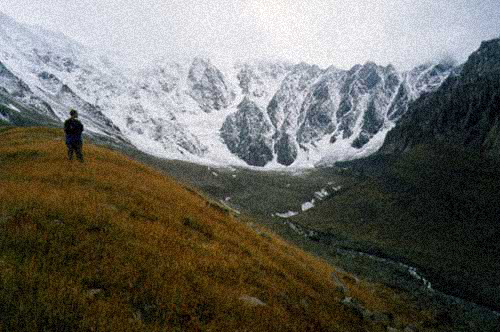
In some places, the mudflow mass ( a mixture of rock fragments and water) reached 200 meters wide and 100 meters deep. Its volume was approximately 130 million cubic meters. In a few minutes, the avalanche wiped out the village of Upper Karmadon and two recreation centers, destroyed all infrastructure in the gorge, and also claimed the lives of more than 120 people. The bodies of most of them were never found.
A resident of Vladikavkaz, Marat Datiev, was traveling with a friend in a car at the time of the mudflow. The first thing he felt was the “shock wave effect” and saw that the trees began to fall like matchsticks. An avalanche then covered his car. The men then jumped out of the car, and the mudflow began to “throw them up, then suck them down,” and so on in a circle. “When it spun down again, I was already choking on this mud. <…> And then at the last moment it was thrown back up, and the avalanche stopped. In the end, we stayed at the top,” Datiev described what was happening. Thanks to the fact that he and his friend were thrown up, rescuers were able to quickly find them.
Avalanche epicenter
At the moment of the avalanche, the film crew of the film “Svyaznoy” - 24 people who were traveling to Vladikavkaz after a work shift - found themselves in the center of the Karmadon Gorge. Along with them there were riot police, stuntmen, drivers and artists from the Narty equestrian theater, who were invited to film horse racing.
That evening, not all members of the film crew went to Vladikavkaz. Deputy director of the film Sergei Safonov and his assistant Dmitry Shibnev remained at the filming site with equipment. Because of this, they managed to escape: the avalanche did not touch them, but rescuers were able to remove them from the mountain only two days later.
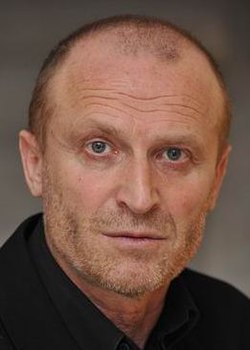

In addition, the two actors who played the main roles were lucky - Alexander Mezentsev, who overslept and spent that day at the hotel, and Anna Dubrovskaya, who returned to Moscow to play in the play. Interestingly, according to the plot of the film, it was their characters who were supposed to survive. Three members of the film crew, who managed to drive through the gorge before the mudflow, also escaped the avalanche. They arrived safely at the hotel and did not even know that something terrible had happened.
“We were talking until three o’clock in the morning that there was a mudflow in the mountains that blocked the road and that the group couldn’t get through. There was a version that they stood somewhere on the side of the road and lit a fire,” said one of the survivors, Igor Grinyakin. According to him, it was only when he woke up in the morning and realized that no one had returned that he realized that “something was wrong.”
Start of rescue work
Almost immediately after the avalanche, the surviving local residents began to call rescuers, but due to the fact that the road was blocked, the Ministry of Emergency Situations employees were only able to reach the site of the disaster several hours later. “We went through two passes around, through two other gorges. And somewhere at the beginning of the first night we descended into the Karmadon Basin,” said Ruslan Tavasiev, who in 2002 was the head of the North Ossetian branch of the Ministry of Emergency Situations.
According to him , they also did not immediately understand what had happened. That night, rescuers began searching for survivors under the rubble. They and their dogs examined all the cracks and voids where people could be hiding.
Relatives of the missing members of the film crew arrived in Vladikavkaz. Volunteers began to join the rescuers, who later set up a camp called “Nadezhda” right on the glacier. The camp remained there for about two years. “It was one big family that was united by grief,” said the head of the Tsentrospas search and rescue team, Oleg Ganiev.
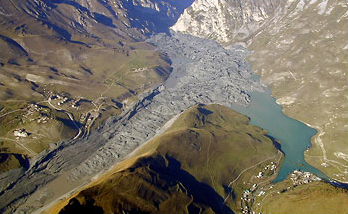
Photo: Sergei Chernomorets – NASA / Wikimedia Commons
Having gone to the Karmadon Gorge on September 21, cameraman Igor Grinyakin with the rest of the surviving members of Bodrov’s group discovered that it was completely covered with ice. “There’s nothing there, you can’t find out where you’ve been because there’s no road and it’s filled in. And you won’t recognize the mountains, because you’ve never been here. This is a new place,” is how he described what he saw.
Over the course of several days, rescuers found 29 people alive and 13 dead. However, more than 110 people, including the entire film crew of Sergei Bodrov, remained missing.
On September 24, the head of the Ministry of Emergency Situations of the Russian Federation, Sergei Shoigu, as well as the father and mother of Sergei Bodrov, arrived in Vladikavkaz. Shoigu immediately promised that six billion rubles would be allocated from the budget to eliminate the consequences of the disaster, and the government of North Ossetia announced that it intended to ban economic construction in the gorge.
By that time, the rescuers’ work was complicated by the fact that the ice that had come down from the mountains began to melt quickly due to the warm weather. Because of this, there is a risk of flooding of villages located in the Karmadon Gorge area - Gizel, Arkhonskoye and Michurino. At the beginning of October, the danger of flooding of populated areas was almost eliminated due to the fact that rocks were blasted and water was pumped out.
“About 150 meters were covered”
From the first days of the search operation, experts said that it was almost impossible to survive in the mudflow. Geographer and Russian tourism champion Andrei Ignatenko then explained that the glacier traveled another 15 kilometers from the location of Bodrov’s group.
“It is unknown where people are now, they should have been dragged further, they could have simply been crushed,” said Ignatenko.
In addition, according to him, the thickness of snow, ice and mud that covered the gorge in its depths has already “completely compacted and been saturated with water.” “This is virtually airless space. And it’s almost impossible to dig out a person from such a mess,” he added in a conversation with the media.
At the beginning of October 2002, officials began to repeat the words of experts. The head of the Southern Regional Center of the Ministry of Emergency Situations, Ivan Teterin, said that there was no longer any hope of finding living people in the area of the avalanche. And the Minister of Emergency Situations of North Ossetia, Boris Dzgoev, said that all search and preventive work will end with the onset of frost and will continue in the spring.
The relatives of the missing did not agree with this plan of action. They demanded to check two automobile tunnels passing through the gorge. They thought that the film crew could have been in the tunnel at the time of the disaster, the entrance to which could have been blocked by stones brought by the mudflow.
These hopes were fueled by stories from local residents. In particular, Karmadon resident Aza Sedakova claimed that she saw a film crew driving near the upper tunnel shortly before the disaster. “I saw the car, I saw the road patrol passing by. There were KamAZ trucks behind them,” she said in an interview with Channel One, whose journalists clarified that these vehicles actually accompanied the group.
However, as the then head of the regional Ministry of Emergency Situations Ruslan Tavasiev explained, the testimony of witnesses contradicted each other. “At first the version was that they entered the middle tunnel and were seen by hunters from above. We checked this tunnel on the same days. The tunnel was completely clogged with mud, icy slurry, and there could be no survivors there. Then this story was transferred to the very top tunnel,” he said .
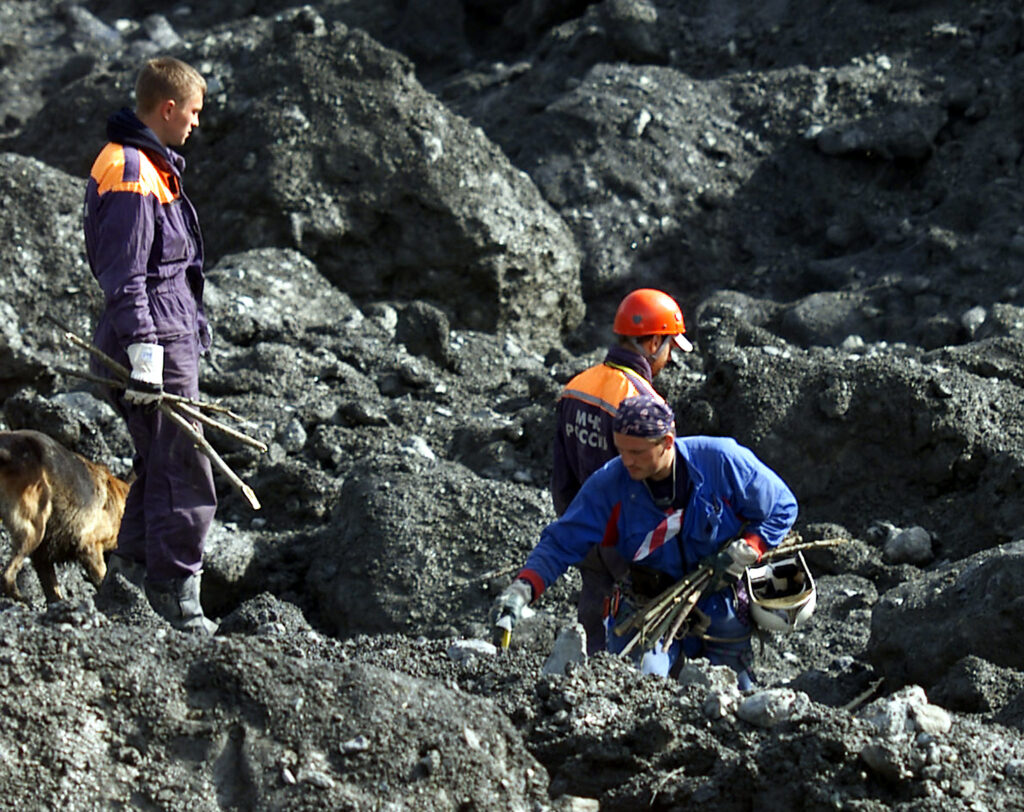
The rescuers understood that even if they managed to get into the upper tunnel, they were unlikely to find survivors there, since under the pressure of the glacier, mudflows filled the entire space of the tunnels. Despite this, they continued the search work. The difficulty was that due to the mudflow, no one could even understand where the entrances to the tunnels were. “After the glacier, it was practically no longer visible. There, about 150 meters were covered,” said Alan Gaziev, a resident of the Karmadon Gorge.
More than 500 rescuers, dog handlers and special forces of the 58th Army took part in the search operations. To clear the passage to the tunnel, they paved the way with explosions, but this did not produce any results. At the same time, work on the glacier was dangerous for the rescuers and volunteers themselves, since, according to experts, the ice masses could move again at any moment and cover people nearby, as happened in 1902.
*"The people there are tired and angry" *
On October 8, the Ministry of Emergency Situations officially announced that all those missing during the glacier collapse had died. The department said that the search will continue, but not for living people, but for the bodies of the dead. Officials assured that search teams continue to work. However, the volunteers on the glacier claimed that they had stopped their activities, and only relatives of the missing and enthusiasts remained on the glacier - there were 15-20 of them.
“Who told you that the Ministry of Emergency Situations is working? <…> Just don’t say that there, on the glacier. The people there are tired and angry. Volunteers carried tons of explosives on their shoulders. But the Ministry of Emergency Situations was not involved in this. There are four people there from the Ministry of Emergency Situations. Observing the glacier from the ground. If they had used equipment, helicopters, then two weeks ago we would have reached the tunnel,” Alexander (the publication did not indicate his last name) , whose son worked in Bodrov’s group, told a Kommersant correspondent.
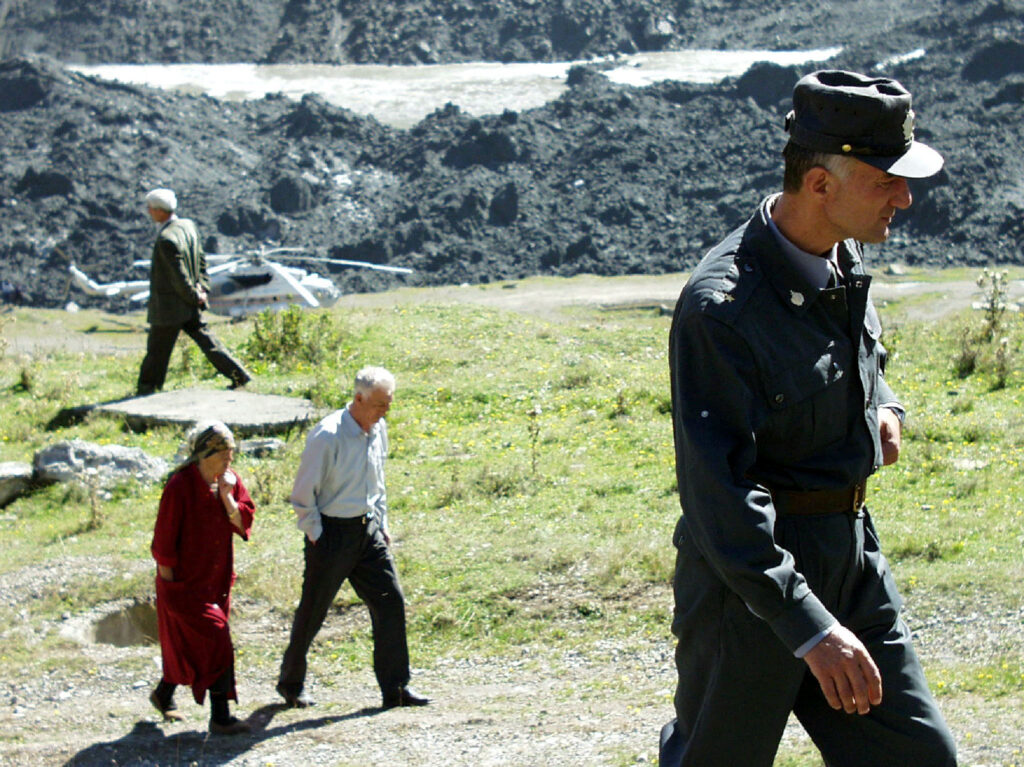
All rescuers, according to another volunteer Valery (surname unknown), worked near the settlement of Gizel, where the glacier stopped and the layer of mud did not exceed three meters. Explosives and equipment, including cables, light bulbs and buckets, were obtained for the volunteers by friends and acquaintances. Carrying a dangerous load, they walked every day along slippery paths on the glacier, while the ice continued to melt and rocks fell from the mountain.
People on the glacier complained that 50 million rubles were allocated for rescue work, but no one gave them anything (according to journalists, only the Moscow government allocated 50 million for work in Karmadon, while the main financial burden fell on regional authorities). All donations sent by ordinary citizens also allegedly did not reach the volunteers.
“When we needed a helicopter to fly over these places and find out where the tunnel was, they said that they had no fuel. We bought fuel from the military ourselves. This is our service, which is supposed to save people,” said Valery.
The volunteers understood that they would no longer be able to find anyone alive, but still did not lose hope. “We are working to save at least one person. But if we find him and it turns out that he died five days ago from suffocation or hunger, few will be happy. It is they up there who are to blame. We would have done everything a long time ago, but they don’t want to help us,” said Valery.
The remains of some of the victims were found. For example, the body of Larisa Tebilova was found in parts: first the hands, then the head. Because of this, her funeral was held twice.
Final completion of work
The tunnel was found with the help of drilling rigs only on February 12, 2003, five months after the avalanche. He found himself buried under an almost hundred-meter layer of ice. “We started drilling a new well. Suddenly the drill rod broke off and flew into the depths of the hole. This was the first time this had happened during the search. They lowered the camera. We saw a void that was filled almost to the top with melt water,” one of the workers said then. After this, the Ministry of Emergency Situations employees delivered pumps to the tunnel and began pumping out water and expanding the opening.
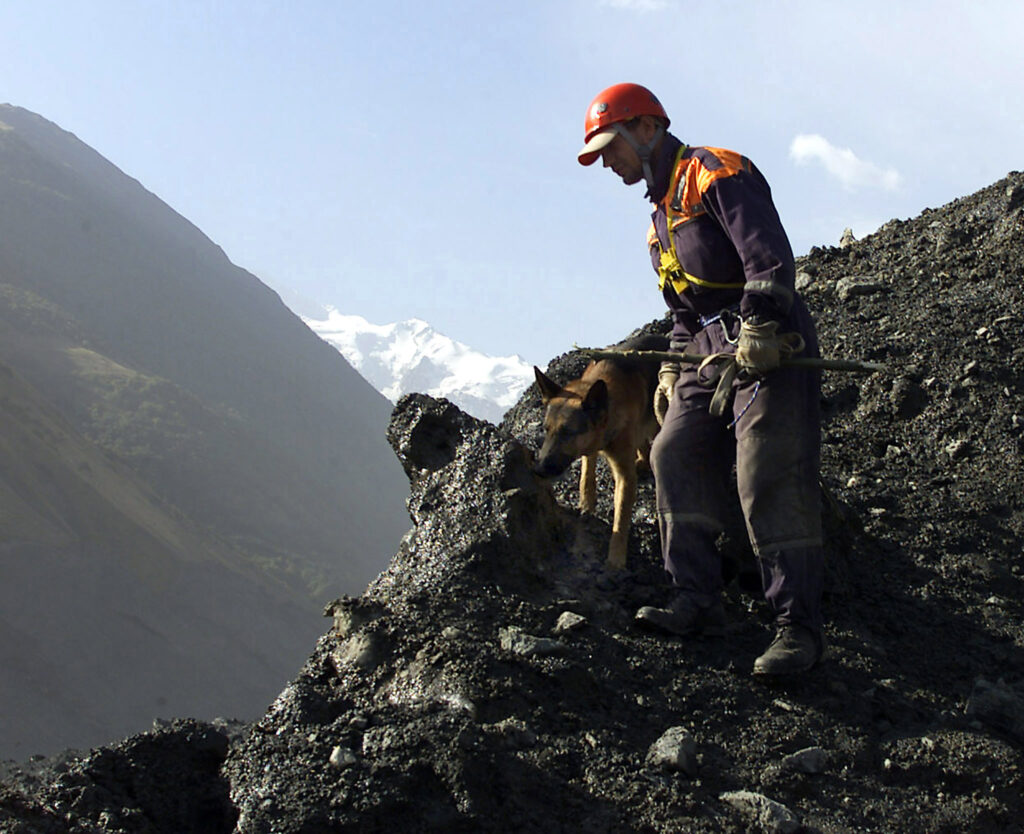
In May, divers who entered the tunnel found that it was impossible to find even the bodies of the missing inside. However, this did not reassure the relatives. “The divers did not go beyond the hole dug into the tunnel, and the tunnel cavity still remains unexplored. That's where you need to look. It’s premature to stop work,” said a relative of one of the missing, Vladimir Trifonov. At the same time, according to rescuers, continuing the work was not only pointless, but also dangerous - a huge melting block of ice hung seven meters from the well.
On May 30, the North Ossetian government officially ended search work in the Karmadon Gorge tunnel area due to “inexpediency” and danger, but promised to continue surveying the area throughout “the body of the descended glacier until it melts.” At the same time, the head of the Republic's Ministry of Emergency Situations, Boris Dzgoev, said that fragments of cars from Sergei Bodrov's film crew were found quite far from the tunnel.
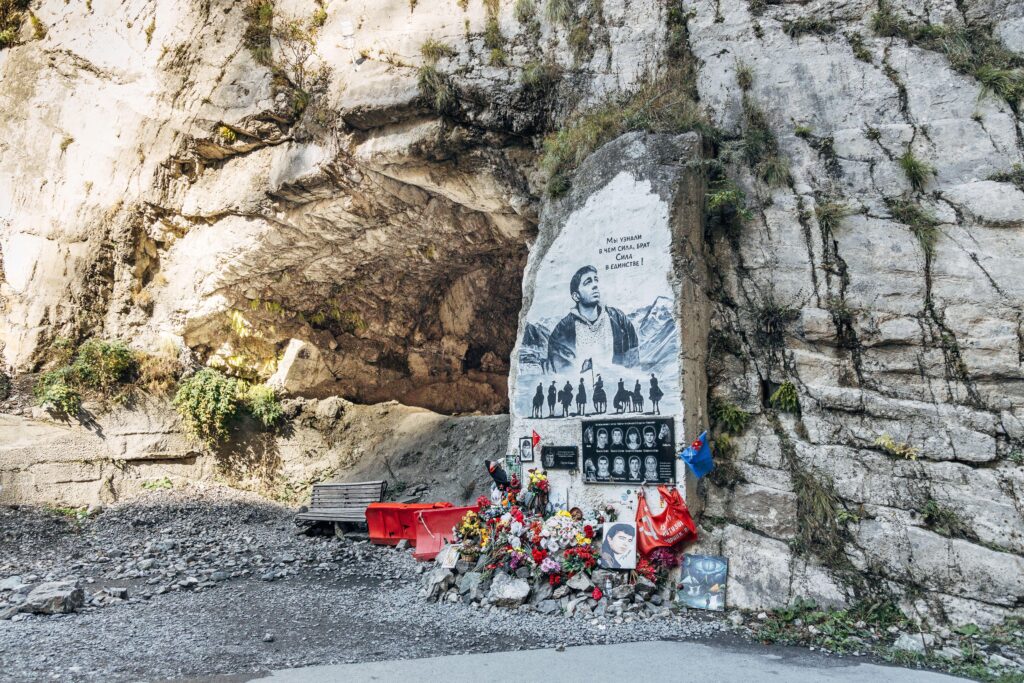
Many years later, residents of the village of Verkhny Karmadon told a story confirming that Bodrov and his team did not get into the tunnel, because a few minutes before the disaster they were too far from it. On the evening of September 20, local residents gathered for the wake and invited Bodrov to attend. And the director and his team came there. A few minutes after they left, there was a gathering. That is, the group was not far from the village, which was destroyed by a glacier.
Relatives of the missing and volunteers stopped searching only after nine months. On February 11, 2004, the informal leader of the search groups, Konstantin Dzherapov, said: “It would be at least unreasonable for us to still believe that we can find the living, especially since we have checked all possible places where people could be.”
The court rejected all claims
A year later, in March 2005, the mothers of director Sergei Bodrov Jr. and producer Timofey Nosik who died in the Karmadon Gorge prepared claims in the Tverskoy Court of Moscow. They blamed the Russian government and the government of the Republic of North Ossetia-Alania for the death of their sons. The total amount of claims indicated in the statements was $900 thousand.
“Experts came to the conclusion that the cause of the tragedy was that there was no warning about the avalanche. The government did nothing, despite the fact that two months before the tragedy photographs were received indicating that the glacier was about to collapse,” said the mothers’ lawyer Igor Trunov. According to him, the only way to prevent the tragedy could be to notify people in a timely manner - “after all, there was information.”
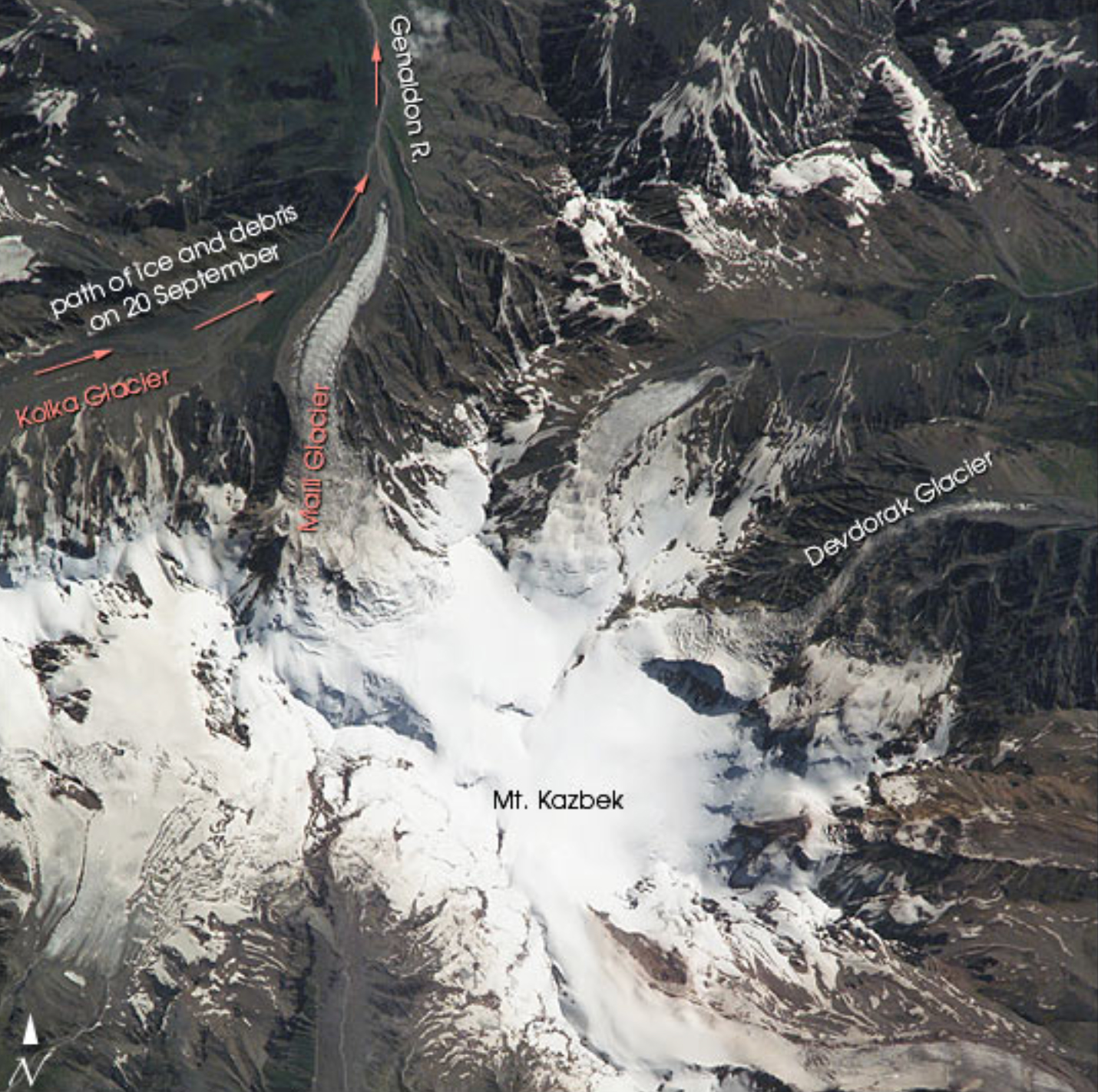
The head of the Earth Remote Sensing Laboratory at the Institute of Geography of the Russian Academy of Sciences, Lev Desinov, confirmed that 38 days before the avalanche, footage was indeed taken from the International Space Station showing that Kolka would soon split. “But the cosmonauts did not have the qualifications to decipher the received image, and according to the flight program, it was not planned to transmit images of Kazbek online to Earth, so the images arrived <...> on Earth in November 2002,” he explained.
In June 2005, the mothers' claim was rejected . However, in September, Trunov’s lawyer filed another lawsuit in Moscow’s Tverskoy Court on behalf of 28 residents of North Ossetia. Each victim of the glacier collapse demanded compensation for moral and material damage in the amount of 300 thousand dollars. But this claim was also rejected.
Causes and troubleshooting
The reason why the avalanche occurred is still unknown. Various versions have been put forward: heavy rains that could erode the base of the glacier, general warming and collapses of ice and stones from the mountain to Kolka. However, glacier specialist Lev Desinov, who was one of the first experts of the Ministry of Emergency Situations to fly around Kolka after the collapse, categorically rejected the version of the collapse of glaciers from above. “No matter how much you hit the glacier, nothing will happen to it,” he said, adding that the reason is located precisely inside the glacier.
According to Desinov, Kolka was destroyed due to a gas-dynamic break-in. From June to September 2002, about 20 earthquakes were recorded in the Karmadon Gorge area, three of them were noticeable. And the glacier was located at the intersection of two faults in the earth’s crust, which made it especially vulnerable.
The version of a series of earthquakes that became the “trigger” of the avalanche is shared by a group of authors who rely on the readings of seismographs in Russia and Georgia that preceded the disaster.
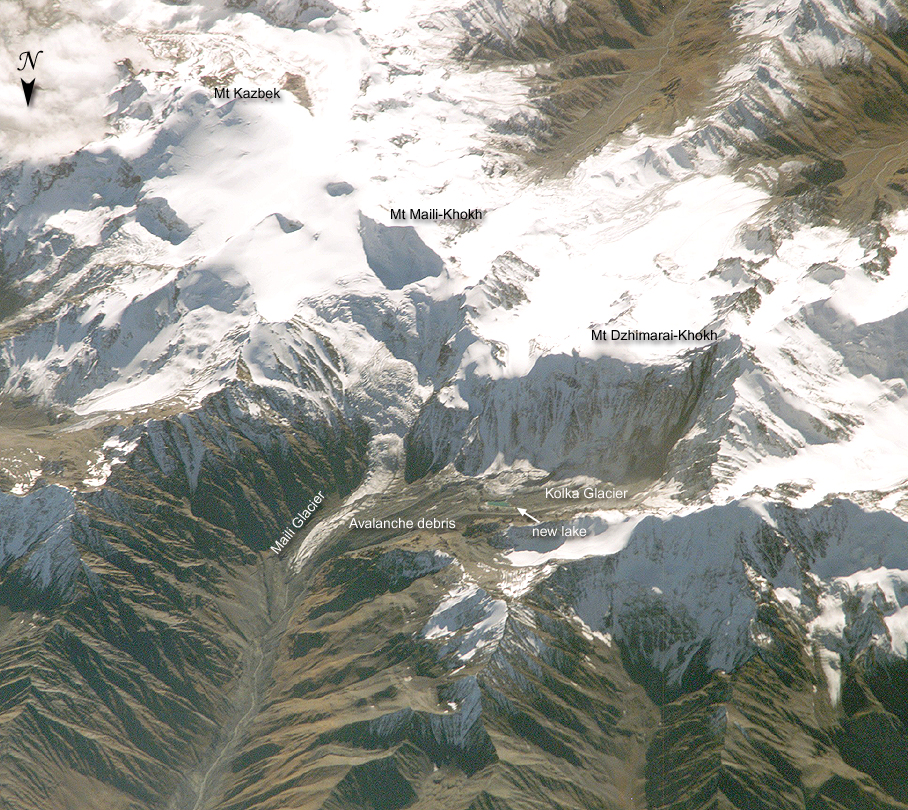
However, the key factor, according to Desinov, was the activity of the dormant Kazbek volcano. Geophysicists discovered a magma chamber under the Kolka bed at a depth of about 11 kilometers, heated to 1000 degrees. From there, volcanic gases containing salt and acid entered the glacier through cracks. They corroded the ice from the inside and at the same time increased the pressure.
The accumulation of gases led to a sharp rupture of the glacier—Desinov compared the process to the “champagne effect.” It was because of this that on the evening of September 20, 2002, according to the expert, an ice mass weighing about 200 million tons broke off and rushed into the gorge.
Desinov said in 2012 that for 10 years, despite the promises of the authorities, ground-based monitoring services have not appeared in the Caucasus. “The only thing that has been done is that seismic sensors of greater accuracy have been installed. Everything else is in a semi-faint state or completely absent,” he said. In his opinion, this tragedy “didn’t teach the authorities anything.”
Photo: film Brother
Author: Daria Morozova