
Translated material
Plus the de-elitization of the entire country
Why the Russian ruling class was unable to be independent. About the book by Alexandra Prokopenko* “Accomplices”

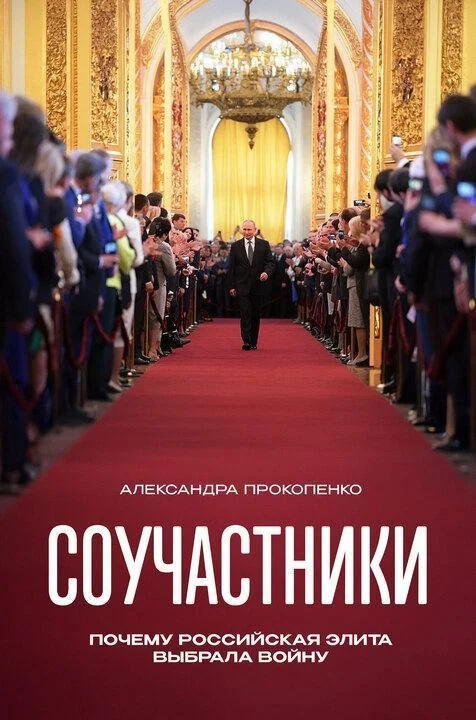
Cover of the book “Accomplices”
(18+) THIS MATERIAL (INFORMATION) IS PRODUCED, DISTRIBUTED AND (OR) SENT BY FOREIGN AGENT PROKOPENKO ALEXANDRA SERGEEVNA OR CONCERNES THE ACTIVITIES OF FOREIGN AGENT PROKOPENKO ALEXANDRA SERGEEVNA.
The year we just spent became the heyday of non-fiction in Russian-language literature. Books of this genre consistently occupy high places in various ratings; they are popular both within Russia and abroad. The rise of non-fiction has been noted by many representatives of the book industry - publishers, booksellers, and reviewers.
But non-fiction in Russia and abroad is different due to censorship and repression against dissident and pacifist-minded authors. Their works are under severe pressure. Such books have practically no chance of official publication within the Russian Federation, and foreign publications arrive with difficulties, and their promotion is very difficult. There are more and more restrictions.
As for those authors who are published in the Russian Federation, they are largely deprived of the opportunity to write truthfully on current topics. Therefore, in Russia, the non-fiction literature market is overflowing with books of various kinds, often strong, sometimes of very dubious quality, but usually unable to deal with the most pressing topics.
People need answers to the most pressing questions of our time, but books published in the Russian Federation often cannot provide them.
Therefore, such publications as “Transurfing Yourself” by Vadim Zeland (the leader of the year in the non-fiction category according to Litres), or “If all the cats in the world disappear” by the Japanese writer Genki Kawamura, a constant leader in all kinds of ratings, are very popular in Russia. Every year, Olga Primachenko’s “Tenderly To Yourself” has also made it to the top. That is, this is psychology, philosophy, abstracted from the current agenda, or even esotericism or even mysticism. It is to these areas that people turn in the hope of, if not getting answers, then distraction, finding consolation and at least some kind of hope and support.
On the contrary, non-fiction published abroad feels free. Recently, a whole body of literature has appeared there, which provides a thorough and comprehensive analysis of the processes that led Russia to its current state. All these works were created by very different people, and it is all the more interesting to read them because the authors are representatives of different professions and different generations. The great advantage of these books is that they were created by specialists, professionals in their field: journalists, economists, sociologists - people who are deeply immersed in the topic.
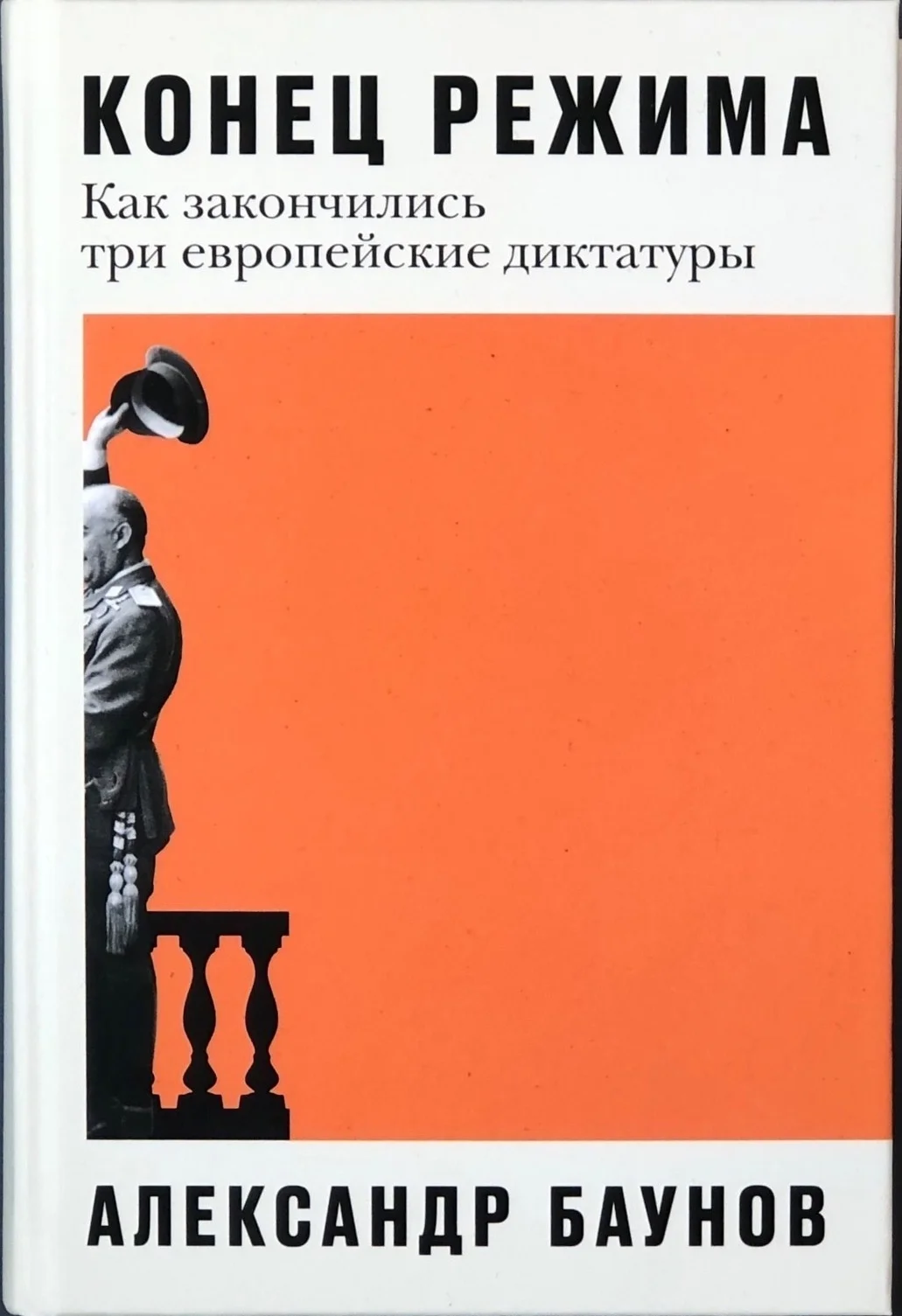
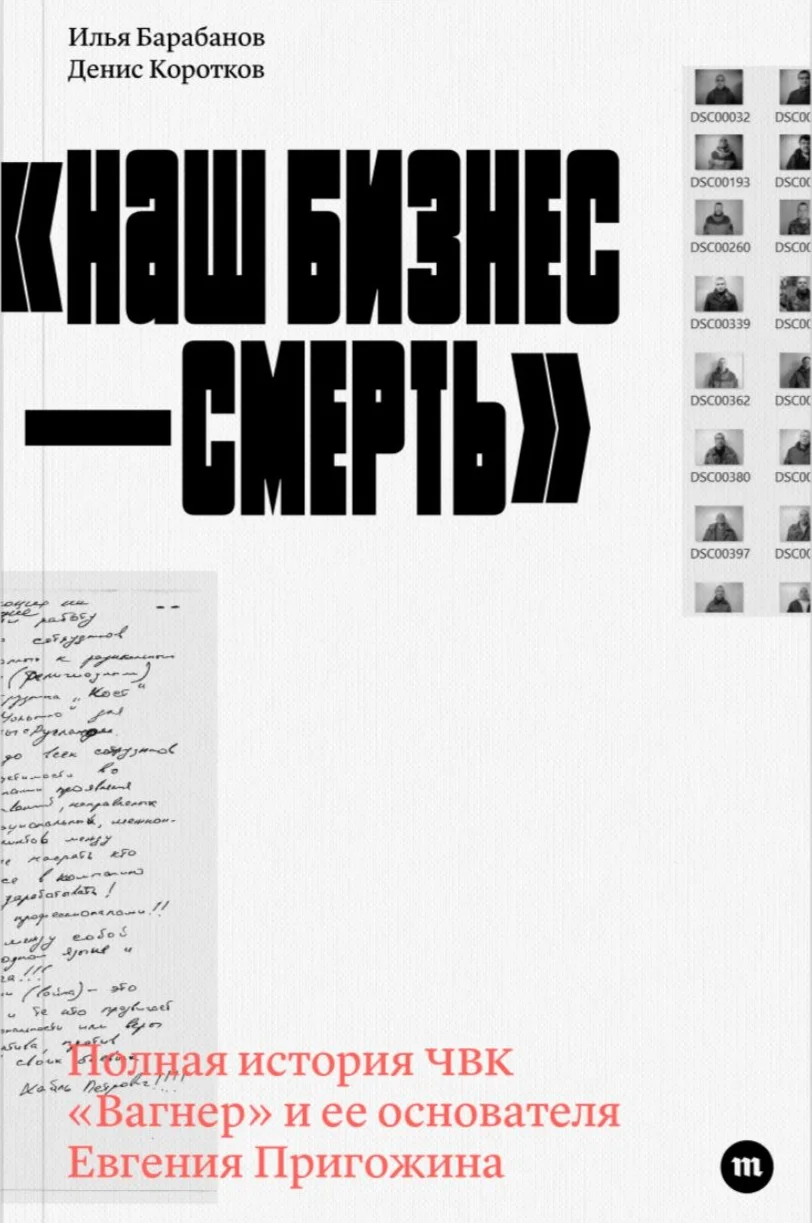
It started, in my opinion, with two books. The first is the book by Alexander Baunov* “The End of the Regime: How Three European Dictatorships Ended.” This is a study of three authoritarian regimes - Franco in Spain, Salazar in Portugal and the Black Colonels in Greece. The second work is a book by journalists Ilya Barabanov* and Denis Korotkov “Our Business is Death” about the Wagner PMC. Both books quickly became bestsellers and set a high bar for subsequent works in this “series.” Most people meet this standard.
In the already quite long series of such books - “Good Intentions” by Ksenia Luchenko*, a journalist who has been studying Russian Orthodoxy and its influence on politics and society for many years; “The Tsar in Person” by journalists Roman Badanin* and Mikhail Rubin* and many others. These works constitute a powerful layer of research on the main question: what led Russia to an armed conflict that is supported by various sectors of society? Research from different points of view: politics, social sphere, church, culture.
I want to pay special attention to one of these books. This is the recently published book “Accomplices” by Alexandra Prokopenko*, published by the publishing house “Echo of the Book” with the support of the FDLV Foundation and StraightForward. In my opinion, at the moment this is one of the best studies on why the Russian elite did not interfere with military action, but, on the contrary, rallied around the figure of the president.
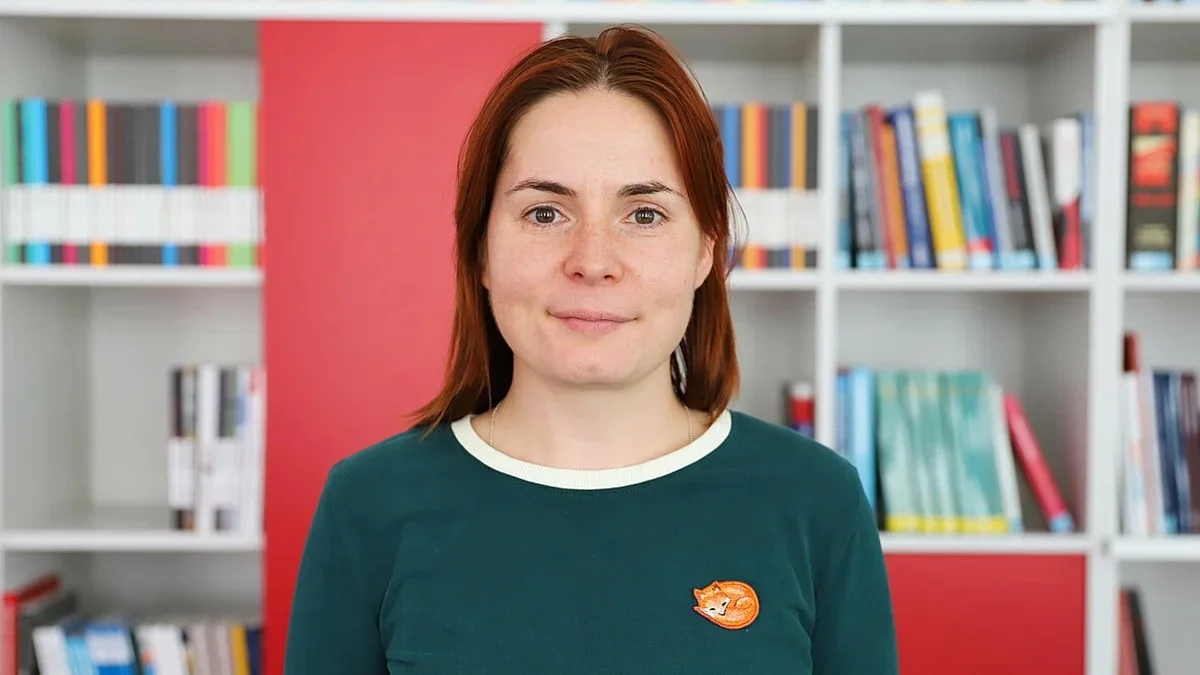
The author of the book, Alexandra Prokopenko, is a graduate of Moscow State University (2006), the University of Manchester (2018) and the famous Shaninka, who is now almost finished off by the authorities. From 2008 to 2017, Prokopenko worked as a correspondent for the Kremlin pool, from where she was eventually expelled. She worked for several years at Vedomosti, then was an adviser to the first deputy chairman of the Russian Central Bank. After February 2022, she left Russia. Alexandra is an economist and sociologist with extensive journalistic experience, including experience communicating with Russian elites. Her book is based both on deep knowledge and understanding of processes, and on personal observations and conversations (I note that this combination gives the narrative both the academicism necessary for research and the humanity and empathy necessary for literature).
It is the elites that are the object of the writer’s study—the civilian elites; there is almost no talk about the security forces and the military in the book.
And we are talking, first of all, about how those ministers, officials, bankers, leading entrepreneurs who once demonstrated liberalism and professed the ideas of progress turned into this.
In fact, this is one of the main ideas of the book: in Russia there is no elite as such. The author even uses another term to designate the ruling stratum: “nobili”, since elitism implies the presence of certain functions, including the ability to influence decision-making or independent management. Russian high-ranking officials have lost these functions. While still having access to resources and attributes of power, recognized as “theirs” within the system, they have lost their subjectivity and the ability to “independently participate in determining the future.”
Prokopenko shows that this state of affairs is not at all accidental. It is the result of Putin’s purposeful long-term policy, who throughout his tenure as president prioritized the depoliticization and de-elitization of the ruling layer. The year 2022 only clearly outlined the new state of this layer: nobles do not participate in decision-making, but only carry out orders, smoothing out the negative consequences as best they can. Among them there are still excellent professionals, many of them have enormous experience, but all of them are now not independent players in Russian politics, but, in fact, only servants.
The author carefully traces the very process of building such a system, which began back in the 2000s and was not interrupted in the future. Both those who were considered liberals and those who were called technocrats came to power. Many of them still occupy high positions. Great hopes were placed on these people. They started out as progressives, young enthusiasts who sincerely believed in the possibility of the civilized development of Russia and in their ability to be useful. They tried to introduce advanced, innovative models and technologies, but fell into the trap of depoliticization and now struggle to demonstrate loyalty to the president personally and his policies, serving his needs. It’s sad to read about this - it clearly shows the country’s powerful development potential, which has never been realized. That's why
By February 2022, Russian nobles had already arrived in a state of complete submission. This explains one of the paradoxes of modern Russian political life: none of the nobles were happy about what happened, no one welcomed it, and few believed that hostilities would begin.
Many expected action from the Russian elite in 2022 and were perplexed: why does it not prevent such a policy? Instead, the former “progressives” and “liberals” became the mainstay of the Kremlin’s power, adapting the economy and social sphere to wartime. Prokopenko's book explains why this happened.
The narration is greatly enlivened by the author’s conversations with high-ranking officials and large businessmen. In private conversations, they complain that they do not understand the goals of what is happening, and then they go to their offices and carry out instructions and orders.
What makes these people do this? First of all, fear, makes a simple conclusion by Alexander Prokopenko. But this is not only the fear of repression: arrests, threats to life (quite real, by the way). It is also the horror of losing one’s position in the system, which is perceived as social death, expulsion from society. A person excluded from the system will face oblivion and emptiness, and this is a very strong motivator for remaining in it.
Another factor is Western sanctions. The Russian ruling stratum perceived them as a blatant injustice, since the nobles are convinced that they had no opportunity to influence the Kremlin’s decision (although some tried). In fact, this is a classic question: “What are we for?” The resentment led to the fact that people began to be proud that they were standing up to a huge, powerful machine directed against them both personally and on a national scale. This is how everything turns upside down when the perpetrator feels like a victim.
In addition, the system of Russian power cannot be understood without knowledge of the practices applied by it. Prokopenko carefully examines them: these are informal practices, often illegal - often important decisions are made in a bathhouse, while hunting, or in the smoking room of some event, where you can quietly “rustle around,” “grind,” and “solve a problem.” In this case, the official must not just hold any post. He must be able to pick up signals. He must understand the wishes of his superiors and carry them out effectively, regardless of the law. It is not without reason that some of the author’s interlocutors compare being in power to participating in the mafia.
The conclusions, unfortunately, do not bode well for us. The elite underwent, as the author puts it, a “pseudomorphosis”, degenerating into weak-willed nobles. She is extremely dependent on the leader and is unable to act independently. In such conditions, a change in the personalist regime will inevitably lead to chaos at the top and in society, since “the ruling layer will not have a single image of the future, nor a consolidated reform agenda, nor a mechanism for internal self-renewal.”
“Under these conditions, the prospects for democratization are minimal,” says Prokopenko. “Not because there is no demand for change in society, but because within the nobles themselves there are no subjects capable of formulating and carrying out these changes.”
I have long noticed that the forecasts of professionals are not optimistic, but they often come true. Prokopenko does not embellish reality, she explores it and brings the results of her research to the reader as they are. Her book is part of the line of publications that give us an understanding of the most important processes taking place inside Russia.
Once we were already unprepared for the future. We could not even imagine that it would come in the form of hostilities and repression. Alexandra Prokopenko’s book, like similar works by her colleagues, makes it possible to prepare for the next stage: for the future, which is just around the corner, whatever it may be.