
Translated material
Ax under the compass
My life with censorship

Illustration: Petr Sarukhanov / Novaya Gazeta
18+. THIS MATERIAL (INFORMATION) IS PRODUCED, DISTRIBUTED AND (OR) SENT BY FOREIGN AGENT GENIS ALEXANDER ALEXANDROVICH OR CONCERNES THE ACTIVITIES OF FOREIGN AGENT GENIS ALEXANDER ALEXANDROVICH.
*How can I explain this?
So as not to make you angry at all
Pious, important fool,
Too prim censorship?*
Alexander Pushkin
Useful knowledge
Having already lived the period allotted to us by the Bible, I discovered that I had surrounded myself with a huge amount of knowledge, which my friend Boris Paramonov disdainfully calls “unnecessary.” In fact, I can list the details of the Athenian portico, the names of three dozen Roman emperors and the main characters of Aristophanes' 11 comedies. This collection does not bother me, because the excess sets off what is necessary with an ornamental fringe, like a lampshade with a light bulb.
But in addition to amusing and useless erudition, there is knowledge that I arrogantly considered atavism. These included not just superfluous, but dead skills, such as the ability to tie a pioneer tie, hand over empty bottles, collect waste paper - and read it.
However, the retrograde movement of modern history is dragging us back with increasing acceleration, and without even turning our heads, we are driving into familiar surroundings. I easily recognize them, despite an ocean-sized distance and half a century of experience in another life. To do this, I just need to go back to the very beginning - to childhood, when my generation mastered the art of coexisting with censorship, necessary in adulthood.
We learned about what we can and cannot say out loud only a little later than we learned to speak.
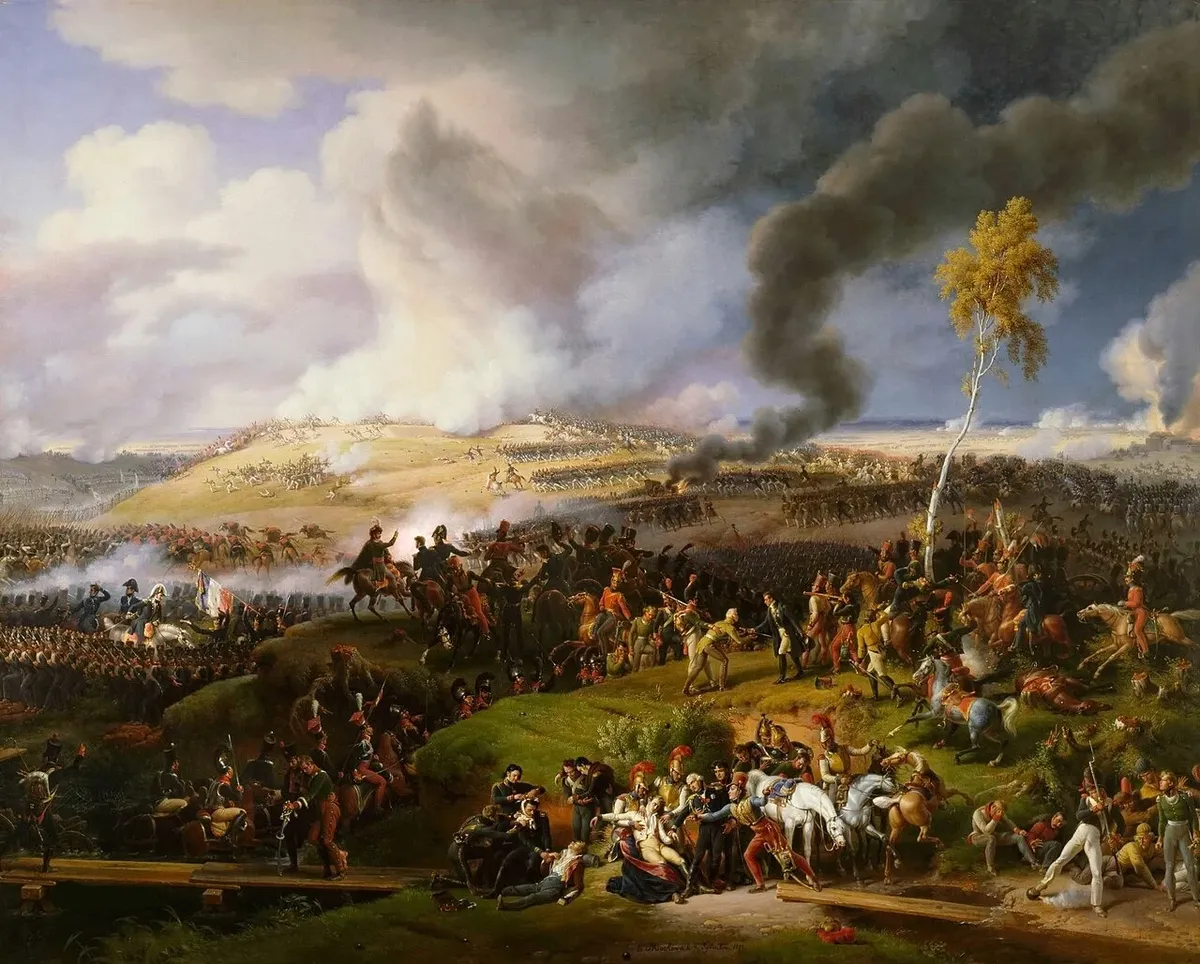
What is allowed for adults, such as swearing, is prohibited for children. But what really took charge of us was the school, which either seemed like a children’s Gulag, or, as Sasha Sokolov wrote, served as a security department. She taught the state's handling of facts. I still haven’t forgiven her for this, because I always wanted to know everything. And in vain that this turned out to be in one history lesson, which I loved to the point of fainting. Standing at the blackboard, I diligently retold “Napoleons” by Tarle and Manfred, proud of what I had read early.
- So who won the glorious Battle of Borodino? - the teacher interrupted, hurrying to put an end to it and stop the flow of unnecessary erudition.
Already in the fourth grade, I understood that the Russian army could not lose the battle, but it was also impossible to declare it a winner, because then it was not clear why the French were given Moscow.
“The glorious Battle of Borodino ended in a draw,” I wriggled out, but didn’t get in.
“Tomorrow,” the teacher snapped, not satisfied with the two, “you will come with your father, who was really to blame for everything, since he filled the house with smart books.”
This lesson turned out to be invaluable throughout my Soviet life. He opened up the censorship zone for me. It covered everything, touched everyone and remained indescribable. The forbidden had to be sensed by a soul frightened since childhood and carefully avoided, as if behind enemy lines.
Censorship led to an evolutionary shift - the development of an additional, sixth sense. It made it possible to identify what was forbidden from afar, so as not to violate the boundaries of what was permitted.
It was easy to cross them because they extended in all directions and across all disciplines. Be it physics, which knew about Popov, but forgot about Marconi. A geography in which there was no place for Israel, whose narrow map hung only in the homes of hopeless refuseniks. And a grammar in which the word “party” had only a singular number. Violations were punished immediately and severely. When my brother was advised at work to join a party, he asked “which one” and was left without a job. It’s good that the inhibitions weakened on the way down, and my brother found himself in the profession of window washing, just as I found myself in the fire department, and we both found myself in unloading cars.
It was more difficult for writers.
Ax under the compass
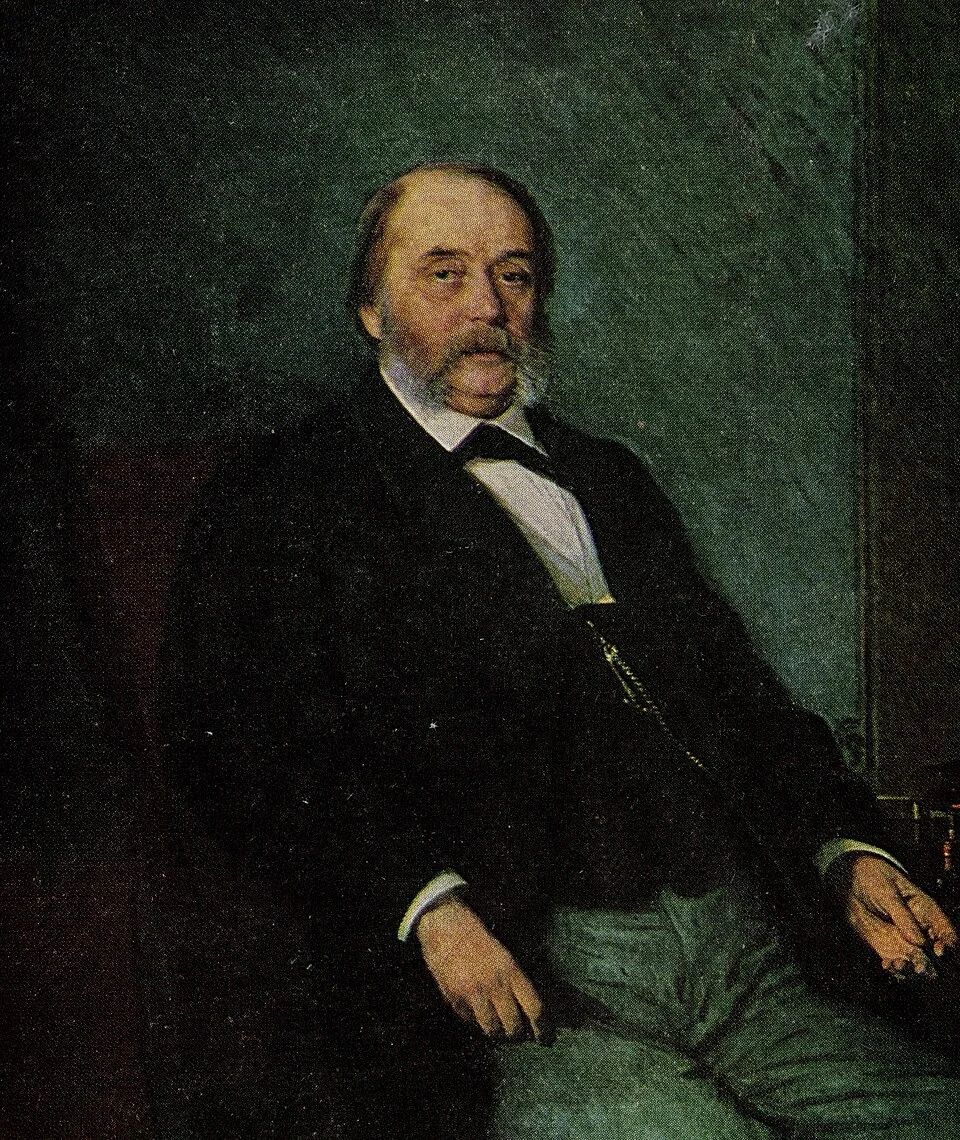
In the Russian tradition, writers either suffered from censors or were them, like my beloved Ivan Goncharov.
Moving from one regime to another, censorship has become accustomed to considering itself necessary and eternal. Rooted into the very core of culture, it built it to suit itself. The resulting design had features that seemed bizarre to an outsider, but were familiar to its own.
Just as an ax has a detrimental effect on a compass, just as radiation changes the tissue of the body, so censorship spoils the fabric of the text. She infects him with alertness. Remembering the prohibitions, the reader guards against the dangerous and tramples on the border of what is permitted. Actually, this line is the content of censored literature. The author is playing a complex game, the rules of which are unclear, situational and, like life, dependent on unpredictable and obscure circumstances. In other words, the writer is groping through a gray area that resembles a minefield. However, it was here that everything worthwhile in the Russian culture of our generation settled - from the early Solzhenitsyn to the mature Strugatskys and all the bards.
The rules governing insolence operated here with the conviction of physical laws. The further the author moved through the forbidden territory, the more love he was rewarded by the spectators watching this dangerous attraction, like in a circus.
In such conditions, risk became a literary category: the boldness of the text justified everything else. Thus, Ehrenburg’s “Thaw” gave its name to the era. And the novel “Not by Bread Alone” awakened young people and, as happened with my father, ruined their lives, remaining completely incomprehensible to foreigners. When Dudintsev was finally translated into English, the critic limited himself to the shortest review: “From this book the reader will learn much more about pipe production than he would like.”
One way or another, the fight against censorship gave special meaning to reading, rewarded and punished everyone who participated in it.
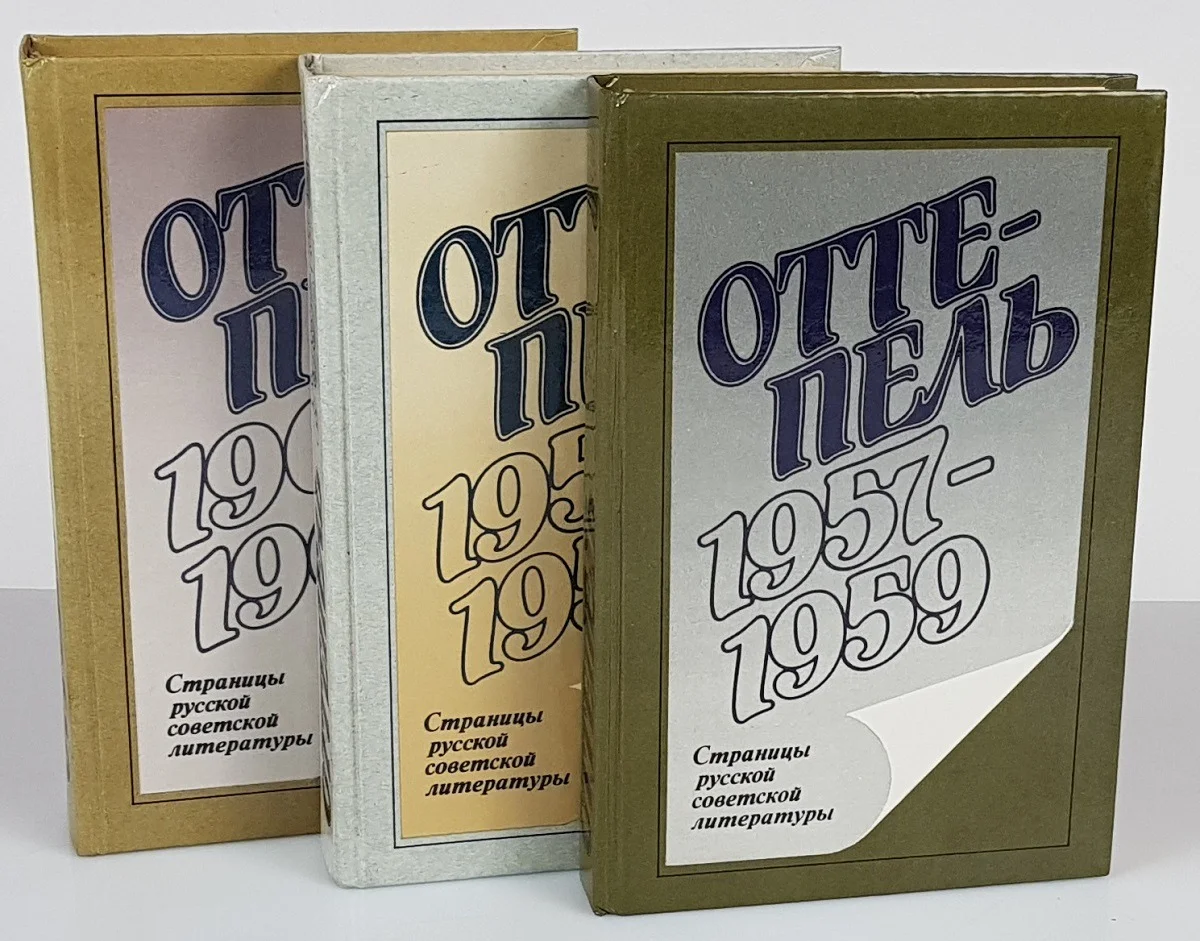
But much more influential and harmful was positive censorship, which did not prohibit, but encouraged the author, completely disfiguring what was left of literature.
“In addition to the Iron Curtain,” Nabokov wrote about this, “a plush curtain of vulgarity has fallen on literature.”
Dovlatov, who suffered from censorship, explained its structure using an example he invented.
“The surgeon recognizes the patient,” Sergei composed as he walked, “the man who stole his wife.” Fighting the desire to kill his opponent, the doctor suppresses his thirst for revenge and brings the operation to a successful conclusion.
Of course, no one believed in such literature, but it led its ghostly life of simulacrum even when no one knew what a “copy without an original” was. For me, the materialization of this mirage was the book “Lenin in Pskov” in Latvian (sic!).
Positive censorship intervened in all the writings of its time - to varying degrees, but with the same result: good defeated evil, consisting of individual and correctable shortcomings.
Let's say the secretary of the party committee was characterized by a forgivable temper.
Knowing the situation in advance, the best authors, like Buddha, followed the third path and also achieved success. To do this, literature had to go down the same evolutionary ladder to the stage where man enjoyed hunting, fishing and gathering. Venichka Erofeev wrote briefly about this: “My stupid fellow countryman Soloukhin is calling us to collect saffron milk caps.”
I don’t see anything stupid in saffron milk caps, especially salted ones, but I agree that censorship has raised the level of natural history to an intolerable level. The culture it mutilated resembled a tree growing near our balcony. Fearing that the cat would jump onto its branches, we trimmed them to a safe height every year. As a result, the tree grew into a bizarre shape.
To get off it, I had to choose the fourth and most radical path: to escape from censorship and its homeland.
Retribution by freedom
Long before perestroika, which temporarily abolished censorship and wrote about it in the Constitution, everyone who moved to the West faced the absence of prohibitions.
This experience was life-giving and devastating, all rolled into one. The ban on free speech disappeared overnight, envy of which drove us abroad. It turned out that the border was a decisive element of worldview and culture. As long as they lied to us, everyone knew when they were lying. From the first day of my uncensored life, the confidence in this disappeared, and I wrote out the maxim, took it in a frame and placed it for my edification not on a written table, but on the kitchen table that initially replaced it.
“The truth,” said my home-grown aphorism, “can only be said about the society that hides it.”
Freedom from censorship turned into a barrage of questions. What do you mean, say what you want? And why, if no one cares?
Deprived of the supervision of power, the writers who hated it felt lonely without the attention of the authorities from which we all fled.
“Before, at least the KGB was interested in me,” Lev Khalif, the author of the legendary and poisonous samizdat book “TsDL,” grumbled gloomily.
It is much more surprising that he was echoed by the founding father of “second literature,” that is, free literature.
“Freedom does not suit a writer,” Sinyavsky argued, “he withers under it, like a northern flower under the bright sun.”
However, Marya Vasilievna fiercely corrected her husband, saying that emigration quickly dealt with nostalgia, building a semblance of a fatherland in the West, including censorship.
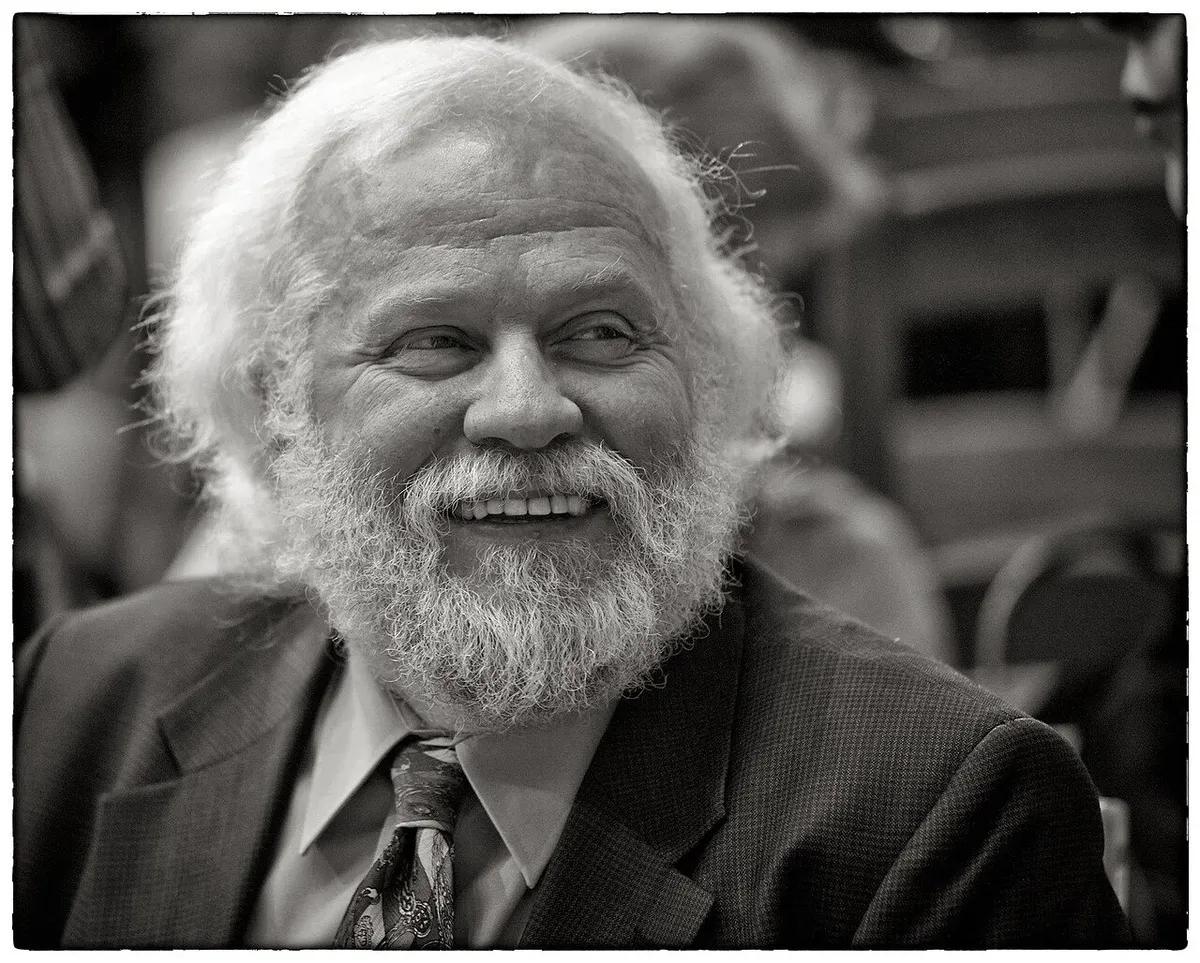
The difference, of course, is that the bans in the emigrant press depended on the party, and there were many of them. What Maksimov’s Continent did not print, Sinyavsky’s Syntax eagerly took on. And dozens of other bodies that offered refuge from the new censorship, and sometimes from common sense itself.
Therefore, the most scandalous book abroad, “It’s me, Eddie,” found a brave publisher, ardent fans and heated critics who proposed establishing a “ministry for the destruction of Limonov.”
Along the way, it turned out that uncensored literature, no less than any other, needs everything that makes it artistic. As soon as one freed oneself from prohibitions, the truth turned out to be bare, inconspicuous and annoying.
Another censorship awaited us in the West and was called “political correctness,” which we were not aware of at first. We first came across it when, together with Peter Weil, we wrote a lengthy report from Harlem, “White on Black,” for the New American. I no longer remember what exactly the State Department official accused the newspaper of, who, to our misfortune, learned Russian, but I guess that the cause of the trouble was unconscious racism. In all of us it manifested itself in a passion for generalizations in which we saw nothing reprehensible, especially when we wanted to say something good.
Thus, Solzhenitsyn began his travel essay from Taiwan with a compliment about the children who met him “with smart eyes, like all Asians.” General Lebed, at a meeting with the New York elite, said that the abundance of Jews in the room inspired hope for fruitful financial ties between the two countries. It was not so much racism as tactlessness that led to funny and absurd awkwardness, which was again best described by Dovlatov.
“If the entrance to the office is guarded by a white security guard,” said Sergei, “I say hello, and if there is a black one, then I also bow.”
Soon, however, our people learned to mimic, use euphemisms, avoid rudeness and not confuse censorship with politeness. With the latter, however, it became increasingly difficult when political correctness turned into a militant ideology requiring sacrifices. Especially in the academy, filled with intimidated professors and touchy students, sometimes reminiscent of Red Guards.
This epidemic almost didn’t affect me, but I’m glad that there was a rollback for this censorship. As Brodsky promised, “life will swing to the right, swinging to the left.”
Spy
Having published the first article in perestroika Russia, Peter Weil and I learned from an internal review of it that “foreign authors do not cross the established boundaries of glasnost.”
Over the years of living in America, we not only forgot about borders, but rather we stopped feeling them as a dead organ that sensed censorship. True, he quickly came to life when we first visited the fatherland, which was still - but not for long - called the USSR. Arriving at a friendly magazine, we brought the text and, in order not to part with it, asked to make a copy, but immediately stopped short, remembering that in our time we were imprisoned for copying.
“You underestimate the progress of freedom,” the editor said, laughing. - Now we’ll call Sergei Petrovich, order the keys to the copying room, and the day after tomorrow everything will be ready.
I became convinced that he was right about progress when a page of a learned colleague appeared in a Moscow newspaper a year or two later. This philosophical essay illuminated the psychoanalytic subtleties of domestic complexes and was called laconically: “Shit.”
Since then it has become clear that living without borders is better, but writing is more difficult. The abolition of censorship also destroyed Aesopian poetics, which greatly complicated what was written. We say one thing, mean another, tease with a third, we get a fourth, sometimes, as in the case of the best master of this literature, Arkady Belinkov, extremely skillful, but suitable exclusively for internal use.
Without the premium for fear, literature returned home. Abandoned by the censor, she, dreaming of a Hamburg account, took only her own place, without pretending to be someone else’s, even in a country where the poet was “more than a poet.”
In the absence of censorship, the boundaries between East and West became less visible. On both sides they talked about the same thing, most often about Brodsky.
The way back became even more difficult. Returning to the past requires exerting other mental forces. After all, now you are not risking yourself: it is one thing to stand under attack, another thing to push friends, editors, and like-minded people to do so. Freedom cannot be imposed at the expense of others. The same, however, as playing by someone else’s rules, which you do not recognize as fair or acceptable.
Swirling under the pressure of opposing forces, I again began to feel like an absurd foreigner in the country of my language - like Pierre Bezukhov on the Borodino field, who did not understand the battle situation and did not know what to do with himself.
Even worse, when you are not afraid for yourself, fear poisons communication, because a spy is participating in the dialogue. His mute presence forces idiotic omissions, which, as we know from old experience, deceive no one. This is how in my time everyone meaningfully discussed the book “Arkhip and Lyonka”, hoping that they would not recognize in it the distorted title of Solzhenitsyn’s work.
Of course, I know where the way out of this painful situation is. He is in the next and decisive division of Russian literature into independent and permitted. Having lived in exile for half a century, I remember very well how this model works. Once again, dozens of magazines and publishing houses from different countries have returned to their posts. In New York, for example, several new bookstores have opened. It is characteristic that the first thing they do is sell children's literature, clearly hoping to educate a new generation of Russian readers in freedom...
All this, of course, has already happened, but history does not quite repeat itself. The new factor in our relationship with censorship is that everyone now remembers a time when it didn't exist.
The end of censorship is like the loss of innocence: a radical, unforgettable and irrevocable event that you have to live with.
New York