
Translated material
Organ Man
Let's imagine that Putin has achieved conditional immortality. But will the generation of great-grandchildren want to be ruled by an endless great-grandfather with ideas about life from the century before last?
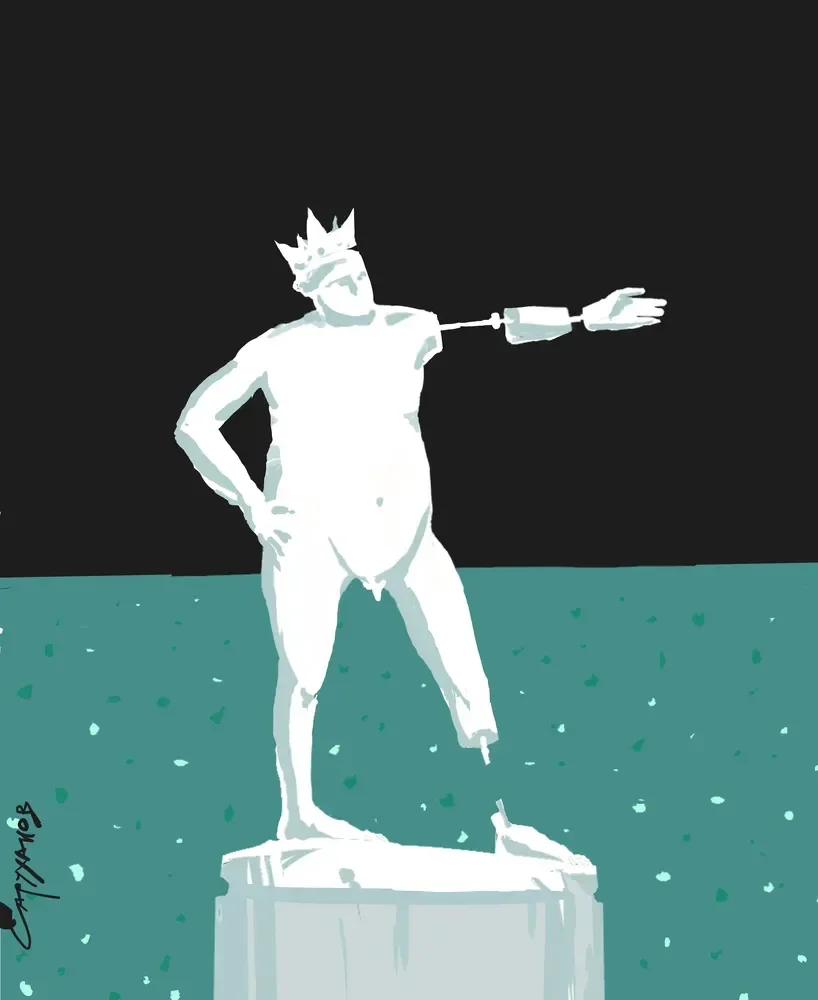
There have been rumors for a long time that in the depths of the Russian government and around it there are conversations swirling and some experimental projects are being born to combat aging and extend life. When, quite in accordance with global trends, one official or another deputy suddenly appeared in public with clearly smoothed skin and suddenly disappeared extra pounds, everyone just shrugged their shoulders: of course, there is money, why not look younger? But with all this, behind the façade of idle talk about the sporadic attempts of representatives of the elite to defeat the process of natural aging, signs were constantly revealed that somewhere out there, at the very top of Russian power, all this seemed not to be a rather routine (which was undertaken by all past rulers in history) attempt in a special way to improve their health and thereby prolong life, but something more.
And it should be greater if you look at where the current ideas of the Russian government and the president personally are heading about what our country and the power in it are, and especially he himself in this power. Back in 2013, in his keynote speech at the Valdai Forum, Vladimir Putin clearly defined this: “Russia, as the philosopher Konstantin Leontyev figuratively said, has always developed as a “blooming complexity,” as a state-civilization, held together by the Russian people, the Russian language, Russian culture, the Russian Orthodox Church and other traditional religions of Russia. It is from the model of the state-civilization that the peculiarities of our state structure flow.” Before this, he regularly spoke about the uniqueness of “Russian civilization,” but now the world was presented with a combination of civilizational characteristics with a special structure of power.
How this linkage should work and what results it should produce was shown in the 14th year with the Crimean events, and the 20th year with constitutional innovations, and the 22nd year with the beginning of full-scale military operations in a neighboring country, and a great many more initiatives and actions of the Russian government designed to demonstrate that all sorts of usual and generally accepted international standards and rules are not applicable to it, because they were written for - that's it! - ordinary countries, but we are an integral civilization, we have different scales and horizons. This is what was enshrined in the new Russian Foreign Policy Concept approved by President Putin in March 2023, which established
that “more than a thousand years of experience of independent statehood, the cultural heritage of the previous era <...> determine the special position of Russia as a distinctive state-civilization, a vast Eurasian and Euro-Pacific power,” which can do almost anything.
It is clear that such a large ship requires a structure of the power system that corresponds to the described scale; all this pre-election fuss every six years with some unpleasant unnecessary gestures, obviously distracting from the establishment of world domination, does not fit into this at all. Simple exercises with the Constitution made it possible to solve this problem for the next 12 years, but what are 12 years compared to the scope of the tasks at hand? And with the status of a de facto autocrat, equal only to the same leaders of the same states-civilizations, to which China, Iran and India were included due to generosity (the descendants of the Roman civilization were recognized as hopelessly decaying and therefore not worthy of attention). However, all sorts of legal restrictions there, which, as has already been brilliantly demonstrated, can always be corrected and overcome, seem to be not the only and far from the main obstacle to leading the proud boat of a state-civilization for a long time and confidently through the stormy seas of world history. Any written laws are inferior to the laws of nature. And first of all - time.
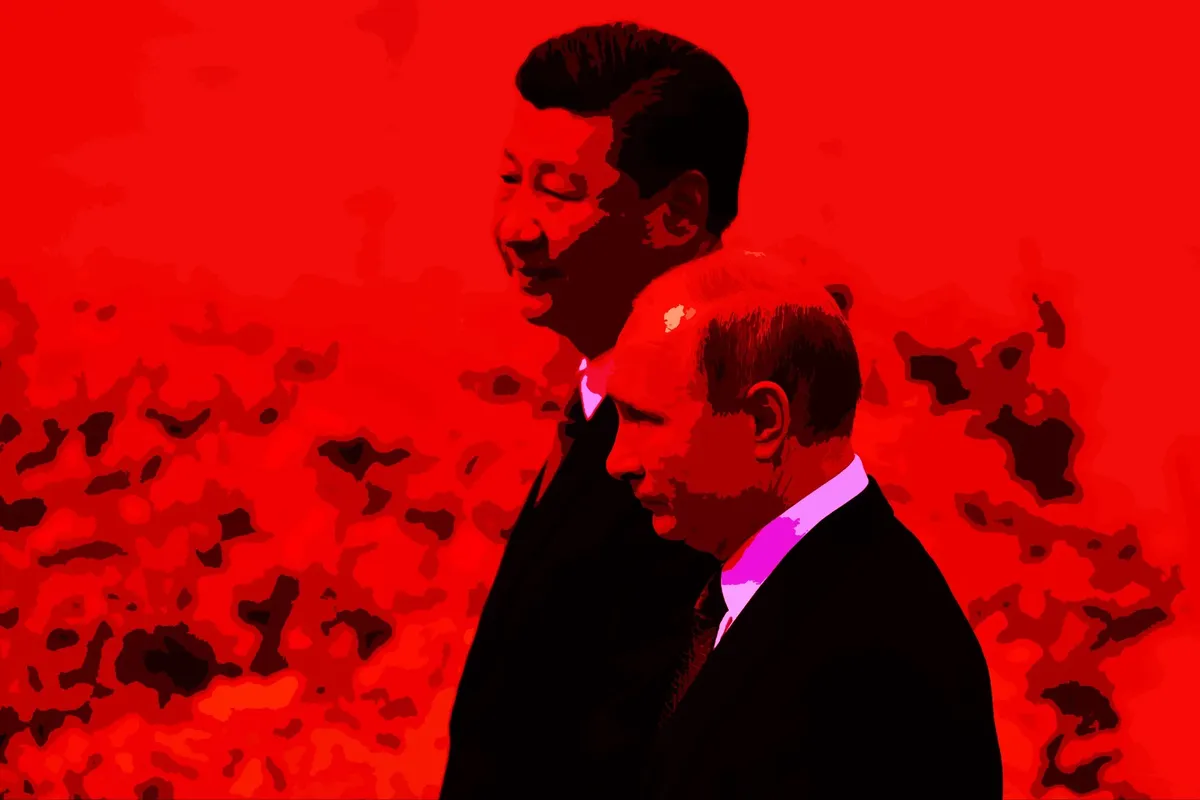
What, in fact, as almost the entire world recently managed to see and hear, was either discussed or lamented by the leaders of Russia and China, who rule almost endlessly and without any restrictions over just two civilization states. It’s interesting that if you type “Putin and Xi” into a Google search, the first options that come up are “immortality” and “150 years.” The world was clearly impressed. And how can one not be impressed if from the transcript of their conversation, observed by journalistic cameras, it turned out that the age of 70 can now be considered almost youth, that longevity can be ensured by timely replacement of aging organs and, thus, one can get almost to immortality or at least to those same 150 years. Later, at a press conference, Vladimir Putin confirmed that yes, this is exactly what was discussed: increasing life expectancy.
There was a fair amount of noise. Both Putin and Xi were 72 years old at the time of the conversation, and both, it turns out, from this very advanced age would like to conquer time with the help of the latest technologies and medical innovations. Vladimir Putin generally has a special attitude towards time. And this is not at all about the fact that he is always late everywhere (although perhaps this is somehow connected with his personal perception of time). If you look closely, he generally bases his policy on not rushing anywhere, delaying everything that can be delayed as much as possible, and postponing everything that can be delayed as long as possible.
Sometimes it seems that he believes that if you slowly stick to your line, constantly falling into a state of protracted pause, internal and external opponents and adversaries in the bustle will make all the necessary mistakes themselves, and then, according to the well-known Chinese wisdom, everything you need will flow along the river of life into your hands.
Probably, the thought of the thousand-year history of the state-civilization, at the helm of which he placed himself, inspires him with a feeling of infinity of time horizons, and the size of the country - the belief in the inexhaustibility of its resources and capabilities. Just know, send them into the furnace of your plans and aspirations and take your time, wait. Not forgetting to simultaneously find ways to live longer, as befits the leader of not just a country, but a civilization, and to definitely see and enjoy the fruits of his labors.
***
Not that President Putin or Chairman Xi were the first in this matter. People have been looking for ways to prolong life as much as possible almost from the very beginning of their history. The first violin in this, of course, was played by philosophers and emperors. The former, like Aristotle, wrote treatises “On Youth and Old Age,” the latter, like the Chinese Emperor Qin Shi Huang, ordered court scientists to invent the “elixir of youth.” And if the texts of thinkers most often talked about the principles and rules of life, which in general could really help people live longer, then with various alchemical potions and potions, as a rule, everything turned out so-so and often led to a strictly opposite result. It is interesting that in ancient times the immortality possessed by the gods was often attributed to the fact that they simply mastered the skill of living forever. Heraclitus wrote: “Who are the gods? These are immortal people, these are the same Greeks, but they have found a way of constant rejuvenation,” and Homer assumed that the gods of Olympus are eternal because they do not abuse bread and “fire wine.” The Hindus believed that their gods were immortal because they fed on amrita, the Iranians on haoma, and the Vikings on rejuvenating apples. One way or another, it all boiled down to the fact that a person only needs to find a way to gain access to the appropriate method of ensuring immortality.
What, by and large, everyone did endlessly: expeditions went in search of mysterious magical substrates, the “philosopher’s stone” was smelted in alchemists’ cauldrons, discoveries were made in the laboratories of inquisitive scientists that laid the foundation for modern medicine and pharmacology. Under the influence of the development of the latter, previously incurable diseases began to recede one after another, and the duration and quality of life began to gradually increase. And then, in the 20th century, a mega-breakthrough occurred: discoveries in the field of biochemistry, molecular biology and genetics sharply pushed the development of gerontology and all other areas of science related to aging.
Almost almost a couple of times a year, discoveries are now being made somewhere in the world that are moving humanity towards a longer life.
And now it is being reported that, for example, in the United States, average life expectancy has increased from 48.3 years for men and 46.3 for women in 1900 to 74.2 for men and 79.9 for women in 2000, and similar figures are observed throughout almost the entire developed world. Even more impressive is Russia’s leap from 24–27 years of average life expectancy in 1900 to 65.5 years in 2000 and to 67 years for men and 79 years for women in 2023. There is already talk about reaching the “80 plateau,” when almost everywhere in the world, where there is access to relatively tolerable medicine and an acceptable quality of life, the average life expectancy will reach a little over 80 years and freeze there. Which seems to many (and is, if you look at the history of mankind) quite an impressive achievement.
But in parallel with this, questions arise: what next, where will the next breakthrough occur, which will lead to one hundred and fifty? Or at least one hundred to one hundred and twenty, which some scientists consider a very real potential frontier? Science has not yet given any definitive answers to this. Plus, adding a fly in the ointment is the same Francis Fukuyama, who in his work “Our Posthuman Future” poses reasonable additional questions: what to do with the fact that, simultaneously with the increase in life expectancy, the birth rate is falling, especially in developed countries? Does this mean that at some point the world will be populated by old people? And who will feed them? And what to do with the fact that these processes are distributed unevenly in the world, and “the world could be divided into the North, where older women will set the tone in politics, and the South, where the driving force will be <...> angry young men with untied hands”? And most importantly,
Is humanity ready for the fact that life extension will bring confusion to almost all existing age hierarchies, and the leaders of countries, corporations and companies will no longer give way to the next generations?
The philosopher is echoed by the American entrepreneur and visionary Peter Thiel, who, in addition to all these questions, reminds that, yes, science has already done a lot and is about to do even more to prolong the functioning of the human body, but has not yet made as much progress in matters of brain aging, in counteracting age-related cognitive changes (for example, in the fight against dementia), and this can have very frightening consequences. Just try to imagine millions of functionally intact people who have no memory of who they are.
It is not surprising that the need to find a balance in parallel counteraction to physical and cognitive aging is reflected in the National Project “New Health Saving Technologies” recently adopted in Russia. Vladimir Putin spoke about it for the first time at the beginning of 2024, and by the middle of that year the project was presented as a multi-component plan. It includes such areas as
medical science management,
development of medical development technologies,
development of biomedical and cognitive technologies of the future,
development of regenerative biomedicine, preventive medicine technologies,
ensuring active and healthy longevity,
development of production of the most popular drugs and medical devices.
All this together should bring Russian medical science as a whole to a new level, placing, as you can see, the topic of ensuring longevity at its very center. It is expected that by 2030 the National Project will be able to save 175 thousand lives and ensure that the average life expectancy reaches 78 years.
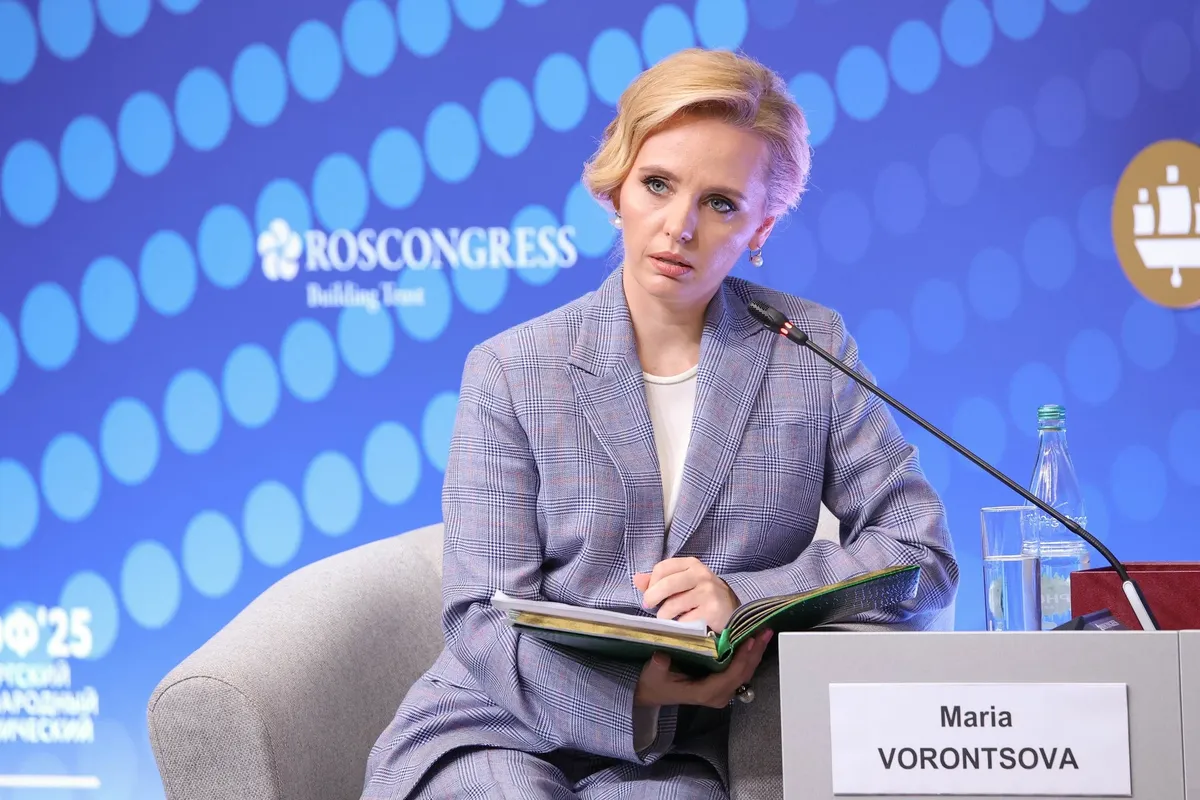
Two areas of work stand out in this project, in which endocrinologist Maria Vorontsova is somehow surprisingly involved. The first direction is genetic research aimed at combating aging. Recently, the laboratory led by Vorontsova won a grant from the Russian Science Foundation under the program for financing world-class scientific laboratories with the project “Regulation of cell renewal processes in the body, the fundamental basis for the long-term preservation of the functional activity of organs and tissues, human health and active longevity.” At the same time, Maria is considered to be associated with the management of similar areas in the state program for the development of Russian genetics, in the organization “Development of Genetic Technologies” and in laboratories based at Moscow State University named after M.V. Lomonosv and the Sirius educational center.
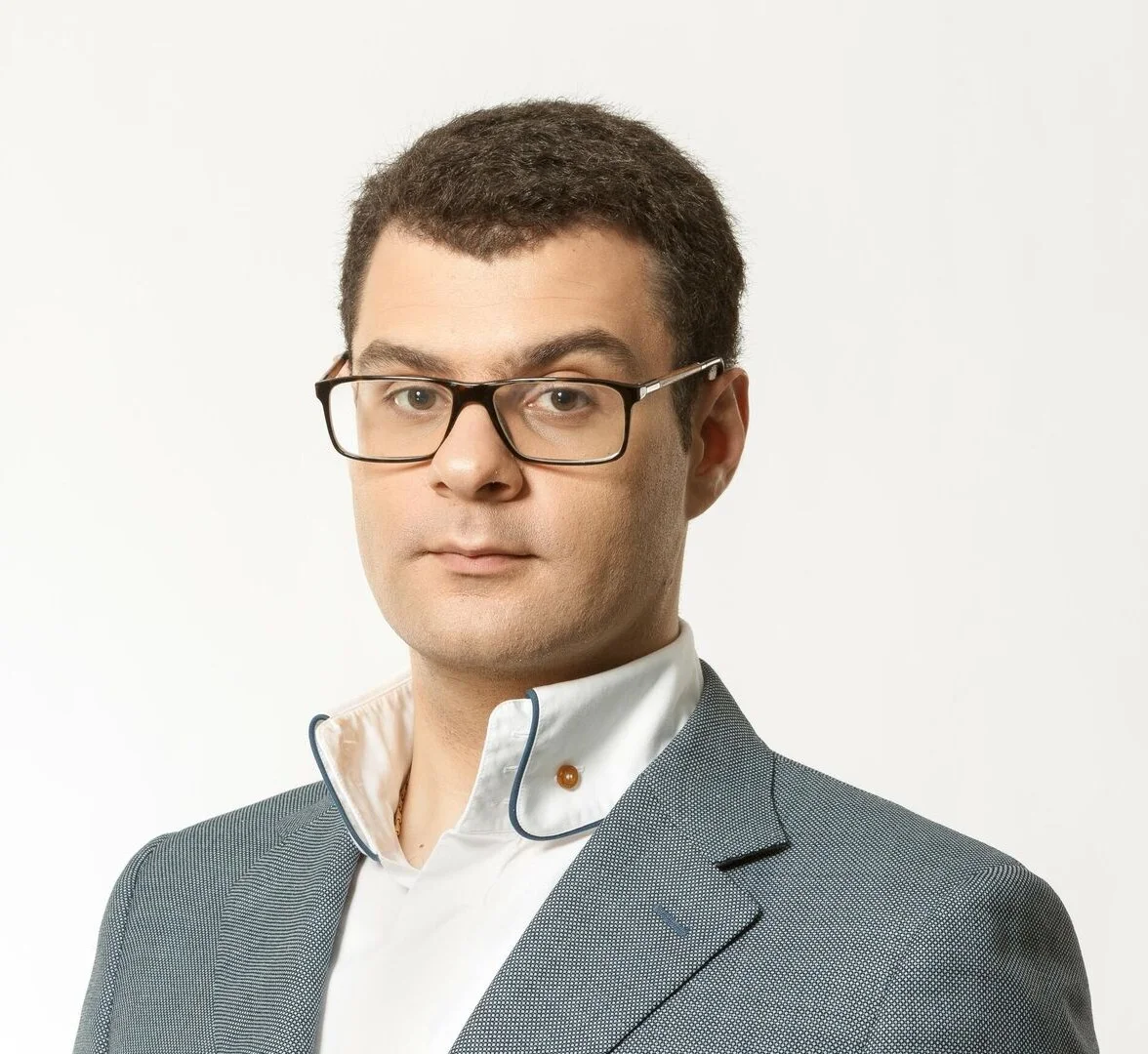
The second direction is aimed at developing three-dimensional printing technologies using living cells, which makes it possible to create human organs (bioprinting). The state corporation Rosatom is now generally responsible for this area, but it builds its work mainly on the methods of the 3D Bioprinting Solutions laboratory, created in 2013 by the owner of the largest clinical diagnostic company Invitro, Alexander Ostrovsky, who after 2022 sold most of his business and moved to Europe, after which the laboratory was de facto led by its managing partner, Yusef Khesuani. And by pure coincidence, he is Maria Vorontsova’s classmate at the Faculty of Fundamental Medicine of Moscow State University. And of course, it is a complete coincidence that in fact, Vladimir Putin recently spoke to Chairman Xi about the possibilities of this very technology of organ bioprinting as a way to achieve the ability to live well beyond 100 years.
***
It’s a pity that our president hasn’t yet found the time to tell all about this to dear Russians. Yes, they heard out of the corner of their ears that the state really wants to develop science and medicine more and more and prolong everyone’s life. True, this has not yet greatly affected the quality and availability of medical services directly at their place of residence, and the Ministry of Health is increasingly reporting about the growing shortage of primary care medical personnel. And yes, dear Muscovites are very happy with the “Moscow Longevity” program, where there is everything, but Moscow is, as you know, not all of Russia, not all of Russia at all. And all of Russia just reads in the news about this very life until one hundred and fifty and is a little surprised: how is this? And who exactly will live to such a respectable age?
Having talked with a fair number of people of different ages with very different views on life and what is happening around, this is exactly what we were able to discover: restrained curiosity mixed with general indifference. Putin says you can live up to 150 years? Well, he knows better. He knows better. Of course, in general it would be interesting to find out how this is possible, but in general terms, as it used to be, we read about anything interesting in “Science and Life” or watched in the film magazine “I Want to Know Everything.” In general terms. Why is this so?
Yes, because it is clear that this has nothing to do with ordinary people, this is only for the rich and those who are there (follows a finger-up gesture), as it was in the Politburo. So why worry about it? If they come up with what it really is, they will tell you.
"That's for sure! They’ll tell you, they’ll catch up and they’ll tell you again!” - laughs one of my interlocutors, a man of retirement age with hands that clearly betray his former working profession and cunning in his eyes:
“So, they figured out how to outwit and outwit everyone there, so that they have Trump-Biden-Trump or someone else, while here Putin lives and lives for himself and shows them all Kuzka’s mother?.. Well done! Eh, they attacked the wrong ones, they thought they would put the squeeze on us, that we would dance to their tune and according to their rules, and we - hop! - and everything in its own way, and for a long time too... They can’t wait! If our people have come up with something to keep the leader alive and well, and for a longer period of time, then this thing must be taken care of like the apple of your eye, it’s a stronger thing than a nuclear weapon, there’s no point in chatting about it on every corner.”
The fact that nothing has been invented yet does not matter, just as the fact that if some kind of idea suddenly happens, it is unlikely to become the property of ordinary people and will allow them, along with the elites, to join in prolonged life. And even though there is an obvious contradiction that Putin and Xi are talking about 70 years as a kind of new youth, and the national benchmark for average life expectancy is aiming at seventy-eight, not far from that youth, but my interlocutor is definitely right that mastering the mechanisms of aging control from the point of view of influencing what the future will be like is really comparable to how the presence of nuclear weapons influenced what happened and is happening in the world. The point is not only how long this or that head of state will live and rule, but how the society he will govern will look like.
This is exactly why young people have a slightly different, more interested view on the topic of the possible arrival of longevity in our lives. Some reactions turned out to be quite sharp and developed in a somewhat unexpected direction:
“So they came up with such a national program so that people would live longer? Did they come up with it right now? When do people sign contracts in batches? How much do they want to increase by extending the life of the population? 170 thousand? This is some kind of bullshit: killing young people with one hand, and increasing the number of old people with the other? What kind of country will they have in which there will be only women, disabled people and pensioners? Just a great idea! The main thing is timely. There is no question that Putin is personally interested in this, but why call it a national program then?”
Somehow it was not possible for those young people with whom we managed to discuss the fact that genetics is about to make another breakthrough and bioprinters will not only someday in the future print us new livers and ears (as well as conscience - crossed out), but even, they say, for those already wounded in some cunning way, new skin is made in hospitals, to discern shining prospects in all this:
“I don’t understand something: they are going to live there until they are one hundred and fifty, and in order for them to succeed, my grandmother must retire five years later than she could have retired earlier? So seriously? They get eternal life, and she gets to work longer? Don’t they themselves see the contradiction here? It is clear that all over the world now there are more and more elderly people, and fewer and fewer young people, and this is a real problem. But it’s like this, so that they can gather another, new life from their new organs, while ordinary people barely live to see retirement with no free healthcare at all and virtually no chance of state help if some serious health problem happens, Kafka never dreamed of this. However, why be surprised, he would be jealous of a lot here..."
But not everyone was so categorical; some see in all this at least some opportunities to move towards some kind of future that is at least somehow competitive on a global scale. And if we now don’t have much of a chance to compete with the rest of the world in anything else in terms of development, then why not try at least in this:
“Musk, whatever one may say, will fly to Mars without us and before us. And with all these sanctions, we are unlikely to achieve anything particularly technological in the near future, except something completely military. We can’t even really make a car. And here is the chance that if the main thing is on fire, then they will pour in all the resources, they will not regret anything, and maybe then we will at least somehow break out somewhere. Science has always been nothing to us. And if you add the personal interest of the first person to this, then maybe something will work out. Stalin got excited about rockets and space at one time, and everything started working there right away. The main thing is that along the way everything is not stolen out of habit...”
Some asked very philosophical questions, which, of course, arise if you look at the notorious one hundred and fifty not just as a number, but as a certain period in historical space, tied to the reality in which we all find ourselves today:
“And it’s cool, if you think about it, to plan in old age to live as long as you have already lived. Not like me, for example, when it’s easy to imagine another plus 22 years (although it’s difficult in reality). And so that you are seventy, and you go one more round. This is how life has changed from the 50s to today, and a person wants to see another such complete change. That is, if you imagine that they are seriously about one hundred and fifty, then it turns out that a person from the 20th century wants to live in the 22nd. Not bad. But it seems to me that he doesn’t take one thing into account: the longer you live, the more generations appear behind you with their own ideas and priorities, interests and desires. It is absolutely not a fact that a generation of great-grandchildren will want to be ruled endlessly by a great-grandfather with ideas about life from the century before last.”
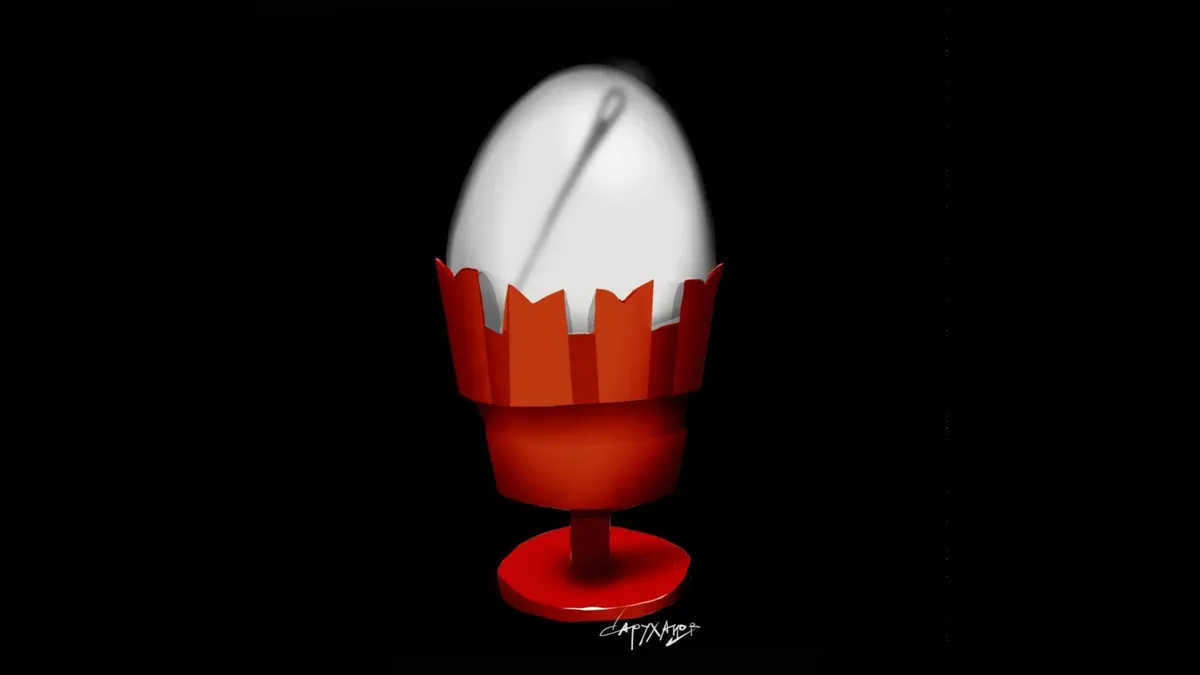
This is really, perhaps, the main problem here: even if you really, really want to subjugate time in order to rise above history, to reign for as long as possible at the head of a state-civilization, even if it seems quite possible that, if necessary, a new you will be recreated from new organs, it is not at all a fact that people living in ordinary time, ordinary cities and towns with their ordinary life, will consider this a good idea.
In the end, according to national traditions, only Koschey was immortal. And he has a so-so reputation.
This material was published in the fifteenth issue of Novaya Gazeta. Magazine". You can buy it in the online store of our partners.