
Translated material
A sign of parting with unfreedom
Lev Shlosberg* - about when his prison will become a museum

Prison in Pskov. Photo: media.informpskov.ru
18+ THIS MATERIAL (INFORMATION) IS PRODUCED, DISTRIBUTED BY FOREIGN AGENT LEV MARKOVITCH SHLOSBERG OR CONCERNES THE ACTIVITIES OF FOREIGN AGENT LEV MARKOVITCH SHLOSBERG
On the morning of December 6, my first in the pre-trial detention center, the deputy head of the pre-trial detention center, walking with me into the cell after the check, said: “This cell is now your home. We need to keep it in order." The furnishings at home were, of course, unusual.
But quite quickly, literally in two or three days, I realized that, despite being moved to a pre-trial detention center, my feeling of home had not disappeared. This is not a feeling that is tied to specific walls - family or government - no, this is my feeling of Pskov as home.
Before my arrest in the pre-trial detention center, I could not imagine this. Being in the Pskov prison castle, I feel at home, because I am in Pskov.
The feeling of my hometown passed invisibly through the walls of the prison and quietly said to me: “You are at home. Be calm. I'm with you." I felt it and understood it.
Many events in the life of our family are connected with Nekrasova Street. Here, from pre-revolutionary times until 1974, stood a house that became the home of the Alesin family in 1938, where the old printer Mendel Alesin and his 16-year-old grandson, my future father Mark, returned from evacuation in 1945.
Here, for the second century, stands the building of the former 2nd, then 8th school (during construction at the beginning of the 20th century - the Mariinsky Women's Gymnasium, now - the Pskov Technical Lyceum), where before and after the war my grandfather, artist and teacher Yevsey Berkal, taught, his children studied here - his son Hone (a graduate of 1941, who went through the entire war) and daughter Bronislava, my mother, who later taught children in the same school of chemistry and biology. Here I myself spent 10 school years from 1970 to 1980, and my sister Irina studied here.
On the same street (on the site of the current telephone exchange building) stood the Pskov registry office building, where my parents got married in 1962.
On the same street is the House of Soviets, where I worked as a deputy of the Pskov Regional Assembly from 2011 to 2021, this was the place of my representative service.
The Pskov Yabloko office has been operating on this same street since 2015, and my workplace remains here.
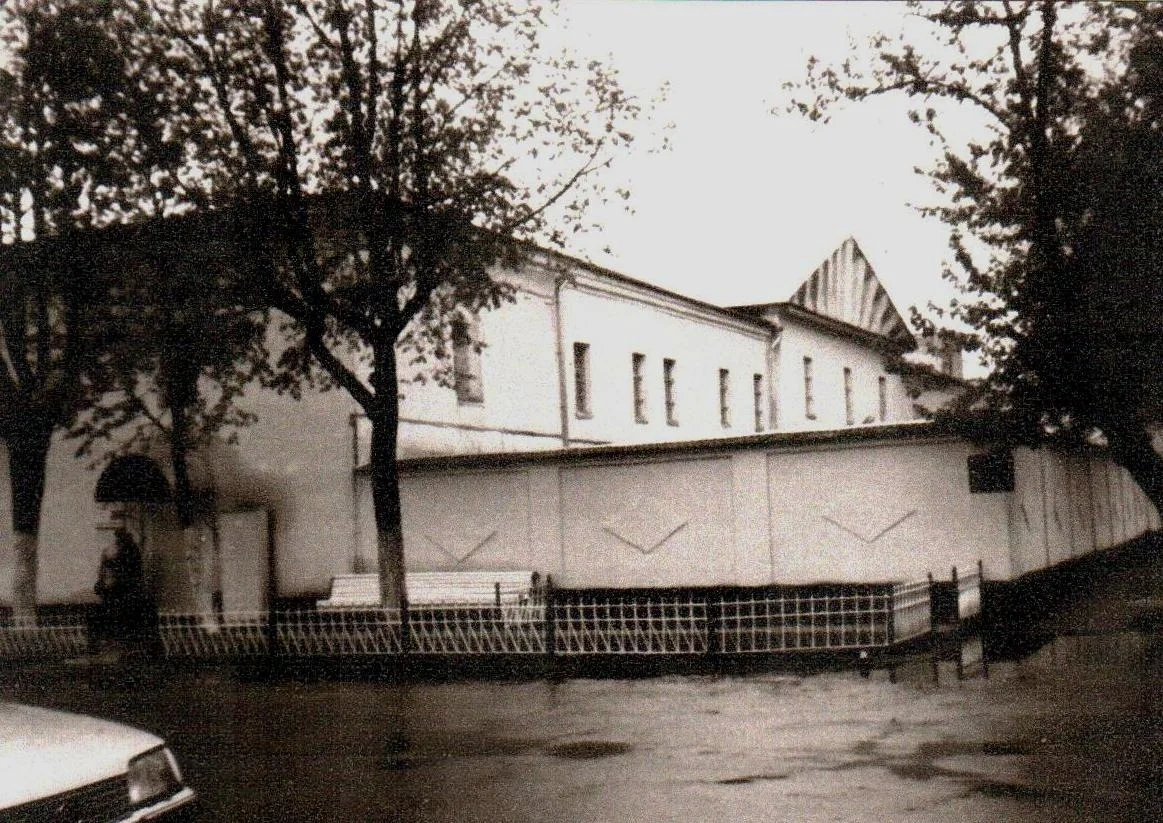
And on the same street is the Pskov prison where I find myself now. Many members of our family walked near this building, and I ended up inside it. But I feel at home in any building on this street, anywhere in Pskov. This is my city, there are no foreign places for me.
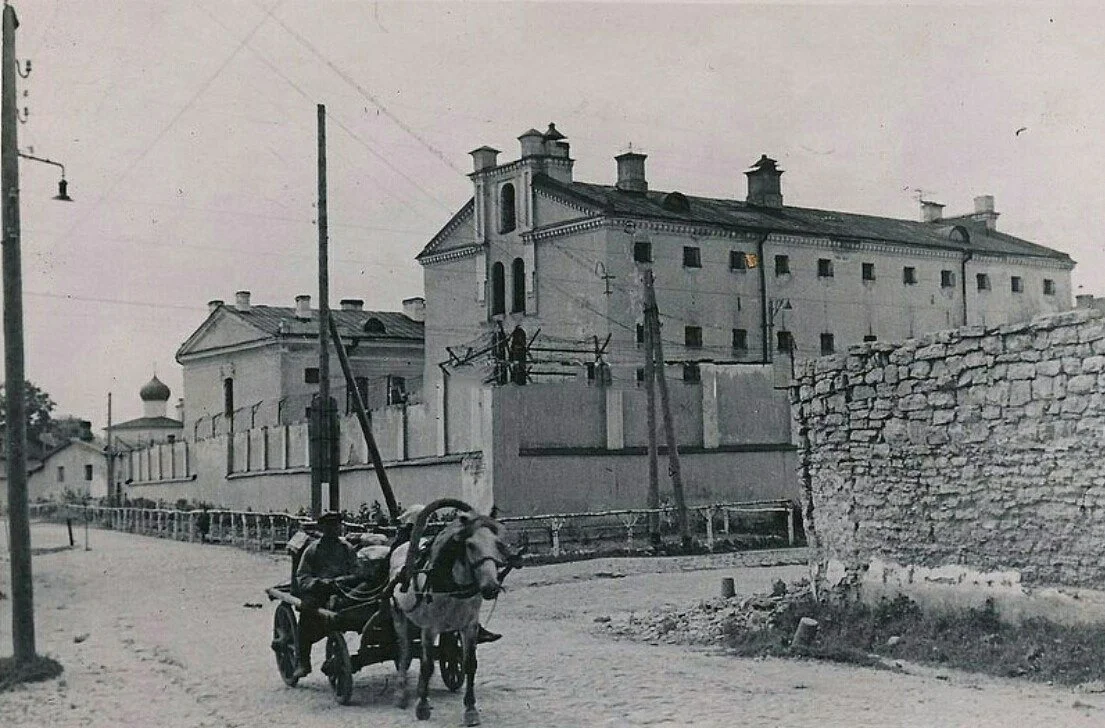
The Pskov Prison Castle is one of the first so-called regular buildings that appeared in Pskov as a result of the redevelopment of the city according to the general plan approved by Catherine II in the mid-1770s. The almost straight streets of Gogol and Nekrasov (under different names, of course) appeared precisely then in place of the old crooked Pskov streets that grew out of the Middle Ages. It was not possible to redevelop the whole of Pskov into “squares”, because this required demolishing entire blocks, but the space between the streets of Petropavlovskaya (now Marx), Gubernatorskaya (now Nekrasov), Mikhailovskaya (now Spegalsky) and Ivanovskaya** (now Gogol) appeared precisely at the end of the 18th century and was later allocated for a large government institution - a prison.
The design of the building of the Pskov prison castle, like all public buildings in that era, was approved by the highest (imperial) approval. At the same time, the building itself was standard; in each city, the project was linked to the locality.
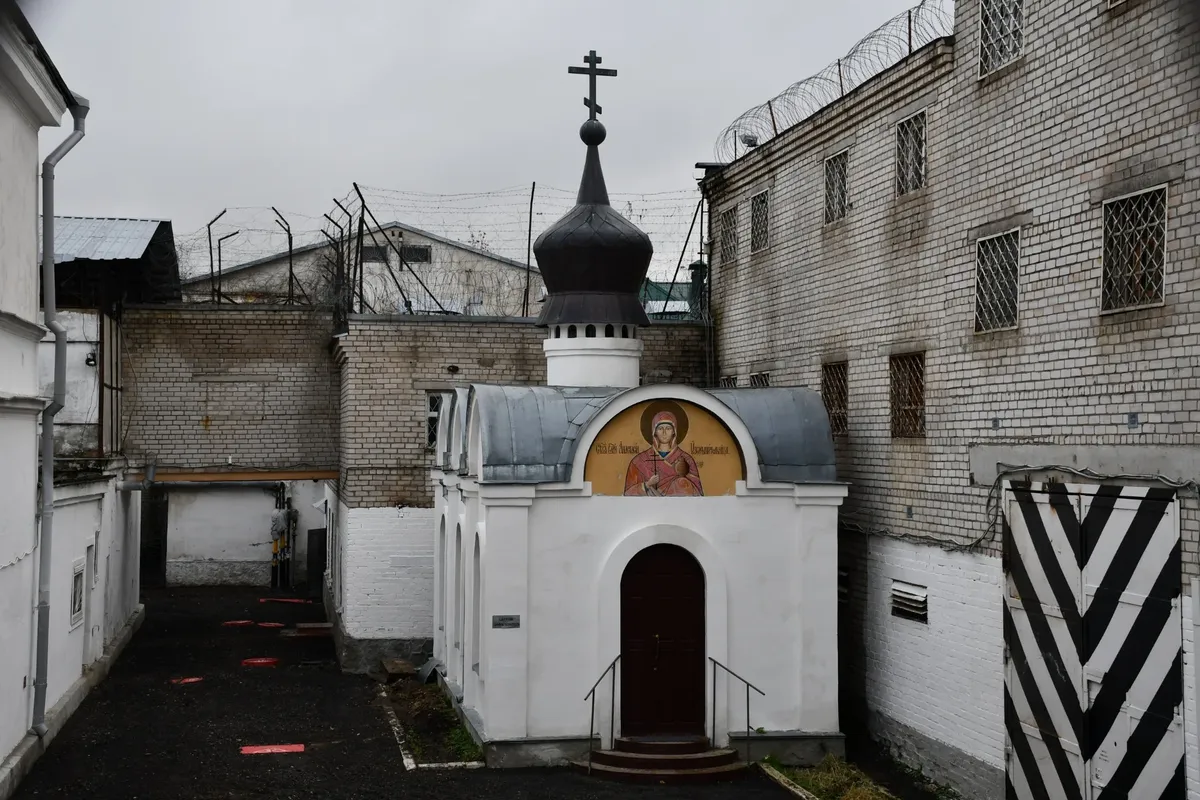
Pskov Prison Castle is a cultural monument of regional significance. I have never been interested in its history in detail, but now I see this complex of buildings from the inside. In this space there is a huge number of artifacts, ready-made museum items. I don’t know whether they are included in the subject of monument protection as parameters of the architecture of the building itself. Cell doors with forged locks, on which dozens of layers of oil paint have grown together. Hand forged scrollwork bolts. Huge size rim locks with 15 cm keys, the keys themselves have large rings and large grooves. Original bars on the windows from the early 19th century, grown into the walls during their construction. Metal stairs. Metal bars on almost every opening.
All this creates a unique interior in which, if desired, you can shoot films about the 20th or 19th centuries, you just need to drape the electronics. All this triumph of metal sounds every minute: it clangs, rattles, knocks, rings and grinds. Metal makes all kinds of sounds and speaks its own language. These sounds can be recorded on soundtracks for cinema and theater. Everything is genuine.
The Pskov Prison Castle is an almost ready-made museum of several eras, and a reliable museum in which nothing needs to be imitated.
We just need to preserve this space, an almost finished prison loft, and fill it with exhibits preserved in the archives of various institutions, tactfully and carefully develop a territory with a powerful independent historical and cultural energy.
How many eras have passed within these walls? “The days of Alexander are a wonderful start.” Cold decades of Nicholas the First. The great reforms of Alexander II, including the fall of serfdom. Rollback and slowdown of the country under Alexander the Third. The era of Nicholas II filled with tragedies: the first Russian revolution of 1905–1907 in the twentieth century, the disaster of the First World War, the fall of the autocracy. Then - the Bolshevik coup in 1917, the Civil War, during which Pskov, along with the prison, passed from hand to hand of the white, red, crazy detachments of Bulak-Balakhovich and the Germans. NEP with its hopes. Stalin's repressions. The German occupation during the Second World War, Stalin's repressions again, the eras of Khrushchev and Brezhnev, the dying of the Soviet system, the collapse of the USSR, Yeltsin's incomplete decade and the entire first quarter of the 21st century - under Putin from the first day.
The state system and political systems, heads of state and government, flags in the city changed, authorities of all levels and types rose and faded into history, but the prison (exactly the kind that was built at the beginning of the 19th century) turned out to be needed by all authorities without exception. Everyone was satisfied with these walls. No one dared to change the prison, no one abandoned the prison castle. And the prison castle survived everyone.
People within these walls went crazy from loneliness and despair, cried, confessed and repented of uncommitted crimes, screamed and died under torture, begged for mercy, were silent as stones, refused betrayal, dreamed of freedom and were released. All the local walls are witnesses to thousands and thousands of destinies, the memory of many of which has not been preserved by history.
A museum should be built here, of course, when the authorities (who knows when?) think about a different, modern way of prison - as a place that no one should ever renounce.
The phenomenon of the Russian prison will find its researchers, because the prison in its current form, the prison as a prison, has become part of the Russian cultural code and has entered into Russian politics.
The prison became the image and prototype of the state itself, became part of the foundations of state power and the way of social life.
Russia’s parting with this image of prison and life itself is parting with the lack of freedom that permeated the entire air over the country, where in every cemetery those who were imprisoned are buried.
In the future museum of the Pskov Prison Castle, of course, it will not be possible to preserve all traces of human existence. Tears will dry, restoration will hide the scars of eras, museum spotlights will ennoble even death itself, living within these walls. But a prison museum is necessary - to comprehend what has happened and as a tribute to the memory of those whose lives were cut short within these walls, as atonement for sins, as a sign of parting with unfreedom, as a symbol of the country’s release from imprisonment to freedom.
And the new detention center should be surrounded by a park, the trees in which will rustle at the prison windows, reminding people on both sides of the bars about the transience of life.
Lev Shlosberg*, Pskov Prison Castle