
Translated material
"The Donro Doctrine" and the "panicists"
The majority of US residents did not support the attack on Venezuela; Trump's rating did not increase

Donald Trump conference. Photo: Imago Sport and News
The majority of US residents did not support the attack on Venezuela, and Trump’s rating did not increase. In contrast, 72% of Americans are concerned about excessive US interference in the affairs of this country.
The media reminds the president of his words to West Point graduates in June 2000: “We are ending an era of endless wars, the task of the American soldier is not to rebuild foreign countries […] we are not the world’s policemen.”
"Welcome to 2026!"
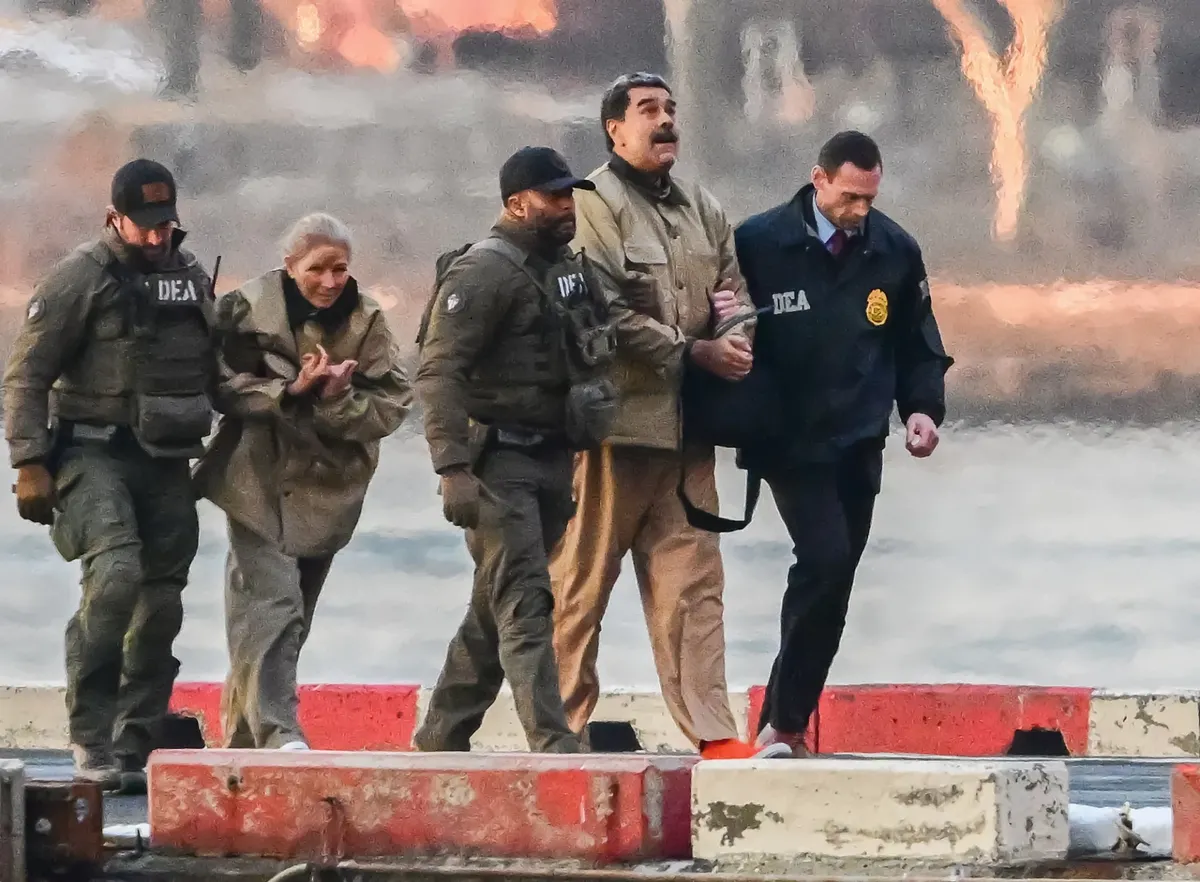
While the first year of President Donald Trump's second term was devoted to negotiating peace deals around the world (the president boasts that he has stopped eight wars during that time), the second year began with the capture of Venezuelan President Nicolas Maduro and his wife Cilia Flores, a swift sting operation that killed between 56 and 100 Cuban guards and Venezuelans, military and civilian. American troops were injured, but no one died (according to official figures). Maduro appeared in court in New York and denied all charges: from narco-terrorism to conspiracy against the United States. The main thing is that Trump announced: everyone else should be afraid.
We are talking not only about Washington’s opponents - “socialist” Venezuela and Cuba, but also long-time trading partners such as Colombia and Mexico, from whom the White House demands that they fight harder against drug trafficking and illegal migration to the United States. The list includes Greenland, the territory of NATO ally Denmark (an attack on it, according to European leaders, would mean the end of the North Atlantic Alliance), Panama (“Give back the canal!”) and Iran, which the United States bombed last summer.
Trump recently threatened to "tear down" Tehran and said America is "ready to fight" and "armed to the teeth" if the regime uses force against protesters. The regime used it: according to the Iranian opposition, 500 people have already died. And the regime responded that it was not afraid of Trump and was ready for war. Thus, the president fell into a trap. If he doesn’t answer, the US will remember the TACO (Trump always chickens out) meme. The president is already trying to downplay the ayatollahs' retaliatory challenge, saying Iran's leaders have "contacted him and want to negotiate."
Another tried and tested method of this politician is to shift attention. Global markets can collapse, as happened on Monday morning when the US Department of Justice opened a criminal investigation into Federal Reserve Chairman Jerome Powell.
Or you can add a new bombing. Over the past month, in addition to Venezuela (it all started with attacks on ships allegedly transporting drugs), the United States has struck Islamist terrorist targets in Syria and Nigeria. Trump promised to intensify the bombing if Christians are oppressed there.
Greenland stands out on this list. Trump said that “if we don’t get in, China and Russia will.” The United States is ready for a “deal” (they write that 57 thousand Greenlanders will “buy”, paying each from 10 to 100 thousand dollars, to agree, following the example of Puerto Rico, to become an unincorporated organized territory of the United States), but “difficult decisions” are also possible. The point is the mineral deposits there, and not the hypothetical landings of the Russians or Chinese, Washington experts write.
Trump’s new course was nicknamed the “Donro Doctrine” (a mixture of the name Donald and the surname Monroe, the author of the historical doctrine of “US hegemony” in the Western Hemisphere from 1823).
As happens with Trump, the term may be new, but its meaning is very old, throwing it back not even to the last century, but to the first half of the 19th century. A year ago, the conservative New York Post ran a cover story with the headline "The Donro Doctrine: Trump's Vision for the Hemisphere." The newspaper's front page showed the president holding a pointer next to a map that crossed out Canada and renamed it the "51st state," labeled Greenland as "our land" and the Panama Canal as "Pana-MAGA."
The term was not immediately recognized, but within a year it began appearing in headlines in the Financial Times, The New York Times and other publications. He has also been mentioned several times on Fox News and Fox & Friends. Donald Trump himself used the term after the Venezuela raid, saying: "Now they call it the Donro Doctrine." On January 7, the cover was published on the House Foreign Affairs Committee account with the caption: “Our country was built by warriors and explorers. We conquered the West, won two world wars and were the first to plant a flag on the moon. President Trump has the biggest dreams for America, and it’s un-American to be afraid of big dreams,” after which the post was deleted. And they edited it, calling it the Trump Doctrine.
In a video posted on the White House page on January 5, the president emerges from an armored limousine accompanied by the acronym FAFO, which stands for f*** around and find out, a favorite phrase of officials of the current administration. It is impossible to accurately translate - mat. "High Culture" of the White House. This also applies to Democrats, remember Victoria Nuland’s statement: f*** the EU (European Union)! Past, current and, apparently, future generations of American politicians have one thing in common: they all talk about “American exceptionalism.” Even Obama.
Amid the blitzkrieg in Caracas, Trump opened up in an interview with the New York Times, saying that he recognizes only one limitation for himself: “My own morality. My own mind. This is the only thing that can stop me." All other official checks and balances mean nothing. “His disregard for international law is absolute,” says London Guardian columnist Jonathan Friedland.
The president is echoed by his team. Defense Secretary Pete Hegseth said during a press conference hours after Maduro's arrest: “This is America first. This is peace through strength. Welcome to 2026." And White House Deputy Chief of Staff Stephen Miller “concluded”: “You can talk as much as you like about international propriety, but the real world is governed by force and might.” On Jan. 7, Trump said he would push for $1.5 trillion in the next fiscal year for the Department of War, which he has renamed from the Defense Department, more than 50% more than Congress appropriated in 2026.
Returning to Venezuela.
This is about oil and money, not about democracy and drugs
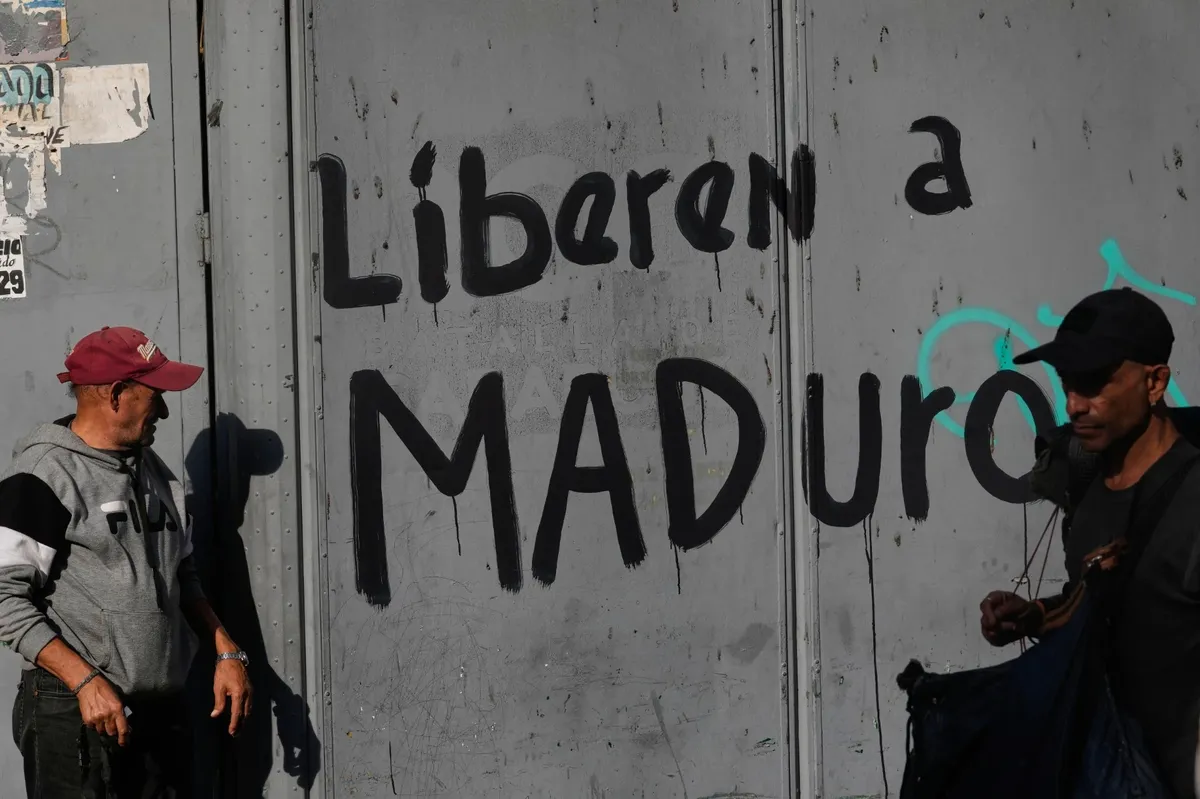
White House officials reminded critics of Maduro's takeover that when Trump bombed Iranian nuclear facilities last June, it "paved the way for a peace agreement" between Israel and Hamas in the fall. Many Venezuelan-Americans, as noted by the Trump team, took to the streets to celebrate the overthrow of Maduro, whose elections in 2018 and 2024 were recognized by the world (with the exception of the dictator’s few allies) as a “farce.”
Trump coined another word for his critics: panicans—a mixture of “panic” and “Americans.”
And he promised a quick political end to the five Republican senators who supported the resolution demanding congressional approval of further attacks on Venezuela. Vice President Vance said congressional consent was "not required."
This is not about restoring democracy. Trump said Venezuelan Nobel Peace Prize laureate, former parliamentarian and opposition leader Maria Conchita Machado is “not powerful enough” to lead the country. The Wall Street Journal suggested what so many people were thinking: Trump is still annoyed that she, and not he, won the peace prize. Machado said she was ready to give her “Nobel Prize” to Trump or “share it,” the president said he was “not against it.” The Nobel Committee was against it. It is now reported that on Wednesday, January 14, the President will receive Machado at the White House.
At the same time, Washington has already established a dialogue with Maduro’s deputy, “interim president” Delcy Rodriguez. On January 9, Trump said he had canceled a planned second wave of attacks on Venezuela and no longer considered them necessary. For now the mode is saved. The release of Venezuelan political prisoners can be regarded as payment. As they say, “the process has begun” - there were more than 800 opponents of Chavez and Maduro in prison.
Trump pretended that his conflict with Maduro was related to drug supplies to the United States, although this country is only in fourth place in drug exports to America. He made similar threats against Mexico and Colombia, and the presidents were forced to respond, promising to increase cooperation with the US Drug Enforcement Administration (DEA). However, Trump just pardoned and released former Honduran President Juan Orlando Hernandez, who was convicted and jailed for 45 years for sending 400 tons of cocaine to the United States.
The main reason is Venezuelan oil. Its deposits are considered the largest in the world. Trump said the country will now transfer 30 to 50 million barrels of oil to the United States. “This oil will be sold at market price, and this money will be controlled by me as the President of the United States of America to ensure that it is used for the benefit of the people of Venezuela and the United States!” — the head of the White House wrote on his social network Truth Social.
Trump summoned the heads of major oil corporations to the White House, urging them to spend $100 billion to revive Venezuela's oil industry. And when faced with skepticism from Exxon CEO Darren Woods, who said the country was not ready for investment right now (the industry has been nationalized, and the debt to American companies exceeds $13 billion), Trump warned that he would not allow Exxon and other doubters to do business in Venezuela.
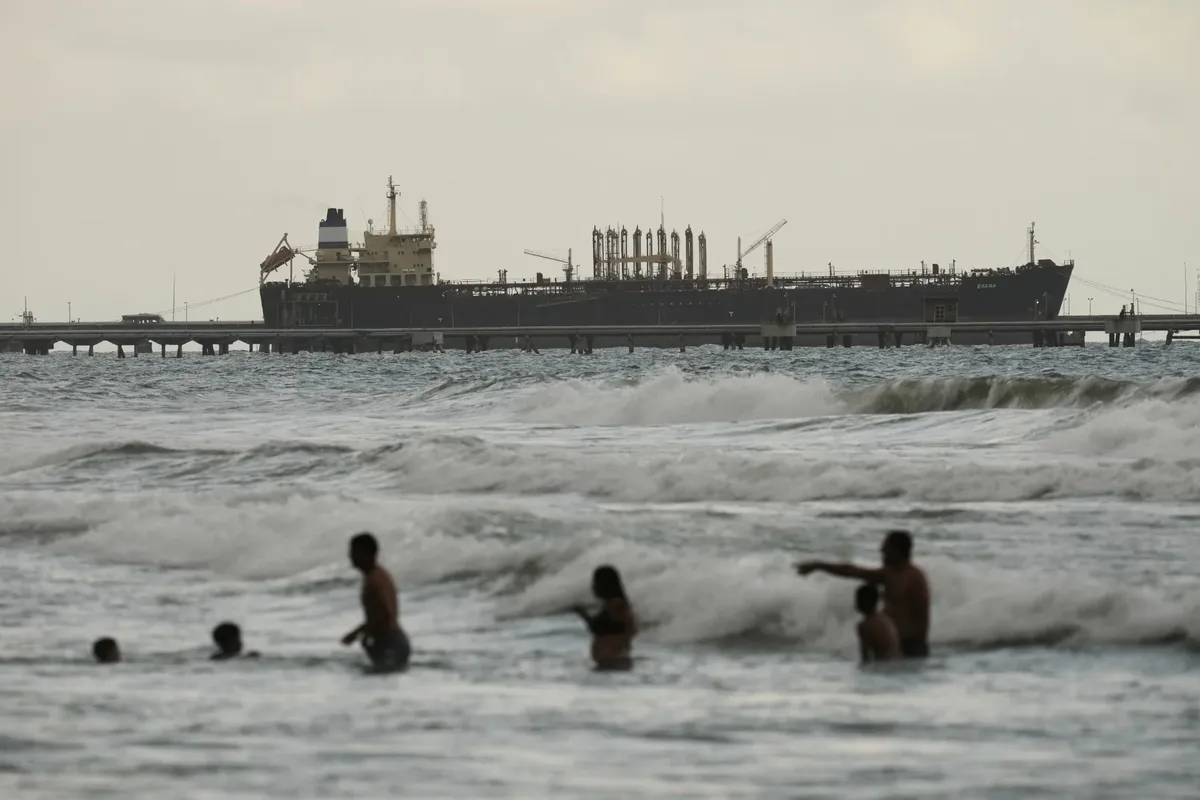
From the same perspective – “business and nothing personal” – one can view the pursuit and seizure of tankers that violated the “complete and comprehensive” blockade of sanctioned Venezuelan oil tankers, imposed by Trump on December 16. As local media write, this was followed by a “coordinated attempt to break the blockade.” Sixteen ships, most of them supertankers bound for China, escaped using deceptive tactics including fake ship names, falsifying locations and turning off tracking signals to operate in "dark mode." Two tankers, Marinera (formerly Bella 1) and Sophia, were hijacked. The operation to seize the first tanker was carried out by the US Coast Guard and the British Ministry of Defense. On December 31, the crew of Bella 1 changed the ship's name to Marinera and flew the Russian flag, and Russia's Ministry of Transport said it had granted the ship "temporary permission" to fly the Russian flag and warned that Washington had no right to seize it.
The president noted at a press conference that the presence of the American military, supported by British forces, was enough to force the Russian fleet to retreat. "I don't want to say it, but the fact is that the Russian ships - it was a submarine and a destroyer - both got away very quickly when we arrived," Trump said.
However, there was no escalation, except for threatening statements on social networks and Ostankino studios by Russians - from former President Medvedev to Deputy Zhuravlev and General Gurulev. The official Kremlin announced: “In response to our appeal, US President Trump decided to release two Russian citizens from the crew of the Mariner tanker, which was previously detained by the American side during an operation in the North Atlantic.”
The American president rejected any parallels between Maduro and Putin, denying plans to “capture” the Russian president. "I don't think it will be necessary," Trump said
in response to a question from Fox News' Peter Doocy during a meeting with oil executives on Friday. “I always had a great relationship with him. I’m very disappointed,” Trump said of Putin. “I have settled eight wars. I thought this *** would be somewhere in the middle, or maybe one of the simplest."
US media have linked the Marinera tanker to Viktor Baransky, a pro-Kremlin former Ukrainian politician, and Ilan Shor, a fugitive Moldovan oligarch dubbed "Putin's man". And they write that “in an attempt to demonstrate strength after the naval fiasco,” Russia launched a series of strikes on the territory of Ukraine using the Oreshnik ballistic missile, capable of carrying nuclear weapons. A group of analysts using open-source data such as InformNapalm suggest that the Oreshnik strike was largely illustrative. They believe the missiles were used without warheads, serving as a "political message."
Thus, Venezuela and Ukraine turned out to be part of the same story. And what unites them in this case is Trump’s entrepreneurial approach to foreign policy. At a press conference meeting with oil industry captains, the president criticized the Biden administration for sending what he said was $350 billion to Ukraine, arguing that the U.S. should be able to “recoup the cost” through a rare earth minerals agreement tied to continued support. He said the US was now "not losing money in this conflict" but instead benefiting from arms sales to NATO allies, and pointed to NATO's pledge to increase defense and security spending to 5% of GDP by 2035, up from the long-standing 2%. “We are not losing money. We make a lot of money” - here’s what you need to know about Trump’s support for Kyiv.
Survey data from Reuters/Ipsos, Washington Post, YouGov and other publications shows the overall picture:
American society is divided into three parts: a third supports the SVO in Venezuela, a third (and even a little more) is against it, and a third is undecided.
About 65% of Republicans support the operation, compared with just 11% of Democrats and 23% of independents. 72% of Americans are concerned about excessive U.S. interference in Venezuela, even among Republican leaners the share is 54%.
Making forecasts with Trump is a thankless task. But it is absolutely clear that one of two political memes will win: FAFO or TACO.