
Translated material
Iran in isolation and fire of protests
People remain without communication for more than 160 hours, human rights activists report thousands of deaths, Trump backs down from threats
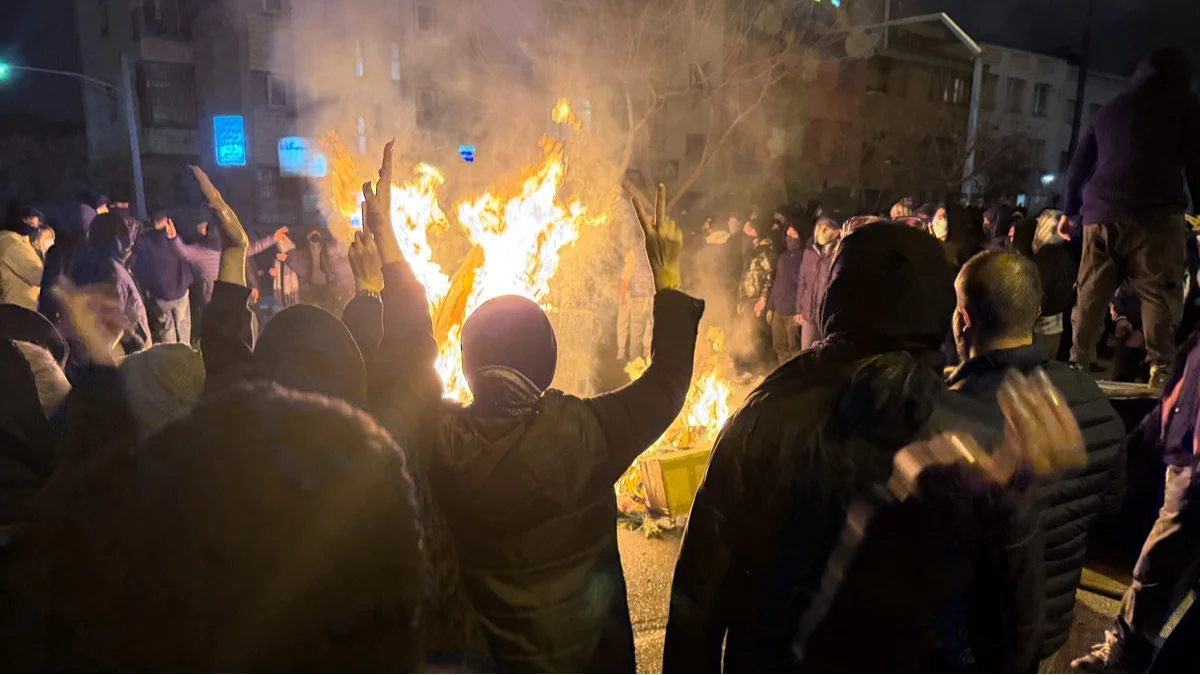
Participants in an anti-government rally in Tehran, Iran, January 9, 2026. Photo: AP / Scanpix / LETA
US President Donald Trump said Iran has canceled its planned executions of protesters. He previously threatened to strike the Islamic Republic if the crackdown continued. Even the day before, the United States was withdrawing some of its personnel from bases in the Middle East and calling on its citizens to leave Iran. Despite the easing of tension between Washington and Tehran, people in Iran have remained without contact with the outside world for more than 160 hours: authorities blocked the Internet amid mass demonstrations. Human rights activists report several thousand dead. Read more about the third week of anti-government protests in Iran, victims and possible US intervention in the material of Novaya Gazeta Europe.
Victims and detainees
Human rights group HRANA reported that as of January 14, 2,615 people had been confirmed dead. Of these, 2,435 are protest participants. 13 children under the age of 18 were confirmed dead. At least 18,470 people have been detained. Protests took place in 187 cities across the country, HRANA reports.
With the ongoing internet shutdown, receiving and confirming reports from the country about deaths and detainees remains seriously hampered, human rights activists say.
Trump earlier told reporters that he had been "notified" that Iran had stopped killing protesters and called off planned executions. A senior Saudi official told AFP that Trump was persuaded to abandon the attack and "give Iran a chance to demonstrate good intentions" by Saudi Arabia, Qatar and Oman.
According to Iranian Ambassador to Pakistan Reza Amiri Moghadam, Trump informed the country's authorities that he did not intend to attack.
“He seems to still be weighing his options; […] But these statements we have just heard indicate a possible easing of tension and that President Trump is moving away from the immediate action he has threatened,” said Al Jazeera Washington correspondent Mike Hanna.
Iranian Foreign Minister Abbas Araghchi has since insisted in an interview with Fox News that authorities have no plans to execute protesters.
“We are in complete control of the situation. And let's hope that common sense will prevail. And we will not allow a high level of tension, which could have catastrophic consequences for everyone,” the minister added.
Araghchi claims that during the protests, contrary to estimates by human rights activists, not thousands, but hundreds of people died. At the same time, the minister states that some “terrorist elements” infiltrated the protests, “captured police officers and burned them alive.”
“When terrorist elements from outside infiltrated these protests and started shooting at police officers, police officers and security forces, they used ISIS-style terrorist tactics. They captured the police, burned them alive, beheaded them and started shooting at the police and civilians. As a result, for three days we were actually fighting terrorists, not protesters,” Araghchi told Fox.
According to the minister, “it was an Israeli conspiracy.” Araghchi believes that in this way Israel tried to drag Donald Trump and the United States into the conflict.
Witnesses told The New York Times they saw snipers on the rooftops of buildings in central Tehran firing into crowds of protesters. The newspaper explains that despite the communications blockade, some Iranians manage from time to time to access satellite Internet, publish videos and report on bloodshed.
Thus, a businessman from Tehran Said said that he managed to access the Internet for a few minutes thanks to the Starlink connection - Elon Musk’s SpaceX company now provides free Internet access through its service for Iranian users.
“I can say that there is a real bloodbath here,” Said said.
A campaign has been launched on social networks in support of 26-year-old store owner Erfan Soltani. He was detained last week at his home in Fardis, west of Tehran, on charges of participating in protests. The man's family reported that authorities were planning to execute him on Wednesday, January 14. One of Soltani's relatives told BBC Persian that the Iranian court handed down the death sentence "in an extremely short time, just two days." The Iranian Kurdish human rights organization Hengaw reported that the Iranian was denied access to a lawyer. At the same time, Soltani’s sister is a lawyer and tried to intervene in this matter. Since his arrest, the man has not been allowed contact with his family.
A spokesman for the Hengaw organization also told the BBC they had "never seen the case move so quickly."
Several Iranian families living in Europe who left the country after 1979 told the British newspaper The Guardian how they learned of the deaths of loved ones during the current protests. Khali Norey said she fell to her knees when she received a call that her 23-year-old niece, Robina Aminian, had been shot in the head from behind at a protest in Tehran on January 8. The girl joined her friends from the university. The family only received the tragic news after their relatives in Iran traveled to the Iraqi border to connect to the Internet and make international calls.
“This is a tragedy for my family. I don’t know what I can do for them, but I want to be the voice of Robina and I don’t want this regime to silence the voices of our children,” the source told The Guardian.
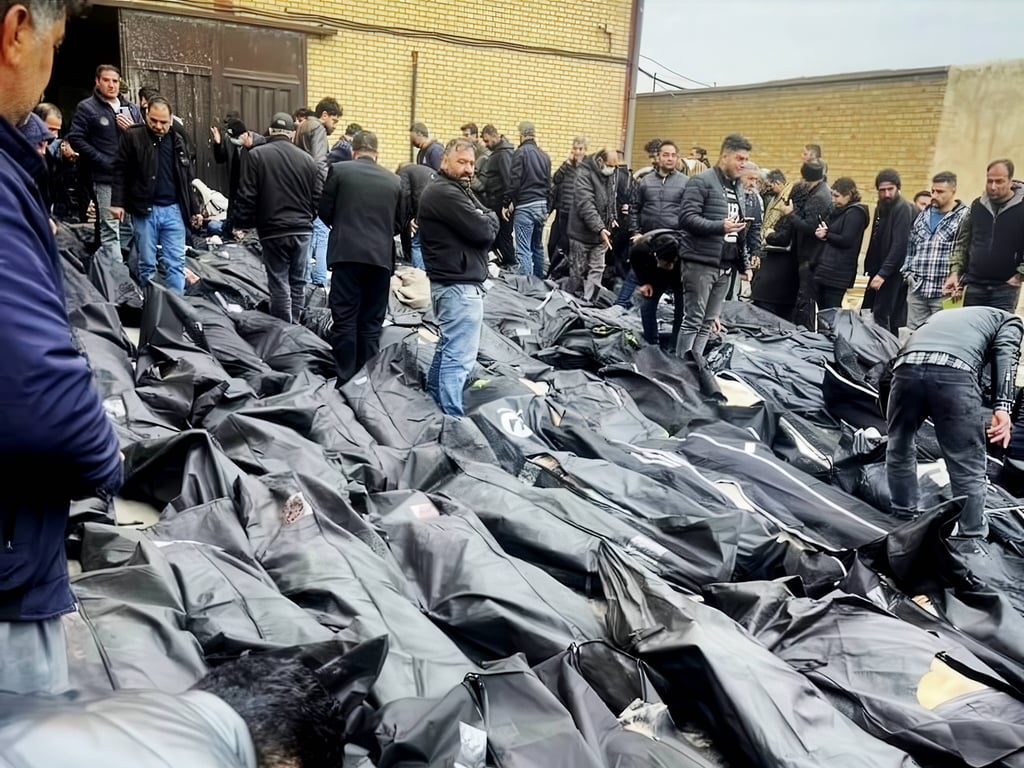
She said her relatives in Iran traveled to Tehran to identify the girl and saw “hundreds of bodies of young people shot and killed.” According to Norey, after authorities did not allow Aminian's body to be taken home, the family had to take it out secretly. As Norey says, several mosques refused to hold a funeral ceremony and “forced Aminyan to be buried by the road, digging a hole.”
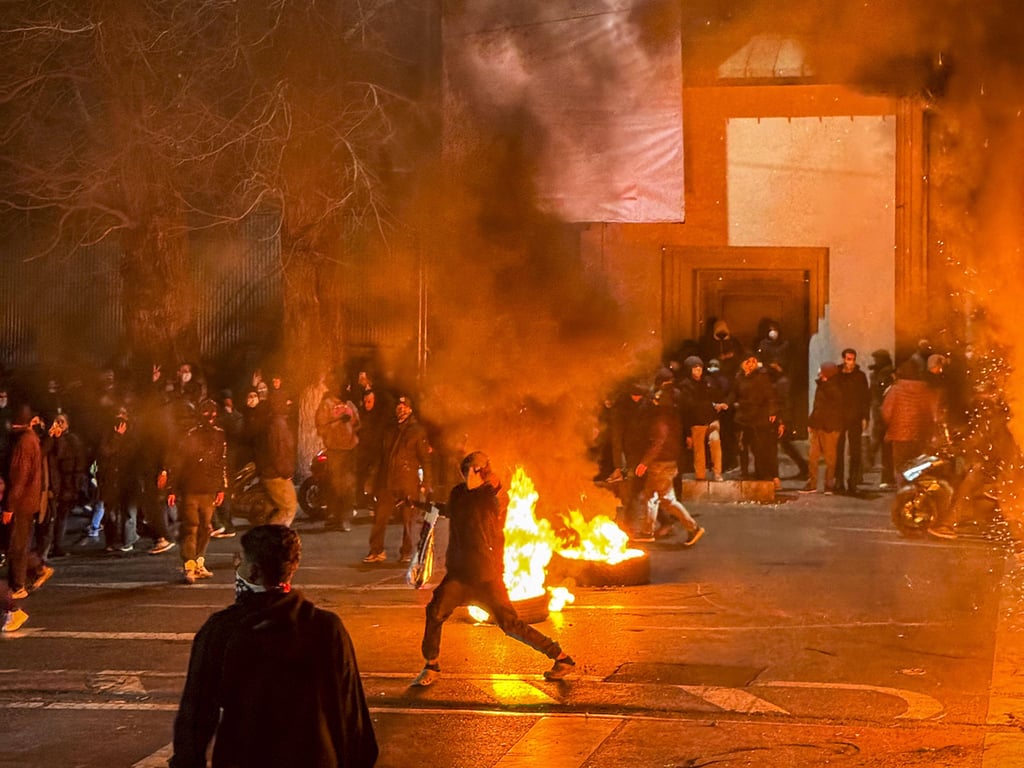
Several other Iranians living abroad told The Guardian that almost everyone they knew was participating in the street protests and they were worried about whether they were still alive.
Iran's state-linked Fars news agency reported that Tehran held funerals on Wednesday for more than 100 security forces and others it called "martyrs."
On January 14, Iran held a funeral for both civilians and representatives of security forces, Al-Jazeera reported .
What we know about Trump's plans
On the afternoon of January 15, the UN Security Council, at the request of the United States, called an emergency meeting on Iran. It will take place on the same day at 23:00 Moscow time.
Barbara Slavin, a distinguished fellow at the Stimson Center in Washington, told Al Jazeera that Trump is "probably torn between two decisions" about what action to take against Iran. She said that while the US president would like "another quick victory, she doesn't think he wants to get into a protracted conflict in the Middle East."
The expert added that she expects Trump to launch limited strikes that will allow him to claim fulfillment of his promise to “help” the Iranian people without provoking a “larger escalation.”
Earlier, NewsNation journalist Kelly Meyer, citing a source, reported that the Pentagon began transferring an aircraft carrier strike group from the South China Sea towards the Middle East. According to the channel's sources, the redeployment is seen as a show of force and a means of deterrence, and not as direct preparation for a strike.
Britain also withdrew some personnel from Al Udeid Air Base in Qatar, where American troops and other international forces are stationed. In addition, the UK temporarily closed its embassy in Tehran.
This came after an Iranian official said Tehran had warned its neighbors to attack US bases if Washington attacked.
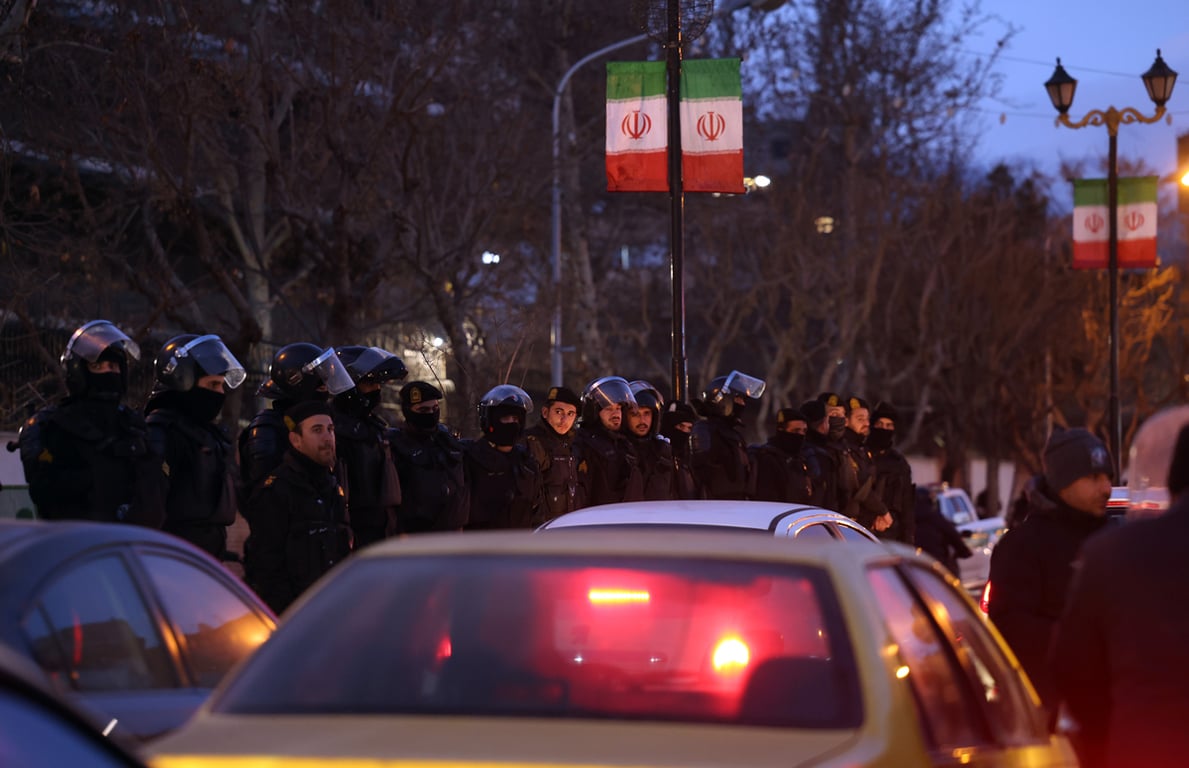
On January 15, early in the morning, the Islamic Republic closed its airspace for several hours without explanation. As the Associated Press recalls , this has already happened during the 12-day war in June between Iran and Israel, as well as during the shelling of Israel during the war between Israel and Hamas.
The restricted flight zone lasted more than four hours. International airlines flew from north to south and back to Iran, but few domestic flights were in the air by about 7 a.m.
Around noon, the country's Civil Aviation Authority said the airspace was "operating inbound and outbound flights and airports were providing services to passengers."
Unrest began in Iran on December 28, 2025. At first, the protests looked like dissatisfaction with the economic situation in the country, but soon the demonstrations grew into large-scale street protests with demands to overthrow the ayatollahs’ regime and slogans “Death to the dictator.”