
Translated material
From miracle to horror
How Iran went from an “oil miracle” to an “economy of resistance”

Photo: AP / TASS
To understand the situation in the modern Iranian economy, you need to look at the numbers, the dynamics of which reflect the process of systemic destruction of a once successful and promising economic system. Iran today is not just a “country under sanctions.” The story of the Iranian economy is not one of sudden collapse, but of slow suffocation stretching over decades.
Failed miracle
The roots of the situation in the Iranian economy today go back to the era of Shah Mohammad Reza Pahlavi, in the 1960s and 70s. At that time, Iran was experiencing what was proudly called the “oil miracle.” Revenues from the export of black gold, especially after the nationalization of deposits in Khuzestan and the price hike in 1973, flowed like a river. The country rushed into industrialization: giant metallurgical and petrochemical plants were built, and a modern (by the standards of the region) infrastructure was created. GDP grew by double digits.
FIGURES OF THE “OIL MIRACLE”
GDP growth during the period 1968–1978: average 11.5% per year. Peak values in the 1970s reached 15–20%.
Oil revenues soared from $1 billion in 1963 to $5 billion in 1973 and, after the oil crisis, to $20+ billion in 1977.
The share of oil in export revenues by 1977: exceeded 90%.
Gini coefficient (a measure of inequality): rose from 0.44 in the 1960s to 0.50+ by the late 1970s.
But this “miracle” was very specific. Oil and gas revenues accounted for more than half of the budget. Industry was patchy, dependent on government orders and imported components. But the main thing is that the fruits of growth were distributed monstrously unevenly. The Shah's court, a narrow layer of oligarchy and bureaucracy, grew rich, while the masses of the rural population who migrated to the cities and the traditional “bazaar” (merchant) class remained on the periphery of this “miracle.” The luxury of the capital and the poverty of rural areas existed in parallel realities.
Word and deed
After Shah Reza Pahlavi expelled Ayatollah Khomeini from Iran in 1964, the Ayatollah came to Paris and gave 132 interviews in 4 months. Khomeini spoke, naturally, in Farsi - and his comrade-in-arms, Abolhasan Banisadr, translated the Ayatollah’s words for European journalists. And if the Iranians (and everyone who understood Farsi) heard the radical calls that Khomeini did not skimp on, then the translator Banisadr conveyed to the European audience the neat and politically correct wording of the Ayatollah’s words, without any radicalism or threats.
Thus, as political scientist Kim Ghattas wrote in her book Black Wave, with regard to the Ayatollah, journalists “gave the impression that this ascetic sage was completely uninterested in politics and planned to spend the rest of his days in the seminary in Qom after the Shah’s regime fell and he could return to Iran.” As a result, Kim Ghattas noted, “the Ayatollah and his associates managed to mislead Western journalists about their true intentions and take advantage of their trust in their own interests”—the Ayatollah began to be perceived by the media community as an acceptable cultural and intellectual alternative to the regime of the Iranian Shah.
In 1979, Khomeini and Banisadr returned triumphantly to Iran. The Ayatollah became the supreme ruler of the country and made Banisadr the President of Iran.
But already in 1981, Banisadr, who was removed from his post, had to flee to France, where he lived for another 40 years under the protection of the French police. Khomeini ruled Iran until his death in 1989.
In the grip of restrictions
Ayatollah Khomeini promised the people of Iran justice and independence from the “Big Satan” (USA). But in reality, this did not result in the construction of a new economic model, but in the systematic destruction of the old one without creating a working alternative . Nationalization, capital flight, severance of international ties - all this immediately brought down the country's economy.
The fall in GDP in 1980 was: 23.5% .
Inflation in the first post-revolutionary years: approached 50% .
Depreciation of the rial: from 70 rials per dollar in 1979 to 1,500+ by the end of the war with Iraq.
With all this, the Iran-Iraq War (1980–1988) became the most important tool for consolidating the new regime. It allowed: to legitimize the militarization of the economy and create its core - the Islamic Revolutionary Guard Corps (IRGC).
It was the IRGC that became the main economic beneficiary of the ayatollahs' policies. From a military-police structure, it transformed into a giant military-industrial-commercial conglomerate . Under his auspices, thousands of companies emerged in the oil and gas industry, construction, telecommunications, finance, and logistics. At the same time, powerful religious foundations were formed, also controlling huge assets. Thus was born Iran's unique "double-loop" economy : the official, inefficient public sector and the shadowy but powerful IRGC empire.
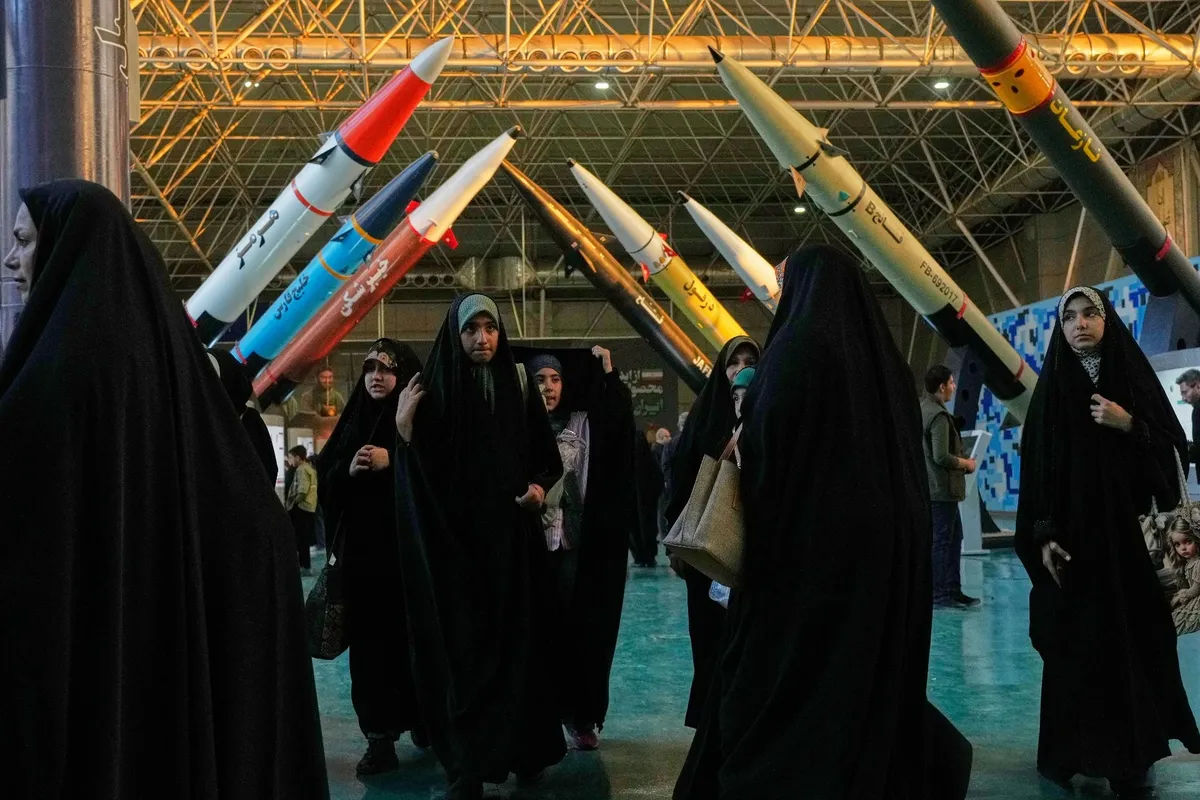
The 1990s brought relative liberalization and attempts at restoration. But already then, in 1995, the United States introduced the first large-scale sanctions. Tehran's response was a timid move towards diversification: the growth of non-resource exports (petrochemicals, metals, carpets, agricultural products) began. The narrative “sanctions are an incentive for development” emerged. However, this development was costly and ineffective.
And since 2011, Iran has been subject to collective US, EU and UN sanctions designed to encourage the ayatollah regime to abandon the use of its nuclear program for military purposes. The package of sectoral sanctions against Iran contains three typical groups of prohibitions:
export embargo (ban on imports from Iran of oil and products of other basic industries - from cars to carpets);
import embargo (ban on supplies of advanced technologies, oil and gas equipment, Western materials and components to Iran) and
strict financial restrictions (exclusion of banks from the SWIFT system, almost complete freezing of the Central Bank's foreign exchange reserves, blocking Iran's access to capital markets and to international payments in dollars and euros).
The first phase of sanctions (2011–2015) was a shock to the Iranian economy.
Oil exports fell by 76% - from $114.7 billion to $27.3 billion.
GDP experienced three years of recession (2012, 2013, 2015).
Inflation soared to 30% per year .
The rial began its decline .
The Iranian economy, deprived of a foreign exchange cushion and access to technology, plunged into crisis. It was this shock that forced Tehran to negotiate and conclude the nuclear deal (JCPOA) in 2015.
The brief respite (2016–2017) showed the depth of the structural problems. The lifting of the embargo had the effect of a sharp rebound (GDP growth of +8.8% in 2016), but this was a restoration of the flow of money, and not an “economic recovery.”
Five years of isolation have caused irreparable damage: production assets have become outdated, the technological gap with the world has increased. There could be no talk of any modernization in two years.
After the start of the second round of sanctions (from November 2018), oil exports fell below 2015 levels, the country again experienced explosive and even higher inflation (up to 60% per year) and another two-year recession, which followed in 2020–2021. recovery growth did not compensate for the consequences of the recession.
Against everyone
It was then that the doctrine of the “Economy of Resistance” was formalized. Official rhetoric presents this doctrine as a plan to achieve economic sovereignty. Its principles sound good: the fight against corruption, scientific innovation, diversification, social justice.
This is not a theoretical model, but a practical set of emergency measures , formed by decades of life under sanctions. Its goal is to ensure minimal functionality of the state and basic social stability in conditions of trade isolation.
The main principle of this doctrine is the desire to build alternative routes for the movement of goods, capital and technology.
Financial bypass (“dedollarization under duress”):
Refusal from the dollar and euro: Complete transition to the currencies of partner countries - Chinese yuan, UAE dirham, Russian ruble, Indian rupee.
Archaic and crypto-tools: Active use of barter, clearing agreements (netting accounts), informal hawala transfer systems and legalized cryptocurrencies for international payments.
National payment systems: Development of domestic card systems.
Trade and logistics bypass (“shadow globalization”):
"Shadow Fleet": Creating or renting tankers without insurance or transponders to transport oil with constantly changing routes and destinations.
Parallel import: Purchase of “prohibited goods” (from spare parts to electronics) through third countries (Turkey, UAE, Armenia) with repackaging and changes in documents.
Refocus on neighbors and non-Western hubs: China becomes the main economic partner, with Turkey and the UAE critical trade hubs.
To neutralize the destructive effect of sanctions within the country, strict government intervention is used.
Wartime currency regime:
Multiple courses (until 2023). A complex system was created:
Official rate (eg 42,000 rials per $1): For imports of critical goods (medicines, food, grains). In fact, a huge hidden subsidy to the public sector and the population.
Special course for exporters/importers: To stimulate non-resource exports.
Market rate (eg 300,000 rials): For all other transactions. Real devaluation rate.
Strict foreign exchange controls: Ban on the free export of capital, mandatory sale of foreign currency earnings by exporters to the state, limits on the purchase of foreign currency for imports.
Strategic import substitution:
Focus on achieving self-sufficiency in food, medicine, military-industrial complex and petrochemicals .
Selective support for large state corporations (for example, in the auto industry, steel, chemical industries), which receive preferential loans, currency at the official rate and government orders.
“Islamic banking” formally becomes the basis of the financial system, directing resources (in theory) to finance “real assets” rather than speculation.
Social contract: Subsidies in exchange for stability:
Massive subsidization of basic goods: Gasoline, bread, medicines, utilities are sold to the population at prices tens of times lower than the market (world) prices.
Direct cash transfers to low-income families to offset inflation.
The implementation of this doctrine allowed Iran to carry out a certain diversification of the economy (with the creation of a strong oil-processing complex), achieve partial self-sufficiency in basic sectors of medium complexity and almost completely replace Western partners with Eastern ones.
But the “resistance economy” was unable to protect Iran from the sanctions-induced compression of oil and gas revenues and the sharp increase in the budget deficit starting in 2018 (according to the IMF, it grew at the level of 4.5% of GDP per year). In 2019, Iran was forced to cut its large-scale social programs and, in particular, its fuel price subsidy program (worth 1.6% of GDP), which sparked a wave of social protests in the country.
Why are prices rising so fast in Iran?
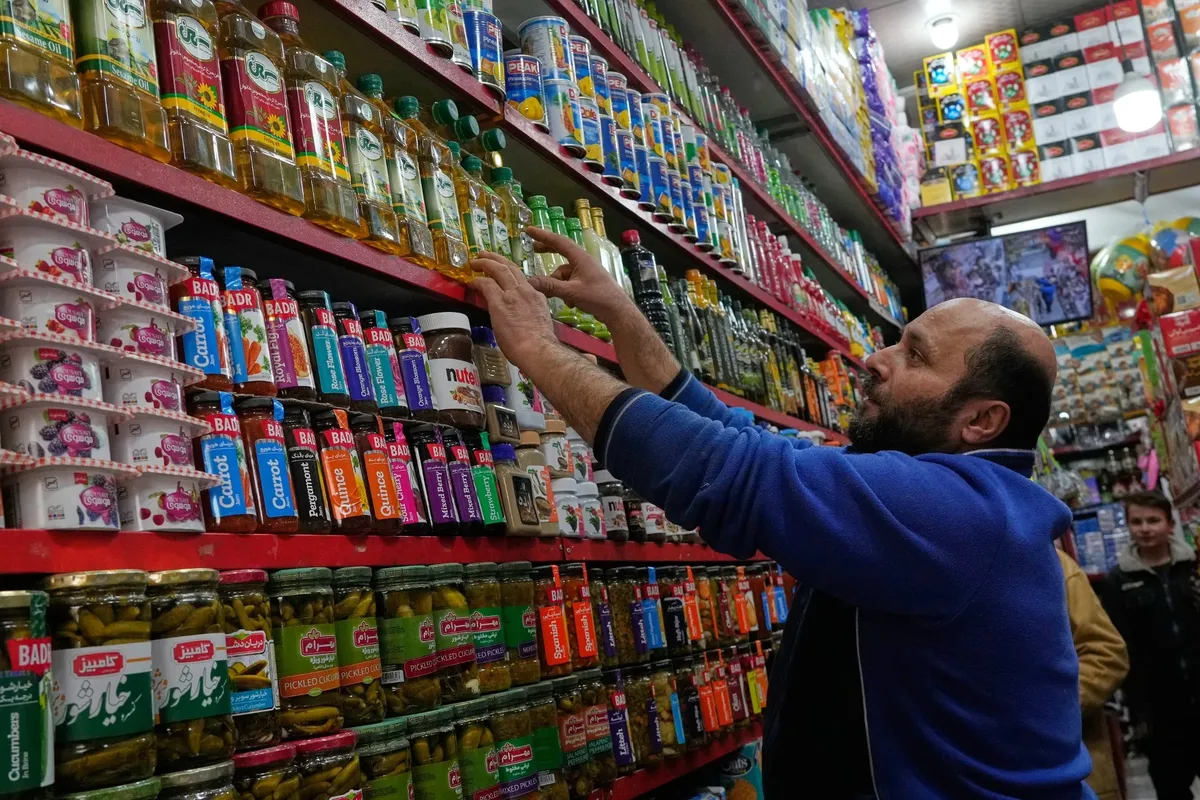
Inflation in Iran is one of the triggers for the deterioration of the socio-economic situation in this country. At the same time, Iran’s financial regulator is pursuing a policy of “inflation targeting” - as, by the way, in the Russian Federation, only the Central Bank of the Russian Federation was able to slow down inflation, but this did not work in Iran.
Why it didn’t work is the answer to this question given by Ali Alikhani, Hossein Sharifi Renani and Saeed Dai-Karimzadeh, economists from the Islamic Azad University, in the article Assessing the Impact of Sanctions and Central Bank Independence on Inflation Targeting in Iran .
Scientists analyzed data for 1978–2024 to quantify the impact of various factors on the “gap” between target and actual inflation in Iran and built a model that included 7 key variables:
The gap between target and actual inflation.
Independence of the Central Bank (a special index was calculated).
Sanctions index.
Money supply.
Exchange rate.
Minimum nominal wage.
The volatility of inflation itself.
The purpose of the model is to show how a change in each of these factors pushes the inflation gap up (worsens the situation) or down (improves it).
The model clearly divided the factors into two groups.
Group 1. “ENEMIES” factors (increase the gap, preventing the achievement of the goal):
- Economic sanctions (greatest effect). This is a powerful macroeconomic shock. Sanctions:
They block foreign exchange earnings from exports by creating a foreign currency shortage.
They cause a massive devaluation of the national currency (rial). Devaluation drives up import prices.
They create an atmosphere of uncertainty, pushing businesses and the population to buy currency and goods, which further accelerates prices.
Thus, sanctions directly destroy the main condition for inflation targeting - a controlled economic environment.
- Raising the minimum nominal wage.
If wages rise by order, and not in response to real labor productivity, business costs rise.
To maintain profitability, companies are forced to increase prices for their products.
Rising prices cancel out wage increases, a “price-wage” spiral arises, and inflation accelerates.
Social policy (raising wages) comes into direct conflict with monetary policy (containing inflation).
- High volatility of inflation itself. This is the effect of losing trust and anchoring:
When inflation jumps unpredictably (yesterday 10%, today 20%), people and companies stop believing that the Central Bank can curb it. Inflationary expectations are becoming “unfastened” - everyone is factoring in high price growth into their plans. These expectations are materializing: businesses raise prices in advance, workers demand extra wages, and inflation indeed remains high.
High and unstable inflation in the past undermines any attempts to control future inflation.
Group 2. “HELPERING” factors (reduce the gap, helping achieve the goal):
- Independence of the Central Bank (the most important internal factor). We are talking about real, not declarative independence from the government:
Iran's problem is fiscal dominance. A government with a budget deficit often finances its spending by having the central bank “print money” (either directly or through the purchase of government debt). As long as the Central Bank is the “wallet” of the government, there can be no talk of any control over inflation.
- Control over money supply growth.
The model confirmed: in the situation in Iran, excess emission of money (“printing” of rials) leads to higher prices in the long term.
- •Stable exchange rate. Key factor for an import-dependent economy:
The sharp fall in the value of the rial makes imports more expensive. This causes imported inflation.
A stable exchange rate (even at a controlled level) restrains panicky demand for currency and breaks the direct connection between world prices and domestic inflation.
In the Iranian context, exchange rate management is a critical tool for containing inflation.
Thus, Iran’s problem is not the inability of inflation targeting itself, but the fact that its success requires a set of institutional and macroeconomic conditions that are systematically absent in the country.
Instead of stability
In addition, along with chronically high inflation, a characteristic feature of the Iranian economy is high volatility in GDP dynamics, when deep recessions alternate with a rapid rebound and another slowdown.
RESULTS OF “RESISTANCE” BY 2025–2026.
Inflation: Chronic, at 40–50% per year. The consumer price index has increased more than 10 times since 2010.
Currency: The rial depreciated from about 10,000 per dollar in 2011 to 1.4 million per dollar at the end of 2025—a 140-fold drop.
Budget: Chronic deficit financed by emissions. Oil revenues have fallen by ~78% over the decade.
Living Standards: Real GDP per capita has fallen back to 1990s levels. About 60% of the population live below the poverty line, 18.4% in absolute poverty.
Thus, neither measures to circumvent sanctions nor the “policy of resistance” save Iran from the continuous mutual reinforcement of many factors destabilizing the economy (devaluations, inflation, budget deficits, double-digit interest rates, etc.), which ultimately results in a further decline in productivity and compression of economic potential. If half a century ago Iran was a growing economy with an average income and a level of well-being above the world average, today it belongs to the group of poor, low-income countries - poorer than Cuba and South Africa (calculated in constant 2015 dollar prices).