
Translated material
Disappearance
Russian literature begins with Avvakum the son of Petrov, the prophet who ascended into the sky of the north with smoke - and with Georgiy Vladimov, the last of those whose word had weight, flesh and pain, it ends

Photo: Andrey Borodulin / Kommersant
Persecuted, kicked out, as the rhymer Trediakovsky was kicked out of the lordly choir, sitting in jail for the obituary of Gogol, as Turgenev sat, sent to the prison, as Chernyshevsky and Shalamov were sent, receiving a bullet in the basement, as Babel and Pilnyak received, disappearing without a trace in mass graves, as Kin disappeared ( see footnote 1 ), Vasiliev ( see footnote 2 ), Novikov ( see footnote 3 ), Mandelstam and others - Russian literature has retained its meaning and purpose through the years and centuries.
It consisted... What did it consist of? After all, literature is not a party to unite around programs, not a society with a single ideology. It was made by people, each of whom was on his own and did not keep pace with others. Russian literature has consisted of different and very different people over the three centuries of its existence - from priests and jesters, from alcoholics and epileptics, from prophets and saints, from princes and commoners. And their beliefs were different, and there were terrible disputes between them, and their foreheads cracked when they tormented each other with words. But still there was one thing that connected and made them closer, so different, so deeply hidden in the heart that you couldn’t see or say.
This is pain. This is a feeling of living with an open heart and without the anesthesia of lies, this is an attitude towards human life as the greatest value.
There is nothing in common between Turgenev, subtle in his feelings and words, and Pisemsky, rude in his manners and language. There is nothing in common between the phlegmatic Goncharov and the furious Leskov in his temperament. There is little in common between Bulgakov in his fastened, frayed cuffs and Pilnyak in his smart American coat. And yet there is something common, but it is elusive in words and dissolved in all Russian literature.
The air of Russian literature is its pain, its suffering, its commitment to man, its truth.
Oh, what unfashionable, awkward, even shameful words. It is better to avoid them so as not to seem archaic and ridiculous in the era of universal relativity.
Sinyavsky, who had not political, but aesthetic differences with the Soviet regime (sentence of seven years in a camp), once wrote that
the truth does not lie in saying things that are already known and understandable to everyone, but in putting your truth against the truth that is generally accepted and known to everyone.
This is what Russian literature did.
Telling the truth about yourself is often more difficult than telling the truth about others.
Archpriest Avvakum nailed him right and left with the truth - whoever he saw, he would give him the truth in the forehead, for which he was beaten mercilessly in response. Not with words, but with fists, and once even with a board. But he also nailed himself with the truth about himself in such a way that it could be called self-mutilation. Well, the mad priest did the right thing; Christ demanded this in the Sermon on the Mount.
Tolstoy, in his diaries and later texts, spoke the truth about himself with bitterness reaching the point of despair, branded himself with the truth, executed himself with the truth. And he ended up in a death bed in someone else’s house on the railroad.
Leskov, who had suffered so much that he could neither eat nor sleep, confused himself with dirt in his thoughts and words, because he knew himself.
Garshin learned the truth of life with such sharpness and clarity that he could no longer live - he rushed down the flight of stairs.
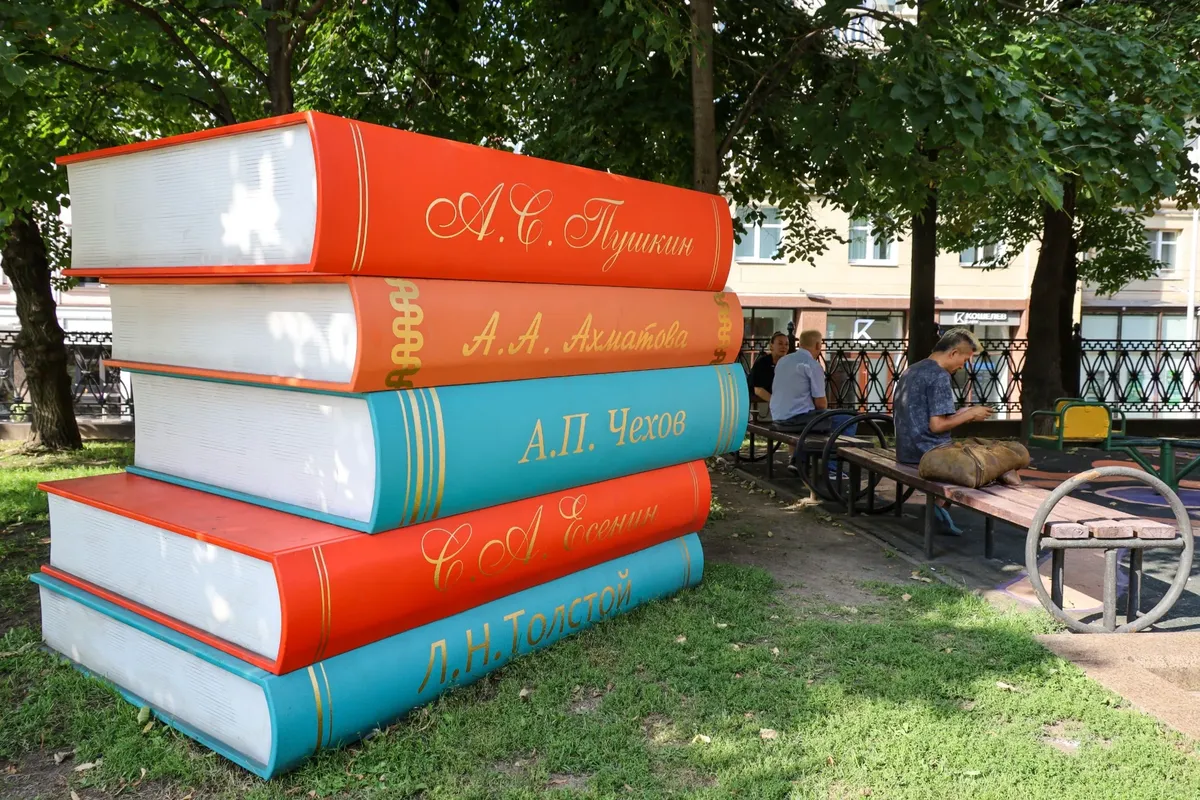
The history of Russian literature is terrifying. Batyushkov went crazy, Artsybashev shot himself, Sobol shot himself on the boulevard, Nikolai Uspensky cut his throat, Pomyalovsky drank himself to death, Dobychin left the house and disappeared, Reed Grachev fell into prostration for several decades. Two were killed in duels, two hanged themselves. I could go on, but that's enough.
This strength of feeling reaching the point of unbearability, this impossibility of making life even a little easier with the hypocrisy habitual to people, this intense and always searching thought and the need to persistently and unshakably ask questions to which there is no answer - this is Russian literature.
So, with such painful attention to injustice and pain around, a normal person cannot live.
A normal person wants happiness, but a Russian writer wants truth. Therefore, a Russian writer is always unhappy.
Unhappy is Gogol, writing an insane instruction on the general reorganization of life on the principles of Christ, unhappy is Tolstoy, who every minute tortures himself with cruel introspection and hides a diary with self-revelations in the top of his boot, unhappy is the old bachelor Goncharov, who has exhausted himself in painful long-term work, unhappy is Turgenev, living as a stranger in someone else’s house and one winter night. going to a Parisian prison to watch preparations for the death penalty and in the morning to watch the death penalty in the square.
Why does he need this? I would sit in my small, elegantly furnished office on the top floor of the Viardot house, surrounded by beautiful trinkets, and write about Kursk nightingales, about Russian peasants, about mysterious girls... But no, I dragged myself to prison to watch the death penalty! I spent seven hours in the Roket prison, watching the preparations, but I didn’t want to and couldn’t watch the moment when a person was deprived of his life, so he turned away for twenty seconds...
Twenty seconds is enough to kill a person.
Everyone knows Turgenev’s novels and stories, but his small work “The Execution of Troppmann” speaks more powerfully than novels about what the heart of a writer is and what Russian literature is. Troppmann is a murderer of an entire family, including children, who stretched out their hands to him in prayer and called their already murdered mother: “Oh, mom, mom!” His guilt has been proven and unconditional. But still, “the thought that we have no right to do what we are doing, that by being present with feigned importance at the killing of a creature similar to us, we are breaking some kind of lawless, vile comedy - this thought flashed through my head for the last time.”
“I could not take my eyes off these hands, once stained with innocent blood, now lying helplessly on each other - and especially from this thin, youthful neck... My imagination involuntarily drew a transverse line along it... Here, I thought, in a few moments, crushing the vertebrae, cutting muscles and veins, a ten-pound ax would pass... and the body, it seemed, was not expecting anything like that... it was so smooth, white, great..."
So, dear Ivan Sergeich, how far does your compassion for man extend? Does the Russian writer sympathize with the murderer in his hour of death? Is it possible to sympathize? These questions should not be asked, they are obscene, indecent, a person can only ask them within himself. They plunge the tall, timid, sensitive Turgenev into a stupor and force him to squeeze and knead his large white hands in suffering.
“I suddenly felt cold, sickeningly cold.”
And this cold is hitting us too.
This is Russian literature.
A person who, of his own free will, goes to watch the death penalty, even if it was the death penalty not of a person, but of a cow - Leo Tolstoy went to a slaughterhouse in Tula - after what he saw, he can never be happy,
but he still goes because he must see, feel, understand and write to everyone about what he understood.
Thirteen years before Turgenev went to a Parisian prison to watch the execution, the young and still unknown to mankind Count Leo Tolstoy in the Swiss city of Lucerne entered the expensive five-story Schweitzerhof Hotel, got a room on the top floor and under its windows saw a wandering beggar musician who sang and played the guitar for the hotel guests. Rich people stood on the balconies, listened to him sing, saw him come three times under the windows and balconies with an outstretched old cap in his hand, and did not give him a penny. The cold, indifferent stupidity of the wealthy public shocked Tolstoy so much that he wrote “Lucerne” - a story about the humiliation of a hungry man by well-fed people; wrote with such rage and pain that his Russian readers - smart, sophisticated readers, such as his aunt Alexandra Andreevna - did not understand him. They saw in all this a random everyday incident, a common occurrence.
But this is not ordinary for Tolstoy. For him this is an “inhuman fact.” In the fleeting he saw an abyss. Humanity will fall into this abyss before his eyes - into the abyss of indifference and what he called “spiritual sleep.” Perhaps in “Lucerne” Tolstoy was the first to write about European hypocrisy - the hypocrisy of well-fed and self-satisfied people. With force, feeling “inexpressible malice,” the mad Russian count struck at them, in the fury of denunciations not inferior to the mad archpriest.
Russian writer, count, beard, shaggy hair, blouse, belt, boots, pain, anger, constant despair and misunderstanding on the part of others. And because of this, loneliness is a lifelong imprisonment in oneself.
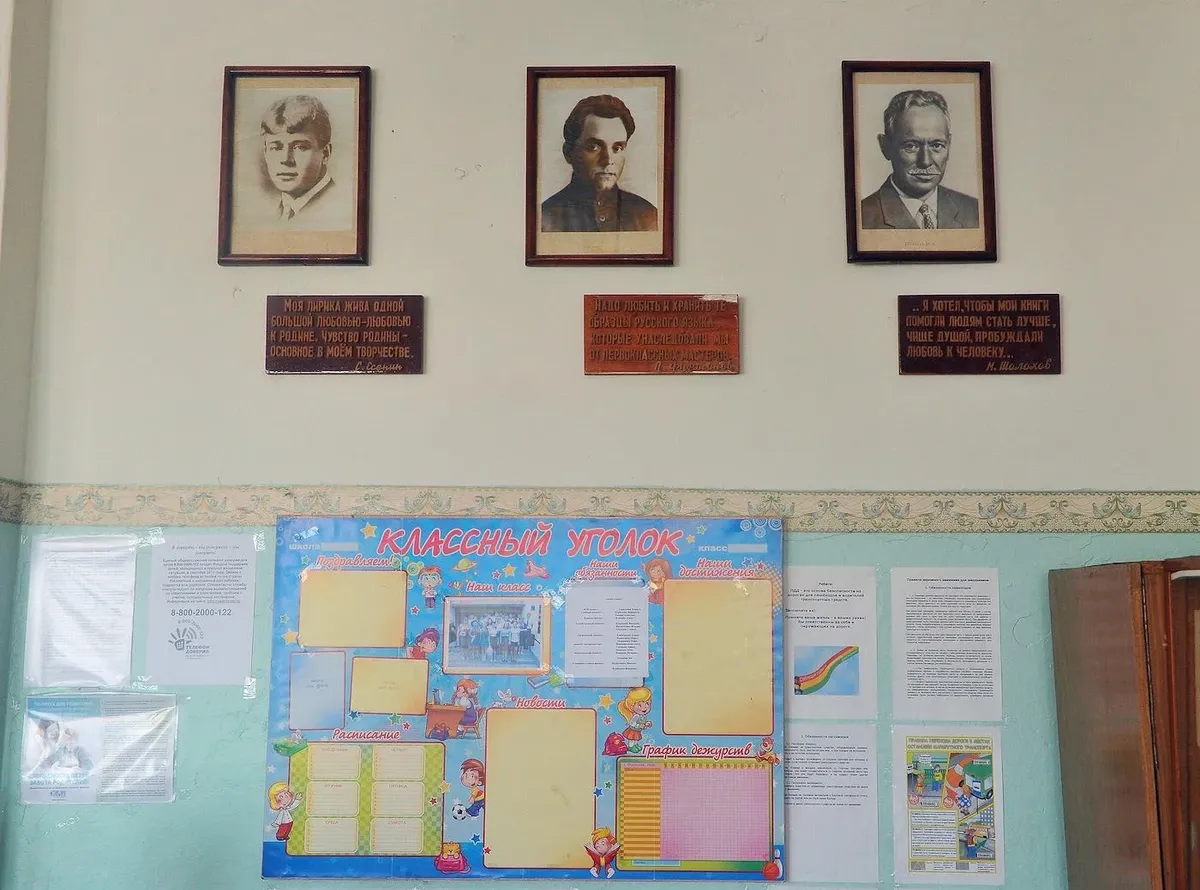
Russian literature is a sacred fire that the Russian intelligentsia kept in their midst, shielding them from the wind with their backs, and passed it on from generation to generation. This fire was transmitted from arrogant nobles with a pen in hand to daring commoners in boots with crooked soles, and from them to philological young ladies copying poems by hand, to barefoot Tolstoyans repairing widows' huts, to sophisticated people of the Silver Age drinking Clicquot, and further - to people of the sixties, on whose shelves blue numbers were lined up in an even row. “New World”, and to a small circle of dissidents with their samizdat. So, passed from handful to handful, this fire went on throughout the time that the intelligentsia existed. And when it was gone, there was no one to preserve and pass it on. And it went out.
Without air, fire does not burn. Literature cannot live without a medium. Some intellectuals still wander through life like blind men and orphans, but the intelligentsia has disappeared as (to use the Bolshevik Volapuk expression) a stratum, as a class. Literature was the work of her soul, her passion, her pain, her enduring interest. An intellectual is someone who is involved in literature, who, although he does not write himself, perceives what is written as close to his heart and as his own. "My Pushkin." "My Tolstoy."
With the end of the Union, the intelligentsia ended. She survived in Stalin’s gas chamber, survived Brezhnev’s paralysis, endured pressure, dismissals, silences, party meetings, censorship - but could not endure the so-called freedom that she herself dreamed of, she scattered to corners, dissolved among the people, and disappeared.
Never before in the history of mankind have so many words been written and there have been so many writers as today - thousands, hundreds of thousands of writers on the Internet and in publishing catalogues. This is understandable: publishing houses need a new book every ten minutes. Literature has become mass production and has ceased to be what it was just recently, that is, the work of the heart, the torment of the soul and “the possibility of impossible happiness” (Tolstoy).
In a huge media environment, where an average blogger has ten times more readers than Pushkin had, literature has turned into toys and trinkets, into fashionable and progressive, into funny and relevant, into editors and authors, into a way to fill time and space with something and nothing, into weightless verbal sand flowing in a thin trickle.
The word loses weight, while weight is the main characteristic of the word. Vladimov is the last Russian writer because he was the last who understood and knew how to do this. That’s why I wrote my books for many years, because I knew that words must weigh. It's difficult to get them out of yourself. Or you can not mine, but simply rustle with weightless candy wrappers, creating a more or less pleasant background to life... after all, music is played in supermarkets and even in toilets. Why is literature worse?
There are too many words, words no worse than the ruble are devalued every day in endless written bashing and chatter, there is a loss of weight and meaning of the word.
There is something in Russian literature that is deeply contrary to the current times. She demands, but does not entertain. She does not please, but torments. She asks questions that you don't want to hear. She doesn't fit into the clip. During small short statements, she draws out her descriptions of nature and man for long pages. During the sought-after and comfortable lightness of being, it seems to be deliberately deep and heavy.
The twentieth century of engineering has done a lot for human comfort. Refrigerators, elevators, dishwashers, radio, television, cars, etc., etc. - this is how humanity, understood by engineers, worked. The world they created is comfortable to live in. It was not without reason that Tolstoy was skeptical and distrustful of technological progress - he understood that technical progress replaces the internal, spiritual progress of man. Literature is not about the convenience of life.
The twenty-first programming century is doing and will do even more for human comfort. Internet, online services, email, social networks, network data storage, smart home, instant messengers, AI - now we are talking about complementing a person’s physical comfort with mental comfort. Comfort is understood as ease and absence of labor. The dishwasher freed a person from the need to wash dishes, AI will free him from the need to look for answers himself. Russian literature does not fit into this global movement, but stubbornly and hopelessly contradicts it.
There are eras and phenomena that can be perceived and observed as a complete thing, having a beginning and an end. Such is the literature of Ancient Rome, the Renaissance and the Sixties - Catullus, Michelangelo and Janis Joplin are beautiful, but they are outside of modernity, outside of its pace, rhythm, ethics and aesthetics. And Russian literature, which for three hundred years has been the essence and salt of Russian life, is in this row.
Russian literature, as a literature of exceptional attention to man and passionate sympathy for him, is gone, has disappeared.
All infused with human blood and flesh, Russian literature does not fit well into the sterile digital age, consisting of odorless ones and zeros. It's too big and unwieldy for compact modernity, which prefers nice Ikea-style designs and entertaining books with colorful covers. She is maniacally moral and this makes her ill-suited to life without big moral problems. She is endowed with a harsh and unfading memory - the memory of military settlements, spitsruten, wars, executions, camps - and with a furrowed brow she stubbornly talks about it, while fewer and fewer people want to listen to her stories about terrible things.
What remains is a sign - the sign of great Russian literature is needed by the publishing business and those writers who, taking a deep breath in their chests, declare themselves Russian writers. They adopted the name of writers from those former writers and with importance considered themselves part of Russian literature... which, as a whole and as a phenomenon, no longer exists. Impostors live in a simulacrum.
Writer as creator of a new faith? Nobody needs a new faith; you can live without faith or settle comfortably in the old one. Sometimes, along with the theater and restaurant, you can go to church, but to preach the truth with rage and passion in homemade tracts and social networks? This is funny.
The writer as an engineer of the human soul? Certified psychotherapists who personally studied with Freud will, for a reasonable fee, reveal your birth traumas to you and explain the simple mechanics of your soul.
Writer as creator of epics? Serials have replaced epics. The finished pictures are placed directly into the viewer’s brain; no effort of imagination is required, as when reading. And no need to turn the pages! Nice!
A writer as an example of taste? But there are Pierre Cardin and Olga Buzova!
The writer is like a voice crying in the desert, no longer able to bear all this shame and bedlam? But the desert is long gone; it has turned into an elite quarter with a business center, a boutique and a coffee shop where well-dressed people drink artisan coffee. Lev Nikolaich, where are you going in your rags with a moral sermon? Let people drink almond lattes in peace!
footnotes
Viktor Pavlovich Kin (1903‒1938) - writer, executed in 1938.
Vasiliev Pavel Nikolaevich (1910‒1937) - poet, executed in 1937.
Novikov Andrei Nikitich (1889‒1941) - writer, executed in 1941.
This material was published in the fifteenth issue of Novaya Gazeta. Magazine". You can buy it in the online store of our partners.