
Translated material
Make America Closed Again
The results of Trump’s migration policy for the year: 600 thousand people were deported, more than 1.6 million people lost the right to legally stay in the country. What else has changed?

Police clash with protesters against US Immigration and Customs Enforcement (ICE) in Minnesota, USA, January 15, 2026. Photo: Olga Fedorova / EPA
The US decision to suspend the issuance of certain categories of visas to citizens of Russia and 74 other countries became the latest episode in the framework of an unprecedented revision of the migration policy of the United States. Almost a year ago, on January 20, 2025, Donald Trump took office as President of the United States and on the same day began fulfilling his campaign promises. Since then, according to official data, more than 600 thousand people have been deported from the United States, and another 1.9 million illegal immigrants have decided to leave the country voluntarily. Legal migrants were also targeted: more than 1.6 million people lost various statuses that allowed them to legally live in the United States. As a result, in 2025, the United States lost more immigrants than it accepted, something that hasn’t happened in at least half a century. Read about what Trump has done to limit both illegal and legal migration and how this threatens the United States in the material of Novaya Gazeta Europe.
Decrees are his weapon
The news that the United States will indefinitely suspend immigration visas for citizens of 75 countries starting January 21 came on the eve of the first anniversary of Donald Trump taking office, who has repeatedly promised to “restore order” to the immigration sector. Or, frankly speaking, completely reconsider the principles and norms that guided the American authorities during the reign of Joe Biden and other Democratic presidents.
Donald Trump has made immigration one of the key points of his election campaign. And to a certain extent, he won precisely because of his promises to deport from the United States those who abuse the generosity of the American people, as well as to block the path to new migrants.
Trump paid a lot of attention to this topic in his inaugural speech on January 20, 2025. He said the “radical and corrupt elite” did nothing to protect “wonderful, law-abiding American citizens” while “providing refuge and protection to dangerous criminals, many of whom escaped from prisons and mental institutions and entered the country illegally.” In addition, the new head of the White House noted then, the Biden government “allocated unlimited funding to protect foreign borders, but refused to protect American ones - and, more importantly, its own citizens.”
Already on his first day in office, Trump signed a package of executive orders (unlike laws, they do not need to be coordinated with Congress) on immigration issues, calling his first decisions the beginning of “the complete restoration of America and the revolution of common sense.”
The revolution turned out to be large-scale. According to estimates by the American Migration Policy Institute (MPI), in the first year of his second term, Trump signed 225 executive orders (data as of January 7). Of these, 38 (that is, almost 17%) are related to the topic of migration. It is significant that during his entire first presidential term, Trump issued only 220 executive orders.
In addition, the administration initiated — through presidential proclamations and policy directives — hundreds of other policies that have had a profound impact on immigration policy. MPI estimates that in the first year of the second term, the Trump administration took more than 500 actions on migration, compared with 472 such actions in all four years of the first term. These steps concerned both legal and illegal migration.
Strengthening the southern border
One of Trump's key decisions on Inauguration Day was the declaration of a state of emergency on the US-Mexico border. The head of the White House ordered "to suspend the physical entry of any foreigner participating in the incursion across the southern border." Border Patrol agents were ordered to turn away people trying to cross into the United States without giving them asylum hearings.
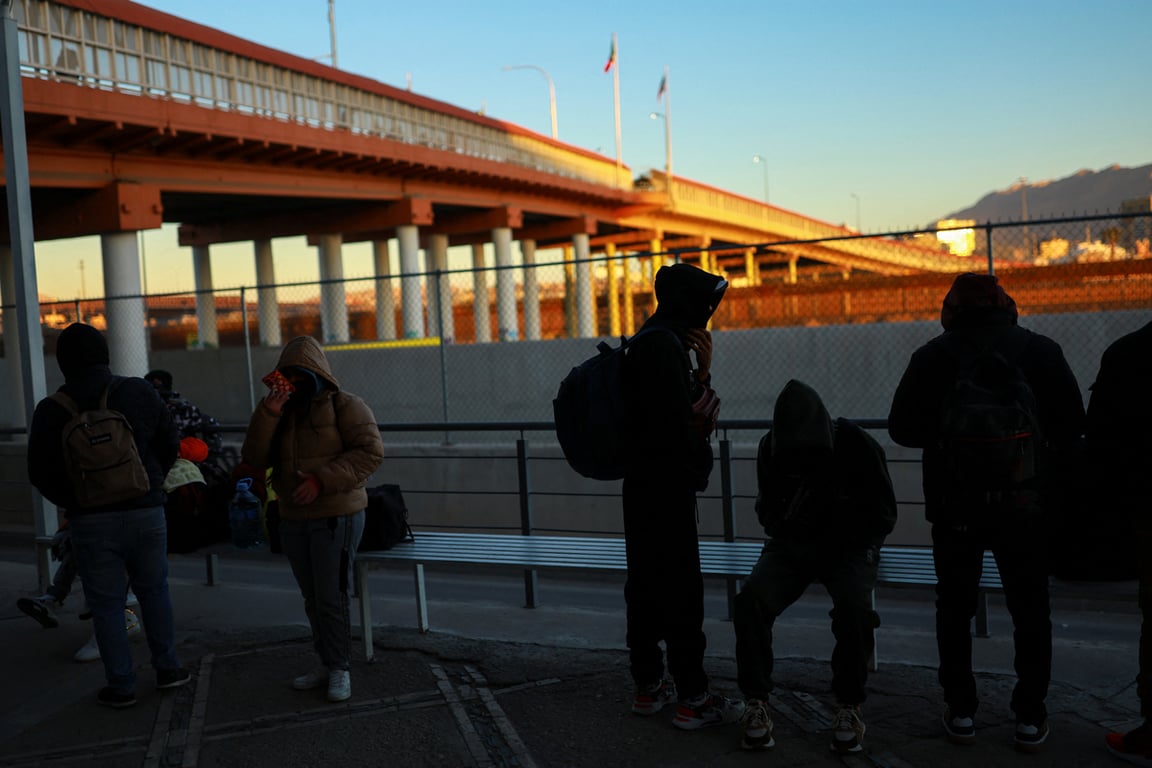
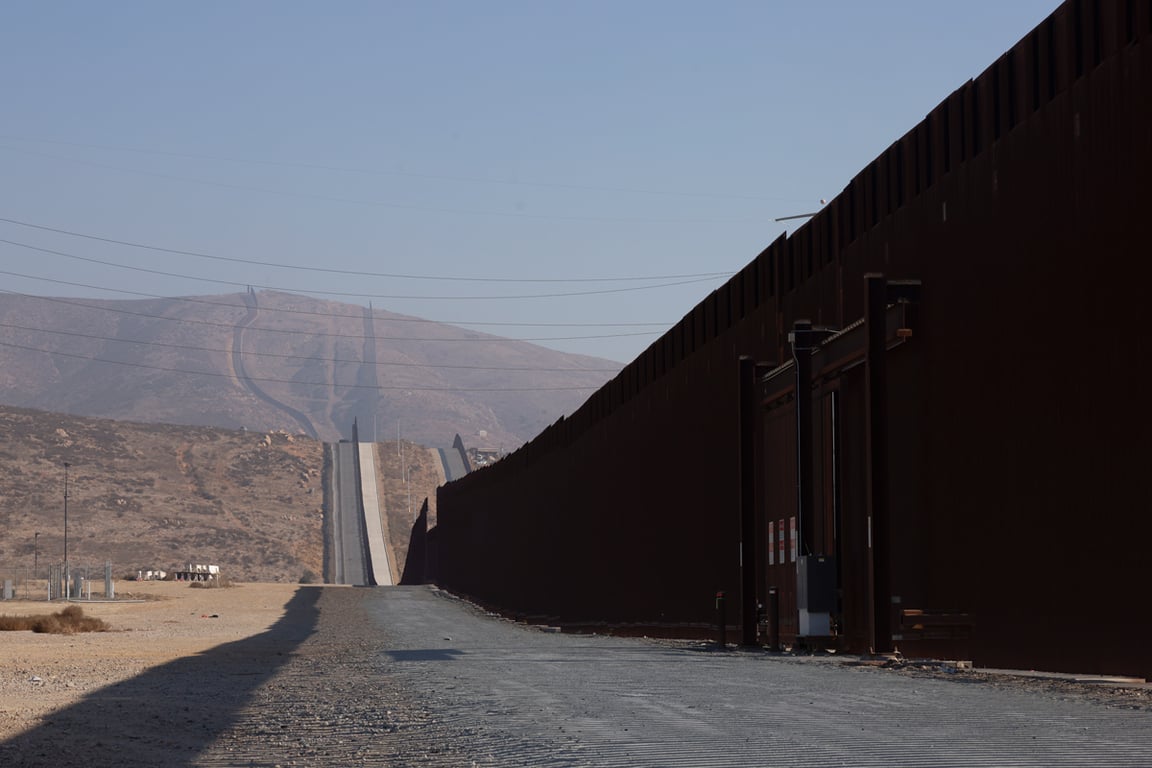
In addition, the head of the White House ordered the immediate resumption of construction of a wall on the southwestern border of the United States, and also further reinforced the border areas with military personnel.
The White House page “Promises Made, Promises Kept,” which was published on the first anniversary of the 2024 presidential election (that is, November 5, 2025), states: “Under President Trump, illegal crossings of the southern border have reached historic lows... Virtually no illegal migrants are released into the interior of the United States.” Statistics from relevant US departments generally confirm these statements.
Deportations of illegal immigrants
Simultaneously with the construction - literally and figuratively - of walls on the border with Mexico, the Trump administration began catching illegal immigrants who had already settled in the United States. This was quite expected, because during the election campaign the Republican repeatedly promised “the largest deportation operation in US history,” declaring his intention to expel from 15 to 20 million people (and this despite the fact that, according to various sources, 11–14 million illegal migrants live in the United States).
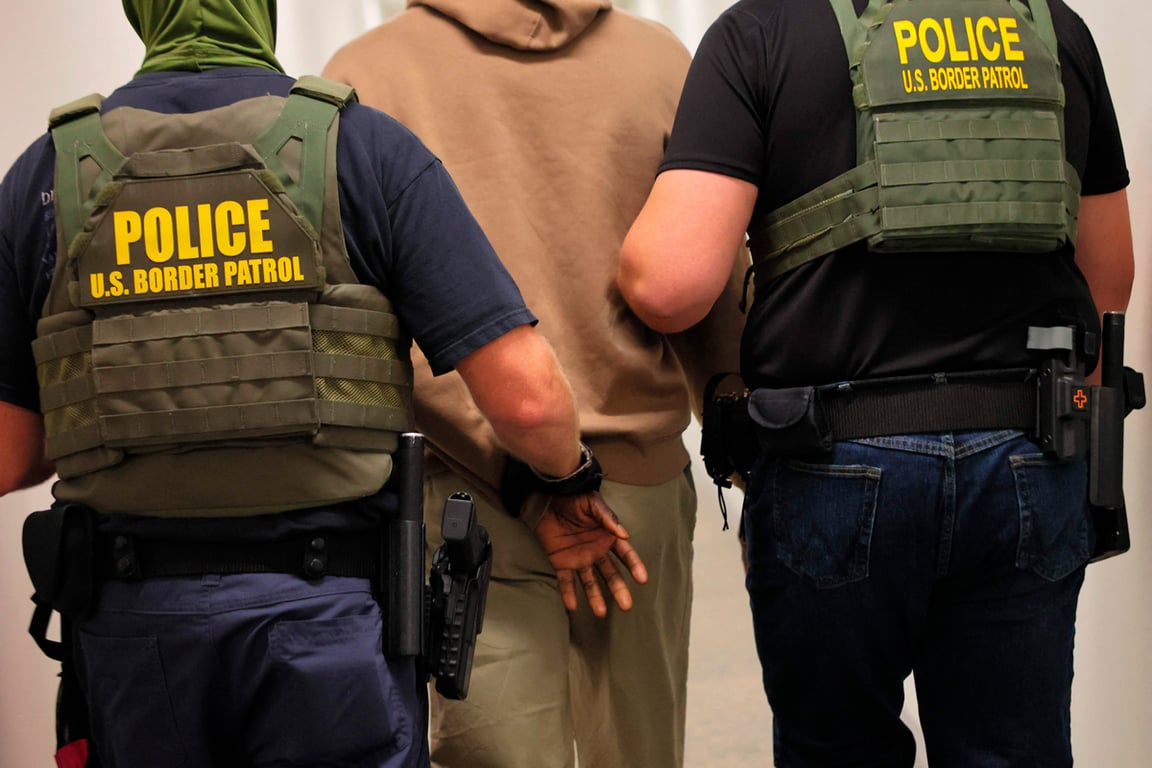
Trump's executive orders authorized state and local law enforcement agencies to carry out immigration enforcement functions "to the fullest extent permitted by law" to "investigate, apprehend, or detain aliens within the United States." Immigration and Customs Enforcement (ICE) also received additional powers. In particular, the long-standing rule prohibiting raids in “sensitive areas” - churches, mosques, schools, hospitals - was repealed.
“Every day, the Trump Administration is removing undocumented immigrants who have committed murder, rape, gang crimes, drug trafficking, and other violent crimes from American streets and sending them back,” a White House report in November noted . “Moreover, the number of arrests made by ICE under President Trump has already significantly exceeded the figures of last year (2024 - Ed. ).”
It is not known for certain how many people were ultimately deported. On December 19, the Department of Homeland Security reported 622,000 deportations since Trump took office. However, according to estimates by The Guardian newspaper, we are talking about approximately 350 thousand cases. The Washington Post on January 13 mentioned the figure of 300 thousand.
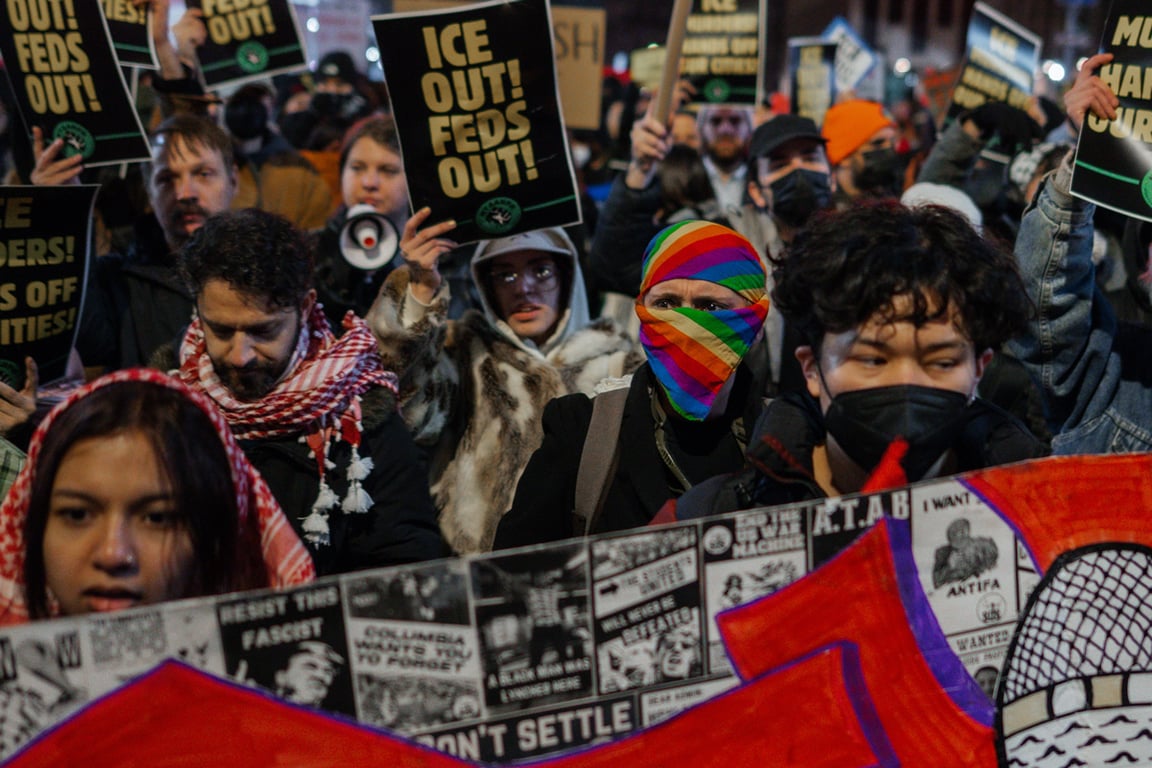
The harsh methods of ICE agents have repeatedly outraged human rights activists and led to mass protests and sometimes riots. For example, in June 2025, after immigration raids, they began in Los Angeles. Trump sent 2,000 National Guard troops to California, which only intensified the conflict - this was the first time the National Guard was mobilized without the consent of the state governor since 1965. Protests in those days spread to other cities.
And in January 2026, demonstrations took place in a number of American cities against the actions of ICE in Minnesota, where an immigration officer shot and killed activist Renee Nicole Goode, a member of one of the groups that monitors the actions of ICE officers and warns about raids. It was at least the fifth death in the Trump administration's immigration campaign, according to the Associated Press.
The US Department of Homeland Security cites even larger figures when talking about “voluntary self-deportation”: 1.9 million illegal immigrants allegedly left the country on their own since January 2025 (there is no independent confirmation or refutation of these data). For “self-deportation,” the CBP Home mobile application developed under Trump, which replaced Biden’s CBP One, is intended. By registering there, illegal immigrants can receive a free plane ticket home and $1,000, as well as avoid any fines for violating immigration laws. At the same time, from December 22 to December 31, special conditions were in effect. “Limited time offer! Through the end of the year only, take advantage of your $3,000 bonus to go home for the holidays,” read a flyer prepared by the Department of Homeland Security.
Refusal of humanitarian programs
A few hours after the inauguration, Trump effectively ended the CHNV (Cuba, Haiti, Nicaragua, Venezuela) program launched by the Biden administration, which allowed 530 thousand migrants from these four countries with humanitarian crises to temporarily enter the United States. To participate in the program, people needed a sponsor in the United States - a relative, friend or loved one. No government assistance was provided to new arrivals. But Trump was not bothered by this. The decision to end the program was later upheld by the Supreme Court, paving the way for CHNV participants to be deemed deportable.
Other humanitarian mechanisms are also under threat. In particular, the fate of Ukrainians who arrived in the United States under the Uniting for Ukraine program after the start of the full-scale Russian invasion caused concern. The Trump administration suspended it for several months in 2025 and then reinstated it by court order, but the precedent itself showed how unstable even this channel of protection had become.
An additional risk is that Temporary Protected Status (TPS) for Ukrainian citizens expires in October 2026, and its renewal is now entirely dependent on the policy decision of the White House.
Temporary Protected Status was created in 1990 for citizens of countries to which it is unsafe to return due to war, natural disasters or political collapse. It provides protection from deportation and work authorization, but does not provide a path to a green card or U.S. citizenship.
Under Trump, a major overhaul of the entire TPS program began, which, as of March 31, 2025, involved about 1.3 million people. The list of states is regularly updated, becoming more compact: the Trump administration step by step excluded from it, in particular, Venezuela, Haiti, Afghanistan, Cameroon, Syria, South Sudan, Myanmar, Ethiopia, Nicaragua, Nepal, Honduras, Somalia. The last decision was made on January 13, 2026: 2.4 thousand Somalis must leave the United States by March 17.
True, a significant part of these decisions were challenged in the courts, which suspended the procedure for canceling the status. Human rights activists pointed out that while the government has the right to terminate national programs, it must prove that the situation in the country in question is improving - something Trump’s allies neglected.

An even more radical step by the current administration was the virtual freeze of the refugee resettlement program, one of the oldest US humanitarian instruments, dating back to the Vietnam War. As part of this program, the United States rescued, in particular, Afghan and Iraqi translators who collaborated with the American armed forces and were forced to leave their countries, as well as refugees from Cambodia, Sudan, Bosnia, and Myanmar. Trump declared refugee admissions contrary to the national interest, suspending the program indefinitely. The only exception was white Afrikaners from South Africa, the homeland of Trump ally Elon Musk: they are still welcome in the United States.
However, in November 2025, the Department of Homeland Security announced that it would review the status of all persons admitted to the United States as refugees under the Biden administration. It was alleged that some people would be called in for interviews and could end up losing their legal status.
Visa restrictions
Serious restrictions since January 2025 have affected not only applicants for humanitarian visas: legal channels of entry into the United States have been closed for many categories of citizens. Thus, Trump again turned to a tool that was well known from his first term - visa and entry bans.
First, in June, under the pretext of protection from foreign terrorists, a ban was announced on the entry of citizens of 12 countries and partial (but also extremely strict) restrictions for seven more states. The decision was announced after an attack on participants in a march in support of Israeli hostages in Gaza, which occurred in Colorado. On December 16, the list was expanded: another two dozen states were subject to restrictions, and the list of exceptions provided for in the previous version of the ban was significantly trimmed.
The country most affected by the new restrictions was Nigeria: over the past decade (excluding the pandemic years of 2020 and 2021), Nigerians received an average of 128,000 immigrant and non-immigrant visas per year. Now almost all of these visas are banned.
In addition, it is interesting that two of the names on the December list - Senegal and Cote d'Ivoire - have qualified for the 2026 FIFA World Cup, which will mainly be held in the United States. In accordance with the new ban, fans from these countries who do not have valid visas as of January 1, 2026 will not be able to obtain them and attend matches in person.
As with the June ban, the Trump administration attributed the December restrictions to national security concerns, problems with vetting applicants and high levels of visa overstays. Meanwhile, as the American Immigration Council noted , “the Trump administration has failed to demonstrate a direct link between a complete visa ban—including for minors—and national security.”
Russia was not on the June and December lists. But in January 2026, it became one of 75 countries for whose citizens the United States will suspend the issuance of immigrant visas from January 21. Acceptance of documents will have to resume after the development of new, more stringent rules. The goal is not to allow into the country those who, in the opinion of American authorities, could become a burden on the social security system. According to Fox News, American consuls have been instructed to more strictly screen applicants based on the “social dependent” criterion. Now they will evaluate a person’s health, age, finances, English skills, and even weight. Those who are elderly, low-income, have serious health conditions, or have previously received benefits will most likely not be able to obtain visas.
The ban should not affect visas that are intended for temporary travel to a country for specific purposes, such as tourism, study, work or transit. Also, the new rules do not affect talent visas - they are considered non-immigrant. However, in 2025, obtaining these visas has become much more difficult for many than before.
For example, in September, the State Department allowed Russians to apply for American visas in only two places: Astana and Warsaw.
The State Department also has other tools in its arsenal. Thus, since August 2025, a visa deposit program has been in effect: applicants for tourist and business visas are required to pay from 5 to 15 thousand dollars as a guarantee of compliance with the terms of stay in the United States. The deposit is returned in case of refusal to issue a visa, its non-use or timely departure from the United States without violating the conditions of stay. Initially, the initiative extended to citizens of Malawi and Zambia, but then the United States expanded it in several stages to citizens of a number of countries, including - from January 2026 - Turkmenistan, Kyrgyzstan and Tajikistan.
In addition, hundreds of foreign students' visas were canceled in 2025, including those who had valid residence permits or even green cards. In a number of cases, detentions and threats of deportation were related not to criminal violations, but to political statements—primarily in support of Palestinian rights.
A high-profile decision was the termination of the green card drawing program (Diversity Visa lottery). This mechanism allowed approximately 50 thousand people from countries with low migration rates to move to the United States annually. The decision was made after the shooting at Brown University (Rhode Island). The suspected attacker, Portuguese Claudio Neves Valente, allegedly entered the United States under this program.
Against the backdrop of all these restrictions, the launch of the Trump Gold Card program looks especially contrasting. It offers a fast track to residency and citizenship for wealthy foreigners willing to pay at least $1 million. A “platinum” version was also announced for $5 million with special tax conditions.
An attempt to restrict the right to citizenship
One of the Trump administration's most sweeping moves has been its attempt to limit birthright citizenship, a principle enshrined in the 14th Amendment to the US Constitution that has been in effect for more than 150 years. This is not just a controversial immigration measure, but a direct invasion of the constitutional architecture of the American state.
On Inauguration Day, January 20, 2025, Trump signed an executive order ending the practice of automatically granting citizenship to the children of undocumented immigrants born in the United States. Thus, Trump fulfilled one of his long-standing campaign promises .
The legal vulnerability of the decree was obvious to everyone: the provisions of the Constitution cannot be limited by presidential decree. That is why the reaction was almost immediate. More than 20 states have filed lawsuits against the administration, demanding that the order be immediately blocked. At least one federal judge has already suspended the document, calling it "clearly unconstitutional." The issue now moves to the US Supreme Court. The hearing is expected to take place this spring.
However, for Trump, the legal outcome is apparently not the main thing. The signing of the decree itself is a method of achieving several goals at once. Firstly, this is a demonstration of the administration’s readiness to enter previously taboo areas. Secondly, it is about consolidating a symbolic break with previous interpretations of migration law. Third, this is an appeal to the core of Trump’s electorate, for whom birthright citizenship is a symbol of an “too soft” immigration system.

Closing America
Thus, in the first year of Donald Trump’s second term, US migration policy ceased to focus only on the fight against illegal migration: we were already talking about the systemic dismantling of legal and semi-legal channels of entry and stay in the country. In the first 11 months of Trump's presidency, more than 1.6 million immigrants lost their legal status. This category included people who came through the CHNV program, Temporary Protected Status programs, visa channels, asylum and refugee admissions procedures. In general, as Todd Schulte, head of the migrant advocacy organization FWD.us, noted in a conversation with NPR, we are talking about people who, upon entering the United States, “did exactly what the state wanted them to do,” but in the end they turned out to be prime candidates for deportation.
In response to criticism, the White House only points out that “having a US visa is not a right, but a privilege.” The administration explains this course by the need to reduce the burden on the budget and the social system. In response to criticism, U.S. Citizenship and Immigration Services (USCIS) spokesman Matthew Tragesser bluntly stated that under Trump, “the American taxpayer will no longer bear the financial burden associated with aliens in the country illegally.” However, people who were in the United States legally were probably also meant.
This decisive policy has achieved an effect that Trump was unable to achieve in his first term.
According to Brookings Institution experts, in 2025, net migration to the United States for the first time in at least half a century went into the negative zone - from minus 10 thousand to minus 295 thousand people (analysts explain this spread, in particular, by a decrease in the transparency of statistical data under Trump).
Official government data on immigration levels for 2025 will be released later and, as The Washington Post noted , may not contain precise information on how many people have left the country.
In 2026, according to Brookings Institution forecasts, net migration will also remain in negative territory. And the White House is clearly happy about this. On January 14, the Trump administration detailed exactly how their immigration policies affect Americans. In particular, it was argued that tough decisions and actions allegedly made real estate more affordable, led to higher wages and increased supply in the labor market, and reduced crime rates.
However, the text of this statement can be considered a classic example of the logical fallacy “after does not mean due to.” For example, the section headlined “Mass Deportations = Higher Wages” is worth quoting in full: “American truckers and construction workers—both industries with traditionally high shares of foreign-born workers—are reporting strong wage growth as blue-collar incomes grow at the fastest pace in decades. Overall, real wages for American workers are expected to increase 4.2% in the first full year of Donald Trump's presidency."
Start too fast
Meanwhile, the Brookings Institution points out the negative consequences of Trump's policies. “The 2022–24 immigration surge was accompanied by sustained employment growth: immigrants simultaneously expanded the supply of labor and created additional demand for goods and services,” experts explain, pointing to the beginning of a reverse trend.
In particular, the authors of the study pay attention to the breakeven employment growth indicator - this is the number of jobs that the economy must create so that the unemployment rate does not change. In the second half of 2025, we were talking about 20–50 thousand new jobs per month, but in 2026 this figure could become zero or negative. And this will signal less potential for GDP growth, as well as a reduction in the tax base and consumption. According to calculations by the Brookings Institution, over the course of two years—2025 and 2026—consumer spending in the United States could fall by $60–110 billion due to Trump’s immigration policies (in 2024 they amounted to $19.4 trillion).
It seems that by the end of 2025, these and other arguments began to influence ordinary Americans.
According to the Pew Research Center, a growing share of the country's citizens believe that the White House is "going too far." According to a survey conducted among US adults on October 6-16, 53% of respondents are confident in this (9 percentage points more than in March).
Meanwhile, 50% generally disapprove of Trump's approach to immigration (including 36% who "strongly disapprove"). 39% approve, of which 24% express strong approval.
Party differences are predictable. 86% of Democratic Party supporters believe the Trump administration is going too far (+11 points compared to March). Meanwhile, among Republicans, the share of those who consider the measures excessive also increased - to 20% (+7 points). 47% of Hispanic Republicans say the administration is going overboard, compared with 13% of white Republicans.
The increase in the proportion of people who fear that deportations could affect themselves, family members or close friends also speaks volumes. In March 2025, there were 19% of them, in October - 26%. Anxiety is strongest among Democrats (41% vs. 10% among Republicans) and Hispanics (52%).
For the Trump administration, these numbers are a serious challenge. On the one hand, US society still allows for the deportation of at least some people without legal status. On the other hand, rejection of the current team’s tactics is growing. One way or another, Republicans are unlikely to discuss the latter publicly. In the coming days, summing up the results of the first year of his second presidential term, Donald Trump will probably only talk about how happy the “common sense revolution” he promised on inauguration day has made Americans.