
Translated material
“I watched her for half an hour.”
The killer attacked women who were returning home alone. They couldn't catch him until he spilled the beans. 
On the evening of November 1, 1978, in the Kotva cinema in the center of the Czech city of Decin, located several tens of kilometers from the border with Germany, a family quarrel occurred. 29-year-old Eva Rokhlenova and her husband Josef came to a screening of the Italian action film “...otherwise we will get angry” and had a fight .
According to one version, after the session, upset Eva fell behind her husband on the stairs in front of the cinema and got lost in the crowd so that Joseph could not find her. She headed to the Elbe embankment to get some air. A few hours later, her body was found in the grass near the river.
Rokhlenova's clothes were torn, and there were signs of rape on her body. Medical examiners determined the cause of death was strangulation.
"Evochka, Eva"
As Jiri Markovic, the investigator for particularly important cases, later recalled , the case was complicated not by the absence of suspects and possible motives, but, on the contrary, by their abundance.
“Establishing their identities and checking their alibis turned out to be very time-consuming and labor-intensive,” Markovich said.
Rokhlenova was married for the third time, and also dated several lovers at once. One of them came under suspicion from the police (then “public security service”) after an anonymous denunciation. He admitted that he had dated the deceased and wanted to break off relations with her, but claimed that he did not wish her harm. He was kept under arrest for 48 hours and then released.
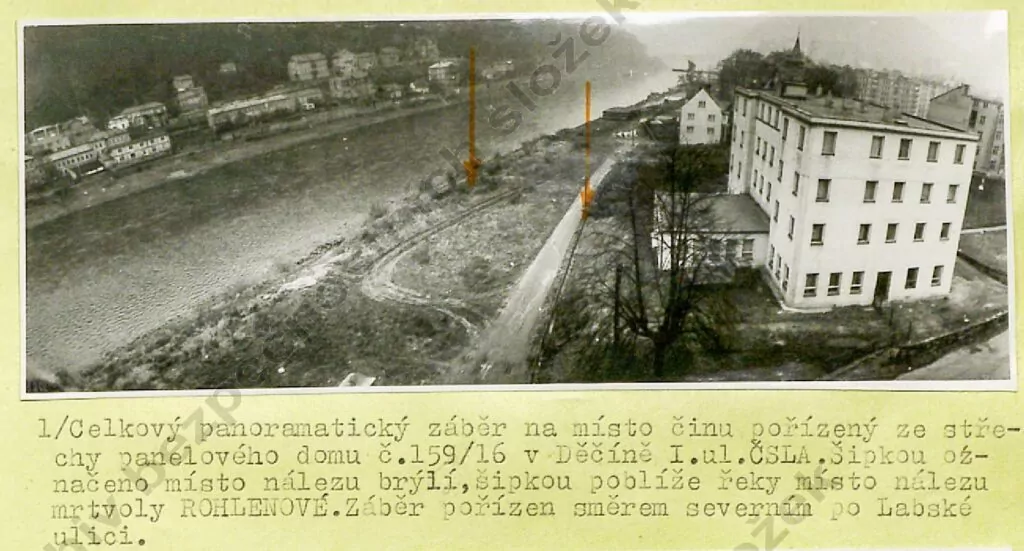
In July 1979, more than six months later, a drunk man was detained near the crime scene, who, according to eyewitnesses, shouted to passers-by: “Evochka, Eva, I didn’t do anything, I didn’t harm anyone!”
He was a 31-year-old ship's helmsman from North Moravia, whose ship usually stayed in Decin for several days. During interrogation, he denied the accusations and said that he just often drinks and behaves strangely, but this time he was impressed by the murder story that was discussed in the pub.
The police found out that the detainee finished his watch on the ship on November 1, 1978, he had free time until November 8. The helmsman claimed that he immediately went home to Ostrava, but his mother and other relatives did not confirm that he was at home. The helmsman remained the main suspect for a year. He was released only in November 1979, after a second search of his home found a ticket dated November 1, 1978, confirming that he had indeed returned home on the night of the murder. “From this we can conclude that his relatives deliberately testified against him... They apparently did not like him and wanted him to go to prison,” investigator Markovich later marveled in an interview.
A year after the murder, police ran out of leads. None of the respondents who were near the crime scene saw either the victim or any suspicious person. And soon there was another murder.
Last passenger
In February 1980, Ivona Springlova, a medical student at a Prague university, passed one of the most difficult exams of the penultimate academic semester. To celebrate, her husband, a serving officer, took leave and they went to a dance party at the International Hotel.
The young couple did not have their own home: Ivona lived in a hostel, but sometimes spent the night with her parents in Decin. After the dance, the husband accompanied his wife to the night train to Decin, which departed at 02:30.
At about five in the morning the train arrived in Decin. Around eight, while cleaning the carriage, one of the cleaners discovered the body of a young woman in the toilet. It was Ivona Springlova. A forensic examination established that she was strangled - with a white scarf that belonged to the victim herself. Her clothes were torn, so the police assumed that they had tried to rape her.

The lock in the toilet was standard. The investigation determined that someone opened it while the door was locked, probably with a regular key for a similar door. Forensic scientists were able to identify almost all the passengers, but this did not lead to the capture of the criminal - the last, 48th passenger on the train was not found at that time.
After the dance
On January 31, 1981, 18-year-old Ivana Matlova was found murdered in a small park near Jilova Street in Brno, a few hours drive from Decin. She was also returning home from a dance she had gone to with a friend.
“I was left at home alone. And Ivana went to a dance party <…> My husband was a singer and musician at another event. At one o’clock in the morning I began to get nervous because my daughter had not returned,” recalled the mother of the deceased.
At three o'clock in the morning the girl's father, Stepan Matlov, returned home. His wife worriedly told him that their daughter was still not home, and they contacted the police.
Soon the police asked Matlova’s father to go outside with them. As he later recalled, after walking a few steps, he saw a body covered with a blanket in the snow.
The police showed Matlov the face of his dead daughter. “At that moment I didn’t know how painfully she died. They simply told me that she was strangled,” he told reporters. The murdered girl had her breasts cut off and her genitals cut out.
During the investigation, it was established that Matlova went to the Slavia cafe, where foreigners, mostly of Arab origin, gathered. One of the versions of the investigation was that someone from this circle of people could have killed her, said criminologist Vladimir Matoshek. However, the police never brought charges against anyone.
The suspect appeared a month after the murder. In one of the university dormitories in Brno, a 21-year-old student of Arab origin tried to commit suicide. In the note he confessed to the murder. “I killed this girl <...> I am a vile killer,” he wrote.
However, doctors managed to save him. “The man later told investigators that he lied in the letter and in fact tried to commit suicide due to failures in his studies. He thought that his parents and society would condemn him as a murderer, and no one would notice his educational failures,” Matoszek later explained.
All over the country
In October 1981, 51-year-old Prague resident Anna Šchastna was returning from a classical music concert, but never came home. Soon her body was found by a passerby . The police began looking for possible suspects with mental disabilities due to the state in which the body was found: Shchastna was lying on her back with her legs spread, completely naked; Many scratches and obvious damage to the genitals were found on the body, women's tights were tightly tied around the neck, and a lace blouse covered the head.
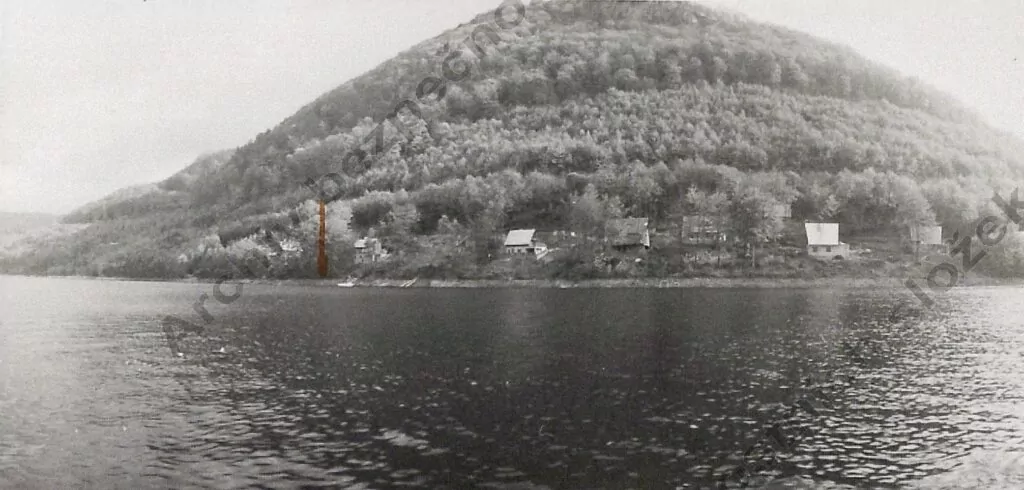
Around the same time, another body was found at the Ruzin reservoir in Slovakia. On October 11, 1981, a man boating noticed something like a huge tire in the water, but when he removed the find from the water, he realized that he had caught a badly decomposed human body. It was a female corpse bound with wire, without a head or hands. The victim appeared to be between 25 and 35 years old.

Ruzin was a popular holiday destination for tourists from Hungary, Poland and the German Democratic Republic, so investigators admitted that the woman could be a citizen of another country.
The police interviewed local summer residents, as well as employees of the Sivec hotel, located nearby. It turned out that a woman matching her age and clothing had been to this hotel in the past. According to one of the waitresses, she sometimes came to the hotel restaurant, always in a male company, but never stayed overnight. However, she had not been seen at the hotel for a long time.
Meanwhile, in Prague, in connection with the murder of Shchastny, investigators checked possible suspects, but this did not bring quick results. The police were looking for men with sexual deviations. At the end of January 1982, the attention of the police was attracted by a certain Yaroslav Donat, a patient of a psychiatric hospital who announced that he did not want to stay in the hospital and would prefer to be in prison. “For the murder of that woman whom I strangled with her own tights, you should put me in jail!” - he said.
Investigators checked the version of Donat's involvement in the murder, but it was not confirmed. On October 3, 1981, the day of Shchastny's murder, Donat was in a psychiatric hospital. However, he gave investigators information that had not been disclosed before: that a strangulation object was used in the murder. The crime scene was closed from outsiders, and no one except the killer could find out about it. But Donat had an alibi.
During the next interrogation, Donat said that some time ago he had been walking with a friend named Ladislav Hoyer, who lived near the scene of the murder and worked as a glazier. “He showed me the place where the murder of a 51-year-old woman took place and said that she was strangled with her own tights,” Donat said.
Hoyer was detained on February 11, 1982, while leaving a glass workshop.
"Not capable of lying"
The police have collected a file on the detainee. At school, Hoyer was a mediocre student and did not stand out in any way except for his lack of friends and a solitary lifestyle from an early age. The family was not rich, the father died early from cancer. The mother remarried and gave birth to a second child, but took little care of the children and soon also died of cancer. The stepfather left the children, and Hoyer and his brother lived alone in the family apartment in Prague.
In 1978, Hoyer was called up for mandatory military service. After returning from the army, he got a job in a glass workshop, where he worked until his arrest.
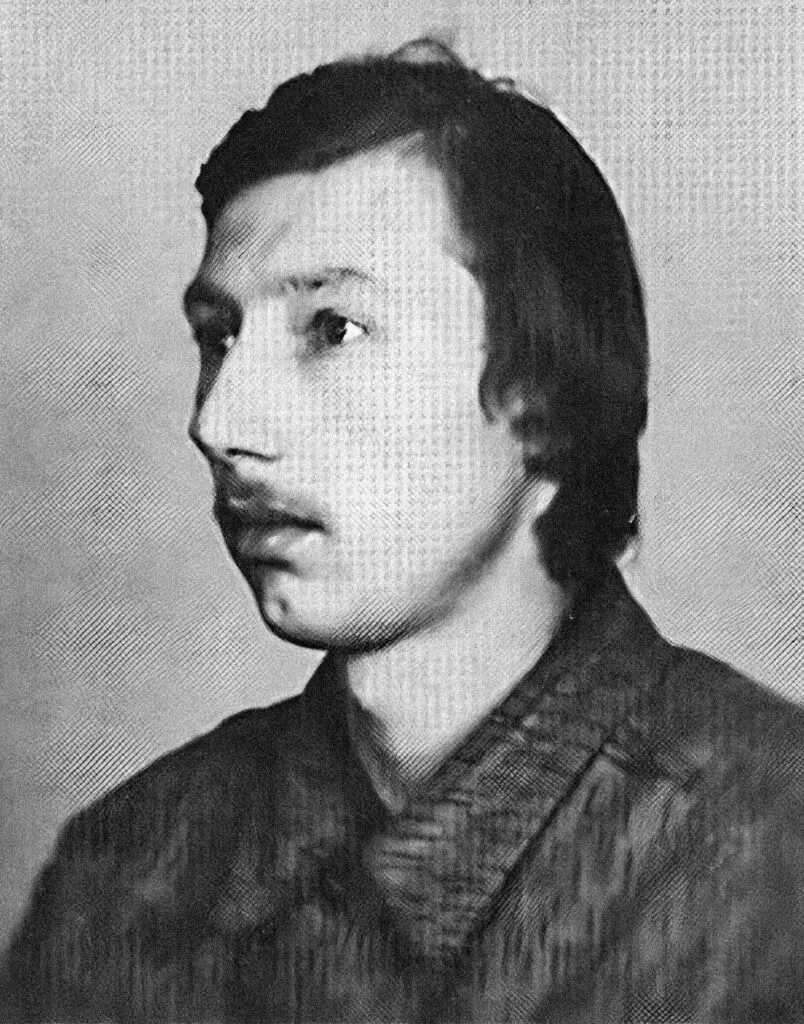
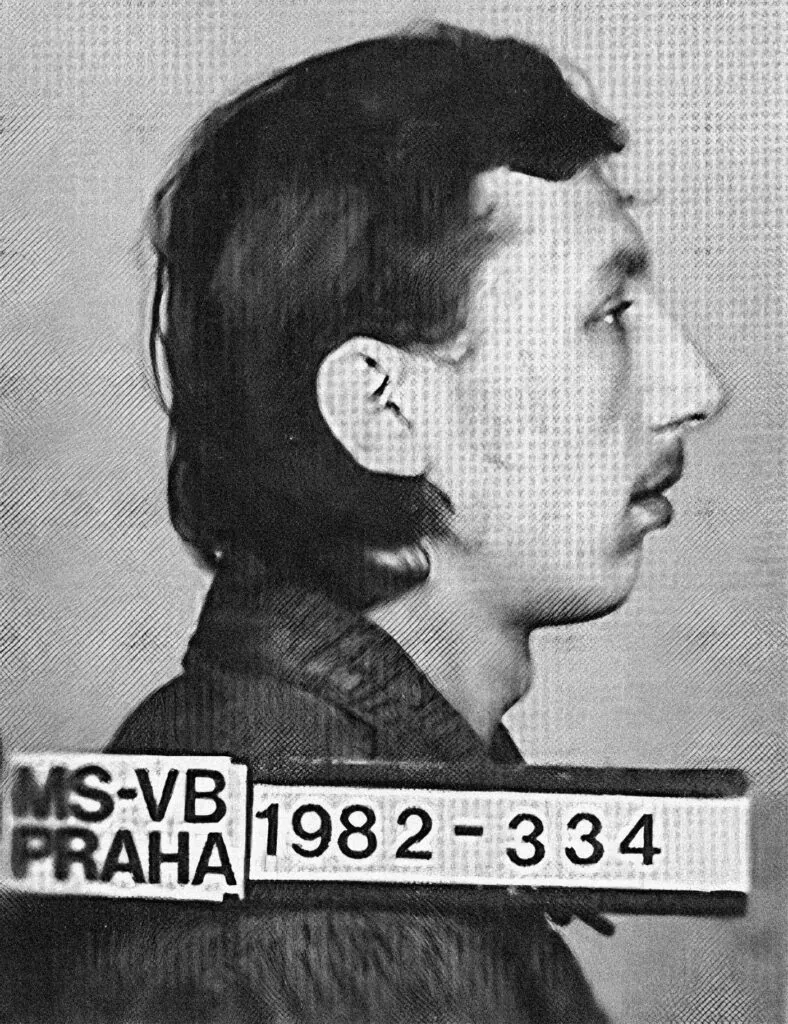
“He seemed mentally retarded to me. Without money, hungry, neglected,” one of Hoyer’s colleagues described . During the interrogation, according to the investigator’s recollections, he spoke with long pauses.
“I felt that Hoyer was incapable of lying. More precisely, he would not have been able to come up with any acceptable lie that he could stick to during interrogation,” said Jiri Markovic.
During interrogation, Hoyer admitted that on the day of the first murder he went to get acquainted with “the beauties of Czechoslovakia” in Decin, where he had planned to go since he once passed through this city on a bus on his way to Germany. According to him, he came to the city “to also look at some girl.” The victim was Eva Rokhlenova, who quarreled with her husband in the cinema. He grabbed Rokhlenova by the chest as she passed by. She started to run, but Hoyer was faster. He knocked her down, stunned her and carried her to a deserted place, where he tore off her clothes, strangled her and raped her.
Hoyer admitted to investigators that he had never had a serious relationship and had never had consensual sex with any woman. He spoke about the motives for the murder of Shchastny. First, Hoyer invited her to his home. The woman refused, which angered the killer. Hoyer attacked her, knocked her to the ground and cut her dress with a knife. He raped Shchastna, and then threw tights over her head, with which he strangled her.
“I thought that if one woman walked by, I would persuade her to have sex with me. “I didn’t know exactly how,” he told investigators. He decided to force the woman to have sex like this: he put a sharp knife to Shchastny’s neck and took her off the sidewalk. “She resisted all the time, so I strangled her. I was afraid that she would recognize me,” Hoyer admitted.
"I'm afraid of everything"
After a few weeks in custody, he began to talk about other murders. At the end of November 1982, he sent a note to the investigator from the pre-trial detention center in Ruzin: “I am writing to you about my criminal activities. I would like to volunteer to explain to you cases that I have not yet reported. I want to tell everything truthfully and not hide anything...” He confessed to the murder of an unknown woman in Ruzyn in August 1980 and to the murder of a student in the north of the Czech Republic.
Hoyer recalled that in February 1980 he went for a walk from the barracks in Liptovský Mikulas, where he was doing his military service. He went to Prague, but was not there for long: he wandered around the city, then went to the Main Station in Prague and took a fast train to Ústí nad Labem. There he chose medical student Ivona Springlova as his victim.
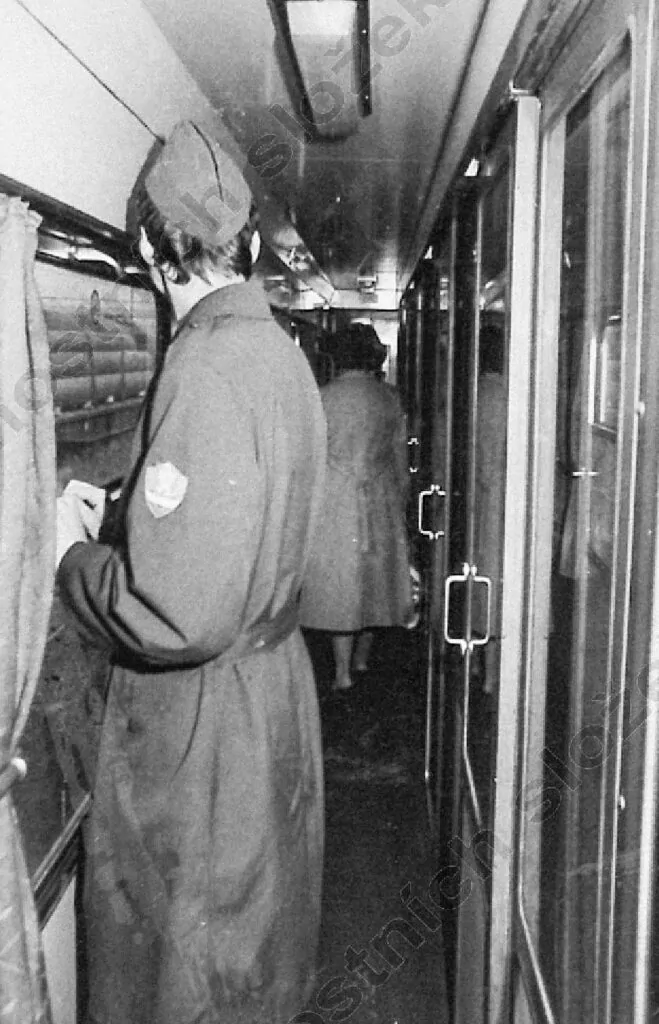
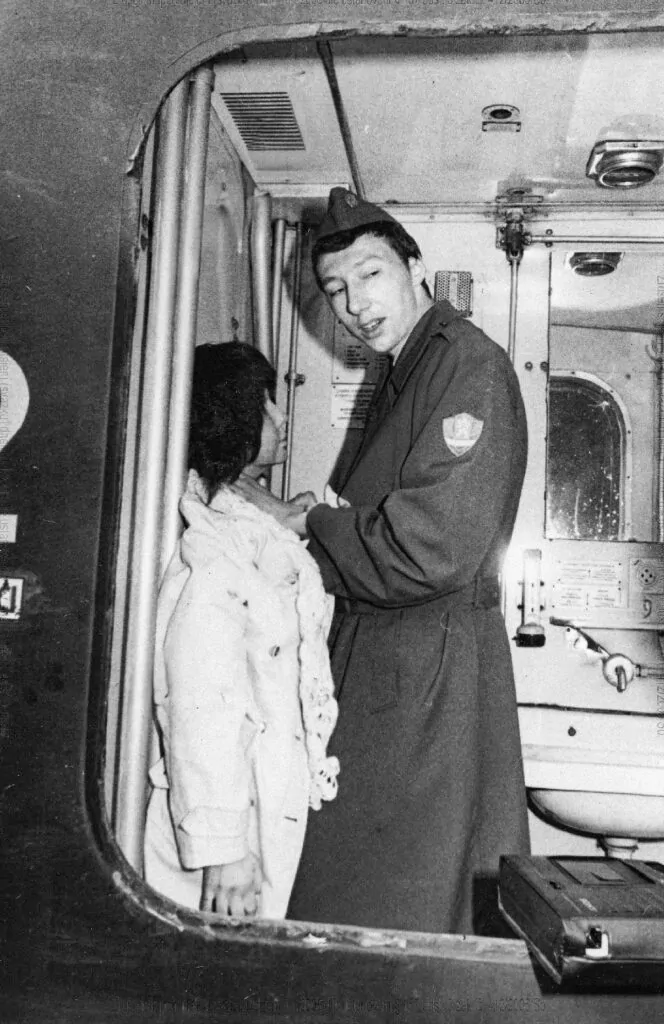
“I watched her for half an hour,” he admitted. When she went to the toilet, he broke the lock and followed her. In the booth, he began to strangle her with a scarf and tried to rape her, but could not. “Try that with the train shaking like that,” Hoyer commented on the failed rape attempt.
“I’m scared to say this,” Hoyer told investigators, looking down at the floor. He cut off the victims' breasts and genitals. “Then I boiled it in salt water and ate it with hot mustard and horseradish,” he described .
However, in one of the notes to his lawyer almost a year later, on October 4, 1983, Hoyer wrote that he did not commit all these crimes. Markovich asked Hoyer to explain why he changed his position. "His words were recorded in the protocol, and I remember them to this day: 'I'm afraid of trial and, most importantly, punishment. I'm afraid of everything,'" the investigator recalled.
Experts came to the conclusion that at the time of the crimes, Hoyer was sane and did everything consciously.
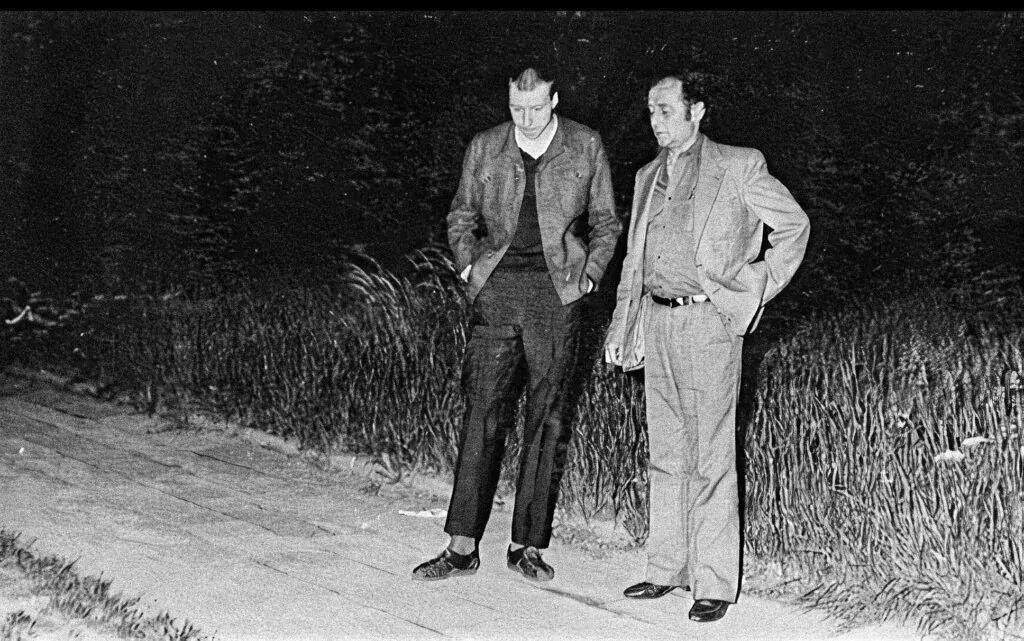
Already on the first day of the trial in the City Court of Prague, Hoyer withdrew his confession: “I did not kill Matlova and did not do these things to her. I couldn’t, I hate the sight of blood... Why did I give different testimony? The police did not let me sleep, I was mentally destroyed, they did not feed me, the investigator - but it was not Mr. Markovich - told me some details in advance. They didn’t beat me, but I was afraid of mental violence.”
However, the judges did not take into account the changed testimony. On November 9, 1984, the Prague City Court sentenced Hoyer to death. He tried to appeal against it, but to no avail. The last hope for Hoyer disappeared on July 4, 1986, when then-President Gustav Husak denied him a pardon.
The sentence was carried out a little more than a month later. On August 7, 1986, 28-year-old Hoyer was put on a “bear” restraint strap by guards and escorted to the basement of Pankrac Prison in Prague, where he was being held.
Two days later, the newspapers published a short notice: “The death penalty has been carried out.”
Author: Kholod editorial staff