Translated material
Less than a year has passed
The results of the work of Olga Galaktionova, the most “convenient” director of the Pushkin Museum
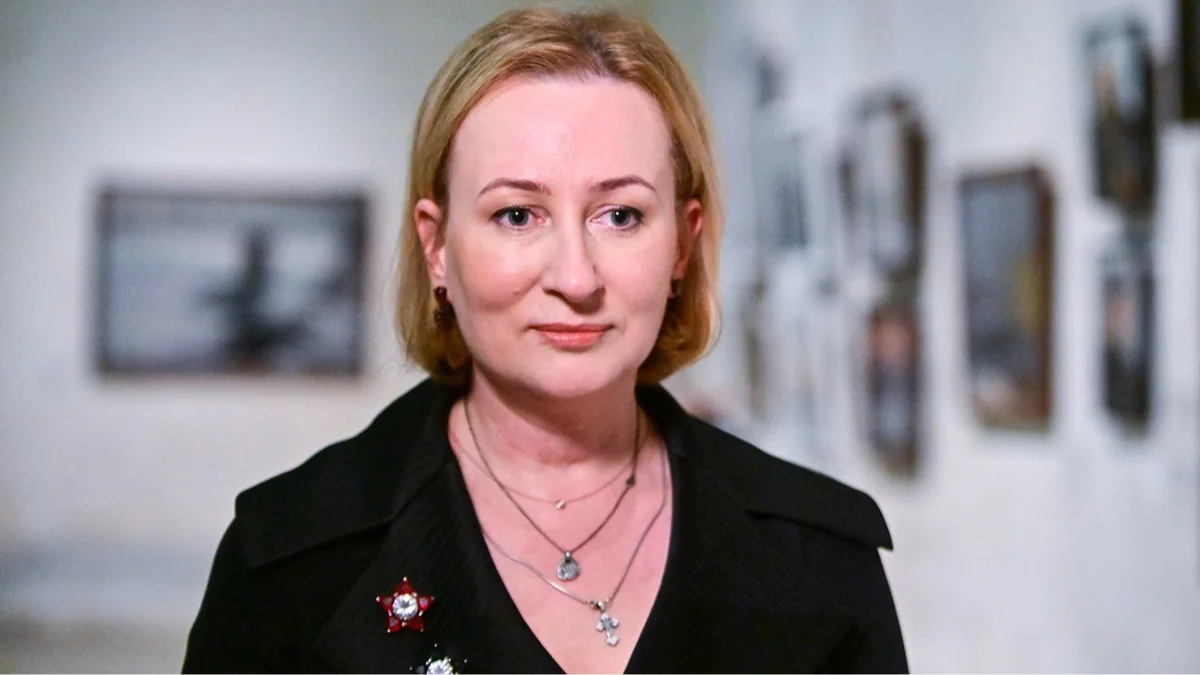
Olga Galaktionova. Photo: Sergey Kiselev / AGN “Moscow”
On January 14, it became known that Olga Galaktionova, who held the post of director of the State Museum of Fine Arts. A. S. Pushkin, left her position and headed the Tretyakov Gallery. Her place was taken by Ekaterina Pronicheva, the daughter of the ex-head of the Border Service Vladimir Pronichev and the sister of the former head of the Tretyakov Gallery. Galaktionova served as director for almost a year, during which not a single major exhibition took place and several regional branches were closed.
Film director
Olga Galaktionova stands out from the rest of the directors of the Pushkin Museum: she was never a certified art critic. Her appointment broke an informal, more than half-century-old tradition: Galaktionova’s predecessors - Elizaveta Likhacheva, Marina Loshak, and Irina Antonova - received the appropriate education. Galaktionova spent most of her life working in television, cinema and theater. From 2000 to 2009, she worked at TV-6, NTV and Channel 3, and for the next 12 years - as general director at the Galaktika film company: among the completed projects on the official website, for example, the screening of the film “Battle for Sevastopol” in annexed Crimea in 2015 is listed. As the head of the company, Olga Galaktionova supervised the filming of the film “Notes from the Past” about the close relationship between Russia and Belarus. The film was shot in 2020, during protests against the regime of Alexander Lukashenko.
In 2021, Olga Galaktionova was appointed head of the State Museum and Exhibition Center ROSIZO. During her work, she received an award from the Ministry of Defense of the Russian Federation in the category “Cultural and Educational Projects” for the project “Peter I. 350 Years”, and also distinguished herself with the exhibitions “DK USSR”, “17/37” and “Kukryniksy”.
“The reason for Galaktionova’s appointment is said to be personal friendship with the minister. But the reason is that she showed a high class at ROSIZO,” wrote art critic Ksenia Korobeinikova in her telegram channel “ku-ku”. Minister of Culture Olga Lyubimova, commenting on the appointment of Galaktionova as director of Pushkinsky, noted, among other things:
“[under the leadership of Olga Galaktionova] ROSIZO carried out active work in new regions of Russia: children's centers and a Cinema Museum were opened in the city of Shakhtersk, Donetsk People's Republic.”
Unlike Likhacheva, Galaktionova never made loud statements: she did not stand up for the Tretyakov Gallery, from which “Trinity” was taken away, and did not support museums whose exhibitions are ideologically inconsistent with current Russian politics, for example, the Gulag History Museum. It was for the latter, according to Anna Narinskaya and Alexey Venediktov, citing their own sources, that Galaktionova’s predecessor, Elizaveta Likhacheva, was fired. Olga Galaktionova, in turn, has always been a comfortable person.
“This is a delight!”
From 2017 to 2019, Galaktionova, according to Meduza, was directly connected with the pro-government Telegram channel “Zakulisk”: this is evidenced , in particular, by a screenshot of a Facebook post published on the channel, which shows the avatar of the ex-head of Pushkinsky. The Telegram channel “Zakulisk” is engaged, among other things, in intimidation, harassment and the spread of rumors about theater figures. From the very beginning of the war, the channel acted as a state mouthpiece on the theater stage and asked to ban the activities of everyone who did not agree with the authorities. Here is the post from February 26, 2022:
“The Moscow Department of Culture has screwed up everything possible. <...>
Either give an official “Order”, or stop making “recommendation” calls about the dismissal of those who wrote the posts or signed the next letters. Do you understand that you yourself are growing these crowns of martyrs?! Why do you give reasons for counter-propaganda? When these exalted bad guys, who don’t care what they sign for narcissism, start posting on Facebook about what kind of “persecution from the authorities” they have been subjected to, it will be a blow not to them, but to you. Because this is a failure of working with public opinion! Especially when Western social networks block the Russian version of events.
All these “recommendations” for dismissal and persecution are a road to nowhere.
Try to come up with other methods of influence.”
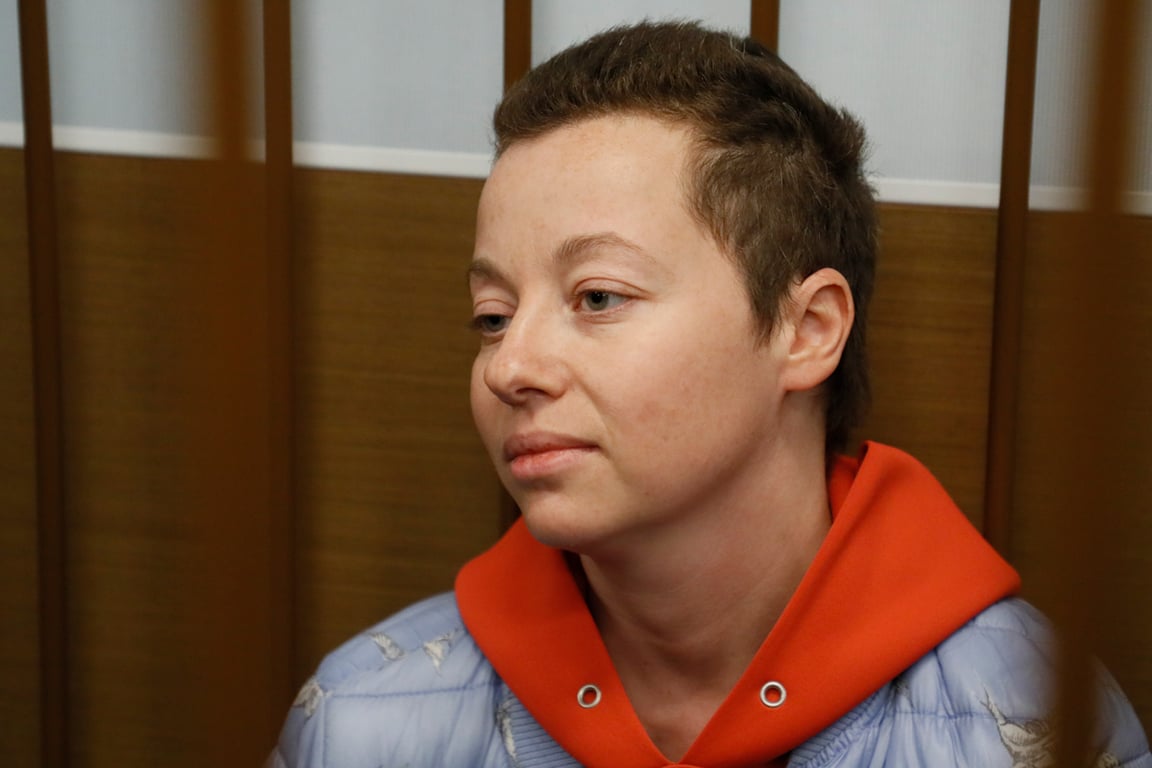
The channel actively criticized Evgenia Berkovich, calling her “mediocre” and regretting that she was being “made into Meyerhold” in view of the indictment against her. Approximately the same intonation was present in the coverage of the “Seventh Studio case”:
“Well, it closed and closed” , “What happened [a suspended sentence for Kirill Serebrennikov] is the best scenario for all those involved in the case . ”
“Behind the Scenes” reduces the role of culture in the country to serving the regime and war:
“Today, on the main front, the fate of the country is decided by the guys behind the ribbon.” Our task in the rear is to help them with all our might. What we can and how we can."
Considering that Olga Galaktionova is associated with this channel, the posts that praise the exhibitions of her directorship look especially interesting. Here, for example, is a review of “Marc Chagall. The joy of gravity":
“Yesterday we looked at perhaps the main exhibition premiere in Moscow - “The Joy of Gravity” by Marc Chagall at the Pushkin Museum. A. S. Pushkin. This is a delight!
Journalists today talk with all their might about “total immersion” - and this is really it.”
When Galaktionova was fired, “Zakulisk” restrainedly recommended that “jokers and castling experts” learn some “material parts.”
New rules
With such a professional background, Olga Galaktionova came to the Pushkin Museum on January 17, 2025. Soon after her appointment to her new post, she went on long leave. Secretary Stanislava Tsolina, who previously worked at ROSIZO, was appointed to organize communication with the director; interaction with the head of the museum began to be carried out primarily through her. According to Novaya Gazeta Europe’s source at the Pushkin Museum, this format made direct communication with the director difficult, and the secretary’s work style raised questions among employees - she “taught everyone,” communication was “boorish.” Moreover, everyone had to seek an audience with Galaktionova through Tsolina, even honored scientific workers, with whom Tsolina spoke “boldly” and “harshly.”
Unlike previous managers, Galaktionova did not work in an office in the main building of the museum, but in the administrative building where the accounting department is located. At the first introductory meeting with the staff, the director, according to the source, said that she was “a very good manager” and was going to “make Pushkinsky great again”, announced upcoming changes in the work of the museum, and emphasized that we were not talking about layoffs of researchers, curators, caretakers and other specialized specialists - she called them “sacred cows of the museum.” And she warned that “sabotage and Italian strikes” would be harshly suppressed. “One feels that she is a person put on the board by the Ministry of Culture,” says the interlocutor of Novaya Gazeta Europe.
Soon after her appointment, according to a source at the museum, the director threatened employees with consequences if they disclosed any information related to their work - she promised that they would be searched for and even “tapped their phones.”
One of the main projects of the spring of 2025 was supposed to be an anti-war exhibition of trophy art for May 9 by Elizaveta Likhacheva, former director of the Pushkin Museum. Her resignation and replacement by Galaktionova came right at the stage of planning the exhibition. The project was entirely based on trophy exhibits - sculpture and decorative art taken from Nazi Germany in 1945-1947. We were talking about works that survived Hitler’s order to destroy cultural property (the “Nero” directive) and the fires in the Friedrichshain bunker in Berlin, from where the surviving fragments were transported to the USSR. Today these collections are in the Pushkin Museum and the Hermitage.
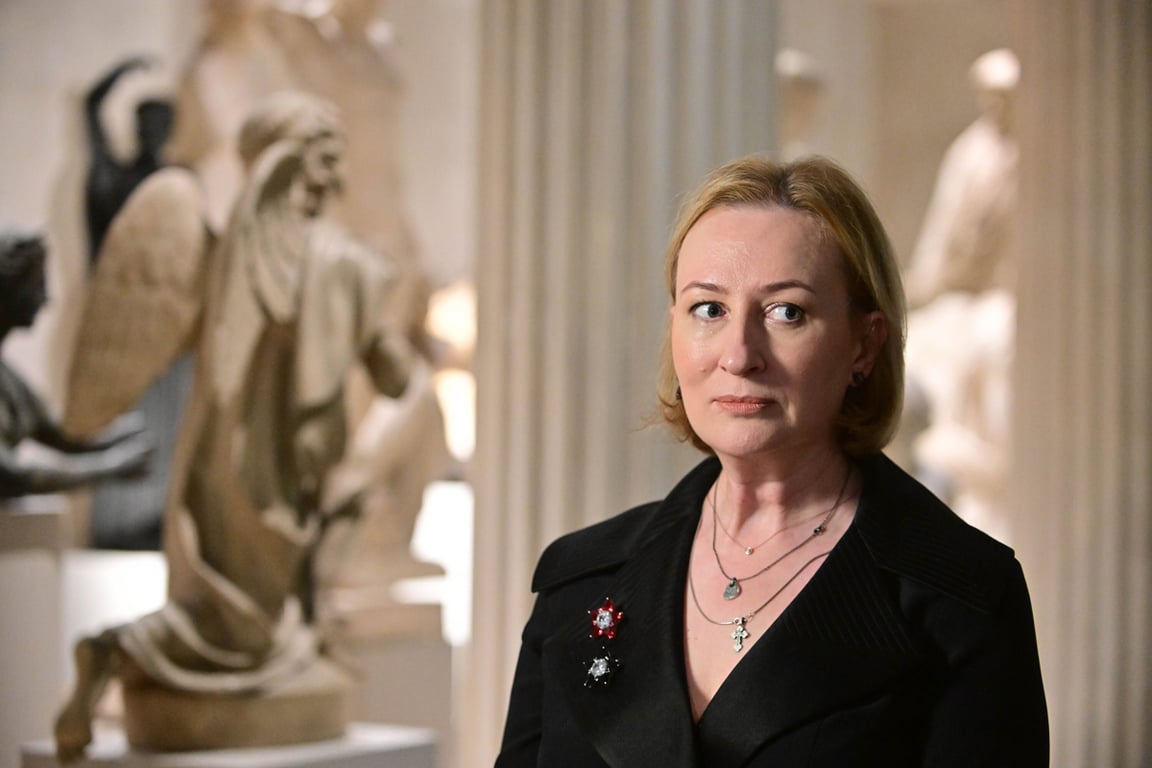
In January 2025, Elizaveta Likhacheva wrote : “Our restorers literally restored works from fragments that were previously considered lost.” According to Novaya Gazeta Europe, the exhibition was to include restored works of the Renaissance and antiquity from the Friedrichshain bunker: works by Niccolò Pisano, Luca della Robbia, Andrea del Verrocchio, Alessandro Vittoria, Girolamo Campagni, Bartolomeo Ammanati, Bertoldo di Giovanni. And, of course, Donatello. The bronze “John the Baptist” suffered from explosions and fires: it was missing an arm, legs, fragments of a cloak—the statue could not stand normally. Restorers restored it to almost perfect condition. "Dancing Cupid" and "The Flagellation of Christ" - two supposed works of the master - also underwent restoration, during which attempts were made to minimize the loss of the original appearance. It was planned to show antique vessels collected by restorers from the wreckage, as well as hundreds of objects of decorative art.
The exhibition was intended to be anti-war. Likhacheva emphasized : “For me, this is a story about a small victory of art over war, a victory that I will celebrate and for which I am grateful to my colleagues.”
However, the exhibition never took place. Instead, the project “Feat of the Museum” was presented in the exhibition space, dedicated to the preservation of the collection of the Pushkin Museum during the Great Patriotic War. When asked by an Izvestia journalist which exhibitions were canceled under Galaktionova, the director shrugged it off:
“I won’t list. It seems to me that if they are cancelled, then why voice it?”
Graphics, Bruegel and the Far North
One of the first major projects under the leadership of Galaktionova was the exhibition “Treasury of Graphics. Engraving cabinet in the first quarter of the 20th century”, which opened in March 2025 and became the start of a new cycle “Ars Graphica”. The engraving cabinet in question was created under Nikolai Ilyich Romanov, who from 1910 to 1924 headed the Department of Fine Arts of the Rumyantsev Museum, and from 1923 to 1928 - the Museum of Fine Arts (now the Pushkin State Museum of Fine Arts). An important episode in the history of the cabinet was cultural cooperation with London: in 1925, the museum received almost 600 sheets of British graphics, and 218 sheets of Russian masters were sent to the British Museum. The exhibits of this Engraving Cabinet were presented at the exhibition: more than 80 works by Western European and Russian printmakers, including graphics by Durer, Rembrandt, Hogarth and Daumier. Many works have not been exhibited for almost 100 years. In the summer months of 2025, the museum implemented a unique project “New Masterpieces of Pushkin. Single Piece Exhibition,” which featured individual works of art individually every two weeks, showcasing never-before-exhibited collections, including holdings ranging from ancient Egyptian artifacts to 16th- to 20th-century European paintings.
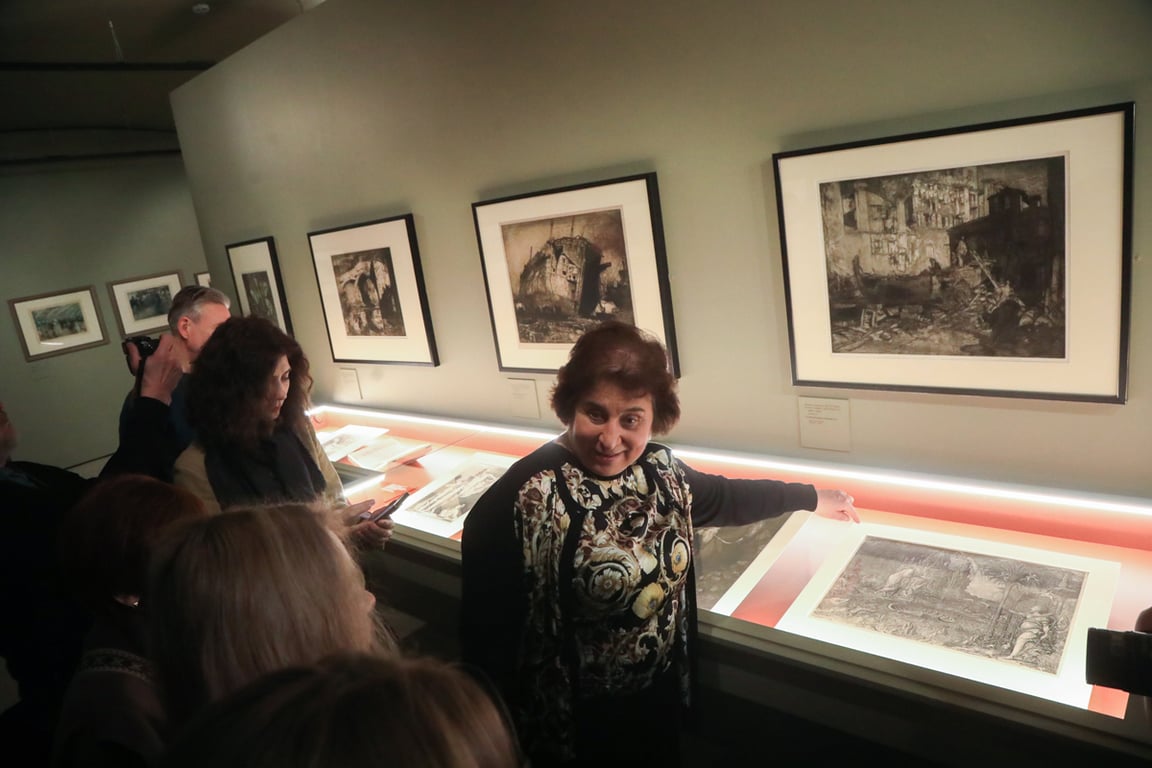
In July 2025, the Pushkin Museum opened the exhibition “Not only Bruegel. Dutch engraving of the 16th century from the collections of Moscow and St. Petersburg." At the center of the exhibition is the publishing house “On the Four Winds” (1550–1570) and its founder, artist and engraver Hieronymus Kok, who produced about 1,400 engravings, including the first landscape series in Europe. A special place in the exhibition was occupied by engravings based on drawings by Pieter Bruegel the Elder. Engravings with views of ancient monuments, works based on paintings by Raphael and Bronzino, portraits and prints of Coca himself were also exhibited, many of which the audience saw for the first time. In August 2025, the exhibition “Course to the North” was opened, dedicated to artistic interpretations of the image of the Far North.
This choice of exhibitions is inferior to the scale of the pre-war period - current topics seem too small. Many reproached both Likhacheva (moreover, an unnamed Forbes source in the Ministry of Culture calls this the main reason for her dismissal) and Galaktionova. But, to be fair, making blockbuster exhibitions in conditions of war and international isolation is very difficult. Especially the Pushkin Museum, which works primarily with Western art.
“After the exhibition on May 9, there were almost no exhibitions for six months,” says New-Europe’s interlocutor at the museum. — From April to November the museum was almost empty. And after such a break, external curators began to organize exhibitions for us. It's not clear why? Do we not have enough specialists?”
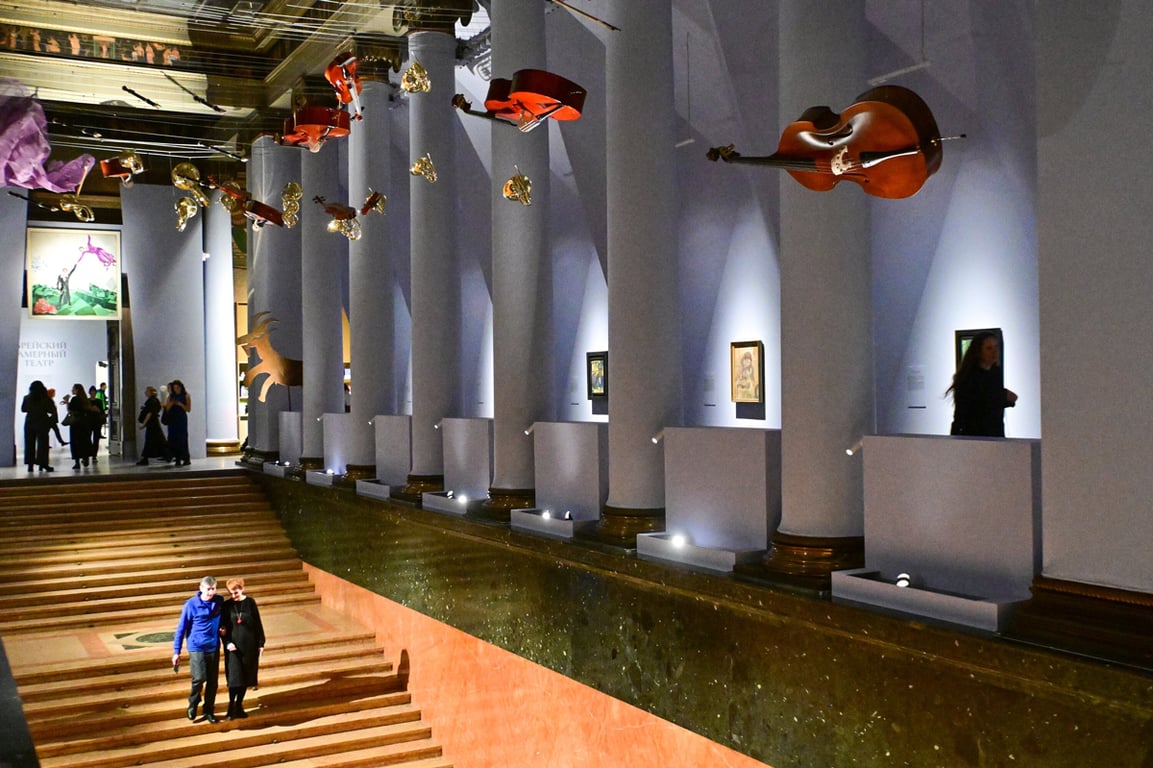
Continuing the trend of studying one’s own heritage and treasures, in December of the same year the Pushkin Museum opened a large-scale exhibition “Marc Chagall. The Joy of Gravity”, dedicated to the life path and work of the artist and which became one of the main events of the year. Most of the exhibits from the “Russian” period date from the 1900s to 1922. Although the exhibition was the first personal exhibition of Chagall in Pushkinsky in almost 40 years, the scenographic elements of its design raise questions: in particular, musical instruments hovering over the stairs and decorative installations. They rather distract from the works themselves rather than help to understand the artist’s work. The use of artificial intelligence raises some doubts - outside the window of Chagall’s room the street of his native Vitebsk is depicted, and a generated grandfather walks along it. Architect Yuri Avvakumov, assessing the exhibition, grinned :
“The exhibition “Marc Chagall: The Joy of Gravity” is designed as an ode to antigravity. Everything in it is torn off the ground, soaring, flying. The 1917 walk from the State Russian Museum came off in such a way that you can only look at it with your head up, strings and wind instruments hovering above the main staircase... If it’s true that the exhibition cost 120 million rubles, then it’s surprising that they didn’t hang live musicians along with the instruments.”
In December, the thematic exhibition “August Ones” was opened. Dolls,” exploring children's culture and toys of the 19th and 20th centuries. Guest curators worked on both exhibitions at the end of the year: Evgenia Petrova, the Russian Museum’s chief expert on scientific and publishing activities, as well as Diana Panskaya, a collector who owns the dolls shown in the exhibition. “The exhibition about dolls that was opened - it’s not at all clear why it’s in the Pushkin Museum? What are we, a toy museum? How does the theme of dolls relate to a museum of Western European art?” — asks the interlocutor of “New Europe”.
Museum space is shrinking
Among other things, under Galaktionova, changes appeared in benefits for employees, as well as problems with remuneration. “Museum employees began to be allowed into the opening of their own exhibitions—on Chagall, for example—only based on lists and memos from department management,” says a New-Europe source at the museum.
— Prices for December evenings were raised so much that the former intelligent crowd stopped coming. Prices for tickets to exhibitions were also raised, and employee bonuses were removed and paid the minimum amount for last year.”
Until January 2026, there was no information about large-scale renovation work, although upon her appointment the director mentioned the construction of the Museum Quarter, which began in the 2000s. “Construction has been going on for almost 15 years,” she commented on this process. - But for now we are talking about what does not exist. We fantasize. But it seems to me that we need to talk about what is and what will happen in the near future. The work is going on, it is planned, we have excellent partners, a fast schedule. “All this is going on its own tracks, and, God willing, when the museum quarter opens, then we will talk about it.”
According to a source from Novaya-Europa, Olga Galaktionova also spoke about the need to restore the main building: it has been in need of major repairs for many years, but the start date for work is constantly being postponed. Over the past year, Pushkinsky has lost three of its branches - Baltic (in Kaliningrad), Ural (in Yekaterinburg) and North Caucasus (in Vladikavkaz). There were no clear explanations from Olga Galaktionova or the museum administration. “The Pushkin Museum named after. A. S. Pushkin continues its partnership with leading projects. In addition, the regions where the branches are present will remain priorities in future joint work,” the museum’s press service told TASS. It was stated that this decision “was associated with a revision of the development strategy of the Pushkin Museum and in connection with the creation of a new institution for working with contemporary art.” The new institution never appeared, and the museum only had two branches left - Volgo-Vyatsky (in Nizhny Novgorod) and Siberian (in Tomsk). For Kaliningrad, the loss is especially significant: it was the only major institution in the entire Kaliningrad region that dealt with contemporary art.