
Translated material
There is no longer autonomy for the Kurds in Syria
They fought Assad and defeated the Islamic State. It was also an experiment in creating direct democracy. Now autonomy is under the rule of Damascus
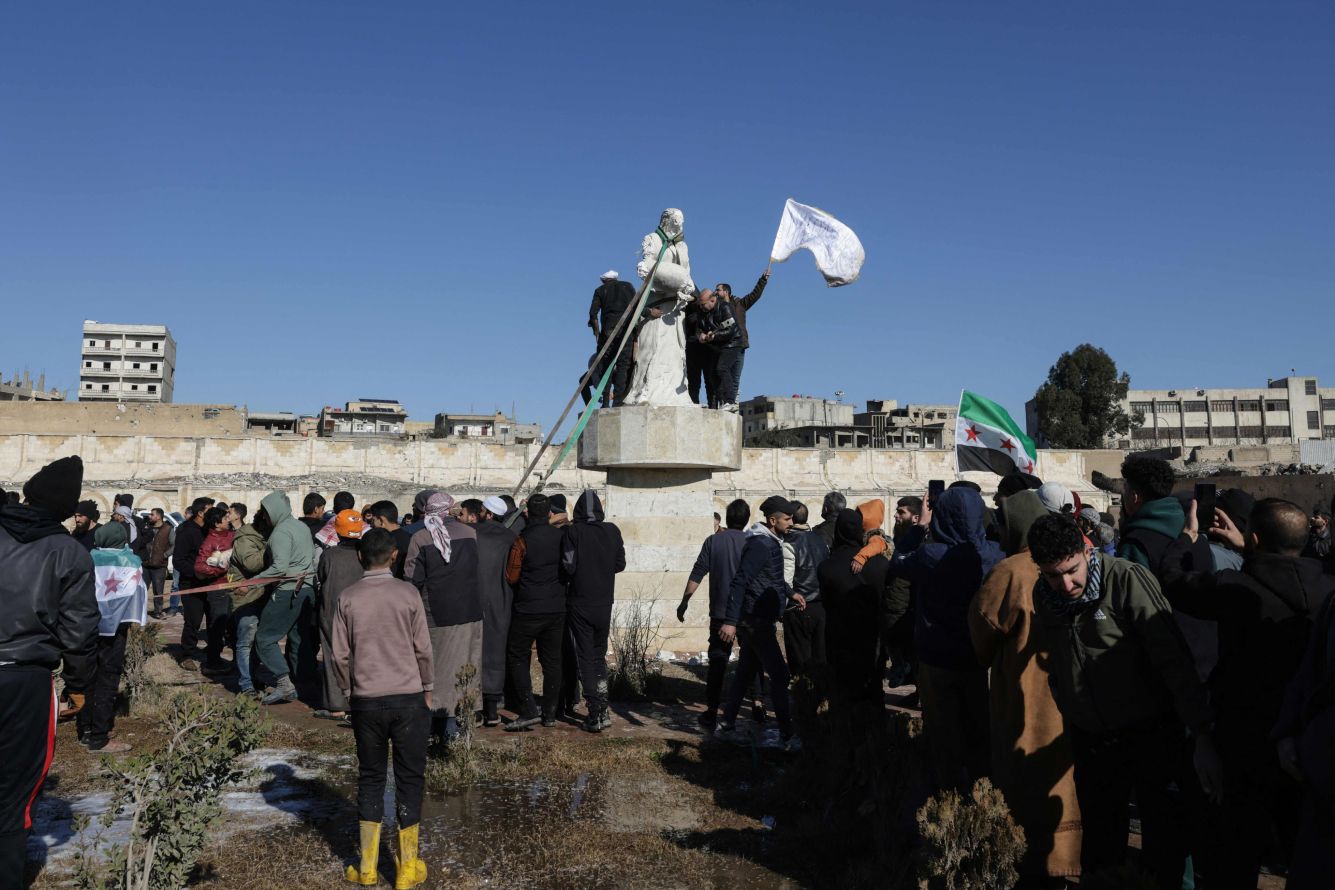
The Kurdish autonomy known as Rojava has been eliminated in Syria. It existed for almost 14 years, repelling attacks from the Bashar al-Assad regime, Syrian Islamists and Turkish “proxies”. She defeated the Islamic State and became a model of “democratic confederalism.” After Islamists led by Ahmad al-Sharaa overthrew Assad, Rojava lost external support, primarily American. The new Syrian regime spent a whole year gathering its strength, and in January it finally launched a decisive offensive. The autonomy held out for two weeks - and actually capitulated.
Calling Rojava a Kurdish autonomy, strictly speaking, is not entirely correct: the Kurds made up only a little more than half of the population there, neighboring - for the most part peacefully - with Arabs, Assyrians, Turkmens and other peoples. The autonomy was created by the Syrian Democratic Forces (known by its English acronym SDF), a coalition of armed groups dominated by Kurdish militias: the People's Protection Units and the Women's Self-Defense Units. Political life was dominated by the Democratic Union - in fact, the political wing of the Self-Defense Units and, in fact, the Syrian branch of the Kurdistan Workers' Party.
The most important symbolic figure in Rojava was Abdullah Ocalan, the leader of the Kurdistan Workers' Party, who is imprisoned in Turkey. The most popular slogan was "Woman, life, freedom", put forward by Ocalan. The name Rojava itself means “west” in Kurdish.
The autonomy emerged in 2012, at the beginning of the Syrian civil war, in the Trans-Euphrates region, a geographical region in northeastern Syria separated from the rest of the country by the Euphrates River. In 2013, it was Rojava that received the main blow from the Islamic State. The largest city in the region, Raqqa, became the de facto capital of the Islamic State. However, the group never gained complete control over the territory, primarily due to the resistance of the SDF, that is, the Kurds and their allies.
The United States, Russia, Iran, and many other countries took part in the war against the Islamic State, but mainly with air forces, while the SDF fought on the ground. They were armed and financed mainly by the United States. By January 2015, the SDF stopped the advance of the “Islamic State” near Kobane in northern Syria, and by October 2017 they captured Raqqa—this meant the virtual defeat of the Islamic State.
Rojava became the second de facto Kurdish autonomy in modern history - after Iraqi Kurdistan, which actually existed since the American Operation Desert Storm against Saddam's Iraq in 1990-1991. But if in Iraqi Kurdistan politics largely boiled down to the traditional struggle between clans in the Middle East (in this case, Barzani and Talabani ), then in Rojava the ideological principle prevailed.
Autonomy was based on “democratic confederalism” - a special political system theoretically developed by Abdullah Ocalan and enshrined in the Social Contract - in fact an analogue of the constitution. This system assumes:
- maximum decentralization of power: the greatest powers are concentrated at the municipal level;
- self-government using direct democracy methods: the most important local decisions are made by the residents themselves, and not by deputies or officials;
- abandonment of a professional army in favor of self-defense by militia forces;
- secularism, religious tolerance, tolerance and “gyneology” - a specific version of feminism; no wonder one of the two main militias in Rojava that defeated the Islamic State consisted exclusively of women;
- careful care of the environment.
Rojava acquired , largely through the efforts of the Western left, a romantic aura: a libertarian socialist utopia built by a fighting people in defiance of the whole world. At the same time, even the human rights organization Amnesty International, traditionally loyal to national liberation movements, accused the SDF of war crimes, including indiscriminate violence and the destruction of entire villages (however, it preferred to call them not a “national liberation movement”, but “allies of the United States”). “Democratic confederalism” in practice turned into the party authoritarianism of the Democratic Union (the political wing of the SDF). And the economic basis of autonomy was oil trading on the black market.
By December 2024, when the regime of Bashar al-Assad fell, the SDF numbered about 100 thousand fighters - it was almost the largest military group in Syria. Representatives of Rojava emphasized that they had no intention of separating from Syria and did not want to fight with the new authorities. But they were ready to integrate into the new state only on their own terms. Firstly, they demanded that Damascus officially recognize Kurdish autonomy - and in general, that Syria turn into a full-fledged federation. And secondly, so that the Kurdish militias are not disbanded, but are included in the new army as special units while maintaining their own structure.
The new Syrian leader Ahmad al-Sharaa was not satisfied with these conditions. He was categorically against the federalization of Syria: for him it was practically tantamount to its collapse. Following the Kurds, other communities would certainly demand autonomy, primarily the Druze and Alawites. Among other things, Rojava contains Syria's largest oil and gas fields - and in order to seriously begin the economic restoration of the country, Sharaa needed to control them.
There was also a foreign policy aspect. Since the war with the Islamic State, Rojava has enjoyed the patronage of the United States, with which Sharaa really wanted to establish relations. At the same time, the main ally of the new regime is Turkey, which has been fighting the Kurds for many years both on its territory and on neighboring ones (for example, it continually bombs the Qandil Mountains in Iraqi Kurdistan, where the leadership of the Kurdistan Workers' Party is hiding).
Immediately after the overthrow of Assad, several Syrian pro-Turkish groups launched an offensive against SDF positions. The Kurds had to surrender Manbij to them, their most important stronghold on the western side of the Euphrates. At this point there was a lull. Over the course of a whole year, it was interrupted every now and then by local clashes, but they did not develop into large-scale hostilities.
The Sharaa government used brutal measures to subjugate another “problem” region - the Alawite provinces of Tartus and Latakia on the Mediterranean coast. Then it tried to do the same in the Druze Suwayda, but retreated after meeting decisive resistance from the local militia, supported by Israel.
The many armed groups that emerged during the civil war gradually joined the new Syrian army. But Sharaa was in no hurry to throw this army against the SDF: this was fraught with a large-scale war, for which devastated Syria was clearly not ready. The president and his representatives negotiated with the Kurds in the person of SDF commander Mazlum Abdi throughout 2025, but it was impossible to agree on peaceful integration.
At the same time, Sharaa successfully brought Syria out of international isolation. He already had good relations with Turkish President Recep Tayyip Erdogan and with Qatari Emir Tamim bin Hamad - back when Sharaa was not the president of Syria, but the commander of the Islamist group Hayat Tahrir al-Sham. Now, to this have been added good relations with the crown prince and de facto ruler of Saudi Arabia, Muhammad bin Salman, and with Tom Barrack, a long-time friend and ally of Donald Trump, who became the US ambassador to Turkey and special envoy for Syria.
The Trump administration has been wavering for some time between two approaches: decentralizing Syria as a guarantee that it will not pose a threat to neighboring countries; or, conversely, its consolidation under the rule of a strong leader as a guarantee of stability. The first approach was advocated by Israeli Prime Minister Benjamin Netanyahu, and the second by other Middle Eastern allies of the United States, primarily the same Muhammad bin Salman and Tamim bin Hamad.
In May, Sharaa arrived in Saudi Arabia at the same time as Trump and met with an American president for the first time. Muhammad bin Salman, as host, formally introduced them to each other. In November, Trump received Sharaa at the White House - by this time, the last international sanctions had been lifted from the Syrian president, at the insistence of the United States.
The Trump administration has chosen to centralize Syria. Of course, not without restrictions. It appears that Sharaa has not (yet?) been allowed to touch the de facto Druze autonomy in the south, the integrity of which has been guaranteed by Israel. But Sharaa received carte blanche to solve the “Kurdish problem” by force.
In early January, the Syrian government army launched an offensive against Sheikh Maqsoud and Ashrafiyah, two areas of Aleppo that have been under SDF control since the beginning of the civil war. On January 11, the Kurdish militia admitted defeat and left the enclave.
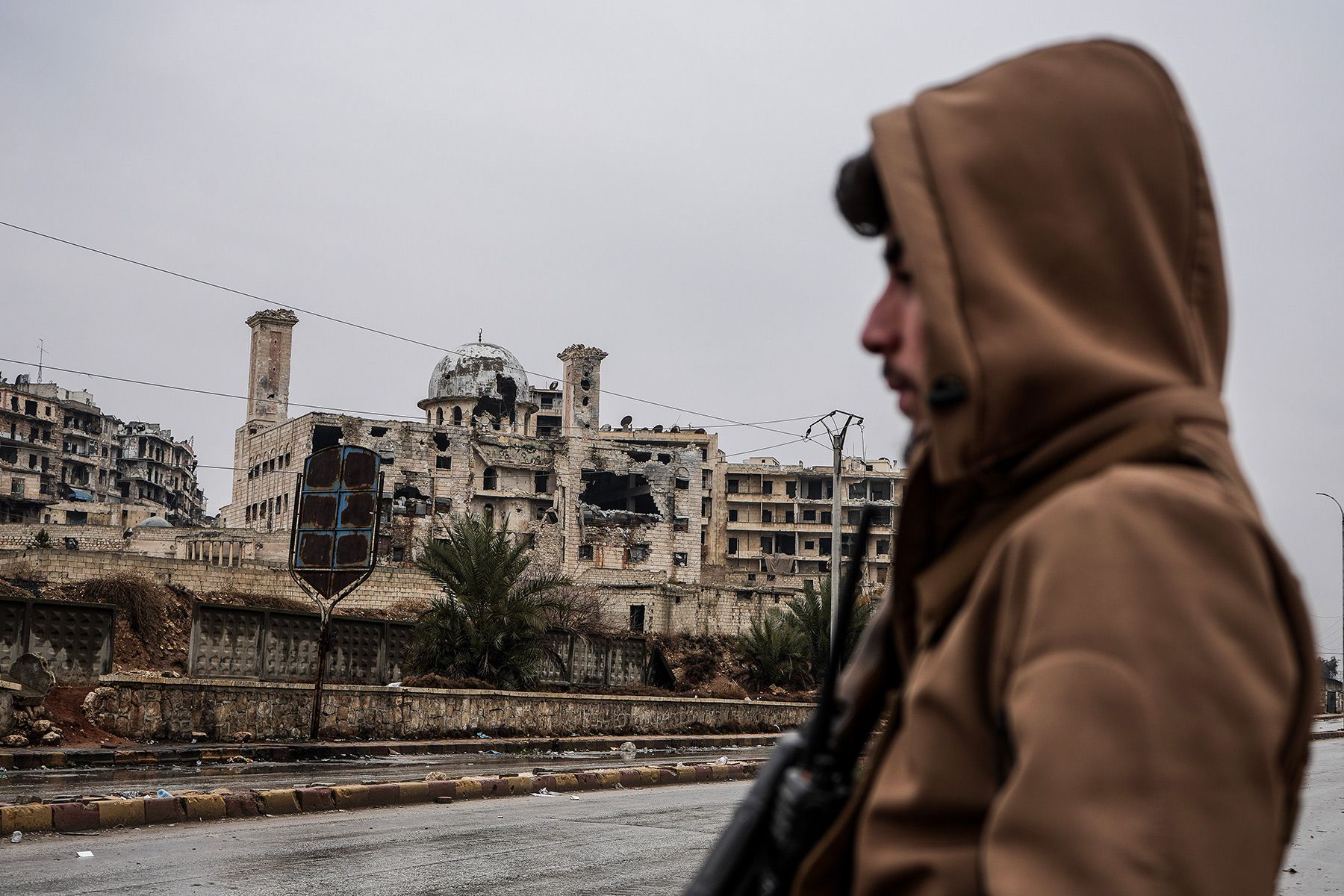
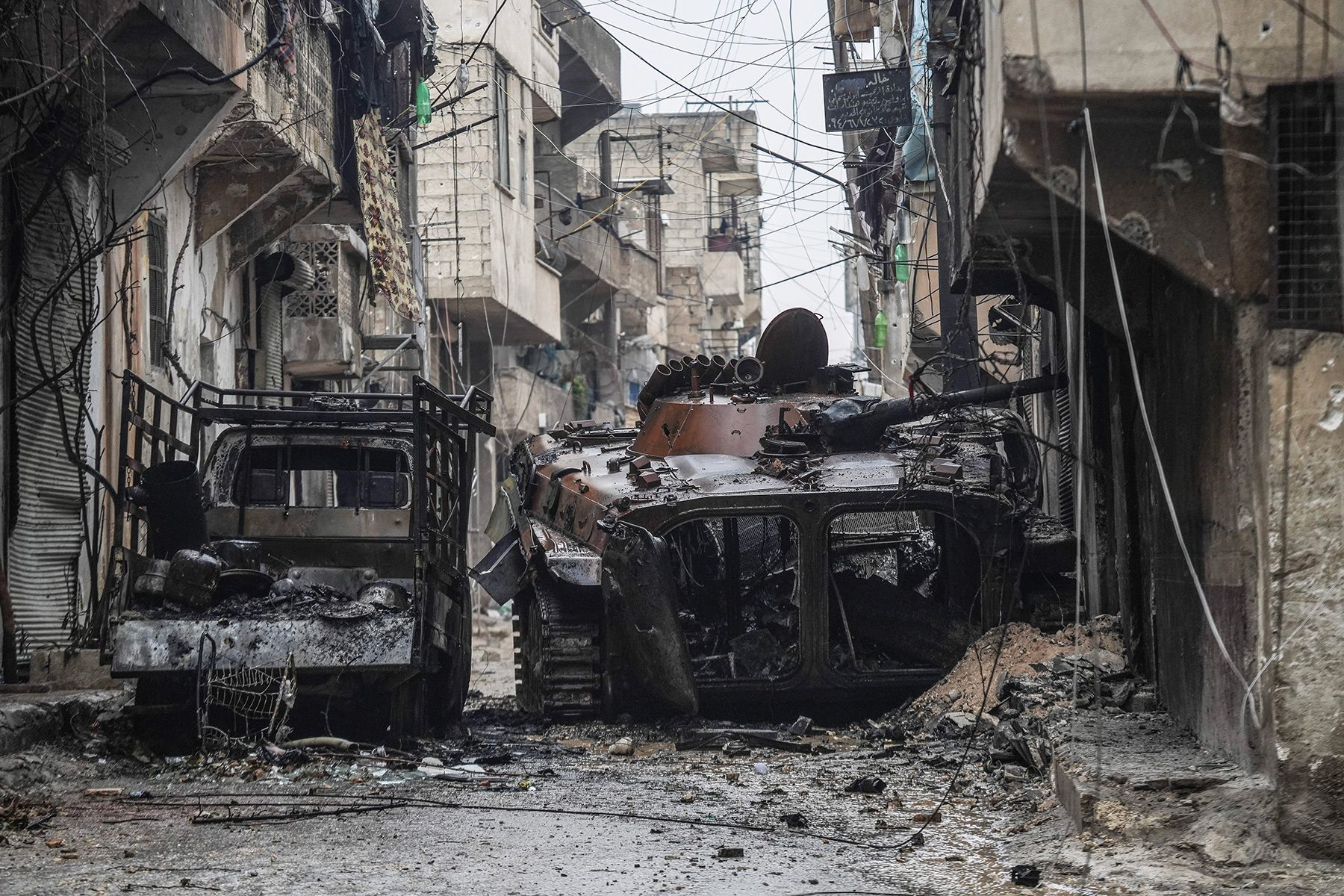
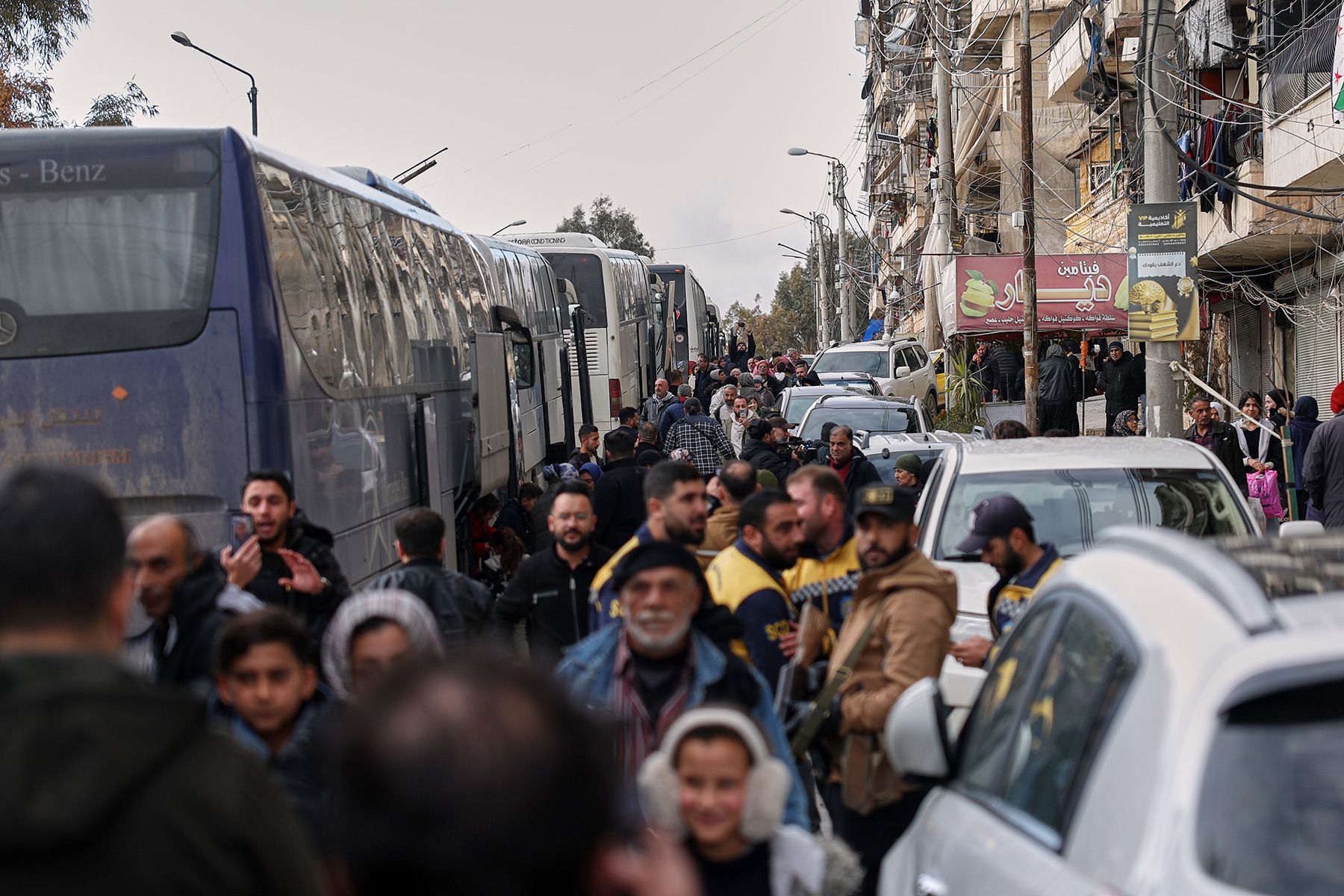
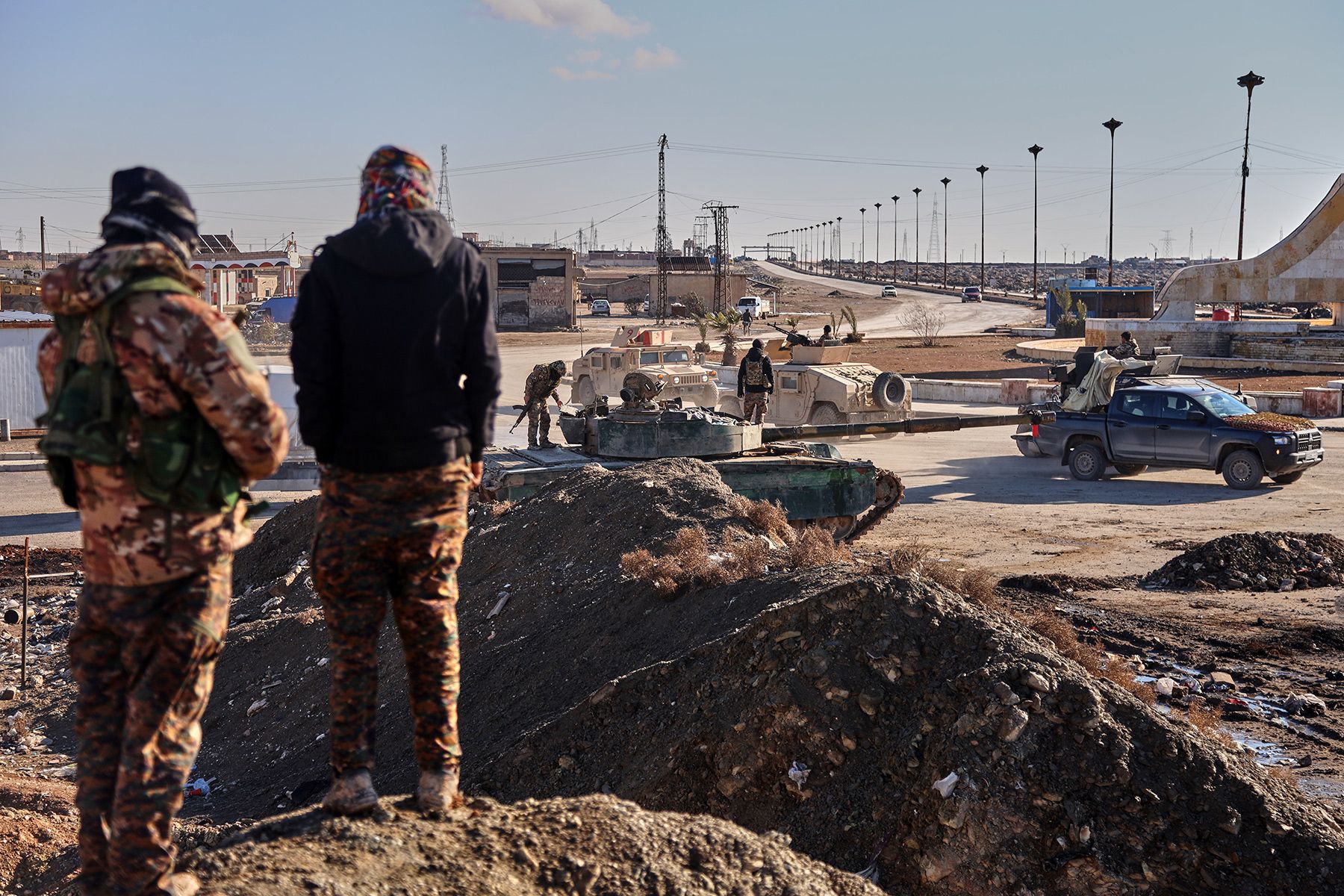
After a short break, forces controlled by Damascus moved towards Rojava. Over the weekend of January 17–18, they took Raqqa and Deir ez-Zor, the most important cities on the Euphrates, as well as the region's largest oil fields. The SDF usually withdrew from major cities and strategic points almost without a fight.
On January 18, the Syrian government announced that it had signed a ceasefire agreement with the SDF. The American special envoy Tom Barrack acted as a mediator: he met with the commander of the Kurdish forces, Mazlum Abdi, in Erbil (the capital of Iraqi Kurdistan), and then with Sharaa in Damascus. Abdi and Sharaa managed to communicate in person via video link.
The ceasefire agreement actually turned out to be a surrender of the SDF. They pledged to transfer the provinces of Deir ez-Zor, Raqqa and Hasaka - that is, the entire territory of Rojava - under the full control of Damascus. All groups included in the SDF are subject to integration into the Syrian army and police “on an individual basis” - that is, not as special units, but one person at a time. This effectively means the dissolution of the SDF. In addition, the agreement provides for the expulsion of foreign citizens from Rojava - we are talking primarily about Turkish Kurds who came there as volunteers and received asylum from persecution by the Turkish authorities.
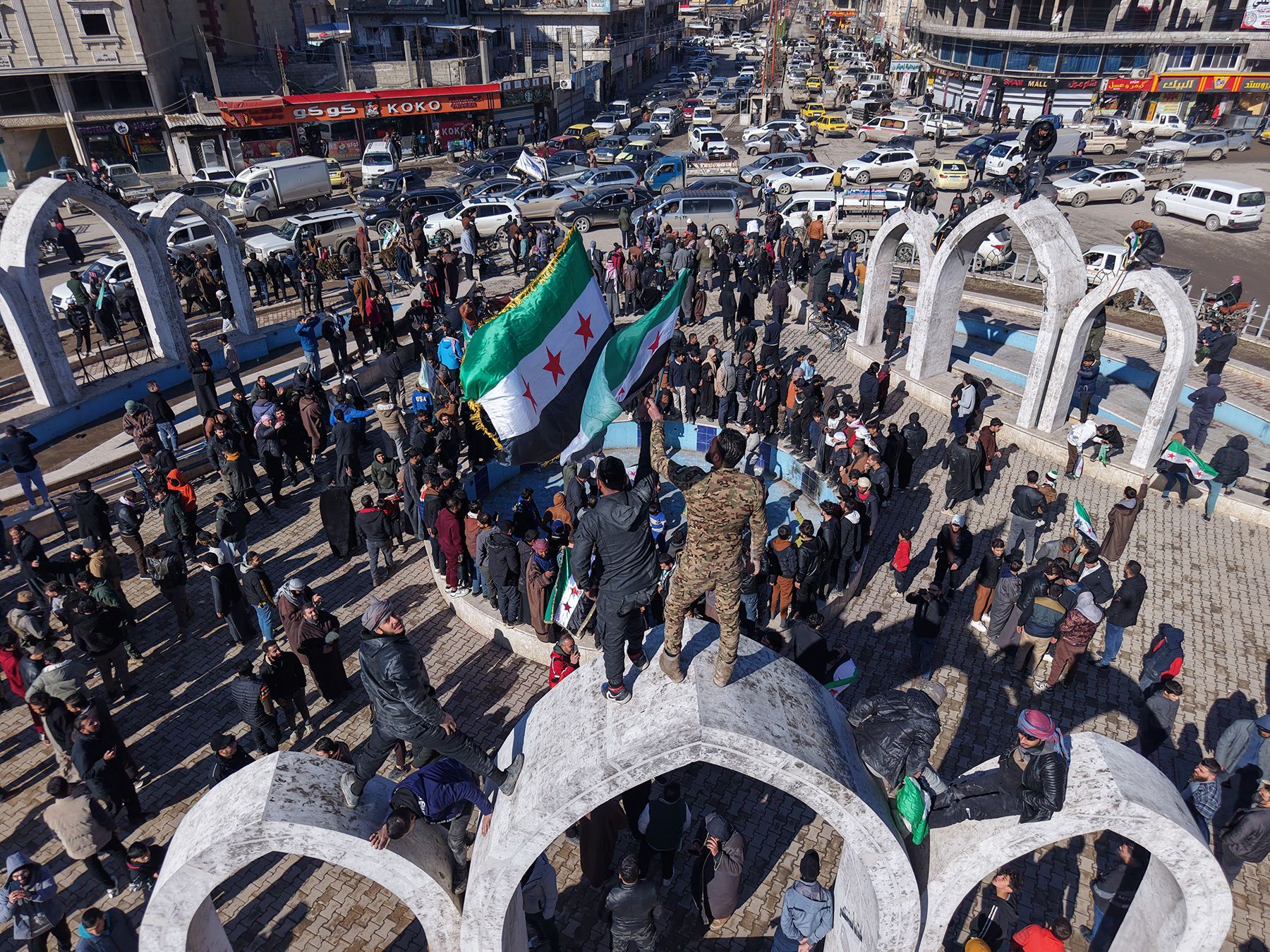
In the midst of this rapid operation, on January 16, Sharaa signed a decree giving official status to the Kurdish language and recognizing Nowruz as an official holiday in Syria. These are symbolic but still significant concessions: a demonstrative rejection of Arabization, which has been the policy of all Syrian regimes for many decades; and the inclusion in the official calendar of a holiday that is not only non-Arab, but also pagan in origin.
The Rojava integration plan was obviously agreed upon with the United States in the person of Tom Barrack - or perhaps it was drawn up by him. In all likelihood, it implies guarantees of immunity for at least SDF commanders. Mazloum Abdi, for example, is due to meet Sharaa in Damascus soon. We can expect that many fighters - especially those who do not have Syrian citizenship - will leave for Iraqi Kurdistan. It has again become the only place in the world where the right of the Kurdish people to self-determination is at least partially realized.
Tamid Ayef