
Translated material
“As long as we carry the memory, we do not allow inhuman things to happen.” Interview with Yegana Jabbarova
For the release of a podcast about genealogy, our hosts Masha and Lesha interviewed the writer Yegana Jabbarova, who recently received the Hamburg Prize for her novel “The Hands of the Women of My Family Were Not for Writing.” We talked with her about family memory, the body as a dowry and heritage, and also found out why literature is not therapy.
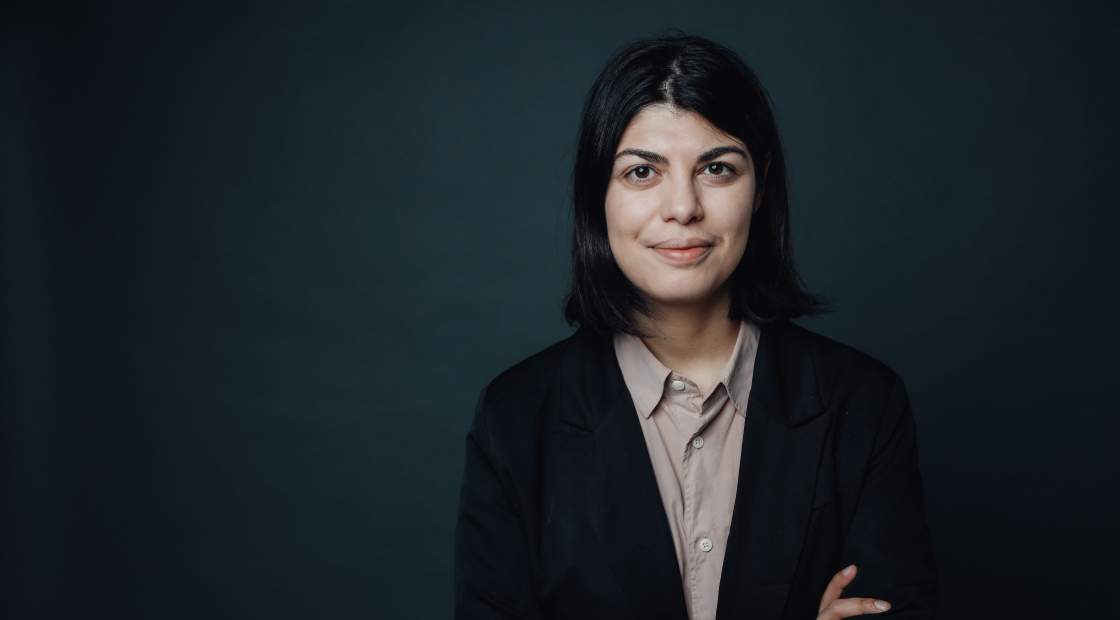
Hello Egana! Tell us why you decided to write a book about your family?
The book [“The Hands of the Women of My Family Were Not for Writing”] existed inside for many years until I finally wrote it. I then reflected for a long time on why this happened at that moment. I think one of the reasons was the distance, namely leaving for another country, working at the National Chengchi University in Taipei - literally on an island in the middle of the Pacific Ocean. This distance turned out to be, frankly speaking, sufficient to look not only at one’s own biography, but also at one’s genealogy as narrative material.
I guess I just realized that from a very early age I wanted to find some kind of experience that would be at least somehow close to mine, and I still couldn’t find it. With age, this demand only grew; questions about one’s own identity and oneself became more and more numerous. Who am I? How to position yourself in a world where you are a stranger everywhere, cannot fit in and do not understand what to do about it? You don’t see a single hero anywhere who would be like your father and mother: neither in literature, nor in cinema. At the same time, you begin to wonder, whose experience do we consider fundamentally significant and worthwhile?
The text of the book is preceded by a line from an interview with Orhan Pamuk: “No life is worthy of becoming the basis for a novel.” And so I wondered whether the lives of my loved ones and my own deserved to be a narrative. And I came to the conclusion that yes. In general, it seems to me that the problem and severity of autofictional writing, especially now, lies in the fact that such literature often represents the experience of those who for a long time were either forced out of it or remained in the shadows.
That is why at some point there was a boom: suddenly those who had been squeezed out of the canonical field suddenly began to speak. This began to infuriate critics incredibly and, by the way, still infuriates us to this day. And I realized that I also want to represent the experience, I want to talk about it. I realized that in fact, my subjectivity, my right to be, was always questioned and was never something that was given automatically.
There is an article by the philosopher Nelson Maldonado-Torres called “Coloniality of Being.” In it, he writes that someone who is oppressed in the broadest sense, whose right to exist is always questioned, does not really seem to exist. Such a person needs to endlessly earn this right.
And I realized that, in general, I live in a situation where I endlessly need to earn the right to exist. I also realized that I don’t want to do this anymore, I want to get him back, rehabilitate him once and for all. And literature is a great way to do this.
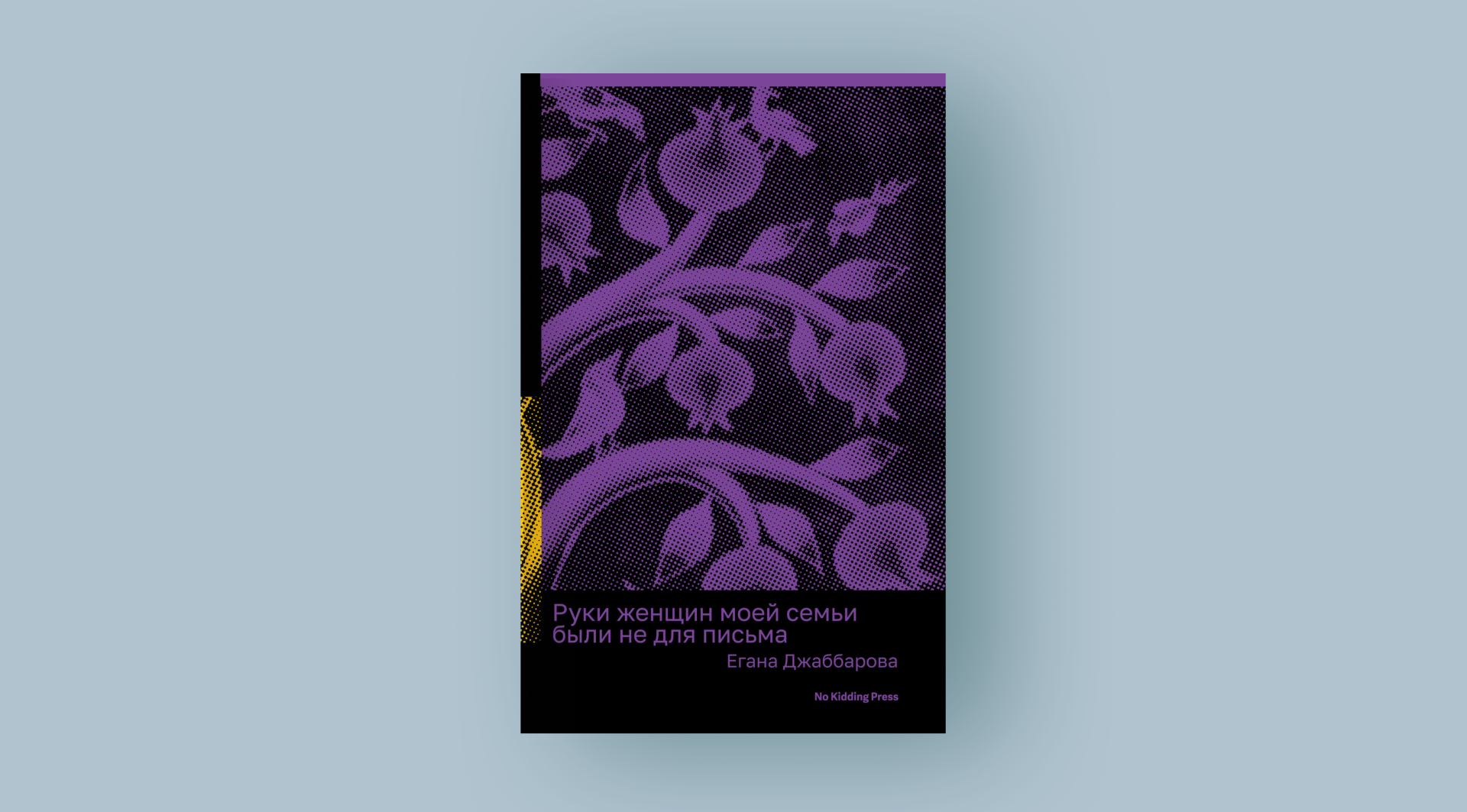
Yegana Jabbarova. The hands of the women in my family were not for writing. No Kidding Press, 2023
Did your loved ones participate in this process? Have you discussed with them that they will be the subject of your writing?
This, by the way, is the most important ethical question when we talk about the autofictional field. In terms of the rules, of course, the author must notify everyone and get consent for the book to happen. In my case, it happened a little differently...
Partly because the book was written very affectively. It was created almost in a feverish state, similar to when you have a temperature of 40°. I couldn’t do anything at all except write this text. Apparently, this obsessiveness is characteristic of me, because my dissertation on Tsvetaeva was written in exactly the same way: this topic was the only one on which I could talk with others. If they did not agree to maintain a dialogue, then I did not see the need to communicate further. And when I wrote “Hands,” I couldn’t communicate with anyone at all.
And only when I came out of this obsession did I realize what I had done. And the question arose: “What should I do about this? Do we need to go to repent, confess to our family and ask them what we are doing about this? Get their permission? At that very moment I realized that, of course, they would never give it in their lives, because they hate publicity and have the right to it. That's why I didn't ask anyone for permission.
In addition, after all, I did not write an autobiography, but an autofictional thing - this is a big difference. An autofictional text contains fiction, an artistic change in the material. And in this sense, I created more like doubles. These are not so much my real parents as doubles that I needed in order to regain my lost right to exist.
So I decided not to talk to them about it. I know that my sister started reading the book, but she didn’t write anything to me - I suspect that she simply didn’t finish reading it. The only writer she loves and finishes reading is Stephen King. It’s impossible for me to compete with him because “Hands” lacks murder, thriller or suspense.
But overall, I’m even glad that this happened. I don’t think I should force my relatives to read this text. Most likely, they will perceive it differently than I perceive it, it traumatizes them - they do not fully realize that this is a love manifesto.
How was her story passed down in your family? Was there some kind of box of photos, an album, or something else?
Another reason why it was decided to write this book is that I tried to create an alternative form of existence for family memory. We don’t have much of it left, in particular because my father fled Nagorno-Karabakh and little could be saved then. Fortunately, some family photo albums with real cards remained. This is a very great joy for me, I often turn to them and leaf through them.
There were also some photographs left on my mother’s side, but there were much fewer of them. Unfortunately, the family nest [of that part of the family] has been lost, the house no longer exists. And along with it, accordingly, access to all the items that remained there was lost. It turns out that memory on both sides of the family tree was severely bitten off. As a result, we only have a couple of family photo albums.
There is also my aunt, whom I love very much. I talk to her very often, I interview her, because she is the main source of memory: she remembers details and names better. When I was working on “Hands,” I periodically asked her questions and clarified something.
We also still have carpets - and this is amazing. No one really remembers their story. Everyone knows that they exist, they are family, but, for example, how they appeared, who brought them, who gave them to whom, no one remembers. This is partly why I try to teach my family to somehow document these things. I am, of course, angry and upset by their irresponsibility in relation to memory.
I think that by losing the past, we lose much more than it seems. Including part of your own identity, heritage, yourself. It’s very sad that there is a lot of dirty work in the family.
When I was working on the third novel [Terra Nullius], I specially came to our family graves and asked questions: whose grave is this, who lies here. There were some very strange graves. For example, a twelve-year-old girl about whom no one could say anything.
It was very difficult to work with memory not as a whole fabric, but as with an openwork napkin - it’s all full of holes, and you can’t reproduce [its drawing] properly. This is partly why I needed a fictional part, fiction - otherwise it would be impossible to work with this material.
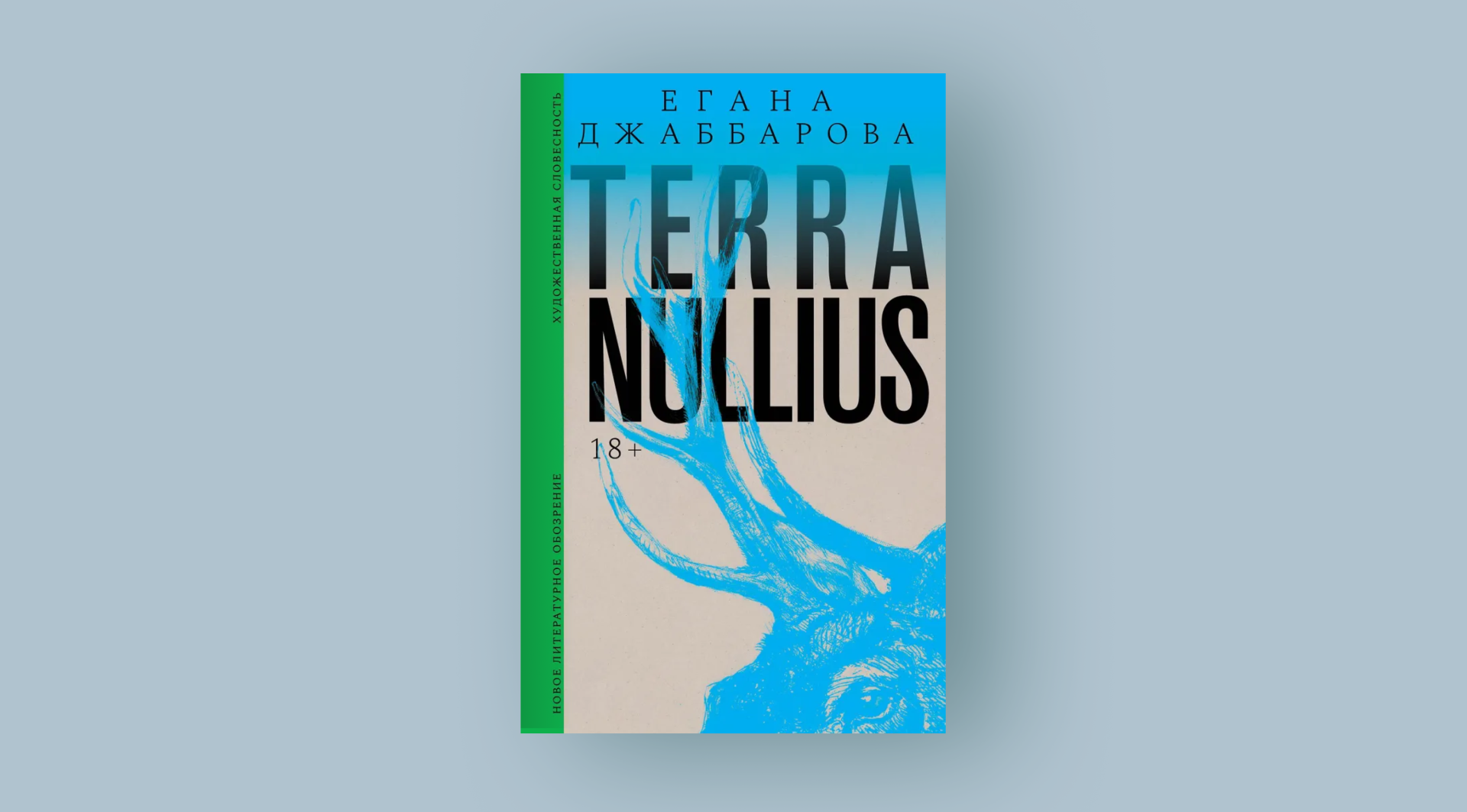
Yegana Jabbarova. Terra Nullius. New Literary Review, 2025
You said that “Hands” became a way for you to regain your right to be. And at the same time they were written for relatives, as a kind of “offering” - even if they never read it. And for whom are you creating—or restoring—the family narrative as a whole?
I think the most important thing for me was not so much the rehabilitation of myself. It became more of a side effect when I had already finished this text. It was more important to re-exist what had been lost for generations. In my writing I try to represent voices, bodily experiences, sets of sensory perceptions that have been erased, denied the right to be, endlessly repressed. I really wanted to change this, including through reuniting with my family. When I wrote all three texts, especially the last one, “Terra Nullius,” I very clearly felt an internal, almost physical connection with my grandmother.
And this same concept underlay the first text. Initially, “The Hands of the Women of My Family Were Not for Writing” was not called that. The first name was “Jihis” - “dowry” in Azerbaijani. That is, what is collected for a girl literally from birth until the moment she gets married. Often these are some household items: pillowcases, sheets, beautiful dishes, pots, pans...
But it was important for me to ask the question: what is jihis globally? In addition to material objects, this is also your biological body - your DNA, your illnesses, your tendency to be overweight. And also culture, traditions. Do you inherit them automatically or do you choose what to take? For me these were very important questions, because, for example, I did not grow up in Azerbaijan. In this case, can I be the heiress of this culture? The answer “Yes, you can” was a revelation for me.
You don't have to grow up within a country to inherit its culture. I began to build my relationship with traditions as an adult.
For example, in our house it was not customary to read books, so I began to read Nizami at a relatively adult age. In the same way, I discovered the Azerbaijani scene of the sixties, which I really liked - I love cooking to this music. And so I chose all this as my dowry.
My book is an attempt to assert not only my right, but also the right of all those who are in the shadows. I tell the story of my father, a simple seller at the wholesale market, but there are so many other similar sellers at the wholesale markets next to him. Or the dorm that appears in the second and third texts: how many others like them live there, constantly facing pain, rejection, racism. I'm trying to create spaces where we can all coexist. I want my texts to work as a shelter, a refuge.
Is it important to you that “Hands” is primarily a story of women? Can this text be read as feminist?
Of course, this topic is there. What women say plays a very important role in the book. Most of the experiences you see are female. Precisely because it is not only repressed, it is also endlessly erased by violence and devalued.
It is wrong to consider this text exclusively feminist, although this element is fundamentally significant.
Partly because I grew up in a world where everyone was given a word, but a woman was not - well, maybe half a word, and only on occasion, when it was allowed. Of course, I wanted to turn this imbalance around, shake it.
Prolongation of the family line as such is often associated with a man, especially in Turkic cultures. Just like in Arabic culture, where names can be very long. Why? Because it contains all the names of the male representatives of the clan. I wanted to reconsider this, because life is literally given to us by a woman who physically bears us - and who is then seemingly erased from history. The trace of her name turns out to be very difficult to trace.
One day, researcher Elmira Kakabaeva, who teaches a course on family autoethnography, taught a master class where she asked the participants what the names of their grandmothers and great-grandmothers were. People started pouring out very quickly because they could quickly remember their grandfather’s name, but did not remember their grandmothers’ names at all. It was an amazingly vivid illustration of what we are talking about. Names are erased institutionally, canonically. Ursula Le Guin writes about the same thing when she talks about literary grandmothers. According to her, every woman who writes seems to be the first - she does not remember her predecessors. Why? Because they are erased from the literary canon and from literature as such. In the same way, women are erased during large historical processes, for example, political repression.
Together with the artist Anastasia Bogomolova we did the project “A.L.Z.I.R.” This is a book that Anastasia made herself, including the paper for it and all other materials. I wrote a poetic text for her, for which I worked with the archive of the Akmola camp for the wives of traitors to the Motherland. When I was browsing the site, I was struck by the fact that the prisoners were divided into national groups. For example, you can go to the “Azerbaijani” tab. For some, the information on their cards was filled out very carefully: not only their last name, first name, patronymic, but also where they studied and worked. And someone has a very short story, like “the wife of so-and-so.” Apparently, everything depended on the specific NKVD officer or the person who kept the records. I was absolutely amazed at the time by how many names had been erased.
That’s why it seems to me that working with memory is fundamentally important for each of us. As long as we carry this memory, we do not allow inhuman things to happen. As soon as we forget about others, we immediately forget about what human hatred is capable of. We may be the next to be forgotten, erased and destroyed in the same way.
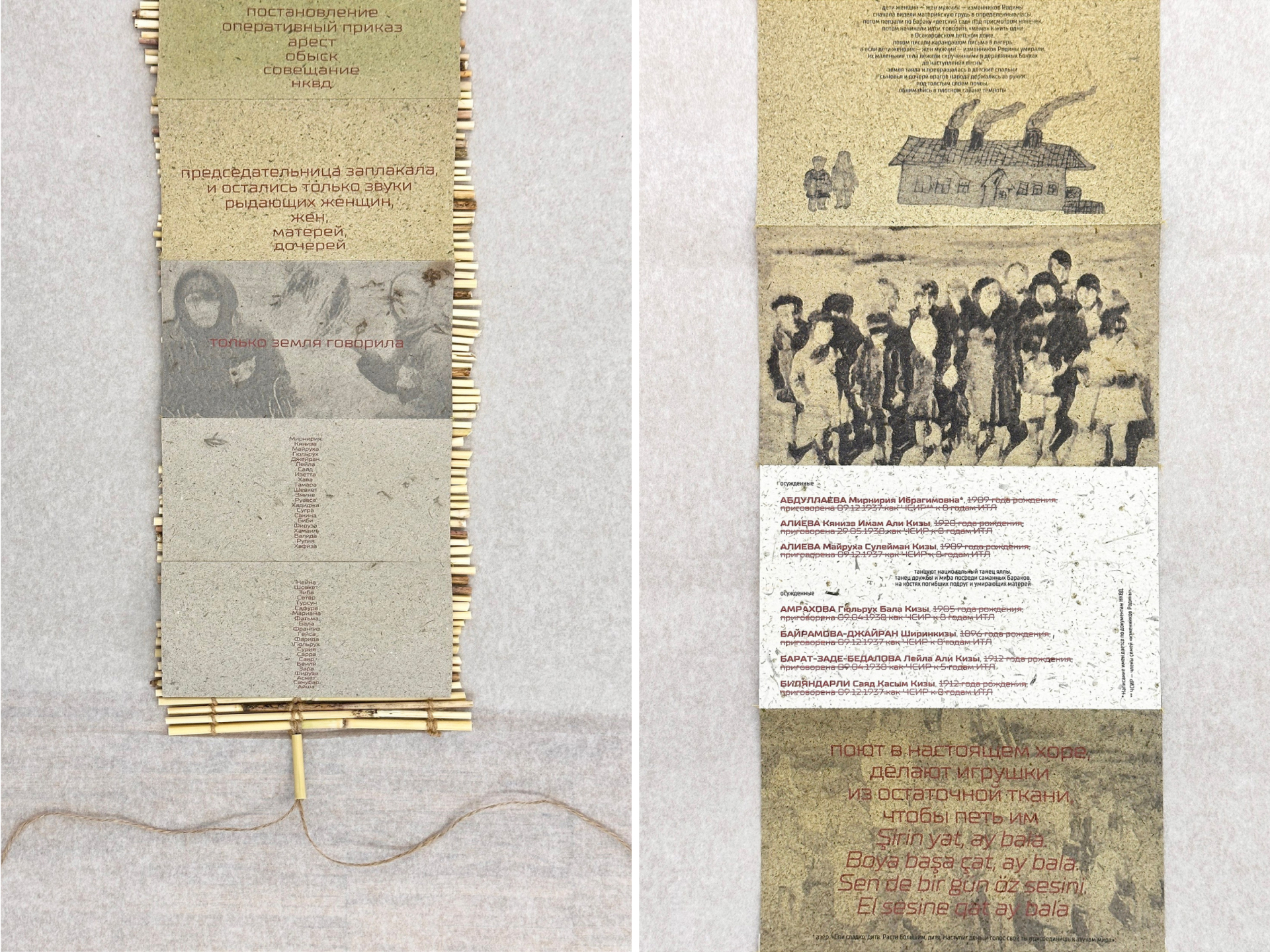
Spreads of the book by Anastasia Bogomolova with the poetry of Yegana Jabbarova “A.L.Z.I.R.” 2024 © anastasiabogomolova.com
For many people, family memory is, as you said, a key thing to identity. It seems to me that many people try to find something good in their family history that they can be proud of. I had a great ancestor, and that’s why I am also - at least a little - like that. Why was it important for you, instead, to work with traumatic, painful themes - and it still had some similar effect?
It seems to me that a person’s desire to discover someone famous in his family is an attempt at some kind of self-affirmation or self-validation. This, by the way, is a completely natural human desire, because we all want to feel special, there is nothing wrong with that. This is how our psyche works.
But there is one more important point. I really don’t want my literature to remain only at the point of trauma. For me, this is a big question: is decolonial literature possible in the sense of literature that overcomes trauma? We know that there is postcolonial literature with its own features and characteristics. But for the most part, this is still literature that is built around trauma - colonization. Thus the injury becomes the spine. If you take away trauma, literature falls apart.
It seems to me that overcoming trauma is important. That is, not devaluing it, but overcoming it in the sense that it is not the core, most importantly, the spine. It shouldn't be the center. There is a dignity that is more than injury.
I can be a carrier of trauma, I can experience the consequences of violence. Human beings are very fragile and our lives are in many ways a story of the pain we receive.
But, it seems to me, it is necessary to remember that at the same time, each of us is a subject bearing dignity, if only simply because we exist. Each of us is part of a huge heritage, a huge family, a huge number of transmitted practices, types of knowledge, for example, lullabies, recipes, some kind of sayings on how to cope with a headache or something else. And this is a very important thing that needs to be documented, touched, remembered, and not allowed to wear off. After all, there is no more powerful knowledge than a recipe that has been passed on for years or even centuries. And when you are five, you are annoyed by your mother, who writes everything down in a notebook, and when you are 35, you understand that she is making a very serious, important pre-colonial gesture.
At the same time, it was important for me not to erase the bad, because this is also part of the inherited, like biological characteristics. It is dishonest to neuter family history and present it only from a favorable or advantageous side. If I start lying, that is, being selective in how I write, then that’s it—it ceases to be literature. If you write about your family so that they praise you at the end and say: “God, what a sweetheart you are,” it won’t be quite literature, but rather a postcard. Sometimes this is useful, but is it worth doing on the scale of a book? Big question.
How do you feel about psychotherapy? Have you had such an experience, and how therapeutic was the book?
For myself, I realized that a book in particular and literature in general are, in fact, not therapy. I often talk about this to people who want to work with traumatic experiences. First you have to go through this experience, otherwise the author will never be able to approach this as material. It will just crush you like a concrete slab. There are often situations when a person comes and says: “Here I am ready. I’ll write about the death of a partner or parent.” And then in the process of work it turns out that the person simply cannot take it out, cannot stand it, cries, and reaches a terrible state. At such moments, you need to say “Stop” and refer him to a therapist.
This was very relevant when I wrote the second book [“Dua for the Unfaithful”], dedicated to my brother. It took me five years after his death [to begin the text], and even five years later, having already worked on it, it was still very difficult for me. There are chapters in it that I could barely write because I was practically dying emotionally at that moment.
I don’t approach my own books as therapy; for this I have a specialist who helps. When I sit down to work on a text, it’s not a bin for emotions. The reader does not have to endure the full brunt of my experience.
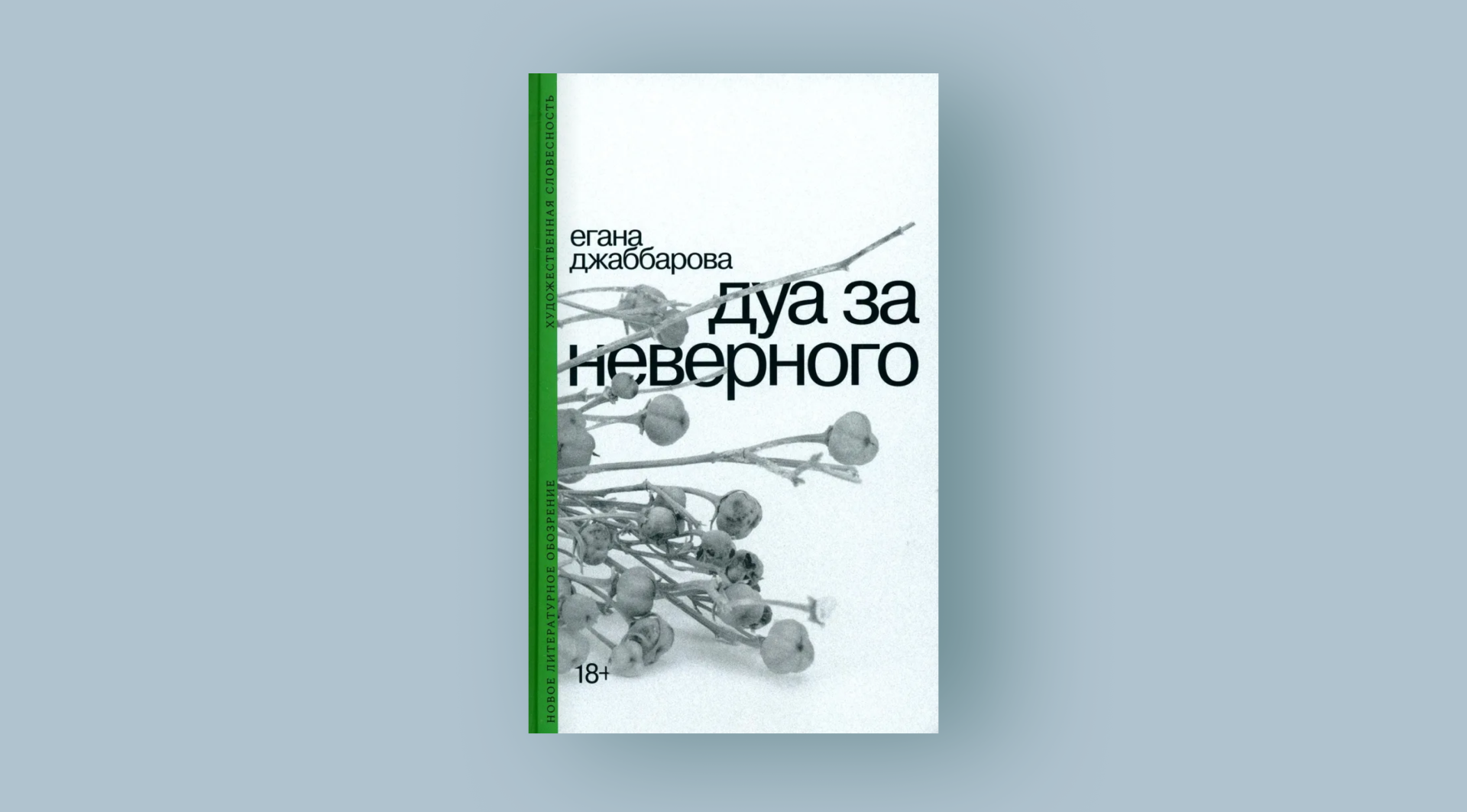
Yegana Jabbarova. Dua for the infidel. New Literary Review, 2024
For me, your novel was primarily about the body. Why was it so important for you to emphasize this theme in relation to family history?
This, by the way, is partly what we talked about when we discussed the coloniality of existence - when your right to exist is constantly questioned, or when you, as a subject, seem to not exist. I have a favorite Latin American artist, Ken Gonzalez-Day. He has a brilliant work called Erased Lynchings. What is he doing? He takes old American postcards that depict scenes of lynching - real scenes of mass executions, massacres of people. In addition, he writes a monograph that produces the effect of an exploding bomb - in it he proves that lynchings were common not only in the southern states, but also in the northern ones. Only, unlike in the south, the victims there were ethnic minorities, for example, Latin Americans, Mexicans, Chinese and many others.
And on these postcards found in the archives, he erases the victims. Accordingly, what do you get? You see the crowd on the postcard. And this crowd is looking at the tree. All. But through this simple gesture, he, firstly, returns subjectivity to the victims. He gives them back the right to choose whether or not to be in this photo. And secondly, it makes objects not those who were killed, but those who committed it. And, accordingly, we find ourselves face to face with murderers and criminals. We see the same lynch mob that, as a rule, did not bear any responsibility.
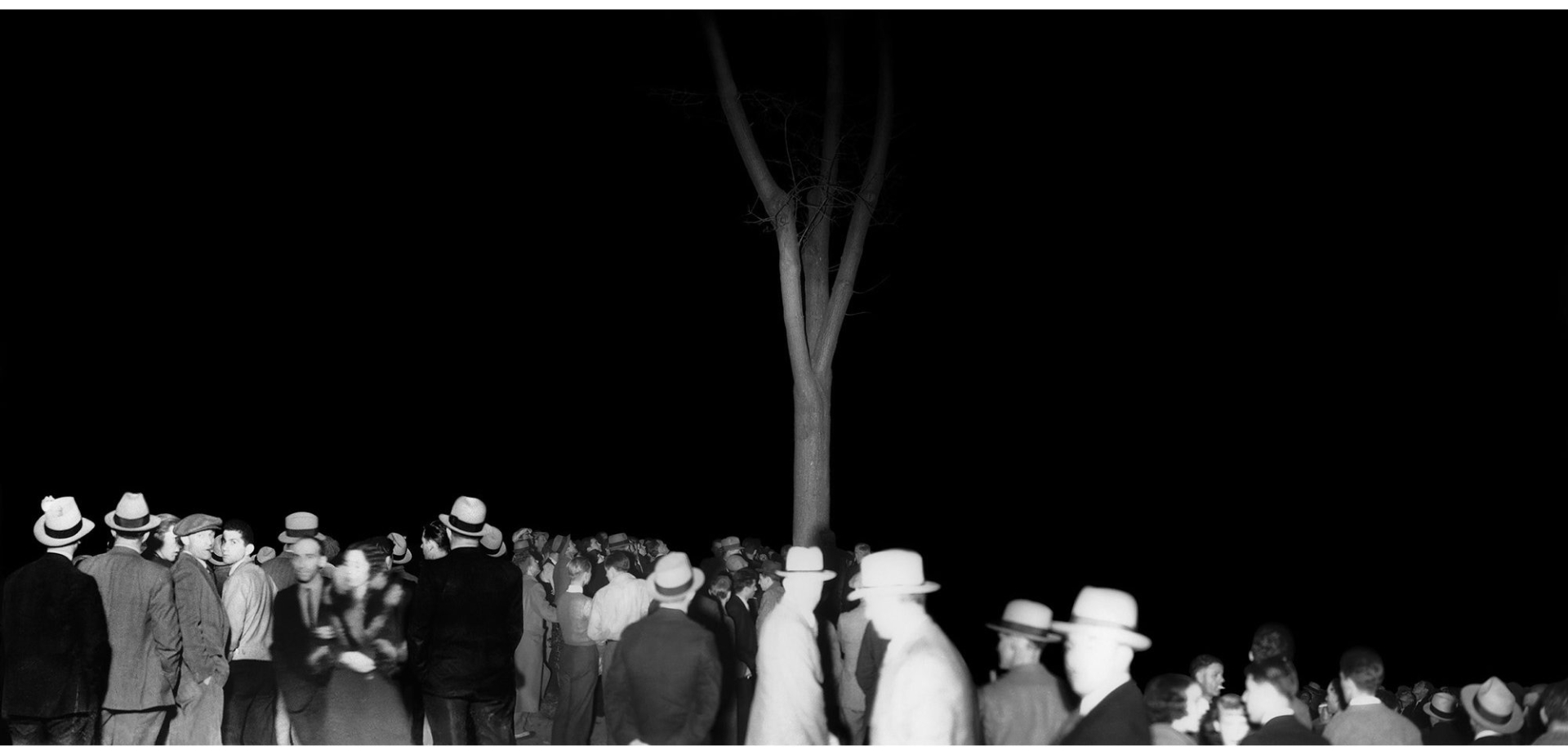
Ken Gonsalez-Day. The Wonder Gaze: Lynching of Thomas Thurmond and John Holmes, from Erased Lynching Series, 2006 © Ken Gonsalez-Day
Why did I start this whole passage? Because it amazes me how his absent body becomes a device. And I see here a rhyme with my position - in the past, as a child who does not represent the titular nation [in a Russian school]. On the one hand, you are super visible against the background of children whom you are not like. But at the same time, you seem to be not a person, not a subject, no one protects you, no one sees value in you - I had a boy at school who constantly offended me on this basis. And this gives rise to an interesting position, as if at the crossroads of invisible zones.
And then, when I became chronically ill, I also felt invisible. Hospital residents are always invisible creatures. It is not for nothing that Susan Sontag speaks of two kingdoms, two citizenships: while you are in the kingdom of the healthy, you do not think that there is a huge world of sick people. The same applies, for example, to migrants or people forced to live and earn money in another country.
I realized that our bodies seem to exist, but no one sees them all the time, as if they were translucent. And I wanted to make these bodies visible, to outline them, as it were, to give them this flesh, so that no one else could look through it. The bodies became evidence—so strong that it was impossible to avoid. [When you read a book,] it’s like there’s a hand on you.
It was also important for me to represent my illness. Not only because it is very difficult to diagnose: many in Russia are misdiagnosed, and people live with muscular dystonia without even knowing it. It was also important for me to show, at least a little, this world, this kingdom of human suffering, which I periodically encounter in neurological departments - and which no one wants to see.
I really liked how you talked about the body as a heritage - for us this is an unexpected angle. But usually we write about architecture, that is, material heritage. Therefore, we wanted to ask you about Yekaterinburg, about the places that are dear to you there.
I adore Yekaterinburg, and there are so many of my favorite places... Firstly, this is the already legendary Clinical Hospital No. 40. Of course, I don’t wish anyone to end up there, but if suddenly fate turns out this way, I highly recommend going down and walking through the basements - there is a huge system of basements that connects each of the buildings. And since I often found myself there, I really fell in love with these basements. One of my poetry books was written entirely in these basements.
You should definitely take a walk along Plotinka. Now it has deteriorated, it is a little reminiscent of Anapa, but it is still a classic. You can walk along it to the Dynamo [sports complex], look at this very Dynamo, and maybe even go in and swim there. It is impossible to drown in this pool - and it is my favorite pool for this reason.
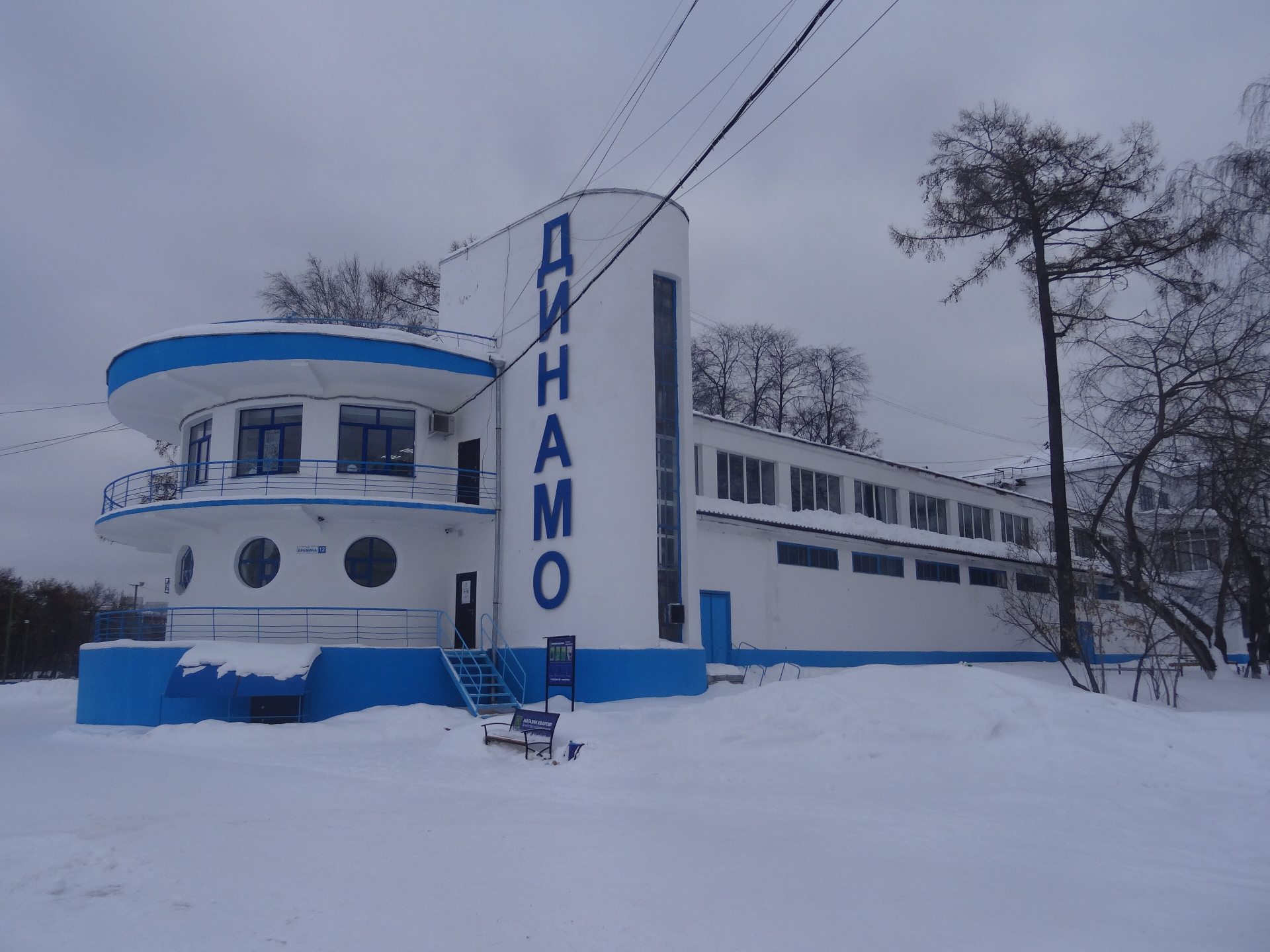
Veniamin Sokolov. Dynamo sports complex, 1929–1934 © Evgeny Smirnov / WikiCommons
Of course, you need to go on some kind of excursion dedicated to street art, because there is a lot of this stuff in Yekaterinburg. The Yeltsin Center is definitely one of the iconic places of the city, there is a good bookstore there, for example, and just a lot of people spend time there, because it is large, vast, and all-accepting. It was like that until recently, of course. Now I don't know what's happening to him.
You definitely need to go to Vtorchik [Vtorchermet], to Uralmash, and in general to the very places of Boris Ryzhy - may he forgive us, whom everyone has already kicked 28 times and sang his song about the ship. However, this is a must have if you are in Yekaterinburg.
An important part of the program is to go to the Kolyada Theater and see what is happening there. You don’t even have to go there, but reading Ural drama is interesting. She is super chthonic, especially in the nineties and two thousand, Vasily Sigarev alone is worth it.
I would also recommend Green Grove - this park is also legendary. When I was a child, everyone said that there were maniacs walking there. And, of course, they were terribly afraid of him, but at the same time everyone wanted to take a risk and still walk through the park.
I feel like I'll never finish this list, so let's wrap it up. I just want to say that Yekaterinburg is a city of love. It seems to me that you either immediately fall in love with him or you don’t.