
Translated material
Checkmate
47 years ago, the Iranians overthrew Pahlavi, and now they are calling for his son to return to the throne. What has the history of the Shahinshah State of Iran taught?
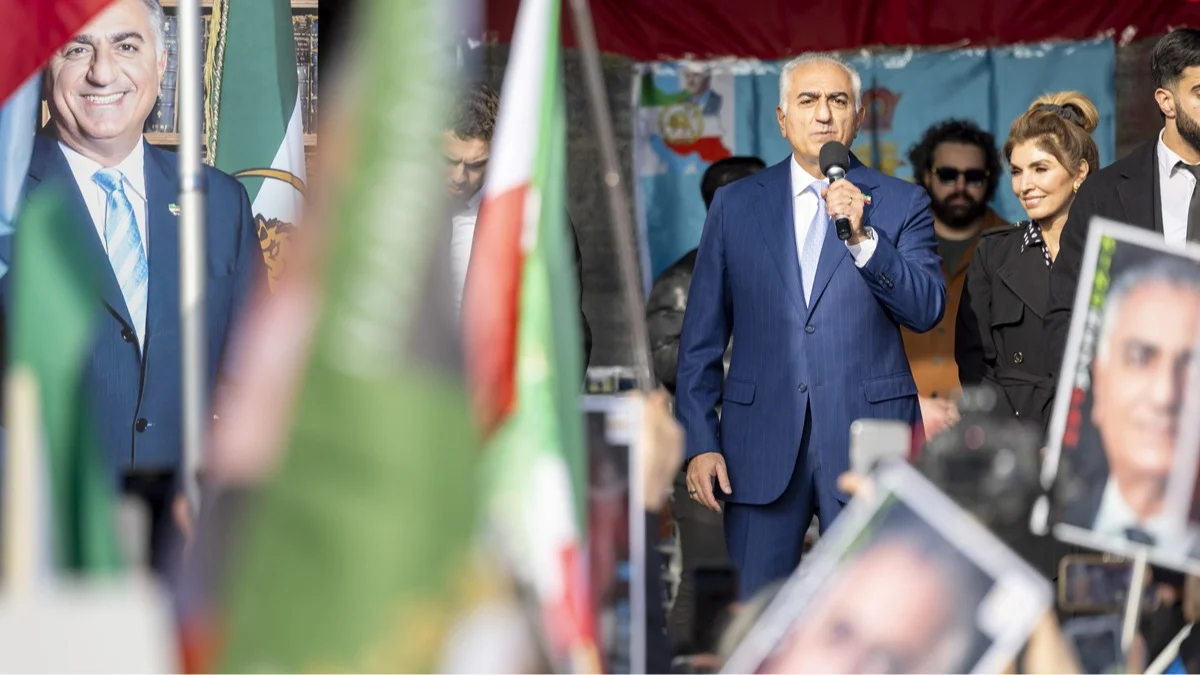
Iranian Crown Prince Reza Pahlavi and his wife Yasmine address supporters in front of the UN European headquarters during a rally in Geneva, Switzerland, February 18, 2025. Photo: Salvatore Di Nolfi/EPA
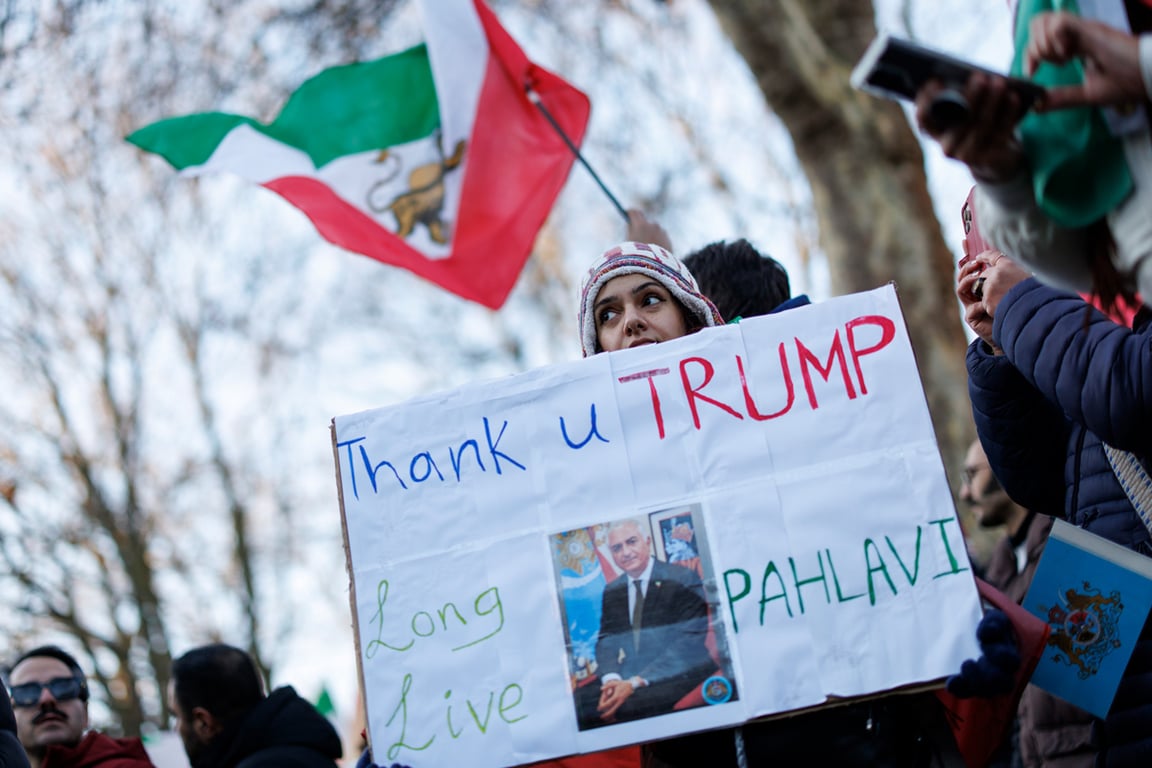
During the uprising in Iran, people in the streets shouted the name of Crown Prince Reza Pahlavi and raised the Iranian green, white and red flag. On a white background, instead of the calligraphed word Allah, the demonstrators had a golden lion with a sword - a symbol of ancient Persia. This is what the flag of the Shah of Iran looked like before the Islamic Revolution of 1979. And with the same fervor with which the Iranians overthrew the Shah 48 years ago, they now called for his son to return. Iranian youth, who mostly took to the streets, imagine the Shah's regime in much the same way as Russians saw Tsarist Russia in the late 1980s. What was the Shaheenshah State of Iran like, where women wore short skirts rather than hijabs? If life was so good there, then why was the Shah overthrown? And how did the Republic of Iran become Islamic?
“Iranians are once again gathering in the streets, shouting the name of Prince Reza. Perhaps Iran is waiting for the revival of Reza Pahlavi to start a new “white revolution,” this time based on full democracy.”
This quote is not from the news of the last two weeks. Professor Adel Darwish wrote this in 2001. Protests against the regime broke out then for the third time. The first ones were in 1998. Two decades after the start of the Islamic revolution, the Iranians, who even then remembered the country well under the Shah, under the same Shah whom they themselves violently overthrew, for the first time opposed the ayatollahs. Shah Mohammad Reza Pahlavi himself was not alive for 18 years. His son, 48-year-old Shahzadeh (Crown Prince) Reza Pahlavi, lived in exile and seemed to have no thoughts of returning home.
The reign of the Shah Pahlavi dynasty in Iran was short and very turbulent. Only two generations of rulers - and both were overthrown. The first in the dynasty, Reza Khan Pahlavi, came to power in 1925, he was 47 years old.
“Pahlavi the First, Reza Khan, was a tough ruler, but he played the same role for Iran as Ataturk did for Turkey,” says the orientalist, who asked not to publish his name. “With an iron hand, he drove the country into modernization. To the point that in Iran, women's veils were torn off. Yes, he was a terrible dictator. But he managed to get the country off the ground.
"Proclaimed himself Shah"
In the Shah's Persia, since 1905, there was a Constitution and a parliament - the Majlis. It was dispersed, convened again, this is a separate sad story. The country was ruled by the Qajar dynasty, which did not want democratic reforms at all. And many Persians wanted them even then, at the beginning of the 20th century. One of them was Reza Khan Pahlavi.
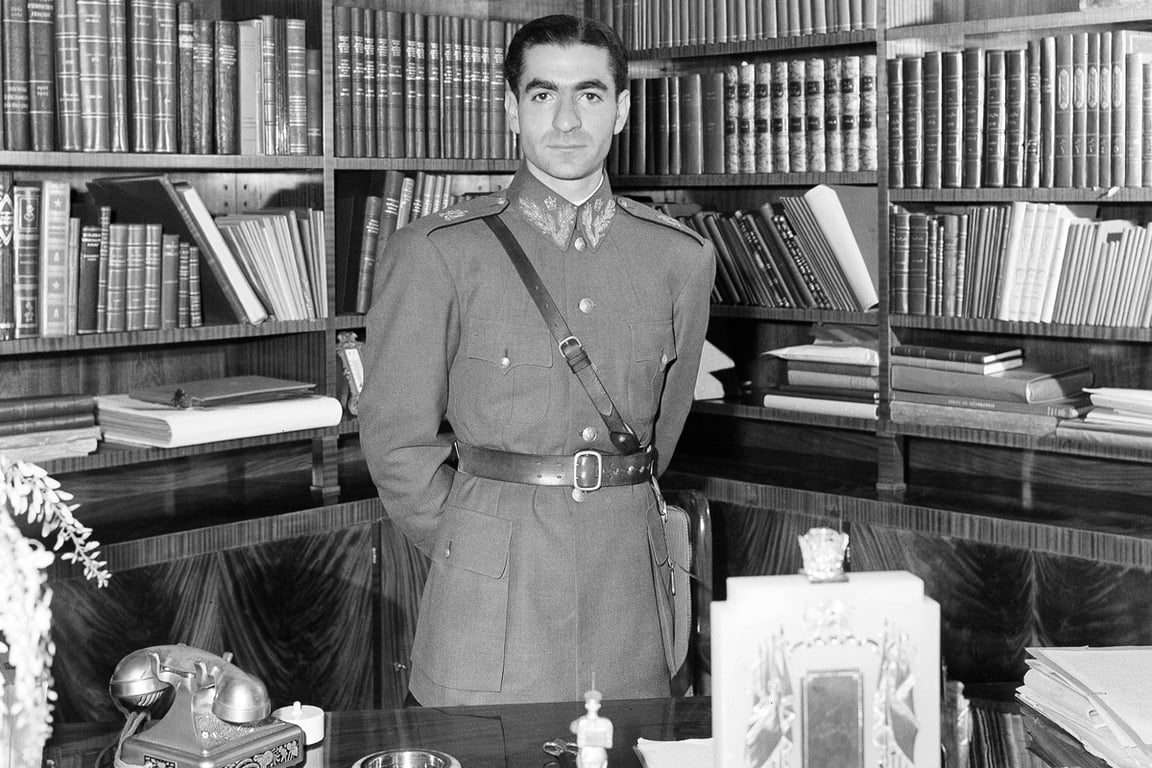
Reza Khan spoke several Turkic languages and Russian, although he never formally studied anywhere and was self-taught. His father was a soldier, his son also became a soldier and served in the Persian Cossack brigade, which was created by instructors of the Russian Empire. By the age of twenty he had risen to the rank of officer, and at forty he was promoted to general. In 1921, he was one of the organizers of the next coup in Iran, and participated in the overthrow of the Qajar dynasty in 1925.
“The Persian clergy brought Reza Khan to power,” says orientalist and Iranian scholar Mikhail Krutikhin. “First he made a career as minister of war, then became prime minister. He did not want to be Shah, but the clergy went in delegations to ask him on behalf of the people. And he then proclaimed himself Shah.
The clergy will then greatly regret what brought the Pahlavi dynasty to power. Reza Khan began to carry out reforms in a completely different direction than the mullahs expected.
Reza Khan began modernizing industry, building roads and railways, establishing a national bank, enacting civil and criminal codes, and sending specialists to study in Europe. He demanded that Persia be called throughout the world as it was called within the country: Iran. And at the same time, he completely subjugated the Majlis, destroying what he himself once fought for. Otherwise, he believed, reforms would not be carried out. And he mercilessly executed everyone who mentioned his despotism, even his close associates and advisers. And since the Persians’ experience of overthrowing the Shah was still fresh, they would probably have overthrown him too. But we didn’t have time.
“In 1941, Soviet and British troops entered Iran, the Australians occupied the country from the south, they organized deliveries to the USSR through Lend-Lease through Iran,” says Mikhail Krutikhin.
— The Shah was accused of pro-German sentiments. Now it is difficult to say how true this was, but the Shah had to abdicate the throne.
Other Iranianists are inclined to believe that Reza Khan did flirt with Hitler, otherwise the allies in the anti-Hitler coalition would not have overthrown him. One way or another, in 1941 he had to leave the country, and his son, Mohammed Reza Pahlavi, continued modernization.
People's Republics
The young Shah was 21 years old. Until the age of 19, Mohammad Reza Pahlavi studied at a boarding school in Switzerland, then for two years at an officer school in Tehran. He inherited a country where there was simply not enough food , in addition, part of Iran was seized by the USSR in order to create their own “people’s republics” there. They were headed by the former head of the NKVD of Soviet Azerbaijan, Mir Jafar Abbas-ogly Bagirov.
“At the height of the war, the USSR overtook troops in the territories of two provinces, Iranian Azerbaijan and Kurdistan, and introduced socialist reforms there,” says Mikhail Krutikhin. — Soviet puppets worked there. Bagirov was a real executioner and sadist and enforced all orders by force. When the war ended, Soviet troops refused to leave. But Prime Minister Ahmad Qawam al-Saltaneh somehow managed to convince Stalin to withdraw his troops in exchange for an oil concession in northern Iran. Then they will talk a lot about the fact that the Americans put pressure on Stalin, but this is not so, Stalin just really wanted to get this concession. And Kavam, the cunning fox, waited until the Soviet troops left, and then came to parliament and said: guys, I made a mistake, let's cancel the agreement with Stalin.
Unlike the USSR, Great Britain did not part with its interests in Iran after World War II; the Anglo-Iranian Oil Company (the future British Petroleum) was extracting oil there with all its might. The United States was also approaching Iranian oil. The Shah did not object to foreigners. But at that time he wanted to continue his father’s reforms and was inclined, if not towards democracy, then towards a constitutional monarchy, so the country was actually ruled not by him, but by parliament. According to another version, the young Shah was not yet experienced enough to seize power. In 1951, Prime Minister Mohammed Mossadegh, who advocated the nationalization of the oil industry, decided to expel foreigners from Iran.
“They managed to pass laws according to which oil, gas and, in general, all the wealth of Iran belonged to the people,” continues Mikhail Krutikhin. “And they kicked all the American and British concessionaires out of the country.” The Shah, who did not support this, had to flee the country.
And then the United States committed what it would later be accused of in any unrest in any country in the world: a coup from the outside. Only in this case did the CIA admit by publishing documents about the preparation of the coup. True, only 60 years later, in 2013. The preparations for the coup were led by Kermit Roosevelt, the grandson of the 26th President of the United States. And in 1953, the Mossadegh government was overthrown, Shah Mohammad Reza Pahlavi returned to the country. Then he ruled like a real autocrat.
"White Revolution of the Shah and the People"
The Shah explained the need for sole power something like this: the country is terribly behind the developed world, you see - we can’t even produce our own oil without the British, reforms are needed, and all sorts of parliaments there only get in the way, get in the way.
“Having returned to power in 1953 and having received the support of the United States and Great Britain, the Shah began to consistently build a line to monopolize power,” says Iranian scholar, author of the book “Iran to All,” Nikita Smagin. “And that’s basically what he achieved.”
The Shah truly carried out a fantastic modernization of the country. He called his reforms the White Revolution of the Shah and the people.
“Agriculture in Iran was feudal, primitive, peasants and farm laborers worked for the feudal lords,” says Mikhail Krutikhin. — The Shah announced that he was taking the land from the feudal lords, but not for free, he would pay with shares of state industrial enterprises. Thus, he began to make capitalists out of feudal lords.
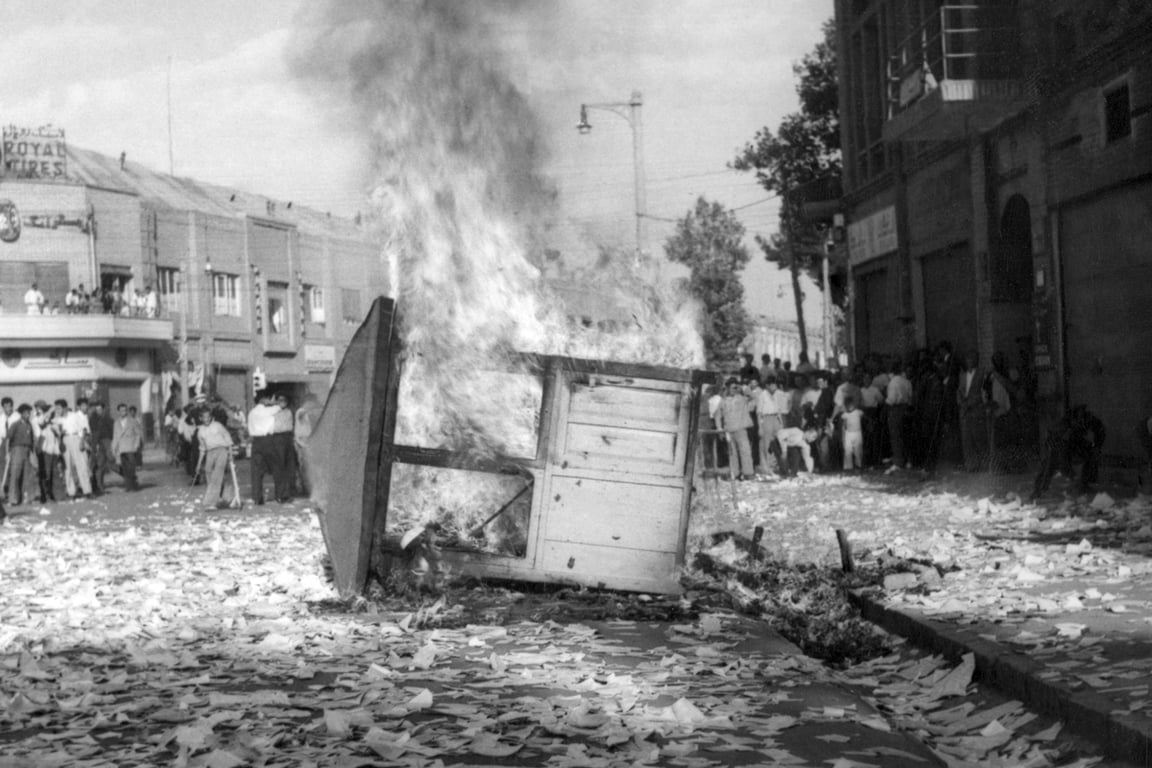
As a result, one and a half million peasant families, 40% of Iran's population, became land owners. But the overwhelming majority of the people remained illiterate, and the Shah decided to create an Education Corps.
“He announced: we have armed forces that don’t do a damn thing in peacetime,” continues Mikhail Krutikhin. “And they began to call for service those who could read and write. They were taught in barracks for six months, and then sent to villages for a year and a half, where they organized schools and taught peasants to read and write.
Then, according to the same scheme, the Shah organized the Health Care Corps: they recruited people who were more or less familiar with paramedic work, trained them for six months, and then sent them to the villages.
“And they taught the peasants about hygiene,” adds Mikhail Krutikhin. “Before that, people lived in complete unsanitary conditions, with cesspools and so on. And the success was amazing.
Following the medical shah, he organized an agricultural corps: mechanics were drafted into the army, who then taught peasants to use modern equipment to get a larger harvest. The Shah demanded that owners of industrial enterprises share profits with workers and pay them bonuses.
“The success of the White Revolution was absolutely amazing,” summarizes Mikhail Krutikhin. — Iran has embarked on the path of very rapid industrial development.
And finally, Mohammad Reza Pahlavi did something that completely outraged the clergy: he introduced suffrage for women. But there was still a decade and a half left before the Islamic revolution.
“Power can only be threatened by a foreign force”
While carrying out his White Revolution, the Shah also reconsidered relations with the outside world. Two coups were fresh in his memory - the one that overthrew his father from the throne, and the recent one that returned the throne to himself. And he also remembered how difficult it was to get rid of the “people’s republics” on his territory.
“Twice in his life the Shah saw foreign states overthrow the government in his country,” notes orientalist and author of the book “Iran to All” Nikita Smagin. — First, the USSR and Great Britain overthrew him, then the USA and Great Britain overthrew his opponent. Apparently, this gave birth to such a stable construction in his head: power can only be threatened by a foreign force.
Over time, Mohammed Reza Pahlavi will understand that this is not at all true, that without internal force no foreign force will overthrow anyone. And in 1953, the Americans succeeded in the coup only because Iran was ready for it from the inside. With the departure of Western oil companies, the economic situation worsened: the Iranians themselves, without advanced technologies, could not extract oil as skillfully as the British and Americans, and the embargo imposed on the country completely deprived it of income. But this, apparently, only strengthened the Shah’s understanding of how important “foreign power” was. And since 1953, he pursued a policy... No, not to expel “foreign agents” and close the country from external enemies. On the contrary: the Shah decided to no longer have enemies.
“In the foreign arena, Mohammad Reza Pahlavi built the most pragmatic strategy,” continues Nikita Smagin. “He managed to make friends with everyone, he was on good terms with Britain, the United States, and the Soviet Union at the same time. That is, he did the almost impossible: he maintained relations with different camps.
The Shah established especially warm relations with Israel. This strategy contributed to the rapid development of the country, Iran grew rich before our eyes.
“In the early 1970s, I served in the Iranian army,” recalls Mikhail Krutikhin. “And there were weapons made in England, in America, and in the Soviet Union, whatever there was. By 1974, the Soviet Union had built three hundred industrial enterprises in Iran, starting with the powerful Isfahan Iron and Steel Works and the Red Cross Hospital. The Iranians paid with gas. A pipe was laid to Armenia, Georgia, and Azerbaijan. And the same friendship was with the United States. For example, ours set up an oil refinery in Isfahan, and nearby the Americans built a power plant that could burn any petroleum products. Iran produced excellent cars.
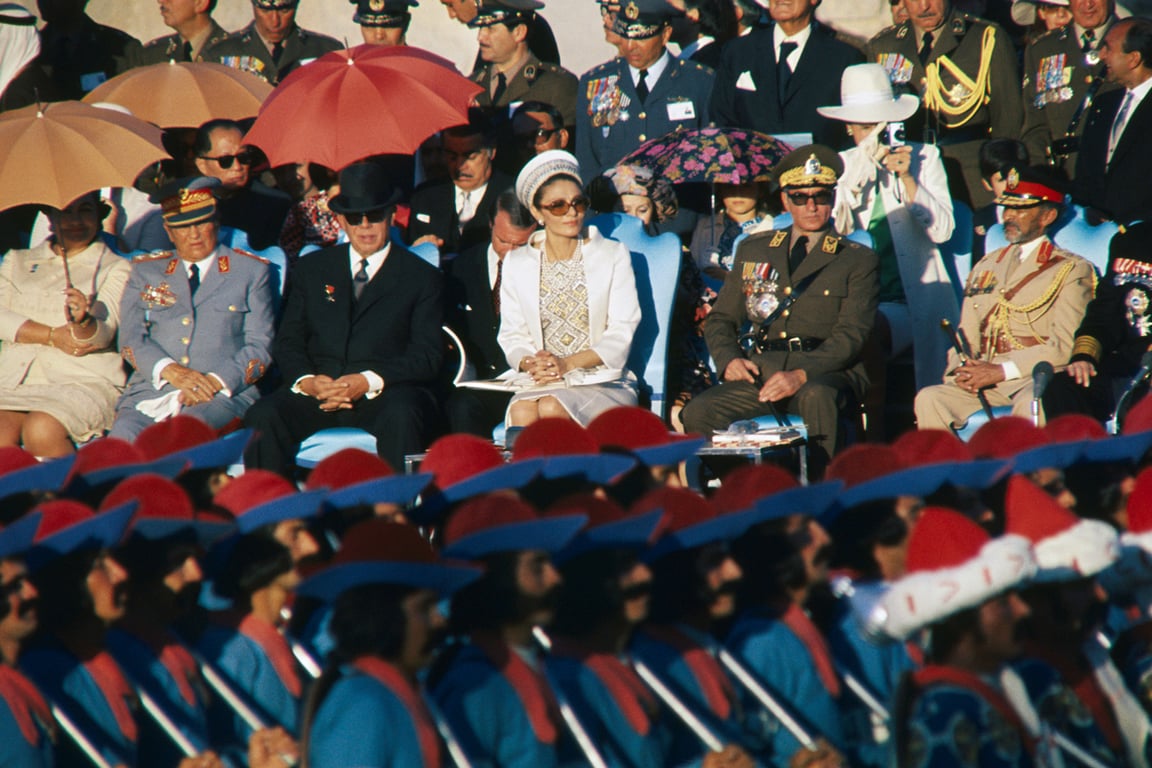
In 1971, Iran celebrated the 2500th anniversary of the Persian Empire. Monarchs, presidents and prime ministers from all over the world gathered in Persepolis.
“Then I saw the crown prince, Reza Pahlavi, for the first time, he was still an 11-year-old boy,” says Mikhail Krutikhin. — The Parade of Centuries took place in a specially built stadium for 100,000 people; people dressed as Persian warriors walked. On the podium next to the Shah's family sat presidents, prime ministers, kings and princes and princesses from probably fifty countries. From the USSR there was Nikolai Podgorny. And I saw a wonderful scene.
The guests of honor sat so that the sun was shining in their eyes. When it became completely impossible to endure, Podgorny pulled the Pravda newspaper out of his pocket, folded it into a cap and put it on the crown prince’s head. Then everyone's umbrellas were collected and handed over to the guests of honor.
Another orientalist, who lived in Iran for several years, admits: the Shah really raised science and culture in the country, and he was respected in the world.
“There is even a myth that for some time in America they accepted Iranian reals as payment,” he notes. — The Shah was a great friend of the West, Western countries ate as much oil as they wanted from Iran, Iran received huge profits from this, with this money they created an education system, a health care system, and so on. Now they say: oh, this Islamic revolution, terrible mullahs came and ruined everything. But revolutions do not happen out of the blue. The Shah tried to play at democracy, but in monarchies it is useless.
“The methods were quite Gestapo”
“Maintaining good relations with everyone around, Shah Mohammad Reza Pahlavi was confident that now no revolution threatened him,” says Nikita Smagin. “But the main threat came not from foreign powers, but from the difficult situation inside Iran. The Shah thought that he had monopolized power in the country, but this was not enough.
The modernization of the country was accompanied by monstrous corruption, which, of course, was discussed among the people. Mohammed Reza Pahlavi himself took precious monarchical regalia from the National Bank for special occasions against a signature and immediately returned them. But people gossiped about the jewelry of his sister Ashraf and other close associates. Modernization, meanwhile, also brought dangerous fruits, which the Shah either did not notice or did not want to notice.
“When the Shah built this great civilization, it turned out that so many people were not needed to build an advanced capitalist economy,” says Mikhail Krutikhin. — In villages, three people produced as much agricultural products as hundreds previously produced. Advanced factories also required fewer people. The population of Iran was 35–36 million people, and no one needed the huge masses. All these old ways of economy, artisans at the market are a thing of the past. People from villages flocked to the cities, but they could not fit into city life, and slums began to grow around the cities. The Shah organized an excellent higher education system, excellent universities, and many students studied abroad. But they had nowhere to work in Iran.
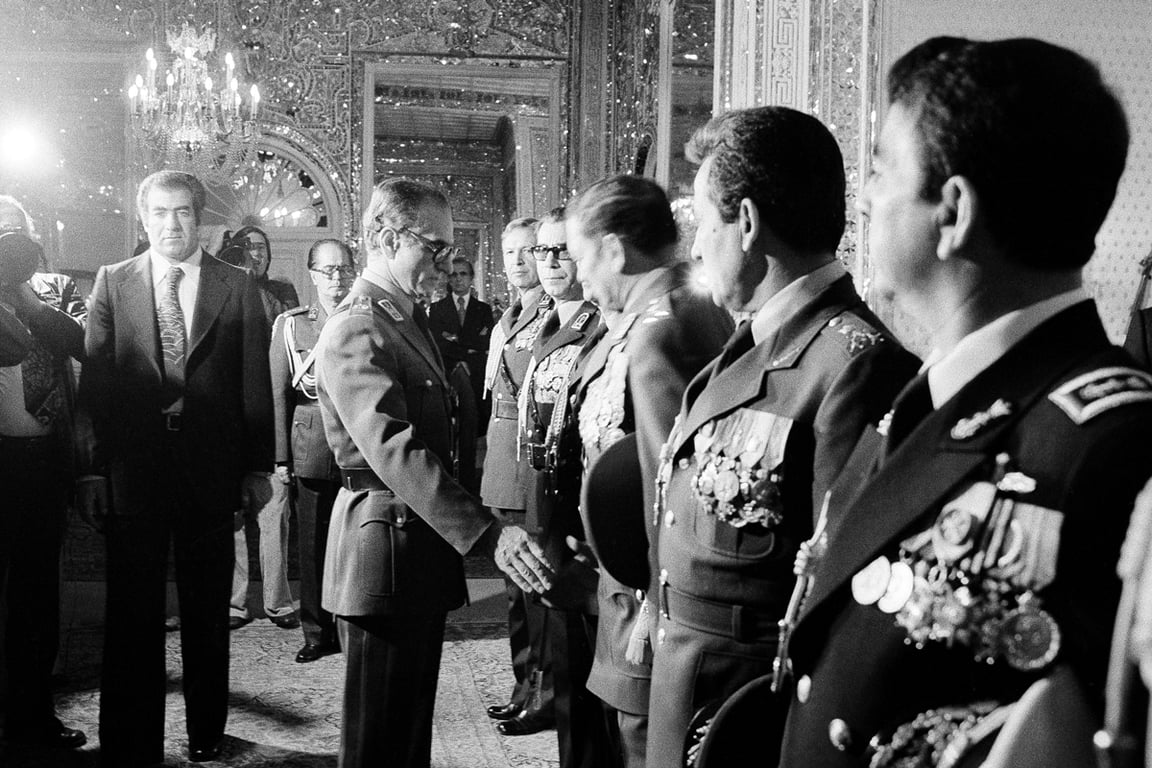
By promoting his modernization, but without thinking about those who were thrown overboard, the Shah actually raised his own opponents. Moreover, these were people already educated.
“In such a situation, intellectuals appear who are dissatisfied with the fact that freedoms are being suppressed,” explains the orientalist. — And a huge number of opposition circles arise. All this gained momentum as the number of educated people aware of the situation grew.
Nikita Smagin divides the forces that eventually formed before the revolution in Iran into three main “branches”: Iranian nationalists, various left-wing movements and representatives of political Islam - Islamists. The leader of the latter was the theologian Ruhollah Khomeini. When he began to actively oppose secular reforms, he was nearly sixty, and then he was simply expelled from the country.
“There were many more currents,” adds Nikita Smagin. — There were peasant socialists, there was a combination of radical Islam and radical Marxism, but in general three directions can be imagined. As it turned out later, the nationalists had the least opportunities and resources, and they were very quickly forced out. As a result, a struggle for power developed between the left and the Islamists. The latter, as will become clear after the revolution, turned out to be the most successful.
As resistance grew, the Shah's regime increased the pressure. Then everything developed according to the laws of physics: as the force of action increases, so does the force of reaction.
“The repressions were directed against everyone who risked speaking out against the policies of the Shah; they were simply removed,” says the orientalist. “And the methods by which the Shah’s regime dealt with the dissatisfied were completely Gestapo, only with oriental characteristics. Or the person simply disappeared, his loved ones knew nothing about him for six months, during which time he could have been shot without trial. Trials also took place, but not always. There was a secret police - the local equivalent of the Soviet NKVD. And if she took a person, they might never know about him.
In Tehran there is the Ebrat State Museum - a former interrogation and torture prison, where they talk about the horrors of the Shah's regime. The exhibition was created by the Ayatollah regime after the revolution, so that Iranians would know what horror the Islamic Revolution had saved them from. And if they are lying, then, according to the orientalist, not about everything.
“Tours around the museum are led by a man who was once in this prison,” he explains. “I don’t think he’s lying in his stories.” Judging by his stories, what happened there was exactly what happened in the NKVD and KGB, but with an oriental flavor. That is, in the sense of physical violence, it is even worse, if that is possible.
Apparently, the Shah remembered the "people's republics" established by the Soviet Union in Iran, because of all those who could potentially oppose him, he was most afraid of leftists - mainly communists. And he did not notice how ordinary people reached out to Islamic theologians. In principle, they promised the same thing: universal equality, “take away and divide.”
“The ayatollahs promoted a program very similar to the communist one: there will be no rich people, we will divide everything among everyone, everything according to justice, that is, according to Islam,” continues the orientalist. — The slogans of radical Islamists and radical leftists are similar, they all appeal to the people, this is especially typical for Shiite Islam. Even scientific works have been written about this, where communism and Shiite Islam are compared. It is also characterized by the opportunity to die for a greater cause, this path of sacrifice: we are doing something great that our descendants will remember. The poorest strata supported this. This was made worse by the fact that the Shah was promoting a narrative: Islam is not the most important thing for us. There were cases when he entered the mosque and could hit the mullah because he made a remark to the shah’s wife because of her uncovered head.
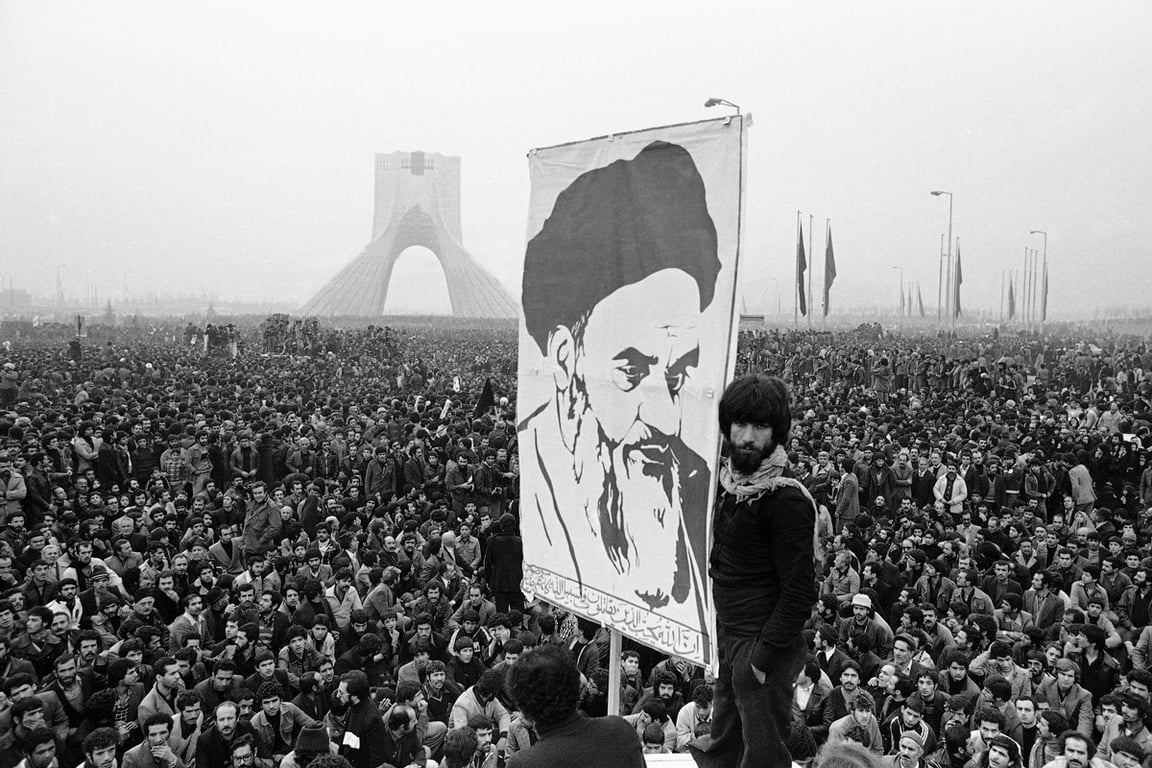
And in 1978 the Islamic revolution broke out. Initially, it was not Islamic, but in January 1978, in the city of Qom, the religious center of Iran, a group of students protested - and the police started shooting at them. On the 40th day, when the victims were commemorated, protests broke out in Tabriz, then in other cities. Then general strikes began, Iranians stopped working. The scale was such that it undermined the country's economy. The Shah tried to take action and promised to hold free elections in the country, but it was too late. He had to flee Iran, and Khomeini triumphantly returned to the country in February 1979 after 14 years of exile.
“Ayatollah Khomeini became the idol of ordinary people because he said understandable things, his speeches were distributed among the people on audio cassettes,” adds the orientalist. “But if initially only the mullahs wanted to overthrow the Shah, the people would not have supported him.” Various forces overthrew, and then the mullahs seized power.
So Iran became an Islamic republic with the Supreme Ayatollah at its head. In 1979, Khomeini was 77 years old. In June 1989, he died, his place was taken by Ayatollah Ali Khamenei, and since then the supreme ruler of Iran has not changed. It was Khamenei, says Nikita Smagin, who created the network of Iranian proxy forces, but that is a different story.
— When Iran celebrated the 2500th anniversary of the empire in 1971, people shouted on every corner: “Long live the Shah!” The Shah is eternal!” recalls Mikhail Krutikhin.
“Then I left Iran and returned in December 1978, during the revolution. On the streets, on every pillar it is written: “Death to the Shah!”
"As the rightful ruler of Iran"
In 1974, doctors discovered lymphoma in Shah Mohammad Reza Pahlavi. His eldest son was 14 years old. From that time on, the crown prince - Shahzade - began to be prepared for the fact that he would rule the state. The Shah took him with him during all state visits and taught him how to behave properly as a monarch.
Immediately after school, Reza Pahlavi went to study to become a military pilot, was enlisted in the Iranian Air Force, and from the age of 17 did an internship in the United States. There he entered the prestigious Williams College. It was assumed that he would begin governing the country after his studies. But then a revolution happened in his country, and the prince had to return home. They flew out of Iran with the whole family, the deposed Shah was at the controls of the plane, he was also a pilot.
What followed were years of moving around different countries, from Morocco to Panama. In 1980, while the family was in Egypt, the Shah died of cancer. The son became the head of the family. When he turned twenty, he announced that he was ready to accept the title of Shah and "full responsibility as the legitimate ruler of Iran." At that time, not only the Shah’s family was thinking about restoration, many Iranians who fled the country after the revolution believed that they would soon return home and everything would be the same.
Shahzade was preparing to become a sovereign. He took a course in political science at the University of Southern California. I looked for supporters and opponents of the Shah’s regime in different countries, listened to them, and learned to accept criticism. He was looking for an answer to the question of what happened in his country and how he could avoid revolution when he became Shah.
At that time, the Shah's family was not short of money; the inheritance that went to the young prince amounted to 25 million dollars. He asked a distant relative, Ahmad Ansari, to help manage the money. In 1987, the prince learned that a relative had stripped his family clean. When Reza Pahlavi arrived in Geneva to take some documents from a safe deposit box, he discovered that his entire inheritance was gone , leaving only 27 thousand dollars. After this, nothing was heard from the Crown Prince of Iran for several years. He was living in Texas at the time and serving as a fighter pilot at an air base.
In Iran itself, Khomeini brutally suppressed any criticism. People who opposed the ayatollahs were found and killed even abroad. The former prime minister, 76-year-old Shahpur Bakhtiar, had his wrists and throat slashed. In Berlin, a group of emigrants from Iran was shot at with machine guns. In the ten years after the revolution, almost everyone who was known as a leader of the opposition to the ayatollahs was eliminated. Iran has become quieter than it was during the harshest years of the Shah.
“This can be compared with Russia,” notes the orientalist. — Nicholas II, of course, carried out repressions. But when the Bolsheviks came after him, that’s when people realized what repression really meant. And when the mullahs replaced the Shah, the Iranian people understood a lot. But it was already too late, because what the mullahs did turned out to be very scary.
In 1998, at the group stage of the World Cup in France, the Iranian team beat the US team with a score of 2:1. Joyful demonstrations on this occasion in Tehran suddenly turned into protest demonstrations. They were quickly suppressed. But a year later, in July 1999, students took to the streets because of the closure of the progressive newspaper Salam. Detachments of "Basij" (people's militia in Iran, something like titushki) burst into dormitories in search of rioters. Four people died, one and a half thousand were arrested.
In the fall of 2001, football again became the impetus for protests in Iran; the national team won a qualifying match for the World Cup. Once again: it was the fall of 2001. After the terrorist attack in the USA. During Iranian protests, women tore off their veils and men shouted, “We love America!” That’s when the name of Shahzade Reza Pahlavi was heard for the first time at a demonstration: “Our spiritual leader!” - the Iranians chanted , repeating his name.
In 2012, the prince, together with a group of emigrants, founded Iran's government in exile, the National Council of Iran, which united several opposition parties. In 2016, through the Huffington Post, he sent an open letter to President Trump, then elected for his first term. The letter ended with the words:
“The Iranian National Council hopes that your administration will take into account the aspirations of the Iranian people, attract democratic forces and support my countrymen in the struggle for peace, freedom and democracy.”
The Crown Prince made almost the same calls to President Trump, who was elected for the second time, in 2025. Over these 13 years, thousands and thousands of people have been killed during protests in Iran; exactly how many is unknown. We know nothing about the death toll even during the last uprising - as early as 2026.