
Translated material
Leader for the Patriarch
At Epiphany, the patriarch called Putin “leader” for the first time. The closest analogy to such a title from the history of the Russian Orthodox Church is Stalin

Photo: Marina Moldavskaya / Kommersant
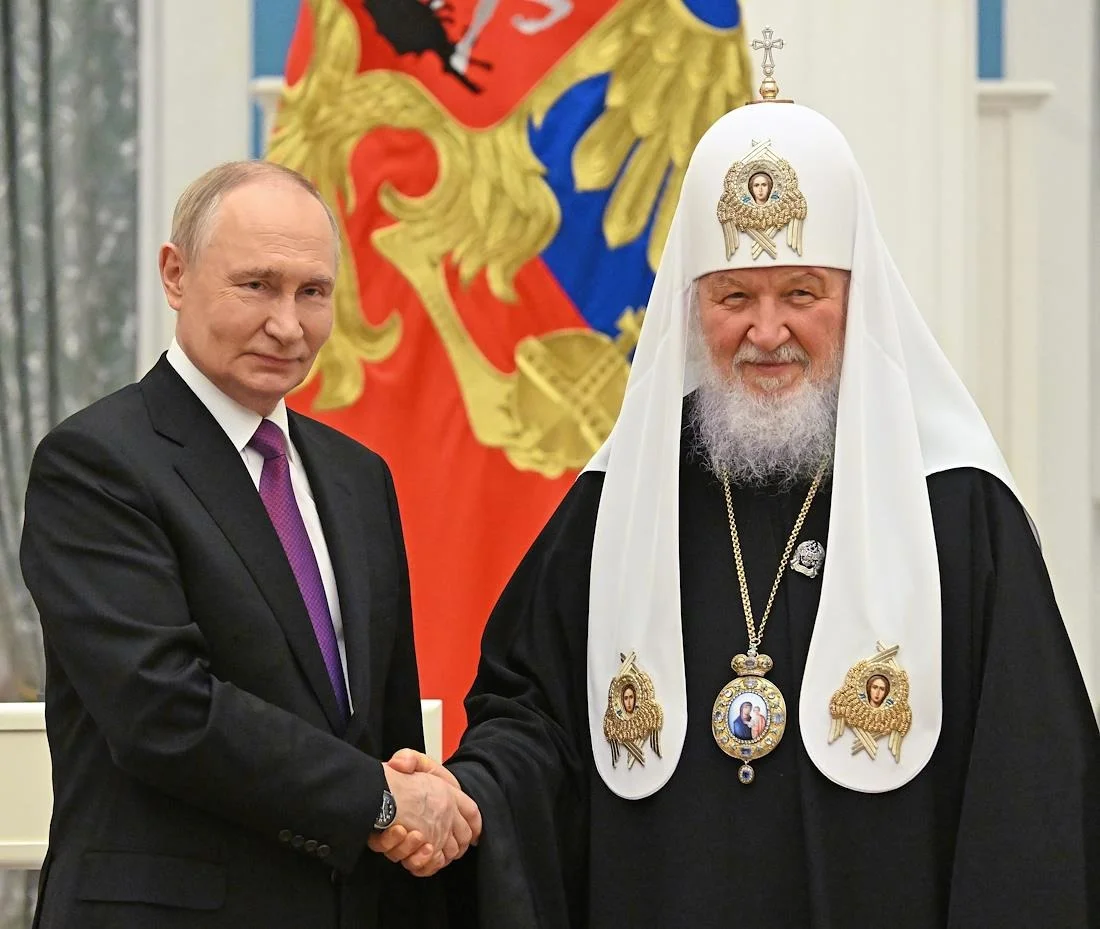
“The head of our state is an Orthodox leader, sincerely, not according to protocol, but by conviction - Vladimir Vladimirovich. And all this, of course, testifies that a miracle of God happened,” Patriarch Kirill (Gundyaev) said on January 19 in his sermon on the feast of the Epiphany in the Yelokhovsky Cathedral in Moscow. There was not a word in the sermon about the spiritual or theological content of the holiday. The head of the Russian Orthodox Church only shared his memories of himself and formulated his political position, demonstrating that politics is at least more interesting to him than religion...
In the Orthodox tradition, it is not customary to title the head of state “leader”. Even the “pious emperors” in Byzantium and Russia were called “anointed ones,” “autocrats,” “sovereigns,” but not “leaders.” Perhaps the most famous precedent for such word usage in the history of the Russian Orthodox Church is the recognition of Stalin, who, in fact, recreated the Moscow Patriarchate in 1943, as a “God-given leader.” Is Patriarch Kirill building a historical bridge to this image from Putin?
Prototype
In the 1920s and 1930s, the church hardly showed itself in Soviet public space. Apart from mentions in the press of various kinds of “trials of churchmen” and vulgar atheistic propaganda. But wartime circumstances and the geopolitical prospects that opened up for Stalin (in particular, the possibility of controlling the Middle East and Eastern European countries with an Orthodox population) prompted him, after a turning point in the war, to pay attention to the “church factor.” On the night of September 4, 1943, Stalin received three hyper-loyal metropolitans in the Kremlin, led by Sergius (Stragorodsky), and on September 8, Sergius was proclaimed patriarch. The current Patriarch Kirill is fifth in the chain of succession coming from Sergius.
With the permission of Stalin and under the strict supervision of the NKGB, on September 12, the first issue of the Journal of the Moscow Patriarchate was published after a long break. He presented the new language of the patriarchy, which was not fundamentally different from the Soviet propaganda of the era of the mature “cult of personality.”
The day after the historic meeting, September 5, the three metropolitans sent Stalin a letter of gratitude, in which they assured: “The Church will never forget that the Leader, recognized by the whole world, ... raised the spirit of all church people to even more successful work for the good of the dear fatherland.” Almost every issue of ZhMP until 1953 used the phrase “God-given Leader” with minor variations (for example, in the speech of the future Patriarch Alexy I on January 23, 1944, Stalin was called the “God-given Supreme Leader”).
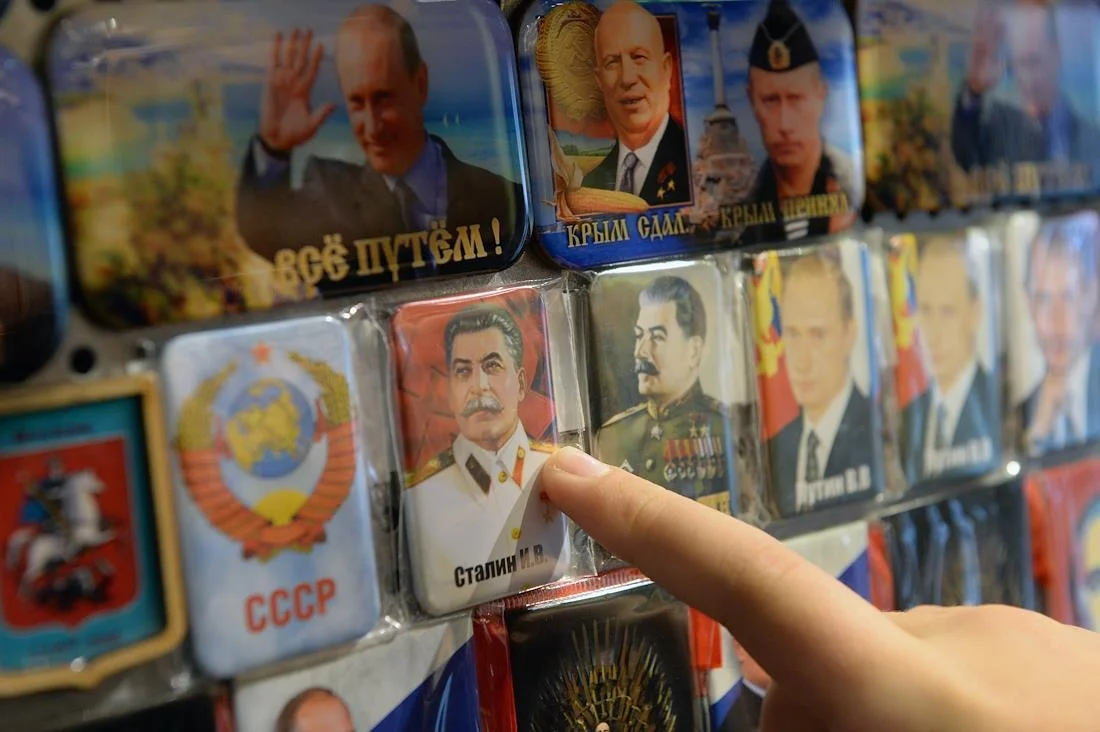
Metropolitan Nikolai (Yarushevich), Kirill’s first predecessor as chairman of the Department for External Church Relations, was considered the most brilliant rhetorician of the Russian Orthodox Church at that time. Nikolai called Stalin “the most beloved Leader of our people, the brilliant Supreme Commander of our army, assigned by God to his feat of serving our Motherland”; “the greatest of the people of our modern era, the brilliant Leader of a multimillion-dollar state” (“ZhMP”, 1945, No. 5, p. 26). Directly contrary to the commandment of Christ (Matt. 23:9), Nikolai recognized Stalin as “the dearly beloved Father of the peoples of our country” (“ZhMP”, 1944, No. 5, p. 7).
On December 21, 1949, Stalin’s 70th birthday was celebrated as a church holiday, despite the fact that in 1948 “church policy” sharply reversed itself, and the closure of churches began again. Patriarch Alexy shared his “cherished feelings for steadily leading our Motherland to prosperity, happiness and glory.” All bishops of the Russian Orthodox Church signed the holiday address with the words “of love and gratitude to the Leader, Teacher and Friend of the working people,” characterizing these feelings as “a particularly precious part of our spiritual heritage,” that is, as the core of a new religious faith.
One gets the impression that Stalin has completely replaced the heavenly Teacher: “We see in your person not only a great statesman and Leader, directing the life of peoples into a new direction of history, but also a fatherly caring trustee of all aspects of our human existence.”
Alexy I served a solemn prayer service in honor of Stalin’s 70th birthday at the Patriarchal Yelokhovsky Cathedral, sharing his personal feelings from meeting him: “Anyone who is personally acquainted with our Leader is amazed by the charm of his personality; he captivates his interlocutor with his attentive attitude to every matter; affectionateness; his extraordinary knowledge in any matter; the power and wisdom of the word; a quick and favorable solution to every case and question presented to him... Our Holy Church has in him a faithful defender” (“ZhMP”, 1950, No. 1, pp. 10–11).
Today, in the Orthodox-patriotic environment, they are talking in all seriousness about the canonization of Stalin, and icons with his image are being distributed. The last Minister of Defense of the USSR, Dmitry Yazov, once shared his secret: “Marshal Rokossovsky said so: Comrade Stalin is a saint for me... We associated everything that was good in our life with his name. During the days of the war, our feelings were well expressed by Konstantin Simonov: ... “Not mother, not son - in this terrible hour // We remember you first.” The Stalin Prize laureate Archbishop Luke (Voino-Yasenetsky), canonized in the Russian Orthodox Church, is credited with the following words: “Stalin saved Russia, showed what it means for the world. Therefore, as an Orthodox Christian and a Russian patriot, I bow low to Stalin.” Finally, Metropolitan of St. Petersburg John (Snychev), who was very authoritative in this environment, wrote in the 90s: “If you look at Stalin from God’s point of view, then he really was a special person. Given by God, preserved by God."
Restoration of the cult
As Novayawrote , the cult of Stalin is included in the modern tradition of the Russian Orthodox Church through the “Life of Blessed Matrona” - very mythologized, not based on historical sources. According to the life, the old woman, who most likely did not belong to the Moscow Patriarchate, but to the Catacomb Church, allegedly met with Stalin and blessed him for victory. This “episode” is depicted as a mark on the icons of Matrona. The most famous image of this kind, painted by the icon painter Ilya Pivnik, is located in the church of St. Olga in Strelna (St. Petersburg).
The historical Matrona could hardly have been a Stalinist: in 1950, the owner of the Moscow apartment where the old woman lived was convicted under Article 58 - for participating in a “church-monarchist group” (as catacomb, underground communities were called in the GB language). A reinterpretation of her image in a Stalinist vein took place in the brochure “The Tale of the Life of the Blessed Elder Matrona,” published in 1993. The new legend resonated well with the tales of Elder Vasily Shvets, which appeared around the same time, about Stalin’s secret religiosity and the “air procession” around Moscow in December 1941. These legends are now captured in the paintings of the “main temple” of the Russian Armed Forces in Patriot Park.
During the years of his patriarchate, Kirill did not criticize “Orthodox Stalinism.” On the contrary, while performing a memorial service for Patriarch Sergius in the Elokhov Cathedral, he once said : Stalin “realized the enormous spiritual and patriotic role of the Russian Orthodox Church and realized that largely thanks to the patriotic position of our Church, what could have happened did not happen,” that is, the defeat of the USSR. In another sermon , Kirill said that following the results of the Great Patriotic War, under Stalin, the USSR had “all the prerequisites to truly revive faith and return to the spiritual path again.”
The Primate of the Russian Orthodox Church often makes it clear: what did not come true during Stalin’s time is coming true now.
Putin is Stalin today, cleansed of revolutionary party remnants.
The myth of “Khrushchev’s persecutions”
The massive opening of monuments to Stalin in different regions of Russia does not cause rejection among representatives of the Russian Orthodox Church; sometimes they willingly participate in ceremonies and even consecrate new monuments. This was the case in August 2023, when priest Anthony Tatarintsev, during a solemn meeting, consecrated a monument to Stalin in Velikiye Luki. Moreover, the priest thanked the leader for the “many new martyrs and Russian confessors” executed on his orders. It turns out that Stalin kindly “gave” such a great host of saints to the church! The Russian Knight Foundation, created by veterans of the FSB special forces, is implementing the “Generalissimo of Victory” program, within the framework of which it is planned to restore monuments demolished by the “Khrushchev clique”.
Annoyance with Khrushchev is another refrain in Kirill’s sermons in recent years. So on January 19, in contrast to the leader, he called Khrushchev “probably the most insane and ridiculous ruler of all who have ever led Rus'.” The head of the Russian Orthodox Church is confident that Khrushchev “remained only in jokes,” while the Moscow Patriarchate, which he allegedly wanted to liquidate, is triumphant.
In fact, the “Khrushchev persecution” of the church is also largely a myth; it would be more correct to talk about the “optimization” of church policy (poor parishes merged with more successful ones, and the emphasis of church life moved to the sphere of foreign policy and PR abroad). Khrushchev's rule began in 1954 with the resolution of the CPSU Central Committee “On errors in carrying out scientific-atheistic propaganda among the population,” which suspended the anti-religious campaign that had been going on since 1948, at the beginning of the Cold War. In 1958, Khrushchev received Alexy I - the result of their conversation was the entry of the Russian Orthodox Church into the World Council of Churches and rapprochement with the Vatican. Pope John XXIII corresponded with Khrushchev and made a major contribution to the resolution of the Cuban Missile Crisis.
Finally, the career of the mentor of the current patriarch, Metropolitan Nikodim (Rotov), took a sharp leap under Khrushchev: in 1960, Rotov became a bishop, chairman of the Department of External Church Relations and the Publishing Department of the Patriarchate, in 1961 - an archbishop and permanent member of the synod, in 1963 - Metropolitan of Leningrad and chairman of the commission on issues of Christian unity...
He spends half of his time on business trips abroad, including to the Vatican, appointing young clerics of the “new formation,” known as “Nicodemusites,” to key positions in the Russian Orthodox Church. It was Nikodim who launched the career of Vladimir Gundyaev in 1965, whom he made his secretary and member of Russian Orthodox Church delegations traveling abroad. At 22 years old, Kirill is already a hieromonk, at 23 he is an archimandrite and representative of the Russian Orthodox Church at the World Council of Churches, and at 28 he is the rector of the Leningrad Theological Academy. Whether such a career would have taken place without the “Khrushchev persecutions” is a big question.
Diagnosis
Paradoxically, in tsarist times the Russian Church did not develop a tradition of calling sovereigns “leaders.” There was only a liturgical formula for commemorating “leaders and warriors killed on the battlefield,” where “leaders” meant officers and commanders. In the Gospel, the word “leader” (Greek Ὁδηγοί) is used in a very negative context. Jesus, denouncing the leaders of the Jewish people - the Pharisees, said: “They are blind leaders of the blind; and if a blind man leads a blind man, both will fall into a pit” (Matt. 15:14). The Christian maxim regarding the attitude towards worldly rulers was formulated by the apostles Peter and John when the Sanhedrin forbade them to preach: “Judge, is it right before God to listen to you more than to God?” (Acts 4:19). In fact, this is a paraphrase of the famous Gospel aphorism: “To Caesar the things that are Caesar’s, and to God the things that are God’s” (Matt. 22:21).
For the first 300 years of its history, Christianity was in a confrontational relationship with the Roman Empire. But even when it became the state religion, the saints continued to call for caution in handling power. John Chrysostom (347–407) preached: “The sins of insignificant people destroy only those who sin, but the sins of a significant person ... cause general harm to everyone, making the fallen even more careless about good deeds.” This principle is clearly visible in modern Russia, where theologically dubious aphorisms of the highest commander go to the people and are uncritically quoted from church pulpits.
The true meaning of the term “leader”, used by Kirill in the modern context, means such a degree of cohesion between the population and the ruler, at which the ability to soberly, critically perceive the latter’s words and decisions disappears.
For some time, the loss of such sobriety creates a feeling of euphoria, but it is impossible to recognize it as a spiritually and even mentally normal state. In this sense, the word “leader” sounds like a diagnosis. Russian society is once again sick with leaderism, and the patriarch is talking about it, perhaps not understanding the full drama of this diagnosis.