
Translated material
Kidnapped from Europe
How the European political class reacts to Trump's Greenlandic claims
It was almost a foregone conclusion that Donald Trump's return to power would lead to a crisis in the Alliance. The “non-systemic” president, even during his first mandate, talked a lot about the uselessness of European allies for US global security in the new era. Warnings to Europeans have been sounded before. Washington's recent withdrawal from the Ramstein bloc of countries that unconditionally support Ukraine has shaken faith in transatlantic solidarity and the magical power of Article 5 of the NATO Charter.
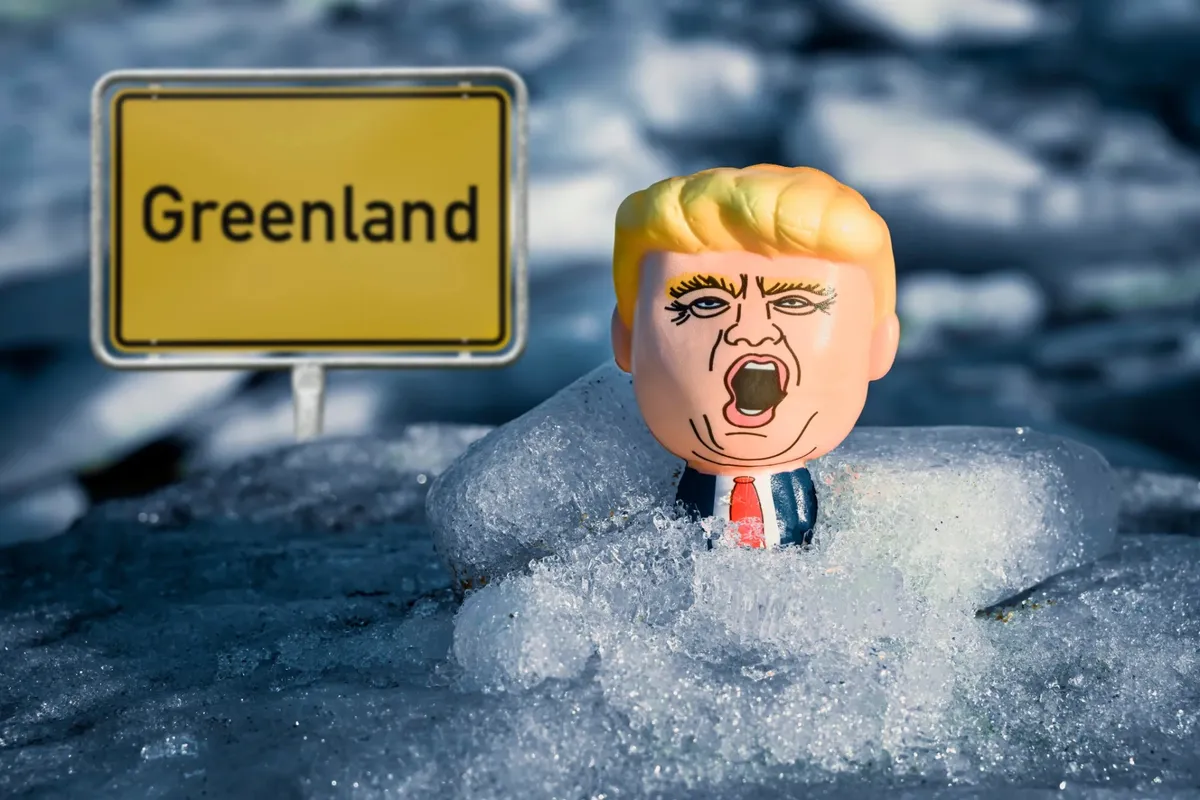
Trump’s disdain and even hostility towards the European Union is not new, as it stems from his philosophy that only nation states with strong leaders at their head have a voice in international affairs. In his understanding, the EU killed old Europe, while European elites believe that the unprecedented unification of countries created as a result of post-war integration contributed to economic growth and social justice, and made the continent one of the best places to live.
Such disagreement can be overcome in order to remain natural allies and strategic like-minded people. But the events of January this year exceeded the most fantastic forecasts. The familiar concept of “West” in the sense in which it has been used for the last 80 years may disappear from the political vocabulary altogether. How are our propagandists doing without the “collective West”?
The vague reaction of Western Europe to the American special operation to kidnap the President of Venezuela was explained not so much by the bliss of the New Year holidays as by diplomatic restraint.
The European Union, which usually never misses a reason to be outraged by every case of violation of international law, was in no hurry to express a strict position, not wanting to once again provoke an unpredictable outburst of Trump's anger.
For the same reason, officials initially tried to “ignore” Trump’s statements about the annexation of Greenland. Perhaps, in the joy of success with Venezuela, he will forget. I didn’t forget, but, on the contrary, began to emphasize the Greenlandic theme, continuing to develop a project called “this is our hemisphere” or the “Donro Doctrine” (in memory of the “Monroe Doctrine” of the 19th century). More and more harsh, more and more unceremonious, derogatory. And all this against the backdrop of awareness of Europe’s paralyzing dependence on the United States in matters of military security.
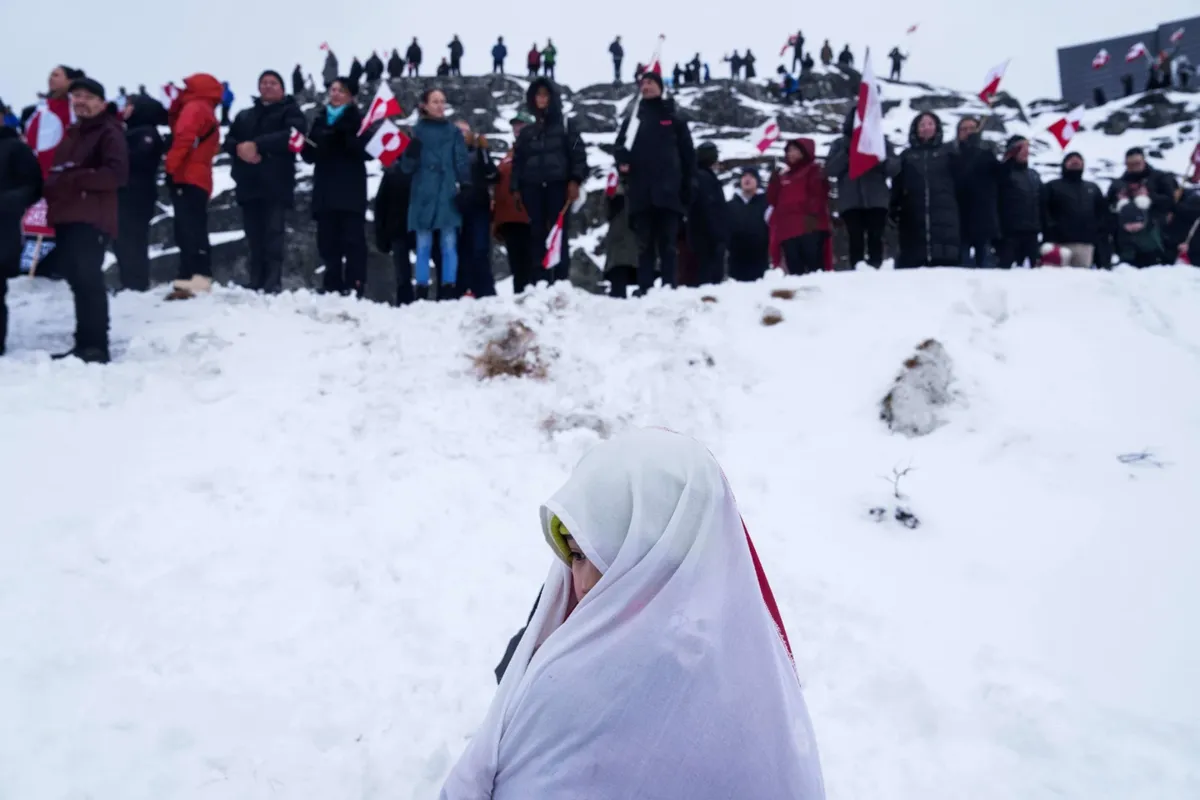
Trump's threat to take control of Greenland "one way or another" came as a shock to the inhabitants of the Arctic island and mainland Denmark, and the rest of Europe began to frantically search for ways to stop the process. After the swift US military raid into Venezuela, Trump’s Greenlandic statements began to be perceived in Europe not as nonsense or empty threats, but as a serious intention, driven by a new imperialist ideology and the desire to seize critical resources. The Europeans are convinced that for Trump and his team there is no international law except the rule of the strong, and there is no measure except money.
Where is NATO?
Trump's demanded annexation of Greenland, an autonomous territory of one of the most loyal NATO allies, would mean the demise of the military alliance as an integral attribute of the Western world, the most important link in the world order that emerged after World War II. The White House's belligerent rhetoric has alarmed European NATO allies and prompted warnings from Denmark that such a move would destroy the post-war Western alliance. Pessimists began to say that such an urgent demand from the owner of the White House was in itself fatal for the international order based on transatlantic relations.
Last week the conflict reached a new level of escalation. Denmark, apparently wanting to at least symbolically express dissatisfaction with Washington's threats, announced the long-planned military reconnaissance exercise codenamed "Arctic Resilience" in Greenland for January 15-17. The limited-scale exercises were “domestic” and were conducted outside NATO. But Denmark invited military personnel from other NATO countries, including the United States, to take part in them. The Americans, as expected, did not come. But several countries sent their military personnel. From one single specialist to 15 people. Germany and France have the most.
This caused a strong reaction from Trump. He decided to punish with sanctions those countries that sent their soldiers and officers to Danish exercises. On Saturday, Jan. 17, he announced sanctions against eight of America's key European NATO allies "until an agreement is reached for the full and comprehensive acquisition" of the island, which he said is critical to American defense. Starting February 1, all exports to the United States from eight countries - that is, the seven countries that sent troops to Greenland, plus Denmark - will be subject to a 10% tariff, which will increase to 25% from the beginning of June. Tariffs will be introduced in addition to those already in effect.
In a statement issued Sunday afternoon, the governments of Denmark, Finland, France, Germany, the Netherlands, Norway, Sweden and Britain countered with Washington that the planned exercise in Greenland "poses no threat to anyone."
These countries warned: “Tariff threats undermine the transatlantic relationship and risk leading to a dangerous downward spiral. We will continue to be coherent and coordinated in our response. We are committed to protecting our sovereignty."
The day before, the European Parliament, which can afford to bypass the diplomatic ritual, immediately announced a specific answer that was within its competence. The leader of the largest faction, the European People's Party (EPP), Manfred Weber warned that rising tensions between the US and Europe make it inappropriate to vote on ratifying the comprehensive EU-US trade deal negotiated last year. The agreement sets US tariffs on goods imported from the EU at 15% in exchange for the bloc not imposing tariffs on US exports. Many in the EU already considered it the result of Ursula von der Leyen’s European Commission bending under US pressure, so it has every chance of ending up on the shelf.
Don't cut from the shoulder
The European Commission and EU governments are more cautious than parliamentarians. But they felt that America had crossed a red line and would have to react. During a three-hour meeting in Brussels on Sunday, diplomats from the 27-nation bloc prepared concrete options to counter Trump in case talks with Washington, timed to coincide with the Davos conference, do not lead to a quick resolution of the situation.
The EU is considering far-reaching trade measures, including tariffs worth 93 billion euros against the US. The retaliatory tariffs would be a resumption of measures that the EU suspended after reaching a trade deal with the US in July. That is, the hard-won deal between the EU and the US, designed to prevent a trade war between them, ends up in the trash. Brussels would not like such a development of events and considers this option as a last resort.
In an interview with Deutsche Welle* on Saturday, EU Trade Commissioner Maros Šefčović said that approving a trade agreement between the EU and the US would be “very difficult”. New US tariffs could trigger a “very dangerous downward spiral” that EU leaders should “simply avoid”.
A harsh alternative would be to use the EU's Anti-Coercion Instrument (ACI), a so-called trade bazooka designed to punish countries that use their markets as a tool for geopolitical blackmail. This was originally intended to protect against China. Such a drastic measure will cause concern among the more cautious members of the bloc. Sunday's discussion at the ambassadorial level resulted in the drawing up of specific scenarios, from which the heads of state and government must make a choice.
French President Emmanuel Macron instructed his representative in Brussels to push for the inclusion of the anti-coercion mechanism (ACI), the same “bazooka” that provides for limiting foreign direct investment and protecting intellectual property.
But, judging by leaks from the EU Council, other countries agree to react somehow, but urge not to stoop to the Old Testament principle of “an eye for an eye,” responding immediately and to every sneeze from Washington. The union of 27 countries needs at least two or three days to discuss and determine the next step.
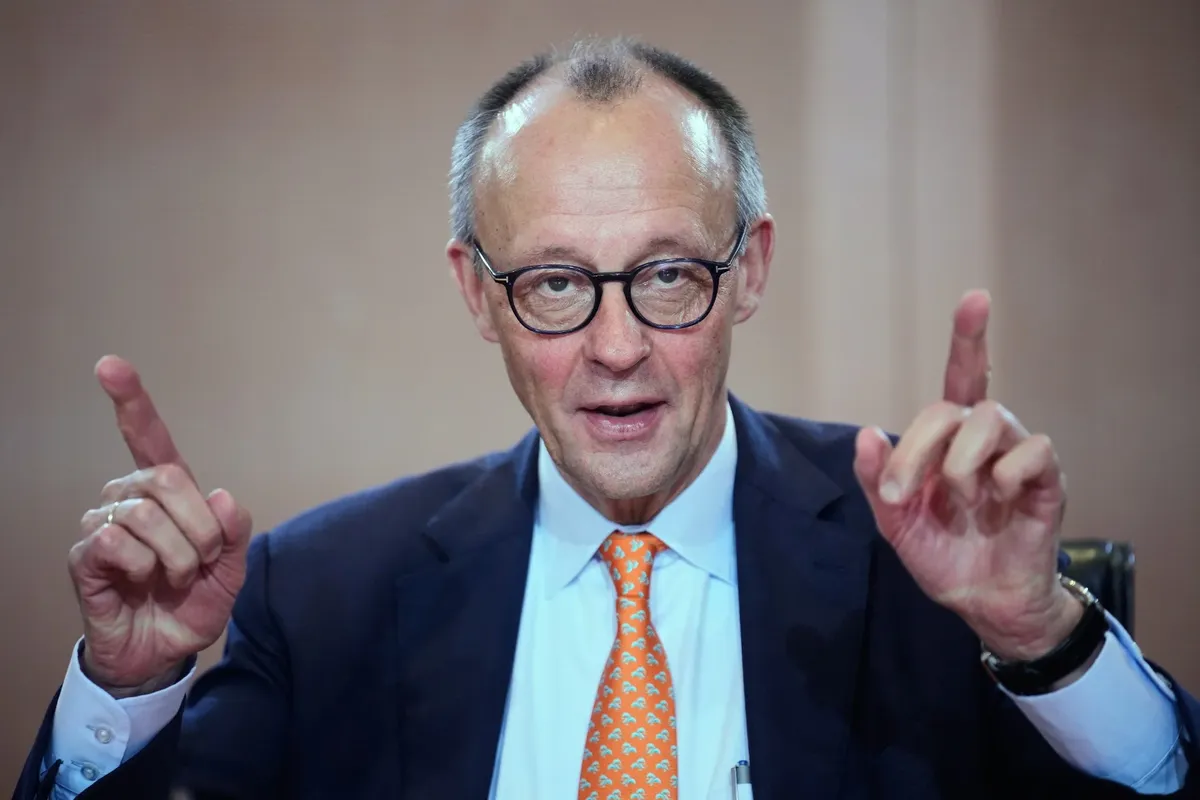
German Chancellor Friedrich Merz wrote on social media of the "strong and unanimous support of Denmark and the people of Greenland." And he said that “tariff threats undermine transatlantic relations and pose a risk of escalation.” However, he himself did not threaten to use the bazooka.
The most conciliatory reaction was made by the head of the Italian government, Giorgia Meloni, who among European leaders enjoys Trump's greatest favor and is considered the best link with him. She called Trump's decision to impose tariffs on EU countries "that have chosen to contribute to the security of Greenland" a "mistake," adding that both sides need to "renew dialogue and avoid escalation."
In a speech on January 20 at the World Economic Forum in Davos, Ursula von der Leyen said the sovereignty of the self-governing Danish territory was “non-negotiable.” “Our response will be unwavering, united and proportionate,” von der Leyen said, adding that the EU would show “full solidarity” with Greenland and was planning a “massive” increase in European investment on the island.
Even at the height of these tensions, EU leaders refrained from retaliating, arguing that the risk of the United States leaving NATO was now greater than the risk of a bad EU-US trade deal. The European economy, for all its problems, is strong enough to overcome stress on its own. But for defense and security, Europe relies on NATO, a military bloc in which the United States plays an absolutely predominant and now irreplaceable role.
Over the 80 years of the post-war world, a peculiar division of labor developed: European integration structures were mainly engaged in economic development, and military opposition to the Soviet Union was provided by NATO.
It was mutually beneficial. The United States, with its military presence, restrained the “Soviet threat” at distant approaches and fulfilled the mission of guarantor of the values of the free world in Europe. Europeans focused on the economy, devoting more resources to improving the “European development model.”
The transatlantic connection has established itself as the basis of the Western world, covering North America and Western Europe as regions close in lifestyle, culture and economic system. During the Cold War, the role of this connection was strengthened, first of all, by its defense component. The illusions of the 1990s that there were no reasons for war left in Europe after the bankruptcy of the Soviet system did not come true; the military component was again in demand. The specter of a “multipolar world” after decades of accelerated globalization threatens a new division into spheres of influence. The balance of power and value trends have changed and continue to change.
The carelessness of European political leaders in past decades lies in the fact that they hoped for the eternity of the transatlantic system in the form in which it emerged in the post-war period, instead of reforming it gradually. There were plenty of warning signs.
Nowadays, radically changing it would be like surgery to separate conjoined twins with the prognosis of losing one of them. Although the Russian SVO in Ukraine served as an impetus for a sharp increase in military spending by European NATO members and the strengthening of the European Union’s own military-industrial complex. But it is impossible to divide NATO simply in proportion to the shares of the participants. There is no “NATO army”, but there are armed forces of individual countries, which are placed under the command of one or another NATO headquarters and use the military infrastructure of the alliance. NATO is about intelligence, command and control structures, planning, standards and procedures. Components such as strategic transport aviation and refueling aircraft, for example, are only available to the Americans.
At a crossroads
What will this new world order be like, what role will ideological and value kinship play in relations between peoples and countries, in the formation of “poles,” and what role will pragmatism of transactions play? In the current chaos, which gives rise to ever new surprises, one can only guess. We still need to understand to what extent what is happening is a Trump phenomenon, and to what extent are irreversible signs of a new era. In any case, diplomats and officials in Brussels do not believe that it will come to military action. But the usual rules no longer apply.
Not a single provision of the 1949 North Atlantic Treaty provides for an attack by one NATO ally on another, that is, in principle, this would mean the end of the alliance. True, there have been cases in history (Greek-Turkish conflict over Cyprus).
But this is not about an ordinary member, and Trump has threatened that “the United States may have to choose” between taking control of Greenland and preserving the integrity of the alliance. For the EU, the preservation of NATO remains a top priority. What options for action in the event of American alienation are being discussed or may be discussed by European states?
The first and preferable option is to come to an agreement with Trump and formally leave everything as it is. In the hope that his presidential mandate is limited in time, and that J.D. Vance, who, as European officials say behind their backs, simply hates Europe, will not come to replace him. To do this, first of all, you need to know why Trump really needs Greenland. Denmark, as an ally and NATO member, is ready to provide ample opportunities for the American military on the Arctic island.
The United States can deploy military facilities in Greenland in accordance with existing agreements, but makes little use of it. The Pituffik space base is a key element of the American missile defense system in the Arctic against possible threats from Russia and China. Its staff is only about 160 people. But it is designed to accommodate 10 thousand, and during the Cold War, B-52 strategic bombers with nuclear weapons on board were stationed there, and a powerful early warning radar station was built, capable of monitoring airspace up to the borders of the USSR.
If Trump's real goal is the island's minerals, then the Danes have been offering the United States the opportunity to invest in Greenland for years - an offer that the Americans have refused, according to European diplomats.
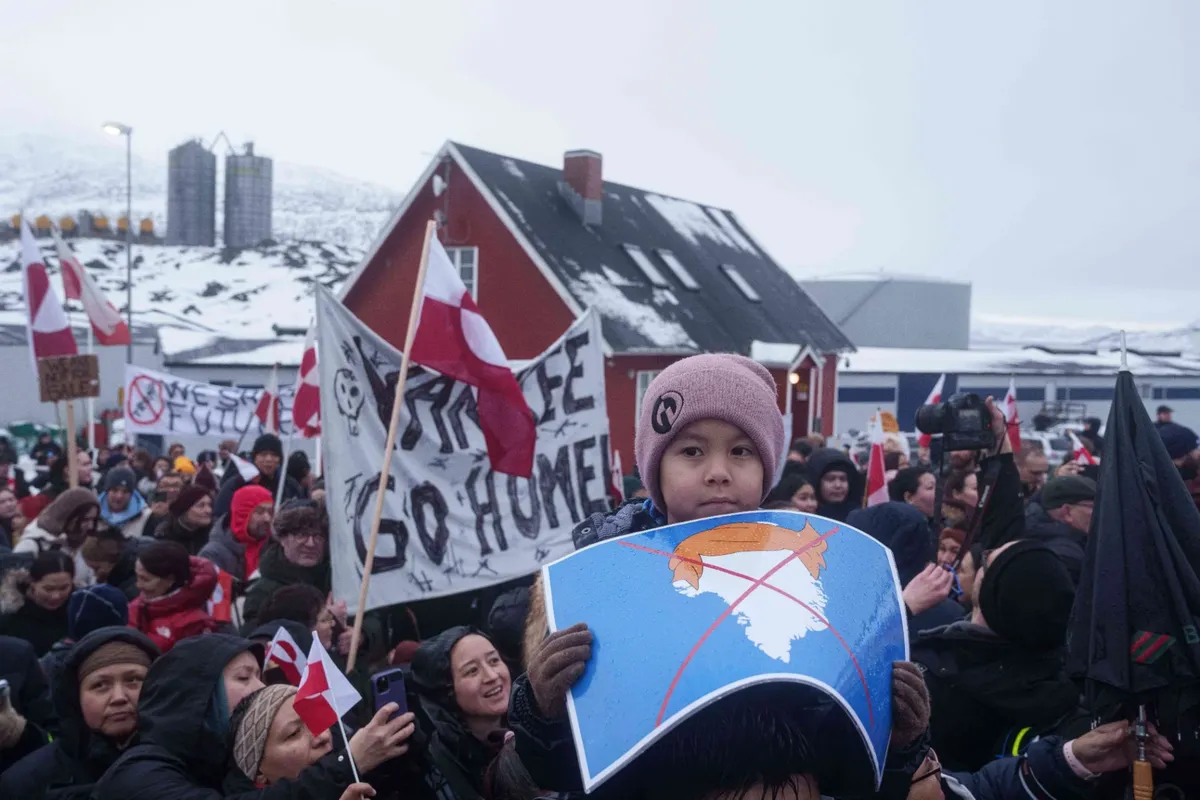
On mining, EU leaders are leaning toward conciliation rather than confrontation with Trump, an EU official said. The European Commission plans to more than double investment in Greenland in its next seven-year framework budget, including for projects to extract critical raw materials.
On defense, NATO Secretary General Mark Rutte laid the groundwork for the agreement when he said on January 19 that the alliance was discussing ways to strengthen security in the Arctic. Increasing investment by European NATO members is one possible option that could meet Trump's desire for Europe to take greater responsibility for its security.
The second, long and expensive option is to fulfill the long-standing dream of European integration enthusiasts to add a full-fledged defense component to the European Union. Past attempts to implement this project were not successful, but in the current circumstances it has become relevant again. True, this requires a lot of time and a lot of money.
Actually, even now Denmark can use a little-known clause of the EU treaties: Article 42.7 of the Common Defense Pact of the European Union. “If a Member State becomes the victim of armed aggression on its territory, other Member States are obliged to provide it with assistance and assistance by all means at their disposal,” it states. Its language is even more binding than Article 5 of the NATO Charter, but is not enforceable and has not been enforced.
The EU has officially decided to ensure its self-defense by 2030. EU Defense Commissioner Andrius Kubilius recently proposed a 100,000-strong EU standing army and revived the idea of creating a European Security Council with around 12 members, including Britain. Von der Leyen has unveiled a new European security strategy, although details have not yet been disclosed.
A third, tempting option has been increasingly mentioned recently and was born out of the experience of military support for Ukraine. European states, including non-EU ones such as Britain and Norway, have spent much of Trump's second term operating within the so-called coalition of the willing, which already operates without American participation.
As Politico notes, national security advisers to governments in 35 countries maintain regular contact, meeting frequently online and in person, as well as chatting less formally. They are used to looking for multilateral solutions in a world where Trump is one of the main causes of problems.
This format could potentially become the basis for a new European security alliance without the United States. The new agreement does not exclude cooperation with America, but does not take it for granted either.
If France, Germany, Poland and Great Britain are in the coalition, the publication believes, and Ukraine is added to them, then the potential military power of such an alliance would be enormous and would include both nuclear and non-nuclear states.
So far, the main consequence of the crisis around Greenland, which may be long-term, is the loss of trust.
A growing number of senior European officials believe it is time to face the truth: Trump's America is no longer a reliable trading partner, much less a reliable military ally.
Moreover, while European leaders tried to gloss over the effect of Trump’s illegal military operation in Venezuela and his claims to Greenland, ordinary Europeans had already realized that Washington was more of an enemy than a friend. This is one of the key findings of a November 2025 survey conducted by the European Council on Foreign Relations (ECFR) and the University of Oxford's Europe in a Changing World research project. The study is based on interviews with 26 thousand respondents in 21 countries. Only one in six considered the United States an ally, while one in five saw it as a rival or adversary. In Germany, France and Spain, the figure is closer to 30%, and in Switzerland - which Trump has singled out for tariff increases - it is close to 39%.