
Translated material
Anka
The story of one family with an incurable child

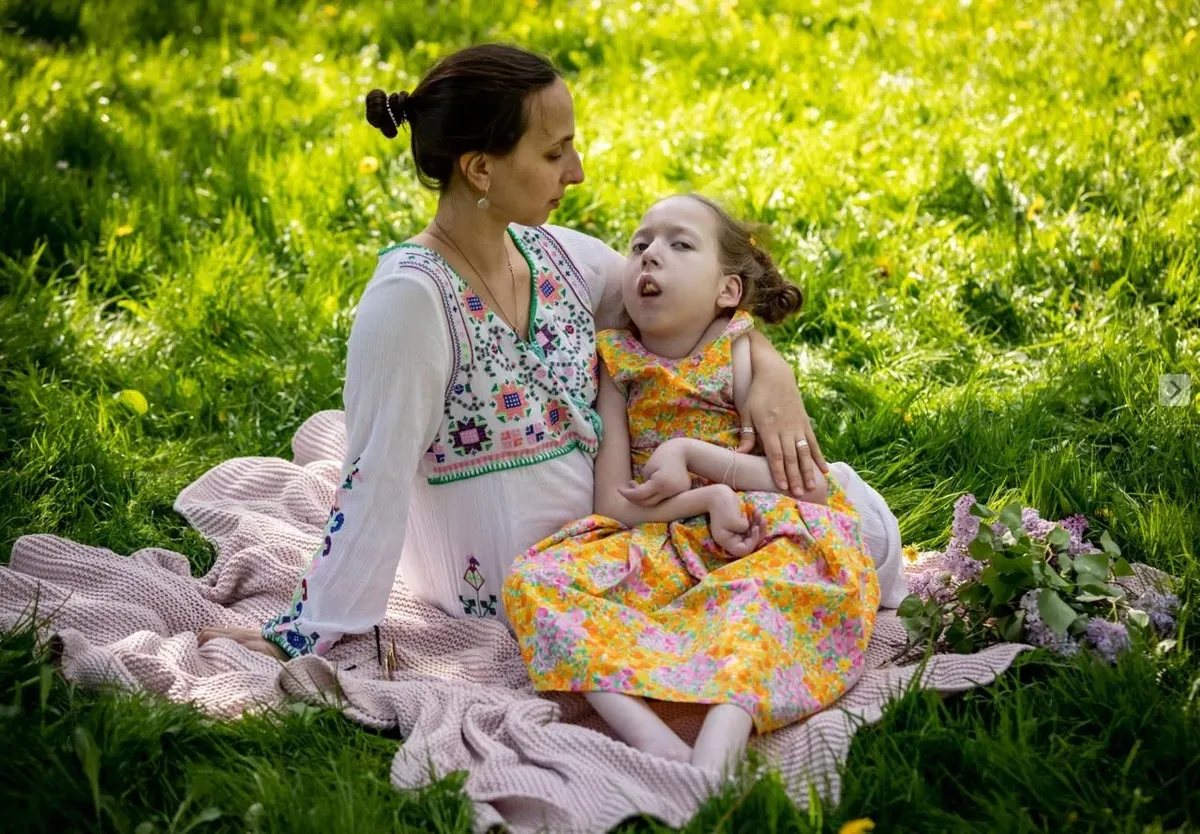
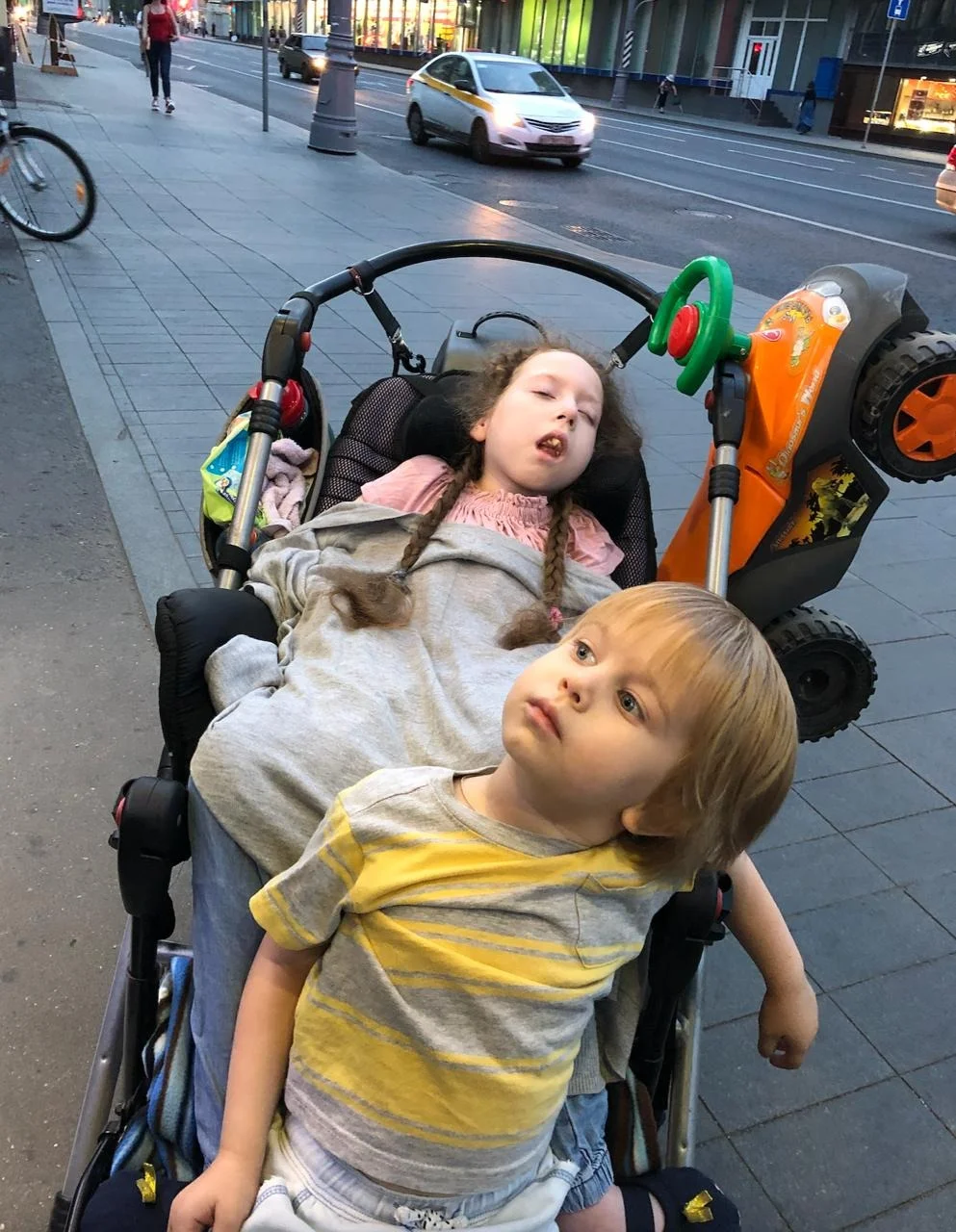
Anka. Photo: personal archive
This story is told by Oksana Popova. She now runs the perinatal palliative care program at the House with a Lighthouse Children's Hospice, and in the past she was the mother of a patient at this hospice. Using her example, you can see from the inside the life of a family with a seriously ill child. Oksana openly tells her story, but asks one thing: not to compare this story with others, because each one is individual.
I was twenty years old. I was expecting the birth of my first child. Everything seemed to be going great. I didn’t know that something would happen, I didn’t prepare for anything. Or rather, I was preparing for a home birth. I don’t remember what I was thinking about at that moment. More precisely, I remember a little, but now it’s difficult for me to understand myself. I took courses and found a midwife. For about a day, even more, I gave birth at home. Everything seemed to be going very well. It seemed to me that everything was working out, but then the midwife said that the baby was not progressing and I needed to urgently go to the maternity hospital.
We went to the nearest maternity hospital, which was five minutes on foot. There I immediately encountered a lot of negativity and aggression, because the doctors realized that I was going to give birth at home. This is always met with negativity from obstetrics. My husband was immediately kicked out the door and we were not allowed to say goodbye. Then they put me in an examination room. I tried to explain that I had been giving birth for a long time, but they didn’t listen to me. Then some doctor came, examined me and realized that I had a so-called clinically narrow pelvis, when the size of the child’s head does not correspond to the size of the mother’s pelvis. I was scheduled for an emergency caesarean section.
I had contractions every minute, I was screaming a lot. Then an anesthesiologist came to me who stuttered. He tried to ask me questions and said “zy-zy-zy-zy-zy-zy.” Then I started having a contraction. “Hello,” he finished. Then he tried for a long time to find out what my name was, what I was allergic to... In the end, they finally took me into the operating room, they took out my daughter, I caught a glimpse of her, she screamed, and then, apparently, they gave me anesthesia, because I don’t remember anything else. I woke up already in the ward. They gave me a cell phone and I called my husband. He started crying because he already thought he had lost both of us.
Then I was transferred to the postpartum ward, to a ward where there were three other mothers, one of whom worked as a guard in a children's colony. Women discussed feeding, breasts, childbirth, husbands. All this depressed me terribly, these rude conversations among themselves... And I’m generally such a home girl, I wanted to give birth at home. I didn't need all this. It was also a maternity hospital, which we did not choose, because we did not choose a maternity hospital at all. That’s why he was one of those bad guys at that time; you can’t find someone like him now.
There were no panties, no sanitary pads, no visits - nothing was allowed. They gave us diapers that we had to squeeze between our legs and walk like that. That's why everyone walked along these corridors in this way.
It seemed to me that women, deprived of all the benefits of civilization, close to physiology, when they are herded all together, turn into such “women.” And I am also the same among them... All this was so difficult, so humiliating.
When the baby was brought to me, she was completely swaddled. Only the round muzzle stuck out. I didn't see any arms or legs. They were brought in like this on a cart, like in the movies, stacked in stacks. By the time they were brought, you had to put on a scarf, put on a pillow, a diaper and sit and wait. If you didn’t have time to do all this, then they started yelling at you, shouting that next time they wouldn’t bring the baby in for feeding. They yelled at me all the time. Everyone was screaming: doctors, nurses, and orderlies. It was very difficult. I find it very difficult to bear this. Unfortunately, it so happened that we were delayed in this maternity hospital because of me: I had low hemoglobin. I walked along the wall, all green. My husband walked under the windows of the maternity hospital, periodically waving his hand to me. Relatives, friends, classmates came with balloons. It was hard for me, because they were there, I was here... I felt very sorry for myself all the time.
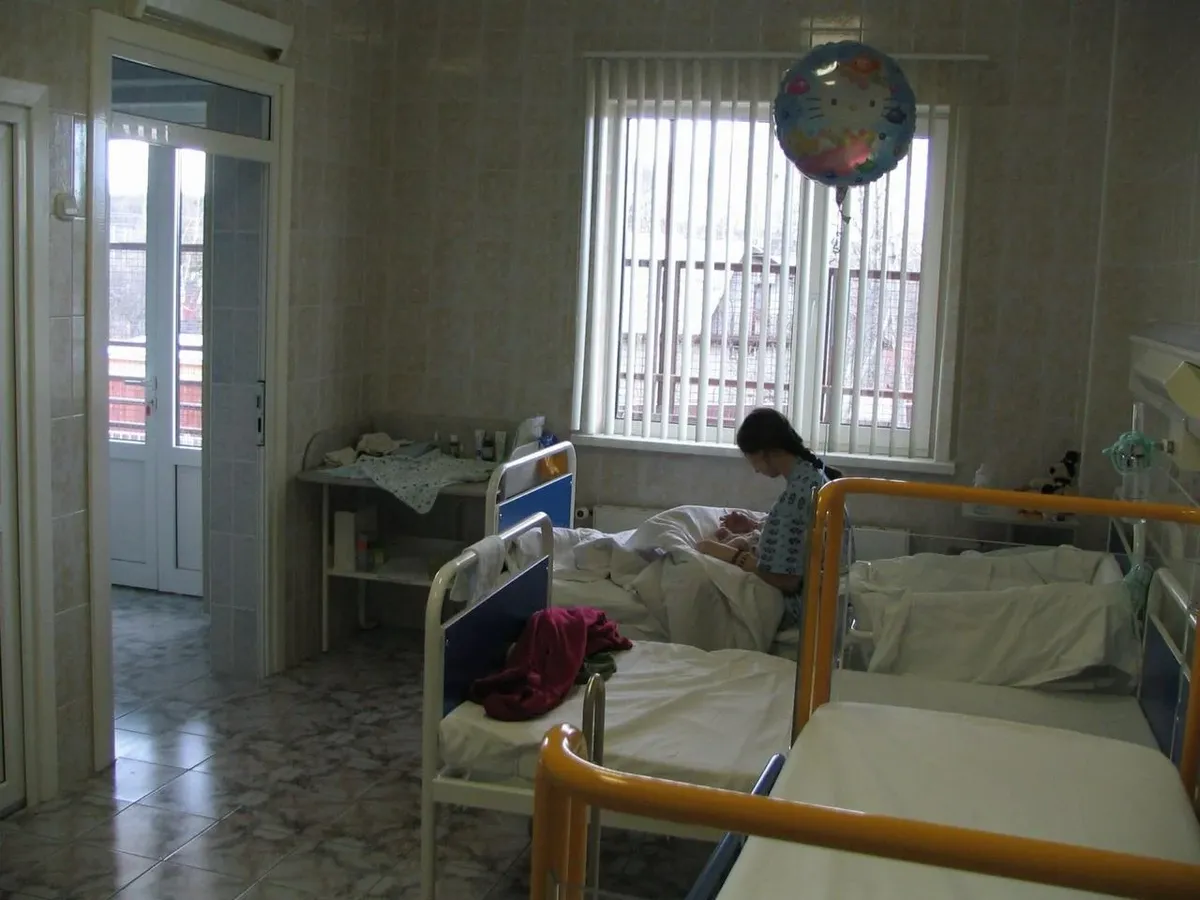
And then, on the eighth day, when Anka was brought in for feeding, she stopped breathing. True, her name was not Anka yet; she was given a name later. Basically, she turned blue and stopped breathing. I jumped out into the corridor and called for help. They took her away and took her away to examine her. Of course, I was very scared, I called my husband, and together we read the akathist to the Most Holy Theotokos over the phone.
Then the doctor came to me and started shouting:
- Why didn’t you tell us that epilepsy runs in your family?! What kind of cramps?! Why are you giving birth in our maternity hospital if you have such heredity?!
I replied:
- What kind of heredity? What are you talking about?
The doctor said:
— Your child has seizures.
I repeated that I didn’t understand anything and didn’t know what kind of seizures I was talking about. To this they answered that they themselves did not really know anything and would transfer the child to another hospital.
I was then allowed to look at her through the window. I walked up and for the first time saw her unswaddled, and counted her fingers that there were five of them all. Then she was transferred to another hospital that same evening. And I stayed there, in the maternity hospital, because I needed another blood transfusion. It was done, my husband came to me for discharge with one flower.
Discharge without a child is not easy, it’s sad. But, to be honest, I was more happy that I was breaking out of these walls where I was, like in prison.
***
I was discharged. After the caesarean section, my stomach hurt, but I had to go to the hospital to see Anka. In the department where she was, there were mostly premature babies, small and thin, and among them was my cheeky Anka, so big and quite healthy-looking. All the mothers were discussing how many grams their children were gaining, but I didn’t want to communicate with any parents. I was sure that it was their problems, not ours. It just happened to us by accident, it’s not clear why.
Doctors tried to find her anticonvulsant therapy. About a week later they said: “Yes, we succeeded, you can prepare for discharge.” I called my husband, all my family and friends finally came to meet Anka and me. With blankets, with flowers. But literally a few minutes before discharge we were told: “You know, the seizures have appeared again, we cannot discharge you.” This situation was repeated several times. I was told that, most likely, the new therapy is helping, there are no seizures. Then, after a while, the doctors again said that no, the seizures returned again.
Every day I got up and went to this hospital by minibus. I knew how many speed bumps there were on my way, because at each speed bump the minibus bounced and I felt pain in my stomach after the caesarean section.
In general, going there alone was very difficult, because it seemed to me that on the street, in transport, I was surrounded by people who were doing well, who were living the life they had chosen. And I was in such a state - probably this is called denial - I thought that this was not happening to me, I didn’t want all this at all, I really didn’t want it, and I felt sorry for myself. Because everything is not going according to my plan, I can’t stay at home, I can’t do what I want, I have to go to the hospital and see these mothers who want to talk to me, but I don’t want to talk to them. At this stage, it was actually very important for me to have someone go to the hospital with me. Because I went there, spent time with Anka, fed her, and then went out and again found myself alone and drove home in silence, in such a depressing state. But then it never occurred to me to ask someone to accompany me and meet me. Just think, I went...
One of the good moments that I remember in that hospital was when I once came to see Anka, and the nurse was changing her clothes. She saw me and said:
— Have you ever changed your daughter’s diaper?
I say no. And she answers:
- So, look, you do this: you take off the diaper, raise your legs and throw it, it doesn’t matter where, it doesn’t matter at all, you throw it and that’s it. And you take, then, a clean diaper...
This “it doesn’t matter where”, all the attention is on the child and “you put on a diaper” - it was so not about the disease, not about the hospital. It was something feminine, maternal, human, something not about the hospital way of life, something very understandable. Then I had two more sons, and I always took off their diapers and threw them, “no matter where.” This is one of my very first warm memories about Anka, about our life with her.
Even then, my friend helped me a lot. She came to me, braided my hair, brought me some food. Movies also helped. There weren’t really tablets back then, but we found some kind of thing on which you could watch videos. We uploaded Georgian short films there. In the hospital, I went into the corridor, plugged in my headphones and watched these short films in a circle. I didn't want to be with these mommies because I had nothing to do with them.
This continued for some time until Anka was transferred to another hospital. They put me there too. I again ended up in a general ward, but thanks to my friends and my requests, I was finally transferred to a separate ward. Communication with other people was very difficult for me. Finally, we began to live together.
Anya had about 200–300 seizures per day. I had to count them. I had these leaves and I put sticks on them. At the same time, we did not have any regime. Anya either did not sleep for days, or slept so that it was impossible to wake her up and feed her, she screamed and cried a lot.
I have already forgotten the state I was in then. But this is a state when not only you don’t want to eat, but there are no desires at all. When I'm nervous, I start to feel nauseous. Then I felt constantly sick. I walked with her along the corridors of the hospital from one office to another, put these sticks, gave medicine, rocked her. Visitors came to see me. They will come, sit with me and leave. And I stayed again to set up sticks, walk along the corridors... I didn’t know what was better. I really wanted people to come to me. But they then left. This is a constant expectation that they will arrive, and then the realization that they can go to their home, and I am locked here with her.
I didn't leave the hospital for quite a long time. At some point, my husband’s mother came to me and literally kicked the two of us out of there. I then had the feeling that I was perceiving everything as if through thick water. That is, I didn’t go outside for two months and was not in very good condition. For example, I forgot how to get on the escalator. I didn’t understand that bus doors opened and closed. I was surprised that life continues in the world - both in nature and among people. But then I returned to the hospital again and stayed there with Anka. She was so sweet even then. I probably already felt some kind of affection for her, but at the same time I felt sorry for myself and angry that I didn’t belong to myself. Many parents experience postpartum depression, but it is also heavily influenced by Anka’s condition, Anka’s disease.
One day they once again prepared documents for my discharge. My husband arrived. I tell him: “Let’s put things here, these things here.” He understands what is happening. We silently put our things in a bag, silently dress Anka, silently dress ourselves, leave the hospital, go to the bus, get on it. When we had already driven away, I realized that we had been discharged. Only then did I say to myself: “We have been discharged.”
***
We came home and started trying to live. But we, of course, had no understanding of what was happening. We were prescribed another pill - it reduced the number of seizures, but only slightly. We decided to go to Israel when Anka was more than six months old. There was such an opportunity. We spent two months in the hospital there. It was also not easy, but in a different way. After all, she and I were exploring a new country. There were more positive doctors in Israel. In general, doctors, doctors... I studied medicine and was going to be a doctor. But after all these hospitals, I realized that I didn’t want to have anything to do with hospitals at all. They tried to treat Anka in an Israeli hospital, they selected different medications, but it didn’t really help. They examined her, tried to understand the cause of the disease, but there was no result. At some point we were discharged for outpatient observation.
What was the hardest thing? Oddly enough, at that time the most difficult thing for me was to give medications by the hour. Of course, we are all being treated. There are probably people who take their medications on time, just as the doctor prescribed. But, in my opinion, most often we suck at this part. We can skip it, forget it. And here it was necessary to accurately crush these pills by the hour. You put a pill in two spoons, you crush it, you give it, it all crumbles...
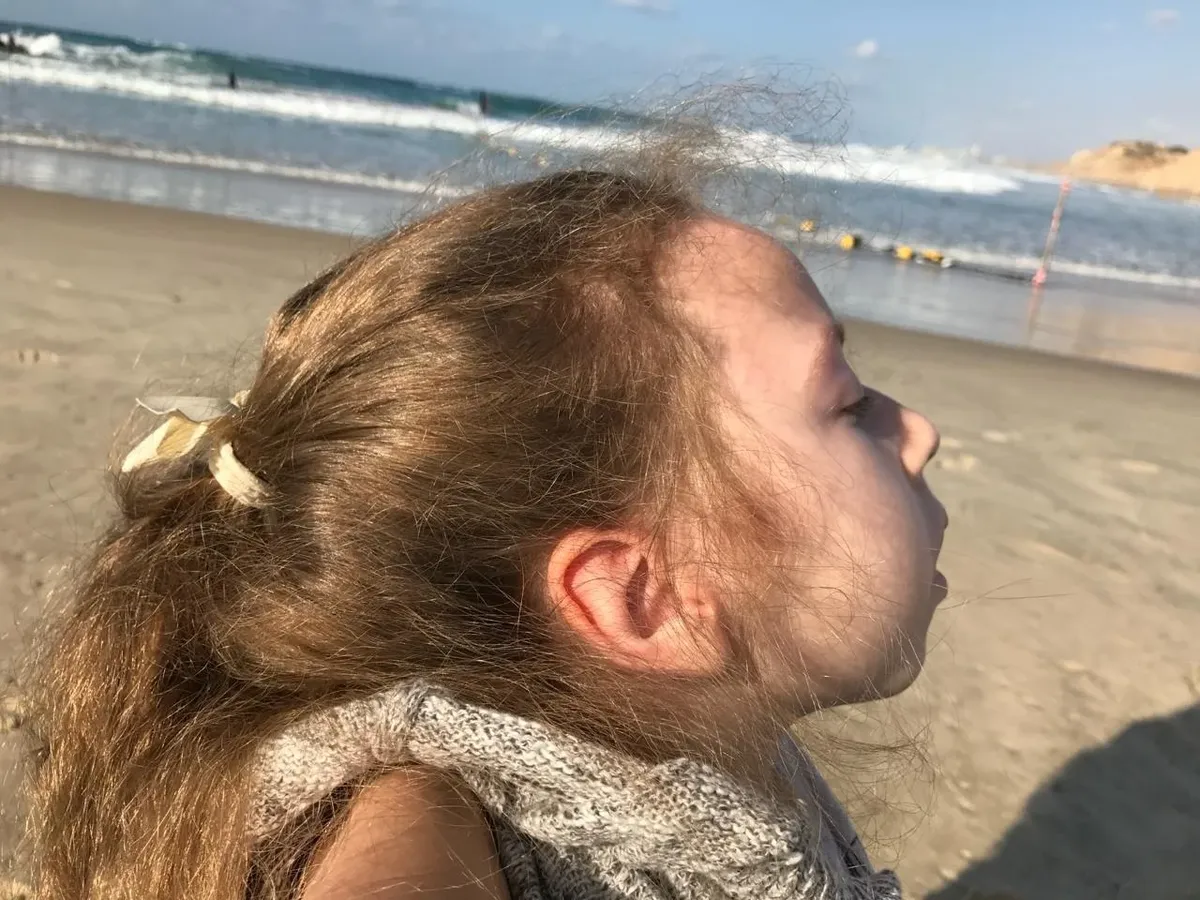
In Israel we rented a room in the basement. One day, my friend’s dad, whom I loved very much, came to visit me. We started talking, and I complain that I can’t give Anka these pills every four hours anymore. And he says:
- Listen, there is little we can do in this life that does not bring evil into the world. Just because you pop these pills doesn't ruin the world. This is great.
For some reason this phrase helped me. It became a little easier, although there were still fifteen years of giving pills ahead.
We returned to Moscow. The Israeli doctors released us with parting words: let's try these pills first, then others after them. In one of the preparations, Anka even kept an eye on the objects. She turned her head behind the toy, she smiled. It probably lasted a couple of days, and then the cramps came back. There are more of them. Israeli doctors said that we would try and select medications. They said that this happens. There is such a resistant infantile epilepsy. Maybe it will go away with age.
Every six months we flew to Israel. Usually it looked like this: for six months we write down our questions, suggestions, we think that maybe we will try this, maybe we will try that... We came, asked the doctor questions, he said, they say, this is definitely not the case, but we can try this in the future. He examined Anka, advised something, and we returned back to Russia.
What helped me at this time... This, of course, was my close friend, who perceived Anka very positively, very openly, with great love. She joked all the time. We were fooling around with her. They had a common joke with Anka. My friend blew into my daughter's nose and the air came out through her mouth. It was never funny, but we laughed. Or she would take Anka out onto the veranda or onto the balcony, cover her with a blanket and say: “Leonid Ilyich, your blanket.” She joked, she laughed, she was not afraid of her, she hugged her. She brought us all the most beautiful things, and this helped a lot. Her attitude towards my daughter helped a lot. Some beautiful things also helped. Despite the fact that Anka herself was beautiful, her illness seemed to crowd out her beauty. Maybe that’s why beautiful things were so supportive.
We returned to Moscow and began to further search for treatment. Anka was already one and a half years old. We found a baby yogi. He was so big, with a beard, he came to visit us and spun Anka, spit him. She described him from head to toe... From this baby yogi I heard very important words. I remember it was a hot summer day. He was sitting in our kitchen, I gave him water with lemon, and he said to me:
“You understand that you have no one in the world dearer than her.”
This, of course, was a revelation for me. That I am not just a prisoner of this whole situation, but I really have the closest and dearest person in the world. This is Anka.
Of course, we didn’t do baby yoga anymore. We tried Chinese teas, we tried osteopaths, several homeopaths, we tried different neurologists - nothing helped. My husband had a wording: “It is what it is, it is what it is, we move on.” And I had fear, fear of becoming the mother of a disabled child, just like I imagined her to be. I imagined an image from childhood. In the temple that my mother and I went to since childhood, there was a woman with her son. She was all in black, her son was also somehow unkemptly dressed.
They always stood in the same place in front of the icon of the Mother of God, and she never spoke to anyone, never smiled, cried a lot, her son made some terrible sounds. This, of course, scared the children, and everyone avoided them. I realized that under no circumstances did I want to become such a mother. This coincided with the husband’s formulation: “We move on with our lives.”
Therefore, I decided that at least outwardly we would be happy. I started inviting guests and always dressed Anka up. I went to school a year after her birth, graduated from medical school, went to residency in obstetrics, because I decided that the maternity hospital is a place where people end up not because they got sick, but because they got pregnant. True, I worked in my specialty for only two years.
***
Outwardly, our life has returned to normal. We lived actively and fully. We traveled, we received guests, we had holidays. But we must say about what was inside. I was able to formulate this much later. The fact is that when a child is born, another part is also born inside the mother. Then inside the mother this part grows and develops together with the child. Here the child learns to look, roll over, grab, walk, talk. And this part, born inside the mother, also grows and develops. And when Anka was born, such a large part of me appeared inside me that lay down next to her and lay there. Maybe it's still there, I don't know. But it was a big part of me, and it took a lot of strength. It was very hard for me that she didn’t look at me, didn’t recognize me, that she didn’t call me mom. My husband had other children who called him dad. I kept explaining to him that he couldn’t understand my feelings. The fact that I am deprived of a large part of motherhood, although I seem to be a mother.
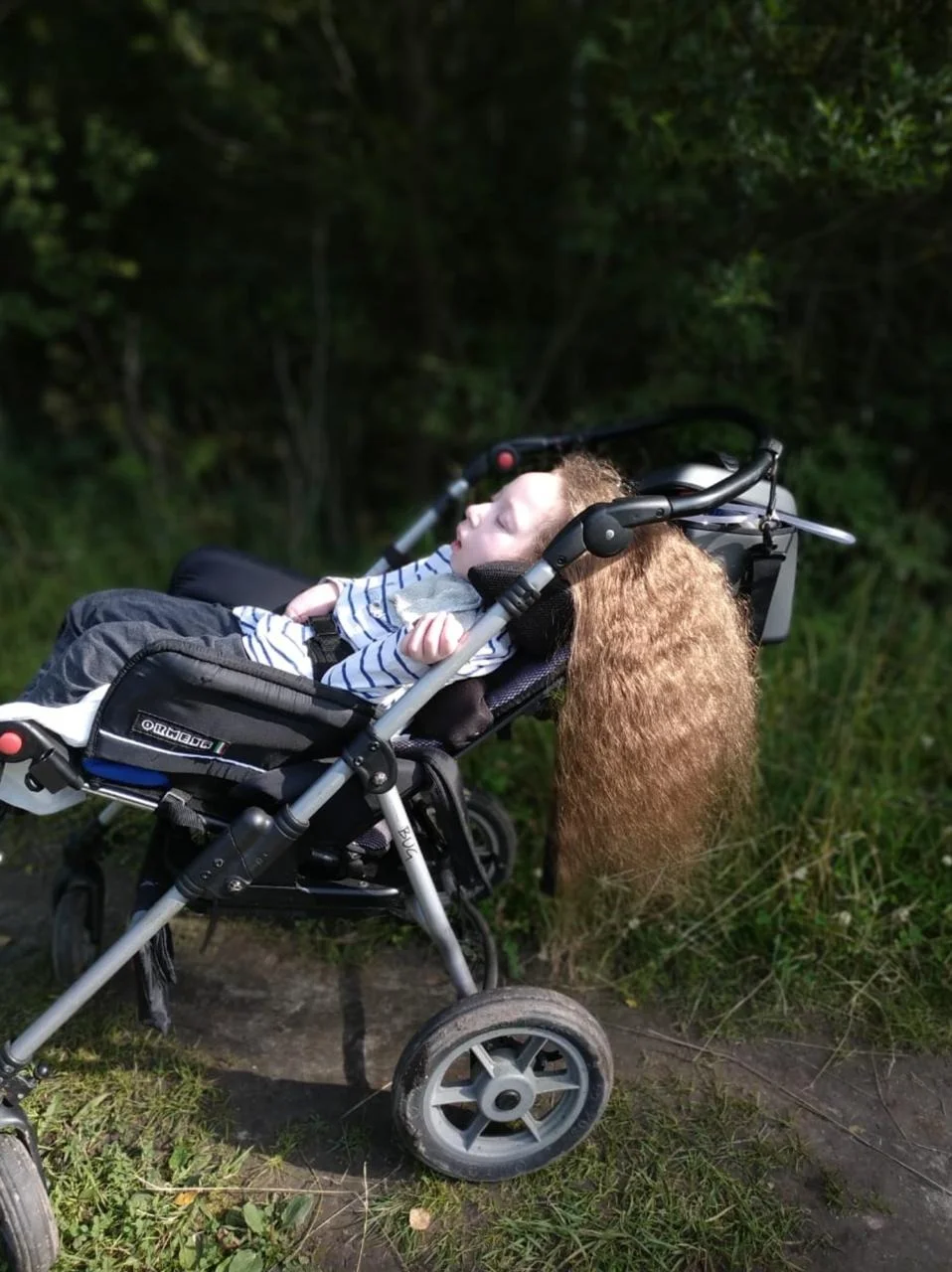
It was very difficult to continue living next to a dear and beloved person who was constantly suffering. She continued to have seizures, ranging from twenty to one hundred seizures per day. She always had them, throughout her life. The cramps were different. It happened that she simply clenched her teeth, slurped, tears flowed, drooled, she turned her eyes to the extreme left or right, nystagmus began, and her arms tensed. Sometimes this was supplemented by stretching out the arms and legs - this is called the “fencing pose.” Sometimes the convulsions were accompanied by vocalization, when at the peak the air came out through the vocal cords and she let out such a loud scream. That is, she didn’t scream, but the air just came out like that. Then she held her breath, and then she came away from this convulsion with a snort. This all lasted about a minute or two. When she had an attack, there was no need to do anything, there was no need to run to her, to save her.
But, for example, at that moment I was eating, kissing my husband, watching a movie, and she felt bad. My whole life around the clock went like this: whether I’m sleeping or awake, there is a person nearby who is being torn apart by these convulsions.
All the time I didn’t understand what to do. Ignore it? I approached her during convulsions, sometimes I regretted it, sometimes I waited for it to end, sometimes I pretended that I didn’t notice or pay attention. But in fact, inside myself, when she stopped breathing, I, of course, did not stop breathing, but I had a spasm at that moment. If she, for example, groaned, I also felt discomfort. Before the birth of my son, I was very united with her, I was physically attached to her. We sometimes left her with my mother and went on vacation somewhere. I came back, and my mother said to me: “Why are you licking her like a cat!” And I had to examine her from head to toe: behind the ears, between the toes, look all over, sniff, kiss. Because she was all very dear and very mine. It was hard to continue life when your beloved child was constantly suffering next to you.
There was a feeling that she only had enough strength to somehow accept the world around her. But sometimes there was some kind of contact with her, she stretched when you stroked her... There was a feeling that there was some kind of gap between the spasms. That there is a time when she still just lives a little in this world, and somehow this world is connected to her and she is connected to it.
And I thought, if Anka doesn’t go to live in the world, then we will drag the whole world to her. We brought people in. We carried her everywhere, although it was a little hard for her.
We went to Cyprus with her, and to Israel every six months, we traveled around Russia with her, lived in tents, rode horses. There was life. But at the same time there were also convulsions.
I was ashamed in front of everyone that I was tired, because what’s the point of being tired? She lies there and, in general, doesn’t ask for anything. I understand: taking children to ten clubs is hard. What about her? Well, he fed me and gave me medicine. It was awkward all the time.
Of course, it was hard to feel people's attention. At first she was small, and people noticed that she screamed and cried a lot. And then they began to turn around. Someone periodically said: “Why doesn’t she walk, she’s so big?” For a long time she looked like a healthy child; if she slept, then there were no differences at all. Then, gradually, of course, some distortions began to appear, the teeth began to stick out. But for a long time nothing like this happened. It was hard for me to bear these looks from people.
Anka had a friend Guido. He lived in Israel and once came to visit Moscow. We are walking through the park. I push Anka in a stroller, and he walks next to her. At one point he says, “I didn’t understand why everyone was looking at her like that. She's beautiful! He, too, caught these glances of people who look not so much with disgust, but with some kind of fear, perhaps with sympathy or horror. It is difficult to understand these views. Of course, it’s not easy with children either. They come up and start asking a million questions. But it’s still easier with them than when people walk and cross their eyes. You notice it anyway. Always.
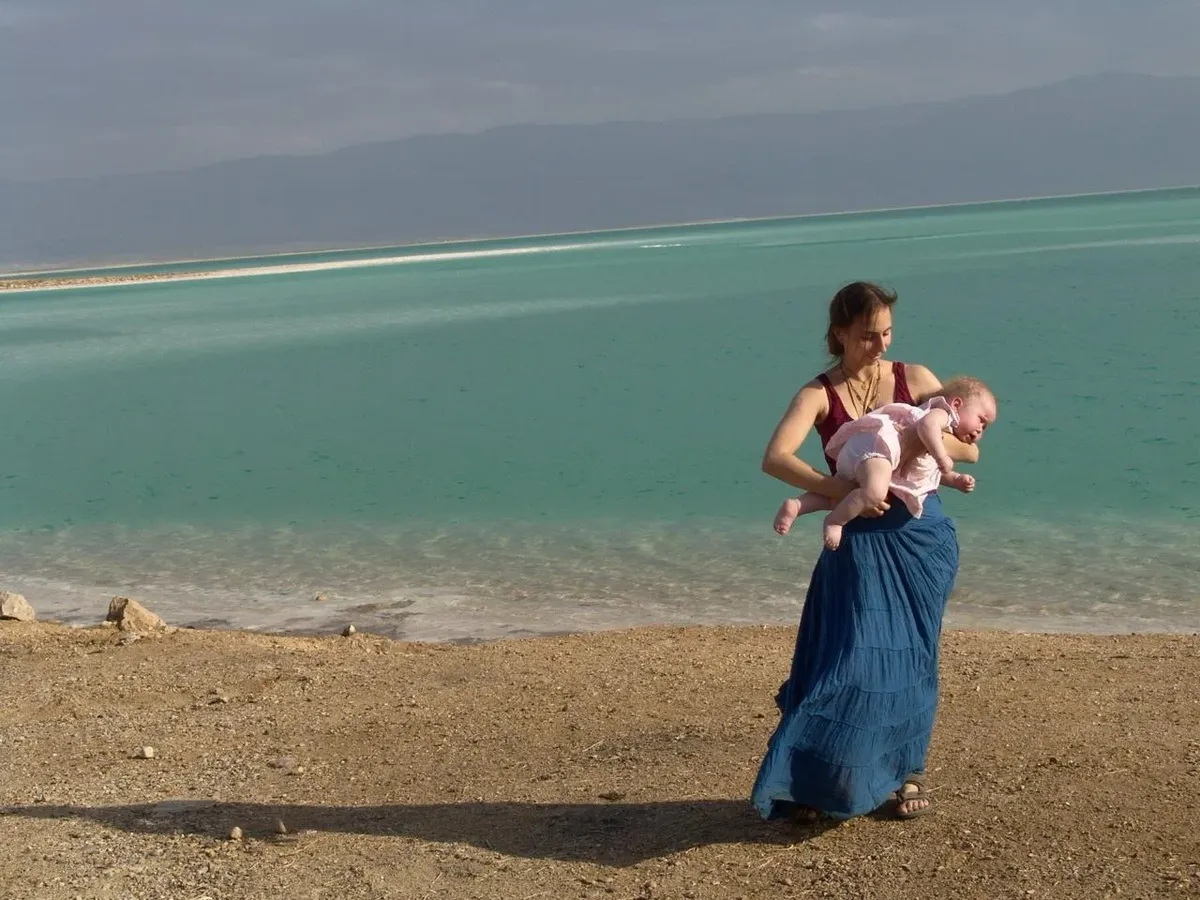
Then it gradually became physically difficult, because Anka grew and became heavier. I fed her in my arms. She drank from a bottle for a long time, then ate well from a spoon. We didn’t think about any dying at that time. On the contrary, I thought that she would live longer than us. I remember how I wrote a will, that if something happens to me, who do I want Anka to be with? But I didn’t have the feeling that she would die before me.
It was still very difficult to think that she did not see the beauty in this world. I remember when I went to some music concerts or saw something very beautiful, I cried because it seemed to me that she was losing this part of our life, so important to me.
Of course, it was hard that we were on our own. That is, all the time there was a feeling that we were engaged in some kind of arbitrariness. We periodically went to doctors in Moscow. They wrote down everything from my words, and then signed it themselves. They didn't say anything. The doctor at the clinic was crying when we got there. “I’ve never seen such heavy children,” she said. I consoled her. It felt like we were cutting out appendicitis at home. We have a seriously ill child with seizures, and we don’t listen to any doctors, because they don’t tell us anything, we decide everything ourselves.
My husband and I realized that we are probably the main experts on Anka. I don't know if it was hard for him, it was hard for me. It seemed to me that we were some kind of underground arbitrators who were treating our child ourselves. On the other hand, it was not clear who to listen to.
***
I read Lida Moniava. I really enjoyed her posts and found her very inspiring. The children's hospice “House with a Lighthouse” was just beginning. We lived in a friends apartment. We had different nannies, we paid them. When it became clear that we needed to rent an apartment, the question arose of how to pay for a nanny. I wrote a letter to Lida saying that we don’t need anything, we just need a nanny. She said, we are registering you, the coordinator will contact you. An employee, Nadya, contacted me, and I told her: “We don’t need anything, just a nanny.”
“Okay,” she says, “do you get diapers?”
I speak:
- Yes.
- Do you have enough of them?
I speak:
- No.
- Well, you see, you need diapers. Do you use wet wipes?
- Yes.
-Where do you get them?
- We are buying.
- Well, why are you buying? We will buy it for you.
Then she started talking about medications.
I speak:
- Well, we buy everything.
- Why do you buy medicine? We will buy them for you too. Was Anechka at the New Year’s party?
I speak:
- No.
- Well, we’ll invite you. When is Anya's birthday?
I say: “Then then.”
- Well, wait for the gift. What gift do you want for the New Year?
- No, we’ll give something to our child.
- No, think about it, we really want to congratulate Anya.
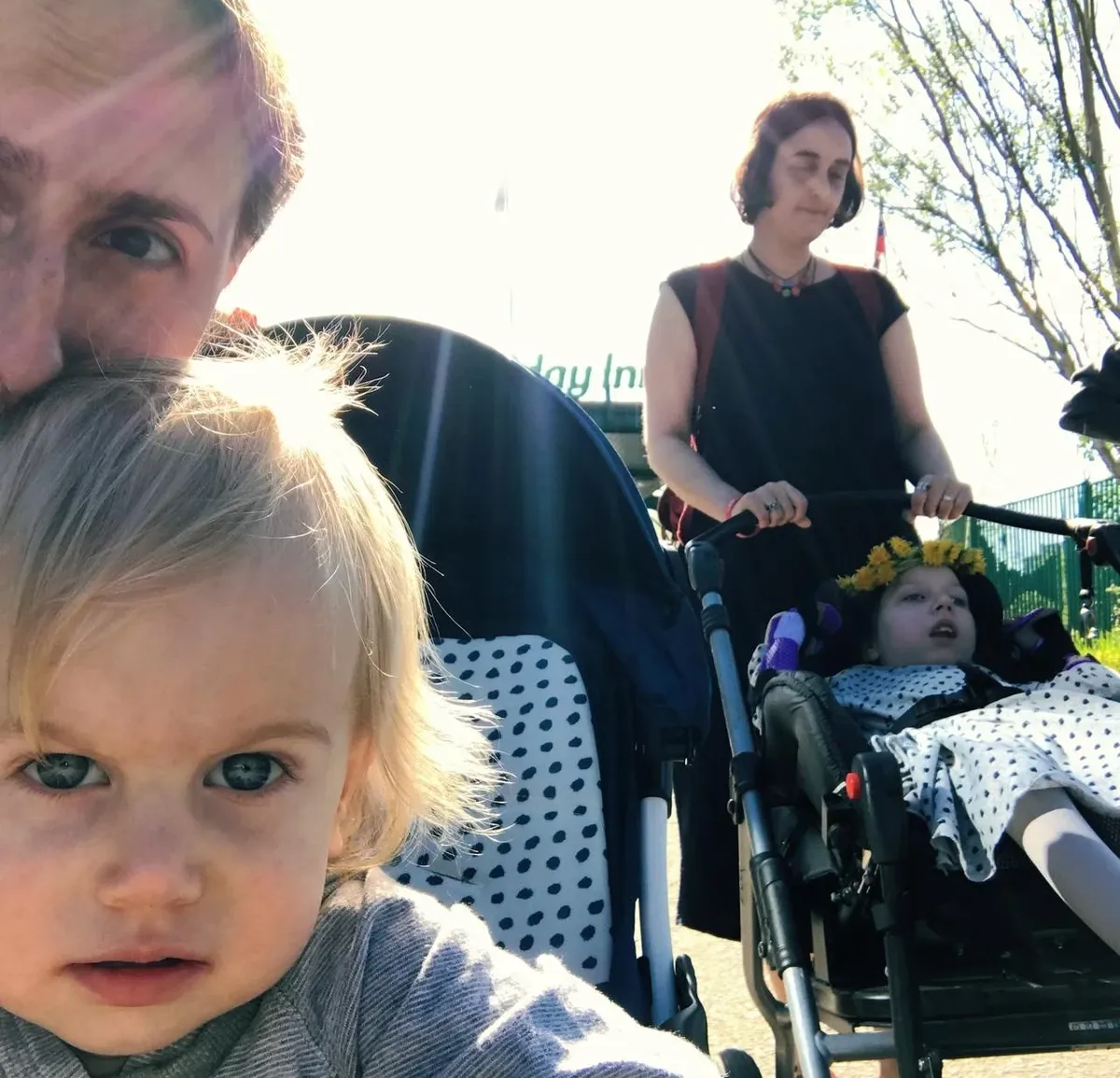
All this seemed very strange to me. Not just intrusive, Nadya was not intrusive at all. She was very tactful, soft and gentle. But all this was still unclear then.
We moved to a new apartment and started living with hospice. Of course it was amazing. What has changed? First, we stopped feeling like impostors who were on our own. A doctor came to us from the hospice who suddenly knew more about something than I did. It was so strange. Firstly, he was not surprised by the number of convulsions, he did not faint, there was no need to feel sorry for him. He knew the name of the drugs she was receiving, which was also cool for a doctor. He asked very good questions and even gave some advice that turned out to be useful.
And there was also a feeling that from the big world, people who cared and who were very generous began to come to Ankin’s world. They are generous with everything: attention, smiles, hugs, care, time, words. They come not because they feel sorry for Anka, but because they, like us, see how cool she is.
There was a feeling that they, like us, wanted to communicate with her, they were interested in her, she was beautiful to them. They will always notice Anka's dress, her hairstyle... They know how to compliment her, and the compliment sounds natural and sincere. Anka began to have friends whom I don’t know. We are driving somewhere along the corridor, a man passes and says: “Hello, Anka!” But I don’t know this person. This is something new for me. How is it that my child has some friend whom I don’t know!
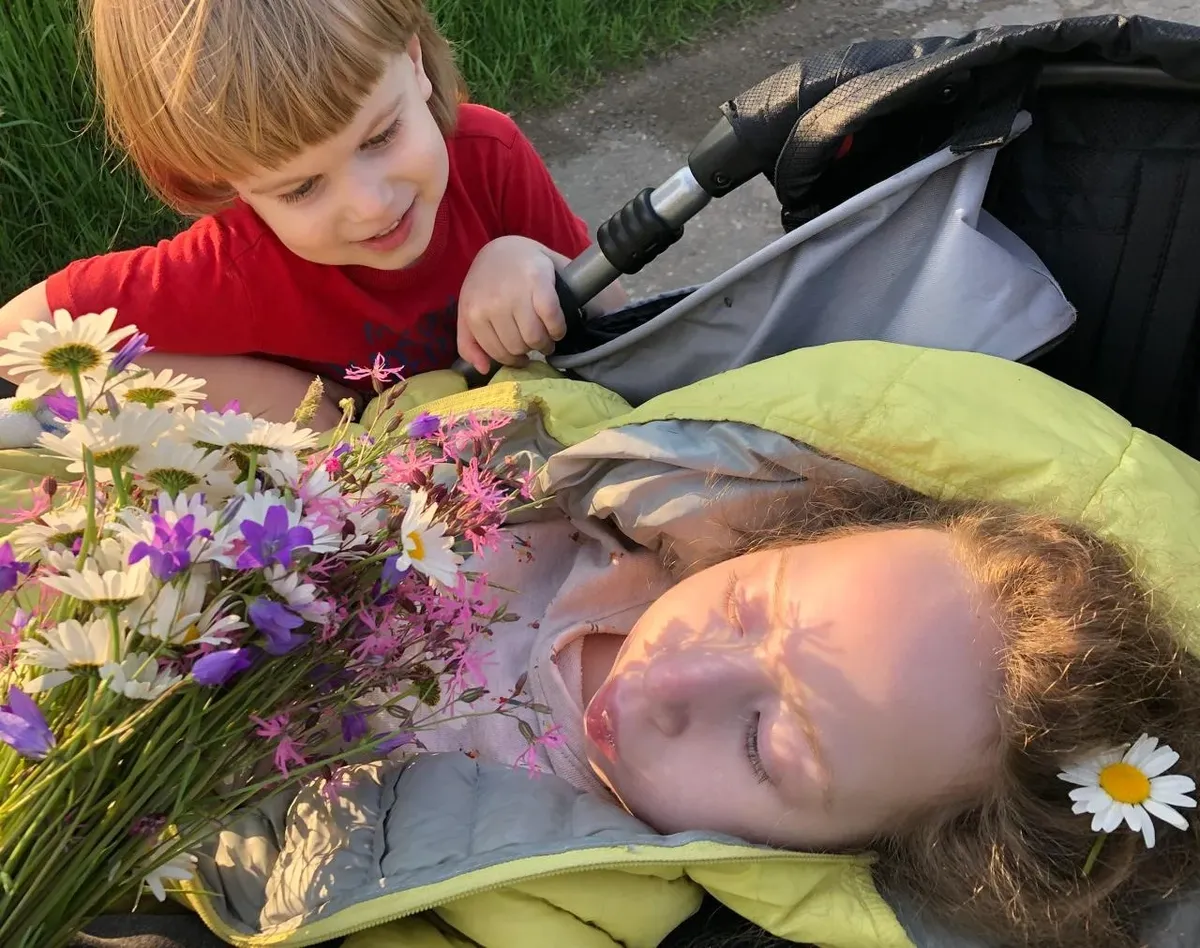
One day a car volunteer came to visit us. She brought Anka a bouquet of wild flowers and a toy, a black puppy. A complete stranger. We named this puppy Edward Whiskey Scotch Terrier Black because he is, of course, very purebred, which is why he has such a long name. Then we began to play that Anka really needs this puppy. In fact, Anya didn’t give a damn whether she had this puppy or not. But we played that she couldn’t live without him. She was in the bathroom with him, she ate with him, then she went with him to get a gastrostomy tube. If we forgot it somewhere, we always came back for it. This was our game.
It was surprising that Anka was brought not just any kind, but the best. I remember when they brought us an irrigator, on which you could stick any stickers of your choice, I cried, because it was not some irrigator for a sick child, but the most beautiful, best irrigator. For Anka, the hospice always brought the best and most beautiful things. There were events, play therapists came... There was a folklore club. This is when children arrived, stood in a circle and sang songs along with the volunteers. Parents could go to a psychologist at this time. I remember the first time I came to a psychological group with my parents. I rather arrogantly said: “You know, I don’t want to communicate with other parents, because why should I communicate with you? The only thing that unites me with you is my child’s illness. Why should I communicate with those with whom I share the worst things in my life? If you and I were united by common interests, that would be different, but otherwise, I don’t understand why all this is needed.” In general, I never wanted to identify with other parents.
Anka studied at this folklore club. I remember what amazed me. They were covered with such a blanket and called by name. I sat with her under this blanket. When they called her for a long, long time, I suddenly saw that she was starting to worry and seemed to hear the name. I then thought: “Wow, I can learn something new about her.”
***
And then in 2016 my son was born. I remember when I was leaving for the maternity hospital, I approached Anka and felt how everything was breaking inside me. I understood that I would have a caesarean section. Surgery is always a risk. What if something happens to me? I have to leave her, but here she is, so beautiful and sweet, sleeping. How will I leave now? I kissed her and left for the maternity hospital.
I had a son, amazing Sashka. I came home with him, and Anka was with my mother at that time. After a while, my mother brought Anka to our home. And I saw her for the first time after Sashka was born.
I saw a familiar, understandable child. But with crooked teeth, he looks sick. I didn’t feel inside the connection that I always had with her. I gave myself some time, hoping that this connection would return. But time passed, and the connection did not return.
And I enjoyed Sashka, enjoyed my motherhood. When he saw me for the first time, I cried. Because my child saw me for the first time. I will remember his look forever.
But I constantly felt that I had betrayed Anka, because somewhere inside I left her alone. We had a connection with her, but now this connection has been broken, and she is now alone there inside herself. And I'm alone. I tried to somehow restore this connection. I bathed her more and held her in my arms. But this connection never returned, and the feeling that I betrayed her and abandoned her remained with me.
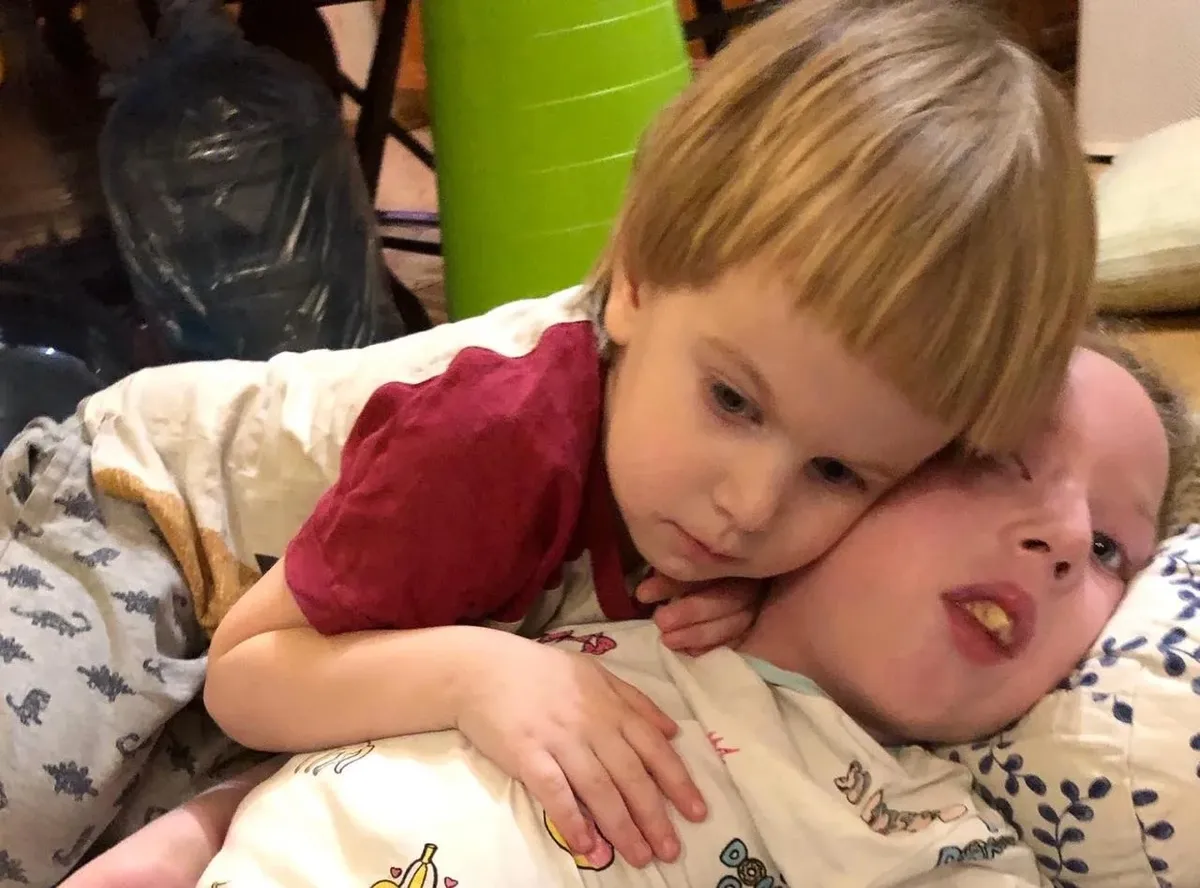
But she had a brother who grew up next to her. This was, of course, surprising for both of them. Sashka is terribly active, restless, he runs, he talks, he does a lot of things. But when he was older, when he was next to her, he would put his hand on her chest and just watch her breathe. He sat quietly, lay down next to her, hugged her, and never forgot about her. It was so cool, so important for him, for her and for me, because I couldn’t spend time with her, I didn’t want to, I wasn’t attracted to her anymore.
Then at the hospice they began to talk to me about the need to install a gastrostomy tube. But I didn't want to. Firstly, I didn’t want to get into her system. Until she was nine years old, she lived in some kind of homeostasis, and we didn’t interfere with it. She got sick a couple of times a year, which is generally cool for a child. At the same time, she had a lot of contacts with other people. She somehow managed to eat. Well, yes, we fed her one curd for thirty minutes, then forty minutes, then an hour. To feed her, you had to pick her up.
This feeding process forced me to pick her up. I understood that if she was given a gastrostomy tube, I would not have such an important reason to take her in my arms. And if this reason does not exist, then I will not take her in my arms. Because this child does not ask for attention, does not ask for anything at all.
But it’s difficult for me to just come up and take it - you have a house, business, a son, cooking, something else... But they persuaded me, and we installed a gastrostomy tube.
Now, looking back, I think there was both bad and good in it. The good thing is that the gastrostomy gave Sashka time to be with Anka, and Anka with Sashka, and gave her husband time to prepare for Anka’s death. The bad thing, it seems, was that the gastrostomy tube prolonged Anka’s life longer than she needed. Don't know. Still, we are not the ones who decide all this.
After the installation of a gastrostomy tube, Anka had a severe epistatus, when the seizures did not stop. If it weren’t for the gastrostomy tube, this would probably have been the beginning of the end. But we administered water and medications to Anka through a gastrostomy tube, and the status ended, but after it such a smooth, gradual deterioration began. This was not immediately clear, but now, in retrospect, it is clear that it probably began from epistatus. All sorts of gadgets began to appear at our house, which I always hated, everything disabled... I didn’t want to buy a wheelchair until recently. An aspirator, an expectorant, an oxygenator appeared, then an oxygenator of the second, tubes, cones, consumables... There were more and more of them. The more of them there were, the more I hated them. They were everywhere, filling the space of our cozy home. Even more drugs. It felt like there was less and less of Anka and Anka’s life in all of this.
***
There was a lot of talk about Anka’s death, but I was ready for her death, at some point I was already waiting for her. I had enough strength until she was about twelve years old, and she died at fifteen. After Anka turned twelve years old, I began to notice that I was starting to get more and more irritated with her. I’m just tired of everything that’s happening to her, and I didn’t see anything bright in our communication with her and in our life with her. As she got older, she began to smell differently. She woke us up constantly, like an alarm clock, because she was wheezing and needed to be sanitized. Moreover, there was no feeling that you sanitized her and she felt better, no. That is, it became easier for her to breathe, but after thirty minutes, after an hour, she began to wheeze again. She was annoying, like an alarm clock, and not like a person who feels bad. And this irritation grew.
At some point, I went to the dacha with my son and, it seems, I didn’t see Anka for a month. Then her husband came with her. And so he arrives, opens the car, puts the stroller, then takes Anka out, puts her down, then takes out one thing, another, a third... I look at this and think: “Lord, how do people live like this?” And before I lived inside this, well, I lived and lived. I thought everyone thought it was very easy for us, because Anka mostly sleeps, lies down, and you don’t have to do anything with her. Just think, we are Anka's parents. What's heavy? And when I moved away a little and looked at it from the outside, I felt uneasy.
I distanced myself from caring for Anka, simply because I did it carelessly and rudely. I was glad that Tema always maintained absolute tenderness towards her. Treated her with the same attention as always. When he came home, the first thing he said was: “Hello, Anka.”
I was angry, I was very angry with her. I was angry that she wasn’t reacting, that she was wheezing, that she was drooling. I think I hurt her. Sometimes I hurt her and saw the reaction to it. This gave at least a little feeling that she was still alive.
But to be honest, I felt that she faded away and died before she died physically. I was very ashamed that I changed her diaper so rudely. I could change her diaper and leave her legs. I was angry with her, I said nasty things to her because she kept waking me up. Because she didn’t react to anything. I wanted to pinch her so that she would at least somehow react to what I was doing, to the fact that I came and stood next to her. I was very ashamed, but I couldn’t help myself.
And then she got sick again and got worse, worse, worse. The doctor came and examined her and said that it seemed to be a different deterioration from the others. The next day she started vomiting and had shortness of breath, so we were prescribed morphine. By that time, we had another son, Mitka. When Anka was dying, the doctor came to our home. Anya was breathing heavily, but it was clear that she was calm. Tema and I were next to her all the time.
I am very grateful for the last day before she died. When I realized that she was dying... I realized that not only this big, crooked, smelling girl was dying, but that all of Anka was dying. That this bag from the maternity hospital that they brought me is dying. This fluffy, beautiful mermaid that I bathed is dying. This girl, whom I sniffed from head to toe, is dying. A big, big part of me is dying. Of course, that day I felt love for her again. Not a connection with her, but love for sure. I asked her for forgiveness, I talked to her. It was very good. I was very happy about this day. And then her breathing became less and less, less and less... I climbed onto her bed, and at some point she stopped breathing. Tema and I hugged her from both sides.
***
Anka was taken away. The funeral was very calm. The only thing I probably regret is that there were no children there. There were always a lot of children around Anka. All the babies that were born to us, friends, were always placed next to Anka so that they would not roll out of bed. But only her brothers were at her funeral service. At the funeral it was not scary, it was not difficult, it turned out to be some kind of very bright funeral service.
After Anka’s death, for the first time in 15 years, I felt that I was no longer attached to anything. This pain, these constant cramps suddenly completely disappeared from my life. I suddenly wanted to live. We went to the river, I dived into the icy water, and I felt so good, it was so easy for me, I felt so free. I remember standing and watching the children play with the vacuum cleaner. I could stand and watch them do it for a long time. And I felt good. Some huge mountain fell from my shoulders, some huge burden left my life. There was amazing lightness. I didn't cry at all, it was very good.
And then there was an interesting moment. It's probably been a week or two since Anka's death. We went with the boys to the shopping center. And Sashka wanted to get a haircut, he had long hair. I say: “Come on.” He asks me: “Can I do it like dad?” I say: “Come on, like dad.” She said and went for a walk somewhere around the shopping center. I come back and see that he has had his hair cut short. Such an ordinary boy's haircut. I started crying and cried for a day without stopping. Maybe this was the last change I was willing to endure. But I cried, and cried, and cried. And then life began.
But I felt very bad. Generally. Not because of Anka. I mean, I think so. Don't know. I had severe depression. Maybe she still remains. I went to a psychiatrist. I didn’t have the strength to do anything, I wasn’t happy about anything, I was terribly irritated by everything, I didn’t want anything. Nothing pleased me and nothing felt good. The psychiatrist prescribed me first some pills, then other pills. And, in general, I can’t say that I have a lot of strength now and that anything makes me happy now. But after the first lecture that I gave about Anka to the hospice staff, it was in the summer, I remember that I came home, put the boys to bed, lay down and suddenly heard my youngest son tossing and turning in his sleep. I suddenly thought that this is how a cramp begins. This was the first time, long after Anka's death, that something reminded me of that experience. Nowadays there are more and more such moments. I was on the subway, and a young man with thick hair was sitting opposite me. He had very dense, elastic hair rings. I looked at them and realized that Anka had the same ones, I twirled them on my finger. I think that I would really like for that experience to gradually return to me now.
I want to say that, despite the fact that we were not socially isolated and we seemed to be coping with everything, I still couldn’t cope with this whole story.
Yes, Anka is a huge acquisition. I never wanted and do not want her not to be in my life. But this is a huge challenge. I lasted twelve years, then my strength ran out and, in general, never returned. I don't know if they will ever return.
I am sure that this is not only connected with Anka’s illness, there was a lot of other things. I made a lot of mistakes, did something wrong and wrong. Maybe initially I didn’t have enough strength. After all, there was always enough support and help from family, from friends, from the hospice, and I could well have walked this path more dignified and grateful.
There was another moment. Sasha and I periodically go to a playground where children play role-playing games. Some girl there was a cat, she and Sashka found themselves in some kind of unforeseen situation, this girl seemed to be seriously wounded... The girl lay down on the ground, and Sashka began to look after her. I look and see that he cares about her like he cares about Anka. His body seems to remember her, his hands seem to remember her. He began to cover this girl, began to put something on her, began to lie down next to her, just like next to Anka, putting his hand on her, watching how she breathed. The girl apparently has her own story, because she endured all this, and it lasted a long time. The presenters came up to me and said: “What’s going on?” I say: “He had a sister.” The presenters, of course, were very surprised and touched. We did not touch Sasha with this girl, and he took care of her. And I thought: “What a blessing that he had Anka.” Even if not in his thoughts, but on some tangible, on some bodily level, he remembers her and misses her. In fact, over time it seems to show up more in my life. And I, of course, am sure that everyone who knew her gained a lot.
Maria Morozova