
Translated material
Russian nationalist consensus
Most nationalists believe: the Russian nation is a multi-ethnic system led by Russians

Photo: Anatoly Zhdanov / Kommersant
18+. THIS MATERIAL (INFORMATION) WAS PRODUCED, DISTRIBUTED AND (OR) SENT BY A FOREIGN AGENT MEDIA PROJECT “COUNTRY AND THE WORLD. SAKHAROV REVIEW" OR CONCERNES THE ACTIVITIES OF A FOREIGN AGENT OF THE MEDIA PROJECT "COUNTRY AND THE WORLD. SAKHAROV REVIEW»
For any nationalist, the question of fundamental importance is in the interests of which particular community he acts. Russian nationalists' ideas about “who the Russians are” and what it means to be Russian have evolved greatly during the post-Soviet period. Media project “Country and World. Sakharov Review* continues the review of the ideas of post-Soviet Russian nationalism, begun in the article “ Who are you?” Russians? »
At the time of the collapse of the USSR
Russian nationalism arose in the Russian Empire, which was not a national state in general and a Russian national state in particular. As nationalism emerged and developed, debates arose about the meaning of the word “Russian.” These discussions were far from over when the Bolsheviks turned the board over and began to build an empire on different foundations.
By the end of 70 years of Soviet rule, a distinction had emerged between political nation and ethnicity (even if they were called differently). The political nation was described by the concept of “Soviet man,” which included ideas about citizenship and ideological loyalty. At the same time, the Soviet government institutionalized and drilled into everyone’s heads the definition of ethnicity. In the USSR it was called “nationality” and was determined by parents, that is, by blood.
Initially, “nationality” was written in documents haphazardly, but by the end of the Soviet period, the bulk of citizens were guided by “nationality according to passport.” To the question “who are you?” people still often start answering something like “half Russian, a quarter Ukrainian, and a quarter Jewish.” This corresponds to the understanding of ethnicity by blood. It was implied (though not officially stated) that “nationality” was an organic and inherited property.
Moreover, in the USSR, “nationality,” including “Russian,” was neither a sign or property of citizenship, nor a synonym for political loyalty. This place was occupied by the “Soviet man”.
For many people, ethnic self-identification or the identification of friends and acquaintances remained rather conditional. But “nationality” as a category of reflection on social issues turned out to be quite stable. This applied not only to the most acute divisions - for example, with Jews or Georgians - but also with Ukrainians and Belarusians, drawing real boundaries with whom was very problematic for the Russians. Nikolai Mitrokhin* in a book about Russian nationalism in the post-Stalin Soviet era (“Russian Party. Movement of Russian Nationalists in the USSR. 1953–1985”) gives the example of a Russian nationalist and apparatchik of the Central Committee of the 1970s, who complained that there were barely 40% Russians in his department, and among the rest he names Jews, Ukrainians and Belarusians.
When the USSR began to come apart at the seams and the prospect arose of the emergence of Russia as a state that had separated from part of the republics (from which part, it was still unclear, but it was then that the Soviet “titular nationalities” began to acquire the potential of political nations), bewilderment arose: how would the community of its citizens be defined in this new Russia and how suitable the word “Russian” would be for this. For those who called themselves Russian nationalists (in the terminology of that time, national patriots), this question was the most pressing.
In accordance with the late Soviet tradition, the first and most obvious answer to this question was “organic”. It was believed that “nationalities” were natural, biologically inherited and derived from ancient ancestral tradition. This understanding of ethnicity is called primordialist. Somewhat sideways, the organic understanding of the nation was supported by Lev Gumilyov’s theory of ethnogenesis, which gained popularity in those years.
The organic version of “Russianness” had and still has three problem areas.
First: what to do with the “mestizo”, how Russian are they?
Second: what to do with the Ukrainians and Belarusians, who in supposed antiquity seemed to be one people with the Russians, and they were called Russian (we are not talking about historical facts here, but about dominant ideas)?
Third: what to do, for example, with General Bagration? Is this a Russian general or a “younger brother”?
Various solutions were proposed, but the discussion usually did not stray far from the usual blood-based understanding of “nationality,” including Russian.
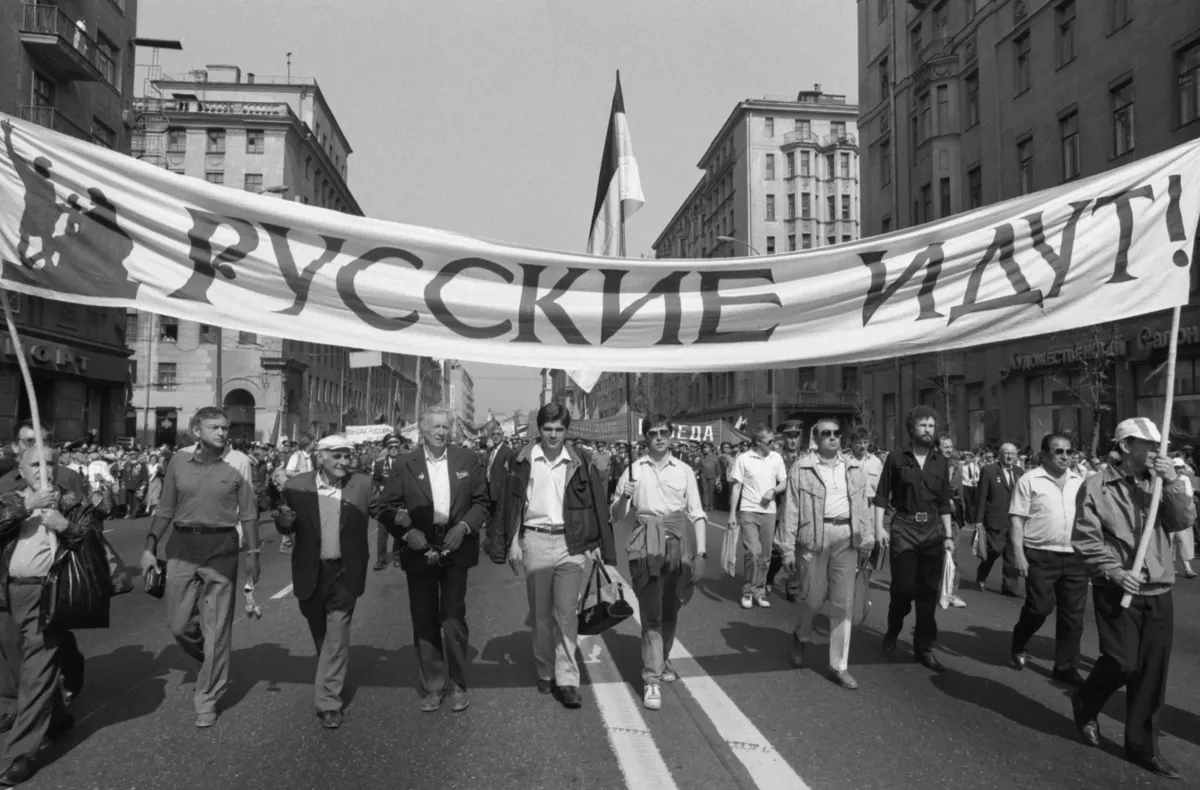
In the early 1990s, wrote sociologist Leokadia Drobizheva, mass self-identification as Russians was very weak, while ethnic self-identification was very strong. Even in the late 2000s, ethnic self-identification was still stronger than civic identification, but at least they were comparable. After the collapse of the USSR, we gradually moved away from the organic concept of ethnicity built in Soviet times, including in the self-determination of Russians. But in the early 1990s there was still too little basis for non-ethnic nationalism. That's why he almost didn't exist.
1990s
When analyzing the worldview of the already fully developed Russian nationalist movement of the mid-1990s, it was clear that ethnocentrism was characteristic of almost all such organizations. First of all, they were Russian in the ethnic sense (this also implied ethno-xenophobia, almost universal). Ethnicity was by default understood by blood. True, not everyone said this directly. Among those who understood ethnicity in this way were, for example, the neo-Nazi People's National Party (PNP), the openly racist "Union of Wends" and the main organization of the decade - Russian National Unity** (RNE).
In the documents of nationalists of the 1990s, it is almost impossible to find a definition of “Russianness” that is opposite to the primordialist one - as a political or cultural community. Although there were rare exceptions. This understanding was shared, for example, by Sergei Baburin. That’s why he called his party a “Russian” and not a “Russian” union, which was very atypical for the 1990s.
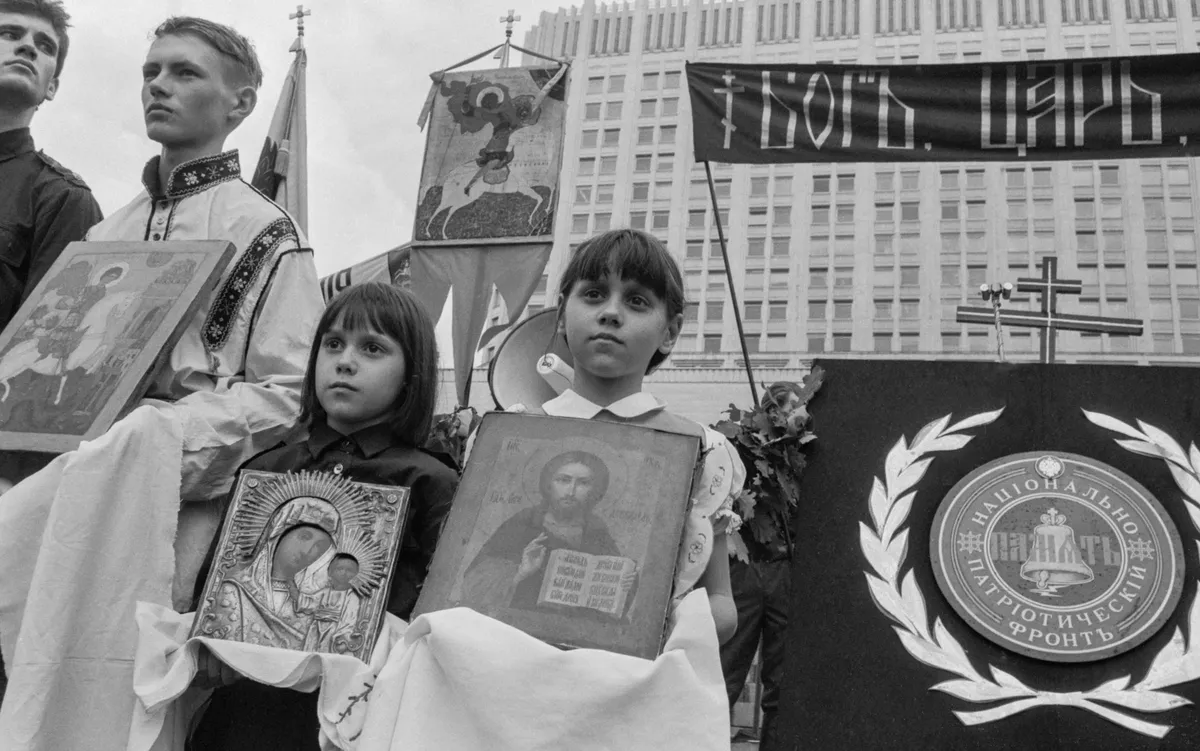
Some tried to rise above the ethnic aspect of nationalism, shifting the emphasis to religion, like organizations of neo-pagans and Orthodox fundamentalists, or to the greatness of the state, like the LDPR and some others, but still did not shy away from defining ethnicity by blood. For example, the National Bolsheviks *** of the mid-1990s could be called “nationalists of the Soviet people,” but they believed that the president must be Russian (at most, half Ukrainian or Belarusian).
The more dexterous Prokhanov and Dugin - the name “nationalists of the Eurasian people” would have suited them - avoided in every possible way the definition of “Russianness”, since this would only hinder them.
The “founding fathers” of post-Soviet Russian nationalism—the NPF “Pamyat” by Dmitry Vasiliev—speaked of “ethnic purity” and continuity with the Aryan race. But at the same time they emphasized that the “Russian nation” is not identical to “Russian civilization”, but is its basis. To be honest, even now most nationalists would say the same thing, perhaps with less emphasis on Orthodoxy and especially on the monarchy than Vasiliev.
A separate important topic was the relationship between the concepts of “Russian” and “Slav” or at least Eastern Slav. Of course, a significant part of the nationalists, including the RNU, have always included Ukrainians and Belarusians among the Russians. But not all. No less often they talked about kinship and community - but of different peoples. Sometimes the community could be understood more broadly, as Slavs in general (for example, in the National Republican Party of Yuri Belyaev).
2000s
All these parties gradually died out. They were replaced by a wave of Nazi skinheads. The ideology of this movement in the second half of the 1990s was not Russian nationalism itself, but Hitlerism combined with Western white racism and neo-Nazism, wrote Vyacheslav Likhachev. “Slavs” were certainly mentioned in their texts more often than “Russians”. These militant youth were not interested in who the Russians were.
Viktor Shnirelman, who analyzed the views of various Nazi skins in the 2000s, believed that they were nevertheless partly Russian nationalists, they simply classified all Eastern Slavs as Russians, and with strict selection according to racist criteria.
Russians singled out in this way could be called the “Russian race” as part of the white race. The term “race” was much more important for Nazi skinheads than the terms “nation” and “nationality”.
Therefore, for example, they could approve the separation of the North Caucasus: it is not the territory that is important, but the purity of blood.
Significant were the frequent examples when “mestizo” became Nazi skins. For being ideological and ready to fight, they were forgiven for “racial impurity.” In this case, race could also be understood in a cultural sense: a person could, as it were, become “white” by an effort of will, but it was important to strongly confirm this with deeds, and not just make a self-declaration (otherwise what kind of racism would that be). It is clear that the Nazi skins did not have a single ideology - there were different versions of it. The concept of "white" definitely dominated the concept of "Russian", even understood in purely racial terms.
Of course, it wasn’t just the Skins who could be racists in their purest form. For example, since 2000, theoretical works on this topic began to appear one after another, starting with the collection “The Racial Meaning of the Russian Idea.” You can make a whole library out of them. For example, Andrei Savelyev, a prominent figure of that time, believed that a Russian should be determined by both blood and self-awareness, corresponding to the “racial type.” According to his assessment, this should have reduced the number of full-fledged Russians by almost half. But such theorists did not have a widespread influence.
Samizdat skin magazines, especially, should not have had a wide influence, but it was on the basis of this movement that the main organization of Russian nationalism of the 2000s grew - the Movement against Illegal Immigration*** (DPNI). DPNI preferred to talk about “migrants” rather than “foreigners,” thereby laying the rhetorical foundation for Russian nationalism for at least two decades to come. But at the same time, the DPNI understood Russians (like other ethnic communities) in the same way - “by blood”, albeit allowing for individual exceptions. Moreover, given the background of its activists, DPNI could not avoid flirting with the rhetoric of white racism. Moreover, the main competitors of DPNI at that time were organizations that were even more openly racist.
In parallel, from the beginning of the 2000s, when they were talking about authoritarian modernization and a certain moderate conservatism was in fashion, intellectual circles also discussed what the Russian nation could be. For example, in the “Seraphim Club” they wavered between the somewhat mystical understanding of a national community, traditional for Russian thought at the beginning of the 20th century, and the idea of a civil nation with cultural subgroups led by Russians, which are determined not by blood, but by culture.
At the same time, a respectable " civilizational nationalism " was growing, which, starting from Toynbee, Huntington and others, sought to define Russia as a civilization, and not as a nation. Accordingly, self-determination was thought of as cultural, not by blood. Culture was defined in different ways, depending on the personal preferences of the authors, but usually through the history and culture of the empire. Our civilization could be called Russian, Eurasian, Russian Orthodox, etc. In accordance with this, emphasis was placed in its definition.
In this version of nationalism, the question of defining ethnic Russianness was, as it were, “removed.” The theorists here were Alexander Panarin, Natalia Narochnitskaya and others, and practical politicians, such as Gennady Zyuganov, tried to carefully follow them, although, of course, sometimes they strayed into a biological approach to ethnicity.
A unique version of the understanding of Russianness was put forward by Metropolitan (until 2009) Kirill (Gundyaev). His doctrine as a whole lay in line with "civilizational nationalism", but was definitely centered on the church. This also applied to the identification of Russians: it was proposed to consider people of Russian culture as such. She, in turn, was determined by “involvement in Orthodoxy” -
not by baptism, not by the degree of church membership, but by some ideological or cultural orientation. At the same time, within the Russian community, the presence of “those not involved” in Russian culture was allowed , but they were considered marginal.
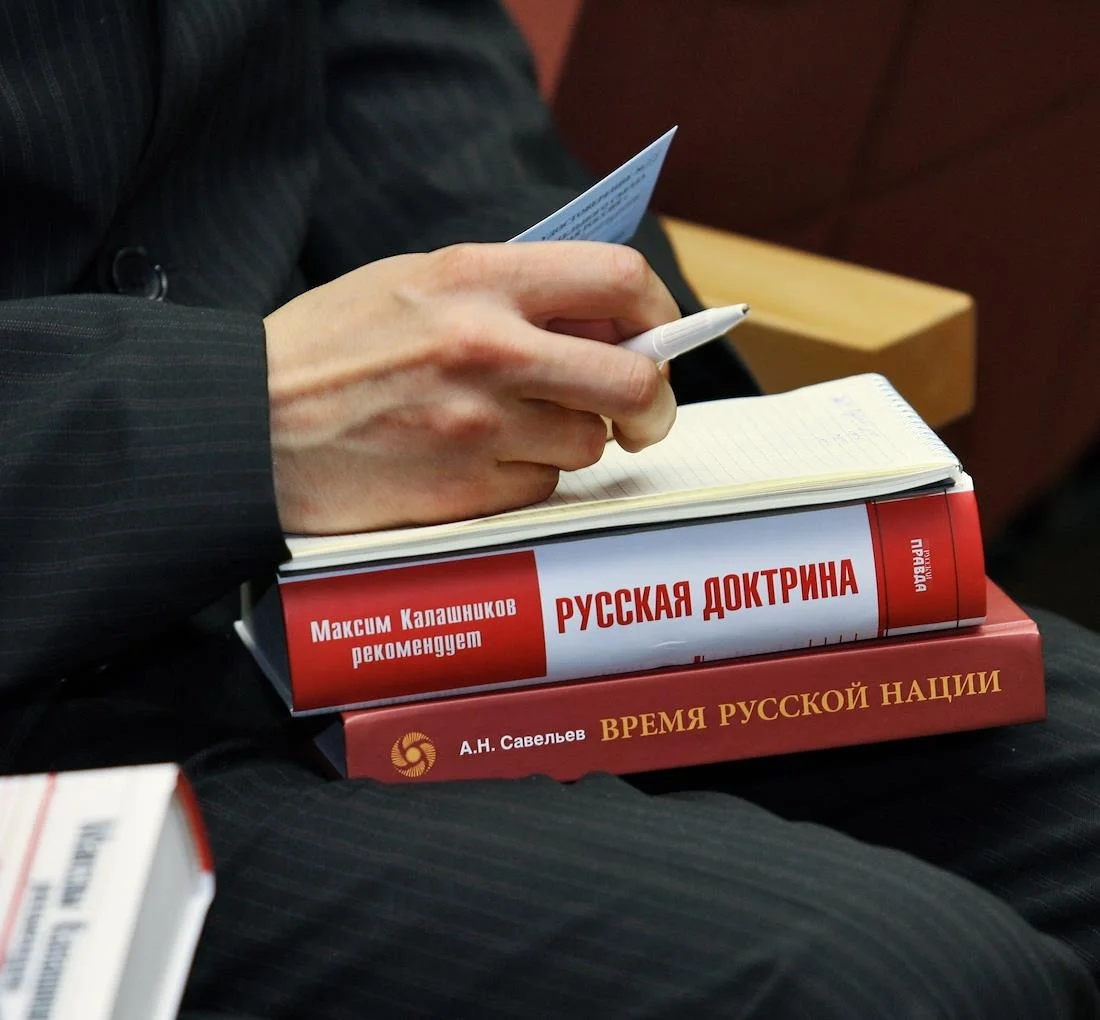
In 2007, the book “Russian Doctrine” was published. This was a large-scale conceptual project of Russian nationalists, claiming to be a program for a broad informal coalition that was supposed to become “support for the Kremlin from the right.” In this book, an attempt was made, through some play on words, to combine the ideas of a nation and a civilization.
The authors distinguished between a “people,” defined by blood, and a nation. The Russian nation included any foreigners who became “Russian in spirit.” Moreover, friendly peoples were declared “Russian ethnic minorities” and were also included in the Russian nation. This broad Russian nation was called “Russian civilization.” It was also said that “Russian” is not a property from birth, but a state to which one must rise. But at the same time, it was assumed that all Russians by blood had already done this, except perhaps the Russophobes. However, this ingenious combination of different approaches expressed before was not in demand: the proposed coalition did not take shape either in 2007 or later.
Other actors of the 2000s and early 2010s, for example, national democrats (national democrats), no matter what place they occupied in the development of Russian nationalism, did not bring an original understanding of Russianness. The main author of the national democrats, Konstantin Krylov, defined Russians simply by blood, like an illiterate young neo-Nazi: only a “half-breed” could become Russian, and then only one who completely rejected his “other half.” A little later, blogger Egor Prosvirnin, popular among the reading public, was ready to slightly expand the circle of Russians determined by blood to include those non-Russians who were ready to actively join the adventurous imperial history of a great power: Prosvirnin saw Russian history somewhat in a National Bolshevik way.
Since the mid-2010s, the Russian nationalist movement has been in such a rapidly progressing decline that it no longer generated new ideas about “Russianness.”
View from the Kremlin
In the 1990s and 2000s, the Russian authorities did not enter into such disputes, limiting themselves to the mantras learned from Soviet times about “friendship of peoples”, and then also about tolerance. But in 2011–2013, in contrast to various ethnonationalisms, including Russian, the concept of Russia as a “nation-civilization”, consisting of many peoples, among which Russian is a “system-forming” one, was officially formed . At the same time, no explanation was given in official documents on how to define and distinguish between “peoples,” including Russian. But they talked a lot about views (for example, on self-identification) and about the problems of Russians (“the complex socio-cultural well-being of the Russian people, the dissatisfaction of their ethnocultural needs”). According to the general impression from the documents, “peoples,” that is, ethnicity, were still understood not in a biological sense, but as a cultural identity; this also applied to the Russians.
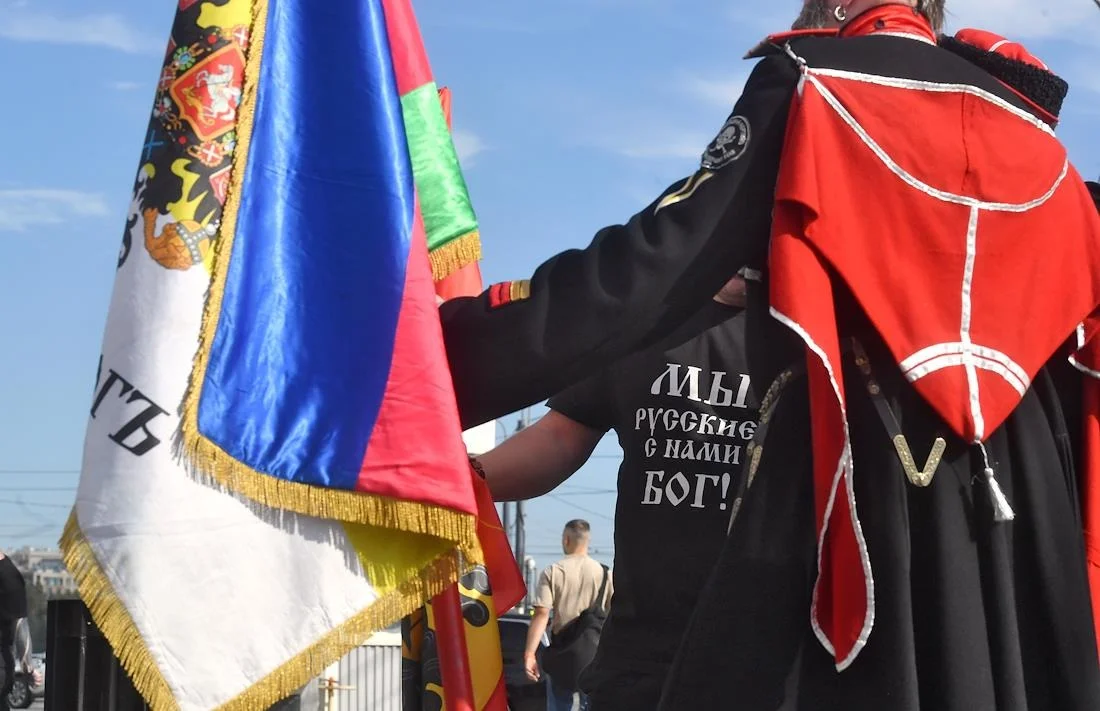
Quite behind the scenes remained the question of whether ethnicity should be understood as self-identification, as is customary in the census law, or as a characteristic defined by others. This was not so fundamental for relations and differences within Russia - say, Russians and Tatars. In relation to “Russianness,” this collision could only be significant for that part of the Cossack ideologists who considered it a separate people (the rest considered the Cossacks Russian or did not perceive them in ethnic categories). Outside Russia, the main concepts were the “Russian world” as a cultural community associated with the established term “Russian-speaking”, and “compatriots” as a legal category. In both cases, no definition of “Russianness” was required.
The real problem arose only in connection with the Maidan and subsequent events in Ukraine. At this point, there was no generally accepted idea of how “Ukrainianness” and “Russianness” were related. Nationalists, who heatedly discussed in 2014 how to approach what was happening in Kyiv, Crimea and Donbass, were divided in terms of choosing a side. But this choice was not predetermined by how the disputants understood the Ukrainians - as part of the Russian people, as a separate people, several different peoples, or in some other way.
It was even more difficult for those who spoke on behalf of the state than for independent nationalists. The political leadership had no problem choosing sides in the conflict, but it did have a problem defining the other side in ethnic terms.
The understanding of Ukraine as a separate state with its own separate “people” was already firmly established by that time. Therefore, it was possible to talk only about the defense of the “Russian world” in the neighboring country, avoiding calling the parties to the conflict “Russians” and “Ukrainians”: this looked implausible and was politically unprofitable.
Unlike Crimea, the “return” of which was ideologically justified in many ways, including through the modern ethnic composition of its population, in relation to the DPR and LPR, President Putin back in 2022 spoke about protecting such a community as “residents of the republics.” It was impossible to completely avoid the ethnicization of the conflict in Donbass in official rhetoric, of course, but the authorities tried. Accordingly, it was possible to avoid the question of whether the definition of Russians was expanding at the expense of Ukrainians or some part of them.
Clarity on this issue did not come for a long time after the Maidan at the level of the official language, but then the boundaries of “Russianness” were nevertheless clarified. In Vladimir Putin’s article “On the Historical Unity of Russians and Ukrainians,” published in 2021, Russians and Ukrainians were understood as two legally formed political nations of one “triune people.” This approach opened up broad prospects for discussing the delimitation of these political nations. But at the same time, it seemed to make it possible to officially close “in the western direction” the question of what the Russian people are.
Belarusians were mentioned only once in the article, and the same logic of the author applies to them. The author of the article proceeds from the principle of recognition of a person’s ethnic self-identification, but here the logic of unity fails: the policy of cultural Ukrainization in Ukraine threatens to reduce the number of Russians due to a change in self-identification by some Ukrainian citizens.
In other words, the “triune people” is still not entirely united - it consists of three peoples. And, probably, it is simply impossible to bring complete clarity to this design.
Known for the radicalism of his statements, Dmitry Medvedev insists that Ukrainians should “refuse to oppose themselves to the all-Russian project and drive out the demons of political Ukrainianness,” that is, abandon a separate political nation altogether. But the idea of Ukrainians as part of a triune people remains unchanged here too. While very sharply assessing Ukraine as a state, Medvedev avoids attacks against the ethnocultural characteristics of the “Ukrainian branch of the triune people.”
New nationalists of the 2020s
The Russian nationalist movement, which has been resurgent since the early 2020s, can be considered at three levels. The top group is “systemic nationalists” like Konstantin Malofeev. Behind them are new movements like the “Russian Community” that are loyal to the Kremlin on all major issues. The alternative is represented by anonymous groups of radicals, focused more on violence than on ideological discussions, and critics of the authorities from the position of more radical imperialism, like the arrested Igor Strelkov. There are other groups, some have existed since the 1990s, but they are not very noticeable.
In this diversity, are there any differences in the understanding of “Russianness” from the previous generation of Russian nationalists, who clearly declared themselves 15–20 years ago, and from the official line? Let us briefly point out the dominant views (the variety of views is not limited to them).
Malofeevsky’s “Tsargrad” focuses on the revival of the empire, but at the same time, like the officialdom, he understands the Russians as a cultural, not a racial community.
It is open to the inclusion of non-Slavic elements within Russia and includes Ukrainians and Belarusians. At the same time, the urgent need to confront mass migration from outside as a threat to Russian cultural identity is emphasized.
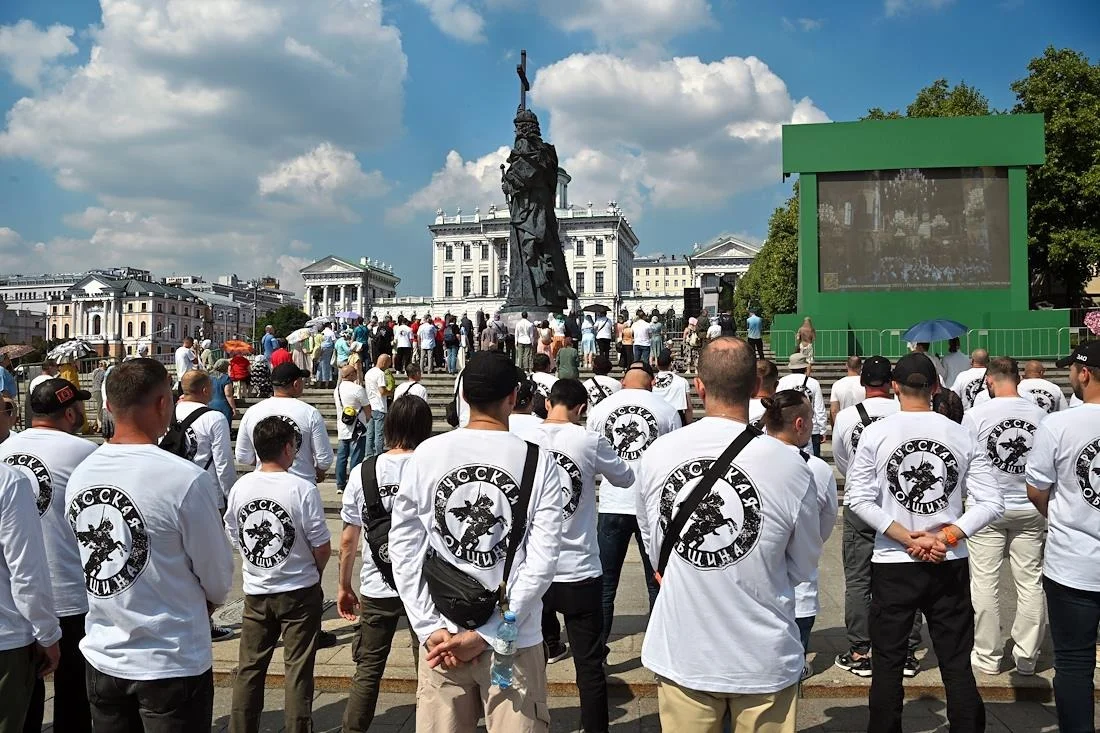
The “Russian Community” generally follows the same views, and for the idea of the Russian people refers to the programmatic text of Yegor Kholmogorov, which, in understanding “Russianness,” emphasizes the creation of an empire by the Russians and their statism. He also mentions the genetic aspect of defining an ethnic community, combining definitions of Russians by culture and blood. The administrator of the TG channel “Russian Community” stated in his own statement : “Both Russians by blood and spirit are important to us.” To avoid ambiguity in the understanding of this phrase, the “Russian Community” explained that “Russianness” is not determined by the nationality of one of the parents or by DNA; even skin color may not matter. But then they say that it is still good to be Russian both in blood and in spirit, even if not 100%.
It is curious that neither the “Russian Community”, which constantly defends Orthodoxy, nor even Malofeev, until recently one of the leaders of the World Russian People’s Council (VRNS - the “political wing” of the Russian Orthodox Church), focus on Orthodoxy as an attribute of “Russianness”. Moreover, this is not in the official statements of the authorities. Orthodoxy is rarely found in the context of the definition of “Russianness” and is characteristic only of groups that, first of all, position themselves as Orthodox. Even Patriarch Kirill himself, as noted above, is satisfied only with “involvement in Orthodoxy” as an attribute of “Russianness.”
Views of “Russianness” among nationalists who sharply criticize the authorities for insufficiently active nationalist policies or weak military efforts (even if they are people who are quite different in other respects) are determined by their emphasis, first of all, on the importance of empire. Let's say, Igor Strelkov understands Russians in a cultural sense, in the sense of orientation towards the power of a power that he sees as multi-ethnic. And the radical opposition ex-Colonel Vladimir Kvachkov, regarding the definition of “Russianness” and its relationship with the Russian state, back in the late 2010s, after being released from prison, said approximately what has now become the official position.
The underground neo-Nazi groups that have multiplied since 2023, judging by their main manifestos, view Russians simply as one of the varieties of the white race; they are pure white racists, being, perhaps, even more consistent in this than the Nazi skinheads of the 1990s and 2000s.
To sum it up
The biologizing idea of “nationality”, that is, ethnicity, which took root in Soviet times, has been preserved at the level of everyday judgments, but in political language it is now completely marginalized. Almost everywhere and from top to bottom (minus the neo-Nazis who have become less noticeable), ethnicity, including “Russianness,” is defined in a cultural sense. Ideas about the degree of inclusiveness of the Russian community can vary: how easy it is to “become Russian.”
To about the same extent, among Russian nationalists by self-presentation or by external characteristics, including President Putin, a consensus has established itself in the idea of the Russian nation as a multi-ethnic system, centered on the Russian “core” and in some sense led by Russians.
Almost as consensual is the idea of a triune people, although at the level of polemical and even more so everyday speech, it may be difficult for a nationalist, especially in the last four years, to distinguish between his rejection of the Ukrainian political nation and his hostility towards Ukrainians as an ethnic community, which often leads to rather cannibalistic statements addressed to them.
Thus, after the primary searches of the 1990s and the competition of grassroots activist racism with intellectual “civilizational nationalism” in the 2000s, a Russian nationalist consensus is being formed in the 2010s, and after 2022 is being consolidated. This happens under the influence of the choice of understanding Russians and Russia that is being made in the Kremlin. Opponents to this consensus among Russian nationalists are now not only uninfluential, but also inconspicuous.