
Translated material
“Characterized negatively, does not strive to take the path of improvement”
The investigation into the suicide attempt of the former head of the Serpukhov region Alexander Shestun has been resumed
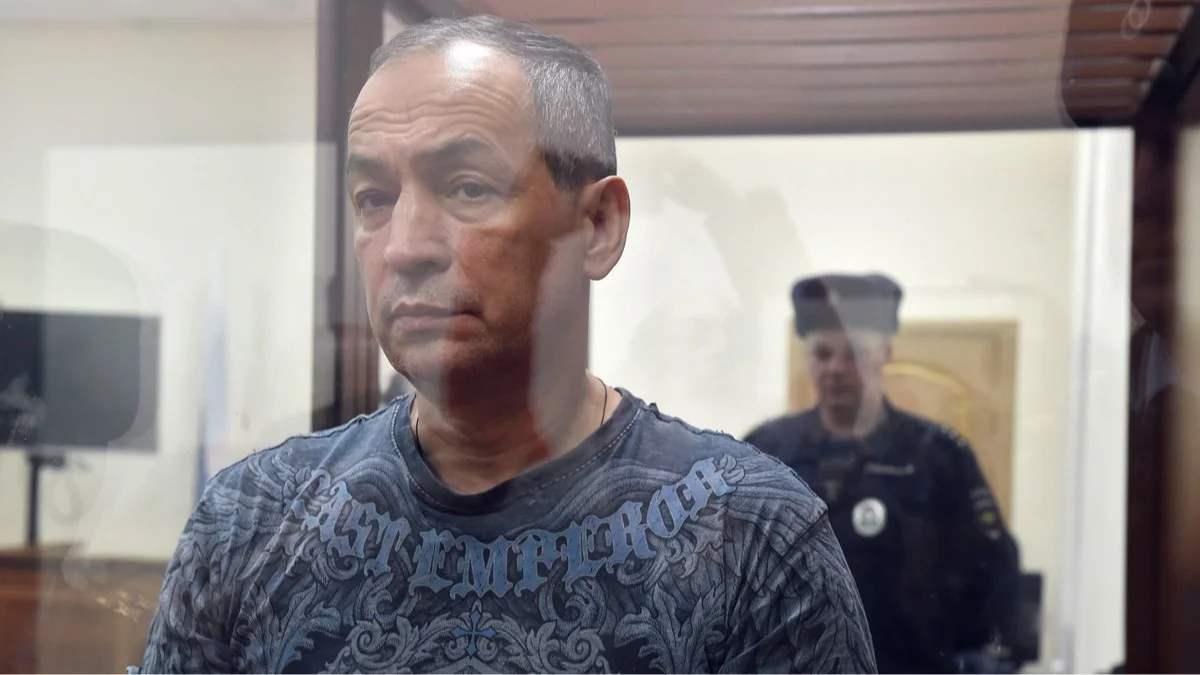
Former head of the Serpukhov district of the Moscow region Alexander Shestun at a meeting of the Basmanny District Court of Moscow, February 12, 2019. Photo: Dmitry Lebedev / Kommersant / Sipa USA / Vida Press
On January 20, Novaya Gazeta reported that the Investigative Committee for the Tver Region will again conduct an investigation into the suicide attempt of Alexander Shestun. Let us remind you that on the evening of December 1, an ex-official serving a sentence in IK-6 in the city of Bezhetsk opened his veins with a disposable shaving machine. The colony officers who discovered him suggested that he “stop self-harm and calmly leave the cell,” and after refusing, they twisted his arms and sent him to the medical unit. As it turned out, the reason for Shestun’s action was the eviction of his 89-year-old mother from her home. In a letter sent to volunteers, the former official said that upon receiving the news, “he cried like a child out of despair.” “The bailiffs still evicted me from my only home onto the street, without at least providing me with a room in a communal apartment,” Shestun complained. In addition, he previously complained about violations of his rights by the colony administration. In particular, he gave examples of depriving him of access to medical care. Soon after the incident, the leadership of the Bezhetsk interdistrict investigative department of the Russian Investigative Committee for the Tver region even conducted an inspection - but responded by refusing to initiate a criminal case under the article on incitement to suicide (Article 110 of the Criminal Code of the Russian Federation), citing the absence of a crime. However, on December 22, the Bezhetsk Interdistrict Prosecutor's Office canceled the decision to refuse to initiate a criminal case, and the investigation was resumed. Novaya Gazeta Europe recalls how the seemingly systemic head of the Serpukhov region, Alexander Shestun, became embroiled in a conflict with the “federals” and what price he had to pay for his stubbornness.
AP gate
Alexander Shestun found himself in the dock in 2018 after he entered into a public conflict with the governor of the Moscow region Andrei Vorobyov, the presidential administration and the FSB, reporting that they were “trying to eliminate him” and offered to resign of his own free will. According to him, in his office on Old Square he heard open threats addressed to him: “They’ll just run you over, you’ll have fucking problems!”
Despite these threats, Shestun refused to resign “of his own free will” from the post of head of the district, and further events for him developed according to the most negative scenario.
It must be said that before this whole scandalous story, few people had heard of Alexander Shestun, with the exception of residents of Serpukhov near Moscow and surrounding villages. In his area, Shestun was known as a successful businessman who made a lot of money trading construction materials in the 1990s: demand for them was then rapidly growing. At the same time, Shestun became a deputy of the district council, then the head of the Serpukhov Union of Industrialists and Entrepreneurs, and in 2003 he was elected head of the district.
At the start of his career, Shestun looked like he came from a semi-criminal environment. Consider the fact that on the eve of the elections a grenade was thrown at his car. The office of the then regional governor, Boris Gromov, did not favor him either. However, Shestun remained afloat for quite a long time and quite successfully managed the district until 2013. Moreover, it seems that he even managed to prove to Gromov that he is a good manager.
Journalist Leonid Nikitinsky, who personally knew Shestun, described him as a populist politician, a kind of “master of the area” - who at the same time “deserved respect as a real patriot, not to cover up predation.”
Shestun was not a modest person. While in power, he acquired luxurious mansions and the necessary connections: he was on friendly terms with FSB generals and even flew to Grozny at the invitation of Ramzan Kadyrov. But the patronage of the special services apparently implied reciprocal services. In 2011, Shestun became embroiled in interdepartmental disputes, which resulted in the “Case of Casinos near Moscow.” In particular, Nikitinsky writes, it was Shestun who told FSB General Ivan Tkachev about the “prosecutor’s casinos” that existed in the Moscow region, and became a key witness in this case. For which he received protection for a while.
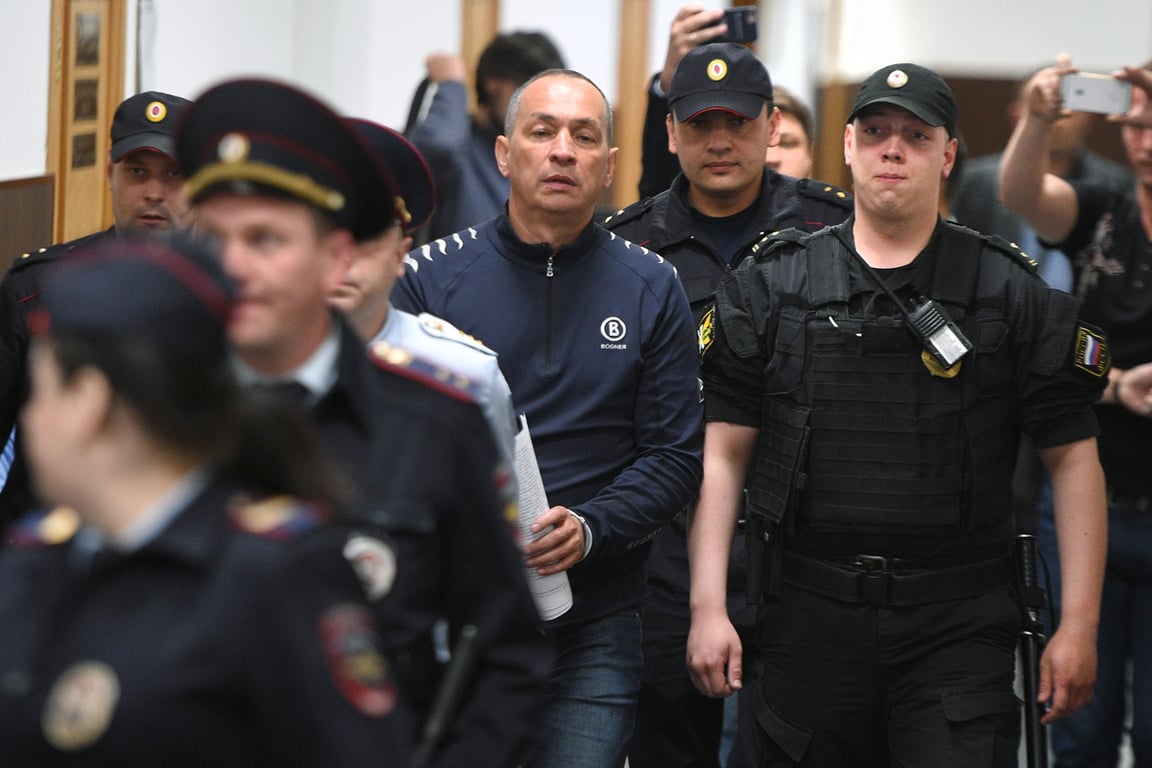
In addition, Shestun himself later admitted, he generously gave Tkachev iPhones and paid for his people in restaurants.
“I also often organized holidays in hotels in the Serpukhov region for Tkachev and his subordinates. The largest trip of Tkachev with all his deputies and their wives, including Tkachev’s wife, was May 22–24, 2015. This company consisted of more than 10 people. In addition to accommodation and catering with various delicacies and elite alcoholic drinks, they rode jet skis, ATVs, motor hang gliders, and motor paragliders,” Shestun said, noting that this visit alone cost him a million rubles.
For the time being, this patronage gave the Moscow region politician some freedom of action. For example, he harshly opposed the municipal reform, which was launched by the new governor Vorobiev back in 2014. Authorized rallies demanding the closure of waste landfills near Moscow. He seemed sincerely confident that voters would be able to protect him: “I feel safe with you. Governor Vorobyov will not be able to put pressure on me,” he said at one of the “anti-garbage” rallies.
In 2018, shortly before the next elections, Shestun published a video message in which he said that the head of the region had privately demanded that Shestun vacate the post of head of the district, conveying the corresponding message through the head of his administration, Mikhail Kuznetsov.
According to the politician, the post of head of the Serpukhov region “was sold to people from the Podolsk criminal group.”
Shestun refused to leave, then Vorobyov, according to his words, turned to the AP and personally to Putin. It was in such circumstances that Shestun found himself in the office of the then head of the internal policy department of the AP, Andrei Yarin, where Ivan Tkachev, already familiar to the Serpukhov head, popularly explained to him what would happen if the official continued to resist. Shestun managed to record this conversation.
- How old are you?
— I'm 52.
“You don’t want to live, is that all?”
- Don't you feel sorry? I have five children.
“I’m sorry, but that’s not what I’m talking about.” Don't let them just run over you.
The owner of the office, Yarin, speaks next. He explains to Shestun:
“ The fates of so many people are decided in this office; believe me, the fates of district heads are decided in offices at a lower level.” Therefore, if I had to pack Shestun, excuse the terminology, I probably would have done it without spending the second hour discussing simple and understandable things.
Realizing that his chances of retaining his position were close to zero, Shestun made, from the point of view of the authorities, a fatal mistake - he washed his dirty laundry in public. He published his own video message in which he spoke about what happened, and attached to it a recording of conversations with General Tkachev and Andrei Yarin. But the Kremlin apparently didn’t even bother to watch the recording. At least that's what Kremlin spokesman Peskov said.
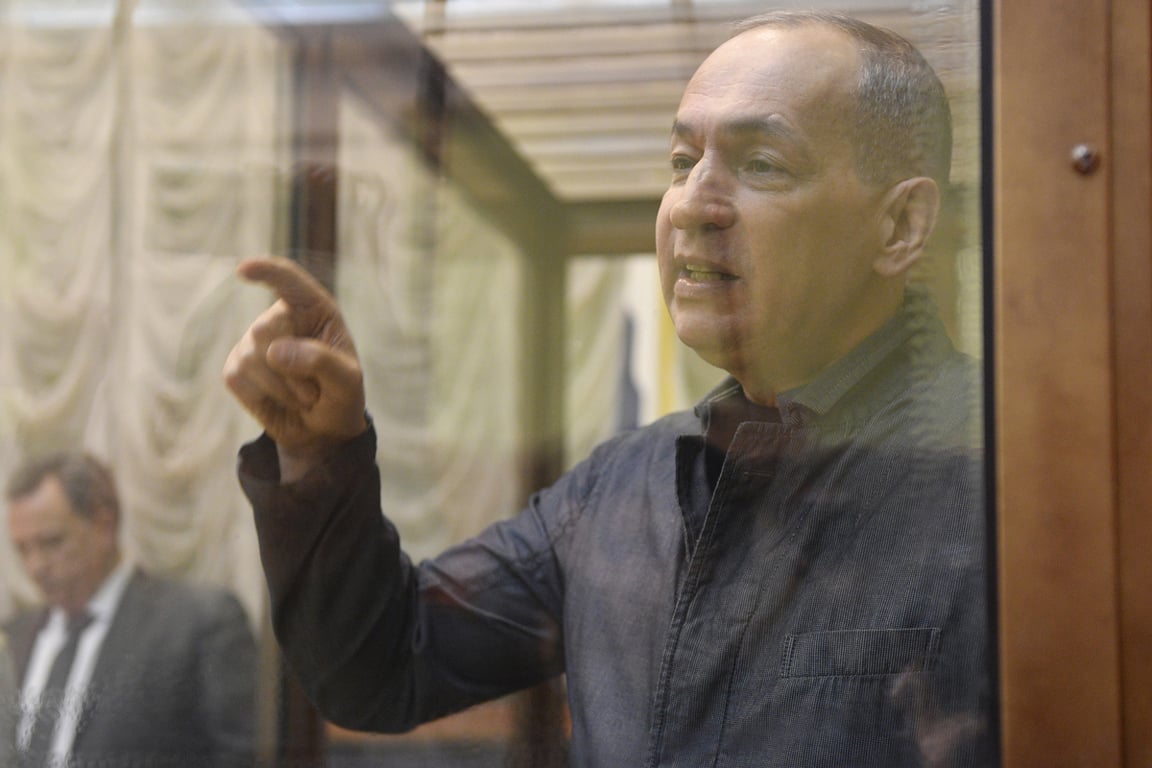
Shestun’s publication provoked a real scandal: for the first time, the country so clearly saw the underbelly of municipal politics. Even the priest Vsevolod Chaplin, previously unconditionally loyal to the Kremlin, reacted sharply, who directly spoke about the “usurpation of power” and abuse of official powers:
“This is a real AP gate. In general, in such cases, the head of state must resign. He should be ashamed to remain in power. And at the very least, all those who illegally and immorally interfere in matters in which they have no right to interfere should be ashamed to remain in power,” Chaplin said .
And yet, Shestun’s demarche did not save him from the wrath of law enforcement agencies, and also clearly showed that the methods of work of the presidential administration and the FSB are not much different from the methods of organized criminal groups of the 1990s.
Sent around the world
Shortly after the AP-gate, special forces burst into Shestun’s house. A number of charges were brought against him: fraud (Part 4 of Article 159 of the Criminal Code of the Russian Federation), receiving a bribe by an official (Part 6 of Article 290 of the Criminal Code of the Russian Federation), legalization of property acquired by criminal means, and illegal participation of an official in business (Article 289 of the Criminal Code of the Russian Federation). The subsequent trial showed that the claims against Shestun could indeed have real grounds. However, exactly the same claims, if desired, could be presented to the vast majority of Russian officials. But other local government officials did not record the conversation in the Presidential Administration. So in 2020, it was Shestun who received 15 years in a maximum security colony and a fine of 49 million rubles.
In prison, the former official continued to fight and even went on hunger strikes to protest against the arbitrariness. Eight years in prison and many days of hunger strike exhausted him, but did not improve his situation. In his last letters, he reports that he has difficulty sleeping due to convulsions, loses consciousness, has problems with blood vessels, but cannot get medical help even at his own expense. In the colony, Shestun is “characterized negatively, does not strive to take the path of correction,” and was even recognized as a “malicious violator.” During his entire term in prison, he allegedly “committed 134 violations of the regime,” for example: “did not say hello when meeting with the administration,” “did not make the bed according to the established pattern,” and so on. Just last year he was twice placed in a punishment cell for “violating the daily routine.” In a word, Shestun can only dream of peace in the colony.
However, after punishing the ex-head of the Serpukhov region, his opponents did not stop.
According to investigators, the former official criminally acquired 678 real estate properties and 25 cars, which he registered in the name of his friends and relatives.
A total of 10.5 billion rubles, which the Prosecutor General’s Office demanded to be returned to the state. Thus, in addition to Shestun, thirty-nine more co-defendants appeared in the civil suit. Shestun insisted that the security officials’ estimates were inflated, pointing out that the district head’s vehicle fleet consisted mainly of small cars, and “hundreds of real estate properties” were small plots of land for gardening.
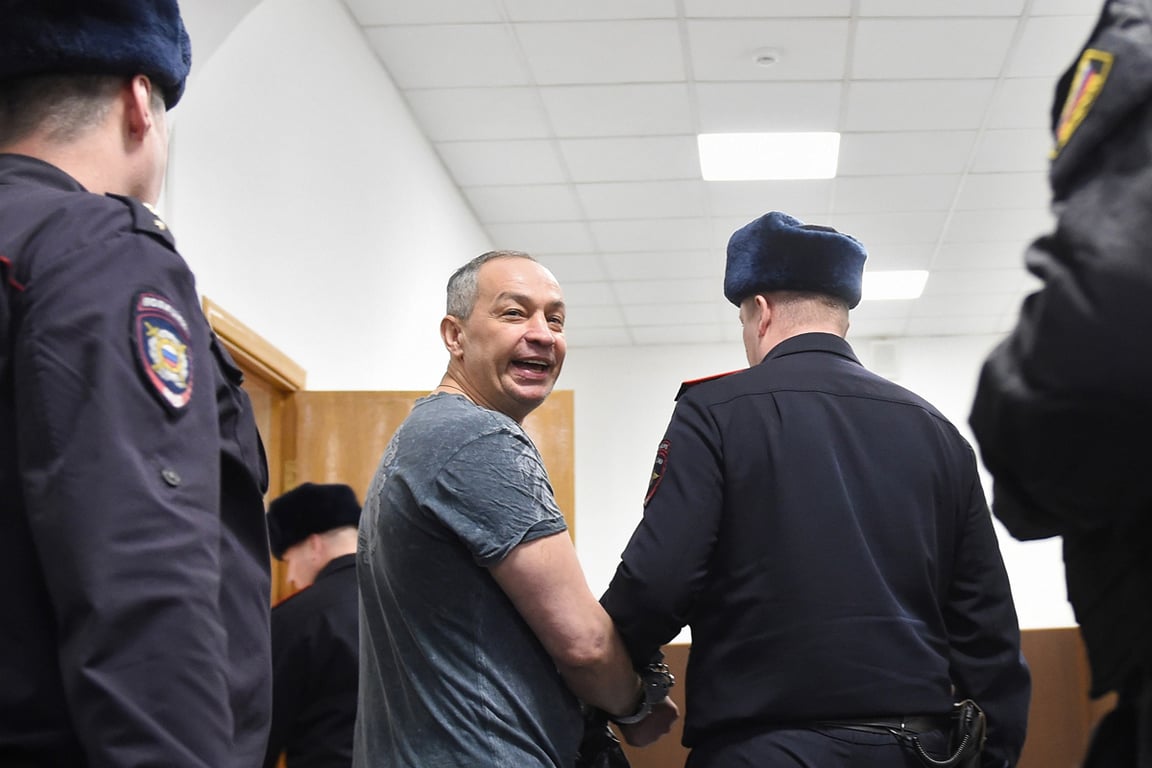
“There was absolutely no control over the house. They didn't even take out the furniture. But teenagers, looters or just homeless people coped with it perfectly. There are bottles and bottles on different floors, and there is black mold all over the house. It means that the house will never be suitable for living again and is only suitable for demolition. The gate is wide open, the glass is broken, the whole yard is overgrown with plants so that in some places it’s even difficult to get through.”
Shestun owned various real estate, his relatives had somewhere to move. The Investigative Committee even showed the last mansion from which the family was evicted to the public, taking the trouble to film it from a quadcopter. A rather spacious two-story house in a pine forest should surprise the viewer with luxurious interiors - but the inside turns out to be unexpectedly restrained. The most “flashy” detail presented by investigators was the dressing room, as well as several exercise equipment. This cottage, our interlocutor says, unlike the first house, is protected: “Still, it was reported through all federal channels in conjunction with the illusory 10 billion. However, it is not clear what condition it is in, since it is impossible to see anything beyond the high fence.”
Alexander Shestun’s mother, Zoya Mikhailovna, resisted the eviction the longest.
According to our interlocutor, “the eviction of an 89-year-old man with a 2nd degree disability from his only home after a massive stroke is [also] illegal,” so the family’s lawyers managed to delay the process for a long time.
However, the Serpukhov City Court still denied Shestun’s mother another reprieve. Probably, the house from which the pensioners were evicted (Shestun’s mother and her husband - editor’s note ) is also not a “hut on chicken legs”, but decent real estate. But, unlike the Shestunov cottage in a pine forest, the security forces did not show it to the public.
“All these two years, lawyers have appealed everything they could. In the case of Zoya Mikhailovna’s house, they managed to postpone the eviction for some time. Apparently, precisely because it was a less “publicized” object, and no one wanted to take the death [of Shestun’s mother] into their own hands. Now she and her husband have been temporarily taken to live with relatives. Naturally, all possible help from relatives was provided,” says the activist.
There is almost no hope for a fair solution, our interlocutor believes. Despite the fact that “during the trial, the lawyers offered to rent out the family’s only home for “social rent,” the court did not grant this request,” he says. Having learned about his mother’s eviction, Shestun fell into despair and opened his veins: “Alexander lost a lot of blood, but in the civil hospital they seemed to sew up his hand quite well. It’s too early to draw conclusions about the long-term consequences, but I hope there won’t be any,” the source told New-Europe.