
Translated material
"I am a woman from Iran"
The number of people killed in Iran is much higher than they say in the media, claims Masih Alinejad
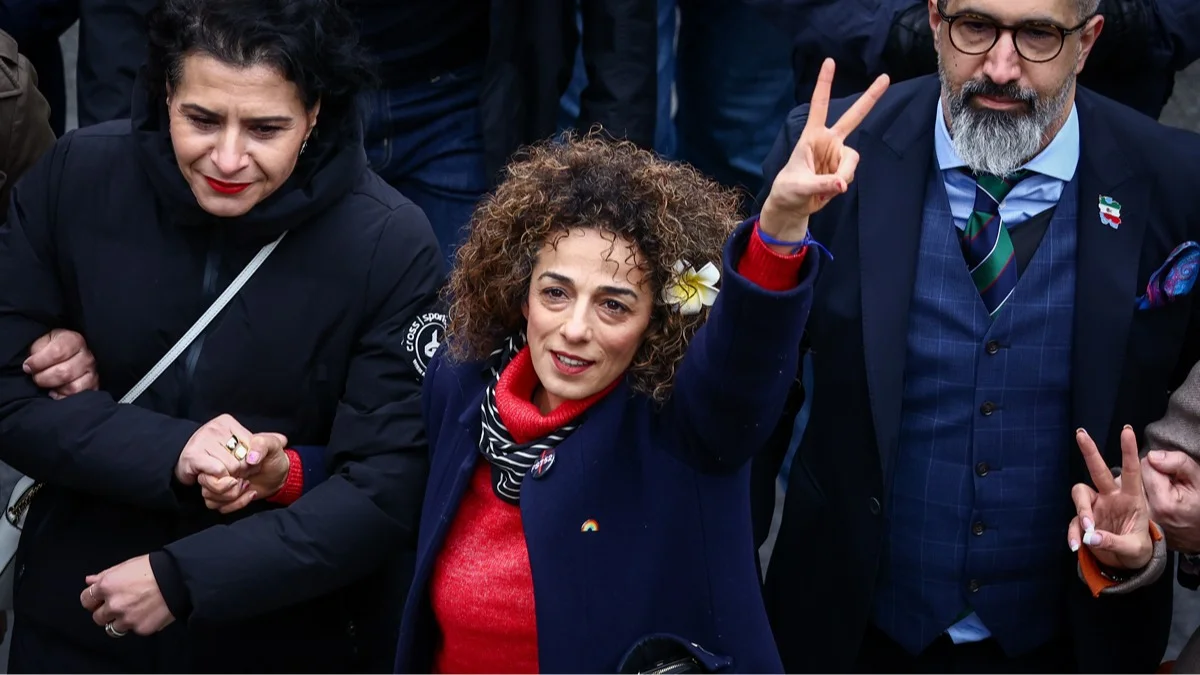
Masih Alinejad during a rally calling on the EU to recognize the Islamic Revolutionary Guard Corps as a terrorist organization, Brussels, Belgium, February 20, 2023. Photo: Stephanie Lecocq/EPA
Late last week, Iranian journalist Masih Alinejad spoke at an emergency meeting of the UN Security Council on Iran and desperately called on the world to intervene and help the protesters. She compared the ayatollah's regime with ISIS and said that the situation will only get worse, and there will be many more victims, if the world community does not take tough action against the regime. Masih, who survived three assassination attempts, a world-famous journalist, activist, human rights activist, leader of the Iranian women’s campaign “My Secret Freedom,” introduced herself at the UN Security Council simply: “I am a woman from Iran.” Masih Alinejad told Novaya Gazeta Europe about how the Iranian authorities cover up their tracks and hide the number of those killed, and about what Iranians expected from the world, but never received.
— Masih, everyone is talking about a large number of victims, but the figures cited by different media vary significantly. You are in touch with colleagues and activists within the country. Still, what number can we talk about as being as close to the truth as possible?
“Different media reports different numbers, not because they are careless, but because the Islamic Republic imposed an almost complete internet shutdown, threatened victims’ families, controlled hospitals and hid bodies to destroy evidence. But let me be clear first: what is happening in Iran is not “crowd control.” This is a massacre. The regime uses army weapons against unarmed civilians: young people chanting slogans; women protesting against compulsory hijab; families demanding respect for their dignity.
When a government uses weapons against its own people, it is no longer a question of statistics. It's about crimes against humanity.
CBS reported that up to 20,000 people died. According to a Sunday Times report based on data collected by doctors in Iran, the death toll from the protests could be as high as 16,500-18,000, and the number of people injured during the protests at around 330,000. My own sources inside Iran - doctors, families of those killed and people risking their lives to pass on information - tell me the real number is much higher. The discrepancy exists because the regime deliberately conceals the extent of its crimes. The bodies are hidden. Death certificates are falsified. Families are forced to remain silent.
— What is known about those sentenced to death for participating in protests? In my opinion, the whole world hopes that Erfan Soltani will not be executed.
— The Islamic Republic uses the death penalty as a weapon of terror. People are sentenced to death after trials that last minutes - without lawyers, based on forced confessions obtained under torture. These are not trials at all, these are executions with paperwork. The charge, the sentence, are just papers with seals that allow them to kill a person supposedly legally. The ayatollahs, by the way, lied to US President Trump when they said they were going to stop the execution of 800 protesters. It's just their tactics. They have been using it for a long time to gain time to restore their own strength and ward off a blow. But they will take revenge very soon.
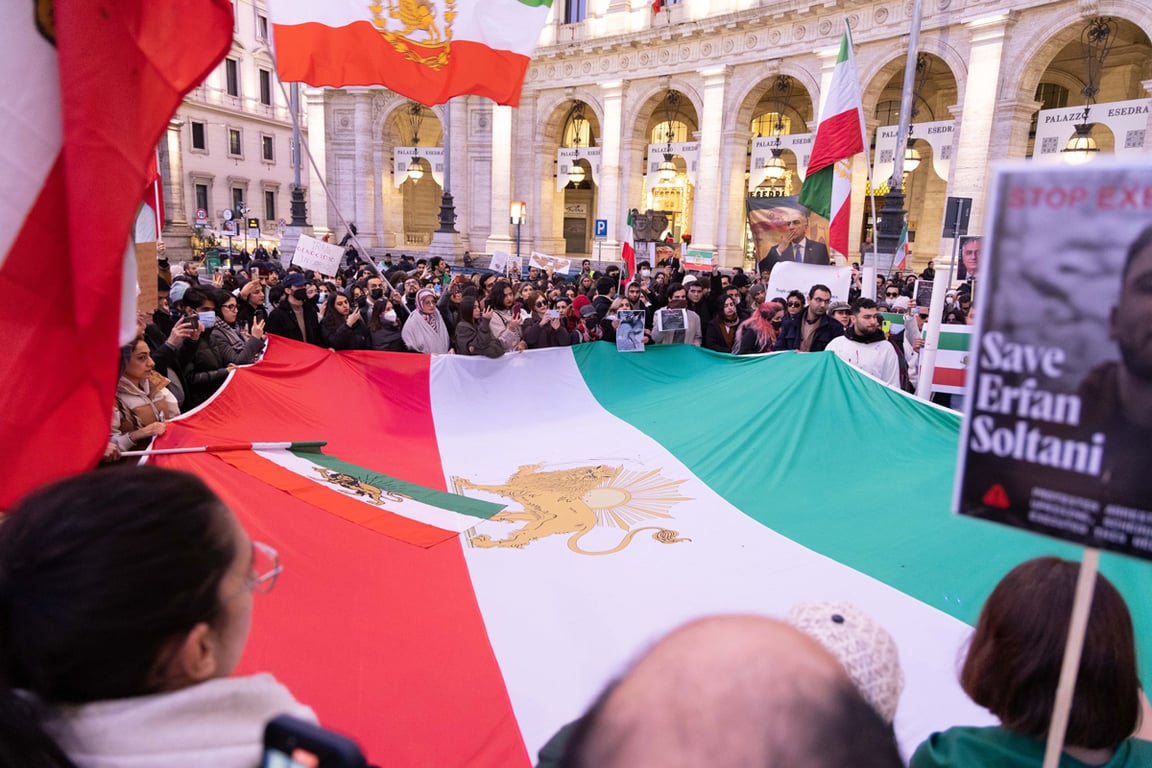
We've been through all this before. Now they are working step by step. They break into hospitals and kill the wounded - this is another form of mass execution. The world was rightly shocked by the Erfan Soltani case. His execution was announced, then postponed. But delay does not mean safety. Some of my sources inside the country claim that he died in prison. This, by the way, is another form of torture. We don't know the real state of affairs. We only see that the regime is using Erfan Sooltani's life as leverage, as a warning to millions of others. But we don’t know whether Erfan Soltani is alive. And he is not the only one - many protesters were sentenced to death, but information about them is hidden by the regime. These people are not known in the world, their names are deliberately erased so that the executions can take place in silence.
— Do you know how many protesters were arrested and what sentences they face?
— Nobody knows the exact numbers; they cannot be confirmed. The Islamic Republic deliberately hides information - by shutting down the Internet, intimidating families and maintaining secrecy in prisons. And this is what the arrestees face: torture and solitary confinement; extracting false confessions; long prison sentences; in many cases, capital charges such as “hostility to God.”
I am also receiving credible reports that at least 8,000 protesters were deliberately blinded - shot directly in the eyes at close range.
— What should the international community do?
- It's very simple. First of all, isolate the Iranian regime. It is he who is the root cause of chaos in the region. This regime sends drones to Putin to kill innocent Ukrainians. This regime has worked closely with China to help dictator Maduro maintain power in Venezuela. This regime persecutes its opponents even outside the country. It was he who sent killers to the USA three times to kill me. It was he who planned the assassination of President Trump and some American officials. He is the one who sends assassins to the UK to get rid of journalists and activists.
The Iranian regime is the biggest threat to global security. But Iran without the Islamic Republic can guarantee this security. My demands, like the demands of the Iranian people, are extremely simple. And the international community knows perfectly well what to do. But it chose to do nothing.
— Besides isolating the regime, what did the Iranians expect?
“There are three very important things that we had the right to expect from the world. First: immediate diplomatic consequences. When a regime kills unarmed people in the streets, it must lose all legitimacy. Democratic countries must immediately expel Islamic Republic diplomats from their territory. You cannot accept representatives of a government that shoots protesters and hangs dissidents. Statements of popular support are meaningless without consequences for the regime.
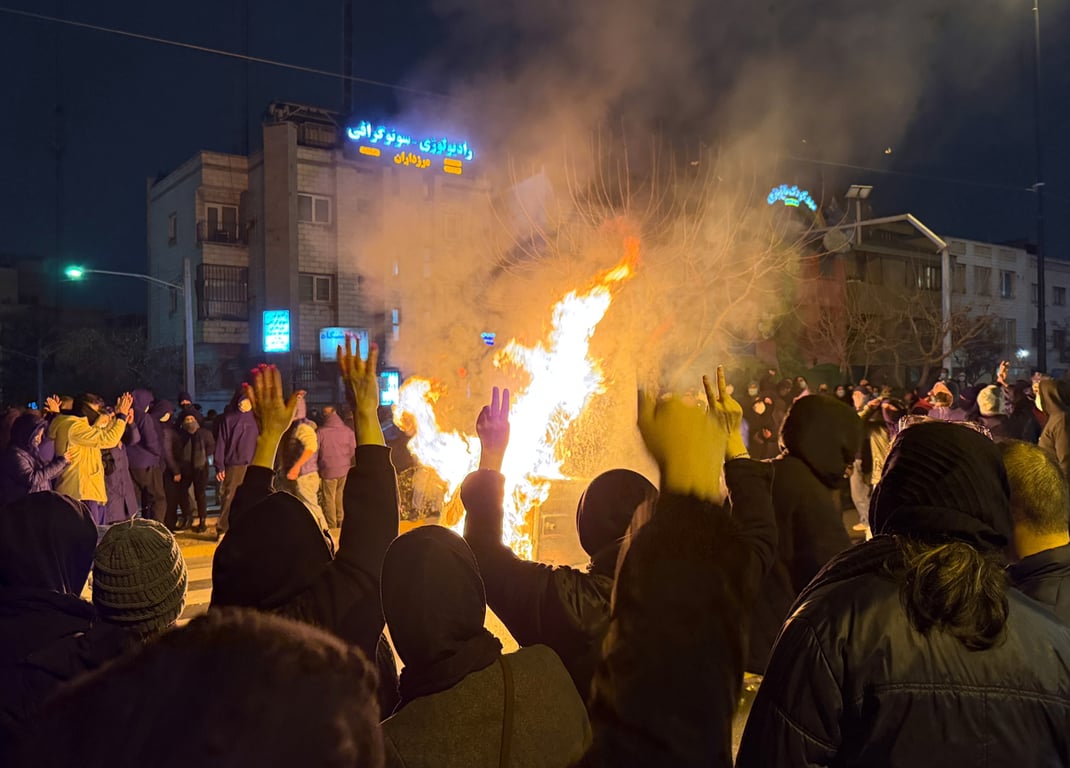
Second: protecting the information flow. The regime is shutting down the Internet, as it did in November 2019, when fifteen hundred innocent people were killed in darkness and silence. Shutting down the Internet is not a technical solution. These are tools to cover up crimes against humanity. The international community should have helped Iranians maintain access to communications via satellite Internet and other technologies. Remember, an Internet shutdown is a clear signal. This means that the regime is preparing to kill.
And finally, third: bringing the organizers of terror to justice. I publicly support targeted action against leaders of the Islamic Republic who order mass murder and export terror beyond Iran's borders. I supported the capture of Venezuelan dictator Nicolas Maduro, and I believe that Ali Khamenei, the Supreme Leader of the Islamic Republic, should be treated the same. He is not a religious figure. He is the commander of a terrorist system.
— There have already been three attempts on your life in the United States, which is why you are now forced to constantly travel with security. Did the orders to kill you also come from Khamenei?
“Khamenei personally gave the order to punish me after I compared the compulsory wearing of the hijab to the Berlin Wall: if this wall is destroyed, that is, the hijab is removed, then there will be no Islamic Republic. After the murder of Mahsa Amini, he instructed the commanders of the IRGC (Islamic Revolutionary Guard Corps) to physically eliminate critics of the regime like me. In recent years, three plots to kill me have been uncovered and the perpetrators have been sentenced to 25 years in prison in US federal court. The indictment makes it clear that this was an operation ordered by the Supreme Leader and carried out by the IRGC.
This regime does not stop at Iran's borders. The Islamic Revolutionary Guard Corps is sending assassins to the United States, Britain and across Europe to silence journalists, activists and even elected officials. Transnational repression is one of its main tools. This is why the international community must stop viewing this as an internal Iranian problem.
The Islamic Republic is a global security threat. And getting rid of terrorists is not a tragedy, it is justice.
The same world that understood that there is no difference between the ideology and violence of Osama bin Laden must understand that there is no difference between him and Ali Khamenei. Ordering mass murder does not become acceptable just because the state does it.
Finally, I call on the UK and all G7 countries that have so far hesitated to declare the IRGC a terrorist organization to do so now. The delay has its own cost, and that cost is the lives of Iranians.