
Translated material
Some kind of wrong world: Who is actually reshaping the global security system
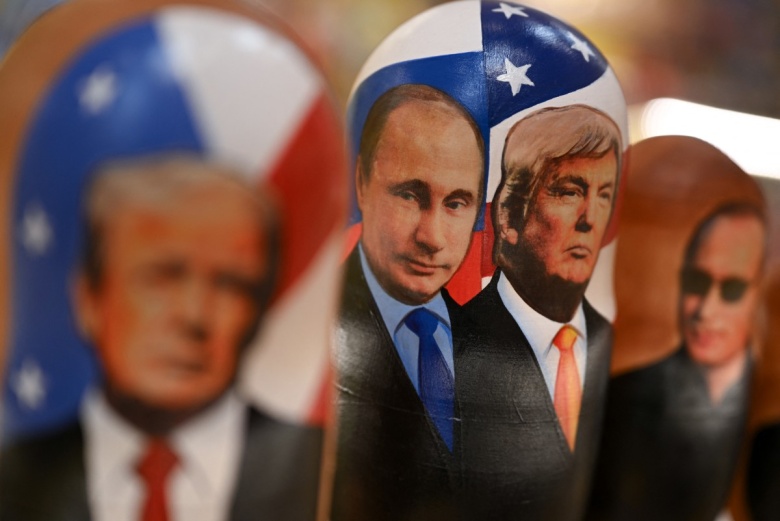
Vatreshki depicting Vladimir Putin and Donald Trump, in a souvenir shop on Arbat.
Photo by OLESYA KURPYAYEVA / AFP
The mirage of a possible peace in Ukraine appeared almost simultaneously in Moscow and Berlin, but quickly faded. While Putin and Merz spoke cautiously of “restoring balance,” Donald Trump was reshaping global security to suit himself, demonstrating that any peace treaties could be a byproduct of a big deal. Mikhail Shevchuk understands why peace itself no longer guarantees anything today and who is actually designing a new architecture of power.
After synchronous statements by Vladimir Putin and Friedrich Merz about restoring relations, the smell of a peace treaty in the Ukrainian conflict seemed to become clearer - but it was instantly interrupted by the harsh and heavy spirit from Washington, where peace is understood in its own way.
Vladimir Putin expressed hope for the restoration of good relations with Western countries in the future. At the same time, German Chancellor Friedrich Merz also spoke in favor of restoring “balance in relations.” One might think that the participants in the global conflict are beginning to soften their positions and are finally ready to end the long negotiation process with peace. But a potential peace treaty between Russia and Ukraine may not in itself mean the onset of a peaceful state.
Subscribe to read in full
Subscribe to Redefine.Media to read Republic
Subscribe [You can pay with a Russian or foreign card. The subscription is renewed automatically. You can unsubscribe at any time.]
Where does the subscribers' money go?