
Translated material
“The informer is different in every era.” Dmitry Bykov's conversation with Natalya Gromova about the fate of literature in the age of the dragon
Natalya Gromova is a thoughtful archivist, publisher and commentator on the diaries of Malakhieva-Mirovich and the biography of Olga Berggolts “There Was and Is Not Death.” Since April 2022, Natalya Gromova has been living and working in Israel, publishing outside of Russia, and this is her conscious personal choice. Her book “Eugene Schwartz. The Fate of the Storyteller in the Age of the Dragon" is the most complete and least academic biography of Gromova’s most beloved author, to whom she always felt indebted. Now this debt has been repaid, at least in part. Regular Republic contributor Dmitry Bykov talked with Natalya Gromova about Schwartz, Bergholz, the Thaw, Khrushchev, those who left and those who remained - then and now.
— What exactly is most attractive about Schwartz’s character? And where do people come from who are physically incapable of lying, participating in bullying, or slandering a colleague? He writes that he simply could not say public nasty things about Oleinikov during the development meeting. Is it upbringing or is it really a special physiology, a happy heritage?
— Schwartz is unique for me not only because of his innate inability to lie. Although he was forced to pretend, this is certain. Take, for example, his trip to the White Sea Canal and participation in various congresses and writers' meetings.
— I didn’t even remember that he was on the White Sea Canal.
- Yes, you see, somehow it didn’t stick to him. His notes say: “I don’t dare to really describe this journey, or rather, I haven’t learned yet.”
For me, he is remarkable for his combination of irony, sometimes merciless, high compassion for the fallen - and a sense of his own sinfulness. For a man of his time, this is a unique set of qualities that I have never encountered in anyone else of that era. How could he say something bad about Oleinikov, about whom he shed tears of blood both after his arrest and then? He loved him more than all his friends. I don’t know whether Oleinikov himself understood this during his lifetime, who was most occupied with himself, novels and his place in literature. It’s a sin to say such a thing about a deceased person, but Schwartz’s moral scale was much higher.
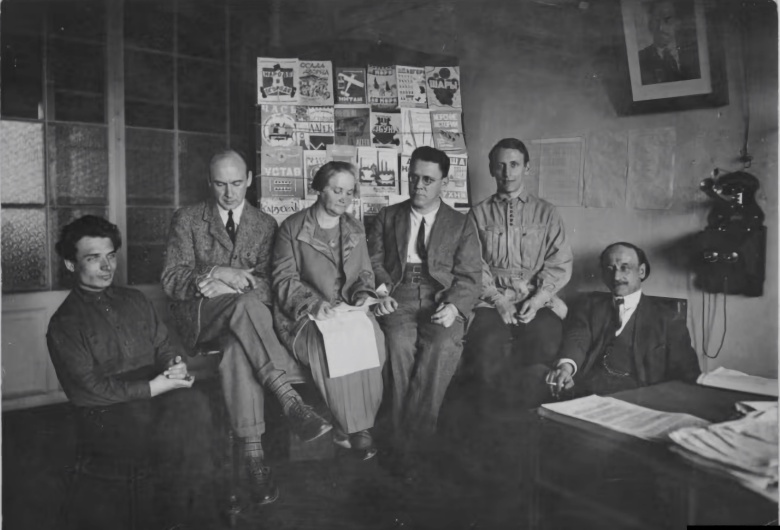
N.N. Oleynikov, V.V. Lebedev, Z.I. Lilina, S.Ya. Marshak, E.L. Schwartz, B.S. Zhitkov. Leningrad, 1926
— Ivan Solertinsky called Schwartz “Ibsen for the poor,” which offended him greatly. In fact, Solertinsky is the poor man's Ruskin, so it seems to me. But what dictated the more or less disdainful, snobbish, arrogant attitude of his contemporaries towards Schwartz? “Fairy tales” they talked about him, while fairy tales were socialist realism, and he was a writer on the level of Andersen and Dickens, not to mention Ibsen. What prevented his colleagues from fully appreciating him? After all, in my opinion, only Slonimsky, Panova and Forsh truly appreciated him.
— Here, it seems to me, the story is about “you can’t see face to face.” They could not yet assess the level of Schwartz's fairy tales. And he himself did everything possible to be treated ironically. There was some kind of super-modesty in him - of course, with a secret dream of fame. Panteleev recalls how he once said that he was not looking for fame at all - Schwartz: “Oh, what are you talking about! What you! How can you say that! What could be more beautiful... Glory!!!" But he himself was a mystery to himself, in my opinion, and his own masterpieces were a surprise to him. They say that the brave are afraid after danger. Schwartz first wrote, and then was horrified - but it was too late, the thing had already been written.
Each time Schwartz himself did not know where this or that plot would take him, so he rushed about, looking for confirmation in the diary prose that he was a writer.
But I wouldn’t say that so few people appreciated him. Malyugin, Kozintsev, Akimov, Alexei German - people of theater and cinema to a greater extent than writers - were given the opportunity to hear his special philosophy through “fairy tales”. Slonimsky appreciated him only in his memories, after his death. About Panova, there is a letter where she calls him one of the first: “Clever, soul, perhaps the first writer of our time (it may very well be so, if you know “Dragon” and “Shadow”), he left, as they say, in the prime of his talent, in full spiritual vigor and efficiency.”
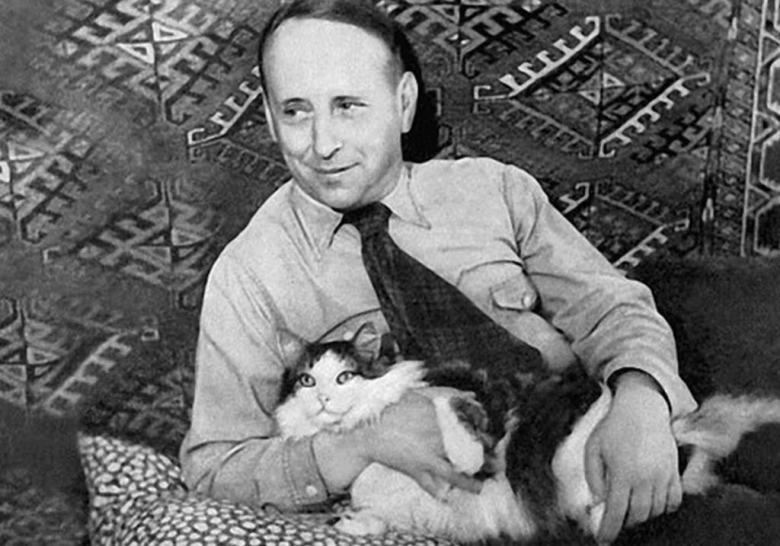
Evgeny Schwartz
But I think Bergholtz understood him better than any of the writers. And Forsh... she always loved the young improviser from the House of Arts in the early 1920s. Akimov guessed his true gift, so he chased him with the demand to write adult plays. But Akimov himself was an “alien”, a bookish person. Schwartz opens up so slowly that even the perestroika era emasculated him, leaving only sharp journalisticism and removing his Christian humanism from film adaptations and productions.
— How do you yourself assess the poetic scale of Bergholz, your other heroine? She seems to me, pardon the expression, to be a physiologically enormous poet - this is what Shklovsky said about Mandelstam. Why didn’t this scale of talent keep her from alcoholism? But the main thing is why did it survive the 1940s and finally deteriorate in the 1950s–1960s? After all, many survived Stalinism, but began to literally go crazy when the thaw also deceived them.
— It’s not easy for me to talk about her poems, because I only like some of them. They seem too straightforward to me. Kornilov (Olga Berggolts’s first husband. - Republic) was much brighter and more talented than her. But she is talented in another way: she is a special person and a poet of the period of disaster. Attractive - both for friends and lovers - with openness, courage, honesty. By fulfilling my destiny. She took responsibility for the silent, voiceless inhabitants of the dying besieged city.
Schwartz understood her character and soul more deeply than anyone else, and both of them, independently of each other, became chroniclers of the ongoing catastrophe.
Her alcoholism, firstly, was hereditary; My father drank very heavily. Her drinking began with the war, a hundred or more grams, with the fact that during the war the male entourage drank a lot, and she did not lag behind. In addition, these were the calories that kept us going during times of famine. But the root cause is her destiny as a woman. She could no longer have children. The betrayals of Georgy - “Yurka” - Makogonenko began, which for her became a reflection of her own betrayals to her husband, Nikolai Molchanov, who died during the siege. This torment, combined with the torture of post-war lies, turned her life into slow self-destruction. She escaped from illness and hospitals for a while - and again sank to the bottom.
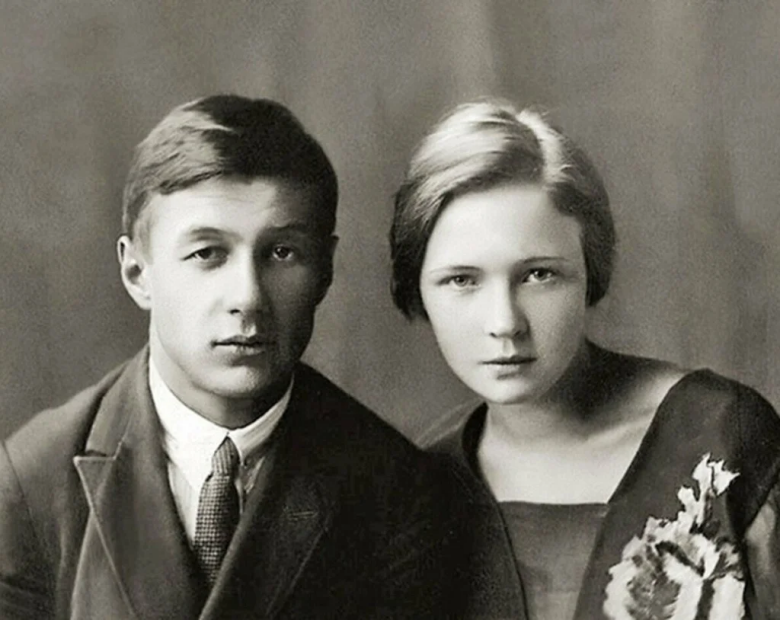
Boris Kornilov and Olga Berggolts
The thaw was not easy for her. At this time, Makogonenko left her, and his daughter was born from another woman. She really wanted to write the Main Book based on her diaries about prisons, camps and the blockade, but she was unable to pull off this plan. She was burned out from all the previous years.
No, it was not the thaw that deceived her, but also the fact that she did not find a common language with the new generation. She mentally remained in the 1930s, which the young rejected with disgust. “Pervorossiyan”, an experimental film version of her poem about a communist utopia, was not allowed to be released, and she herself did not like the film. The time around was hopelessly alien.
— Pasternak said about Khrushchev: before we were ruled by a madman and a murderer, and now by a fool and a pig. Do you share this assessment?
Subscribe to read in full
Subscribe to Redefine.Media to read Republic
Subscribe [You can pay with a Russian or foreign card. The subscription is renewed automatically. You can unsubscribe at any time.]
Where does the subscribers' money go?