
Translated material
“I don’t want my child to live like this”
Raising a child with cerebral palsy and epilepsy in Russia was not easy for manager Anna Testova . So much so that once she started fighting injustice, she couldn’t stop. In emigration, too, at first it was no better, until, through adventures, Anna, her husband and son Maxim reached the USA, where people with disabilities are treated differently
A Russian language teacher by training and a manager by vocation, Anna Testova was apolitical before the birth of her son and led, in her own words, an absolutely hedonistic lifestyle.
The birth was difficult; due to a medical error, the child suffered IVH (cerebral hemorrhage). “A shunt, brain surgery - as a result of cerebral palsy, epilepsy and all the accompanying mental histories,” Anna dryly describes what happened. After this, faced with the invincible Russian bureaucracy, the difficulties of finding a suitable rehabilitation program and the necessary medications for her son, she quickly became politicized.
They took her five-year-old Maxim to a kindergarten in the center of Moscow for only two hours, immediately refusing to dress him. “My husband Stas came, dressed him, went for a walk with him and the other children. They held out for two days and told us to take him away,” says Anna.
Even before the war, the situation with specific medications in Russia began to actively deteriorate. Maxim was prescribed Ospolot for epilepsy, but the medicine is not registered in Russia, so you can’t buy it in a regular pharmacy .
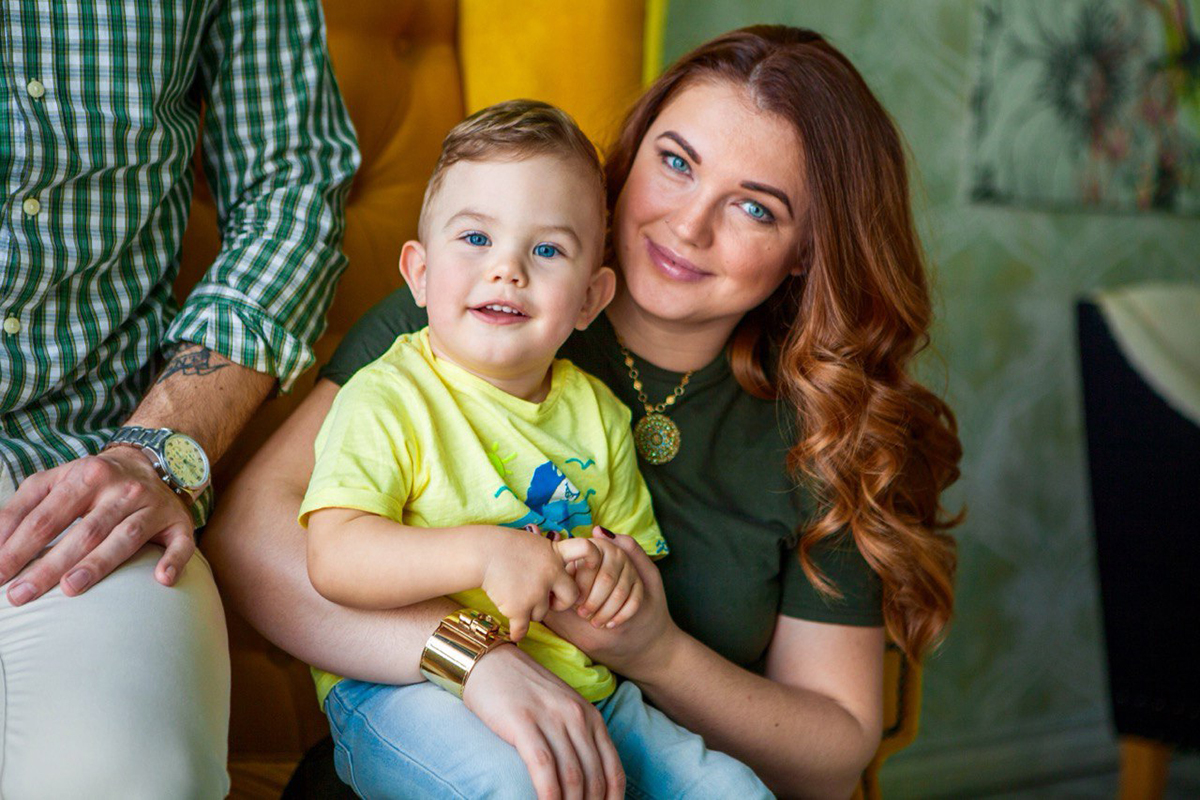 Anna with her son Maxim Photo: from personal archive
“Like diazepam microenemas, which are made especially for children, they are very easy to use and relieve attacks in just a few seconds. This does not produce consequences such as the death of parts of the brain or clinical death,” says Anna. — When your child has frequent attacks with loss of consciousness, vomiting, if the child is not breathing and the ambulance is not on the way, then a microenema is a matter of life and death. No parent will be left without such an emergency drug.”
Therefore, Anna ordered what she needed illegally, although for this, according to her, they could already be given a sentence under Article 228 of the Criminal Code (diazepam is included in the list of psychotropic substances in the Russian Federation). “ Once our parcel was seized by customs officers at the border with Belarus, and since everything was purchased on our credit cards, there was a high risk that they would take us all away,” recalls Anna. Fortunately, they were not taken, but she lost not only about 100 thousand rubles, but, more importantly, the drugs themselves.
“Where did we go then? Our child was absolutely useless to anyone. And we were the ones who were pushing, but we couldn’t achieve anything,” says Anna. Together with her husband, she signed and distributed petitions to protect the rights of persons with disabilities, to stop discrimination against parents of children with disabilities, and wrote to all authorities, trying to get help.
From war to emigration
When the war began in Ukraine, Anna and her husband Stanislav decided not to sit at home and went to rallies.
“I was in such a state that I couldn’t sit at home, I had to do something. We could not remain silent, although I know my friends who do this now. I had a feeling of terrible injustice, some kind of fear that if I didn’t get out, then everything would only get worse,” she explains her motivation.
Anna herself says that she had every chance to grow up as a person with different views, because her father, Sergei, was “strongly pro-Putin.” He died in November 2024, when Anna was already in exile. During their last conversation, he told his daughter that she was “an American slut who betrayed her homeland.”
Anna was born in the Donetsk region of Ukraine, grew up in the Far North of Russia, in Dudinka, and graduated from Herzen University in St. Petersburg with a degree in teaching Russian language and literature.
Anna still had relatives in Ukraine. My aunt, my father’s sister, and her son now live in the Donetsk region, in the village of Velikaya Novoselka. During the war, she organized the delivery of medicines to them.
Anna’s grandmother lived there, but died in April 2025. Russian troops took Velikaya Novoselka for a very long time - little was left of the village. “She never wanted to evacuate because her grandfather died there. She had breast cancer and just wanted to die in her home, which is basically what happened. The first time a rocket fell into the garden, she was wounded. The second time the rocket hit the house, and the grandmother was crushed by the wall,” says Anna.
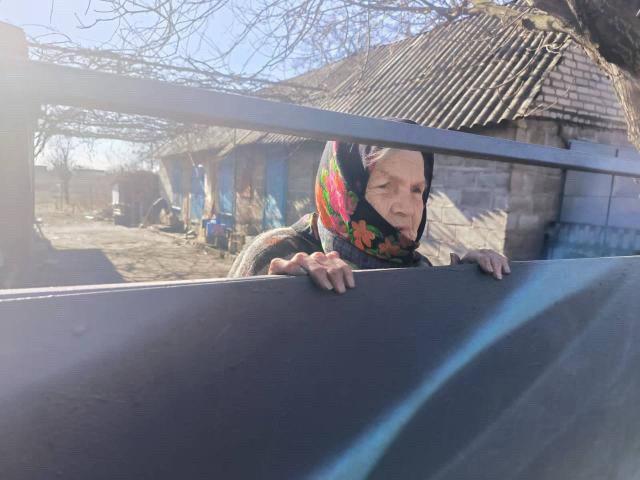 Last photo of Anna's grandmotherPhoto: from personal archive
It was difficult for Anna to live calmly in Moscow, where people do not notice the war, and the authorities hang up posters with the letters z and v.
“I was once driving to work and listening to “Elzy’s Ocean.” I got into such a stupid state when you want to open the windows so that this music is not only inside the car, but also outside. Having done this, I drove simultaneously with a feeling of freedom and with horror that I might not get anywhere now. I realized that I couldn’t live like this and I definitely didn’t want my child to live like that,” recalls Anna.
In Moscow, she had a position as a mid-level manager and a good salary (Anna asked not to name her place of work). When the HR department began receiving subpoenas in September 2022, Anna sent all the young employees to rest. Some of her colleagues spent time in the provinces, others emigrated, but “because of her, no one was mobilized,” she says proudly.
“It was very stressful for us to leave, because the child is a priority, but I made a strong-willed decision for my husband,” says Anna. On September 25, “after pressure and threats from the authorities” (Anna asked not to publish details), he set off through Upper Lars to Georgia. “With torn ligaments, a two-meter man walked for three days, but he made it.”
The most unpleasant thing, Anna recalls, is that their son had a serious orthopedic operation planned for September 27. “Maxim grew up sharply - he took after his father. His bones were very deformed, he began to walk just like a ballerina, on his toes. [The operation] involved putting him down on his heels, cutting his Achilles tendons,” the mother explains.
According to the plan, Maxim was supposed to go to the hospital with his father, and in Russia, Anna clarifies, the parent needs to undergo “a billion tests” for this. In this case, the doctor accommodated her and postponed the operation for a week, during which Anna managed to pass all the necessary tests.
“For the next two months, my son was completely immobilized due to his legs being cast up to the pelvis and just lay there. Not only is he heavy, but there are also two heavy casts. But we got through it all,” she says. When the cast was removed, the child “absolutely” stopped walking and had to be put back on his feet.
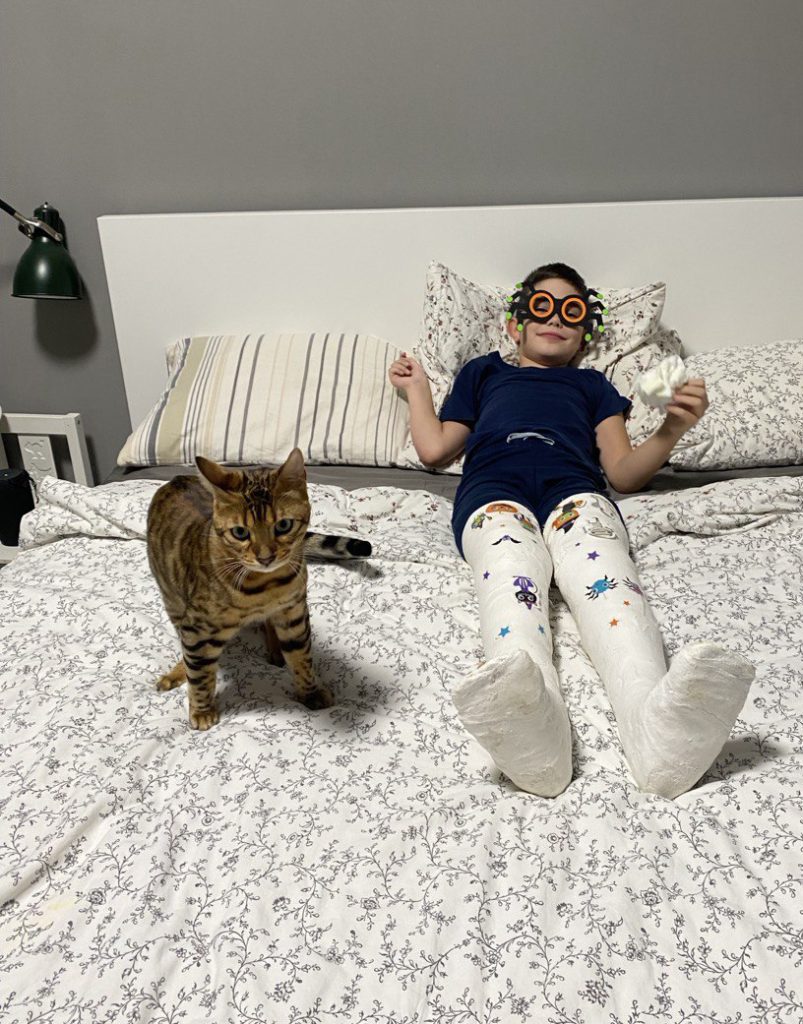 Maxim after surgery Photo: from personal archive
The couple found suitable rehabilitation in Turkey, because her husband could not return to Russia, and Anna continued to work to pay for the treatment - the clinic alone cost about eight thousand dollars a month.
“We didn’t plan to emigrate. We thought that some time would pass and everything would end - well, everyone can’t go crazy at this pace! It’s just that when you’re in a situation, you don’t understand how much everything is going to hell and how scary everything is,” she says.
Realizing that “nothing would go away,” Anna left for Georgia in June 2023, where the couple found rehabilitation cheaper than in Turkey.
True, already in Tbilisi Anna realized that her son could not live here. “There wasn’t even a sidewalk near the entrance. The wheelchair couldn't get anywhere. To leave the house, we carried the child on ourselves. Considering that my husband took the child immobile and carried him like a backpack, upon arrival I saw not a large man, but a dried-out tree,” she recalls. At this moment, Anna “gave some slack” and fell into depression.
Miracle on the way to the USA
Pulling herself together, Anna made a “very spontaneous and very strange” decision - to move to the USA.
“It seems logical now, but then it seemed to me that this was the wildest thing I could come up with. Take a disabled child with epilepsy, without medication, and rush to Mexico and then cross the border. But I felt like I just had nowhere else to run,” she says.
She was encouraged to move by the CBP One program (it was in effect from May 2023 to January 2025 and allowed her to independently and legally sign up to cross the Mexico-US border in order to ask for asylum on the spot) . Anna did not plan to climb over the fence. Especially with a child in a wheelchair.
The family stayed in Mexico for four months. “And this is even more divine. Our unfortunate colleagues arrived somewhere at the same time and sat in Mexico from 10 months to a year and a half. This is because there have been a lot of fraudulent schemes on CBP One, when they tried to sell a queue for several thousand dollars,” says Anna. When Donald Trump came to power, the program was completely canceled.
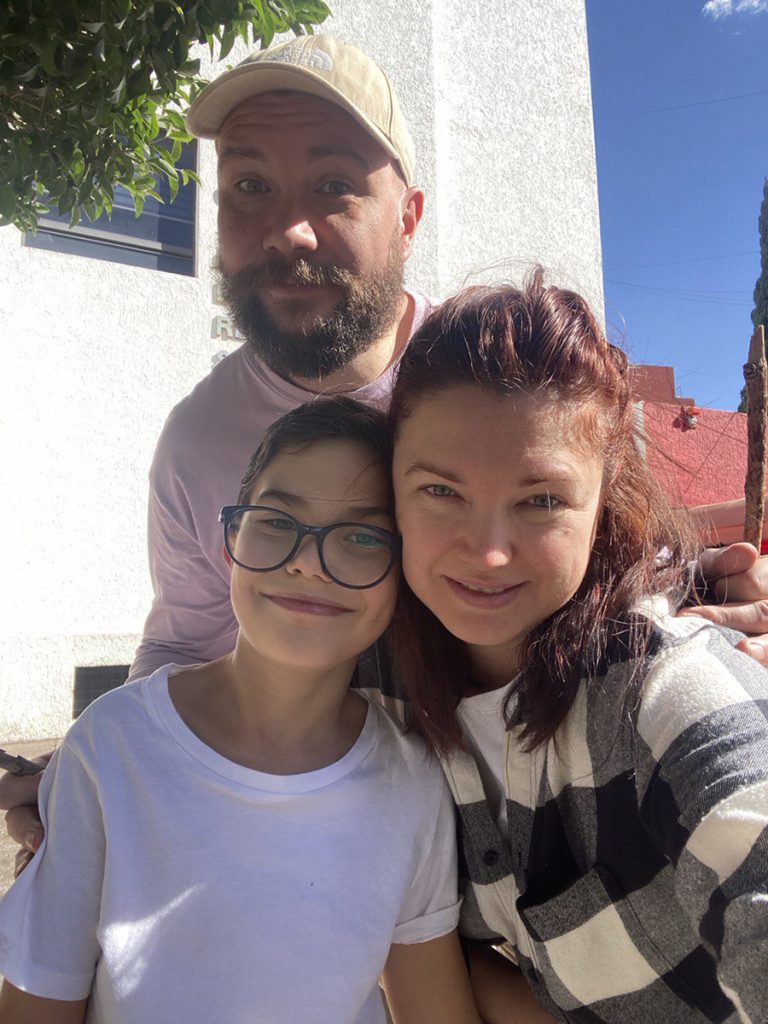 Family during their stay in MexicoPhoto: from personal archive
This is how CBP One worked. Every day you submit your application and every day you participate in the lottery for the border call number. “It’s stressful every day: every morning you get ready and hope for luck,” says Anna.
Suddenly, in the chat where everyone was sitting waiting their turn, one girl wrote that she had crossed the border the other way. Anna asked her how she managed it, and she replied: “My story is absolutely unremarkable, I won’t even describe it, because I have a child with a disability.”
"Oops!" - thought Anna. It turned out that the girl quite by chance met a guy in a cafe who told her in Russian that he could help. “But in Mexico, cartels kidnap people for ransom. It's all so scary! How can you trust anyone there?” — Anna reasoned then, but still decided to take the risk.
Anna sent documents to the address that the guy in the cafe left, describing in the cover letter the whole history of her child and the problem with running out of pills. “In response, on January 9, we received a letter from US border service officers saying that they were expecting us at the border on January 11,” says Anna. But they were expected in Tijuana, and they were in Mexico City (the distance between the two cities is more than 2.7 thousand kilometers).
Of course, there were no plane tickets, and the bus route to the border, according to Anna, is supervised by cartels and it is much easier to fall into their hands there. The family decided to make a detour and drive 15 hours to the resort town of Puerto Vallarta, and from there fly to Tijuana. Not an easy path, but everything worked perfectly.
At the Tijuana airport, Anna, Stanislav and Maxim were detained by immigration police and taken to a special office - Anna calls it “glass” and says that it is familiar to everyone who has tried to move to the United States.
“Everyone is sent to the glass cell to await a decision on whether they will be released or not. If we speak emotionally, then for the first time it became very scary. They treated us quite rudely there, and then 40 Indians crowded in, and it became difficult for my child with epilepsy to breathe. “Someone sat on his wheelchair,” Anna recalls. “You’re trying not to scare him, you need to smile, tell him that this is all such an adventure, that we’re having a great time.” At the same time, we ourselves are very scared at this moment. Who did we even send the letter to? What if no one is waiting for us?
Finally, the family was taken from the glass by an officer who, according to Anna’s recollections, was in a uniform with American stripes. “I understood that this was a person from the border and, most likely, from the other side. He said he would take us to the hotel, but we didn’t even believe him. We didn't understand what was happening at all. Why is an officer from the American border taking us?” - she says.
The officer, whose name Anna managed to forget, also helped lift the suitcases into the room, after which he said: “You are guaranteed to get lost tomorrow, let me pick you up in the morning and take you back.”
“It's just a crazy, fantastic story. This can't happen. But it was. This is the super-careful attitude of the American authorities towards disabled children in order to reduce stress for the child as much as possible,” explains Anna.
In the morning they actually came for them and took them to the border, where the parents, however, again had to be nervous.
“Everything seemed fine: they took us there, such a friendly atmosphere. We see that they really treat us with care,” says Anna.
Everything changed when she was asked to take out the laces from her shoes and the elastic bands from her trousers, something she only knew well from other refugees before being arrested.
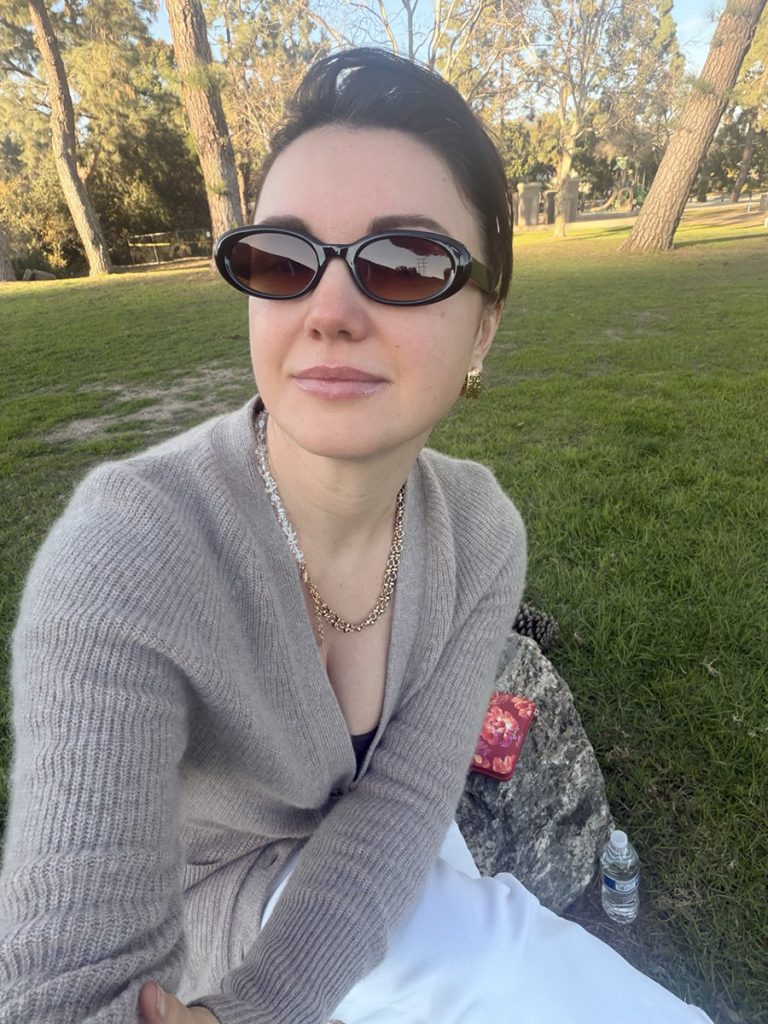 Anna TestovaPhoto: from personal archive
“The level of stress was already crazy, so when I realized that we were being arrested, I turned pale. I couldn’t imagine how I would now be with a child in a border prison (something like a holding cell at the border. — Author’s note), where they only give them camp foam to lie on and foil to cover themselves with. You have to sleep there in daylight, and when Maxim is deprived of sleep, he starts having seizures,” recalls Testova.
She started to panic and try to explain something, but they shouted at her. “The child was scared because he didn’t understand what was happening, and I had to start smiling. Joking and crying at the same time,” explains Anna.
And yet, after eight hours of waiting on iron benches overlooking a giant American flag on the wall, the family was allowed into America.
“The first thing we saw was a huge McDonald's. It was very funny, because it was like a bad movie about the spirit of freedom. We sat down on the curb, laced up our shoes, looked at this McDonald's and realized that this is it! We are in America! - Anna says and laughs.
Motels, bedbugs, perfect school
In the USA, things weren’t easy at first either. “When you arrive, you have a piece of paper from the border stating that you have been released and you undertake to prove in court that you have the right to political asylum. You don’t have any rights anymore, and in general in America, in order to rent an apartment, you need a background: a credit history, tax payments, salary, local ID,” says Anna.
For the first few months, the couple lived in bedbug-infested motels, ate at 7/11 stores, then rented a studio in the worst area of Los Angeles, Skid Row, where “you leave the house and step over homeless people and people on drugs.”
But Maxim’s mother still quickly realized that she had made the only right choice.
“Literally on the third day after arriving in America, my son’s medicine ran out. At that time we had no insurance, no doctors, no understanding of where to go in principle. And as luck would have it, because of all this stress, the child began having seizures several times a day with respiratory arrest,” says Anna.
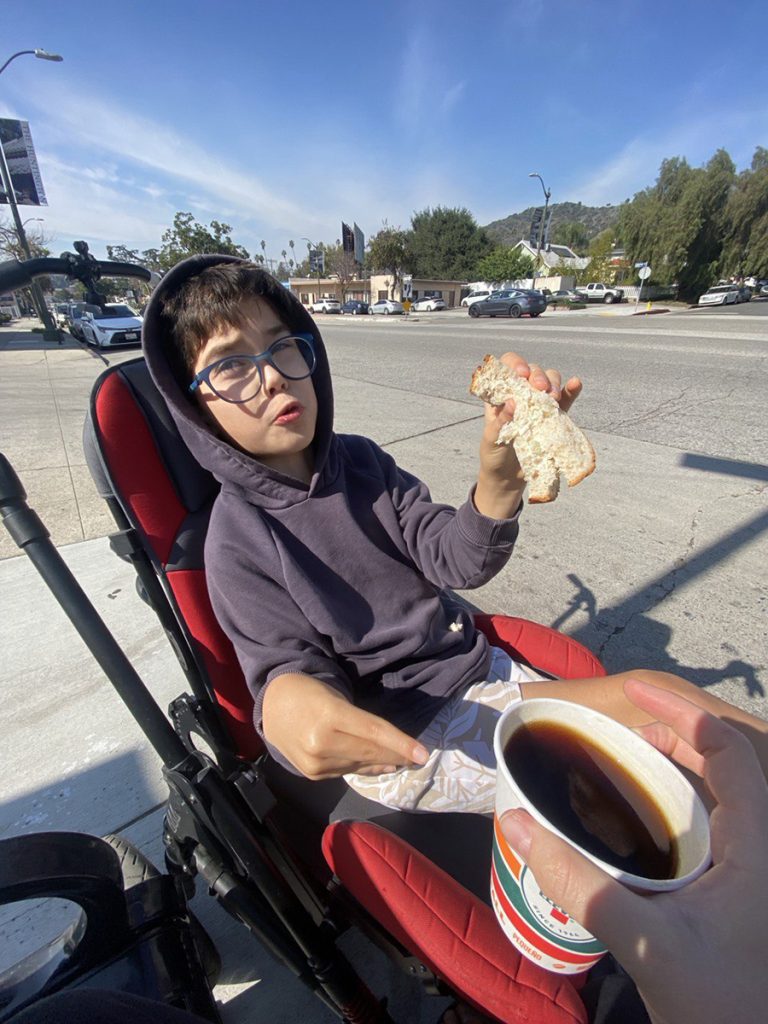 Start of life in Los Angeles and breakfasts at the 7/11 storePhoto: from personal archive
She knew that calling an ambulance in Los Angeles would cost $5,000—an unaffordable sum for the family. “In the end, we went to the emergency room, where they gave us a temporary policy, prescribed medicine, and within 15 minutes we had it! The same thing for which I was almost imprisoned in Russia,” says Anna. “I just didn’t understand what was happening at all, how this was possible!” But when a person is a priority, then a person is a priority.”
Slowly, says Anna, everything else got better: “My husband did the paperwork, got his license, and found his first job - transporting things. It was useful that he was big and strong. He made money and we were able to rent an apartment in a good area with a good school.”
A few months later, the couple managed to send the child to this school, and then it became finally clear what all this torment was for.
“We were stunned that they wanted to see Maxim, that they wanted to help him, take him into class, realizing how difficult he is. In literally a week, they assembled a commission of 10 people (psychologists, teachers, physical therapists), wrote a huge individual program on how they would work with him, but at the same time integrate him, so that he would socialize in the classroom with ordinary children. We simply couldn’t believe our eyes,” Anna describes her shock at the time.
The only negative is that her son had to start studying right from the fourth grade, although before that he had not gone to school at all. “It’s difficult for him, but they work with him a lot, and now he spends almost 90% of his time in a regular class of 36 people. He has socialized well and speaks English like a native speaker, I no longer understand him,” admits Anna.
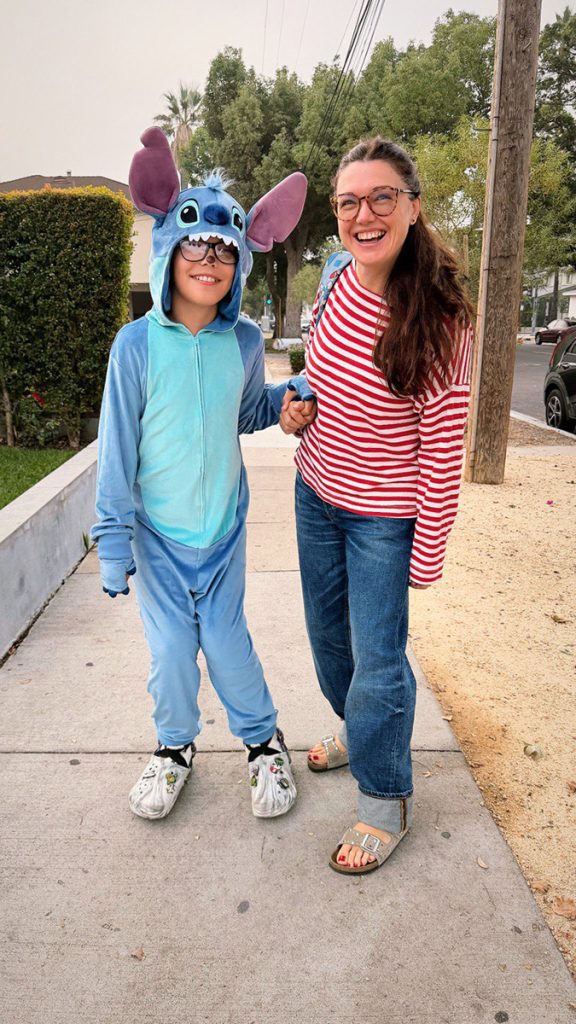 Maxim and Anna on HalloweenPhoto: from personal archive
Now she works as a cleaner, but is not discouraged: “Yes, I now clean people’s houses, but this gives me the opportunity to live in a free country and see my child happy.”
“When depression sets in and there is a lack of understanding of how to live on, I remember my son. Everything we did, we did absolutely right for him, because he lives a completely different life here - super-full and adequate. You couldn’t even dream about this in Russia,” says Anna.
Her son was given a suitable medicine that prevents him from having seizures; it is being treated by rehabilitation specialists and psychologists. “The doctors say that they do not have the task of curing him with a magic pill: their task is for him to live independently and be an absolutely adequate member of society,” says Anna. “And here you believe in it, because people with disabilities here calmly go to the store, at almost every pedestrian crossing there will be someone next to you in an electric wheelchair. They all work, and everywhere in advertising you see not only ordinary people, but also people with disabilities. You get used to the fact that these are not second-class people, as is the case in Russia.”
Criminal case and fear of deportation
In September 2025, Anna accidentally learned from Mediazona that she was wanted by the Ministry of Internal Affairs. “I’m sitting drinking coffee before work, I see the link and I’m thinking about checking on my husband, but suddenly Anna Sergeevna Testova comes out,” she laughs and says: “Although, it would seem, what do they want from us already? Well, they scared us, well, they made sure that we fled the country. But no..."
It turned out that back in April, they came to search her apartment, where her disabled mother-in-law lives. “She was so scared that she didn’t even tell us about the search and interrogation. I decided that if we don’t discuss anything, then maybe somehow this will all resolve,” says Anna.
On November 27, 2025, she was sentenced to five years in prison under Part 2 of Article 207.3 of the Criminal Code (“Fakes about the Russian Army”) for a post on VKontakte about the shelling of a children’s hospital in Kiev. Later, Anna was also added to the list of extremists and terrorists.
But it’s not as scary as living while waiting for a family to be granted asylum in the United States. Recently, Russians have been increasingly rejected, although the percentage of applications approved is still much higher than in Europe.
“If American justice works as it did, then my sentence is no longer even political persecution, it’s a real criminal sentence,” says Anna about the increased chances of being granted asylum, but admits that she is worried about the fact that even people with criminal cases filed against them are now being deported to Russia from the United States.
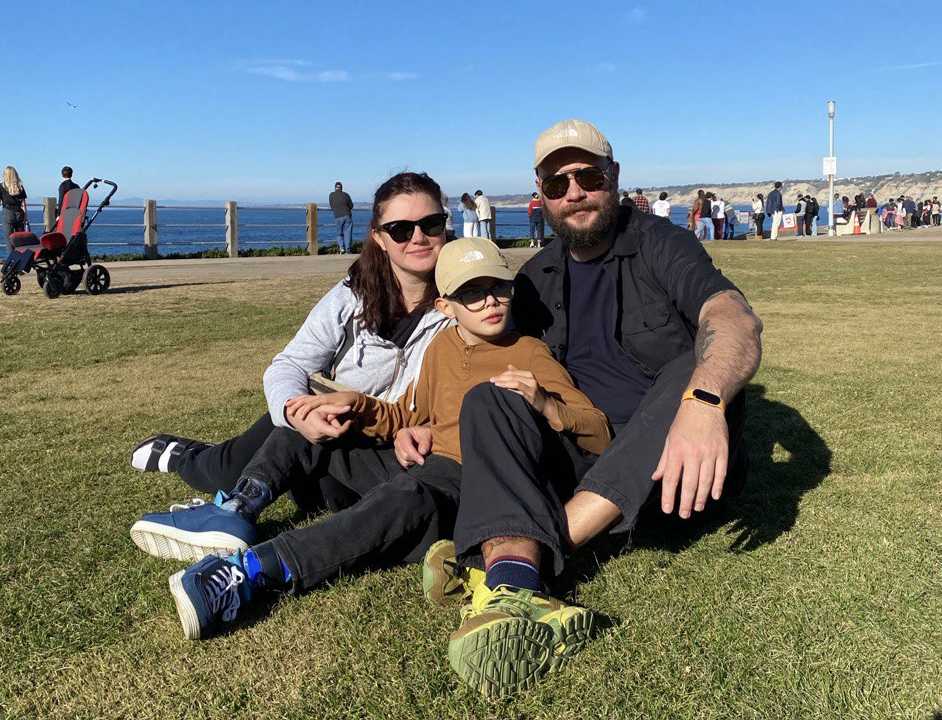 First day in California, San Diego Photo: from personal archive
The worst thing, Anna believes, is that now in the States they can be detained simply on the street.
- There are a lot of such cases. You could end up in a migration prison and go through all these trials while you're there. And if suddenly the judge does not believe you or says that you do not have enough grounds for political asylum, then you will be deported directly from there to Russia (in the last six months alone, four charter planes with Russian citizens to whom the court refused to grant asylum were sent to Moscow from the United States. - Author's note). That’s the real fear of this whole story,” she says.
- Well, they won’t do that to a child with a disability! - I exclaim.
- In theory, yes. But when we were coming here, parents and families were not detained at all! Then they started detaining the men, and releasing the women and children. Then they started sending the children to foster homes, but now the children are taken away from their parents and sent to foster families,” Anna responds to this.
At the same time, Anna, according to her, has no negativity towards the new US authorities. “ CBP One was a great idea, but I don't have rose-colored glasses. I understand perfectly well that migration requires laws and requires regulation. But now there are a lot of actions that are not taking place according to the law, it is unclear why and it is unclear how. They cause bewilderment and fear, naturally, because you don’t know what to expect and don’t know what rules to live by.”
The material was prepared with the participation of the “Punctuation Marks” project