
Translated material
"The Ideal Aryan Baby"
The 1935 cover of the Nazi magazine Sun in the House featured a photograph of a little girl. She won the “perfect Aryan babies” competition. True, it turned out that the girl on the cover was Jewish. How this became possible - in the material "Cold" .
Photos of this girl were published in Nazi magazines and on postcards. She turned out to be Jewish 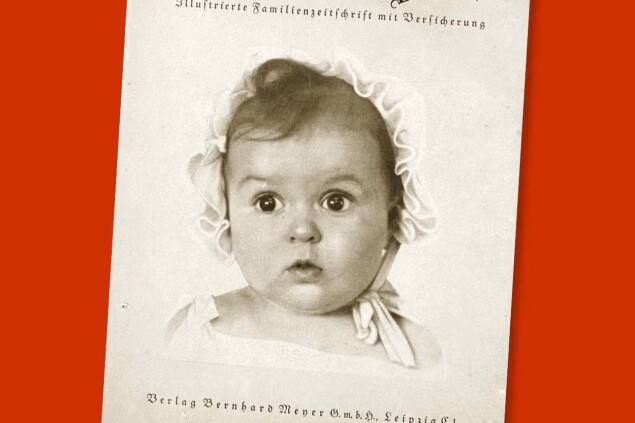
Some time later, the Levinsons' housekeeper told Paulina that she had seen Hessie's photograph on the cover of a magazine.
“My mother thought that [the housekeeper] must have been mistaken, that children were often alike, and simply told her, ‘This can’t be true,’” Hessey said years later. However, the housekeeper objected that she had seen Hessie on the cover. “Just give me some money,” she said , “and I’ll bring you that magazine.”
Soon the housekeeper returned with the latest issue of the Nazi magazine Sonne ins Haus (“Sun in the House”). There really was a photo of Hessy on the cover.
"Make the Nazis look stupid"
Paulina and Jacob leafed through the magazine and were horrified : the magazine contained images of military men and swastikas. Then Paulina ran to Hans Ballin's photo studio to find out what was happening. He greeted her, after which he locked the door, drew the curtains and led her into the back room.
Ballin said that in the winter of 1935, Goebbels' propaganda ministry organized a photo competition to find the "ideal Aryan baby". The winner's photo was promised to be printed on the cover of the family magazine "Sun in the House." 10 famous photographers submitted 10 works each. Ballin was among them - he knew that Hessy was Jewish, but “ he wanted to make the Nazis look stupid.” As a result, out of 100 photographs, the judges chose one - the one that depicted Hessie Levinson.
“I wanted to laugh,” Hans Ballin told Hessi’s parents. - As you can see, I was right. Of all the babies they chose this one as the “ideal Aryan.”
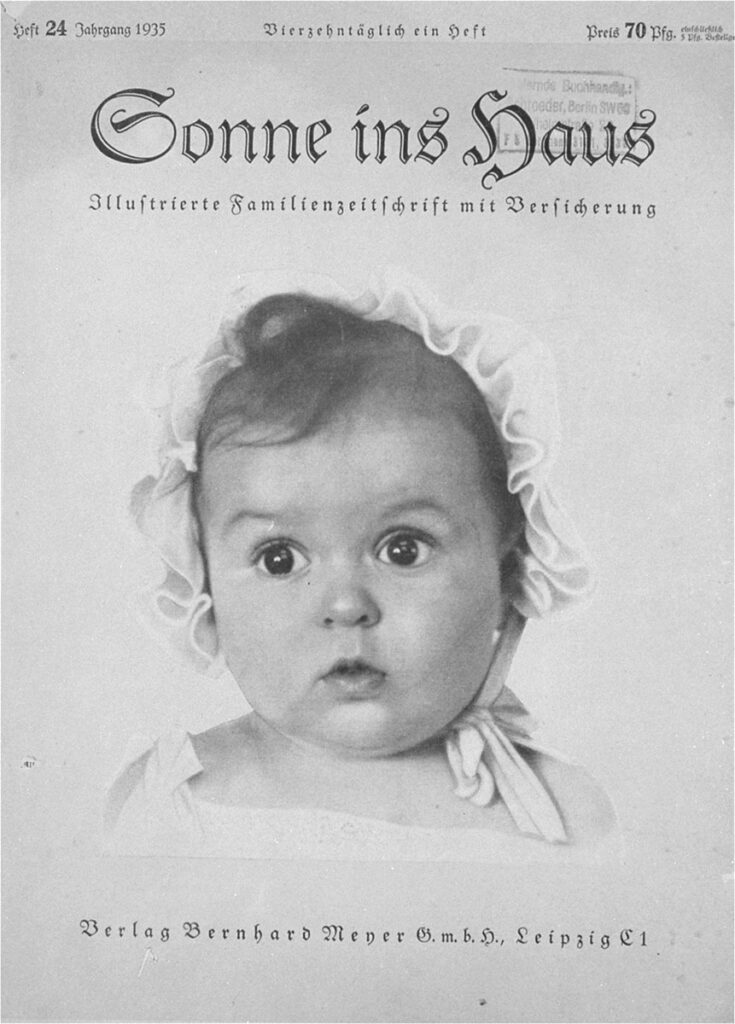
Hessy's photograph was everywhere - advertisements with it were posted in shops and on the streets, it was printed in newspapers and on postcards that were distributed throughout Germany and the occupied countries. Aunt Hessi saw one of these postcards in Lithuania. Under the girl’s photo, in gold letters, was written: “Best wishes on your birthday.”
Jacob and Paulina were afraid that the truth would be revealed - in this case, Hessi could simply be killed. Not wanting passers-by to recognize the girl, the Levinsons practically did not let her leave the house for several months. “I couldn’t play in the park anymore,” Hessy recalled . “And I couldn’t go to the zoo, my favorite place.”
Life in the Third Reich
Jakob and Paulina were born in the Latvian city of Liepaja, but moved to Germany in the mid-1920s. They dreamed of becoming opera singers: both studied at the Berlin Higher School of Music.
In 1932, Jakob got a job at the opera house in Breslau (now Wroclaw). To hide his origins, he performed under the pseudonym Jascha Lenssen. The contract stipulated that he would become the leading baritone in 19 performances. However, when the administration asked him to indicate his real name in the documents, it turned out that Jacob was Jewish. Before the season had even begun, the contract with him was terminated.
Then Jacob became the German representative of a company registered in Latvia. Paulina also stopped playing music. In 1934, the couple had their first daughter, Hessie.
“The [Latvian] consul convinced my parents that Hitler would not last long. He advised them to stay in Berlin until Hitler fell, and then continue their musical careers,” Hessy later said . The Levinsons were foreigners, so some of the anti-Jewish laws did not apply to them.
However, in 1936, Jacob was arrested by the Gestapo on trumped-up charges of tax evasion. Fortunately, his accountant and friend, who was also a member of the Nazi Party, stood up for him. Jacob was quickly released , and he, realizing that Germany had become completely unsafe, immediately left the country with his family. They first went to their native Latvia, but in 1938 they settled in Paris.
Road to the USA
One day a doctor, also of Jewish origin, came to their Paris apartment. He noticed a photograph of a cute child that was standing on the piano. Paulina immediately shared the story that happened to their family. In response, the doctor suggested telling it publicly to show people the absurdity of Nazi ideology. Paulina almost agreed, but Jacob flatly refused.
"The doctor told my father: 'You know, Mr. Levinson, you have nothing to be afraid of anymore. Now you are in France,'" Hessy later said . “Well, history has proven that my father was right.”
In June 1940, France fell: German troops entered Paris. The Levinsons had to flee again. There were people who helped them secretly move to the south of the country, which was not occupied by German troops and was controlled by the Vichy puppet government. There, Jacob tried to get visas for the whole family, and in 1941 they were approved by American ones - however, they were given only 45 days to enter the country. Jacob was unable to quickly find transport and tried to extend his visa, but his request was rejected .
Only a year later, the Levinsons received visas - this time Cuban ones. They had a long journey ahead of them: the family got to Lisbon by train, and then by boat to Cuba. There, Hessi and her younger sister Noemi spent most of their childhood, until the Levinsons finally moved to the United States in 1949.
Got revenge
While in New York City, Hessey became interested in chemistry and, after graduation, attended Barnard College as an undergraduate and then went on to graduate school at Columbia University. There she met her future husband, a mathematics teacher named Earl Taft. A year after graduation, in 1959, they got married , then the couple had children, and Hessy left the chemistry laboratory. “At that time, a scientific career for women was incompatible with raising children,” she explained in a 2014 interview.
In order not to give up chemistry completely, Hessy got a job at the Educational Testing Service and began writing chemistry exams that applicants in the USA and Canada take. And in 2000, 66-year-old Hessey returned to science: she became a professor of chemistry at St. John's University. By that time, she already had four grandchildren.
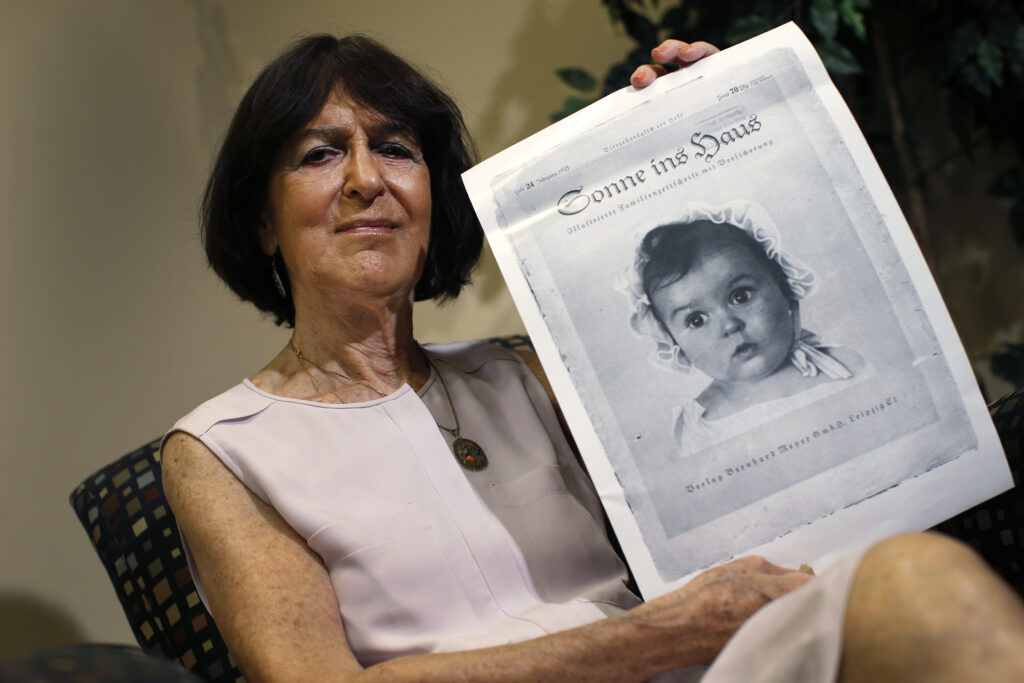
Hessi managed to survive World War II, but many of her relatives in Latvia were killed during the Holocaust. In June 2014, 80-year-old Hessy traveled with her husband to Yad Vashem , Israel's national Holocaust memorial site. She told the employees the story of her childhood and gave them an issue of the magazine that had been kept in the family all this time. She also filled out forms by hand, writing down what happened to her loved ones.
Grandmothers Hessi Basia Levinson and Chaya Hinda Levina were deported and killed. Her aunt Rosa Levinson , like her aunt Ida Prisman , was also killed during the Holocaust when they were about 45 years old.
When Hessy was asked how she felt about being a Jewish girl on the cover of a Nazi magazine, she replied : “I feel like we got revenge.”
Hessy said she was grateful to Ballin for “showing courage” to stand up to the government. However, the incident came as a shock to the family - her parents were afraid to talk publicly about this story until they were old, although they were impressed by how ironic it was.
“Now I can laugh. But if the Nazis had known who I really was, perhaps I would no longer be alive,” she said .
On January 1, 2026, Hessie Levinson Taft died at her home in San Francisco. She was 91 years old.
Photo: United States Holocaust Memorial Museum