
Translated material
Little dark horses
The mini-series "Pony" about American spies in Moscow in the 1970s turned out to be interesting - and not only because Emilia Clarke speaks Russian here
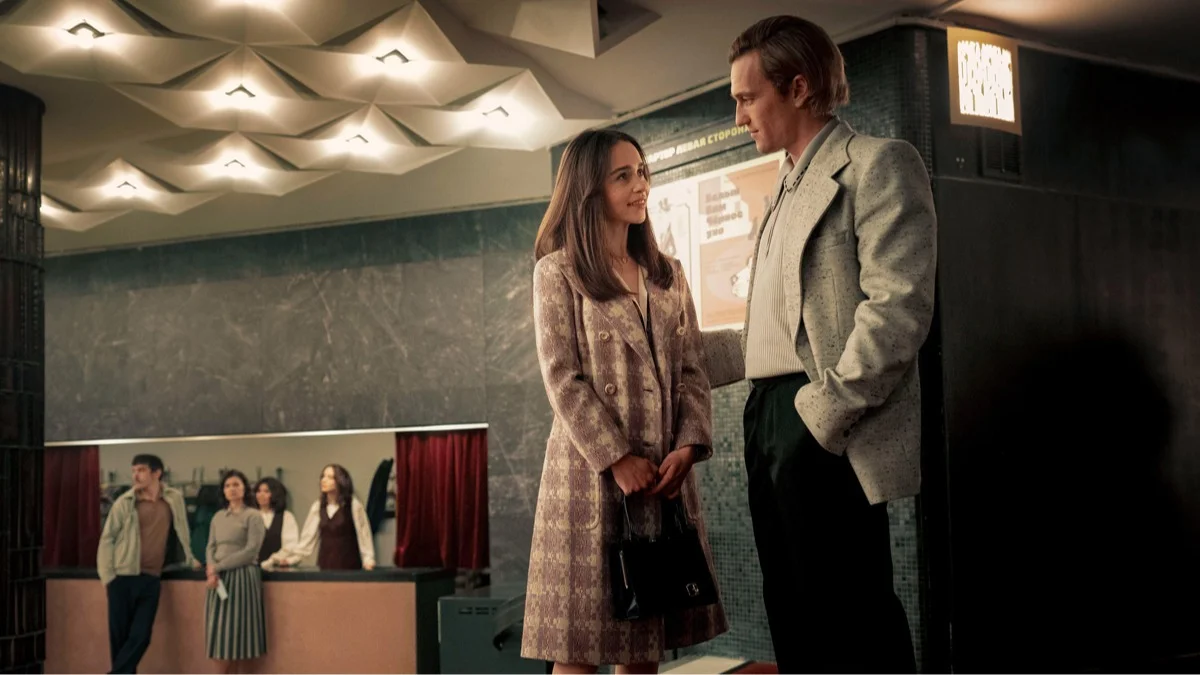
Photo: Landmark Media/Alamy/Vida Press
The adventurous mini-series “Pony” has been released about the widows of American special agents who decide to work for the CIA in order to find out the circumstances of the death of their husbands. The main roles are Emilia Clarke (“Game of Thrones”) and Haley Lu Richardson (“White Lotus”), while Clarke tries very hard to speak Russian (though with a strong accent), and among the performers of supporting roles there are many for whom Russian is their native language. Continuing the tradition of spy projects like “The Americans,” “The Little Drummer Girl” and “Germany 83,” the authors of “Pony” are not afraid to add comedy and entertaining cringe, thanks to which the series becomes a fun and reckless project about the vicissitudes of the life of double and triple agents. Film critic Katya Stepnaya turned on “Pony” without high expectations and got a lot of pleasure from the way the series played on the theme of espionage and the American-Soviet confrontation.
After the death of two American special agents, their wives Bea and Twyla (Emilia Clarke and Haley Lu Richardson, respectively) are left alone with their grief: they are about to be sent back to the States. It’s the second half of the 70s, in Moscow there is cold, shortages, boredom and zero reasons to stay. But Bea and Twyla want to know the truth and decide to find out whose frame led to the death of their husbands. Bea is more mature, shy and aware; moreover, as stated in the series, she speaks excellent Russian and can even introduce herself as Nadya Vasilyeva from Belarus without giving herself away. Twyla is a fearless young bastard with no clue in Russian, with a great set of survival skills, and together they turn into the perfect duo that no one takes seriously for the time being.
With each episode, more and more characters appear in the story: Bei’s grandmother Manya, who is also not averse to spying, a young KGB careerist who collects dirt on both the Americans and his bosses, a young Ukrainian Sasha with an existential crisis, prostitutes dying in Moscow one after another. It is immediately clear that the entire royal army of the American Embassy is in uniform, including the most ordinary employees. And the Soviets are not lagging behind: underground bars, shops on the streets, service apartments and distant dachas become places for secret meetings and data transfers. In the end, Bea and Twyla are at a loss as to which side they are playing for. Their agent status in intelligence agency slang - PONI (Person of no Interest) - helps them stay in the shadows and throw out dubious numbers without attracting too much attention. But they themselves feel like “insects”, as defined by a KGB officer.
If you're expecting a serious, politically charged Cold War spectacle, Pony is definitely not your choice. It's more of a buddy comedy with funny and dangerous incidents in the spirit of Luc Besson's Anna,
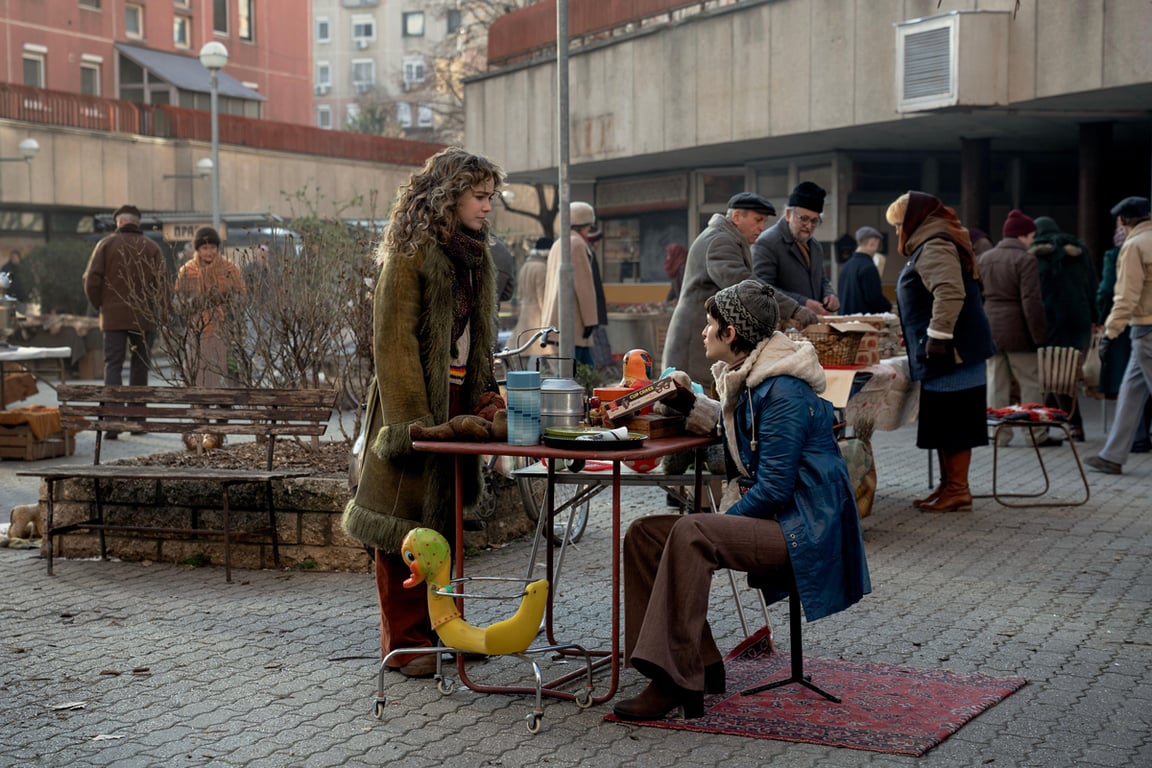
"Red Heat" and the comedy "Lethal Weapon", where cute and funny heroines constantly get into trouble. True, this time the team was really prepared and confused about the relative verisimilitude of locations, costumes and historical events, so there will be no memes about Foma Kinyaev from “The Bourne Identity”, whose passport says “Lshtshfum Ashchf” in Cyrillic. But in half of the shots, the Spasskaya Tower is attached to the streets of Budapest, and the first meeting of Bea and Twyla takes place at the market, where Bea learns to quarrel with the saleswoman because she slipped her broken eggs. Towards the end of the season, Elton John even comes to Moscow (he really was in the USSR, albeit a year and a half later) - the companions of the Soviet security officers all look like visitors to Studio 54, and the double agents listen to psychedelic rock and funk, popular in those years, from across the hill.
Russian-speaking viewers will most likely smile widely at the dialogue in Russian, where one actor speaks his native language perfectly, and the second works from memorized transcriptions. And the sight of an African-American man in a beige trench coat walking around a small town in Belarus without attracting attention is just absurd. However, if you close your eyes to such cranberries, you can get a lot, a lot of joy from “Pony”, because first of all it is a story about girlish friendship and support, and secondly, a sober look at the games of the Cold War, where everyone, without exception, is gradually plunging into borderline disorder.
Despite a bunch of historical inconsistencies (for example, that someone's wives will be included in the spy operation), "Pony" is not a black-and-white story about American liberators and Soviet rectangular nomenklatura. In addition to the heroes from Moscow, other residents of the USSR are also represented here, and the authors did their homework well, throwing into the episodes conversations about Gaidai’s comedies, everyday Soviet habits, non-obvious locations and time jumps. Beya’s grandmother, a Belarusian who immigrated to the States, gives her granddaughter not only a love of Russian literature, but also left her best friend in her homeland, to whom she dreams of returning many years later.
And the word “old lady,” spoken with a strong English accent, like the appearance of a very American grandmother in a Soviet headscarf, is one of the assumptions to which you quickly get used to in “Pony.”
At a minimum, there are no toasts “To your health!”, bagels and balalaikas that do not exist in Russian-speaking culture, which feed the globalist culture.
The creators of the series, Suzanne Vogel (the romantic thriller "Cat and Mouse" and the teen comedy "An Education") and David Iserson ("Mr. Robot" and "Mad Men") rely on the on-screen chemistry of the leading actors - an intellectual with Belarusian roots and an assertive American hillbilly, observing how constant stress highlights their attitudes to life, attitudes and understanding of friendship and love. And, just without watching the series and focusing on viral TikToks, you can accuse Emilia Clarke ofsupporting the pro-Soviet position: both powers in the series look like puppet regimes that do not value human life.
The best thing that the Pony series does (besides presenting sensitive and enterprising female characters) is precisely its destruction of the image of the noble citizen who commits crimes out of a sense of patriotism. With each series, the number of corpses increases, almost every first one turns out to be a double agent, and the mystery of “who killed our husbands?” dissolves into a hundred cruel machinations of the Americans and the Soviets.
In the era of the new Cold War, American authors are filming about the past - without rose-colored glasses. They admit that a protracted international conflict prioritizes the interests of both military blocs, but not living normal people who want confidence in the future, love, friendship and a simple human “everything will be fine” - without the Pentagon, the Kremlin and the dividing narrative of how all the good ones should get together and destroy all the bad ones. In light of the news of early 2026, this view offers some hope.
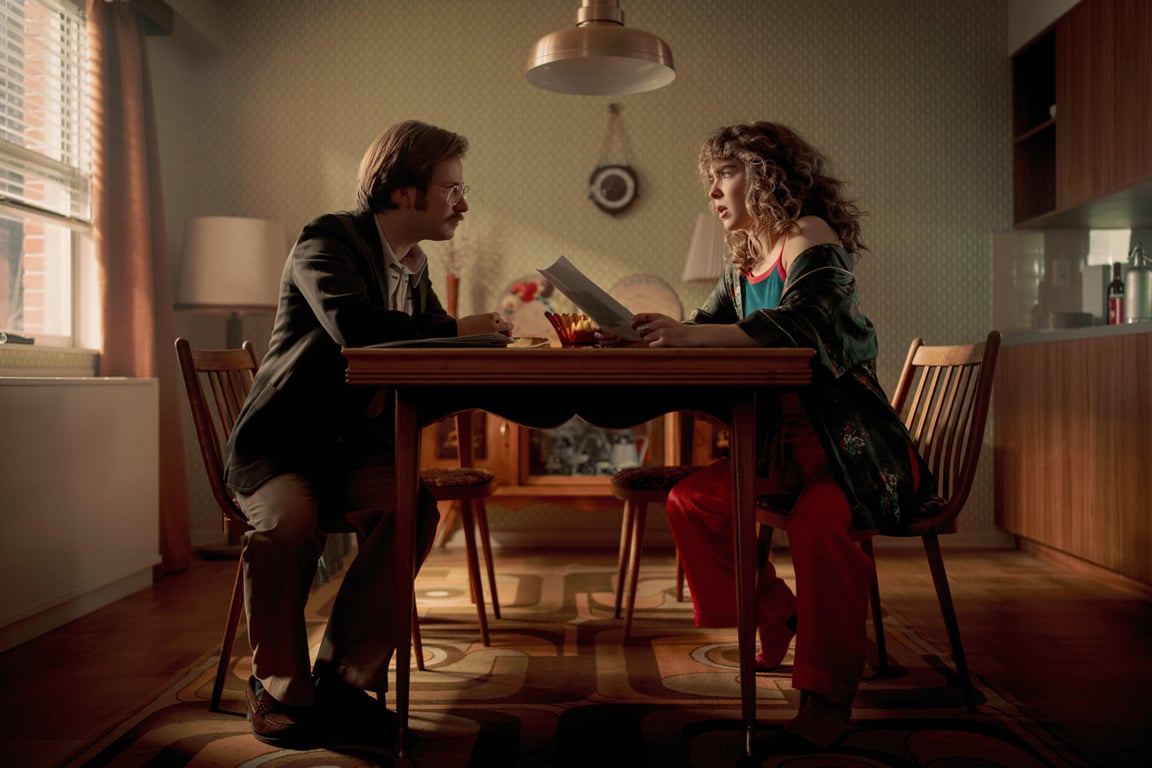
The coolest thing about Pony for the casual viewer is the way the show constantly subverts its own genre: it seems to play the usual spy scheme of mission-mistake-escape, but each time it veers towards confusion and awkwardness under the guise of nervous laughter. At times, the heroines are forced to literally wash themselves away from their next job: blood, dirt, other people’s apartments and other people’s smells. The chase is followed by a bath, washing, changing clothes, trying to become normal again. The image of home as such also does not exist: Beya and Twyla’s service apartments at the embassy are a temporary stop where one cannot relax: there is no privacy for anyone here in principle. Survival doesn't make you a hero, it just keeps you alive for a while.
The series carefully deals with what is considered uninteresting in the classic spy genre: waiting, boredom, everyday trifles, casual conversations. Flirt with the right person without saying too much, stand in line without giving off an American look.
The series does not romanticize the transformation of heroines into professionals: they do not become cooler, cooler, more confident, but on the contrary, with each episode more and more doubts and fatigue accumulate in them. The evolution of the plot goes in the opposite direction from the usual spy narrative: from the illusion that Agent 007 will figure everything out - to the understanding that there will be no explanations. The question “who is to blame?” gives way to the question “what to do next with this?” Will it always be like this now?
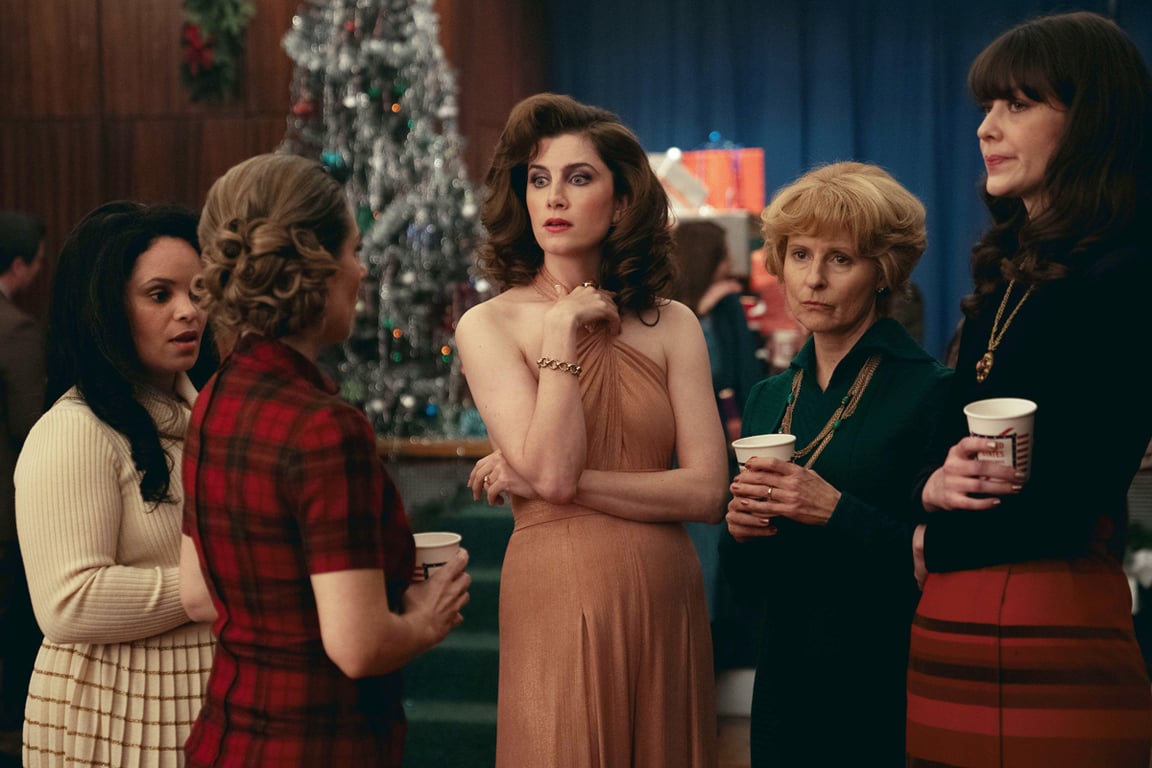
Pony feels less like a show about the Cold War and more about female vulnerability in patriarchal power structures. Bea and Twyla constantly face being perceived as either other people's wives or useful resources: their emotions are ignored, and their grief is considered a side effect of big politics. The story about “persons of no interest” allows you to laugh at the absurdities of the era, cultural misunderstandings, everyday details, but does not let you forget that behind all this there is a very specific human cost.
In this sense, the heroines of the mini-series are truly “little dark horses”: not because they hide some great secrets, but because in a system where everything is decided by structures, it is human connection that turns out to be the most unpredictable factor.
There are no winners in games of states, there are only those who do not understand that they have already lost. And also those who are still trying to save at least one loved one in this chaos.