
Translated material
Papa Leo and Father Trump
Despite the growing contradictions, the US President invited the Pontiff to the Peace Council. If the Pope refuses, it will be a feat
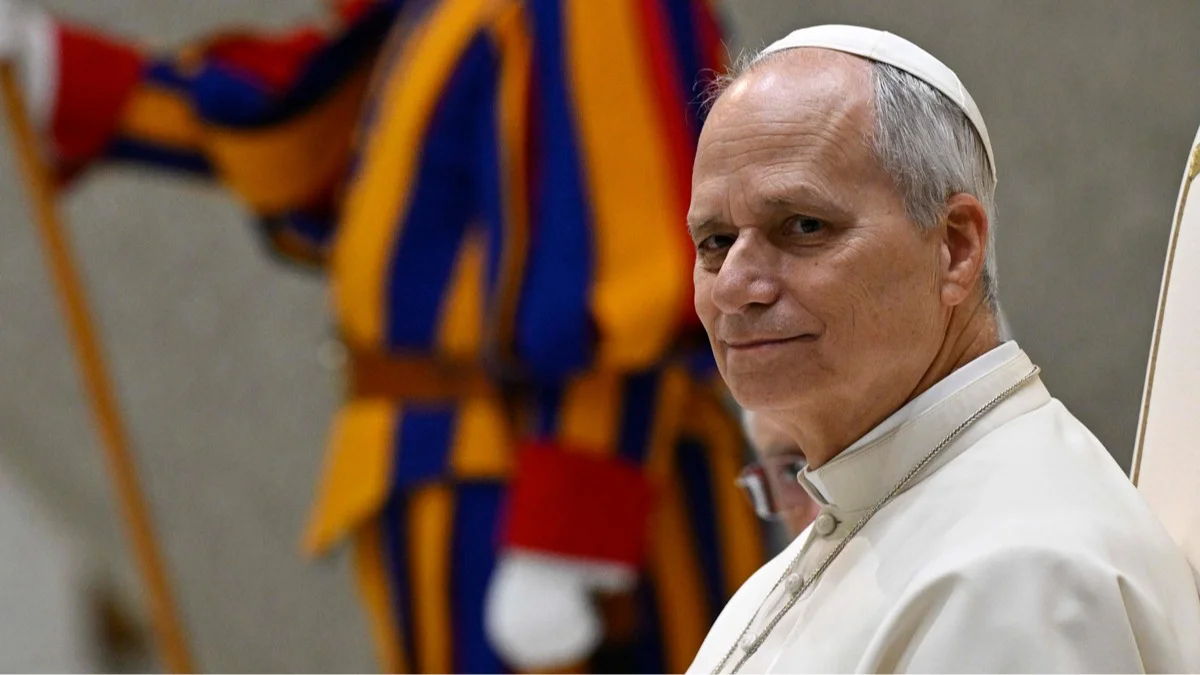
Pope Leo XIV, Vatican, January 21, 2026. Photo: Vatican Media/EPA
On January 21, Leo XIV received an invitation from Donald Trump to join the “peace council” he was creating. The leaders of some countries (for example, Israel, Egypt and Belarus) have already joined the “council”. There has been no response from the Vatican yet. In the fall, the pontiff called Trump’s plan to restore Gaza “realistic,” but he strongly argued with the American leader on other issues.
Trump's second coming to the presidency of the United States almost coincided with a change of power in the Vatican: on January 20, the inauguration took place in Washington, and on February 14, Pope Francis was hospitalized. He never returned to full-time management of the church and died on Easter, April 21. On May 8, he was succeeded by Leo XIV (Robert Francis Prevost), the first pontiff in history to be born in the United States (in Chicago in 1955). The College of Cardinals seemed to have decided to send a positive signal to the maximalist Trump, who is very partial to religious issues.
If Francis openly feuded with Trump even during his first presidential term, for which he received the label of a “leftist” from the Trumpists, Pope Leo is trying to be more moderate and sensitive. But due to certain peculiarities, Trump demands “all or nothing.” His view of the role of the Vatican in the modern world is conveyed by the famous collage published in the official White House account during the Vatican “interregnum” (Trump in papal vestments. He himself claimed that he had nothing to do with this image). Despite such transparent hints, Leo XIV refused to become Trump's obedient. At the beginning of the second year of his presidency, one can already definitely admit that the conflict between the Vatican and Washington continues and even plays with new colors.
Let's try to understand the different aspects of this conflict...
Challenges of Venezuela and Greenland
After the radical renewal (“aggiornamento”) of the Catholic Church at the Second Vatican Council (1962–65), its theology and social teaching developed in line with European liberalism, albeit with an eye to evangelical values. In particular, the Vatican was actively involved in the process of decolonization and the fight against the remnants of imperialism, which looked like an anachronism in the post-industrial world. The liberal tendencies of the 20th century made the Catholic Church absolutely unprepared for the onset of the “new Middle Ages,” the barbaric principles of which (primarily the cult of force, hegemony, disrespect for international law) are proclaimed by Trump. His attempts to put these methods into practice - for example, in relation to Venezuela - predictably ran into condemnation from the Vatican.
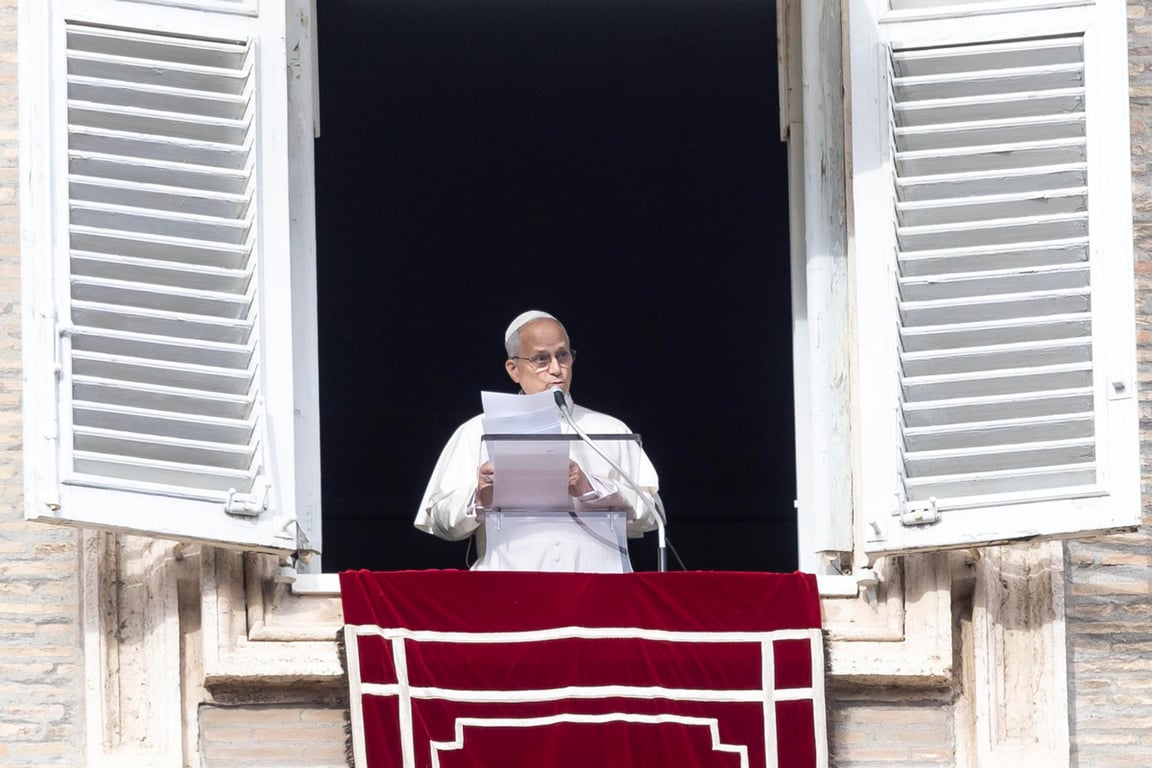
On the Sunday closest to Maduro’s kidnapping, January 4, Leo XIV, in a very emotional manner, called from the window of his palace for the protection of state sovereignty and respect for the rights of every person. A few days later, the Washington Post reported on the unprecedented efforts that the Vatican made back in December to get the United States to abandon its plans to capture Maduro. The Secretary of State of the Holy See, Cardinal Pietro Parolin, who served as apostolic nuncio (ambassador) to Venezuela before his appointment to the second most important post in the Vatican, begged American Ambassador Brian Birch to “show patience” and give the Venezuelan dictator a chance to escape to the Russian Federation.
Meeting with ambassadors accredited to the Holy See on January 9, the pope himself said that “stability in the Bolivarian country is possible only if external aggression is stopped.”
Leo XIV gave such a strict definition to US actions in Venezuela.
This does not mean that the Vatican was in any way sympathetic to Maduro, but “order is order.” Despite the fact that, according to census data, 96% of the Venezuelan population is Catholic, the radical leftist regimes of Chavez and Maduro clashed with the Catholic clergy. De facto, the Vatican, like most Western countries, did not recognize the results of the 2018 presidential elections in Venezuela, and the head of the country’s Catholic Bishops’ Conference, Cardinal Jorge Luis Azuaje, officially called Maduro “illegitimate.” In 2019, Pope Francis refused an audience with Maduro, accusing him of failing to implement the agreements reached at their meeting three years earlier. The Holy See views the current Venezuelan leadership in approximately the same way, as eloquently demonstrated by the meeting of Leo XIV with the leader of the Venezuelan opposition, Nobel laureate Maria Corina Machado on January 12. After this meeting, Machado gave Trump her Nobel medal.
The pontiff has not yet spoken out on another scandalous Trump “project”—the annexation of Greenland. On January 19, Czech President Petr Paul met with him at the Vatican, who stated that the pope shared his position: the Greenland issue should be resolved through negotiations, without military or economic pressure. The parties also agreed that the ongoing processes give Europe a chance to embark on a more independent path of development.
Dad vs MAGA
Francis and Trump - despite the contrast of their worldviews (leftist and ultra-right) - were psychologically close to each other. Both broke stereotypes, shocked the public and dreamed of a radical reorganization of the world. From this point of view, Leo XIV is more diplomatic and is ready to make curtseys towards the conservatives, with whom Francis clearly did not sympathize. However, as the influential American publication Politico notes , in essence the priorities of the current pontificate do not differ from the previous one. Leo XIV continues to defend the rights of people from poorer countries or dissidents to emigrate, condemns mass deportations of illegal migrants, and promotes the inclusion of LGBTQ+ people and the environmental agenda.
From the point of view of Trump supporters, this is a classic set of purely “leftist” values that they are determined to fight vigorously. Therefore, the differences between Leo XIV and Francis are rather “stylistic”, but not ideological.
In the first year of Leo’s pontificate, his contradictions with the Trumpists boiled down mainly to migration issues. In the fall, the pontiff supported the position of the Catholic bishops of America, who declared the inadmissibility of deporting migrants without trial, especially on a mass scale. Almost the majority of Catholics in the United States are first-generation immigrants from Latin America and Asia. Recognizing the US right to have its own policy in this area, the pope warned : “When people live normal lives for ten, fifteen, twenty years, treating them this way (deporting them - editor's note ), to put it mildly, is extremely disrespectful. And unfortunately there is violence."
This position of the pope caused a wave of hate from Trumpists. Thus, right-wing activist and informal adviser to Trump Laura Loomer describes Leo XIV as a “convinced Marxist” and “anti-Trump,” citing his many years of experience serving in Latin America (Peru), where far-left sentiments dominate. Politico also quoted Steve Bannon, a conservative Catholic and former top strategic adviser to Trump, as calling Leo XIV "the worst choice from a MAGA Catholic perspective."
Horseman of the Apocalypse
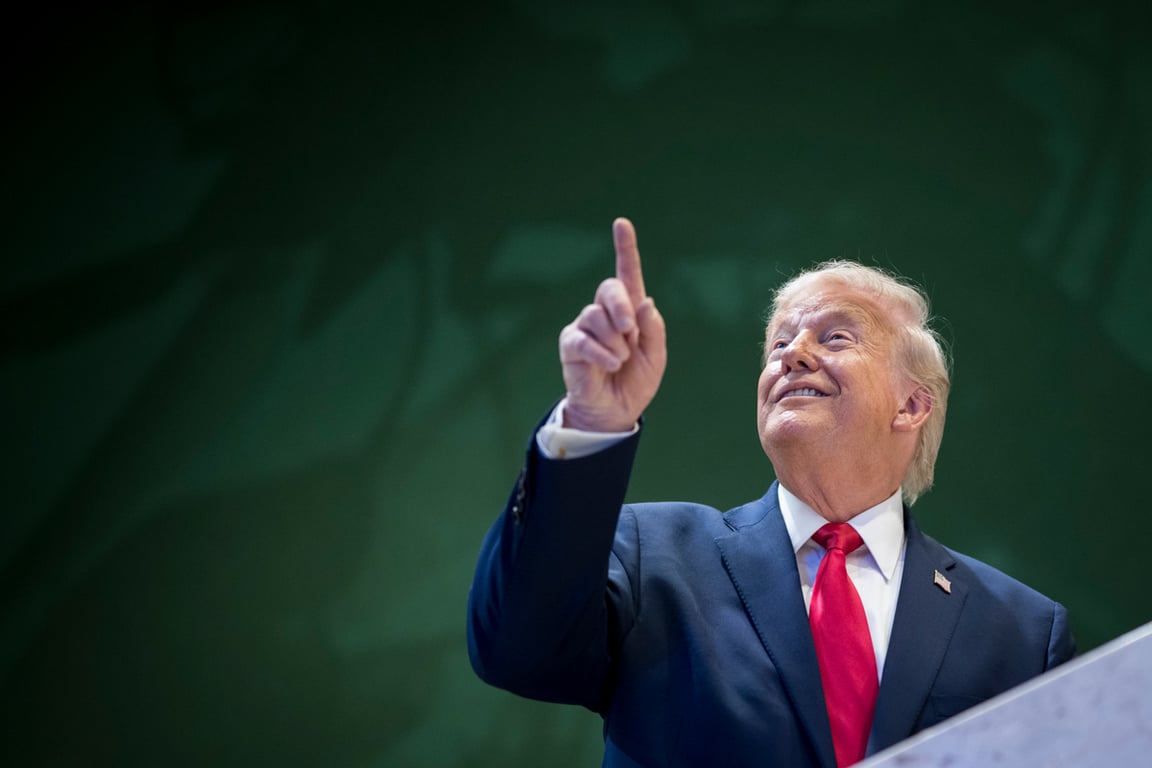
Speaking on January 21 at the international economic forum in Davos, the US President recalled with obvious pleasure how one “very smart person” called him the pope of the modern world. The play on words here occurs only in some Slavic languages - in English (and other European) “Dad” does not cause direct associations with “Pope”. But it would not be a big mistake to say that both Trump himself and his ardent admirers describe his mission in religious terms (Novaya Gazeta Europe devoted a separate study to Trump’s specific religiosity). The American Baptist Association has described the religious views of Trumpists as the “heresy of dispensationalism” - the belief in a special personal revelation to Trump personally, which entrusted him with a global mission to create a new world order led by America. From the point of view of Orthodox eschatology, dispensationalism is more likely to evoke associations with the kingdom of Antichrist, as described in the last book of the Bible. In any case, the design of the “peace council”, where Trump gets the opportunity to be the permanent leader with the right to veto the decisions of all states and joining which implies an expression of personal loyalty to him, evokes associations with the 13th chapter of the Apocalypse.
One of the brightest ideologists of Trumpism is considered to be Silicon Valley billionaire and Bilderberg Club member Peter Thiel , who invested huge sums in Trump's election campaigns. Lately Thiel has been talking a lot about the Apocalypse. The core of his philosophy is a kind of technocratic mysticism - the doctrine of the destruction of old institutions, in the place of which a certain “blockchain” of business corporations regulated by artificial intelligence and making payments with cryptocurrency will be created. In a sensational interview with The New York Times last summer, Thiel and his interlocutor spoke about “transhumanism,” about the biological exhaustion of humanity, which can only develop on the basis of artificial intelligence. A little later, Thiel read a series of lectures in Silicon Valley about how the Apocalypse has already arrived, and the Antichrist’s task is to destroy artificial intelligence.
Within this mystical concept, Trump's leadership becomes humanity's last hope for a technocratic victory over the Antichrist.
It is not known whether Thiel read the works of the philosophers of “Russian cosmism” (Nikolai Fedorov or Konstantin Tsiolkovsky), but his formulations bring to mind precisely this tradition. “We remain open to an eschatological framework in which God works through us to build the kingdom of heaven here today,” writes Peter Thiel. The chief philosopher of the Kremlin, Alexander Dugin, recognizes the closeness of his philosophy and even terminology (“katechon”, “New Rome”) to Thiel’s teaching, seeing a danger in this - the Trumpists seem to be intercepting the slogans of the World Russian People’s Council, which were “picked up by the masses” in Russia.
Apparently, Trump’s kind invitation is not only a political, but also a mystical, eschatological challenge for Pope Leo XIV. The Pontiff took time to think. On the one hand, the status of the leader of the Christian peacemaking movement does not allow him to shy away from global initiatives under the banner of peacemaking. On the other hand, relying on a one and a half billion Catholic community and a thousand-year tradition provides the pope with a resource to resist Trumpist totalitarianism, defending the idea of a world based not on force, but on love. If Leo XIV refuses Trump's offer, it will be a real feat.