
Translated material
PACE is about to launch a platform for oppositionists, “representing the interests of anti-war Russians.” The one that everyone was fighting about
How does it work? Who will enter it? And can she change anything?
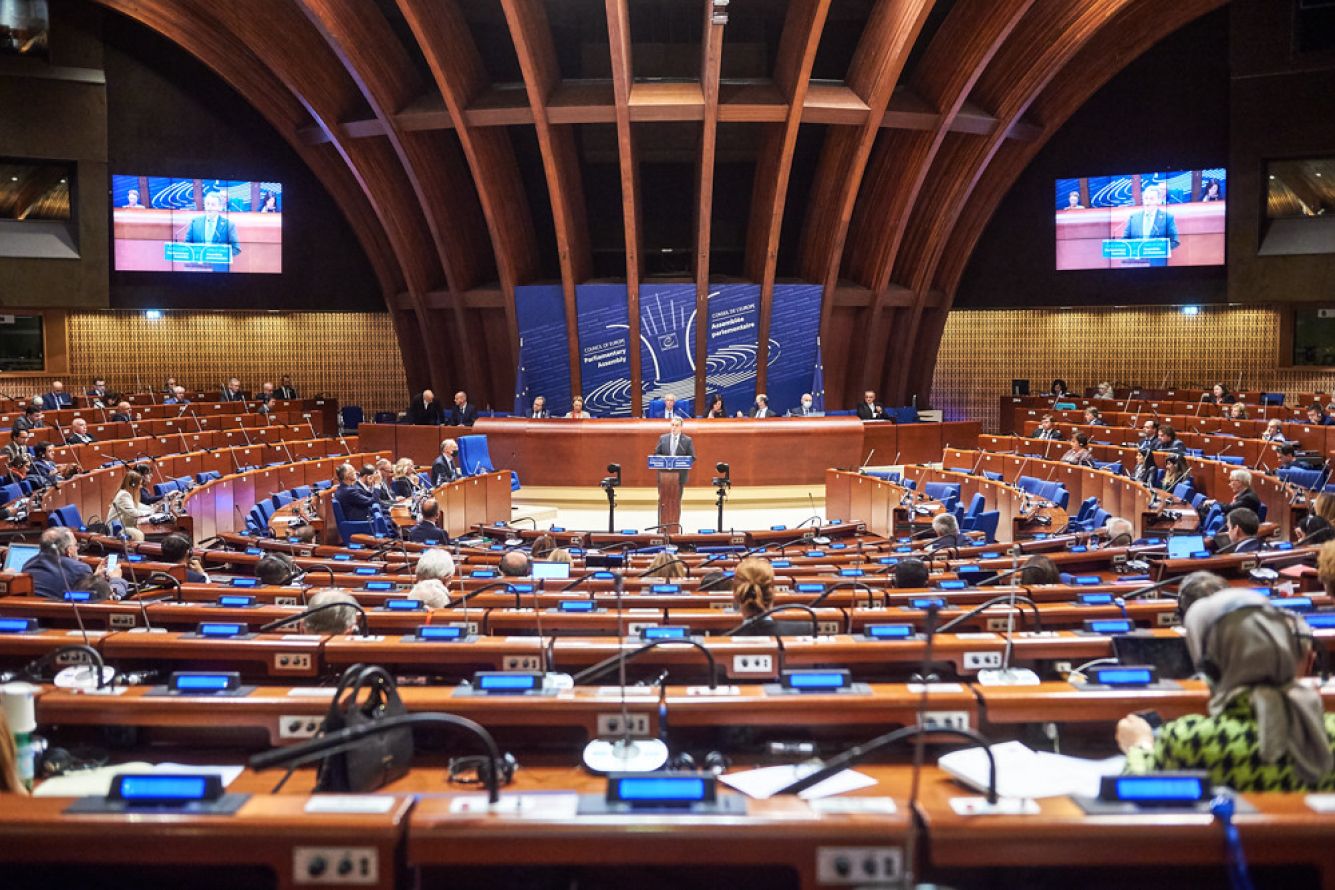
On January 26, the names of 12 participants in the Russian platform in the Parliamentary Assembly of the Council of Europe (PACE), the launch of which was announced in the fall of 2025, will become known. According to European officials, the Russian delegation (which could include Vladimir Kara-Murza, Mikhail Khodorkovsky, Ekaterina Shulman or someone else from a long list of candidates) “will help strengthen Russian democratic forces” and “achieve a lasting and just peace in Ukraine.” Many candidates who applied to participate in the platform believe that it will allow them to defend the interests of anti-war Russians at the international level. There are, of course, skeptics: they believe that the delegation will create an image of the Russian opposition that is convenient for the West, without actually solving any problems. Meduza tells how the work on the new PACE platform went, why everyone quarreled over it - and what hopes are associated with it.
You can read this story in English here .
Be careful, this text contains obscenities. If this is unacceptable to you, do not read it.
Listen to the audio version of this text on Radio Medusa
How will the work of the Russian platform in PACE be organized? Where did she even come from? And why is FBK criticizing her?
The Parliamentary Assembly of the Council of Europe (PACE) is one of the advisory bodies where deputies from EU member states and neighboring European countries (for example, Turkey, Serbia, Armenia and others) sit. Until February 24, the Russian delegation also worked in PACE. It was headed by the Deputy Chairman of the State Duma, prominent United Russia member and famous propagandist Pyotr Tolstoy.
In 2022, Russia's participation in the Council was suspended. Moreover, this was not the first time: after the annexation of Crimea in 2014, the Russian delegation was also expelled from PACE - although in 2019 it was allowed to return.
In October 2025, PACE decided to launch a platform for interaction with anti-war Russians. According to European parliamentarians, this “will help strengthen Russian democratic forces to bring about democratic change in Russia and achieve a lasting and just peace in Ukraine.”
The decision was the result of long negotiations that have been going on since 2022. On the part of the Russian opposition, four associations participated in discussions with PACE representatives: the Anti-Corruption Foundation (FBK), the Free Russia Foundation ( FRF ), the Anti-War Committee of Russia ( AKR ) and the Free Russia Forum ( FSR ).
Later, supporters of Alexei Navalny stated that they would not participate in the work of the platform because the procedure for its formation “does not meet basic democratic principles”:
It provides for a closed procedure for the appointment of platform participants with the submission of documents to an anonymous mailbox, contains requirements for symbolism and ideological frameworks imposed from the outside, and also suggests conditions under which the participation of some groups is preferable to others. Within such a framework, FBK does not consider its meaningful participation possible.
The resolution on the creation of the platform does not really talk about voting for members of the delegation, since they will be appointed by key PACE functionaries. At the same time, the document describes 15 criteria that a candidate for the Russian delegation must meet. Here they are in compressed form:
- the candidate must be a public figure who fights the “totalitarian and neo-imperial regime in the Russian Federation”;
- he did not hold positions in the Russian government or receive funding from it;
- he must recognize the territorial integrity of Ukraine, Georgia and Moldova, sign the Berlin Declaration and recognize the war crimes of the Russian army committed in Ukraine.
When asked by Meduza why platform participants will be appointed by European officials, and not by anti-war Russians by voting for candidates, politician Dmitry Gudkov, who applied for participation from the Anti-War Committee of Russia, responds this way:
Can we [Russian opposition politicians abroad] represent the country or the Russian parliament? No. Can we hold alternative elections [in the Russian Federation], where there would be a significant number of voters? No. Even if we had five million voters, PACE would not perceive this as something legitimate, because there are 140 million people living in the country. The second option: you must unite and put forward a single list. We could not unite, then we put forward lists - they will choose themselves. A political institution has certain rules, and they make decisions according to these rules.
PACE representatives themselves had not responded to Meduza’s request by the time this material was published.
What else does FBK criticize the platform for?
FBK, which refused to participate in the work of the platform, is also outraged by the fact that Russian delegates will not be able to use national attributes (we are talking about the flag, coat of arms and anthem). Instead, European officials propose using a white-blue-white flag as a symbol of resistance to the Kremlin.
The FBK was also dissatisfied with the quota for national minorities: out of 12 representatives of the Russian delegation, four must represent the indigenous peoples of Russia.
To become a participant in the platform, candidates had to send a free-form application, a short biography and a questionnaire to the PACE secure email by January 5, 2026. Recommendations from European-recognized anti-war organizations approved by PACE were not a prerequisite, but counted as a plus. Candidates could submit applications as self-nominated candidates or be nominated by anti-war associations (they themselves nominate their participants).
On January 26, PACE President Theodoros Roussopoulos will select candidates and submit them for consideration to the PACE Bureau, consisting of deputy presidents, chairmen of factions and heads of relevant committees of the body. The composition of the Russian delegation will be updated once a year.
One can probably judge how the work of this platform will be organized by the activities of the Belarusian representation headed by Svetlana Tikhanovskaya, which appeared in the assembly in September 2020. This is not an official delegation with voting rights, but a group of civil society representatives that makes proposals to PACE to support Belarusian political emigrants in Europe. For example, Tikhanovskaya’s team is trying in PACE to solve the problem of issuing passports to Belarusians in EU countries (so far unsuccessfully).
At the same time, the Belarusian platform has one important advantage over the Russian one: PACE recognizes Tikhanovskaya as the head of the democratic forces of Belarus, since she participated in the 2020 presidential elections (and, apparently, won them). Among the Russian oppositionists there is no such figure - who both truly represents a wide range of citizens and is recognized as such at the global level.
However, the Kremlin reacted quite sharply to the creation of the platform. Criminal cases were opened against Mikhail Khodorkovsky and 22 other members of the “Anti-War Committee of Russia” (this association is especially active in fighting for the formation of a structure under PACE): they are charged with creating a “terrorist community” and participating in it (Article 205.4 of the Criminal Code), as well as “an attempt to forcibly seize power” (Article 278 of the Criminal Code).
According to investigators, within the framework of the AKR, Khodorkovsky, together with political scientist Ekaterina Shulman, politician Vladimir Kara-Murza, philanthropist Boris Zimin and other members of the committee, were engaged in “activities aimed at the violent overthrow of the existing state system.” In the official press releases of the security forces, the creation of alternative structures of the Russian opposition, including interaction with PACE and other Western institutions, is cited as one of the “evidence” of their guilt.
Why did everyone fight over the platform?
After the adoption of the resolution on the creation of a platform, a new split occurred in the Russian opposition.
It seemed to start with a ridiculous story. In December 2025, a dinner was held in Paris for representatives of associations nominated in PACE. There were also Kasparov, Khodorkovsky, Kara-Murza and the founder of the Free Buryatia Foundation, Alexandra Garmazhapova. At the meeting, Kasparov, according to Garmazhapova, insulted Kara-Murza several times.
The former chess player reproached the politician for not signing the Berlin Declaration ; Kara-Murza replied that he was in custody at the time the work was being done on her. Then Kasparov said: “Aren’t you ashamed to say that you were imprisoned, by the way, for only two years , when here is a man [Khodorkovsky] who was imprisoned for 10 years?”
When other participants in the meeting reminded the chess player that he himself left Russia in 2013 and escaped criminal prosecution, he, according to Garmazhapova’s post, again turned to Kara-Murza: “You bastard! Who got you out of prison?! I got you out! You don’t sign the Berlin Declaration because you can’t say that Crimea is Ukraine!” Kara-Murza, in turn, announced right at the dinner that he was leaving the AKR.
Despite the conflict, committee representatives stated that they “respect the choice” of Kara-Murza and “hope for fruitful cooperation in the future.” In a conversation with Meduza, Vladimir Kara-Murza commented on his exit from the AKR: “[Kasparov’s] behavior seems to me absolutely unacceptable. I do not believe that this is normal or acceptable, and I will not tolerate this in my attitude. I don’t consider it possible after this to voluntarily be with Mr. Kasparov in the same organization.”
Behind this quarrel is the struggle of Russian opposition groups for influence within the platform, politician Dmitry Gudkov, who was nominated in PACE from the same AKR, tells Meduza. He confirmed that the main point of dispute between Kasparov and Kara-Murza was the Berlin Declaration, on which Khodorkovsky and the committee worked. Navalny’s supporters (as well as FRF , another opposition organization involved in the negotiation process regarding the platform) did not participate in the creation of the declaration - and Leonid Volkov called it “a tool for Khodorkovsky’s manipulations,” with which FBK has long been openly in conflict.
The fact that AKR and Khodorkovsky want to become the dominant force in the Russian delegation to PACE is not only believed by FBK. In December 2025, FRF President Natalya Arno said in an interview with Dozhd and The Breakfast Show that Khodorkovsky offered representatives of the Russian opposition an “agreement”, namely, to submit a single list for participation in the platform from three organizations: his Anti-War Committee of Russia, Garry Kasparov’s Free Russia Forum and Natalia Arno’s FRF. However, Arnault categorically refused: “We are fighting Putin’s monopoly in Russia. Why should there be a monopoly in PACE?”
As a result, approximately 50 oppositionists publicly announced their intention to run for membership in the platform. The exact number of applications submitted is unknown, since not all candidates openly indicated that they were trying to get there.
Here's the full list
- Sergei Aleksashenko - economist, former Deputy Minister of Finance of the Russian Federation (1993–1995) and First Deputy Chairman of the Board of the Central Bank of Russia (1995–1998)
- Natalia Arno - journalist, founder and president of the Free Russia Foundation
- Danila Buzanov - activist, former coordinator of Alexei Navalny's headquarters in Balakovo (Saratov region)
- Irina Vesikko - activist, founder and coordinator of the Democratic Community of Russian Speakers in Finland
- Andrey Volna - traumatologist-orthopedist, publicist and public figure
- Elena Gaeva - activist of the Berlin association of anti-war Russians Demokrati-JA
- Olga Galkina - politician and public figure, coordinator of Reforum Space Berlin, former deputy of the Legislative Assembly of St. Petersburg
- Marat Gelman - publicist, art manager, former director of the Perm Museum of Contemporary Art PERMM
- Igor Glek - chess player and politician, participated in elections to the Moscow City Duma (2019) and the State Duma (2021)
- Fedor Gorozhanko is a public figure, investigative journalist, IT specialist and former FBK employee.
- Gennady Gudkov - politician and entrepreneur, former deputy of the State Duma of the Russian Federation
- Dmitry Gudkov - politician, public figure
- Igor Drandin - IT specialist, right-wing liberal politician
- Rodion Evdokimov - former deputy independent ombudsman of the Republic of Chuvashia, member of the "Diplomatic Council of Chuvashia - Volga Bulgaria"
- Ivan Zhdanov - lawyer, public and political figure, former director of FBK
- Khusein Iskhanov - artist, during the years of the Chechen campaigns he was an envoy to the main headquarters of the army and the personal adjutant of Aslan Maskhadov
- Vladimir Kara-Murza - politician and publicist, vice-president of the Free Russia Foundation
- Garry Kasparov - chess player, politician
- Nikita Kirillov - activist, former independent deputy of the St. Petersburg municipality "Ulyanka"
- Andrey Kordochkin - archpriest, cleric of the Belgian Metropolis of the Patriarchate of Constantinople
- Semyon Kochkin is a lawyer, human rights activist, former coordinator of Navalny’s headquarters in Cheboksary and founder of the “Angry Chuvashia” project.
- Olga Kurnosova - political activist, organizer of the Marches of Dissent and mass protests of 2011–2013
- Margarita Kuchusheva - human rights activist helping emigrants
- Elena Lukyanova - lawyer, former member of the Public Chamber of the Russian Federation (2010–2014)
- Ksenia Maksimova - founder of Russian Democratic Society UK
- Ekaterina Margolis - artist and publicist
- Vladimir Milov - economist, vice-president of the Free Russia Foundation for international advocacy, former Deputy Minister of Energy of Russia
- Rostislav Murzagulov - political strategist, journalist and writer, former chairman of the Public Chamber of Bashkortostan, ex-PR specialist for the head of the republic Radiy Khabirov
- Alexey Nesterenko - co-founder of La Asociación de Rusos Libres in Spain
- Lelya Nordik - eco- and femme activist
- Mikhail Oreshnikov - blogger, activist, founder of the Diplomatic Council of Chuvashia - Volga Bulgaria
- Helga Pirogova - politician, former municipal deputy of the Novosibirsk Council of Deputies, host of the YouTube channel "Popular Politics"
- Alexander Podrabinek - Soviet dissident, Russian human rights activist, journalist and public figure, author of the book “Punitive Medicine” and participant in the Solidarity movement
- Vika Privalova - artist, director and activist of the Feminist Anti-War Resistance
- Vadim Prokhorov is a lawyer who represented the interests of Boris Nemtsov, Ilya Yashin and Vladimir Kara-Murza
- Daria Serenko - poet, writer, artist and activist, co-founder of the Feminist Anti-War Resistance (FAS)
- Lyubov Sobol - politician and lawyer, was one of the key figures of FBK
- Sasha Starost - artist and musician, activist, founder of the “Psychoactive” movement
- Nadezhda Tolokonnikova - artist, activist, former member of the art association Pussy Riot
- Gera Ugryumova is an activist and journalist, founder of the Iskra project (Italy), which combats discrimination against Russians abroad
- Svetlana Utkina - politician, former municipal deputy of the Finnish district of St. Petersburg
- Sergey Ukhov is a human rights activist and public figure from Perm, co-founder of the independent regional publication “Perm 36.6”
- Mark Feygin - lawyer, former deputy of the State Duma of the Russian Federation and deputy mayor of Samara
- Elena Filina - politician, former municipal deputy of the Moscow district "Prospekt Vernadskogo"
- Mikhail Khodorkovsky - politician and businessman
- Evelina Chaika is the founder of the European LGBTQ human rights organization EQUAL PostOst
- Evgenia Chirikova - politician, leader of the “Ecological Defense of the Moscow Region” movement and the “Movement for the Defense of the Khimki Forest”
- Anastasia Shevchenko is an activist, the first person in Russia against whom a criminal case was opened for participation in the activities of an “undesirable organization” ( Open Russia )
- Ekaterina Shulman - political scientist and publicist
Most candidates are nominated by organizations - for example, the Feminist Anti-War Resistance (FAS), the association of former municipal deputies "European Choice" , and communities of national minorities in Russia. There are also self-nominated candidates. Among them are former FBK lawyer Lyubov Sobol and former director of the fund Ivan Zhdanov.
Some opposition politicians popular among Russians did not become nominated in PACE - for example, Ilya Yashin, who called for Vladimir Kara-Murza to be appointed head of the Russian delegation (Yashin refused to comment to Meduza).
What do Shulman, Kara-Murza and other possible members of the delegation say about why this platform is needed?
Meduza spoke with several oppositionists who submitted applications to PACE. Most interlocutors agree on one thing: despite the fact that they will not receive the right to fully participate in the work of the assembly, the emergence of such a platform will be a step towards formalizing relations between the Russian opposition and the European Union. At the same time, political scientist Ekaterina Shulman, one of the candidates of the AKR, admits that the members of the Russian delegation cannot be called full representatives of the interests of Russians:
In the absence of stamped paper, we write on simple paper. Yes, it would be better if someone represented anyone, but we cannot afford any elections: neither in person nor online. The question of who platform members represent has a simple answer: themselves. These are people whom, for some reason, the PACE leadership trusts and whom the parliamentary assembly is ready to listen to. This is the small resource that we have.
Politician Dmitry Gudkov agrees with Shulman:
When you have a platform officially recognized by Europe, you calmly go straight to the deputies and ministers of the EU countries. In Germany there are problems with humanitarian visas [for Russians] and everything comes down to the German Ministry of Internal Affairs. It is clear that PACE cannot order the German Interior Ministry to do something, but at least PACE can organize a meeting with the Minister of Internal Affairs, with relevant deputies. In order to meet, discuss, understand what the problem is and how it can be solved, this platform exists.
Vladimir Kara-Murza tells Meduza about possible priority areas of his work on the platform. The first is assistance to political prisoners in Russia, whom the politician calls “the concentrated conscience of society” and “the best people of Russia.” “It is very important that the international community seeks the release of these unjustly detained people. The names of political prisoners should be heard at the podium, it is necessary to talk about their specific cases,” explains Kara-Murza.
The politician considers his second task to be “improving the EU sanctions mechanism.” He is outraged not only by the fact that the Russian army continues to use weapons with Western components and technologies, but also by “the other side of the problems associated with sanctions” - discrimination against Russians abroad. “Some Western countries prohibit Russian citizens from crossing borders and obtaining visas. People are discriminated against not because they did or didn’t do something, but simply on the principle of citizenship,” says Kara-Murza, adding that “in the 21st century, such an approach is absolutely unacceptable.”
In addition, the politician hopes that the PACE platform will be the first step towards transitional justice in Russia. In practice, this involves supporting thenewly created “Tribunal for Putin,” which will collect evidence of war crimes by the Russian army in Ukraine. The politician also wants the Russian delegation to PACE to engage in “civil diplomacy” - that is, to represent at the international level the interests of Russians who do not want “Mr. Lavrov or Ms. Zakharova” to speak on their behalf with world politicians.
Finally, Kara-Murza concludes, the PACE platform can be a platform for discussing democratic transition in Russia after Putin. According to the politician, the task of the opposition forces is “not to wait, but to prepare for a change of power.” He recalls that “the tsarist regime in 1917 and the communist regime in 1991 collapsed in just three days.” “The responsibility of democratic forces is to be ready for the window of opportunity,” Kara-Murza is sure.
The founder of FAS, Daria Serenko, who submitted an application to PACE, believes that her participation in the work of the Russian delegation will provide an opportunity to help victims of domestic violence from Russia - for example, by developing a mechanism for providing asylum to Russian women (especially from the North Caucasus) in as many countries as possible. “It is also important for us [at the FAS] to assist Ukrainian and Russian human rights defenders in the investigation of war crimes against women,” Serenko adds. “We would also like to push for the inclusion of female political prisoners on lists for possible future exchanges.”
Representatives of national minorities believe that the PACE platform will help them represent the different peoples living on the territory of Russia. “I was born and raised in Chuvashia, I do not and have never spoken on behalf of Moscow. And I consider this not a weakness, but an advantage,” Semyon Kochkin, a Chuvash politician and former head of Navalny’s headquarters in the republic, who was nominated in PACE, wrote on Facebook. — For too long, Russia has been “represented” by people from the center. That’s why no one hears or understands the regions!”
What do skeptics say?
Apparently, the creation of a platform is of least interest to opposition politicians remaining in Russia. A former municipal deputy and Moscow oppositionist, who still lives and works in the Russian Federation, told Meduza that, in his opinion, the PACE platform “is some kind of useless crap.” He doesn't understand how this initiative can actually help Russians.
A well-known systemic opposition politician, who asked Meduza for anonymity, said that he was not following the situation at all. Another well-known politician in opposition circles, who also spoke to Meduza anonymously, said that for Russians abroad, the activities of the Russian delegation to PACE may be somewhat useful, but this will not in any way affect what is happening in Russia:
Europe has long lost all leverage over Putin. In general, she herself expelled his representatives from PACE. If a delegation of the official Russian authorities remained there, then it would be possible to somehow enter into a dialogue with them. And the dialogue between Europeans and the opposition... how can all this change the situation in Russia? Changes in Russia will take place in Russia, not outside its borders.
Meduza’s fourth anonymous interlocutor among opposition politicians who continue to live and work in the Russian Federation agrees with this. According to this source, “it is clear that you need to do something for Russia while in Russia.”
However, many participants in the opposition movement abroad doubt that the life of anti-war Russians will improve with the advent of the platform. Political scientist and former member of the FSR council Ivan Preobrazhensky (did not apply to PACE), in a conversation with Meduza, suggests that platform participants will use it not for real help to Russians, but for their own PR:
I think the meaning was buried even before the scandals, when [Russian oppositionists] abandoned the idea of sending second-rank figures there who would work and not increase their personal recognition.
Former St. Petersburg municipal deputy Vitaly Bovar (who did not apply to PACE) is also not sure that the platform will be effective. According to him, the main problem is in the candidate selection system itself, whose ability to solve problems seems to Meduza’s interlocutor “minimal, if not negative.”
Bovar believes that platform participants “will create the impression for some of their counterparties that they have direct access to Russian civil society” - but this, according to the former deputy, is absolutely not the case. “Even the people themselves who gathered there understand that they do not represent anyone. I think it’s harmful to create this illusion of representation,” says Bovary.
In addition, he suggests that the Russian delegation will be more likely to create “an image of the Russian democratic movement that is very convenient for Europeans” than to help Russians. “It seems to me that this is not very important now, it’s not 2022 anymore, to try to somehow gain the trust of Europe,” says Bovary.
* * *
The names of 12 members of the Russian delegation to PACE will be announced on January 26. A discussion of their powers is scheduled for January 28, and the first meeting is expected to take place on January 29.
And we came up with something strange! We wonder what the composition of this platform would have been like if it had been chosen not by European officials, but by Meduza readers. Vote here !
"Jellyfish"