
Translated material
“They destroy living things for the sake of cemeteries.” Karelian village is dying due to the extraction of stones for tombstones
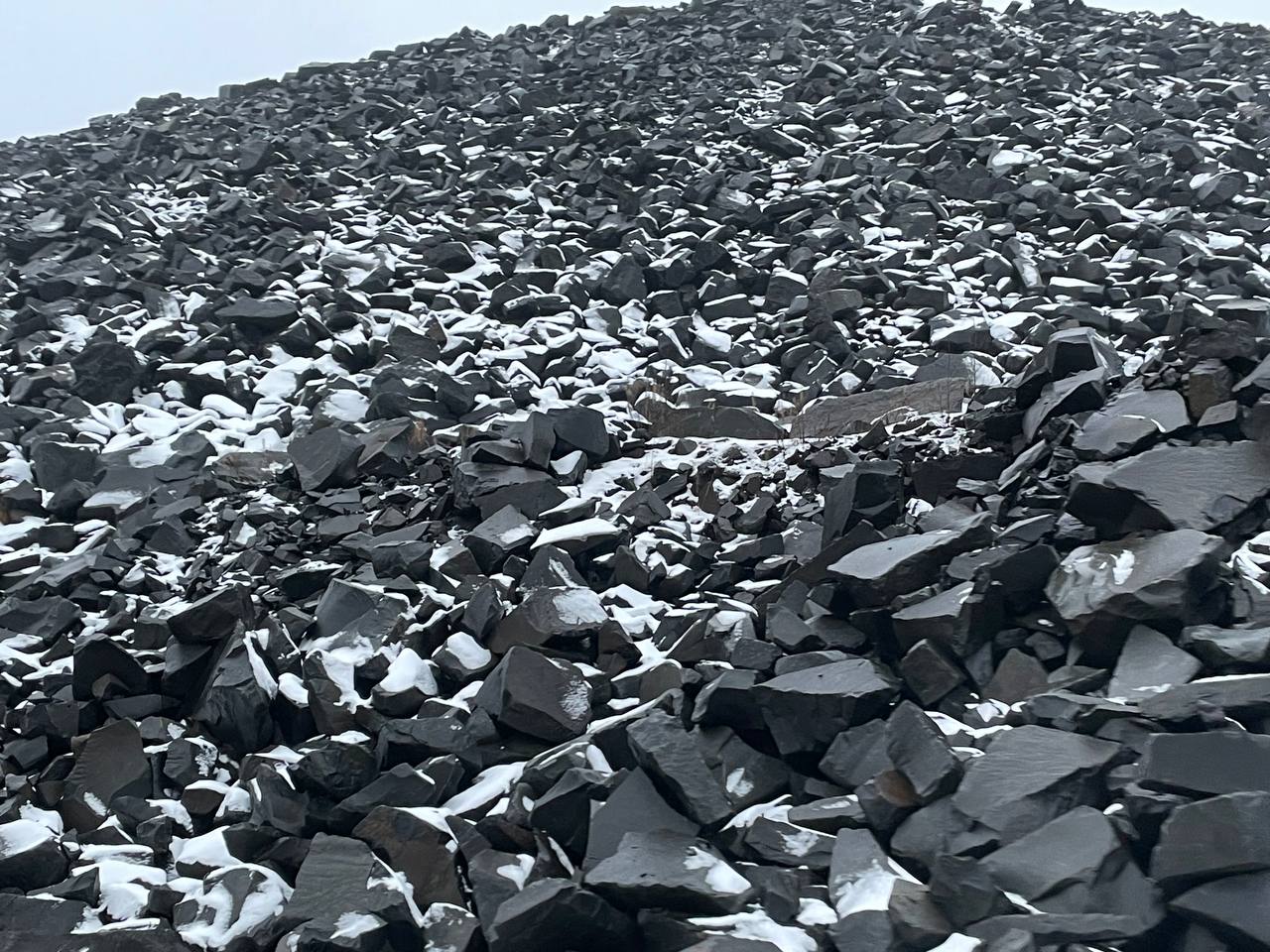
The ancient Vepsian village of Kaskesruchey may soon disappear: it is surrounded by quarries where stone is mined for cemetery tombstones. Due to constant explosions, the walls of wooden houses shake, the shore of Lake Onega, on which the village stands, is destroyed, fish disappear from the lake itself, and water is lost from the wells. Residents of Kaskesruchye believe that their right as a small people to lead a traditional way of life on their land is being grossly violated. They write appeals to the Ministry of Natural Resources and complain to President Putin. But everything is useless.
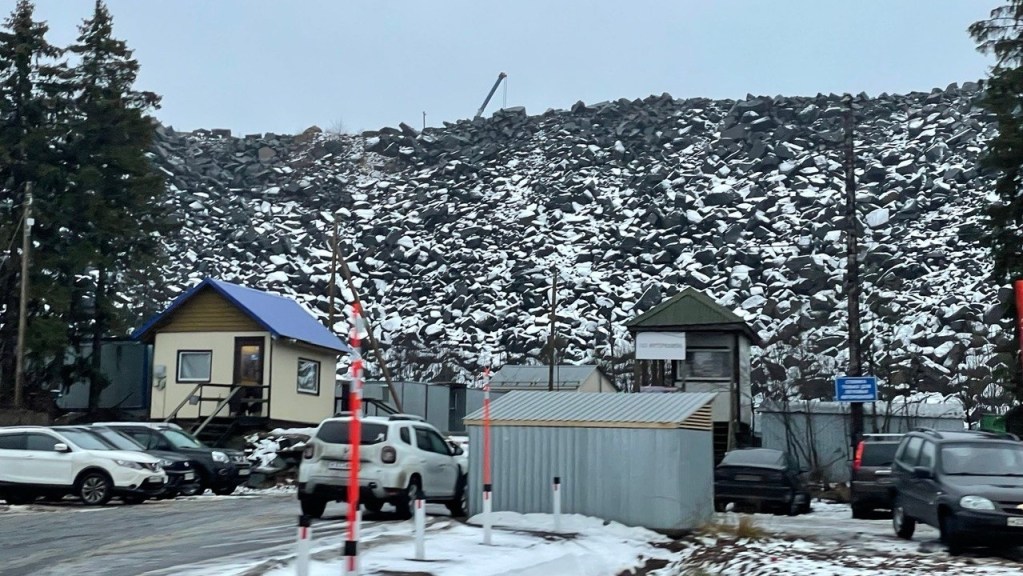
"The village is sliding into the lake"
“Trouble has come to our land... living for years in an environment similar to being close to the front line is unbearable. The roar from rock explosions at times makes you instinctively duck down - walls in houses shake and window panes rattle. Kaskesruchey stands on the sandy steep shore of Lake Onega, where swifts and swallows once lived in nesting holes. Now there is no trace left of them, only a memory.” - this is how they talk about the problems of the village in the “Reflection of Karelia” group.
Kaskesruchey, one of the oldest Vepsian villages, stands in a beautiful place on Lake Onega. In winter, several dozen people live here. In spring and summer, summer residents come here, and the village's inhabitants number several hundred. Until recently, Kaskesruchey was surrounded by forests full of mushrooms and berries; valuable species of fish spawned in Onego Bay - salmon, palia, vendace. Now there is nowhere to pick mushrooms and berries - the forests have been cut down for quarries, and irreparable damage has been caused to the bay. Due to blasting in quarries, the shores are covered with stone dust; when it rains, it falls into the water, which becomes cloudy, and the fish leave these places. In the village itself, the wells are drying up, and the water that remains smells of hydrogen sulfide. Residents believe developments are to blame for the erosion of the Onega bank. The village is sliding into the lake.
Anna (the names of the interlocutors have been changed for their safety) lives in Kaskesruje, one of the quarries is located very close to her house. According to her, in all of Karelia here is the best deposit of black gabbro-diabase stone. Thanks to the quarries, the inhabitants of these places have work. Therefore, at first no one objected to stone mining here - until the quarries came close to the village.
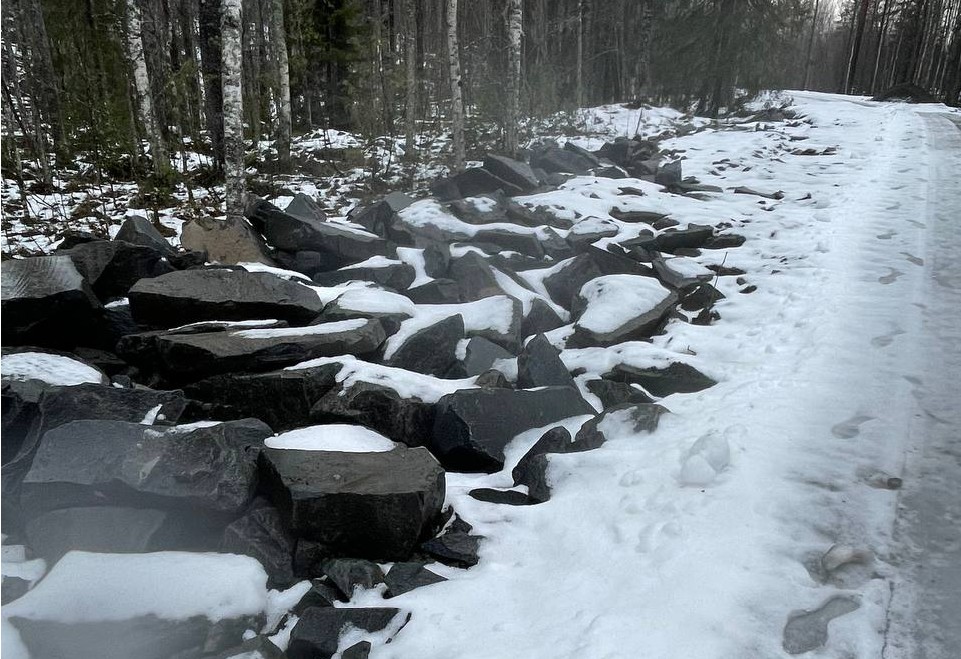
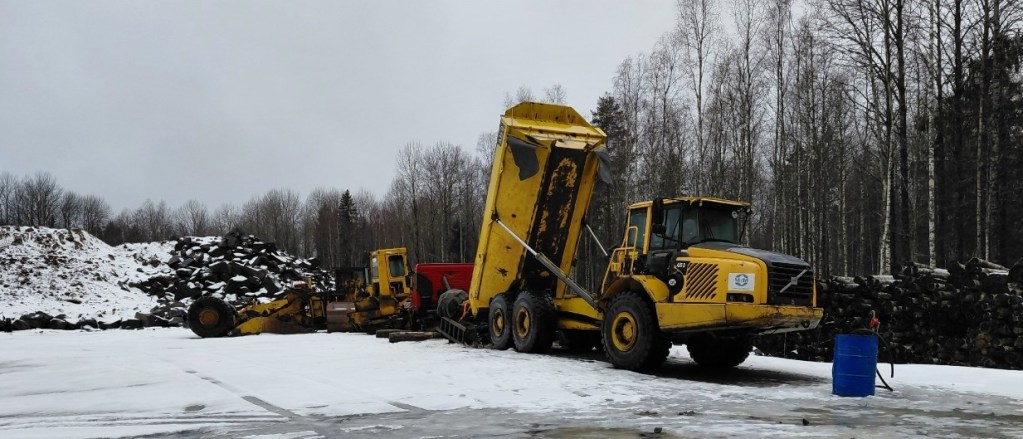
“Only 7 kilometers along our road there are more than a dozen companies mining this stone, each on its own site. If you drive along the road, there was a forest all around three years ago, but now it’s just one continuous bald mountain, and they are constantly hollowing it out, blowing it up and transporting, transporting, transporting this stone. It is already dangerous to drive on the road - all the sides are littered with stones. They are blowing up a rock right next to our village, almost right next to it. - says Anna.
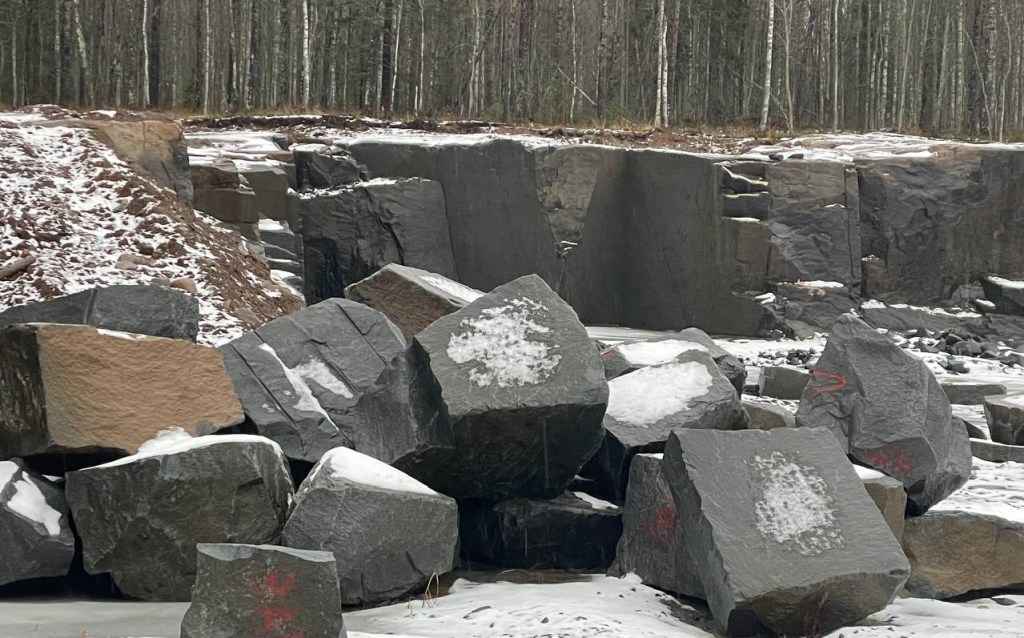
She herself also works in the quarry.
– I can’t say that I’m happy with this job, but what should I do? Everyone wants to live, everyone wants to eat, as they say. From our quarry to the central road - 8 km deep into the forest, and to the two nearest settlements - almost 20, so our quarry does not bother anyone. Everyone needs a job, no one argues, all the developers shout - like, if there are no quarries, you won’t have a job. But you have piled up so much of this stone here, you treat it simply like a bestial, because there are extraction methods that are more gentle. Even if there are careers, you need to treat it adequately, and not like this: “We’ll skim off the cream now, but we don’t give a damn about you.” They could come to us and ask: “Here, let’s all think together about how we can do better.” They didn't. They just did everything quietly, came here with the equipment when they had already received licenses. We wrote everything to Putin and tried to call his direct line. And I watched this line from cover to cover, but at some points I said to myself: “I’m wildly dissatisfied and don’t agree.” – Anna admits.
“Extracted using a barbaric method”
The rock in the local quarries is “extracted using a barbaric method” - by blowing it up, locals say. The inhabitants of Kaskesruchye believe that the placement of quarries around their village violated the Federal Law “On Guarantees of the Rights of Indigenous Minorities of the Russian Federation” - the right to protect their original habitat, the right to traditional use of natural resources and the right to compensation for losses from economic activities.
Vepsians are a small people of the Finno-Ugric language group of the Uralic language family. traditionally living in Russia on the territory of the Republic of Karelia, Vologda and Leningrad regions. Most of the representatives of this people live in Karelia. In 2006, the Vepsians were included in the List of Indigenous Peoples of the North, Siberia and the Far East of the Russian Federation. In total there are about 4,900 people.
The national language, Vepsian, written in Latin, is close to extinction today.
People write about the consequences of the development of stone quarries around Vespsian villages in their appeal to the Ministry of Natural Resources as follows: “Destruction of the foundations of the traditional way of life: cranberry and mushroom lands will be lost forever, hunting grounds and animal migration routes will be disrupted. Physical threat: Blasting creates dangerous vibrations for our homes, leads to constant noise and dust pollution, and destroys sacred landscapes. Threat to Lake Onega: runoff and changes in the hydrological regime from the quarry will strike the water area, which is our source of drinking water and fish.”
In response to these appeals, on December 1, 2025, at the initiative of officials in the village, so-called public hearings were held on two issues: on the provision of a forest plot to Drugoretskoye LLC for the extraction of gabbro-diabase at the Drugoretskoye-2 deposit (near the village of Drugaya Reka), and on the provision of a forest plot to RM-2013 LLC for the extraction of building stone at the Yuzhnoye-3 deposit (near the village Kaskesruchey). But locals say that no one notified them about these hearings. And literally three village residents came to them, who accidentally found out about the meeting. And no one listened to them there. Moreover, as it turned out, licenses to the developers had already been issued by that time.
After such “hearings,” the locals again sent requests to the Ministry of Natural Resources, Rosnedra and the FDN (Federal Agency for Nationalities of Russia).
In a collective appeal to the head of the Prionezh Municipal District, Grigory Shemet, it is said that people categorically object to the provision of forest plots for the Yuzhnoye-3 deposit for the extraction of gabbro-diabase by the company RM-2013 LLC and demand that their legal rights be protected, and “the public hearings held with gross violations be declared null and void.”
In response to all these requests, people, according to them, receive “some kind of replies,” and the mining of stones around the village continues.
“The black mourning stone is worth it”
Blasting operations have already disrupted the aquifer in these places. The wells from which people here always took water were empty.
“Either the water is colored, it’s colored, apparently, where the water mixes with clay, sometimes it will be red, sometimes it will be white. And if in childhood we stood with a fishing rod, caught the same bream, all the fish came to the shore, but now they move far away from the explosions. - says local resident Alexey .
Stone mining also destroys local industries;
– And this is not only about catching fish. Today I spoke with a man who is in charge of receiving berries, he says - there are so many clearings, so many plots, lingonberries are disappearing, and in general the berries have become bad. And that’s why the animal comes out of the forest - last year the lynx came and ran across the roofs. We have wolves coming out of the forest, a bear walked recently - apparently they woke him up. Right behind the house we had a large forest, there were swamps, we collected cloudberries, cranberries, and lingonberries. everything was nearby. Please, there's nothing now. The forest was cut down - the wind had already begun to rustle so much that the iron was flying off the roofs. And we have frosts in winter - the winter before last it was minus 48 on New Year's Eve. If they remove the entire forest, there will be a storm and a crazy wind. On the one hand, everyone seems to say: “We protect, we protect small nations.” And as soon as industry arrives, it’s goodbye, there’s no protection,” says local resident Natalya .
The development of quarries and stone extraction in the region was once supported by the Ministry of Natural Resources and Ecology of the Republic of Karelia. The former head of this ministry, Alexey Shchepin, was arrested in September 2025 and placed in a pre-trial detention center on charges of fraud on an especially large scale during the waste reform in the region. But the arrest of the head of the ministry did not in any way affect the work of the stone mining campaigns. “A project promoted by a department under the leadership of a person with such a reputation cannot be considered conscientious and requires special legal and anti-corruption verification,” write the inhabitants of Kaskesruchye in their appeal to the Ministry of Natural Resources.
But all these appeals do not change anything. Stone mining continues around the villages.
“Expanding the quarry and cutting down the forest almost close to the houses will put an end to the future of the village. Who will go to live in the quarry? No amount of taxes from stone will bring back the lost culture and unique landscape. Our small homeland is literally being destroyed,” write residents of the village of Kaskesruchey to the head of Karelia, Artur Parfenchikov.
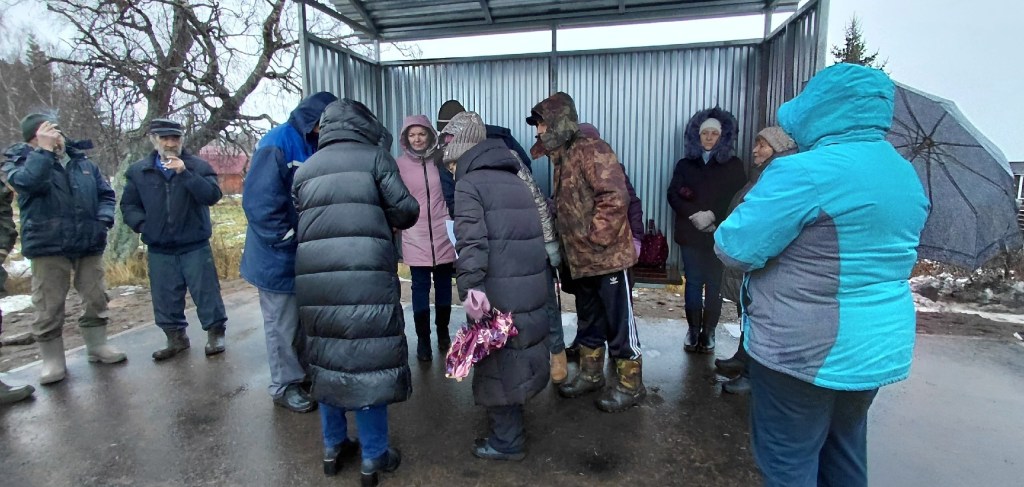
– The Vepsians are a unique culture, it is still partially preserved in the Leningrad and Vologda regions - there are very few Vepsians left. And they are protected by a special law on the small peoples of the north,” says local resident Olga. “With these laws, the Vepsians are supposedly guaranteed a certain inviolability of their traditional habitats. But in reality, they are raking our resources, and we cannot ask for even a cultural center to be built for us.
The dumps from the quarries have already completely distorted the local landscapes. Although very close to these places there is experience in civilized quarrying.
“Our neighbors are the Finns, who also mine this kind of stone; they don’t blow it up, they just cut it out. After all, if you blow it up, it crumbles. And the creepiest thing for me is that this stone, gabbro-diabase, is used mainly for making cemetery tombstones. If you drive into Petrozavodsk, you can see these stone trucks rushing along Alexander Nevsky Avenue. And then these black monuments are sold, it’s a nightmare. It turns out that they destroy wildlife, living villages for the sake of cemeteries. - says Olga.
According to her, the stone mined in local quarries is also used in local cemeteries, where more and more graves of those killed in the war against Ukraine have recently appeared.
– When mobilization began, many Veps men went into the forest together. They said we won’t go, there are so few of us. And there really are just crumbs left. But they are being rowed - and in the Novgorod region there are dead, in Zheltozerye - this is the Veps side, and there are dead guys there. More than a thousand people have already died in our little Karelia. It hurts a lot. And they also have tombstones made from our gabbro-diabase. The black mourning stone is worth well.
"Moon Landscape"
At the end of 2025, Karelian State Duma deputy and member of the Yabloko party Emilia Slabunova also received a collective appeal from residents. In December, she went to the site and was impressed by what was happening : “The cabins, the equipment park, the units ready for shipment - I saw everything and saw for myself personally... There is no limit to the indignation of the residents! The surrounding area already resembles a lunar landscape. There are practically no territories left for the traditional management of the Vepsians, despite the fact that the rights of the indigenous small people are protected by law. Residents demand an ethnological examination of the proposed project and the cancellation of the results of public hearings!”
In December 2025, Slabunova sent requests to the supervisory authorities to verify the legality of the actions of the authorities obliged to protect the indigenous people. The prosecutor's office told her that “supervisory measures will be organized.” The Ministry of Natural Resources sent a deputy to the Baltic-Arctic interregional department of Rosprirodnadzor for an economic assessment of the environmental impact.
The editors of the “Window” project sent a request to RM-2013 LLC, which is developing the Yuzhnoye deposit, whether the company is going to compromise with local residents who oppose stone mining near their village, why the stone is mined using such methods that 90% goes into dumps, and whether there are plans for the reclamation of places littered with stone mining waste. There is no response to the request yet.
At the end of 2025, the Center for Sustainable Development of the Russian State Geological Prospecting University. S. Ordzhonikidze (MGRI) presented the Environmental rating of Russian regions based on the results of the year. Karelia found itself in the “red zone” – among 9 problem regions of Russia. A year earlier, the republic was not yet on this list.