
Translated material
Shadow logistics of the Arctic
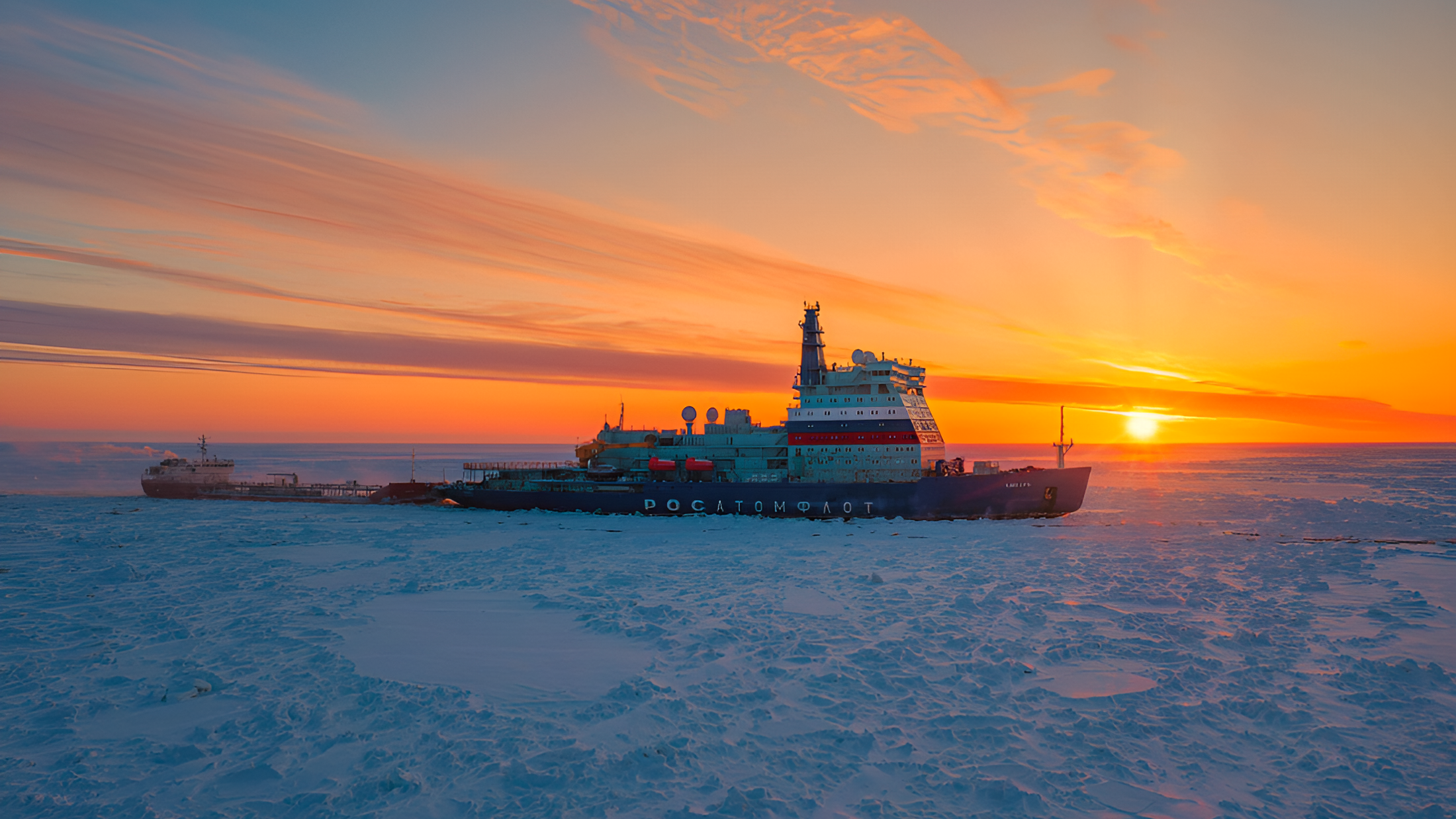
How Russia's sanctioned megaprojects continue to receive supplies through shadow operators on the NSR
The US and EU countries are introducing sanctions against the Russian energy sector, trying to limit the technological development and export capabilities of hydrocarbon giants.
However, the construction of LNG plants and the development of fields in the Arctic does not stop. Necessary cargo continues to arrive uninterruptedly at destination ports. This occurs through an established logistics network of formally independent contractors and transport operators that make supply chains legally permissible but opaque.
This happens because the commercial interests of commodity corporations are disguised as the activities of regional transport companies. Formally they are independent, but in practice they turn into closed logistics hubs for sanctioned structures.
Since 2020–2021, a stable group of private operators has been formed in the Arkhangelsk transport hub, whose vessels are regularly involved in navigation along the Northern Sea Route (NSR). The key figures are TK Northern Project LLC and Eco Shipping LLC. Both companies operate on Arctic routes, service large infrastructure projects and find themselves involved in episodes associated with sanctions restrictions and increased regulatory risks.
"Arktida" understood in more detail the logistics of companies that transport goods along the NSR. This is the first investigative text in a series where we examine large infrastructure projects in the Arctic.
"TC Northern Project": from offshore schemes to shipyards
TK Northern Project LLC, which has already been subject to US sanctions, positions itself as a key independent operator in Arkhangelsk. The company not only charters ships, but also acts as an operator of subsidized domestic flights along the NSR. A significant part of the company’s property was acquired through the leasing structure of LK GPB LLC, the sole beneficiary of which at the end of 2022 was Gazprombank.
Behind the façade of a successful Arctic logistician is the figure of Denis Kuzmin, who owns 90% of the assets. Kuzmin has repeatedly attracted the attention of law enforcement agencies. In the mid-2010s, the regional department of the FSB suspected him of illegally withdrawing 370 thousand dollars abroad using forged documents for fictitious transportation of goods. However, in 2018, the prosecution was stopped with a court fine of 230 thousand rubles. The basis for this decision was the status of the enterprise as a significant regional employer and taxpayer: the court took into account the social and economic contribution of the company and the provision of jobs. Two years after this, the Arbitration Court confirmed the company’s fine of 6.3 million rubles for a fictitious transfer of $130 thousand to Golden Breeze Shipping Corp for brokerage services. The actual services cost ten thousand, and the director received the difference.
Kuzmin is actively expanding his business: he owns Arctic Shipping LLC with assets worth 4.8 billion rubles, and at the end of 2024 he registered the shipbuilding plant SP Chaika LLC, the activities of which are already covered in the media as an example of a successful production organization. Kuzmin’s partner and owner of a 5% stake in TK Northern Project is Dmitry Chernov, who also holds the post of General Director of the shipyard. In 2025, in an interview dedicated to the official opening of the shipyard, Chernov directly outlined the Arctic ambitions of their new asset:
“At the initial stage, we will build Arc4 ice-class tugs of the NP19T project, capable of operating in the northern seas.”
This means that first there are plans to build small port tugs with reinforced ice construction, capable of operating in northern conditions. The head of the security service at TK Northern Project is Stanislav Glinsky, who has experience in military service. In the background of Glinsky’s personal page on VKontakte is the cargo ship “Northern Project”, and archival photos and videos from his military service are regularly published on the feed.
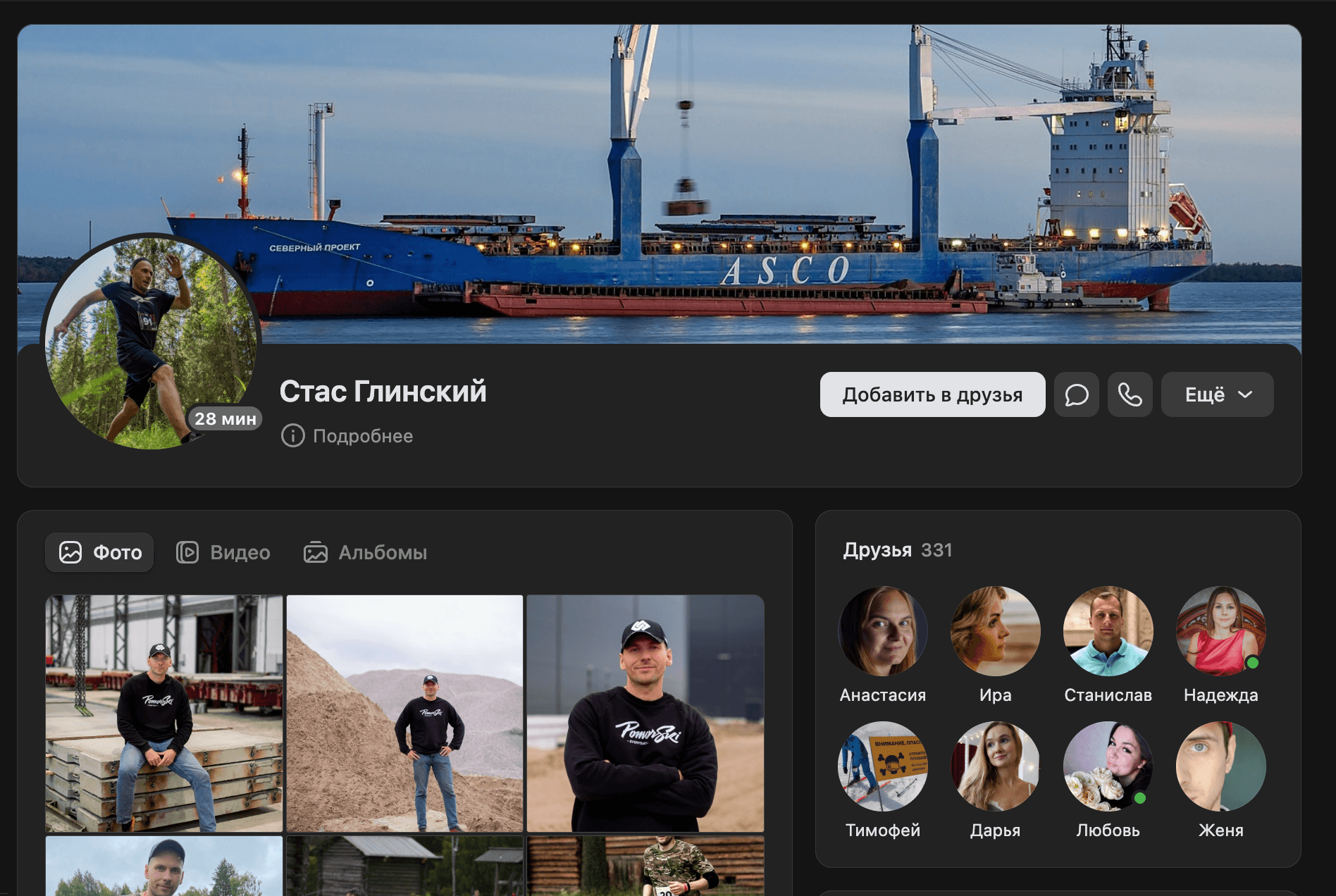
From Glinsky’s biography it is known that his profiling began at the Faculty of Information Technologies of the Arkhangelsk State Technical University. After receiving his diploma, he served in a company of technical reconnaissance equipment in the village of Pechenga, Murmansk region, a strategically important area located just 15–20 kilometers from the Russian border with Norway. After returning from service, Glinsky worked for nine years in the structures of the Federal Penitentiary Service (FSIN), where he rose to the post of head of the regime and supervision department.
The career path of the current head of the security service of TK Northern Project combines higher IT education with service in technical intelligence units and implies competencies in the field of electronic monitoring, data protection, communication monitoring and, probably, work with navigation equipment.
Administrative resource and “donation” of the Arkhangelsk River Port
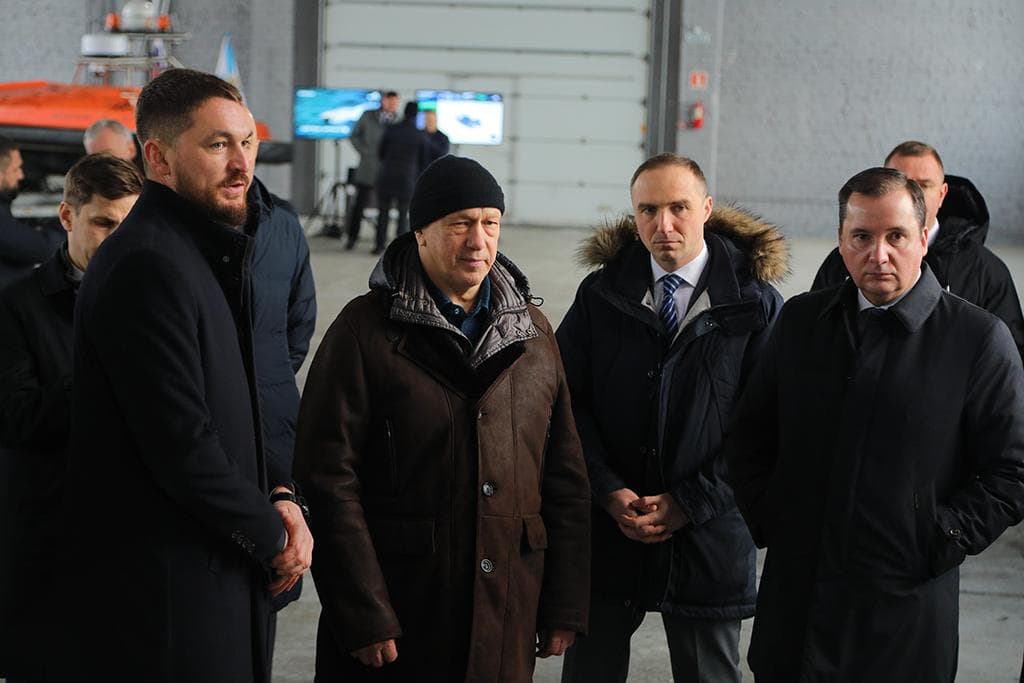
Business expansion is actively supported at the regional level. The governor of the Arkhangelsk region, Alexander Tsybulsky, who strives to make Arkhangelsk a key port of the Arctic as opposed to Murmansk, uses the “TK Northern Project” as a showcase “success story.” The governor has successfully lobbied for Arkhangelsk to be included in the subsidized flight program and personally presented the opening of the Polar Trans Port railway terminal associated with the group in 2025.
The official website of Polar Trans Port states that the opening of the terminal creates a “full logistics cycle” to Arctic points. This integrated approach includes acceptance of cargo by rail and road transport, processing at the rear terminal, loading at the sea pier and transportation along the NSR by vessels of our own fleet. It is called the “Arctic transport logistics complex of the TK Northern Project group of companies.” The project was further given public legitimation by the visit of Plenipotentiary Representative Yuri Trutnev, after which the complex was officially named on the Far Eastern Federal District portal as a key element of logistics.
However, the financial foundation of this expansion also has a dark side.
For many years, the financial donor of TK Northern Project was the Arkhangelsk River Port, an enterprise that performs socially significant functions and receives subsidies. The largest shareholder of the port, Konstantin Kuznetsov, was also among the founders of TK Northern Project from 2016 to 2018, and then, until February 4, 2022, his relative was one of the founders. The port systematically lent to a private company through accounts receivable, without receiving payment for services, and acted as a guarantor for loans to logisticians at VTB Bank, mortgaging its own property and fleet . Konstantin Kuznetsov himself was sentenced in 2019 to five years in a maximum security colony and a fine of nine million rubles for bribery for the sake of a monopoly on transportation to the Solovetsky archipelago. Then the sentence was commuted, and soon the court completely vacated the criminal record for “good deeds.”
Hidden clients: LNG plants, builders of “Putin’s palace” and Norilsk Nickel
One of the most powerful logistics flows processed by the company is associated with the construction of LNG projects on the Gydan Peninsula and other strategic facilities in the Russian Arctic. In particular, TK Northern Project has been closely cooperating with projects of PJSC NOVATEK since at least 2021.
The key link in this process is Nova LLC - this specialized division is focused on building infrastructure for the production and transportation of hydrocarbons. The company's ownership structure has undergone significant changes: as Interfax reported, on October 15, 2019, Leonid Mikhelson became the direct owner of Nova. Until August 2018, the asset was owned by his daughter Victoria, and in the period until 2018–2019, various offshore structures and Russian legal entities were among the owners.
Today, Nova is constructing NOVATEK’s largest facilities, including the Center for the Construction of Large-Capacity Offshore Structures (TSSKMS), and its other major customers include Gazprom and Gazprom Neft.
The geography of their joint interests with TC Northern Project is concentrated on the Gydan Peninsula: it is there that the Salmanovskoye (Utrenneye) oil and gas condensate field is located, which serves as the main resource base for the sanctioned Arctic LNG-2 project.
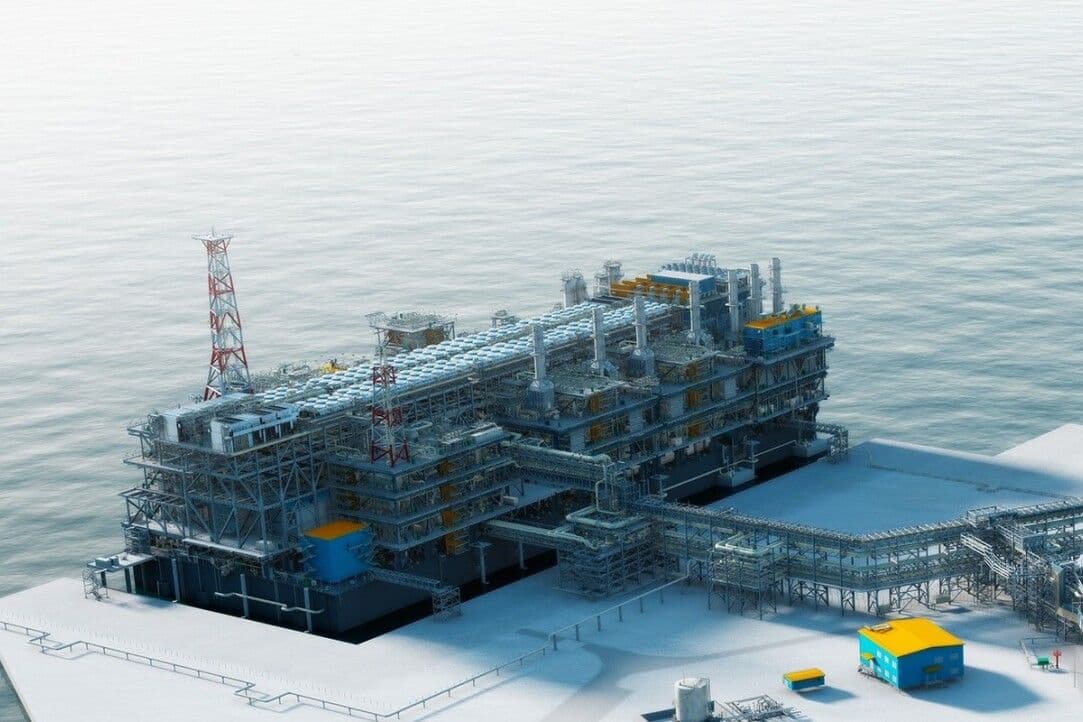
Among the orders of TC Northern Project there are also those related to the implementation of the State Defense Order (GOZ) and special projects of Rosatom. And the main counterparty of the company is: Zapsibgazprom-Gazification LLC - a Tyumen company that is part of the Zapsibgazprom group. On its official website, the structure states that it carried out complex projects for the Russian Ministry of Defense “in areas greater than 80° northern latitude .” Zapsibgazprom is one of the leading contractors for the construction of military and scientific bases in the extreme conditions of the Arctic and Antarctica. Their track record includes participation in the construction of the Arctic bases of the Ministry of Defense “Northern Clover” and “Arctic Trefoil”.
Logistics services are also provided to nuclear sector enterprises. FSUE RFNC-VNIIEF is a federal nuclear center in the Rosatom system, located in the historically closed city of Sarov, formerly known as Arzamas-16. VNIIEF is a scientific and technical organization that performs the most important government tasks in the field of the nuclear weapons complex. The center is historically and organizationally associated with the development of nuclear charges, and today with the conduct of “non-nuclear explosive experiments” (NVE) and testing of promising weapons at the Central Test Site of the Russian Federation. As follows from industry materials from Rosatom and official reports from the Russian Ministry of Defense, Novaya Zemlya serves as a testing ground for such tests and expeditions.
In addition to the defense industry and gas industry, the Arkhangelsk operator is deeply integrated into the business processes of the largest resource monopolies and the political elite. There are three areas in the pool of counterparties: JSC TK Logistic-Center, CJSC Lesozavod 25 and LLC Velesstroy.
More about them
"Eco Shipping": blocking sanctions, criminal echo and family contract
Along with TK Northern Project, the second key link in the Arkhangelsk transport hub, providing logistics for megaprojects, is Eco Shipping LLC. This company also positions itself as an independent ocean carrier. The company's ownership structure is as follows: 66.67% of the assets are controlled by Pavel Andreev, and the rest belong to LLC Territorial Trading Company Nord-West. In February 2024, the US Treasury added Eco Shipping to the SDN blocking list as an integral part of the logistics network providing infrastructure construction for the sanctioned Arctic LNG-2 megaproject.
In October 2025, the government of the Murmansk region entered into a cooperation agreement with the Eco Shipping group of companies. The document was signed by the regional governor Andrei Chibis and the founder of the transport company Pavel Andreev.
It is known that Pavel Andreev was born in 1985 in the city of Novodvinsk, Arkhangelsk region, and in the past had a criminal record under Article 116 of the Criminal Code of the Russian Federation (battery). According to the registration databases, he lived in Arkhangelsk in a house where Artem Ruslanovich Andreev and Ruslan Vasilyevich Andreev were also registered. As the local publication Echo of the North previously reported , it was there that the famous Arkhangelsk crime boss Ruslan Andreev lived, who was later killed.
Recently, the management structure of Eco Shipping has undergone changes, typical of companies trying to disguise beneficiaries against the backdrop of sanctions risks. According to media reports , from January 14, 2025, the functions of the management company for Eco Shipping began to be performed by Arctic-Trans LLC. Since June 2024, the sole owner of Arctic-Trans has been Andreev Artem Ruslanovich, whom we mentioned above.
The position of General Director in the new management company Arctic-Trans LLC was taken by Sergey Krylov. According to the ABN publication, Krylov previously served as director at Eco Shipping itself. Moreover, connections between Krylov and Andreev extend through other legal entities. According to the database of financial leaks, Sergei Krylov previously received official income from Transstroy LLC - in the same company where Pavel Andreev worked.
Energy giants, Chukotka copper and “green” cover: who charters the Eco Shipping fleet
The basis of Eco Shipping's cargo base is traditionally formed by the energy cluster, where the leading customer is the group of companies PJSC NOVATEK. It is the needs of gas workers that provide the Arkhangelsk carrier with a stable load.
For several years, the company's list of key counterparties has included operators of the country's main LNG projects - Yamal LNG OJSC and Arctic LNG-2 LLC. The main beneficiaries of these structures are Leonid Mikhelson and Gennady Timchenko, who is under Western sanctions. As for the foreign shareholders represented by the French TotalEnergies and the Chinese CNPC and CNOOC, although formally they still remain, in fact their participation in the projects is completely frozen. In addition to the plants under construction, transport and logistics services are also provided by NOVATEK-Yurkharovneftegaz LLC. This production subsidiary acts as the operator of the Yurkharovskoye field, which serves as a resource base for the development of the entire LNG cluster.
The second most important logistics area for the operator is the mining sector, focused on the extraction of gold and copper. A good example here is cooperation with the structures of the Baimsky Mining and Processing Plant. The project to develop the giant porphyry copper deposit Peschanka in Chukotka is considered one of the most expensive in the world: capital costs for its implementation are estimated at more than eight billion dollars.
Shadow fleet: from grain smuggling to Libyan ports and hidden transshipment
The activities of Arctic operators extend far beyond the Northern Sea Route, tightly covering the operations of the classic “shadow fleet” at the global level. Vessels formally assigned to northern projects are regularly spotted in zones of international conflicts and gray logistics schemes.
Thus, in mid-January 2026, the ship “Cape Zhelaniya” was recorded in the port of Tobruk (Libya). The ship delivered military cargo, presumably for the Afrika Korps structures, and the unloading process took place in the presence of a Russian destroyer.
The ship "Cape Zhelaniya" is subject to sanctions from the United States and Ukraine. According to the electronic shipping information system Equasis, the vessel is currently owned and operated by Arctic Transportation LLC. The sole founder of this company is Artem Andreev, who is also associated with the ownership structure of Eco Shipping. In general, the practice of changing registered legal entities was also applied to other vessels in the Eco Shipping fleet.
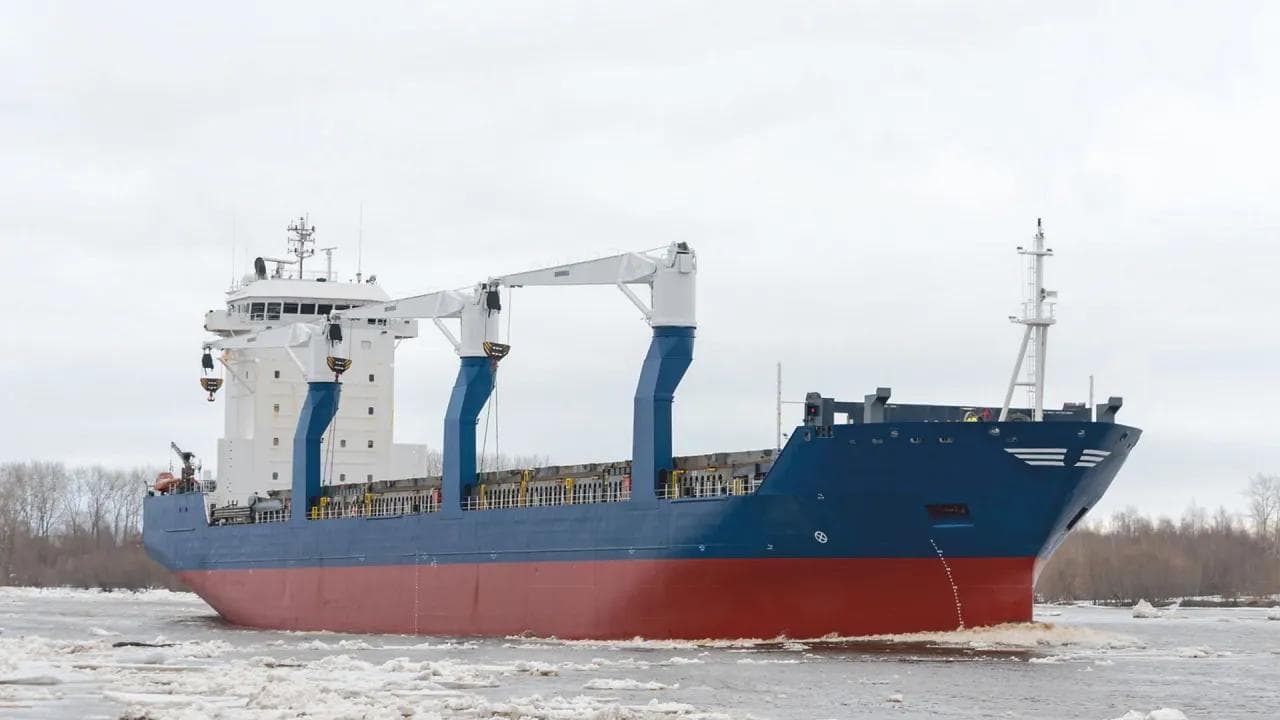
Similar changes in the management structure affected the assets of Pola Rise LLC and the ship Mys Manorsky, which previously bore the name Pola Dudinka. In February 2023, the United States placed Paula Rise and 22 affiliated vessels on a block list for activities in the maritime sector and facilitating supplies for Arctic construction projects. In June 2025, management of the motor ship Mys Manorsky, as in the cases of other vessels of the group, was transferred to Arctic-Trans LLC.
Before the restrictions were introduced, in October 2022, Paul Dudinka’s vessel participated in the offshore transshipment of coal from the Sibanthracite company in the Baltic Sea. The logistics mechanism consisted of the following stages:
- Loading coal onto the ship Paul Dudinka in the Russian port of Ust-Luga.
- Transshipment of cargo on the high seas onto the large-tonnage bulk carrier Syros Island, which was managed by Greek companies.
- The direction of the Syros Island vessel to the Egyptian Port Said with the declaration of the cargo as not subject to sanctions risks, while Paula Dudinka returned to the Russian port for a new shipment.
Transportation of agricultural products and routes to Syria
Vessels owned by TK Northern Project are also involved in the export transportation of grain crops. In May 2024, the Yenisei vessel with its AIS system turned off was identified on the grain transportation route from Sevastopol to Venezuela.
Upon arrival at the port of Puerto Cabello, the ship was denied berth. Industry experts believe that this is due to the entry into force of the 14th package of EU sanctions, which imposed restrictions on servicing a number of vessels operating on alternative routes. In similar operations for the transportation of grain, the dry cargo ship Siberia is also mentioned .
In addition, the dry cargo ship Northern Project operated flights between Sevastopol and the port of Latakia (Syria). Such routes, as a rule, transit through the territorial waters of neutral or friendly countries. This approach allows shipowners to minimize the likelihood of stops and customs inspections that are possible when passing through international waters.
На базе региональных логистических компаний сформировалась масштабная и гибкая транспортная инфраструктура, необходимая для функционирования российской экономики в условиях санкционного давления. Предприятия, исторически ориентированные на внутренний каботаж и классический северный завоз, фактически трансформировались в многопрофильные хабы двойного назначения.
Через систему формально независимых подрядчиков, таких как «ТК Северный проект» и «Эко Шиппинг», выстроены каналы поставок, позволяющие минимизировать влияние международных ограничений.
За сложной структурой собственности, частой сменой учредителей и управленцев, биографии которых связаны с судебными разбирательствами и регуляторными рисками, просматриваются интересы крупнейших энергетических корпораций и оборонно-промышленного комплекса. Региональные власти и государственные финансовые институты, в свою очередь, обеспечивают этому бизнесу системную административную поддержку, льготы и проектное финансирование.
В результате частные морские перевозчики стали важным структурным элементом новой экономической реальности. Их юридически выверенные цепочки поставок позволяют продолжать бесперебойное снабжение стратегических мегапроектов, таких как «Арктик СПГ-2», и реализовывать непубличные государственные задачи, превращая арктический транспортный узел в один из ключевых инструментов обеспечения санкционной устойчивости.