
Translated material
"Dad's not around." 70 years of Karelian historian Yuri Dmitriev
The historian of Stalin's repressions, the former head of the Karelian Memorial, Yuri Dmitriev, celebrates his 70th birthday in a maximum security colony. He has been in prison for nine years now and is “very tired” of being in prison, say his friends who maintain contact with him, and dreams of being “exchanged,” but the article under which he was imprisoned makes this prospect very difficult. Looking back, his supporters regret that they talked too much about Dmitriev’s historical merits, and not enough about his complete, absolute innocence.
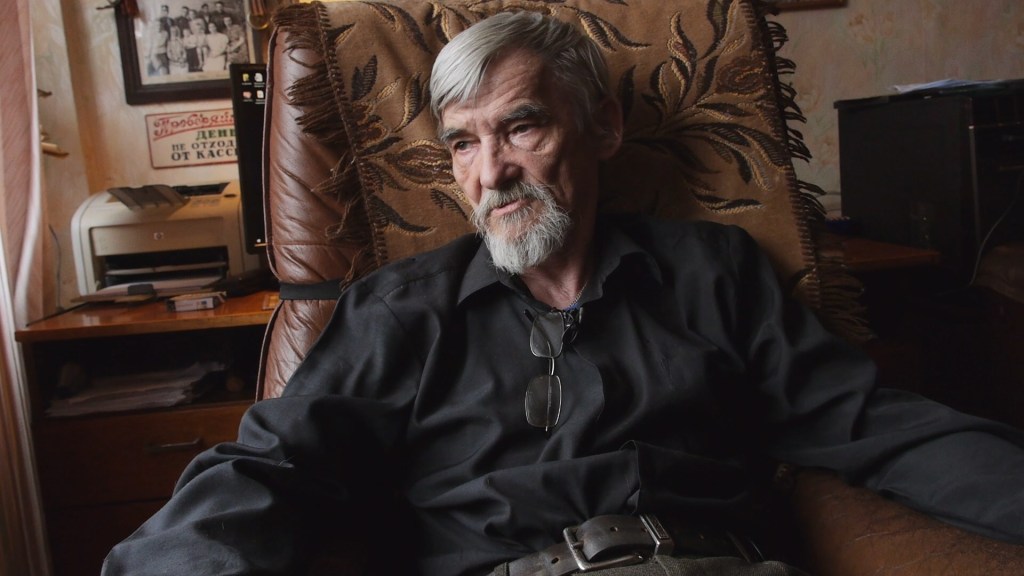
“Every year on daddy’s birthday we call each other - it doesn’t matter who lives where now and what cities we’ve moved to,” says Katerina Klodt, Yuri Dmitriev’s eldest daughter. “We just get together on Zoom and celebrate his birthday: we talk, we reminisce, we sing songs - we do everything that people do when they want to be close, but cannot. And every time I am happy: so many people congratulate dad, remember him - and his birthday gradually became some kind of our common holiday.
For the historian’s 70th birthday, his support group is preparing for publication the collection “The Guardian of History.” It will include articles by Dmitriev himself, his interviews, publications about his work from 1991 to 2025.
– Dad’s not around – what else can we think of? Most likely, it will be the same birthday as in previous years,” says Katerina. – I will try to come up with something every time when dad is already at home. Then we will definitely celebrate for real, on a grand scale. I’m sure a huge company will gather to congratulate him personally.
A criminal case was opened against Dmitriev in December 2016. It began with an anonymous statement: an unidentified person reported to the police that the historian was “taking pictures of his adopted daughter naked.” During a search, photos of a girl without clothes were found on the historian’s home computer. The investigation qualified this as the production of pornographic materials. Dmitriev explained photographs as monitoring the physical condition and development of the child and a way to protect himself from custody claims. In the first trial, the prosecution came with three articles: production of “child pornography” (clause “c” of Part 2 of Article 242.2 of the Criminal Code of the Russian Federation), “depraved acts” (Article 135 of the Criminal Code of the Russian Federation) and “storage of weapons” (Part 1 of Article 222 of the Criminal Code of the Russian Federation). In April 2018, a court in Petrozavodsk acquitted Dmitriev of “pornography” and “debauchery”, finding him guilty only of possessing an old sawn-off shotgun (a suspended sentence was imposed).
However, on June 14, 2018, the Supreme Court of Karelia overturned the acquittal and sent the case for a new trial. And the prosecution added a new, more serious article: other actions of a sexual nature against a minor (clause “b”, part 4 of article 132 of the Criminal Code of the Russian Federation).
By the second trial, the investigation shifted its focus to working with the victim. Immediately after the initiation of the case, the child was removed from the family, and Dmitriev was deprived of custody. The girl’s own grandmother became the new guardian and legal representative. And in the appeal that overturned the acquittal, the prosecutor’s office presented the results of a new psychological examination of Dmitriev’s adopted daughter, carried out after the decision of the trial court. Later, independent experts who studied the texts of the psychologist’s conversations with the girl said that the conversation was structured as if the task was not to figure it out, but to confirm the already existing version.
In the summer of 2020, the court again acquitted Dmitriev of “pornography”, “debauchery” and weapons, but found him guilty of sexual assault and gave him 3 years 6 months – a term below the minimum threshold. Such a verdict was perceived practically as an acquittal: taking into account the pre-trial detention center, it allowed for release in November. But in the fall of 2020, an appeal raised the punishment to 13 years of strict regime, and a cassation in December 2021 increased it to 15 years. Yuri Dmitriev is serving his sentence in a maximum security colony in IK-18 (Potma, Mordovia). Taking into account the time spent in pre-trial detention, he should be released in 2032. In January 2024, the European Court of Human Rights (ECtHR) communicated the complaint of Dmitriev’s lawyers (it was filed before Russia ceased to be a member of the Council of Europe).
“This is a man of amazing tenacity”
Over the years in the colony, Yuri Dmitriev ended up in a punishment cell many times, undermined his health, but he tries not to complain about the conditions of detention or prison medicine, says his daughter Katerina Klodt.
“We just call each other and that’s all.” We call each other and talk about the most pressing things. I ask how he is there, how he feels, what he eats, whether he reads books, whether he writes letters. And he, in turn, asks me: how are you, how are we living, how are children, what are we doing. All this - everyday, everyday things: the weather, relatives, acquaintances. We don’t discuss anything else,” she says. - Hard. I’m not a titan either: during this long time I was depressed and my health was failing. I'm very empathetic, so I don't read the news and I'm not ready to tell him all this. Dad understood and accepted this. Therefore, we stick only to homely, simple themes - to what we can stand.
In the camp hospital, Dmitriev was diagnosed with a neoplasm. But the biopsy was never done: the medical staff assumed that the growth was benign, although there was no 100% guarantee. It was not possible to obtain a consultation with an oncologist. Dmitriev is hospitalized about once a year, after which he is formally declared “healthy,” and the administration’s answers contradict each other - they either write that an oncologist is not needed, that the oncologist has already examined him, or that treatment has been prescribed, although without an accurate diagnosis it is impossible to prescribe treatment, his friends explain. He periodically experiences severe dizziness: due to weakness, he sat down on his bed a couple of times before lights out, for which he was twice sent to a punishment cell - once in a colony, another time in a hospital. Dmitriev tries not to aggravate relations with the administration, since conditions in the punishment cell are much more difficult than in a regular zone, they note.
“Yuri Alekseevich’s correspondence is amazing: not only I notice this, many people say the same thing,” says Viktor Tumarkin, who came to Petrozavodsk to support Dmitriev during the trial, and now corresponds with him. “He somehow managed from the pre-trial detention center, from the colony, from the camp to encourage those who are free. This is an amazing character trait. What he has inside and how he holds it - he, of course, will not tell. But he tries to support the people with whom he communicates: so that they don’t give up, don’t hang their noses. This is a man of amazing resilience.
“Everything hasn’t changed much for me. I’m alive and well (relatively, in accordance with my age), I read newspapers, I follow the life of my country and its “enemy environment”. I receive and write letters. In general, everything is as always, only there is not enough real work,” Dmitriev wrote in October 2024, when health problems were already manifesting themselves.
Before the war, Viktor Tumarkin was commissioned by the Ministry of Defense to develop websites about searching for missing soldiers of the Great Patriotic War.
“We essentially did one thing - we were engaged in preserving memory,” he says. – And in his letters Yuri Alekseevich writes all the time: memory is the most important thing.
“It could have been personal revenge”
Victor learned about Dmitriev’s case from the press and began traveling to Karelia for trials.
– One of my first impressions: some person in the court corridor congratulates Dmitriev on the fact that the case fell apart. And Yuri Alekseevich’s natural answer: “What are you congratulating me on? Because I'm not a pedophile? I already know that.” Such a small remark,” recalls Tumarkin. “And then a completely wild story began when the security forces, having suffered an unexpected defeat, began to bully the girl in a completely wild way, extracting testimony from her. It was all visible, it was absolutely terrible.
Tumarkin has no doubt that Dmitriev’s criminal case is directly related to Sandarmokh, its main historical heritage.
In July 1997, a search expedition led by Yuri Dmitriev found execution pits in the Karelian forest: thousands of those killed in 1937-1938, hidden for decades in the ground and papers. From this discovery grew the Sandarmokh memorial cemetery and the annual ritual of remembrance: names, signs, a road, people coming to remember their executed ancestors. Representatives of government authorities also participated in commemorative events on the day of remembrance of victims of political repression on October 30. But then the concept changed.
In the mid-2010s, Karelian historians Sergei Verigin and Yuri Kilin came up with the hypothesis that Red Army soldiers shot by the Finns during the Winter War could be buried there. The Russian Military Historical Society undertook to confirm this version by organizing excavations in Sandarmokh. The story ended with the scandalous disappearance of the raised remains: first they were “given away for research,” and then they were secretly reburied in an unknown location.
Yuri Dmitriev was already under arrest at that time.
“It is clear that if Dmitriev had not been behind bars, he would have made a big fuss about this activity, but he was no longer there,” says Tumarkin.
The initiation of a criminal case against Dmitriev helped rewrite the history of the Sandarmokh execution site. But the motive could also be a banal personal revenge of one of the local security officials, his friends believe.
“The fact is that Dmitriev headed the Karelian branch of Memorial,” recalls Tumarkin. – Around this time, Memorial published lists of NKVD officers involved in these atrocities. And it is possible that these lists also included the names of Karelian NKVD employees or relatives of such high-ranking figures. That is, it could have been personal revenge.
On this list, for example, there is Vasily Ivanovich Seryshev . And the head of the FSB Directorate for Karelia until December 8, 2016 was Anatoly Seryshev. Literally a few days after the historian’s arrest, he moved to Moscow, receiving the post of deputy head of the Federal Customs Service, and two years later he became assistant to the president. The “project” established that FSB officer Seryshev and NKVD officer Seryshev have a common point in their biography: the village of Koblyakovo, Bratsk district, Irkutsk region.
"She's a member of our family"
Yuri Dmitriev's adopted daughter is already 20 years old. Katerina Klodt had not heard from her sister for a long time, although before everything happened they had an excellent relationship.
– You know, our communication broke off after the first verdict, when dad was acquitted. Then my grandmother blocked me on all social networks - and since then we lost contact and never spoke again,” says Katerina. “I really want to know how she is.” Just talking to her like a human being - I miss her. She is a member of our family and never ceased to be: she lived with us for a long time. But on principle, I don’t want to look for her and impose myself, so that it wouldn’t be considered pressure. I don't want to put my dad or her at risk under any circumstances. She already got a lot. I really hope that someday she herself will want to get in touch with us. I will wait - and I will be very glad to see her. It’s really important for me to know that everything is fine with her: how her life turned out, where she studies, who she enrolled in, how she graduated from school, how her life is going on.
The girl is definitely the victim in this story. Only she suffered not from “actions of a sexual nature” on the part of her adoptive father, but from the way the investigation was conducted, supporters of the Karelian historian are sure.
– As for my daughter, the situation is difficult - it seems to me that they treated her terribly. During the first trial, she was still corresponding with him, writing letters: “Dad, I love you...”. And then they completely isolated her and began to press her. They pressed, they inspired, they broke. She was only 11 when it all started, then 13 – still a child. And they convinced her that he had “disgraced” her,” says Viktor Tumarkin. “At the same time, what was shown on television—these photographs—are actually from a closed case. What is this? This is a crime. There was a crime on a crime - just not his, but the way the court and the “glorious structures of the prosecution” worked.
Despite the heavy charge, Yuri Dmitriev has no problems in relations with other prisoners, say activists who maintain contact with him. But “he was very tired of sitting.”
In letters, Yuri Alekseevich was told about the “big exchange” - when Putin released political prisoners from prison in exchange for the return of Russian criminals convicted abroad. Since then, Dmitriev has dreamed of being exchanged in the same way.
- Of course, an exchange is needed. But the likelihood of exchanging a person who is under a pedophile charge is extremely low. There will be a cry from Russia that “they are taking pedophiles to the West,” says Viktor Tumarkin.
In his opinion, an important mistake was made in the Dmitriev case: they talked too much about what he did - about the scale of his work and its significance.
– It’s really difficult to overestimate the significance. But the main thing that should have been said first of all: he is innocent. Otherwise, some people have a dangerous impression: since a person is engaged in such important things, it means that any sins are “written off” to him. And this is a substitution. It should not be about merit, but about facts, says Tumarkin. “His innocence, in my opinion, is clear from the very course of the investigation and trial, from the behavior of the security forces - and from what is happening around the sites of memory of the Great Terror. Sandarmokh is not the only example. In various burial places of victims of Stalin's repressions today they are trying to promote versions that these are not only execution sites, but also the graves of Soviet soldiers who died during the war. In this context, it is especially important not to hide behind Dmitriev’s merits, but to say the main thing: he is innocent.