
Translated material
Shadows of the Holocaust: how do they remember the Holocaust in the Kaliningrad region?
When, on January 27, 1945, Red Army troops entered the Polish Auschwitz-Birkenau concentration camp complex and freed its prisoners, it seemed to draw a line under the worst disaster of the 20th century. However, for prisoners in other camps, the final act of the Holocaust unfolded only a few days later. Thus, on January 31, 1945, in the village of Palmniken near Königsberg, several thousand prisoners of the Stutthof camp were taken to the shore of the Baltic Sea and shot. How are these tragic events remembered today, when Palmniken became the Russian village of Yantarny, and Koenigsberg became Kaliningrad? Researcher Valeria Shpinkova tells.
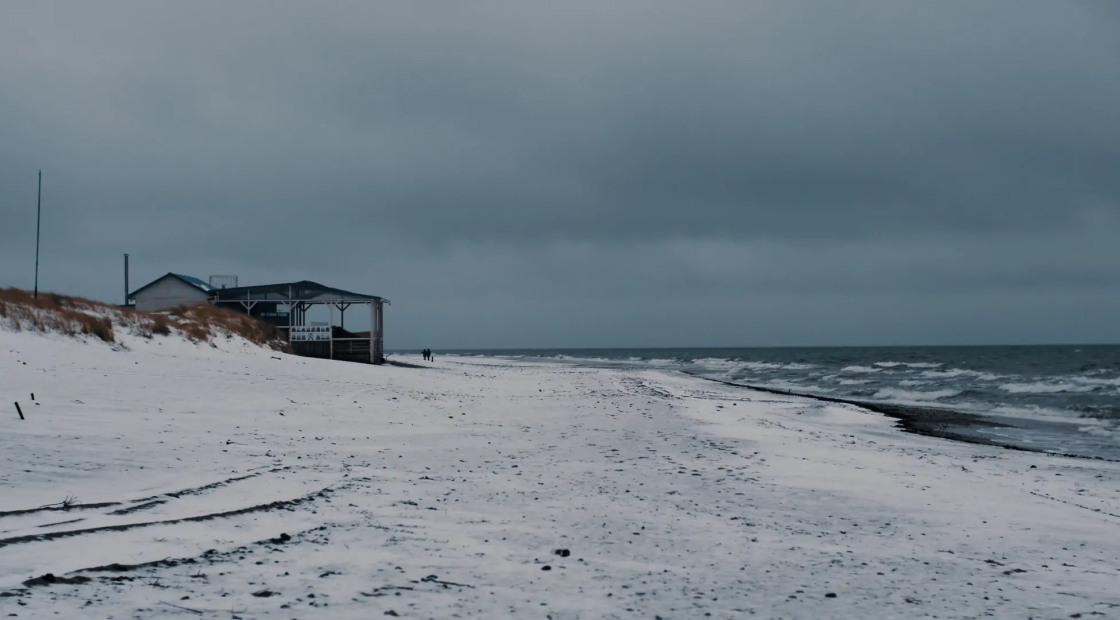
The shore of the Baltic Sea in Yantarny, the former village of Palmniken. Still from Andrei Proskuryakov’s film “Palmniken Tragedy”, 2022 © AB-TV Production
Every day, thousands of passengers of Kaliningrad's Northern Station pass by a modest memorial plaque. Most people don't even notice who it's dedicated to.
By 1942, the Nazi administration of the then Königsberg decided to “cleanse” the city of the “non-Aryan population.” On June 24, the first deportation took place: 465 Jews not employed in important industries were sent to the Maly Trostenets death camp near Minsk.
A plaque perpetuating the memory of the deportees was opened in 2011. The initiator was the German community “Königsberg” in Duisburg*, but the plaque was installed on behalf of “residents of Kaliningrad and Königsberg”. This was not easy to do. It was important for the initiators to place the board at the North Station, but they encountered bureaucratic difficulties.
Fellowship is an organization of former residents of the city and their descendants, created to preserve culture and ties with their homeland.
“It was a squeak,” recalls Viktor Shapiro, who at that time was the chairman of the Kaliningrad Jewish community Adat Israel. — We couldn’t choose a location because we wanted it on the building of the former Northern Railway Station, where the Kaliningrad Business Center is now, but we needed the director’s consent. He said: “No, don’t, I have commercial advertising hanging everywhere here, you hang such a gloomy board, it will scare away customers.” Then they decided to place it at the station itself. A problem arose at the station: this is a strategic facility and permission from Moscow is needed.”
As a result, the fence near the modern building of the North Station was chosen as the location for the memorial plaque - a site owned directly by the municipality, which made it possible to finally achieve approval. According to Shapiro’s recollections, this was facilitated by Alexander Datsishin, who then held the post of deputy plenipotentiary representative of the Northwestern Federal District in the region. The opening ceremony was attended by Michael Wieck, who as a child himself witnessed how Königsbergers were rounded up for deportation.
However, years later, despite all the efforts put into installing the memorial plaque, it remains almost invisible in the seething flow of everyday life. Does this mean that the topic of the Holocaust is now practically ousted from the public space of memory in the city? Or does it seem so only at first glance?
Someone else's pain, your own memory
The Kaliningrad region is often called a “palimpsest city” - by analogy with manuscripts from which the original text was erased in order to write a new one over it. In Kaliningrad, Soviet and Russian history are written on top of the German Königsberg.
The trauma of World War II is central to the region. Soviet settlers who arrived here after 1945 actively transformed the alien and initially hostile space, often purposefully eliminating everything German from the appearance of the city. However, generations change, and the grandchildren of the settlers no longer perceive the fragments of the East Prussian heritage as something hostile. On the contrary, many are proud of this heritage and support its preservation. Thus, the local history volunteer movement “Keepers of the Ruins” is engaged in the beautification of destroyed cultural monuments and educational activities, and many Kaliningrad residents proudly show tourists the villas of the Amalienau region. The German past has become “ours”.
The specificity of Holocaust memory in Kaliningrad lies in the paradox: it is an experience that has not been experienced by current residents, but is clearly present in the landscape. In other regions of Russia, such as Bryansk or Rostov, the memory of the Holocaust is often intertwined with family memory. Neighbors, friends, and relatives were killed there.
Modern Kaliningraders are not participants in events, not victims and not executioners. Most of those who preserve the memory of the Holocaust - historians, local historians, activists, journalists - are not directly connected with the Jewish community. For them, this is not a question of blood or religion, but of preserving historical truth.
Still from Andrei Proskuryakov’s film “Palmniken Tragedy”, 2022 © AB-TV Production
"Everything is mixed up." The Old Jewish Cemetery as a Place of Weaving Stories
On the Litovsky Val, among the forest, there is an old Jewish cemetery - the only surviving one of the four that existed in Königsberg. In place of the rest, residential complexes and infrastructure facilities are now rising. In 2024, they began to build a parking lot on the former territory of the historical cemetery on Chernyakhovsky Street and during the excavations they came across human remains. Representatives of the local community were outraged and demanded that the remains be reburied in accordance with tradition. The authorities cooperated.
“Together with the chief rabbi, we put every bone back in its place. It was a day of fasting, it was very hot, so it was physically hard work,” recalls Rabbi Avraham Boruch Deich. “I saw these skeletons and directly felt that these were my relatives, these were my brothers and sisters, that I, thank God, was able to return them to the same place where they should be so that they could have peace.”
The only surviving cemetery is a perfect illustration of how complex Kaliningrad collective memory is. For many years it was abandoned and more than once became a victim of vandals. However, in 2023, the Jewish community, with the support of city authorities, began work to improve the place, and the following year, 2024, the cemetery was included in the list of cultural heritage sites. The Protestant community, in particular the local Word of Life Church, also took part in cleaning the graves. Its representatives explain that for them it is not only volunteering and serving people, but also recognition of continuity and spiritual kinship with Jews.
“We are simply showing the love of God by caring for a place that is important and valuable to Jews in this way. We are very grateful to the Jews and the Jewish people for bringing the Holy Scriptures to us. And this is the little that we, perhaps, can somehow do for them,” explains church minister, wife of the senior pastor, Marina Lazareva.
The central memorial site in the cemetery is the memorial wall. Memorial plaques on the wall are dedicated to Jews buried in the cemetery, Jews of Königsberg who died during the Holocaust, whose names and burial places are unknown, as well as Jewish soldiers who fought in the Russian and German armies in the First World War. The latter deserves special attention: on one board they remember people who during their lifetime saw each other only through the sight of a rifle. The unity of the Jewish people is placed above any borders and military oaths. It seems that such a mixture of heterogeneous categories of victims is only possible in a place like Kaliningrad.
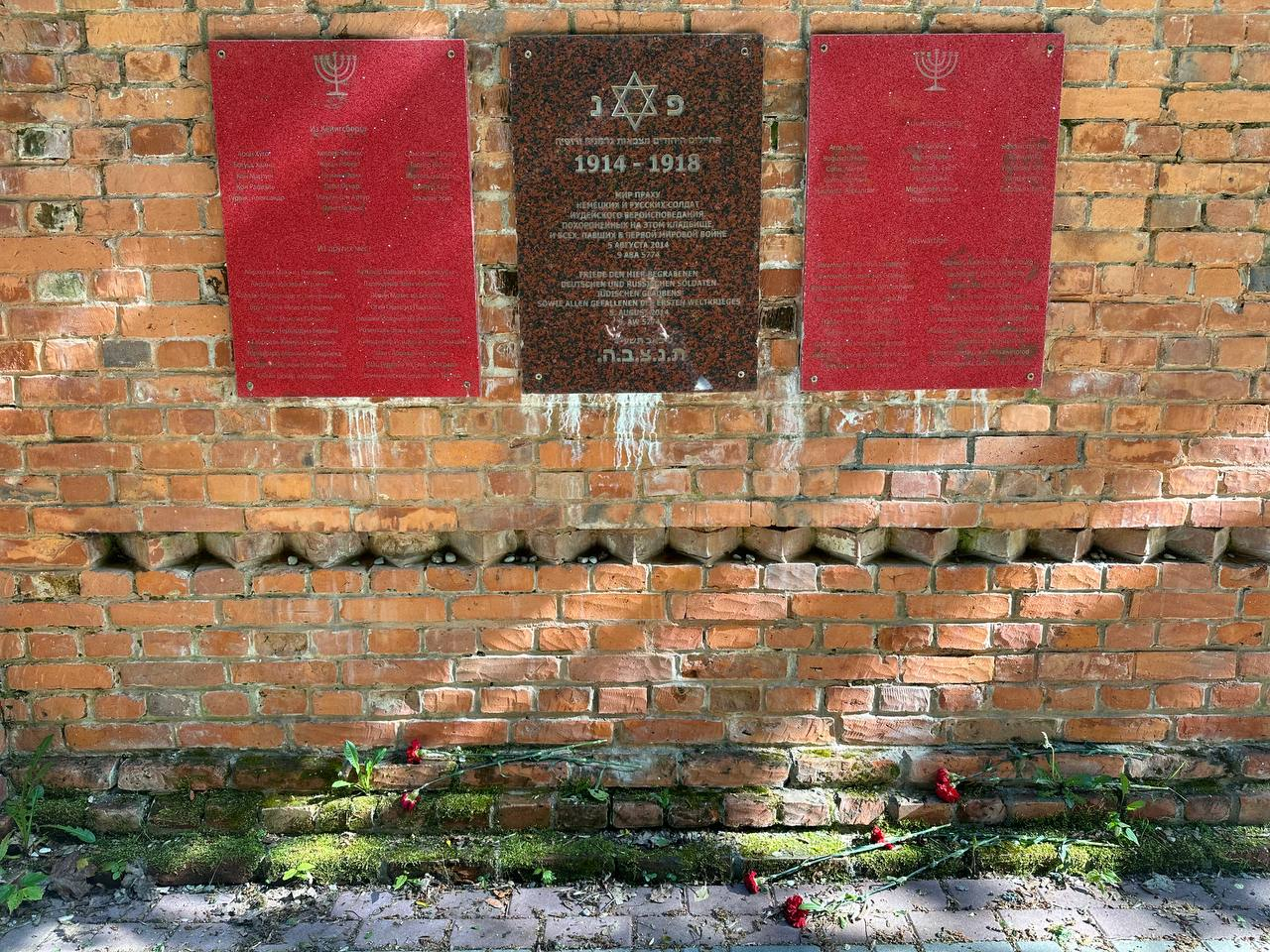
Memorial wall at the Jewish cemetery © Valeria Shpinkova
The stand created by the Center for War Memorial Research of the Kant Baltic Federal University also attracts attention. It is dedicated to Russian Jews who died in East Prussia during the First World War.
Experts note that the appearance of such a stand marks an important shift in emphasis. If the wall of memory speaks of sorrow, then the stand, on the contrary, declares victories. A recoding occurs: the Jew ceases to be a victim and becomes part of the military history of Russia, a “Russian warrior.” There is a quote on the stand: “We have always felt like citizens of Russia and have always been faithful sons of our Fatherland... No forces will tear the Jews away from their homeland - Russia.”
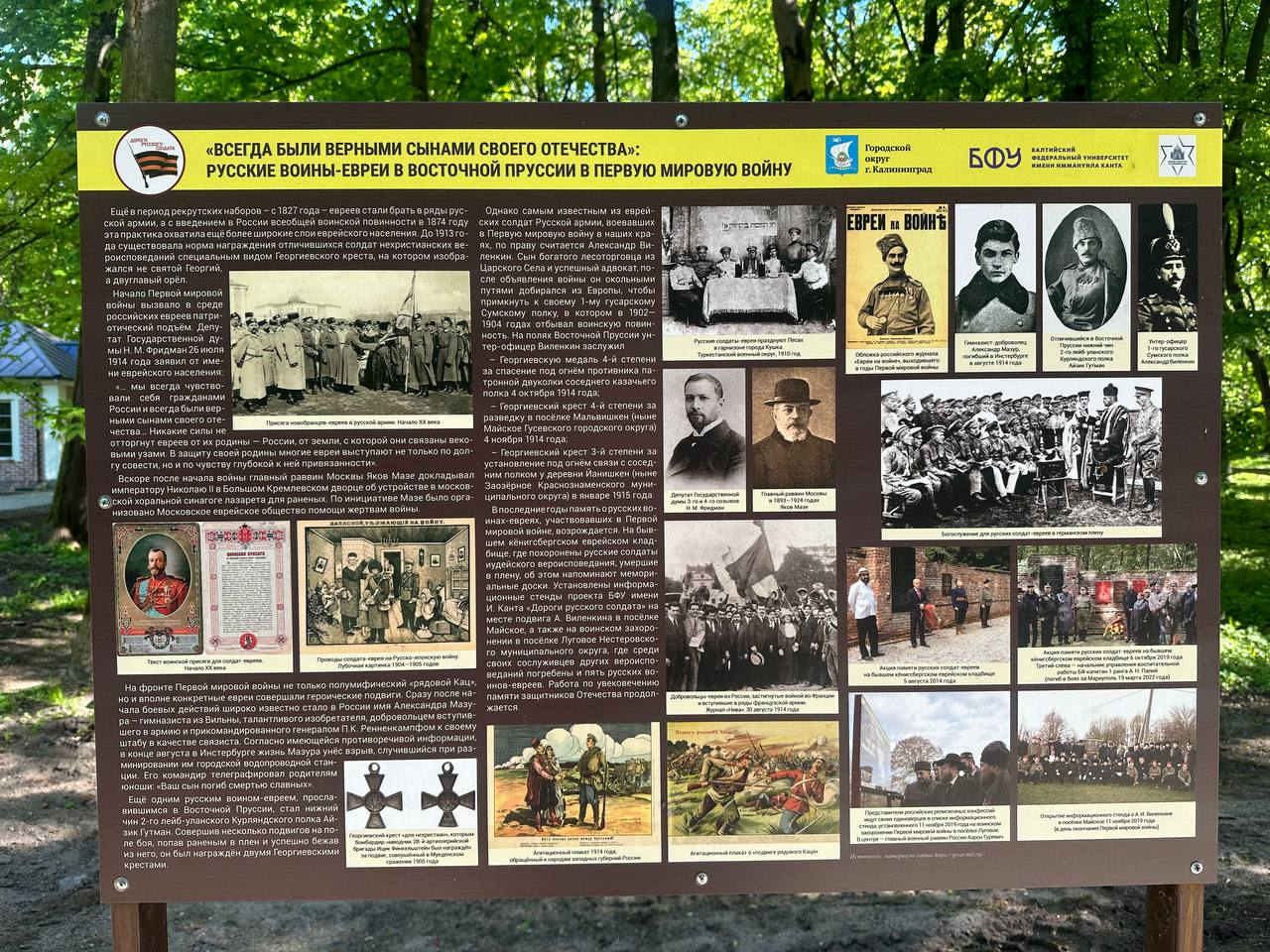
Information stand at the Jewish cemetery © Valeria Shpinkova
The juxtaposition of the stand and the memorial wall creates a contradiction between mournful and victorious narratives, between the memory of a unique ethnic tragedy and the desire to integrate Jews into a broader historical context. This clash is clearly demonstrated when people bring flowers to the “Wall of Remembrance” on Victory Day. The place, associated with Königsberg Jews and victims of Nazism (most of whom were German citizens), begins to be associated with the May 9 holiday. Thus, the cemetery turns into a universal place of mourning, where “everything is mixed up”: Russian soldiers of the First World War, victims of the Holocaust and the memory of Victory Day, which blurs the specificity of each of these stories.
"The Holocaust was here." Museum in the synagogue as a custodian of the memory of the Jewish community in Königsberg
If the cemetery is a space of memory of the dead, then the New Synagogue opposite Kant Island is a manifesto of life.
Before the war, Koenigsberg had a developed network of Jewish institutions: four synagogues, a school, and an orphanage. The center of life for the Jewish population was the New Liberal Synagogue, burned by the Nazis on Kristallnacht*. After the war, a circus tent was erected on the site of the burned house of prayer. For a long time, the Jewish community fought for this territory, and in 2011 the first stone of a new synagogue was laid. The house of worship was opened on November 8, 2018, exactly 80 years after the events of Kristallnacht.
Kristallnacht, or the Night of Broken Glass, was a series of coordinated anti-Jewish pogroms on November 9–10, 1938 in German and Austrian cities, during which people were killed, Jewish stores and synagogues were destroyed and looted. The events of this night are considered to be the starting point of the Holocaust or Shoah.
The new synagogue in Kaliningrad is a copy of the liberal synagogue in Königsberg, destroyed during World War II. During the construction, drawings and archival documents provided to the community by the German society “Jews of East Prussia”* were used.
Juden in Ostpreußen is a cultural and historical project aimed at studying and promoting the heritage of East Prussian Jews, created by Ruth and Michael Leiserowicz. The society is engaged in the search and preservation of archival documents, as well as organizing exhibitions and lectures dedicated to Jewish communities living in the territories that belonged to East Prussia.
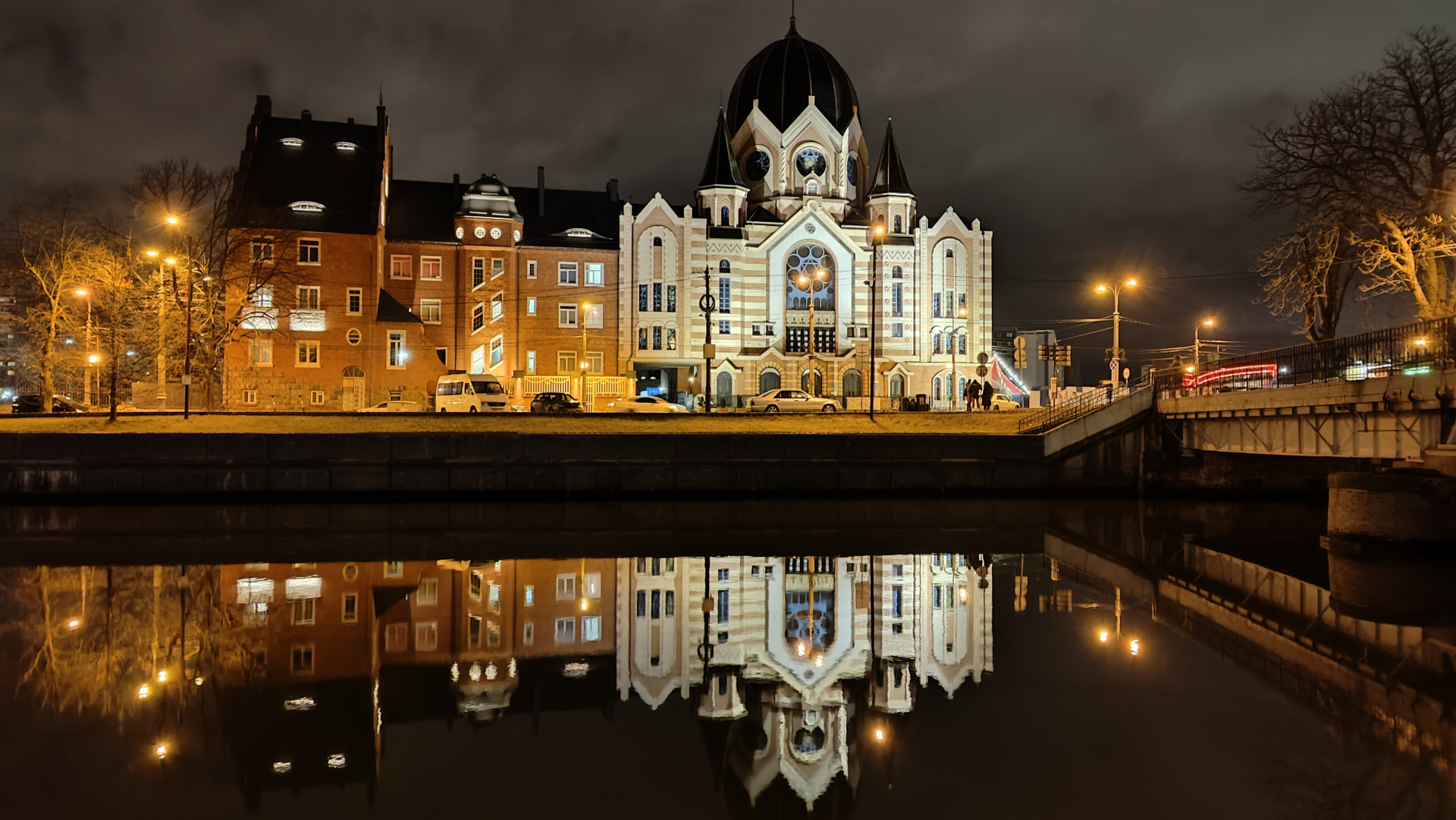
New synagogue in Kaliningrad © Amber bracelet / WikiCommons
The Museum of Jewish History and Culture was created at the synagogue. Not only Russian, but also European specialists and organizations participated in the preparation of the exposition. This collaboration clearly demonstrates that the memory of the Holocaust, a tragedy of global significance, is closely intertwined with the multinational history of Königsberg itself, making understanding its history an international matter.
Before learning about the horrors of the Shoah, the museum visitor is introduced to the peaceful life of the pre-war community. The tragedy itself is not presented through statistics and general phrases - the exhibition dedicated to the Holocaust is almost entirely built on the testimonies of survivors, for example, Michael Wieck and Nechama Drober.
“The museum helps sensible people think about the consequences of intolerance and xenophobia,” says museum director Julia Oysbeut. — Sometimes guests come from Russia, from somewhere in the central part, or are not closely familiar with this topic, and say: “Well, the Holocaust was far away, in Auschwitz.” We answer: “No, the Holocaust also happened here - both in Konigsberg and in East Prussia.”
The museum in the New Synagogue is a bright, but practically isolated initiative. He collaborates with other cultural institutions in the city, but the theme of the Holocaust remains within the walls of the synagogue. A representative of one of the large city museums honestly admits: state museums have other priorities and plans approved by the Ministry of Culture. The topic is considered “highly specialized” and interesting, first of all, to the community.
Of course, the synagogue museum plays a very important educational role, but its audience, as a rule, already shows an interest in history and visits the complex purposefully. If large state museums in Kaliningrad do not include the topic of the Holocaust in their exhibitions, the public may not learn about these pages in the history of the city at all. When the responsibility for preserving the memory of the Holocaust falls primarily on the Jewish community, there is a risk that the Shoah will cease to be perceived as a universal tragedy and will gradually turn into a “Jewish topic” of interest only to a narrow circle of people.
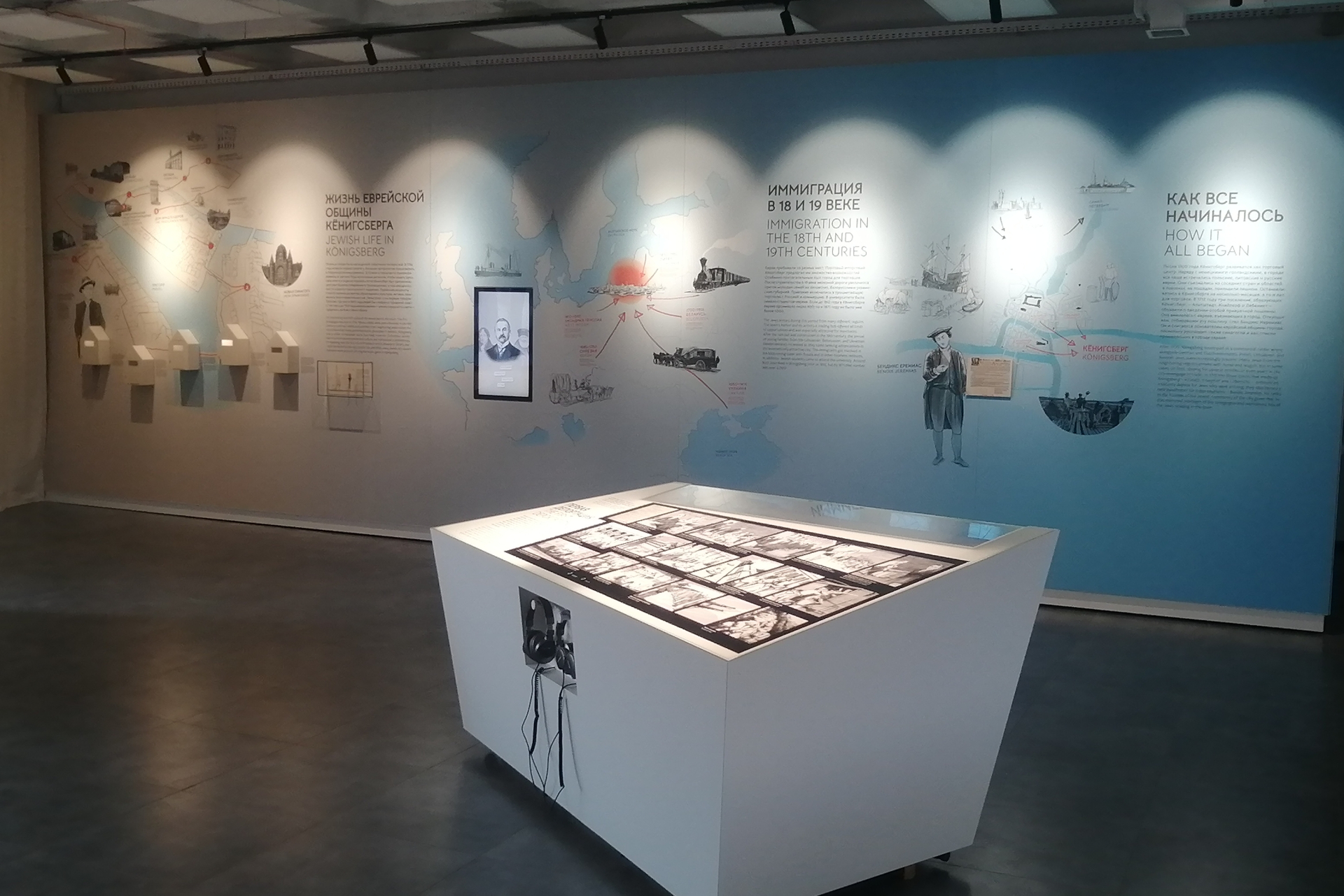
Fragment of the exhibition of the Museum of Jewish History and Culture © Melafefon / WikiCommons
“There is peace, there is war, there is death.” Palmnik massacre and memorial in Yantarny
In January 1945, when Soviet troops were already entering East Prussia, the Nazis began to cover their tracks. Prisoners of the Polish Stutthof camp, mostly Jewish women and children, were rounded up in Königsberg and driven to the sea. Historians differ in estimates of the number of victims, but recent studies put the figure at approximately three thousand people. Hungry, in rags, in severe frost, they walked almost 50 kilometers. Those who fell from exhaustion were shot by the guards.
On the night of January 31, 1945, the column reached the village of Palmniken. They were taken to the old adits of the Anna mine and then taken to the beach. People were driven into the icy sea. Only a few dozen people survived - those who managed to pretend to be dead, hiding among the corpses.
Information about the tragedy was kept silent for a long time. It became public only in 1999, thanks to the German Martin Bergau. In 1945, Bergau was a teenager and a member of the Hitler Youth. Young people, even if they were not always aware of what was happening, were not just witnesses, but full-fledged participants in the events - they escorted Jews and Jewish women to be shot. Half a century later, Bergau came to the Kaliningrad region and told his story, which formed the basis of an article in the newspaper “Dvornik”.
In 2022, Andrei Proskuryakov’s documentary film “Palmniken Tragedy” was released. Filmed with the participation of local journalists Alexander Aderikhin and Alexei Shabunin, the film included interviews not only with Bergau, but also with other witnesses to the massacre. The German writer Günther Nietzsch, who as a child and his mother looked after the graves of the dead, as well as Simcha Koplowicz, the son of the woman Sheva who survived in Palmniken, were involved in the work on the painting. The filmmakers saw as their goal not only the restoration of the chronology of events, but also the actualization of questions about the nature of guilt and responsibility.
Every year at the end of January, more than a hundred residents of the region gather in the village of Russkoye to walk to the memorial to the victims of the Palmniken massacre. This path was called the “March of Life”. Every year people walk through the Baltic wind, repeating the “Death March” of those who were driven to their death.
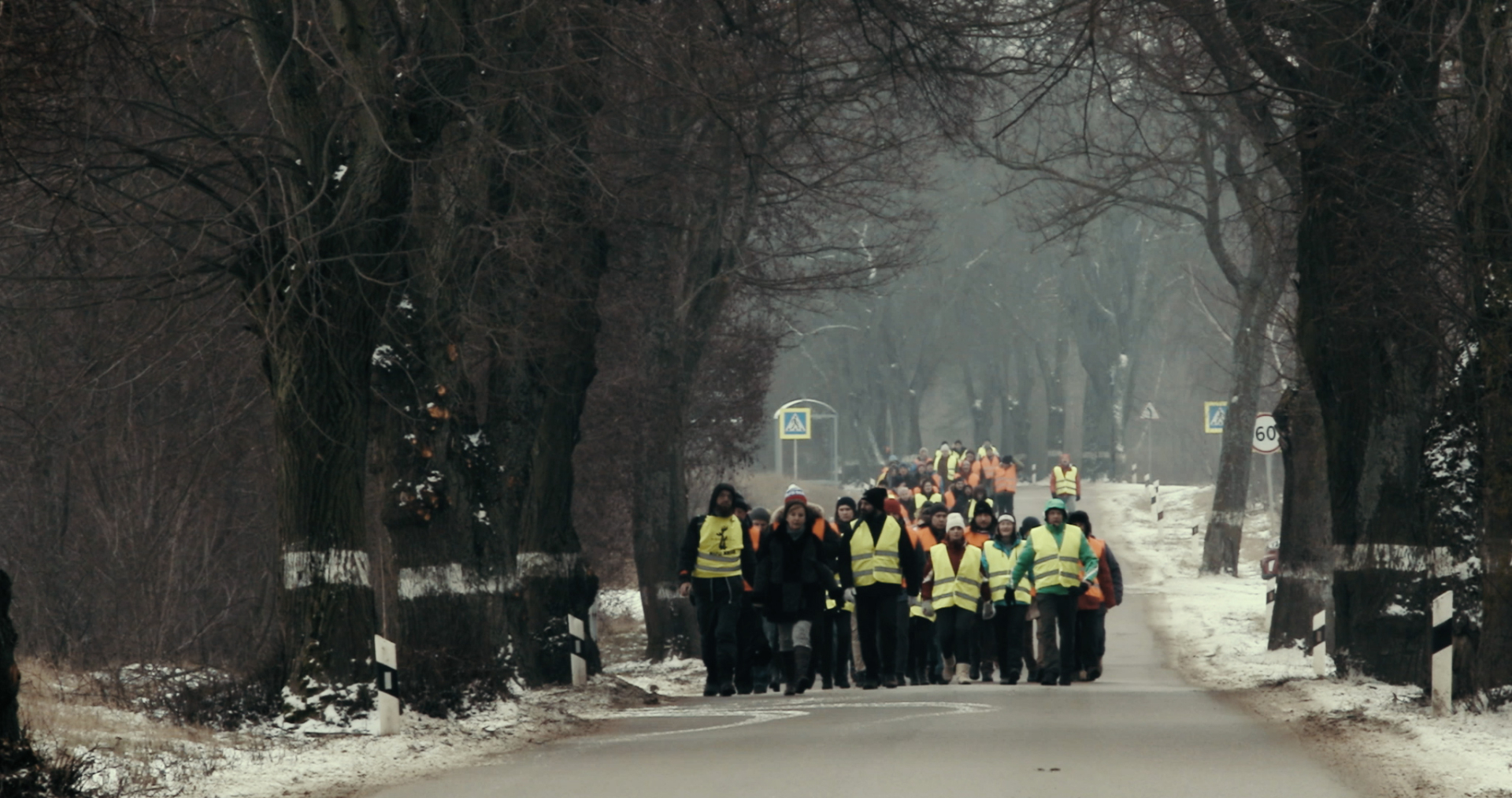
"March of Life" Still from Andrei Proskuryakov’s film “Palmniken Tragedy”, 2022 © AB-TV Production
The memorial in Yantarny - as Palmniken is called today - was opened in 2011. Giant hands reach out to the sky, begging for mercy. They have camp numbers stamped on them. Its architect was Frank Meisler, the author of many European monuments to the Shoah, and the installation was sponsored by Kaliningrad businessman Vladimir Katsman. It was the “Hands of Palmniken” that became the main symbol of the Holocaust in the region. Mourning rallies are held near the monument, foreign delegations and schoolchildren come to visit it.
But even here, memory is forced to literally fight for attention: for many, this place is associated with a resort vacation. There is a restaurant right in front of the monument. Tourists eat barbecue, drink beer, music plays, and two steps away are stone hands with prisoner numbers. The location also attracts investors - in 2019, they wanted to build a hotel near the memorial. The Jewish community did not protest, but the Cultural Heritage Protection Service expressed its doubts about such a neighborhood - and the hotel was not built. True, more likely due to the onset of the pandemic than due to ethical considerations.
“This is a good monument. “He stands in his place,” says journalist Alexander Aderikhin, one of the investigators of the Palmniken massacre. — There is, however, a slight contradiction in the fact that this is a beach. That is, you come in the summer, there are tanned bodies, and above all this - “The Hands of Palmniken.” But maybe it’s necessary, as a reminder that there is peace, there is war, there is death.”
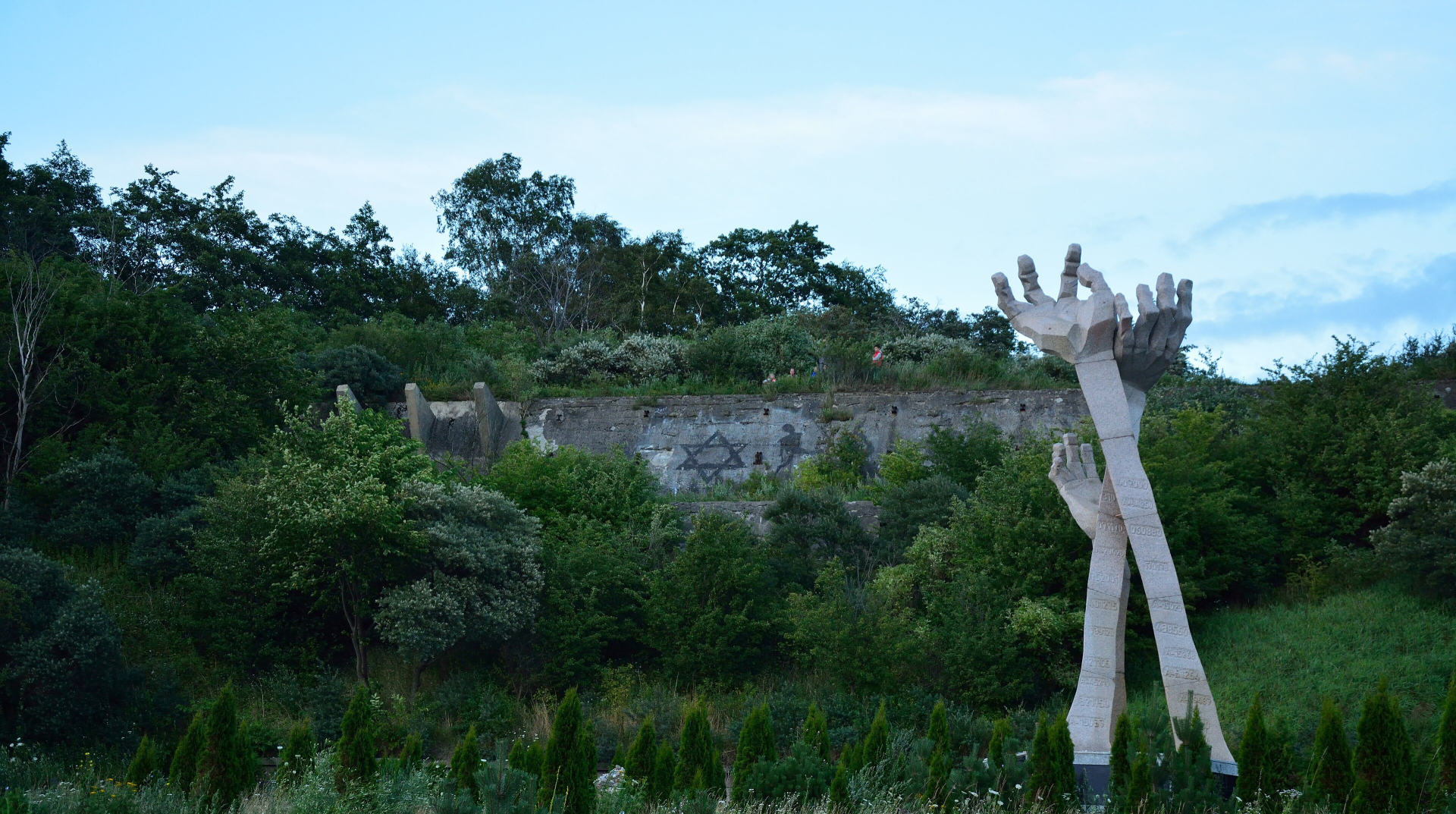
Memorial to Holocaust victims in Yantarny © Anton Yefimov / WikiCommons
The memory of the tragedy is the subject of not only territorial, but also historical disputes. In recent years, the public has increasingly heard the opinion that those executed were not only Jews, but Soviet citizens. Particular emphasis is placed on the fact that many of the victims were from Lithuania. And since Lithuania was annexed to the USSR in 1940, they were formally Soviet citizens. This makes it possible to fit the Jewish tragedy in the region into a broader narrative about the genocide of the Soviet people in 1941–1945. This makes history more “understandable” and “own” for people who know well what the Great Patriotic War is. In addition, this makes it possible to include the region in federal projects, the purpose of which is to preserve the memory of Nazi crimes against the civilian population of the USSR, despite the fact that in the context of Kaliningrad this is somewhat paradoxical, since at that time the region was not part of the Soviet Union.
On social networks, under posts about the “March of Life,” comments often appear calling for “preserving your own memory, not someone else’s.” An attempt to find “our people” among the victims is the answer to such a popular request. However, the emphasis on the fact that the victims included Soviet citizens blurs the fact that they were killed primarily because they were Jews. The Nazis killed both Polish and Hungarian Jews in the same place, and all victims should be remembered equally.
Memory without script
Preserving the memory of the Holocaust in the Kaliningrad region is a complex and multi-layered process that requires constant reflection.
Of course, city memorials, such as the “Wall of Memory” at the Jewish Cemetery, the memorial plaque at the North Station, the museum at the New Synagogue and the “Hands of Palmniken” memorial in Yantarny, serve as powerful “anchors” of history. However, their effectiveness in forming broad collective memory varies. While the March for Life is a vibrant civic initiative capable of attracting hundreds of participants each year, other sites, such as the modest plaque at Gare du Nord, remain less visible to mass audiences. Moreover, the paradoxical fact of bringing flowers to the “Wall of Memory” on Victory Day and its proximity to the stand about the heroes of the First World War indicates the mixing of narratives and the transformation of specific grief into universal respect for the memory of the dead.
There is also a tension in the region between two ways of thinking about the Holocaust. One group, including the Jewish community, individual civic initiatives and the Museum of Jewish History and Culture, seeks to preserve the Holocaust as a unique, unprecedented tragedy of Königsberg Jewry—a narrative deeply rooted in local history. Another group, often represented by large state cultural and educational structures, tends to integrate the Holocaust into the broader context of the genocide of the Soviet people during the Great Patriotic War - a narrative that seeks to include the Holocaust in a history familiar and close to Russians.
At the same time, Kaliningrad, as the only city in modern Russia that survived the full cycle of the Holocaust from Kristallnacht to the last executions, is connected with the theme of the Holocaust in a special way. Its oblivion or its transformation into a “purely Jewish matter”, divorced from the general urban context, would mean a loss of knowledge that is important for understanding the history of the region. Preserving the complex regional memory of the Holocaust allows us to take a fresh look at Kaliningrad - to see behind the façade of a tourist resort a multi-layered historical heritage that continues to live on today.