
Translated material
The platform of the Russian opposition under PACE met for the first time in Strasbourg
Its participants promise to defend the rights of anti-war Russians. But a video about “pissing” will also go down in history.
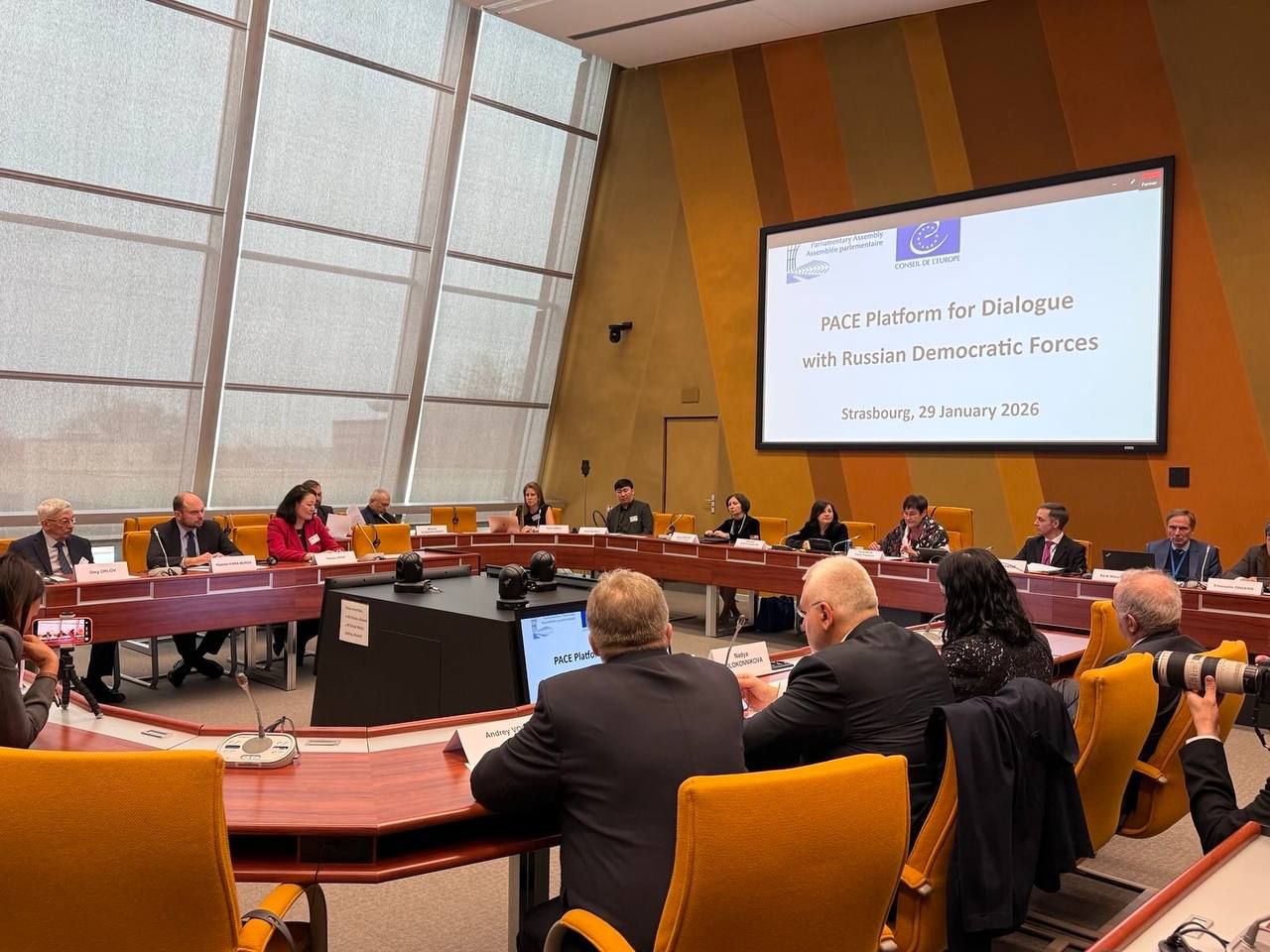
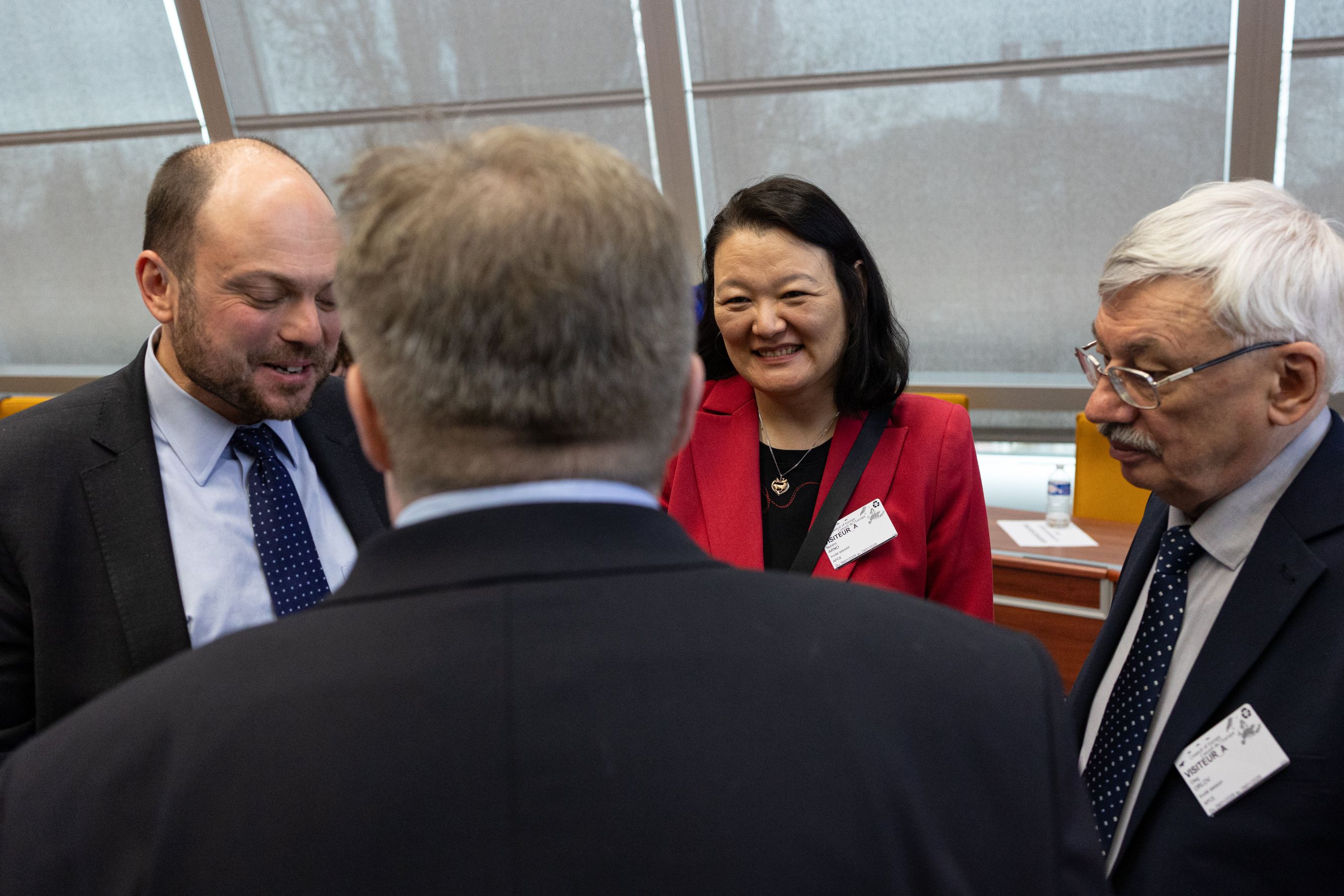
On January 29, the first meeting of the platform of Russian democratic forces at the Parliamentary Assembly of the Council of Europe (PACE) was held in Strasbourg. The PACE Bureau approved the composition of the platform a few days ago; it included 15 people. 12 of them took part in the first meeting.
Who entered the platform
- Head of the Free Russia Foundation Natalia Arno,
- politician, former State Duma deputy Dmitry Gudkov,
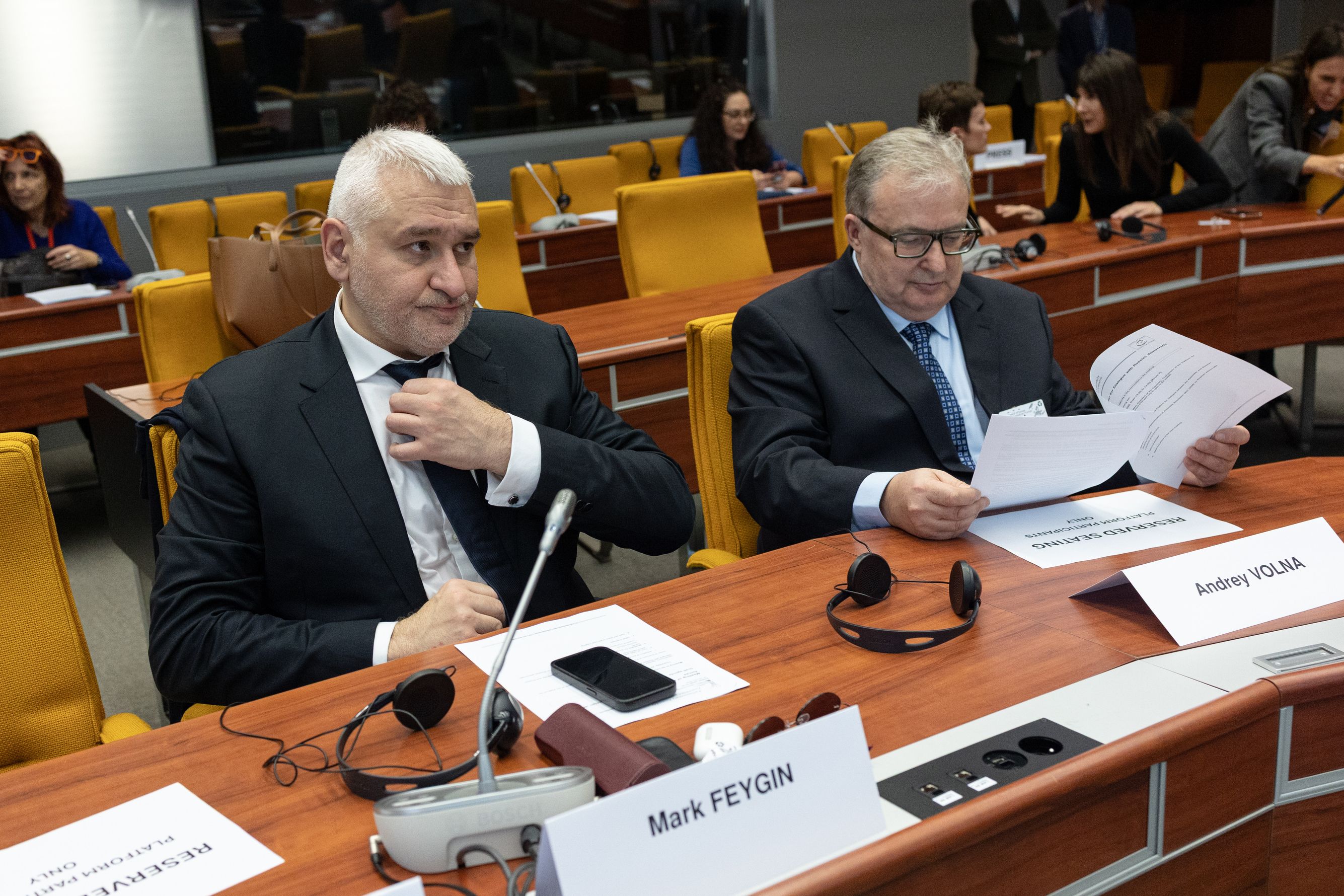
- lawyer and former State Duma deputy Mark Feigin,
- Vice President of the Free Russia Foundation Vladimir Kara-Murza,
- politician and former world chess champion Garry Kasparov,
- politician and businessman Mikhail Khodorkovsky,
- co-chairman of the Memorial Human Rights Center Oleg Orlov,
- doctor and publicist Andrey Volna,
- former employee of the Anti-Corruption Foundation Lyubov Sobol,
- one of the founders of Pussy Riot Nadezhda Tolokonnikova.
Representatives of indigenous peoples of Russia will take part in the work of the platform:
- Chechen activist, president of the “Assembly of Peoples of the Caucasus” Ruslan Kutaev,
- artist and director of the House of Ingria in Narva Ekaterina Kuznetsova,
- founder of the public “Asians of Russia” Vasily (Batlay) Matenov,
- head of the Komi Daily publication Lana Pylaeva,
- Defender of the indigenous peoples of Russia Pavel Sulyandziga.
In the open part of the meeting (it lasted 10 minutes, the main part of the meeting was closed from the press), PACE Chairman Petra Bair made a speech, said Lyubov Sobol. Sobol also stated that she asked to make the entire meeting open, but this was refused “with reference to the general decision of the PACE Bureau.” The publication “That’s So” clarifies that even the participants of the Russian platform themselves were not allowed to film.
“It was my decision. I wanted to build trust between people, so it was important to create a safe space for the exchange of opinions. If the media and the public were present, it would no longer be about the essence of things, but about some personal problems. And regulating personal issues is not our business,” Petra Bair told reporters. Presumably, we are talking about conflicts within the Russian opposition, including the quarrel between Garry Kasparov and Vladimir Kara-Murza.
In the closed part of the meeting, according to Sobol, each participant was asked to say “what he will do first, name his priorities.” Following the meeting, which lasted an hour, the participants, as Deutsche Welle writes , agreed to hold a general meeting of the platform once a quarter. Bair said there were "a number of technical issues that need to be identified - how to participate in political groups, how to work within the assembly structure" and also "a list of realistic goals - what we can achieve as an assembly."
Mikhail Khodorkovsky, in turn, said that all participants in the meeting “managed to speak out about what problems they consider key, what exactly should be resolved within the framework of this platform and what areas they are ready to take on.”
After the general part, we stayed for another 30-40 minutes - this time as our Russian group. We talked about simple but important things: how we communicate, how we make decisions, how we speak on behalf of the entire Russian unit. We agreed on the 2/3 vote rule. And they separately stipulated that in order to [make] a decision, out of five representatives of indigenous and small peoples there must be at least three votes in favor.
Several platform participants told after the meeting what issues they plan to deal with. In particular, Sobol and Khodorkovsky, as well as Vladimir Kara-Murza, stated that they were going to help political prisoners in Russia.
Pussy Riot member Nadezhda Tolokonnikova said that she sees her first task as helping Ukraine. “First of all, support for Ukraine. There is a task to help Ukraine, to wish that Europe would help Ukraine better and more. I really want Ukraine to win. I said in my speech that I love several things: Ukraine, feminism, destroying the apparatus of the Russian empire, I also love unicorns and rainbows,” she told DW reporters. Tolokonnikova added that she represents pro-Ukrainian Russians, feminists and queer communities: “Definitely not all Russians, because they saw me hanging on a bitch.”
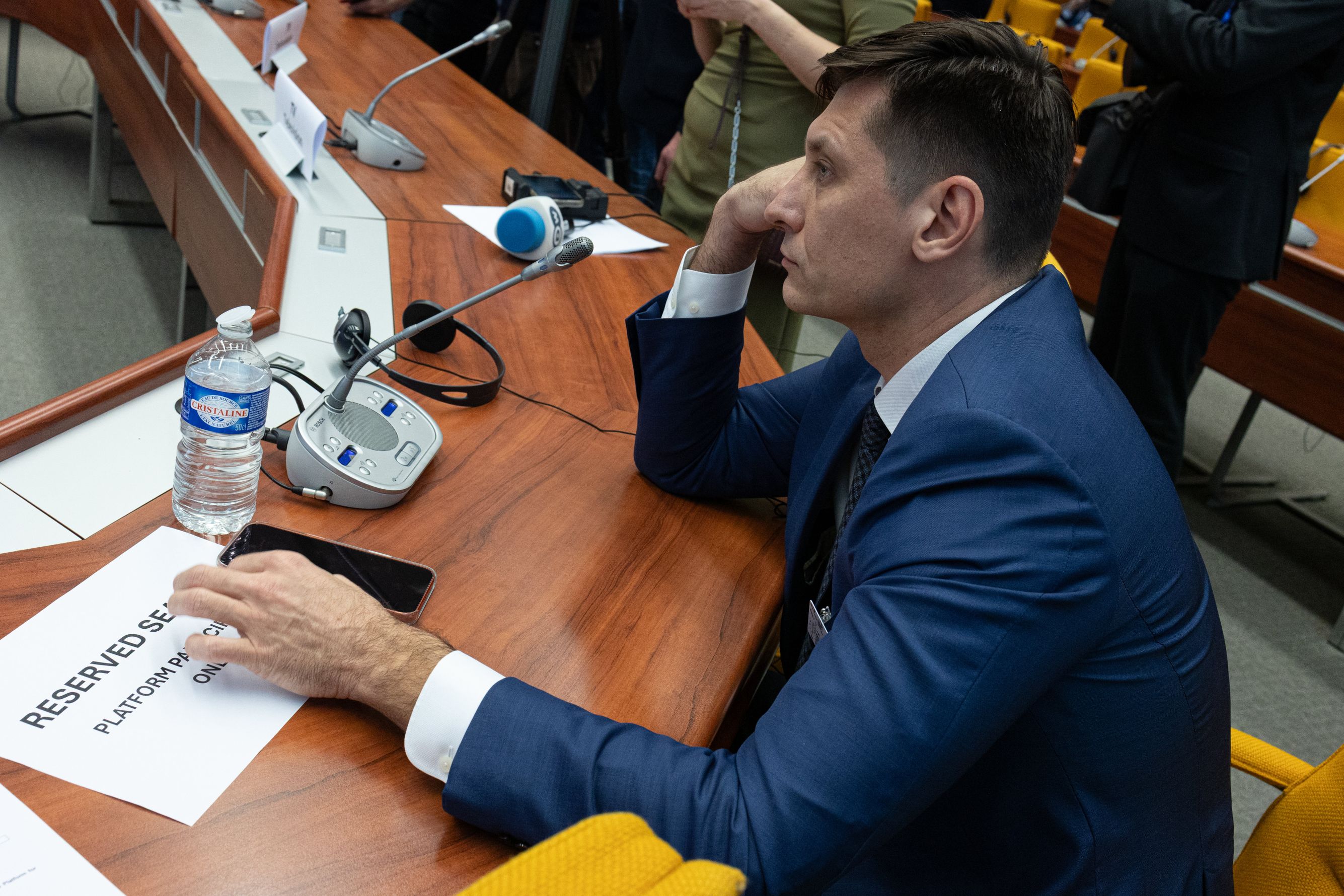
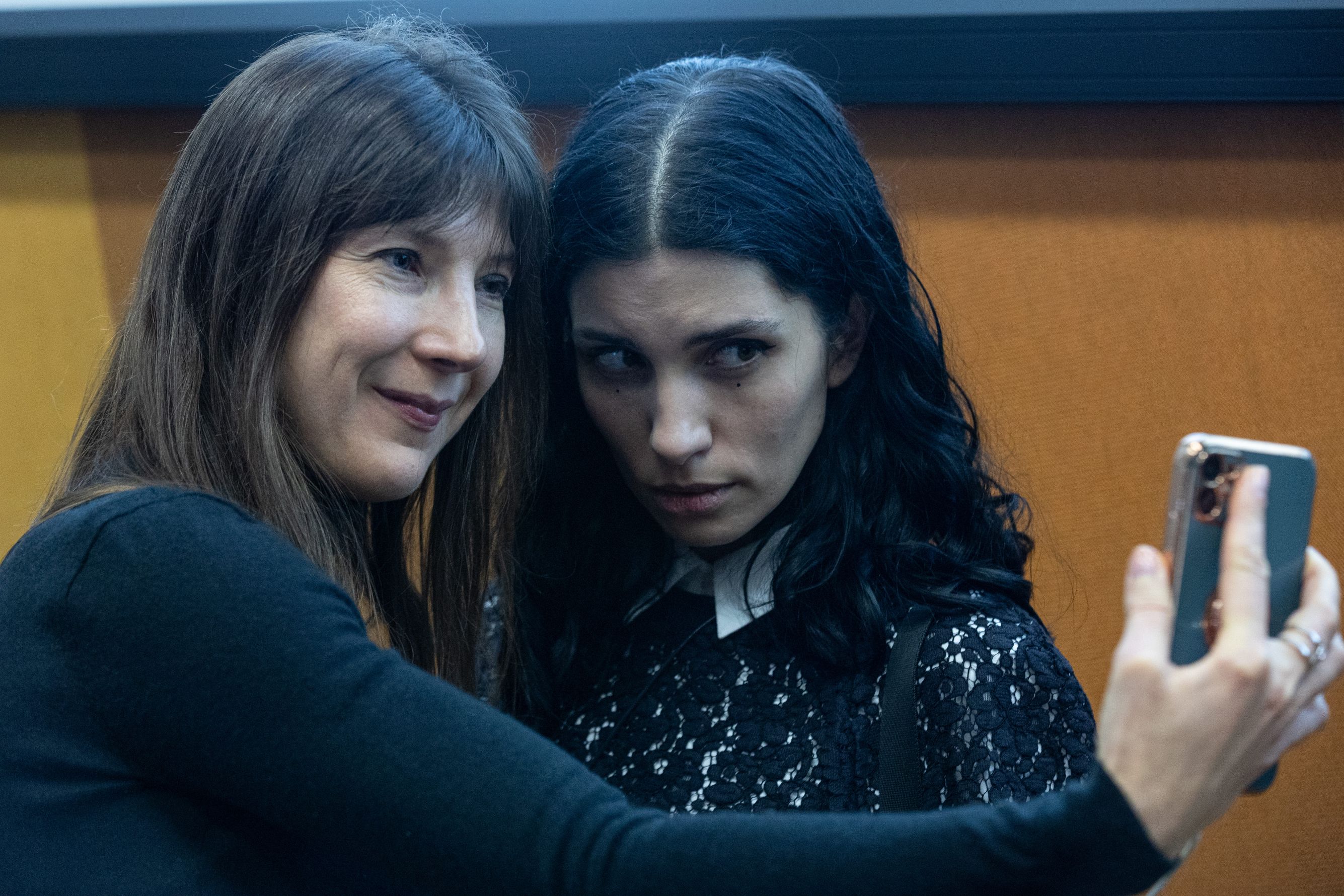
According to Khodorkovsky, all meeting participants supported the idea of protecting the rights of Russians who oppose the war and are “de facto deprived of political representation.”
To put it very bluntly: if you did not oppose the war, then Lavrov’s department is looking after you. But if a person opposes the war, no one will deal with him in a positive sense (in a negative sense, of course, they will deal with him - they will put him in jail). These people often face very practical problems - from the loss of documents to the inability to obtain basic things like a birth certificate for their children. Someone's passport, powers of attorney, certificates, legalization are stuck. This must be resolved.
“That’s So” reports that platform participants also had disagreements. For example, Garry Kasparov and Oleg Orlov expressed different opinions on how the platform should be shaped in the future. Kasparov believes that it is necessary to create a single voter base, which will include those who “broke with Putin’s Russia.” Orlov believes, in turn, that such an approach could create an additional split among Russians. “I don’t see the possibility of creating such a base precisely because for me the opinion of my friends, colleagues and simply like-minded citizens inside Russia is very important. This is where we probably disagree decisively,” he said.
Chechen activist Ruslan Kutaev told DW that he spoke at the meeting about a tribunal against the “Putin regime” for crimes committed in Russia “since 1999: bombings of houses in Moscow, Volgodonsk, Buinaksk, the war in Chechnya and beyond.”
Dmitry Gudkov also announced plans to support anti-war Russians and political prisoners. He also believes that democratic forces “should not be an object of sympathy, but a source of knowledge about Russia - about the economy, the impact of sanctions, countering propaganda, supporting independent media and providing European governments with high-quality analytical material.” In his opinion, it is also “necessary to prepare in advance a clear strategy for the event of a post-Putin transition - a transition from a personalist dictatorship to a country with inclusive political institutions.”
Kasparov called the creation of the platform “a historical event, even in bureaucratic terms,” since for the European bureaucracy “an unthinkable thing happened: it is one thing to exclude Putin’s Russia, and another thing to start creating something that is not in the books.” In his opinion, Europe realized that the war will not end tomorrow and “moreover, in this war we are not supplicants, but we are allies.” “Anti-Putin Russia is turning from a concept into a real political factor; it must be formalized somehow,” Kasparov believes.
The head of the Ukrainian delegation to PACE, Maria Mezentseva, tried to attend the platform meeting, but she, like journalists and others present, was asked to leave the hall after the 10-minute open part, writes “That’s it.” Earlier, Mezentseva said that the Ukrainian delegation opposed the creation of a Russian platform and “opposed it.” The Ukrainian side also proposed to include in the platform the Russians who are fighting on the side of Ukraine. Representatives of the Russian Volunteer Corps and the Freedom of Russia Legion were nominated for the platform, but they were not selected as participants.
After the meeting, Vladimir Kara-Murza was approached by a correspondent from the Sota publication. This publication is financed by businessman Leonid Nevzlin. Sota editor-in-chief Alexey Obukhov confirmed this fact to Meduza, although he clarified that this is not the only source of funding. Obukhov also claimed that the work of the editorial board is “controlled by the editorial board.” Sota has repeatedly published compromising information about the Anti-Corruption Foundation (FBK). The Foundation claims that Nevzlin ordered the attack on Leonid Volkov in the spring of 2024.
The correspondent began asking Kara-Murza about his “salary at Free Russia and how it contrasts with the funds allocated for political prisoners.” Kara-Murza asked which publication the correspondent represented. Hearing the answer, he said : “Oh, so you’re a shitter, you would have said right away, I didn’t intend to [talk to you] at all.” I thought it was, “That’s it.”
In addition, Sota posted a comment from Nadezhda Tolokonnikova, who was asked how she felt about criticism against her in connection with her work on the OnlyFans service. “Remember the story with Cicciolina? <…> She was an Italian porn star and at some point was elected to parliament. That is, such things have been happening for a long time. Of course, I haven’t reached the status of a porn star yet, but I’m working on it. I believe that sex work is a job like any other and I am proud of myself and my independent source of income. I think this is great and gives me the opportunity not to depend on any political force,” Tolokonnikova said.