
Translated material
Mobilized Georgiy Avaliani escaped from the front, survived torture and is now wanted. But the German authorities believe that nothing threatens him in Russia
They began to issue asylum refusals to deserters
On January 23, it became known that the German authorities denied asylum to 47-year-old engineer Georgiy Avaliani, who was mobilized, ended up in a torture cellar, escaped from the army several times and is now wanted for desertion. His family - his wife and two children, who were under pressure from the military police in searching for Avaliani - were also refused. Officials of the Federal Office for Migration and Refugees (BAMF) of Germany decided that the Avaliani family was not at risk of persecution or serious harm in Russia. In their opinion, mobilization in Russia has already been completed - after all, Vladimir Putin said so. Human rights activists and journalists who studied the BAMF decision in the Avaliani case called it formulaic. They are sure that the officials did not even delve into the essence of the engineer’s story. Using Avaliani as an example, Mediazona told how Germany began to rubber-stamp decisions on the deportation of Russian deserters. We are retelling this article.
Georgiy Avaliani was mobilized despite having three children. He escaped from the army several times and ended up in a torture cellar
Before the war, Georgy Avaliani worked as an engineer at Mosvodokanal, received a good salary and had no intention of leaving Russia. He never served in the army due to “heart problems,” writes Mediazona. What kind of disease he has is not specified.
In October 2022, shortly after mobilization began in Russia, he received a summons. He has three children, all of whom were minors at that time. According to the law, a father with many children should not have been mobilized.
The Avaliani family tried to challenge the draft, but in the end, a draft commission was appointed to Georgiy anyway. He did not hide so as not to abandon his family. After the commission, he was sent to a training camp in the Moscow region, and then to the already occupied Svatovsky district of the Lugansk region of Ukraine.

A few days after arriving at the unit, Georgy escaped. He reached the Russian border along with four other deserters whom he met along the way. At the border they split into two groups. Later, in conversations with journalists and in an interview with a BAMF official, the engineer claimed that the second group was shot from a helicopter. There is no evidence of this. George’s route was checked by the “Farewell to Arms!” project, which helps deserters. The episode with the helicopter is “the only question” that human rights activists have for Avaliani, said the organization’s coordinator, Alexey Alshansky.
Georgy and another deserter crossed the border, but were soon detained in one of the abandoned villages. Avaliani was sent for 10 days to the torture basement of the Russian Ministry of Defense - “Centre for holding military personnel who have temporarily lost their combat stability, Western Group of Troops (Forces) “Zaitsevo”. Other deserters had previously spoken about this place. According to human rights activists, the center is located in the occupied village of Rassypnoye, Lugansk region. According to Georgiy, there he was beaten and taken to a staged execution.
From the basement, Georgy was sent to the assault squad. Two days later, an ammunition depot was blown up near the positions of his unit. Avaliani was concussed and suffered a heart attack. He was sent to a distribution point and then to a hospital in Russia. Instead of the hospital, Georgy went to Moscow. He was hiding with his family at a dacha in the Tula region. Periodically he came to Lyubertsy for treatment. In mid-February 2024, military police detained him in the Moscow region.
Avaliani was sent to Kaliningrad, the place of permanent deployment of his unit. There, one of the commanders learned about Avaliani’s specialty and contracted him to do repairs at his dacha. At the same time, Georgy sought to pass a military medical commission. But in the end he was declared fit for service. In May, he learned that a case had been opened against him and was being summoned for investigative actions, and he decided to flee again. Avaliani first left for Belarus, and then went to Montenegro through Uzbekistan and Georgia.
Georgy's wife Oksana remained in the Moscow region with their children. Soon after her husband left, the investigator began calling her, and in September they came to search the family. Oksana had a nervous breakdown and in October she ended up in a psychiatric clinic for a month. However, the visits of the military police did not stop - the last time the security forces came was on January 7, 2025. After this, Oksana agreed to leave Russia.
The family ended up in Bosnia and Herzegovina, and then in Croatia, where, as Mediazona notes, obtaining asylum exists only on paper. From there they went to Germany. Avaliani arrived in Berlin with his wife, eighth-grader daughter and six-year-old son at the end of January 2025. By that time, he had been on the federal wanted list for more than six months. Under the article on unauthorized abandonment of a unit, he faces up to 10 years in prison.
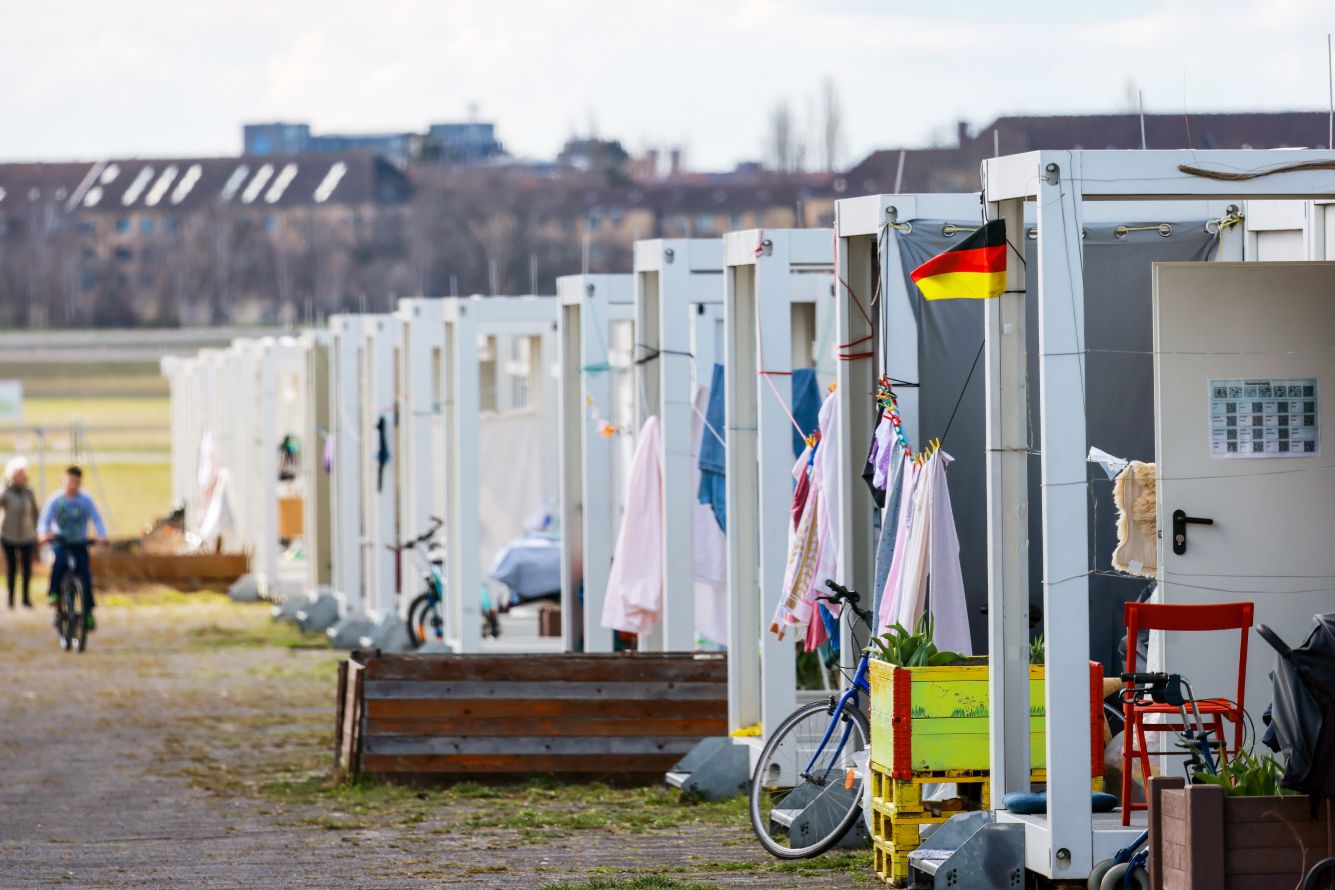
The Avaliani family received the status of asylum seekers without clarifying the specific circumstances of their flight. Like other applicants, they were given temporary housing in a refugee camp - a small trailer with two bunk beds on the site of the former Tempelhof airport. They lived there for almost a year. At the end of 2025, they were provided with a hostel in west Berlin, but soon after that the Federal Office for Migration and Refugees (BAMF) decided to refuse asylum to the entire family.
Avaliani will appeal the decision, but if this fails, the family will have to leave Germany within 30 days. Otherwise they will be deported to Russia.
Georgiy Avaliani has evidence that he is being persecuted in Russia. But in Germany they ignored them - and did not even study his case in detail
After escaping from Russia, Georgiy Avaliani told his story to journalists from Russian and international publications, as well as at a personal hearing at BAMF. When communicating with officials, he noted that he “fears for his life” if he returns to his homeland. His wife Oksana described the psychological consequences she and her children faced after visits by Russian military police. In support of their words, the family provided a package of documents, including a mobilization order and a publication about the search on the website of the Ministry of Internal Affairs.
However, German officials decided that nothing threatened George and his family in Russia. “There is no reason to believe that if returned to the Russian Federation, they are likely to face persecution or serious harm,” the BAMF official concluded.
Mediazona studied the documents on the Avaliani case. Here's how the German authorities explained the refusal.
- They considered the Avalianis to be “apolitical people,” and it is unclear why the family decided that the Russian authorities considered them their opponents. According to BAMF logic, otherwise Georgy would not have been able to leave Russia.
- The department made a mistake when it indicated that Avaliani in Russia would only face a fine for escaping from the front under an administrative article on failure to fulfill military registration obligations.
- Department officials found no signs of continued mobilization after Vladimir Putin announced its completion. Even if it is resumed, BAMF believed, it is not a fact that Avaliani will be drafted into the army and sent to war, since Russia has another 25 million people in reserve.
- “Even taking into account that the applicant evaded mobilization, it cannot be expected that as a result of evading and failing to comply with the draft order, he would be subjected to inhuman or degrading treatment, the threat of which is necessary to obtain asylum,” the decision says.
- According to German officials, upon returning to their homeland, the Avaliani family will be able to continue to lead a decent life and provide for themselves. They also considered the applicants’ physical and psychological condition not so bad as to require treatment in Germany.
Mediazona journalists studied BAMF decisions in the cases of other deserters. They discovered that German officials were drawing up boilerplate documents.
Moreover, BAMF employees formulate decisions as if we are talking about people who are afraid of receiving a summons, and not about those who fled from the front and do not want to fight with Ukraine.
The texts of the decisions themselves “are a set of excerpts from various analytical reports, as well as media publications, including Russian ones, both state and independent - for example, Meduza, Layout, and so on,” the publication notes (which publications in question are not specified).
Mediazona journalists were surprised to find links to their 2023 article . Officials used it as an argument that those mobilized in Russia could only be fined. “At the time of publication, criminal cases for evading service were indeed unknown, but since then the situation has changed (we warned about this in the same article),” the publication notes.
“It turns out that in its decisions the department simply confuses those who fled from the front with the mass of applicants who decided to leave Russia only after the announcement of mobilization, and ignores the difference in the severity of the consequences,” writes Mediazona.
Human rights activist Alexey Alshansky from “A Farewell to Arms!” connects the refusal of BAMF to the Avaliani family with a wave of draft dodgers who, since 2022, began to flee en masse to Europe. According to Artem Klyga, a representative of the human rights organization Connection EV, about a thousand Russians have requested asylum in Germany due to Russian mobilization.
Mediazona compared the texts of several BAMF decisions on cases of Russians who fled mobilization with the decisions that Avaliani received. They are largely the same.
Georgiy Avaliani is now discussing with lawyers options for appealing the decision of the German authorities. If nothing works out, he is not going to return to Russia.
“I came here not to eat better sausage, but so as not to end up in prison. I worked in Russia at a normal job, and the standard of living that I had there, of course, I will never achieve here, I’m not 20 years old or even 30 to break away and go to distant lands for a better life. I have only one reason for leaving: persecution. It’s a pity that they don’t understand this,” he said.