
Translated material
From "Godunov" to Godunov. Ekaterina Barabash* - about her father, First Deputy Minister of Culture of the USSR
Our regular author Ekaterina Barabash completes the story about her family with an essay about her father, Yuri Yakovlevich Barabash, Deputy Minister of Culture of the USSR under Demichev, and later the editor-in-chief of “Soviet Culture”. From the ban on Yuri Lyubimov’s play to the State Prize of Ukraine, from performances about Lenin at Lenkom and the Moscow Art Theater to the first concerts of Scorpions and Boney M in the USSR.
This will be the most difficult text for me from the “Family Album” series. I will write about my dad, Yuri Yakovlevich Barabash. The most difficult one - because I know how many people remembered and remember him with an unkind word. But I wouldn’t write anything if I didn’t know that a huge number of people remember him with gratitude, respect and tenderness.
Dad passed away a little over a year ago; he was 93 years old. He lived a bright and controversial life, and died quietly, like an angel. I struggled for a long time with the consequences of a serious operation, but did not win.
This was the most controversial person I have ever known in my short life.
One hundred percent intellectual of an academic mindset and erudition, but extremely ambitious. He loved me, my brother and my mother to the point of stupor, but managed not to say a single tender word to me until old age. A man of free thought, who gave his youth to the callous development of socialism. Authoritarian and even despotic, at some point he realized this and began to fight it. Thank God it worked. We had a very difficult relationship - I myself am quite authoritarian and explosive, but one fine day we both began to move towards each other and met his old age with the closest tender friends. His life is a long-term struggle between Dr. Jekyll and Mr. Hyde, in which Jekyll won. This is an amazing story of the development of a largely blinkered consciousness to complete freedom of spirit. Actually, it was largely because of my dad that I started the “Family Album”.
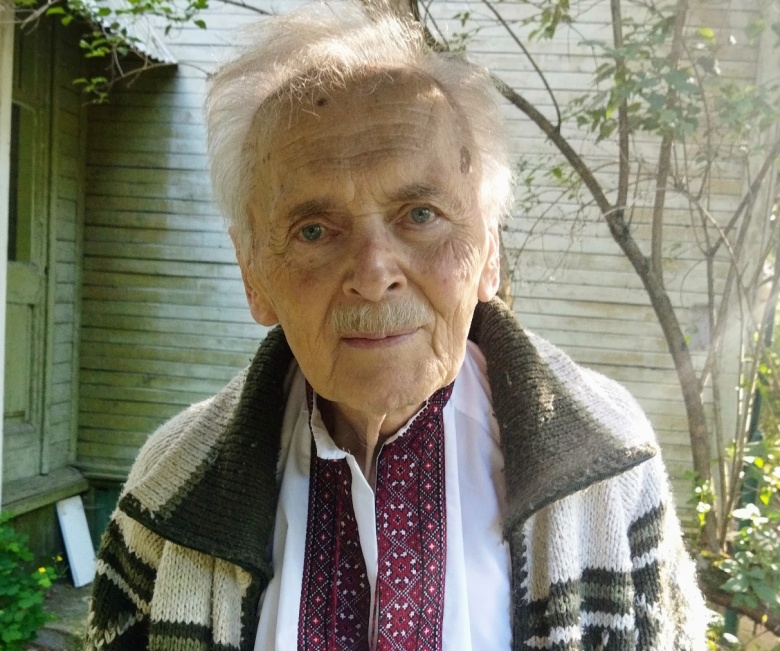
Dad on his 90th birthday, August 10, 2021
from the personal archive of Ekaterina Barabash
He was born in 1931, graduated from Kiev University, and worked as a correspondent for Evening Kyiv. Then he and my mother returned to Kharkov, where first my brother was born, then me. During the occupation of Kharkov, my father’s family did not want to evacuate, which was why there were difficulties later - life in the occupied territory promised serious obstacles for the Komsomol and for the party. And my father, due to his career aspirations, was eager to join the party from his youth. With difficulty, but accepted. Dad was 28 years old when he was invited to head the reputable literary magazine Prapor - an unprecedented thing at that time, because 28 years was considered almost a child’s age. By that time, my father had already published two books - about modern lyric poetry and about Dovzhenko, and the first of them was in Ukrainian. In a word, everything was going well and according to the rules, until he was noticed in Moscow. The editor-in-chief of Literaturnaya Gazeta, Valery Kosolapov, shortly before his dismissal for the publication of Babyn Yar by Yevgeny Yevtushenko, drew attention to the young literary critic. He was just looking for a new deputy. And here we are in Moscow.
I still sometimes regret that my father agreed then. On the other hand, at that time Kharkov was already an absolute province, and every person focused on a career had to look for a place in the sun only in Moscow. Now I often imagine - what if dad had chosen the quiet life of a provincial literary scholar, the house with a garden where I was born, the Ukrainian environment?
After working for three years at Literaturka, my father made a decision that he regretted for the rest of his life, until the very end. And the longer he lived, the more he regretted it. He accepted an offer to work in the Central Committee apparatus as a consultant in the cultural department. It was a career takeoff, but at the same time it was a sharp departure from what he loved, from Ukrainian literature, from his cherished dream of scientific work.
In Soviet times, the talented and ambitious did not have much choice.
You could, of course, not join the party, you could sit at home at your desk, doing science. Or even go to work as a stoker, as particularly desperate artists did. This is for the talented. Ambitious ones, in case of a successful combination of circumstances, climbed further up the career ladder. It was a hundred times more difficult for the ambitious and talented - either you nurture your talent and your calling, or you betray them with the nomenklatura system. My father also fell into these networks.
He consoled himself with the fact that he was not going to change his calling, that he would work a little in the System and return to science. But it doesn’t happen like that - the System sucks him in, as he later became convinced of with all his bitterness. Dad continued to write articles, he published books about literature, but when I read them as an adult, no, it was a different person, a different language, different intonations. He tried to write as he wrote before moving to Moscow, but if you are engaged in creativity at night, and in the morning you go to the office in the ideological department of a totalitarian state for the whole day, you should not expect a creative upsurge and free flight of thought. As I grew up, I understood how difficult it was for him, how he rushed about, but he couldn’t leave the warm, prestigious place, and didn’t really want to, inventing different explanations for himself.
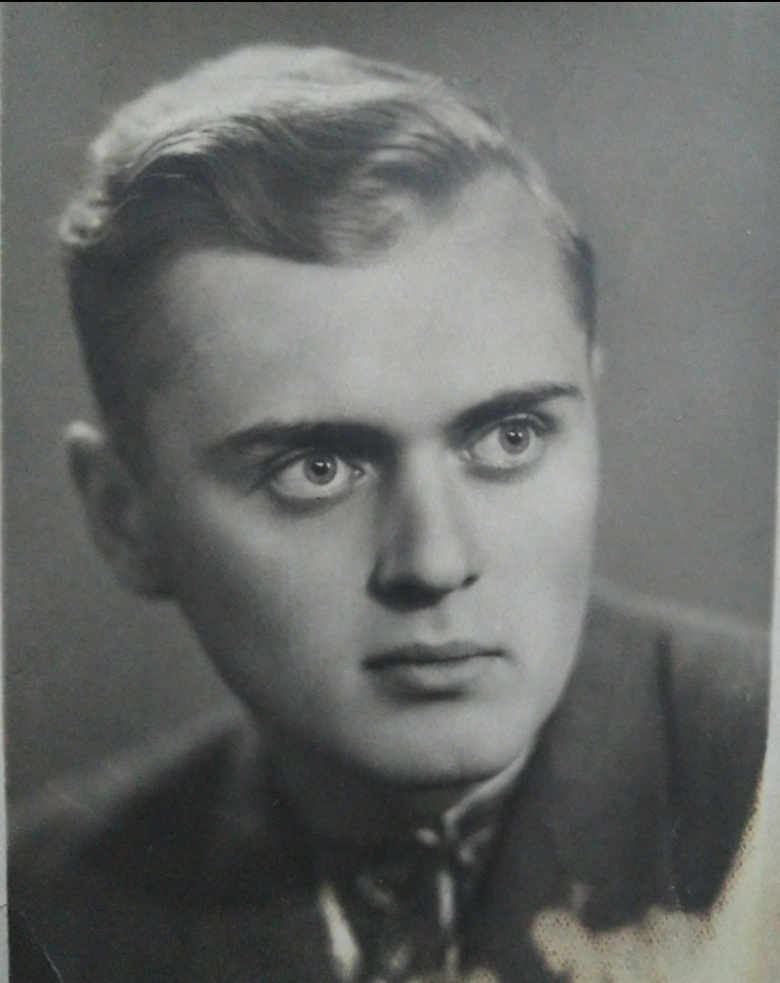
Father, 1961 or 1962
from the personal archive of Ekaterina Barabash
I still can’t imagine what they were doing in the Central Committee apparatus, but I understand that first of all it was ideological oversight. More than ten years were spent on useless, even harmful to the soul, work. When my father was offered to head the Institute of Art History (now the Institute of Art History), he decided that the nomenklatura past was behind him. He was in a hurry - the institute was under the jurisdiction of the USSR Ministry of Culture, and, despite its strong scientific composition, it was still, to a greater extent than, say, the humanitarian institutes of the Academy of Sciences, obliged to follow ideological canons.
Now, when almost the entire intelligentsia is in a hurry to sign their anti-Soviet sentiments, their hatred of the Soviet regime, contempt for the so-called “developed socialism”, and the fact that they made their way through jammers to the BBC and the Voice of America, I am keeping quiet. There were no anti-Soviet conversations in our kitchen at home, I don’t remember my parents listening to “voices,” and from the entire army of Soviet dissidents, my father, from his youth, was lifelong friends with Ivan Dziuba, a famous Ukrainian dissident and human rights activist, literary critic, who repeatedly publicly spoke out against violations of human rights, for which he was sentenced to several years in the camps. Dzyuba died exactly on the eve of Russia’s full-scale invasion of Ukraine. They corresponded for many years, and after the death of Ivan Mikhailovich, his father gave all the letters to the State Archives of Ukraine. For many years, confident that dad was a convinced communist in the service of the state, I later realized that in our seemingly ideologically stable family, there was the doublethink characteristic of the intelligentsia.
When my father was offered to become director of the Institute of World Literature of the USSR Academy of Sciences, he did not hesitate for a second - it seemed to him a welcome return to scientific work, which did not promise a decrease in status. Everything seemed to be going more than well.
What happened next - dad didn’t like to remember this and all his life he regretted that he didn’t have enough determination to insist on his own.
Subscribe to read in full
Subscribe to Redefine.Media to read Republic
Subscribe [You can pay with a Russian or foreign card. The subscription is renewed automatically. You can unsubscribe at any time.]
Where does the subscribers' money go?