
Translated material
Don't be afraid!
Buzin opened a new world for me - the world of a big city and boundless freedom

Photo: Oleg Buldakov / TASS
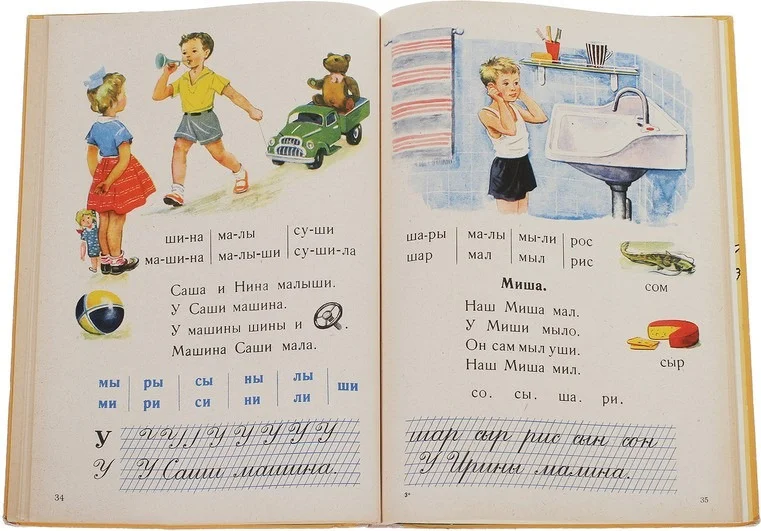
I sat at my desk, looked at the primer and absentmindedly listened to Buzin, stumbling, reading syllables. "Sa-sha and Ni-na ma-ly-shi." In the picture, a boy in a yellow shirt was blowing a trumpet and driving a toy truck on a rope, and a girl was holding a doll by the hand. Bored, I turned fifty pages at once and found myself at the end of the book, where stories about Lenin, Gagarin and Khrushchev were collected. I was a developed boy, I read from the age of three, I read the primer at home on the first day of school, and now I was bored in class.
- What are you? - the teacher Natalya Gavrilovna, a huge, plump woman in a gray dress with a white collar, called out loudly to me. I stood up silently. - Don't get distracted! Work with the class! I sat down silently.
On my fifteenth day of school, I already knew that what was important was not that I could read, but that everyone could - and if Buzin couldn’t, then he was “failing the class.” I didn’t understand this Buzin. He sat on the first desk in the right row and behaved in the most amazing way. On the very first day, we were taught to sit correctly - the back is straight, the hands are folded on the desk in front of us - but he did not get into this form. On his desk, he either stretched out freely, resting his head on his hand, or turned sideways and stretched his legs into the aisle - like a drunk on a boulevard bench. He could have blurted out anything. Once Natalya Gavrilovna read us a story about the polar explorer pilot Vodopyanov and asked questions, and Buzin - although he was not asked anything - suddenly blurted out a guess that illuminated him: “He is Vodopyanov, because he drinks vodka!” And my heart really filled with indignation at the large, rosy-cheeked, disheveled hooligan Buzin when Natalya Gavrilovna scolded him: because of him, all of us will not be accepted into the October ranks!
Then I wrote in a notebook, using thin pink rulers. Sticking out the tip of my tongue from the corner of my mouth, with my hand numb from tension, I wrote the words “ball”, “cheese”, “rice” in slanted letters, at the same time listening with loving attention to what my all-knowing, kind, intelligent teacher was saying. And she, walking between the rows, looking down at our carefully bowed heads, said very valuable, very correct things.
- Try, guys, try! - she told us affectionately. - Patience and work will grind everything down! You can’t even pull a fish out of a pond without difficulty, do you understand? And suddenly her unhurried, monotonous sentence exploded with a sharp gesture - she snatched his notebook from under Buzin’s hands and angrily raised it up.
- Look, guys! - we looked. - Look here, everyone! We looked with all our eyes. On the open pages of the notebook hanging above the classroom were huge, uneven scrawl letters dancing between the lines. “What are you painting here, Buzin?” - the teacher accused, amid the indignant quiet murmurs of thirty-five little people. - What kind of scribbles do you have?
Buzin stood with his head bowed on his chest, so that his face was not visible; but suddenly he raised his head, and everyone saw that he was laughing at the top of his lungs, good-naturedly and cheerfully, not offended by anything and incomprehensibly rejoicing at nothing.
- At least you have a stake on your head! - said Natalya Gavrilovna, and Buzin, flushed from ear to ear, nodded joyfully.
- But you help him! Stay with him after school and teach him to read! - Natalya Gavrilovna told me. — Octoberists must help each other! Buzin and I stood at her table. He was larger than me, wider, thicker - and always all torn to pieces. His gray school jacket sat askew on him, the collar of his shirt stuck out crookedly from under his jacket, his wrinkled trousers bubbled at his knees, and above all this disorder his thick black hair protruded wildly and his thick cheeks glowed tomato-red. I would have been offended if they left me after school, but Buzin had a reserve of primitive, virginal joy - no matter what you offered him, he was happy with everything... A two in reading? He smiled as if it were a gift. Penmanship count? He was simply happy. Stay after class? Yes, this is a holiday!
After class I sat with him in an empty classroom. “Look, there are “en” and “i”, together “ni”. Now “en” and “a”, together “na”. We read the whole word - Ni-na...” Buzin, wanting to please me, looked seriously at the letters, but could not stand it for long. Energy burst through him.
-Where do you live?
- Wait, later! Read it here! Buzin obediently lowered his face into the book, and his thick lips moved, mastering the syllables. - Patience and work will grind everything down! — I encouraged him with a smart thought and walked importantly around the class. It was the second hour of a September day, bright and cool, and from behind the trees of the school garden, a pleasant, calm sun was shining from the blue sky.
- Let's go outside! - Buzin suggested. - You will teach me to read on the street! In the yard!
- No, you can’t.
- Then you know what? — ideas came to Buzin’s head continuously. - Let's go to my house. We'll work out there. Hesitating, I seriously looked into his face and looked for a catch, but there was no catch in the round cheerful duckling - only love of life and friendliness.
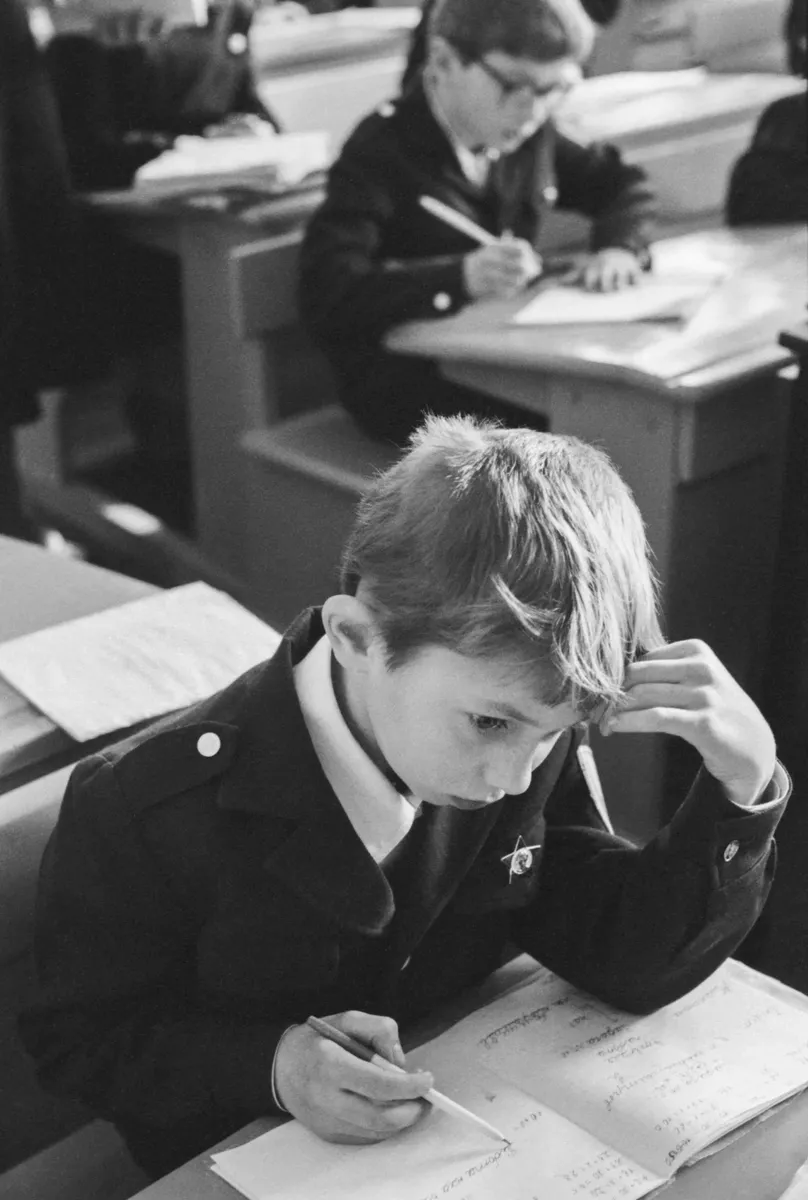
That’s how I remembered him, this frivolous oaf, a seven-year-old reveler of Moscow courtyards and a scamp of the streets - with tousled hair, with thick, slightly turned out and for some reason African lips, with a constant smile of joy worthy of a puppy, with a torn cowgirl collar. He was immediately, naturally, naturally kind to me - he always jumped up in the lobby and helped me put my backpack on my back after class.
Through a passageway, past a garbage can, where a skinny gray cat splashed right from under our feet, we came to a gloomy house, the lower part of which was brick and the upper part was log. A dark wooden staircase with the smell of dampness led upward, a narrow window shone with bright light. Upstairs, on the landing, is a felt door with a brown mailbox. Buzin called. A woman in a cherry blouse and a black skirt opened the door - she had a pleasant soft face and brown hair gathered in a bun at the back of her head. From above she looked at us in surprise.
- Mom, hello! - Buzin shouted. - We came to study!
- Yeah! — the woman said with an expression I didn’t understand, looking thoughtfully at me from above. - Who is this with you?
“This is my friend,” he said my name. - They assigned him to me. He will teach me to read! Give us something to eat!
- Yes? Well, let him teach. “Come in,” the woman agreed, and we followed her along the corridor to the kitchen. It was an ordinary long corridor of an ordinary communal apartment - with painted reddish floor boards and a light bulb hanging on a twisted black and white cord. The kitchen was also ordinary - rough tables along the walls, two gas stoves, brown-painted glass above the bathroom door. The woman seated us at a table under a blue oilcloth and placed a full plate of thick and hot borscht in front of each of us. As soon as she turned to the stove, Buzin put his hand up to the elbow into the pocket of his wide school trousers, took out a pocket knife, picked up the blade with his fingernail and plunged it into a piece of meat floating in the soup. Pleased with himself, he winked at me, took a wet piece of meat from the plate on the edge of a knife and dug his teeth into it. There was a crash - the woman, turning from the stove, slapped Buzin on the back of the head. He beamed with delight.
- Aaah! Mom, don't fight!
- Eat like a person!
- Fighting! - Buzin told me without anger, rubbing the back of his head. After which, with a quick movement, he wiped the blade of the knife on the sleeve of his school jacket, hid the knife in his pocket and pounced on the soup. I also began to eat - carefully and ceremoniously, as I had been taught. I still remember this soup, which my mother Buzina, a pleasant young woman with a simple, clear face, fed me, an unfamiliar boy, in the kitchen of the communal apartment. He didn't have a father. There was something in her attitude towards her son that I had never seen before in the relationship between parents and children - irony, mockery, slight detachment... She noticed that I was eating slowly.
- Tasty? Don't you like my soup?
“No, thank you, it’s delicious for me,” I answered, and my ears turned red. I had a small tooth, I could not devour thick borscht poured into a bottomless plate with the jet speed of Elderberry.
- Where do you live?
- Mom, he lives in the general’s house!
- Well! — The eyebrows on the woman’s face rose. -Who is your general? she asked curiously.
- Grandfather.
- Okay, mom, that's it! - said Buzin, sharply pushing the stool away and jumping up. - We went to study! To the yard! It's time for us!
“Well, study, study,” she said to her son with the expression with which one speaks to a good-for-nothing man who has been on the loose, who has already made a hundred vows and broken them all.
Buzin opened up a new world to me - the world of a big city and boundless freedom. Before meeting him, my habitat was limited to three nearby courtyards - “Mom, I’ll be in ours, next door or Bannom!” — but I didn’t risk going anywhere else.
I couldn't. After the rain, I couldn’t slide down along Palashevsky, covered with bubbles and splinters, with the stream of water seething along the sidewalks; I couldn’t dive from the Bath Yard into the construction site, into the concrete catacombs. To use the childish language of those years, I “obeyed.”
Buzin also couldn’t do something there, but he didn’t even remember what it was. What for me was under a ban that I couldn’t even think of crossing, Buzin crossed easily and carefree, without thinking at all about the consequences. He knew from experience that there are no consequences - adults only scare. "Don't be afraid!" - he told me as the two of us walked along the alleys, moving away from familiar places. “Don’t be afraid, they won’t even know!” - he said, towering next to me - a large, big-faced boy with a wide-open shirt collar and a shock of black, tousled hair. Where I suffered, fearing my parents’ insight and fearing my own inability to lie, my friend acted easily, with a light heart. He could come home whenever he wanted, and if his “mother” scolded him at home, he took it lightly - just think, she slapped him in the face and pulled him by the ear! “And you tell them that you were left to clean the classroom!” - he advised me, taking me for a walk after school. Or: “Just lie to them!” - he was not afraid of the word “lie”, he did not avoid it, lying for him was not something bad, shameful, but was an easy thing and made life very simple.
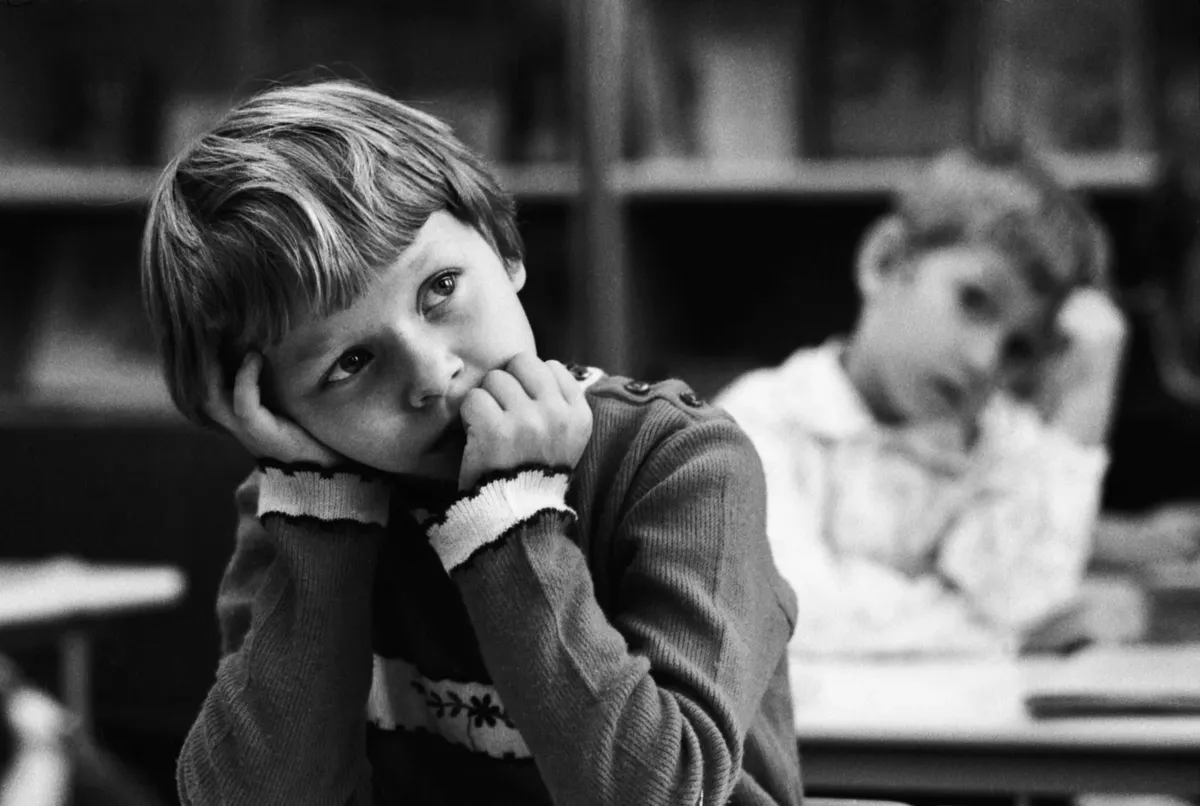
Before meeting Buzin, I had no need to deceive anyone. I knew that good boys don't cheat. I was blameless. But now, in the very first month of school, my life came into conflict with the life rules with which my mother and grandmother surrounded me like a ball of cotton wool. I felt this contradiction when I went out after school not to go home, but to go for a walk with Buzin - but so far, in September, I somehow managed to avoid outright lies and limited myself to omissions. Or maybe that September they simply didn’t pester me with questions and interrogations - after all, I was a neat boy in a brand new school uniform, who could read and count, because I had just started school, and there was no reason for suspicion, and the whole family watched me with joy and hope.
Buzin was the first person I met in my life who perceived life as an adventure.
By the age of seven, I already knew that in life you have to try, you have to study, you have to work, you have to be honest, you have to be careful and a hundred other things - my friend Buzin didn’t care about all this. Every day after school, with a backpack under his arm, he went out into Palashevsky Lane, and a new brilliant idea immediately arose in his tousled head. The peculiarity of his character was that he immediately carried out everything that flew into his head. For example, shouldn't we go to a construction site, where - he knows - there is carbide in one place, and shouldn't we now stuff the carbide into an empty bottle that he found in the trash? A grenade will come out. We left immediately. Or should we go for a trolleybus ride along the boulevards? I obediently walked next to him, looking with delight and fear at the new, unfamiliar houses and streets. Why we came here, why we were shaking like hares on the back deck of the trolleybus on route thirty-one - we both didn’t know. Just like that. The joy of life filled Buzin’s broad chest and his eccentric head, and I kept up with him - a little criminal who broke covenants. Wandering around the city, along its tangled alleys, driving, jumping off, walking at random through other people's courtyards, where other people's men were knocking on dominoes at wooden tables - all of this was a delightful, wonderful, dangerous adventure. But Buzin was not afraid of anything - he entered other people’s yards with a confident, light, decisive gait, the free gait of a seven-year-old adventurer and owner of this city.
Cellars were Buzin's specialty. He had been exploring them for several years, starting his research when he was almost four years old, and now he was showing me his wealth. In a distant courtyard, he knew of a hole in the fence, behind which was a door leading to the basement of the printing house, where we wandered under a low overhanging ceiling between huge rolls of paper. I climbed onto the rolls, and Buzin rested his palms on them and tried to roll me, but they did not move. In another yard, Buzin knew a rusty door in a concrete cabinet, behind which there was a descent into a metro shaft - we (that is, Buzin) threw a bottle of carbide into the shaft, which whistled down and exploded with a terrible roar. An iron staircase led down. He told me that he had already climbed it and found another door there in the wall, which, as he believed, led directly to the subway tunnel. It would be nice to go there. We planned to go down, open the door and go deeper into the tunnels - the implementation of the plan was postponed until Buzin found a hacking tool. He was going to steal from some “Uncle Sasha”—he said “shave”—pliers and a crowbar. Then Buzin told me about the basement, which began in the yard next to mine. I had no idea that the secret existed so close. According to my friend, this basement was the beginning of a whole network of underground passages that led to the Kremlin and were intended in case our rulers suddenly had to hide from the Americans who were besieging the capital. According to Buzin, who anticipated modern diggers with his activities and reasoning, all the basements and tunnels in Moscow were interconnected, and, having entered the basement in Palashevsky Lane, one could exit, for example, on Arbat or even in Serebryany Bor. And, naturally, one day in October we decided to go through these passages to the Kremlin.
We were well equipped: Buzin had with him a rope, a screwdriver, a stick coated with varnish, a bunch of rags, matches, and a brick. Everything is in your pockets. The match flared brightly, pulled out the vaulted ceiling and the disgustingly damp wall from the darkness, burned for several seconds and died in Buzin’s fingers. Under our feet there were some disgusting scraps, rags, dirty rubbish. Every now and then I looked back - from behind I could see a door surrounded by a shining strip of light. I sneaked behind Buzin and thought about how we would appear in the Kremlin. Somewhere near the Tsar Cannon the hatch cover will open and I will stick my head out. Or will we immediately go to the basement, and from there we will go up the stairs to where the government meets? But soon a brick wall stood in front of us. Buzin felt her with his hands and muttered.
- They blocked it. It didn't exist before. I walked on.
- Who blocked it?
“Frogs,” he said with inexpressible contempt. “These frogs crawl everywhere, they don’t let people live!”
I didn’t know this word, but I realized that these were enemies.
We turned back. Our plans expanded: now Buzin was going to steal Uncle Sasha’s sledgehammer in order to break the wall erected by the vile frogs and blocking our path to the higher spheres.
At night, before falling asleep, I smiled and thought about Elderberry. The day, with everything we had done and where we had been, now seemed long to me, like life, and I knew that tomorrow something interesting was waiting for me again...
Ideas, as I already said, came to Buzin’s mind continuously, and he implemented them without delay. His character allowed him not to be afraid of any consequences. This was probably his family trait - otherwise where did the surname Buzin come from? Now, thinking about him, I imagine a series of his ancestors, in whom this wonderful character was given in all its integrity - large, portly, healthy, dashing men without a king in their heads, gentle, good-natured, ready to cause trouble for any reason and for no reason...
The idea of stealing Stashevsky’s briefcase came to Buzin’s head suddenly, at that moment when, after school, we were sitting brotherly close to him in the lobby on a banquette. The briefcase ended up between us, and its owner went to the wardrobe to get a coat. He was already wearing a coat, which meant it was late autumn. The idea of stealing a briefcase left unattended for a minute so shocked Buzin with its genius that his round face immediately lit up with delight. From under the black shaggy hair, black eyes looked at me with cheerful madness. He grabbed the briefcase that he hadn't even thought about five minutes ago and galloped out of the school. I'm following him. The heavy school door slammed behind us, and we rushed up the quiet Palashevsky Lane - large, black-haired, ruddy, joyfully laughing Buzin and I - delighted, delighted, shocked. I had never stolen before - nothing, never, and I was just getting used to the idea that it was possible to lie. But my dashing friend lived at full speed - today he lied, tomorrow he stole, the day after tomorrow he took a trolleybus to Luzhniki. And in all this there was no vice or sin - in a sense, Buzin was as blameless as I was. He just lived like that. He loved buzz, nonsense, freedom.
Like cats, we climbed onto the roof of a dilapidated house in our yard. With a decisive jerk, Buzin shook out the contents of his briefcase - a primer, notebooks, and a wooden square fell out, and the last one to fall out was his pencil case with a loud thud. Buzin sat down and opened it, sliding the lid into the grooves - there, laid out in compartments, lay an ink pen, pencils and a soft pink eraser. Buzin turned the pencil case over and handed it to me. In fact, he didn’t need all these things at all. There was also a large homemade cardboard dial in the briefcase. We passed the time. Lying on a warm roof warmed by the autumn sun, under a bright, spreading sky, we turned the hands on the cardboard dial and leafed through Stashevsky’s notebooks with lazy contempt.
I realized that I was doing something terrible. I held a pink eraser with a gray corner in my palm - Stashevsky erased with this corner - and felt that things somehow miraculously contained someone else’s life - the thoughts and feelings of Stashevsky, his father, his mother and grandmother, who once, when I came to visit Stashevsky, treated me to tea and meringue cakes. In sharply sharpened pencils, in neat notebooks, in a heavy pencil case, in a tender soft eraser there was their love. I didn’t know many adult words and couldn’t name what I was feeling, but I quite obviously felt the blasphemy of what I was doing now. But at the same time, I seemed to step over myself, at the same time I rejected my timidity and my fear, left them in the far corners of myself, and contemptuously mocked the things of my classmate Stashevsky. I leafed through his notebooks with A's and for some reason I knew that he was a fool. Stashevsky is a fool! And I’m great.
The day dragged on, slow and smooth. We sat on the roof with our hands on the iron behind our backs and our outstretched legs spread out. Stashevsky’s briefcase was lying nearby; we were already tired of it. Buzin, once again turning the dial in his hands, swung it and threw it down. The air flow picked up the dial, it floated in circles and landed on broken bricks. There was nothing else to do on the roof. Jumping up, Buzin began stuffing things back into his briefcase. He tugged at it, shaking it, and then threw it down to where the black galosh, which had already survived two winters, lay. The briefcase fell heavily onto the fragments of bricks and at that same second became trash itself. And Buzin was already climbing down, feeling for the ledge of the cornice with his foot.
The next day, Buzin and I exchanged glances, listening to Natalya Gavrilovna talk about the unknown scoundrels who stole Stashevsky’s briefcase. His grandmother came to the school to investigate. I, a polite boy, greeted her and even became indignant at the scoundrels. I didn't feel any remorse. That day, as soon as we left school, Buzin was attacked by third-graders who could not forgive him for some old trouble. There were about five of them, they surrounded my friend and pushed him several times, starting to fuss, but he didn’t give in. Laughing, with a cheerful cry, he spun in place, holding the backpack in his outstretched hand. His shaggy hair flashed, the hem of his jacket and the cowboy shirt that had come out from under him were spinning, he was spinning like a propeller, and a flock of his enemies retreated in bewilderment in front of the heavy backpack that was spinning in circles, inside of which lay a brick. The backpack could easily blow your head off. Buzin’s red cheeks and cheerful eyes flew and flashed, his joyful cry rushed along the alley.
It was already winter - Buzin walked in a black coat, belted with a wide officer’s belt, and in a worn black earflap. We again climbed onto the roof of a dilapidated house. From the roof there was a view in one direction of our general's courtyard, and in the other - of the courtyard of the Museum of the Revolution. There were two tall, double-height, semi-circular casement windows, one of which I would break out six years later with a magnificent kick from a soccer ball that flew over the fence - and there stood a heavy green cannon on huge wheels and with its barrel raised up. In October 1917, the Bolsheviks fired from this cannon at the Kremlin, which we never reached underground with Buzin. The gun appeared in the yard recently. I showed it to Buzin, and he immediately decided to go after it. It was easy to get to the cannon on the ground - through the arch to Gorky Street, go into the courtyard of the Museum of the Revolution, there to the left into the gateway and into the courtyard... But Buzin chose to decorate his life with one more adventure and therefore went down the steep wall. He lay down on his stomach, lowered his legs and smoothly disappeared behind the edge of the roof. He stretched out on the pink brick wall, spread out his arms - and slowly and steadily moved towards the goal, feeling with his foot in a black felt boot the hooks protruding from the wall and clinging to the recesses and crevices with his wet red fingers. I once again looked down, at that moment he threw his head back, saw me and was delighted - wild locks fell from under his earflaps on his forehead, his thick lips cheerfully shouted something encouraging to me...
I didn’t even have time to see him fall from the wall - perhaps I averted my eyes or moved away from the edge of the roof. Suddenly a wild roar was heard from below, I ran to the edge and saw something terrible: blood... a lot of blood... bright, scarlet blood on the snow, on the green wheels and rotary levers of the cannon. Somewhere there, next to a huge wheel, a small carcass lay the body of my friend. Buzin’s scream cut through the quiet air of the courtyards, ascended to the high sky, attracting the attention of the whole world, loudly announcing that he and I, together with him, had committed an unthinkable crime... Fear took possession of me, a fear that I had never experienced before - a fear that discouraged thinking, paralyzing. It was a release of fear, an explosion of fear - the same one that had been gathering in me all these weeks and months. I broke the rules, and I was a thief, and my friend lay prostrate in blood. Horror overtook me and I ran.
This could be the end of this story - it seems to already have everything: there is my friend Igor Buzin, whom, by the way, no one ever called by name, there is myself - a boy from a decent family, for the first time in his life breaking prohibitions and paying for it, there is Moscow and its courtyards, alleys and basements... But you can not end the story here, but continue - I have always found it funny the stories of venerable masters of the pen who know exactly where the story is the beginning and where the end is. The beginning can be anywhere, just like the end.
The next day I got a bad grade. The first in my life. Shocked by what happened to Buzin, feeling the shame of my flight, I looked out the window all evening, didn’t do my homework and lied to my mother that he simply wasn’t there. Now, sitting in the classroom, in my usual place - the third desk in the left row - I looked at the vile, skinny, long-necked, red two in the notebook, and did not know what to do and how to live: a feeling of a terrible catastrophe filled me. I didn't hear what was going on around me; I was paralyzed by my own fall, which at that moment seemed so clearly, so clearly to me. “My grandson will be an excellent student!” - Grandmother Klava’s naive boasting sounded in my ears. “He will study with straight A’s!” How happy my father and mother were when I went to school, how solemnly they congratulated me! And so... I betrayed them all. I slowly closed the notebook. But the large, vilely curving twosome, without disappearing, stood before my eyes.
After school I didn't go home. I climbed onto the garage in our yard and sat there in sad bewilderment. From above, from the roof of the garage, I saw my father walk home and saw our kitchen window light up. I sat on the corrugated roof and sobbed: it was impossible to tell mom and dad about the deuce, but it was also impossible not to tell. Then he stopped sobbing and just sat on his haunches, cowering, in stupor...
I climbed the stairs to the door of our apartment and stood for a long time. I couldn’t reach the white pimply bell; I announced my presence by kicking the door. I stood, stood, stood on the staircase, suffering from melancholy. Then I heard heavy footsteps approaching behind the door, I was afraid that they would find me now - and I tapped with the toe of my felt boot.
- How are things at school? - asked the father.
- At school? — I asked in a dull voice, pretending to be incredibly busy with the felt boot that didn’t want to get off my foot.
“At school,” my father said, standing over me.
“Okay, dad,” I said. — I didn’t receive anything today. This was the first obvious lie in my life. The words forced their way through my suddenly dry throat, came out in jerks, abrupt and uneven, and hung in the air, as if expecting to be met with a blow and a cry: “Lies!” I felt that my protruding ears were filled with blood, that the back of my head, my neck, the sharp corner where the spine began - all this was open, bare, vulnerable and, together with my bloodshot ears, betrayed a lie; For a difficult, unbearably long moment, I waited for punishment to fall on me from above - and I was ready to accept it humbly and patiently. I even wanted there to be punishment: so egregious was the crime that I committed, such a blatant lie with which I tried to save myself not from punishment, but from the shame of a defeated hope - a hope that I, a weak person, did not justify.
- Well, well done! — Father’s big hand patted my neck. Father left. I felt that I was swimming all over with heat, like a candle: my forehead was burning, my ears were burning, my palms were burning, the back of my head was burning, glowing from under my light, short-cropped hair. The touch of my father's hand seemed to turn me into a lump of hot wax that could not bear its own weight - but nothing happened. I sat in the room on the edge of the ottoman, stroking the hard pile of the carpet with my palm. The heartbeat calmed down, the brain cooled down. Then - a lot of time had passed - my soul was freed, as if a concrete slab had fallen from it. I sighed and went to the window, in which there was already darkness - a cozy darkness with red, orange, yellow rectangles of Moscow windows. I was now happy with the knowledge that lying, it turns out, does not kill, that lying is easy and simple...
Buzin appeared at school a week later - the same as he always was: cheerful, shaggy, torn, with a cowboy shirt tangled under his jacket. Now I knew the reason for his tornness - he constantly climbed through basements and over fences. This was his rule of life: if you saw a fence, climb over it! If you see a pushed-back hatch in the asphalt, dive down immediately without thinking! He sat again, lounging, on his first desk in the right row, listening with half an ear, and looking at Natalya Gavrilovna with a good-natured smile. I was embarrassed to see him entering the classroom with a backpack under his arm, but at recess he approached me as if nothing had happened. He acted as if I had done nothing wrong, as if I had not abandoned him, lying in blood on the snow-covered asphalt. In the school corridor, I said something to him - asked how he survived it... it must have been very painful... expressed sympathy. I already knew that in the hospital they put stitches on him and stitched up his broken lip.
- What are you doing? - He was cheerfully surprised at my embarrassment. His mouth went all the way to his ears. - You know what a great ride I had in the ambulance!
This material was published in the thirteenth issue of Novaya Gazeta. Magazine". You can buy it in the online store of our partners.