
Translated material
Is monkeypox dangerous?
Two cases have already been recorded in the Moscow region. Let's figure out what this exotic infection is and how it could have appeared in Russia
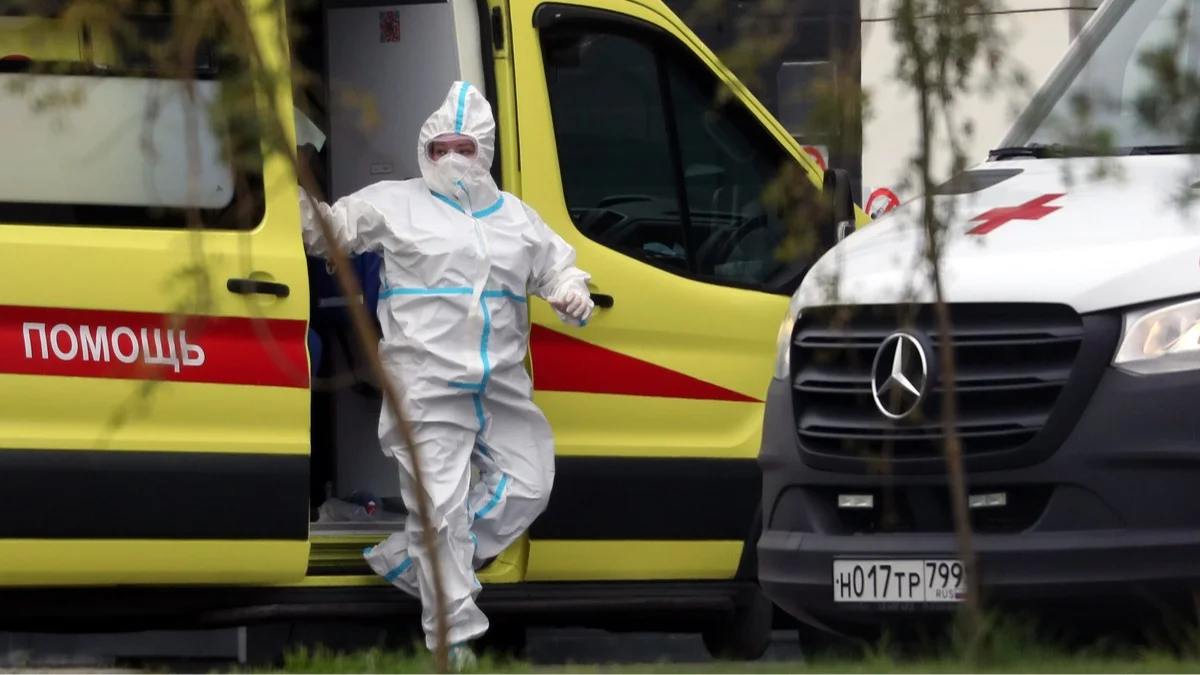
Photo: Maxim Shipenkov / EPA
On Saturday, a man was hospitalized in the Moscow region who went to the hospital complaining of a sore throat, runny nose and rash. These symptoms together allowed doctors to suspect that the patient had monkeypox, and a study of the biomaterial confirmed the diagnosis. On Monday, another case of this infection was confirmed. According to Rospotrebnadzor, an epidemiological investigation was carried out, all contact persons were identified, medical observation and isolation were organized for them. In case of infection, they will be provided with the necessary medical care. We are looking into whether there are reasons for concern.
Where did the infection come from?
In general, monkeypox is the closest relative of smallpox, the same one that wiped out half of humanity in the Middle Ages and was completely eradicated at the end of the last century. But unlike the deadly medieval disease, which was transmitted from person to person without knowing borders, monkeypox is a typical zoonotic infection, that is, transmitted to humans from animals. It is distributed mainly in the countries of Western and Central Africa, and its carriers are small rodents. The monkey is only an accidental host, like humans, who can become infected through bites or scratches, as well as through foods that infected animals have “tasted.”
The virus is transmitted from person to person quite rarely: usually by contact - through contact with the biological fluids of an infected person.
Airborne transmission requires very close and prolonged interaction, such as sleeping together or hugging.
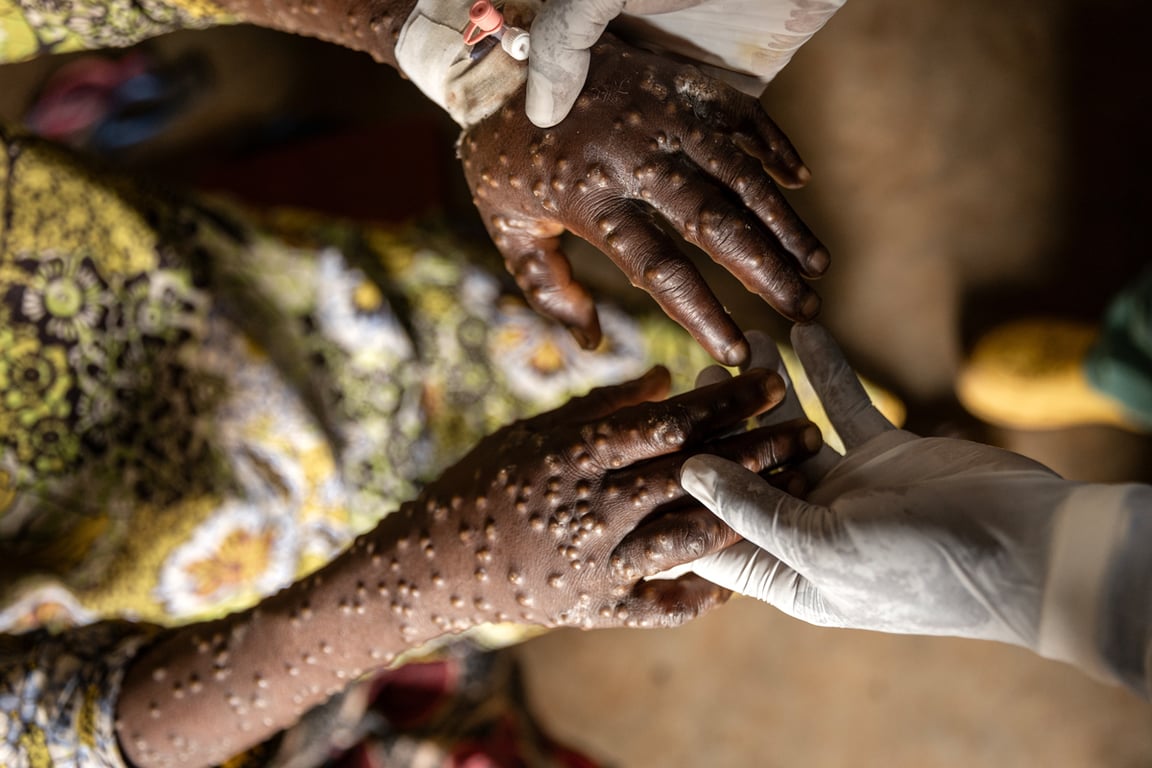
The disease begins with a high temperature, the lymph nodes become enlarged, catarrhal symptoms appear (runny nose and sore throat), then a specific rash appears. The illness lasts about a month and usually ends with recovery.
How common is this disease?
The first case of monkeypox was reported back in 1970 in the Democratic Republic of the Congo. Since then, it has been regularly recorded in African countries. Basically, these are cases of intra-family infection, including among children.
But at the beginning of this century, the infection spread to another continent. In 2003, an outbreak of monkeypox was reported in the United States. The results of an epidemiological investigation revealed that the infection occurred from domestic prairie dogs - they were kept together with Gambian pouched rats and dormice, brought into the country from Africa. And in 2022, cases of the disease were registered in Portugal, Spain, Great Britain, Australia and again in the United States - mainly among men who have sex with men.
How did monkeypox get to the Moscow region?
Since there are no natural foci of this infection in Russia, according to experts, these are most likely imported cases. An infectious disease specialist who spoke with Novaya-Europa on condition of anonymity suggested several possible infection scenarios: either a person traveled to Africa, where he somehow came into contact with animals - potential carriers of the pathogen; or had sexual contact with an infected person; or could have become infected through imported infected animals.
At the same time, patients near Moscow reported that they had no sexual relations with potentially infected people, and had traveled abroad for a long time. So the epidemiological investigation continues.
Why are we increasingly being attacked by zoonoses?
“There is an active human invasion of wild nature, which is becoming an accessible tourist site,” explains the infectious disease specialist.
— People are increasingly traveling to exotic countries, to some remote places, where they encounter animals - potential carriers of the same exotic infections.
Just a week ago, the world was discussing an outbreak of infection caused by the Nipah virus, which also came to humans from the wild. In this case, the main natural reservoir of infection is flying foxes, which live in the jungles of Southeast Asia. It is enough to have an unfortunate “communication” with these animals or eat an unwashed tropical fruit to catch the virus.
Maybe we should bring back the smallpox vaccine?
The smallpox vaccine is indeed effective, although not one hundred percent, both against the monkeypox virus and against other varieties of this infection - elephantpox, cowpox, and so on.
Infectious disease experts suggest that the cessation of smallpox vaccination played a cruel joke because it increased susceptibility to monkeypox. Experts do not rule out that if the incidence increases, smallpox vaccination may be introduced for some countries for epidemiological reasons. But so far there is no talk of mass vaccination.
Are we facing a monkeypox epidemic?
“There is no reason to talk about an epidemic yet,” says the infectious disease specialist. – The monkeypox virus has a fairly long incubation period—1–2 weeks—and a contact route of transmission. These are the factors that allow us to control the infection. If tourists also follow basic safety rules, the risk will be significantly reduced.
However, according to my interlocutor, the infection has already spread beyond endemic areas and is being recorded in countries where it has not previously been encountered. And the evolution of the virus continues towards accelerating mutations. All this cannot but be alarming. So scientists continue to closely monitor the virus.