
Translated material
Lena's last house
On January 27, in Irkutsk, a member of the SVO, threatening with a knife, dragged a woman into his apartment, held her for five hours, and then strangled her. Lena is survived by two daughters, 12 and seven years old. Lena is an orphan. For the last five years she has lived in a crisis center for mothers with children of the Obereg foundation. “Things Like This” tell the story of how this murder became possible
At first the coffin appears to be empty. Lena is so small in it. Her eldest daughter Nastya, with dark pigtails, kisses Lena’s waxy hands and forehead. Then the grandmother hugs the girl for a long time. When she lets go, wet marks remain on Grandma's jacket. The youngest, seven-year-old Katya in a pink jacket, is taken into the car to warm up. Very cold.
* * *
The Obereg crisis center is a white two-story building with a children's playground in the courtyard. Mothers and children live here and have nowhere else to go. Little kids are running along the corridor. Masha, a stern, blue-eyed woman, is frying pancakes. Tomorrow is Lena's funeral and wake.
Lena, Masha and her sister Sveta were closest friends, close by all the time - since Lena was brought, pregnant, to “Amulet”. Lena and Masha prepared food together for the homeless (this is one of the areas of the foundation’s work), distributed it together, bought food for themselves together, had dinner together, celebrated birthdays, looked after each other’s children, and went to the river together. Lena often stayed with Sveta's son. They lived in the same room. “I sat with him, almost raised him.” Masha wipes away her tears.
“Lena was like my right hand. She was very nice. Very. So small and fragile. Fifty meters. And so kind. Whatever you ask, he will always do it and help. I loved watching Turkish TV series. You walk into the kitchen and he sits and watches. The cleanliness is simply perfect. The stove can take an hour to clean. Until you tell her: “Calm down already.” Life is now over. Life will be completely different without her. It’s all over without Lenka.”
Roman Michurin beat and sadistically tortured his wife Sveta for five months, and when she ran away from him, he caught Lena and killed her.
Orphan's house
Lena did not remember her parents - they abandoned her. She was born in the city of Myski, Kemerovo region, and grew up in a correctional boarding school.
“It was very difficult for her alone in this life,” says Evgenia Kalmykova, head of the crisis center. “She has intact intelligence, but she is a little unsocialized.”
For example, Lena didn’t even know that as an orphan she was entitled to an apartment.
After graduating from the boarding school, she had nowhere to go, and she and her friends came to Irkutsk by train. For some time she wandered and begged. I met a young man. He also grew up in an orphanage, but he has foster parents. Nastya, the eldest daughter, was born. The child's father was drinking.
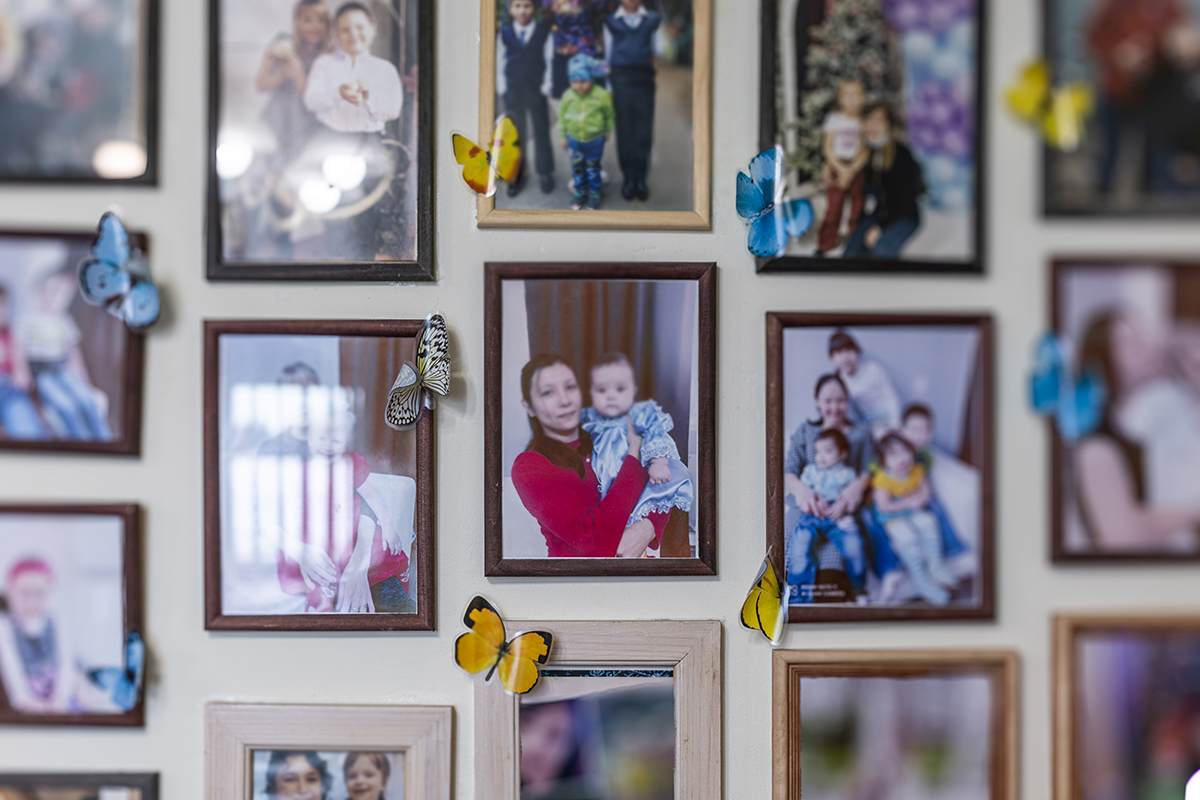 Photo of Elena in the “Amulet” center Photo: “Things like this”
“Lena was a little driven, she was very dependent on the environment she found herself in,” says Evgenia. “For the five years that she lived with us, we never saw her drink alcohol. But she used with this guy. His adoptive mother sent Lena to the juvenile affairs commission, where she was offered to undergo rehabilitation so as not to be deprived of her parental rights. She agreed. She’s generally like this: they told her she had to, she agrees. The child’s father was not offered to undergo rehabilitation, only her.”
The rehabilitation center turned out to be a workhouse, where the wards' passports and earned money are taken away. Lena lived there for about four years. She was mainly involved in cleaning in this center. She was not allowed to see her daughter. Lena could have gotten out of there, but for this a person had to come and pick her up. The family of the daughter's father did not expect her. As a result, Lena remained in this “rehabilitation center” simply because she had nowhere to go.
Her daughter Nastya was raised by her grandmother, the adoptive mother of the child's father.
When Lena became pregnant again and was already seven months old, the owners of the “rehabilitation center” brought her to the “Obereg” crisis center: it was forbidden to be with children in the workhouse. The youngest daughter, Katya, was born. The child's father did not participate in the girl's life.
“It took a long time for Lena and I to establish contact,” continues Evgenia. “Due to such a difficult life path, she was distrustful and a little harsh. It took a while for her to start trusting us. Only a few years later we learned that she had a daughter living here in Irkutsk.”
Good Mom's House
At the crisis center they helped Lena get her passport restored.
“Lena is basically like my child,” says Anastasia Afanasyeva, a social work specialist. She can hardly hold back her tears. “When Lena was first brought to us, I saw her and thought: “How small she is.”
At the crisis center, Lena said that she has a profession - a plasterer-painter. They helped her restore her education documents. Then the baby was born. Anastasia collected everything for the child and took Lena from the maternity hospital. When the girl went to kindergarten, Anastasia found a job for Lena - as a cleaner in a supermarket not far from the center.
“Lena needed our support in many ways,” explains Anastasia. “She was anxious, scared to go to work alone. Sometimes she would get there, but she might turn around and come back. Then we called the supermarket and said: “She’s coming - meet her, please.”
 Children playing in the shelterPhoto: “Things like this”
Lena might not remember what the pediatrician prescribed for the baby. The fund's employees called the doctor to clarify. Lena went to the city and got lost. I called the center and cried. They explained to her how to return.
“For an ordinary person, this all seems simple. But Lena was like that. But she had other very good qualities that I greatly valued,” says Anastasia.
Lena was very kind and attentive to people.
“When you feed the homeless all the time, you become a little stale,” continues Anastasia. “You put a portion in, give it away, and you don’t even look.” And Lena will give not one cutlet, but two to a person. He will slip some candy. And if a homeless person gives her another dirty jar, she will definitely fill it with food. She had no disgust, only a kind attitude towards everyone.”
In the center, Lena was called “Our little brownie” because she was distinguished by her thriftiness and cleanliness. At seven in the morning Lena met Anastasia with a mug of coffee.
“She gives everyone coffee, takes the kids to school, to kindergarten, and goes to work herself. Lena was in good standing there and was highly valued for her hard work. On her days off, she always helped Masha in the kitchen. If at work they asked me to replace someone on the weekend, I never refused. I could work for two or three weeks without days off.”
Lena memorized long poems. I took books from the center library and studied everything - Goethe, Mayakovsky, Blok. Quoted to fund employees.
 In the center "Obereg" Photo: "Things like this"
A few years later it turned out that Lena’s eldest daughter lived in Irkutsk. Anastasia long sought the opportunity for her mother to see her. Lena, despite her small salary, always saved money and bought clothes for her eldest daughter and gave sweets. Two years ago, Nastya moved to a crisis center to live with her mother and sister. It was her choice.
“Lena was a responsible mother,” says center psychologist Lyubov Serebryannikova, “even though she grew up without parents. Caring for children and love were natural to her. She consulted with me about parenting: she was interested in how not to harm the child, what would be best to say in a difficult situation so that the child would react correctly.”
Lyubov smiles: “I once found a puppy on the way to work, on the highway, and took him. While I was running around here all day, Lena looked after him. I just volunteered to help myself.”
Housewarming house
Social worker Anastasia Afanasyeva helped Lena get an apartment. It wasn't easy. Lena was removed from the queue for an apartment because they could not find her (remember, she moved from the Kemerovo region to Irkutsk). And after the orphan turns 23, it’s too late to get in line. The crisis center lawyer succeeded in reinstating Lena in this queue, and then quickly getting an apartment. It was given in Kemerovo, but Lena flatly refused to move there.
“She said she couldn’t live without us,” explains Anastasia. “And we sold the apartment there and bought it here, not far from our center. It’s a one-room apartment, but we renovated it at the expense of sponsors. They came up with zoning to accommodate children.”
 Children playing in the shelterPhoto: “Things like this”
Anastasia shows photographs of the apartment - small, bright and cozy. Matches Lena.
The center's psychologist recalls that on that day, January 27, Lena had a day off. “She was so peaceful, happy, because the next day she had a housewarming party.”
“I don’t even know why Lenka. - Masha seems to be rubbing the tears back into her eyes with her hands, but they flow anyway. “The smallest of us, she walked around forever in her high boots. That day she was hanging curtains in her apartment, and was supposed to buy a sofa on Wednesday. I was figuring out how best to do it there for the girls so that there would be enough space for each of them. Where to do homework, where to sleep.”
Lena was 42 years old.
Like a sister
Lena’s closest friend Sveta has lived in the Obereg crisis center for six years. Sveta has a seven-year-old son.
“Sveta is a girl with a core of steel,” says Evgenia Kalmykova, director of the crisis center. - Independent, hardworking. Plows like a horse. He can work five days a week, while still taking night shifts, and from the night he works again during the day. She has a goal - to make money. Here, many girls try to meet a man in the hope that he will take them and arrange their lives. But Sveta did not strive for this. She is independent. They looked after her, but she was very careful.”
Sveta recognized Roman Michurin through mutual friends.
“He gained her trust because he always invited her to spend time with her child somewhere. He took them to have fun, gave them flowers, took them somewhere to relax. He made a good impression on all of us here. We were happy for her."
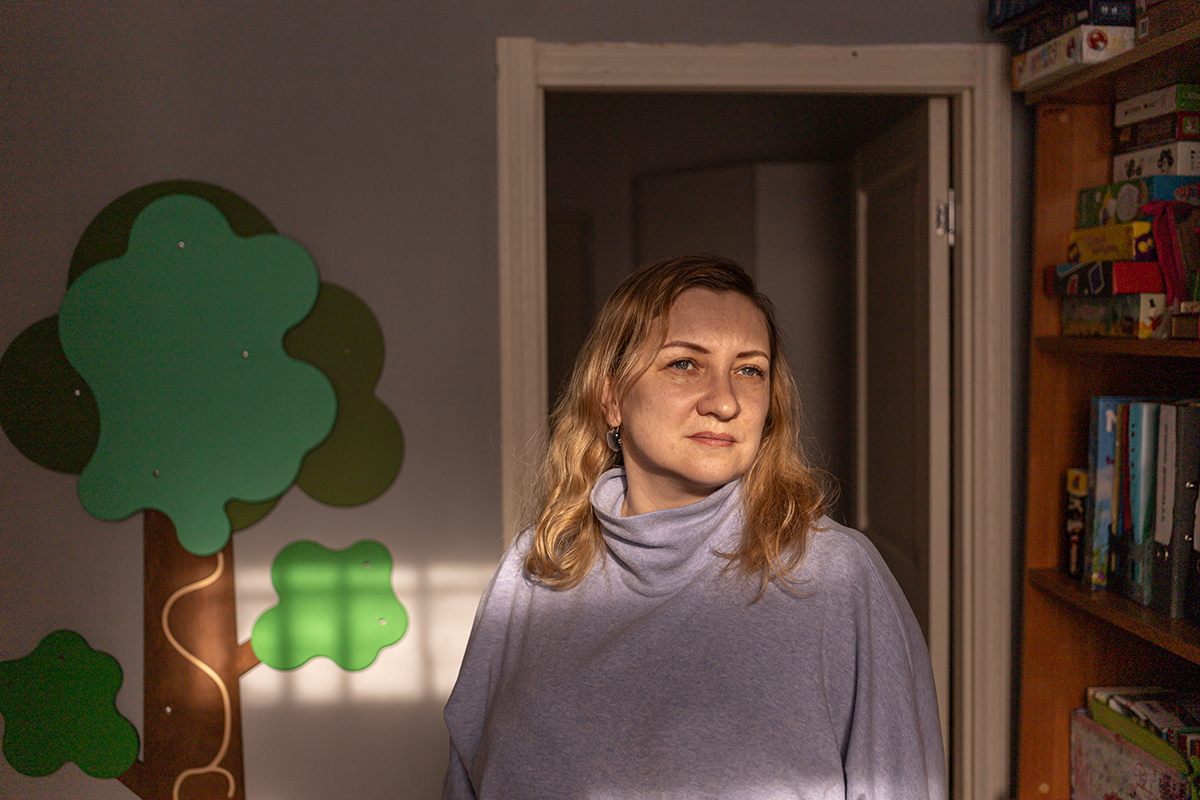 Lyubov Serebryannikova, psychologist of the center Photo: “Things like this”
Roman has a 12-year-old daughter. The four of them often spent time together: Sveta, her son and Roman and his daughter. Roman's daughter became friends with the daughter of the deceased Lena. They played together.
“His father had a stroke,” says Anastasia. “We helped him with the fund, gave him diapers and a walker. Sveta looked after him. There were no signs. But as soon as they got married, he completely changed.”
“It was normal at the beginning,” agrees Masha.
Sveta and Roman started dating in March 2025 and got married in mid-summer. She moved to live with him. And on the night of September 3, I came to the crisis center.
“I came in completely beaten up,” says Masha, “all over my face.”
Seven calls
Her new husband tortured her: he strangled her with a wire, beat her with it, and stabbed her in the back with a knife. There were bruises and long red stripes all over his back.
Roman Michurin is 32 years old. He is from the city of Shelekhov. He grew up without a mother, only with his father. At the age of 15,he killed a man: in a fight with a neighbor, he stabbed him five times. He spent some time in a pre-trial detention center. But I didn’t get a real sentence. He has three convictions. In 2009, he was sentenced in the case of murder (105 of the Criminal Code), in 2020 - under articles of threats to kill (119 of the Criminal Code) and destruction of property (Part 2 of Article 167 of the Criminal Code), and in 2024 - in the case of arson of the apartment of a woman with whom he was in a relationship at that time.
Roman’s ex-girlfriend wrote to Masha: “Two years ago I miraculously survived this monster. First, he crashed the car, the next day he burned my apartment and threatened to kill me (once he even strangled me), but our authorities said: “But he didn’t kill me. There is no reason to detain him.” After all these acts, Roman was given a year and a half probation, he went to the SVO, and according to the court, the entire debt (compensation for damage) was written off. He was wounded, but after treatment he did not return to his unit. He was recognized as a deserter. They caught him twice and took him to the unit, but he ran away. After this situation, I was left without money and an apartment with two children. Our police and justice don’t care.”
The girl confirmed to Such Things that she “suffered very much from him,” but she is not ready to show documents and share detailed information.
After treatment, Roman was supposed to undergo a medical examination and return to the combat zone, but he did not pass the examination and did not return. Deserter Michurin calmly married, rented an apartment, worked as a driver and tortured his wife.
“On the morning of September 3, I came to work,” recalls Anastasia, “and saw Sveta in this state. I say: “We need to do something.” And what? For beatings we only have a fine . Sveta said that nothing would happen to him at all. He'll just get a fine, which will make him even angrier. She was very afraid."
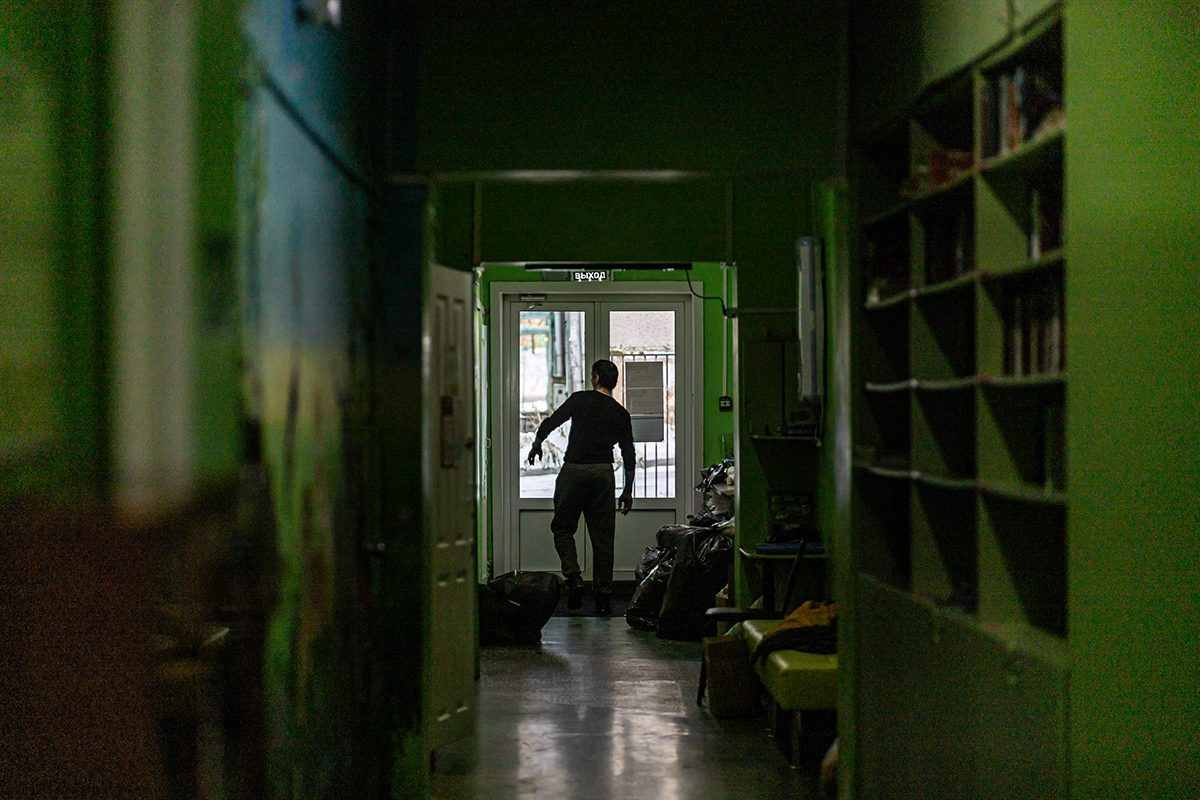 You can bring unnecessary clothes to Amulet and place them at the entrance. Almost every hour someone brings bags with things Photo: “Things like this”
The crisis center "Obereg" does not provide shelter to women victims of domestic violence. In such cases, they are offered to go to a crisis center in Novosibirsk, with which the fund has an agreement.
“The only salvation in most cases is moving,” the head of one of the shelters for women comments on the situation. “Our ward can only hide, because the police, as a rule, do not want to deal with such cases; with the current legislation they have little leverage, especially if the torturer is a military man. They are dealt with separately by the military prosecutor's office. An article about torture may be presented, but the woman needs to prove this fact very persistently. Collect all medical certificates, ask for a medical examination, indicate the smallest details.”
On the same day, September 3, Sveta went home to pick up her things.
“And she disappeared, we lost her,” recalls Anastasia. — The phone is turned off. I called the police. They didn't want to react. At that time, an inspection from the Ministry of Internal Affairs from Moscow came to us in Irkutsk, I told them that I would contact these inspectors directly. Only after that they began to look for Light. In the evening, the operative called and said that Sveta had been found. Sent me a recording of a telephone conversation with her, where she says that everything is fine with her.”
“She was somehow able to calm him down,” says Masha. “If you agree with him, he calms down. She was very afraid of angering him. That’s why she didn’t go to the police.”
But employees of the Obereg foundation and Roman’s neighbors called the police. There were seven calls in total.
After the first complaint, the police interviewed Roman. And he fell behind Sveta for some time.
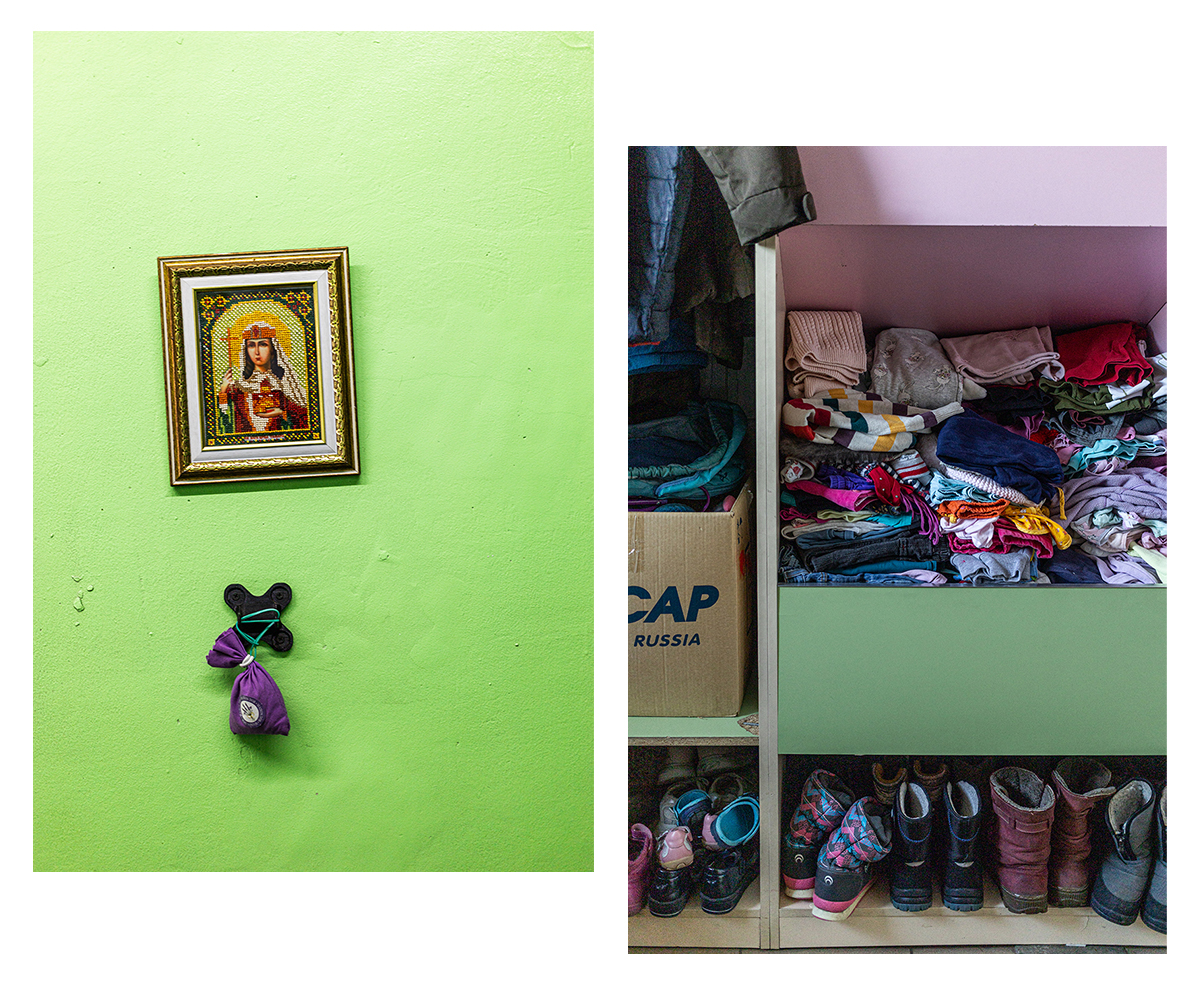 Left: the wall in the center “Amulet”. Right: things are sorted into categories in a separate room, and there anyone can choose something they need. Photo: “Things like this”
“Svetlana had very reasonable reasons to be afraid,” comments Marie Davtyan, head of the Center for the Protection of Victims of Domestic Violence at the Consortium of Women’s NGOs. — Let's start with the fact that military personnel are not even fined for beatings, that is, for administrative violations they only have disciplinary responsibility before the command of the military unit. In addition, the law , adopted in 2024, allows the suspension of a criminal case while a person is a military serviceman, as long as he has a valid contract. And it is quite possible that his criminal case, even if it had been initiated, would have been suspended. So she had every reason to be afraid. In our country, according to this law, it is possible to commit serious violent crimes, sign a contract and not incur any punishment, there may not even be an investigation - the person simply leaves for the Northern Military District, and that’s all.
Well, in any case, she had, of course, to contact the police and demand state protection. We have no other body that can protect us other than law enforcement officers, investigators, and police officers. Whether they actually protected her or not is impossible to say. Practice varies. The important thing here is that he is a deserter. The contract with a deserter is usually terminated, they have criminal liability for leaving a military unit, and other types of crimes can be added to this.”
As psychologist Lyubov Serebryannikova explains, a woman who is in a cycle of violence experiences a colossal amount of fear, shame and guilt: “A woman simply lives in this and is afraid to speak, to go somewhere - because it could get even worse. The brain refuses to consider any options, consciousness seems to narrow. This is how psychological defense works.”
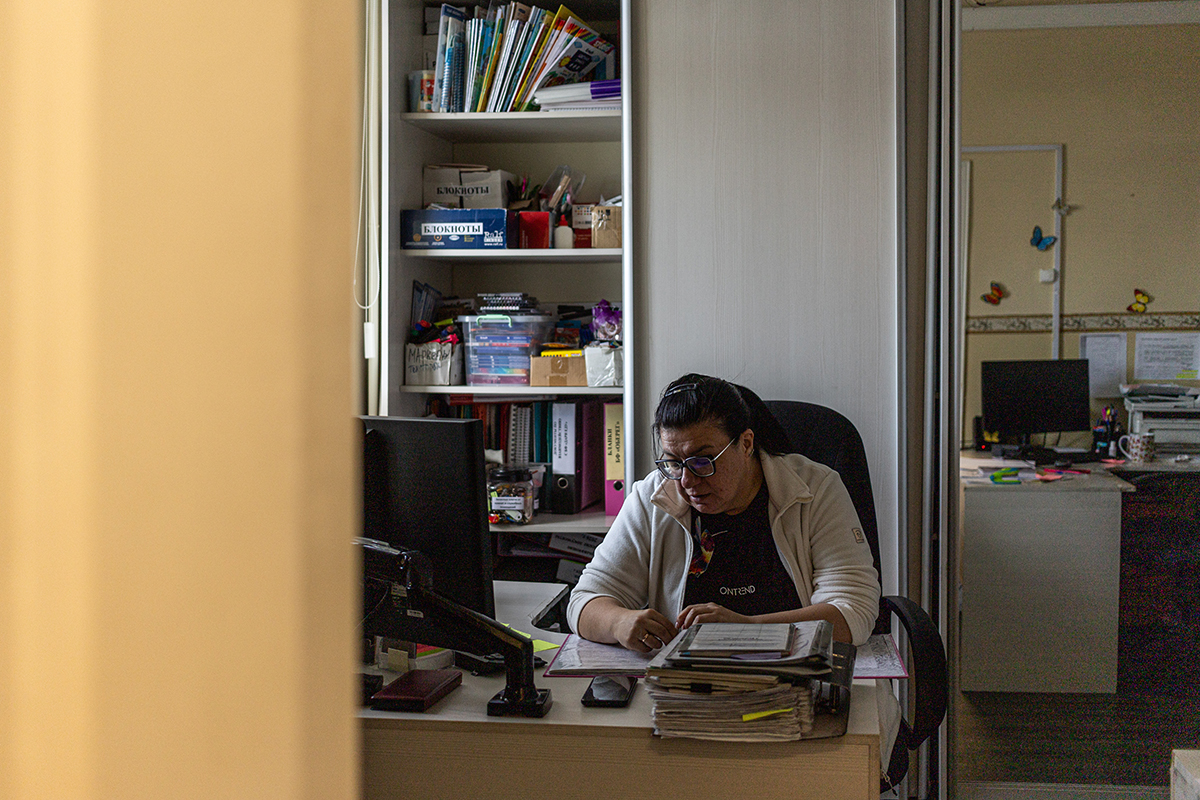 Director of the Obereg center Evgenia Kalmykova Photo: “Things like this”
Sveta came to the crisis center again in mid-September. Roman then stuck a knife in her leg.
"She said: 'I don't believe that he will get anything for this. He will be released, and that's it. I'll write a statement against him now, and then I'll just be screwed,' Anastasia recalls. He's a real sadist. Inflicted such injuries that do not seem to lead to death, but at the same time bring wild pain. Sveta tried to calmly negotiate with him all the time. Masha begged him to stop. I tried to talk to him, called him. But it's no use. He just yells obscenities."
Roman wrote disgusting things about her to all the foundation’s employees and Sveta’s friends. Forced her to delete all social networks. I tried to isolate her from everyone I knew. He forbade Svetlana to communicate with her sister. They didn't see each other for three months.
The next time Svetlana came to hide at the crisis center on the night of January 26th. Together with my son. She was all beaten up again.
“I saw Sveta,” recalls Anastasia, “and I said: “What is our way out of this situation? We need to write a statement to the police.” She refused and said it was useless. Then I called the military prosecutor's office. They confirmed to me that Roman is wanted. I tell them: “He is simply terrorizing the foundation.” They answer: “If you have one, you tell us, we will come.” That's all."
 In the courtyard of the house where the murder took placePhoto: “Things like this”
Under the door
On January 27 at 20:30, a nanny from a neighboring kindergarten called the crisis center and said: “Someone took your girl away at knifepoint.”
Roman wrote to Svetlana a message that Lena was with him and demanded to bring beer and cigarettes. Fund employees called the police. In addition to the police, the Ministry of Emergency Situations, the Russian National Guard, SOBR, employees of the military prosecutor's office, the Military Investigative Committee, and an ambulance arrived. In total, there were about 50 security officers at the entrance. Anastasia and Sveta were also there.
“Sveta begged him: “Take me, give me Lena,” recalls Anastasia. “But he’s completely crazy, there’s no other way to call him because he made crazy demands.” He demanded that they shoot Sveta in the head, send him a video, he will see how she dies, and then he will let Lena go. We explained to him that no one can do this. I talked to him: “Roma, why are you doing all this? You have a child. How will she live with this?” I suggested to him: “Let Lena out, I’ll come in, you and I will talk like adults.” But he only sent everyone. The military told him: “Release the hostage, we will return you, you will join the stormtroopers, you will serve.” The police tried to convince him: "Why are you increasing your sentences? Why do you need this? Let the hostage go."
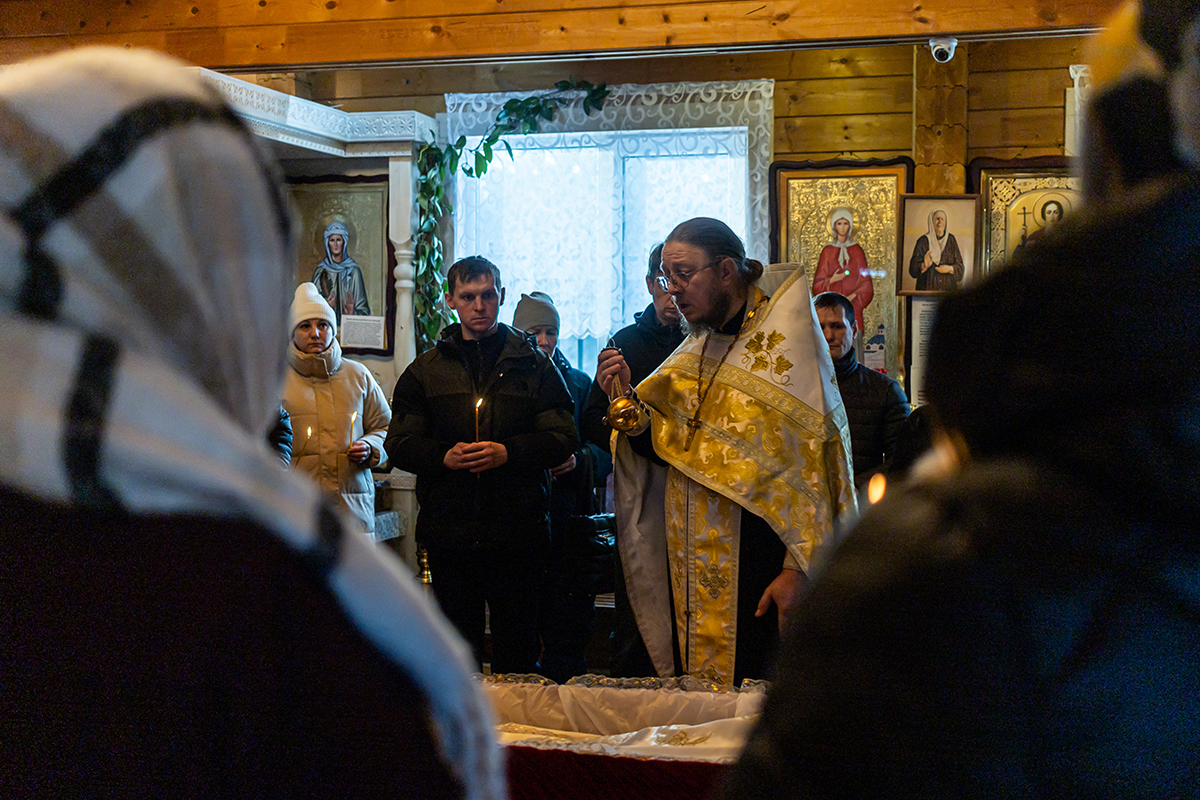 Funeral service for ElenaPhoto: “Things like this”
Lena came to the door several times and said that she was alive. Down there, under the window, they laid out a special trampoline, because he threatened to throw her out the window. But somehow they laid it out crookedly. These departments could not agree among themselves what to do. They planned the assault and never started. I don’t know why there wasn’t a professional negotiator, why there wasn’t a clear plan... I don’t have answers to these questions. I believe they could have saved her. Sveta was there all this time in a terrible state. She seemed to be having a stroke; she did not understand what was happening to her. Roman wrote her a message that he would leave with Lena at 2:30. He came out alone, they knocked him down. They came in and said that Lena was dead. Sveta became hysterical and ran downstairs. I followed her."
Roman Michurin is a deserter, sadist and murderer. He fought, but did not become a hero. The theory that if rapists and murderers are sent from prison to war, they will return as noble, useful members of society, somehow does not work. This theory has been refuted by the blood of peaceful Russian citizens, mostly women.
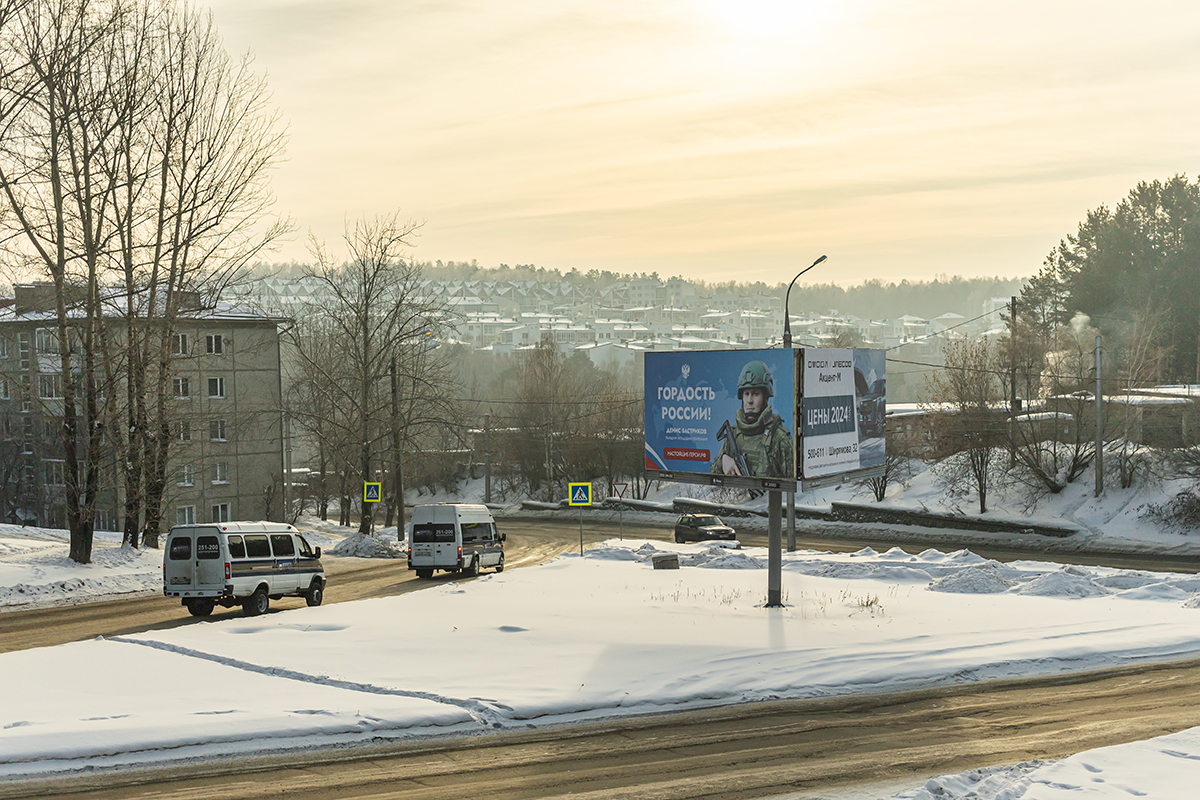 After the funeral service, the hearse goes to the cemetery Photo: “Things like this”
In Tyumen, on October 6, 2025, a military man killed his wife; in October 2025, in Nizhny Tagil, a member of the SVO killed an 11-year-old girl. In March 2025, in Moscow, a member of the SVO killed a colleague and a taxi driver. In Chelyabinsk in August 2025, a member of the SVO killed his wife, in Yekaterinburg in January 2026, a military man killed a friend.
“If a person is a sadist, a scumbag, then he remains one, regardless of whether he went through the war or not,” says Anastasia. - Even now Sveta is afraid. He says: “They won’t do anything to him, he will come back and kill me.” She's sure of it."
According to lawyer Marie Davtyan, now, in order for the killer not to be sent to a war zone, the injured party must actively demand criminal prosecution; it is in the interests of the state and its citizens. During the investigation and trial it is possible to influence the situation. But if he goes to prison, no longer. He could be taken from there again to the combat zone.
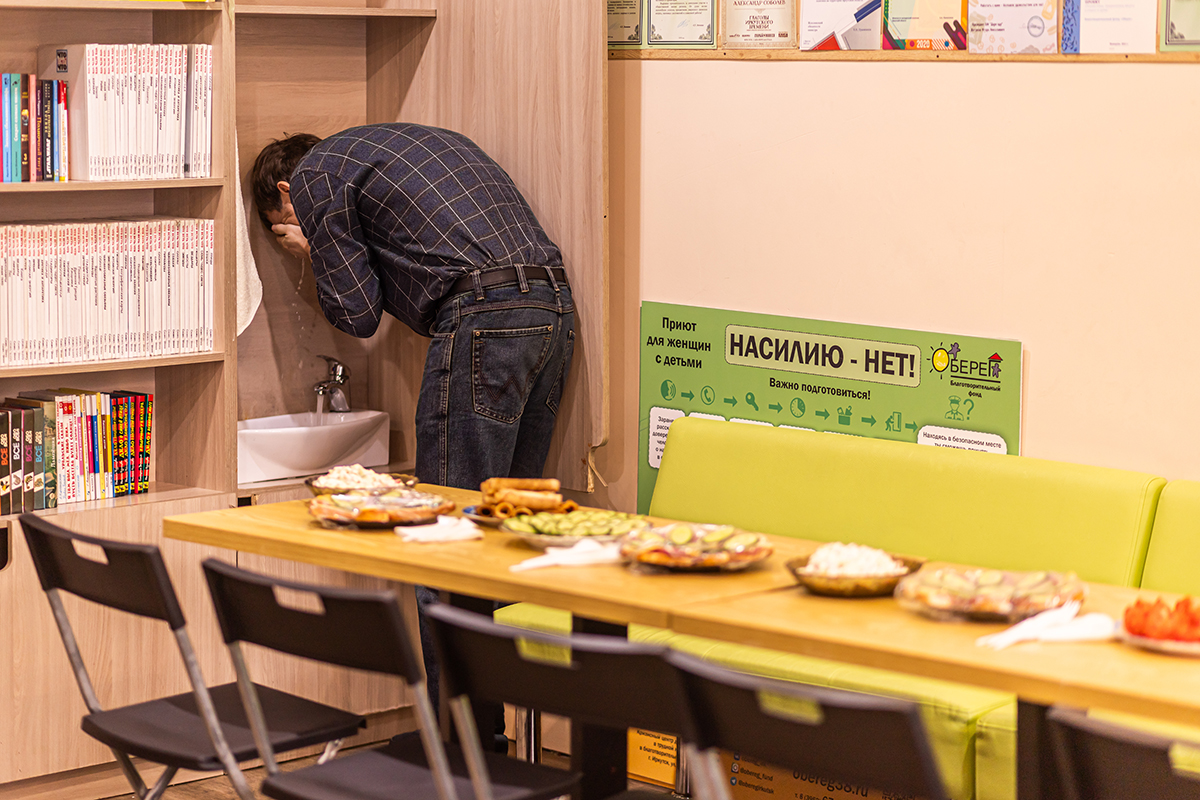 Alexander Sobolev, president of the Obereg foundation, washes his face in the conference room before the wake. Photo: “Things like this”
The last house
In winter, funerals in Siberia are always a challenge. White snowy slope, behind it taiga. Tricolors and banners of units at fresh graves move slightly in the icy air. Black smoke reaches towards the dark forest - these are gravediggers burning tires so that the ground thaws and they can dig.
While the funeral team prepares a final home for Lena, mourners eat freezing pancakes. The gravediggers lower the coffin into the ground. The funeral director says: “Citizen of the Russian Federation Elena Kadymova finished her earthly journey today.”
Lena’s grave is easy to find in this huge cemetery: you need to go down from the long rows of black marble pyramids - the memorial burial site of the Wagner PMC fighters.