
Translated material
Buckwheat soup with thallium
Several people at a Kyiv school became seriously ill at once. They all felt sick after they had lunch in the cafeteria. Not everyone was saved. Investigators soon learned that this was not the first death of school employees over the past year. The investigation led to the exposure of an entire family, and one criminal was shot. “Cold” tells how the criminals were caught, whose cynicism and cruelty shocked the entire city.
A dishwasher poisoned school students and staff by adding poison to their food. But it soon became clear that there were many more victims 
The school was built in 1939, and for decades there were no incidents. But in March 1987, some students and staff became ill, and they were taken in serious condition to one of the city hospitals. They all complained of weakness and severe pain in the joints.
Doctors initially thought it was a severe form of influenza of an unknown strain. However, the young resuscitator Nikolai Sukhodolov, who was then working at the hospital, immediately suspected that the matter was different: after all, it was March , and usually at this time the epidemic was already ending. He suggested that the patients could have been poisoned. But none of his colleagues listened to his words.
Then, one after another, the patients' hair began to fall out. And a few days after hospitalization, one of the sick children died. Several more deaths followed. Only then did the doctors become convinced that it was not the flu - this does not happen from it.
Buckwheat or radiation
The first victim of an incomprehensible epidemic was Vasya Yurchenko. He was in sixth grade and, according to his mother, dreamed of becoming a liquidator at the Chernobyl nuclear power plant. A few days after Yurchenko was admitted to the hospital, he died . Before his death, all his hair fell out.
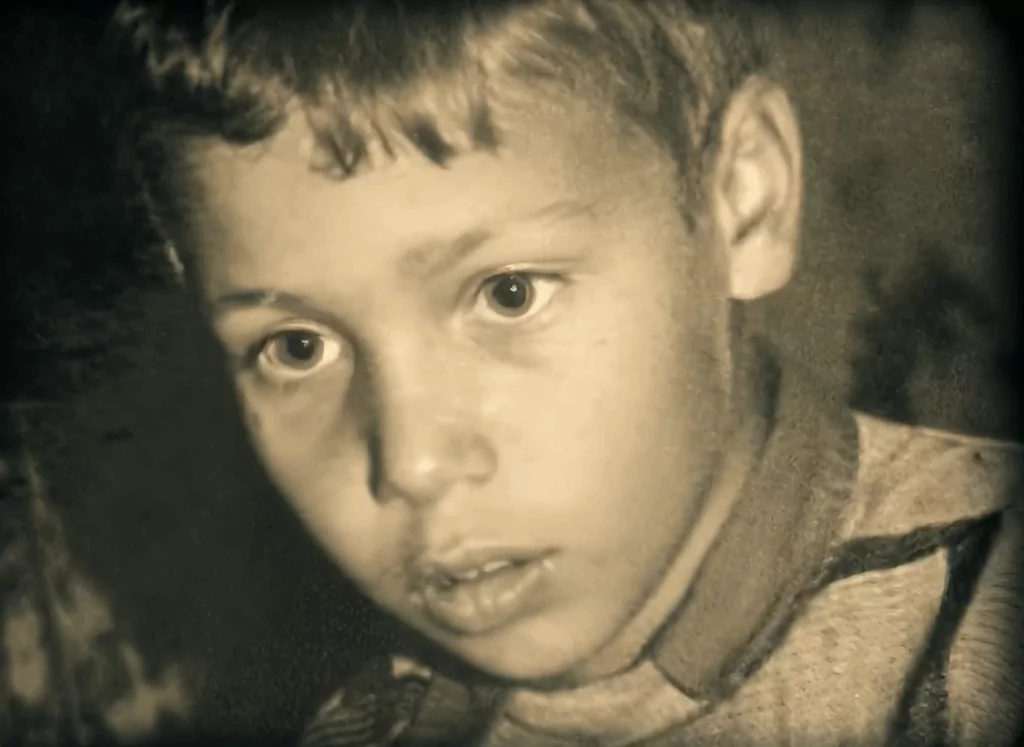
Witnesses told reporters that after this, another injured schoolgirl with the same symptoms cried and screamed that she did not want to die. “The mother, who was on duty next to her daughter in the hospital room, called the doctors: look at the pillow! The pillowcase was literally covered with hair,” recalled Nikolai Poddubny, who at that time was an operative of the Kiev Central Internal Affairs Directorate and was involved in the search for the case. The girl still died.
Figures vary on how many more people died in hospital. Poddubny wrote that doctors were unable to save two more adults - a teacher and an engineer who came to the school to check a faulty refrigerator. According to other sources , only the engineer died. The remaining victims remained in hospital in serious condition.
By that time, doctors no longer doubted that the patients were poisoned . But no one understood what exactly. Police and prosecutors joined the investigation. Among them was Poddubny, who a year later wrote about the case in his book “Catching a Werewolf.”
“By that time, I had more than 20 years of detective experience behind me; the other members of the police team, which was “abandoned” to investigate this high-profile case, were also no strangers. But, to be honest, I don’t remember a more complicated case,” he recalled .
Poddubny wrote that the police put forward more than 10 versions of how students and school employees could have been poisoned. It seemed most likely to them that the canteen employees had processed the meat poorly or prepared the food from low-quality ingredients. It was also assumed that cockroaches or rats could have been poisoned at school and the poison got into the food or on the dishes. However, the director and the sanitary services claimed that nothing of the kind was done at the school in March 1987.
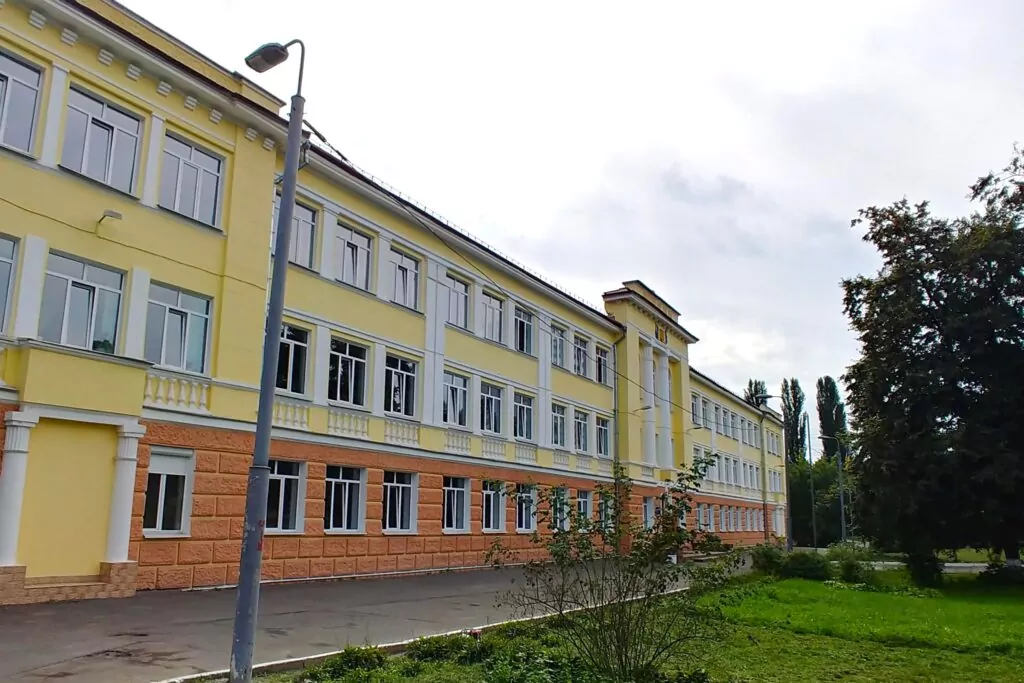
There were other hypotheses that were considered less likely: for example, it was assumed that one of the hooligans could have brought to school a container with a toxic substance that had leaked from a container somewhere. The detectives also thought that there might be an increased background radiation at the school (the disaster at the Chernobyl nuclear power plant, which was only a two-hour drive from Kiev, occurred just a year earlier). The victims' symptoms were somewhat reminiscent of radiation sickness , which causes people to lose their hair.
The school was checked for radiation. Cleaning lady Marina Nesterenko later recalled that to do this, she had to open all the utility rooms - they inspected literally every corner. But the check revealed nothing.
The operatives waited until the patients felt better and were allowed to talk to them. When this happened, the dining room version became the main one again. Three patients immediately said that they felt sick after they had lunch there. They ate the same thing - buckwheat soup and fried liver. There was another coincidence: all the victims came to the cafeteria after five o’clock in the evening, a few hours after the general school lunch.
"Auntie from the dining room"
“Sixth-grader Anton, small, frail and completely hairless, constantly cried during the conversation,” Poddubny wrote in his book. He was the only one of the poisoned schoolchildren who survived. He was asked if he had eaten anything in the school cafeteria and why he was there after lunch time.
It turned out that the schoolchildren, at the request of the caretaker, were bringing new chairs into the dining room. After this they were brought buckwheat soup and fried liver. “When we all finished, my aunt offered us something to eat,” Anton Poddubny recalled the words.
He asked Anton what this woman’s name was, but he didn’t know: “Auntie from the canteen - that’s all...” Poddubny went to the school director and asked for the information of all the canteen employees. He also asked if he could talk to someone who supervises the food preparation process at the school. It turned out that the school nutritionist Natalya Kukarenko (according to other sources , Kukharenko) was doing this. She died a few weeks before his visit.
The director said that Kukarenko died of heart failure. The last time she was seen was at a holiday in honor of March 8: she “was cheerful, even danced with the military commander.” And the next day she was taken to the hospital, where she died a few days later.
Poddubny recalled that then he began to suspect that one of the school catering staff was deliberately poisoning people. But this idea seemed “ridiculous and senseless” to him. To rule out other versions, he instructed his subordinates to check the chemistry and biology classrooms to see if reagents that could have poisoned the victims had disappeared from there.
At the same time, one of the police officers talked with the doctors of the hospital where Kukarenko died. They insisted that the cause of death was heart failure. The operative also spoke with the school nurse who visited Kukarenko shortly before his death. She claimed that she herself did not believe in the diagnosis and before her death she complained of numbness in her hands and pain in her joints.
The subordinate told Poddubny about the nurse’s words, and then he asked permission to exhume Kukarenko’s body. Experts found traces of thallium in the tissues of the corpse.
"Like an angry vixen"
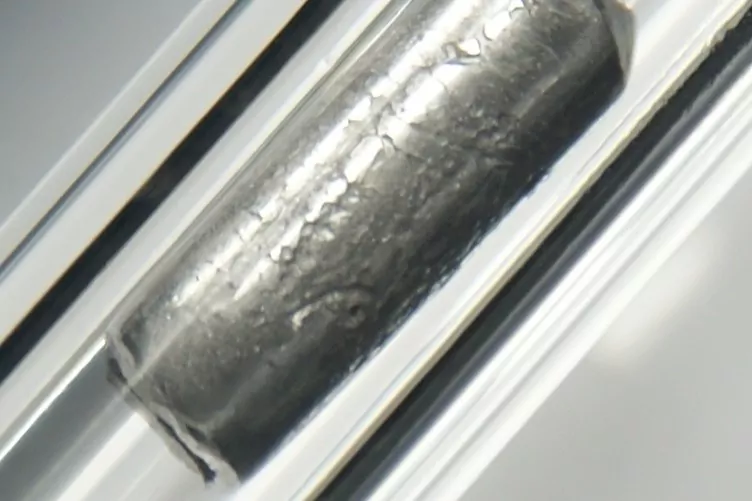
Thallium is a heavy metal that has been used as an insecticide and animal poison and in some industries. It is very toxic to living organisms and causes severe damage to the nervous and digestive systems. After it enters the body, a person’s hair quickly falls out, convulsions begin and limbs go numb. Thallium poisoning can be fatal.
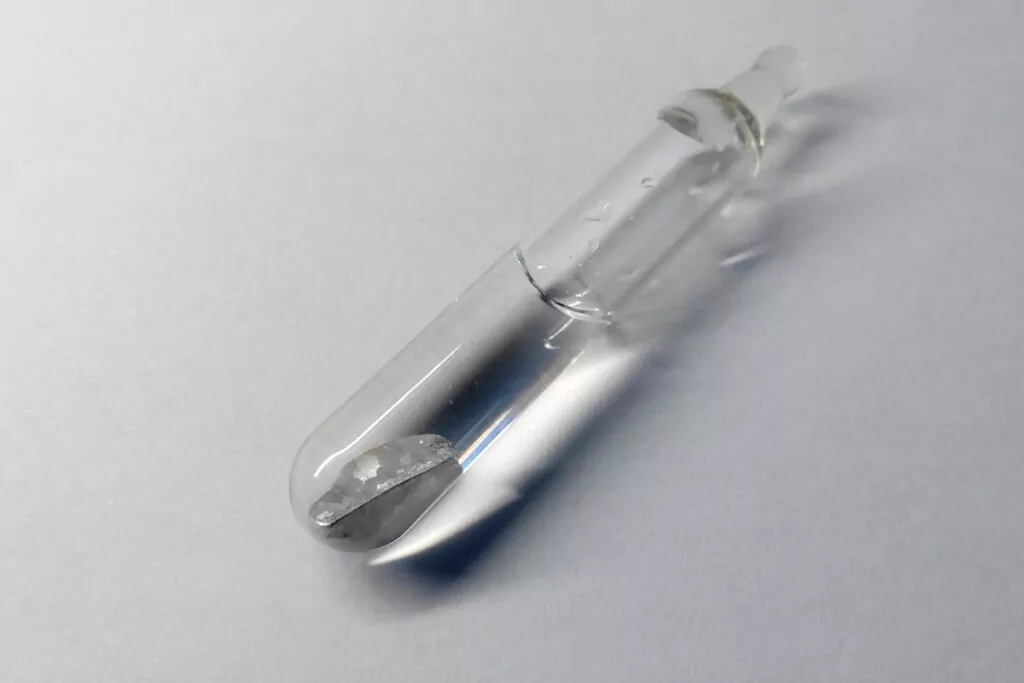
An aqueous solution of thallium salts is called Clerici solution. In the 1980s, it was often used by geologists to determine the density of minerals. After the exhumation of Kukarenko’s body, operatives suggested that schoolchildren and staff could have been poisoned with this particular liquid.
Police officers arrived at the canteen of school No. 16 to inspect all possible products and containers. “They collected buckwheat for analysis from all the containers where this grain was stored, they took swabs from the huge pan in which the ill-fated soup was cooked, and even from the drain pipe of the sink for washing dishes,” recalled forensic expert Valentina Kalachikova.
But the searches did not lead to anything. Within a few days after the mass poisoning, traces of the poison, if there were any, could already have disappeared.
Then the operatives began checking everyone who was involved in the school catering unit and conducting searches at the addresses of cooks, confectioners, food distributors and dishwashers. They went around the houses of the canteen employees one by one, but did not find anything suspicious.

The next inspection was the house of dishwasher Tamara Ivanyutina. Her behavior alarmed Valentina Kalachikova even during the searches at the school. “This woman behaved... well, nothing less than an angry vixen! She almost pushed me away from the kitchen utensils, she was rude,” Kalachikova recalled .
When police officers came to Ivanyutina’s home, she was not there.
Vial of liquid
The senior task force decided to talk to her husband Oleg, who was on sick leave. He complained to the operative about a headache, numbness in his feet and leg cramps. Among the complaints was another one - baldness.
Oleg Ivanyutin told the policeman that he had recently buried his parents, who died two days apart. First, my father died. After a family dinner he became ill: the next morning his legs were paralyzed and his feet were numb. He could not put on socks on his own, and touching his feet caused severe pain.
At the hospital, as Poddubny writes, doctors diagnosed an exacerbation of polyarthritis, prescribed medications and sent him home. Ivanyutin told investigators that his wife Tamara looked after his father, put a heating pad on his feet and fed him soup. But my father’s condition worsened and he died.
Oleg Ivanyutin’s mother became ill at her husband’s funeral. Tamara handed her a glass of Valocordin and a glass of water. However, she did not feel better: white foam appeared on her lips, she vomited, and she screamed that she had been poisoned.
Poddubny writes that there was a witness at the funeral who noticed how Tamara Ivanyutina took a bottle of some liquid from her pocket and dropped it into the medicine. People began to demand that the police be called and that the contents of the glass be taken for examination. Then Tamara threw the glass on the ground. Oleg shielded her from the indignant crowd and began to calm her mother down. Two days after the funeral she died.

After the police received this testimony, they searched the Ivanyutins’ house—this time Tamara was at home. There are two versions of what happened next. One of them was told by Valentina Kalachikova. According to her, at first they did not find anything suspicious there, but then the operatives approached a Singer sewing machine, next to which there was a drawer. Kalachikova recalled that when she asked to open the box, Ivanyutina threw the keys to the floor and shouted: “Open it yourself, seamstress!”
There was a bottle of unknown liquid in the box. “Well, what could theoretically happen there? Oil for lubrication only. I mechanically put this liquid in my pocket, just in case,” Kalachikova recalled . According to her, she went to the laboratory where she worked all night. In the morning, the results of the examination arrived, which showed that there was thallium formic acid in the jar.
According to another version, told by the former prosecutor of the Minsk district of Kiev Sergei Vinokurov, at first the search of the Ivanyutins did not yield anything. But, according to him, after leaving their house, he told the head of the district criminal investigation department: “Listen, I have a feeling that we forgot something. So, in my opinion, we didn’t look behind the curtain carefully. What if?
At first the operative was doubtful, but returned to the house and found a small heavy jar behind the curtain. She was seized and sent for examination. Forensic experts determined that the jar contained thallium.
Now it is hardly possible to establish which of these versions corresponded to reality. But be that as it may, Tamara Ivanyutina was detained the next morning after the search. During interrogations, she admitted that she added poison to the food in the canteen. Oleg Ivanyutin, as Poddubny writes, did not believe that his wife was a criminal. His doubts were dispelled when experts exhumed the bodies of his parents and found traces of thallium in their tissues.
Dishwasher killer
Tamara Ivanyutina was born into the family of Anton and Maria Maslenko. Their family came to Kiev from Tula in the first half of the 1980s: then Tamara was a little over 40 years old, and her parents were over 70. Tamara’s sister Nina also moved with them.
In Kyiv, Tamara married for the second time - to Oleg Ivanyutin. Her first husband (his name remains unknown) worked as a truck driver. One day during a flight he suddenly became ill. His partner later told the operatives that his legs were very sore, he could no longer feel the gas and brake pedals and asked to change him.
They stopped at the river to rest and swim, but Tamara’s husband did not feel better. The towel he used to dry himself, according to his partner, was covered in hair. He died after returning from the flight. Tamara got his two-room apartment.
In September 1986, Tamara Ivanyutina got a job at a school. In addition, she raised chickens and pigs in her yard and, according to Oleg, dreamed of selling meat at the market, getting rich and buying a black Volga. To feed the livestock, she often carried waste from the dining room.

But the school nutritionist Natalya Kukarenko made sure that no one took away the leftover food. Therefore, by her own admission, angry, Ivanyutina poisoned her.
After the death of the nutritionist, the head of the canteen began to be more suspicious of Ivanyutina. And on March 16, 1987, Ivanyutina took the poison with her and added it to fried liver and buckwheat soup, knowing that the head always had lunch at school. He, as well as everyone who ate at the same time or later, ended up in the hospital in serious condition.
The survivors, including the director, spent several months in the clinic. Some of them received disabilities.
“The young librarian never showed up at school again; she immediately applied for a disability pension. Suffering from terrible pain in her legs and spine, the poor girl simply could not keep her body upright. Another young teacher, also left disabled, gave birth to a stillborn child,” recalled chemistry teacher Viktor Stadnik.
He was a union representative and came to the school cafeteria every morning. There, he and the nutritionist had to monitor whether the canteen staff complied with the food quantity standards when preparing food. After some time, he began to feel unwell: his hair fell out and problems with his legs began, but he did not connect his health with poisoning. It turned out that this was exactly the case.

There were several other cases similar to poisoning, which Poddubny retold in his book. For example, Ivanyutina often quarreled with the party organizer (responsible for local political work during the USSR): the latter did not like the fact that the dishwasher interfered in the cooking process. Soon the party organizer died. The cause of death was given as heart failure.
“Once two children came into the dining room to ask for bones or leftover cutlets for their dogs. Brother and sister. The girl is a first-grader, and her brother is in the fifth grade. They say that Ivanyutina simply became furious. She tore the bags out of their hands and pushed them out of the room... And a few days later the children fell ill with an unknown disease. They were sick for a long time. The boy is completely bald,” wrote Nikolai Poddubny.
During interrogations, Ivanyutina also admitted that she took the Clerici liquid from her friend, who was a laboratory assistant at the Institute of Geology, telling her that she was going to poison rats. The friend confirmed this, adding that she shared thallium with other members of the Maslenko family, who constantly complained about rats and mice.
Family Affair
Kyiv operatives went to Tula, where the Maslenko family lived before moving to Kyiv. Neighbors and relatives told them that Anton and Maria Maslenko had three sons and three daughters. According to friends, parents instilled in their children that the most important thing in the world is money and material well-being, which must be achieved by any means.
The investigative team was able to find out that family acquaintances periodically died under strange circumstances. For example, in November 1980, when the family was still living in Tula, Maria Maslenko was admitted to the hospital, and her in-laws decided to visit her. As the operatives told Poddubny, after the visit she came to Anton, said that there was little hope for his wife’s recovery, and offered her help with the funeral.
As Poddubny writes, Anton asked his relative not to say nonsense, but to drink together to his wife’s health. At night the woman felt bad, she called an ambulance and told the doctors that she had been poisoned by a boiled egg. She ate this egg in Anton Maslenko’s apartment.

According to Poddubny, it happened like this: Maslenko started peeling an egg for a snack, and it turned black in his hands. He said it was spoiled and threw it aside. But the woman felt sorry to throw away the food, and she finished the egg. This story seemed like nonsense to the ambulance crew, and they did not pay attention to it. Despite attempts to save her, the woman died by morning.
The husband of Tamara Ivanyutina’s sister, Nina, also died. He was 25 years older than his wife and died shortly after the wedding. Before his death, he complained of worsening arthritis and heart pain.
According to the laboratory assistant, over several years she shared the solution nine times with Maslenko and Ivanyutina. After what eyewitnesses told about the Maslenko family, operatives came to their home. During the first search they found nothing, but rumors spread that the family was poisoning people. And thanks to them, we managed to catch the criminals.
As Poddubny writes, one day, after Tamara Ivayutina was detained, her mother Maria Maslenko baked pancakes and brought them to a neighbor. She, suspecting something was wrong, did not eat them and treated her cat to them. By evening, the cat died in convulsions, and the neighbor immediately called the police. An examination of the corpse showed that she was poisoned with thallium.
The Maslenko spouses were detained and placed under arrest. During interrogation, Maria admitted that she baked pancakes to poison her neighbor: she allegedly received a large disability pension, and she became envious. This was not the first time that Anton and Maria Maslenko bullied their acquaintances over small grievances. They admitted that they once killed a neighbor in a communal apartment who was turning on the TV loudly, and a relative who reprimanded them for a puddle in the toilet.
Soon, the investigation also arrested Ivanyutina’s older sister, Nina Matsibora. She was charged with poisoning her own husband.
“Wrong upbringing”
Investigators and operatives proved that the Maslenko family poisoned at least 40 people. Of these, 15 (according to other sources , 13) died - including two children.
Tamara Ivanyutina was found guilty of nine murders and 20 attempts. A forensic psychiatric examination found the defendants sane and determined that all four had inflated self-esteem, they were touchy and vindictive.
The hearings in the case of Maslenko, Ivanyutina and Matsibora took place in the Kiev City Court and lasted about a year. Each trial was attended by family acquaintances, employees and parents of students from school No. 16 and friends of the victims. Only trial participants and a limited number of spectators were allowed into the hall, so many simply waited outside.
Before giving the defendants the last word, the judge invited Tamara Ivanyutina to repent to the parents of the deceased schoolchildren. As Nikolai Poddubny wrote in his book, she replied that she did not consider herself guilty and she “had the wrong upbringing” for repentance.
On March 29, 1989, the court sentenced Nina Matsibora to 15 years in prison, her father, 81-year-old Anton Maslenko, to 13 years, and 79-year-old Maria Maslenko to 10 years.
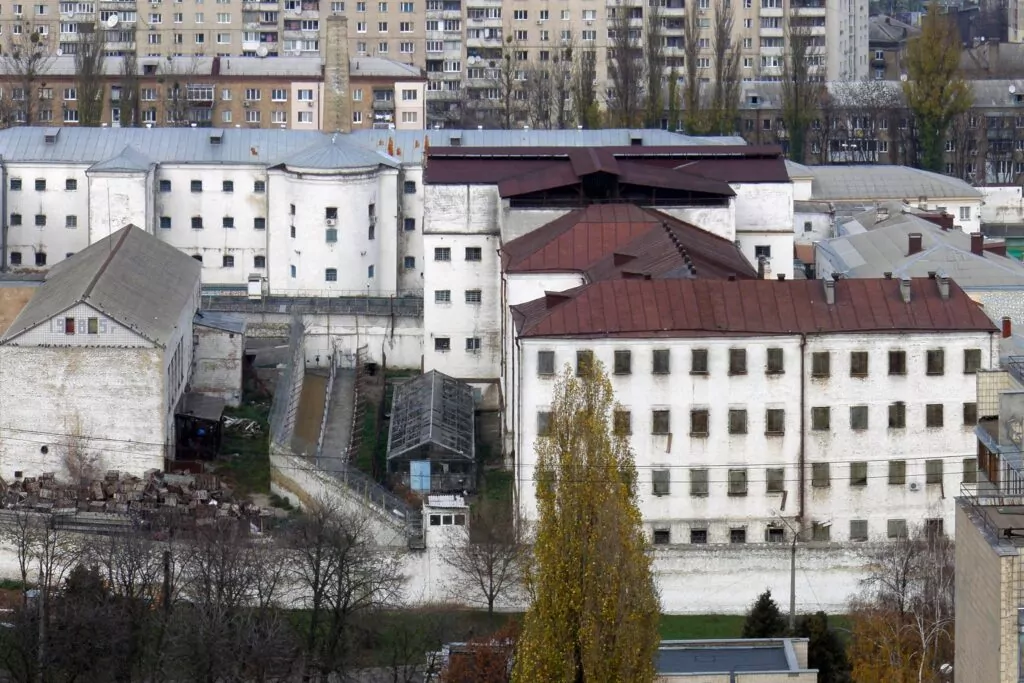
Tamara Ivanyutin was sentenced to death. She became the last woman executed in the USSR. From the moment of her verdict, Ivanyutina spent more than a year and a half in the Lukyanovsky pre-trial detention center in Kyiv. On December 6, 1990, she was shot . According to media reports , Anton Maslenko and his wife Maria died in custody. There is no information about the fate of their eldest daughter Nina Matsibora - the publication “Facts” wrote that after the verdict, her apartment was transferred to the housing office (housing maintenance office). A local janitor moved in there, and Matsibora never returned there.
Years later, students of school No. 16 recalled how children were poisoned in the canteen. Kiev resident Natalya, who was then in the fourth grade of school No. 16, told kp.ua in 2017 that the rumors did not stop: “After this incident, I didn’t eat in the canteen anymore. The parents fought a lot about what happened. Some children were even transferred to other schools.”
Photo: NTV
Author: Marina Kiryunina