
Translated material
Black Vezhniki
Why does the state need repression against indigenous peoples?

Photo: Lev Fedoseev / TASS
“On December 17, 2025, at 09.00, seven people broke into my apartment: five of them were FSB officers, two girls were allegedly from the street, and, according to them, search operations were carried out. My communications and computer equipment were confiscated, and my old notebook was stolen. Why was it stolen - because it was not included in the protocol,” Valentina Sovkina’s message appeared on social networks five days after the events mentioned - she lost access to the pages, since the phones with SIM cards were taken away during the search.
Valentina is from the Sami people living in the Murmansk region, as well as in the north of Finland, Norway and Sweden. On February 6, the world officially celebrates Sami Day. It was erected in memory of the first Sami congress in 1917 in Trondheim, Norway. Then, a little over a hundred years ago, the movement of the northern people towards subjectivity began. The struggle for identity. The states where the people live responded harshly. If in Northern Europe the actual genocide of the Sami ended with de jure reconciliation only in the 21st century, then in Russia right now there is a new wave of struggle against national activists. They face multi-year prison sentences.
Everywhere the Sami population was persecuted over the years. In Scandinavia, the Sami now have their own representative bodies - the Sami parliaments. They have different powers; perhaps the most extensive are in Norway, where the opinion of parliament really influences the approval or disapproval of, say, industrial research or large construction projects in the areas where the Sami live.
In Russia in the 2000s, there was also one of these - its chairman was Valentina. However, then the parliament was abolished - virtually without the knowledge of its active participants, and in its place the government of the Murmansk region created a managed body - a council of representatives of indigenous peoples, which, among other things, includes officials.
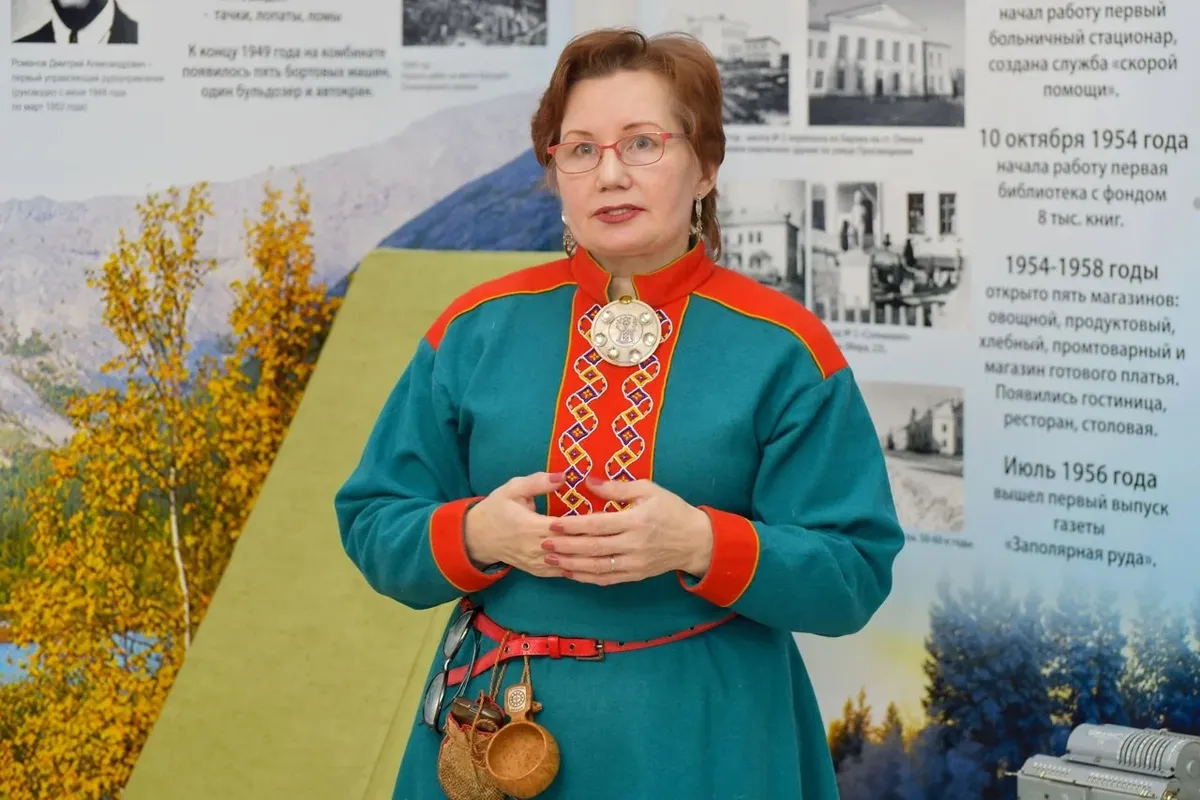
Valentina is an activist, popularizer of the Sami language and literature, and master of folk crafts. She is also a participant in the UN Permanent Forum on Indigenous Issues. Several years ago, she already faced persecution in her homeland: on the way to Geneva, unknown people tried to take away her passport in front of the police.
The search at Sovkina’s place in December was carried out simultaneously with security forces’ visits to other activists in different regions of the country. The campaign is planned and clear. The activists themselves practically do not name those whom the security forces came to, fearing for their safety. However, information about a series of “operational measures” was released by the anti-discrimination center “Memorial”*.
The FSB conducted searches and interrogations of human rights defenders and activists in the Altai Republic, Tomsk, Murmansk and Kemerovo regions, Altai and Krasnoyarsk territories, Yakutia and St. Petersburg.
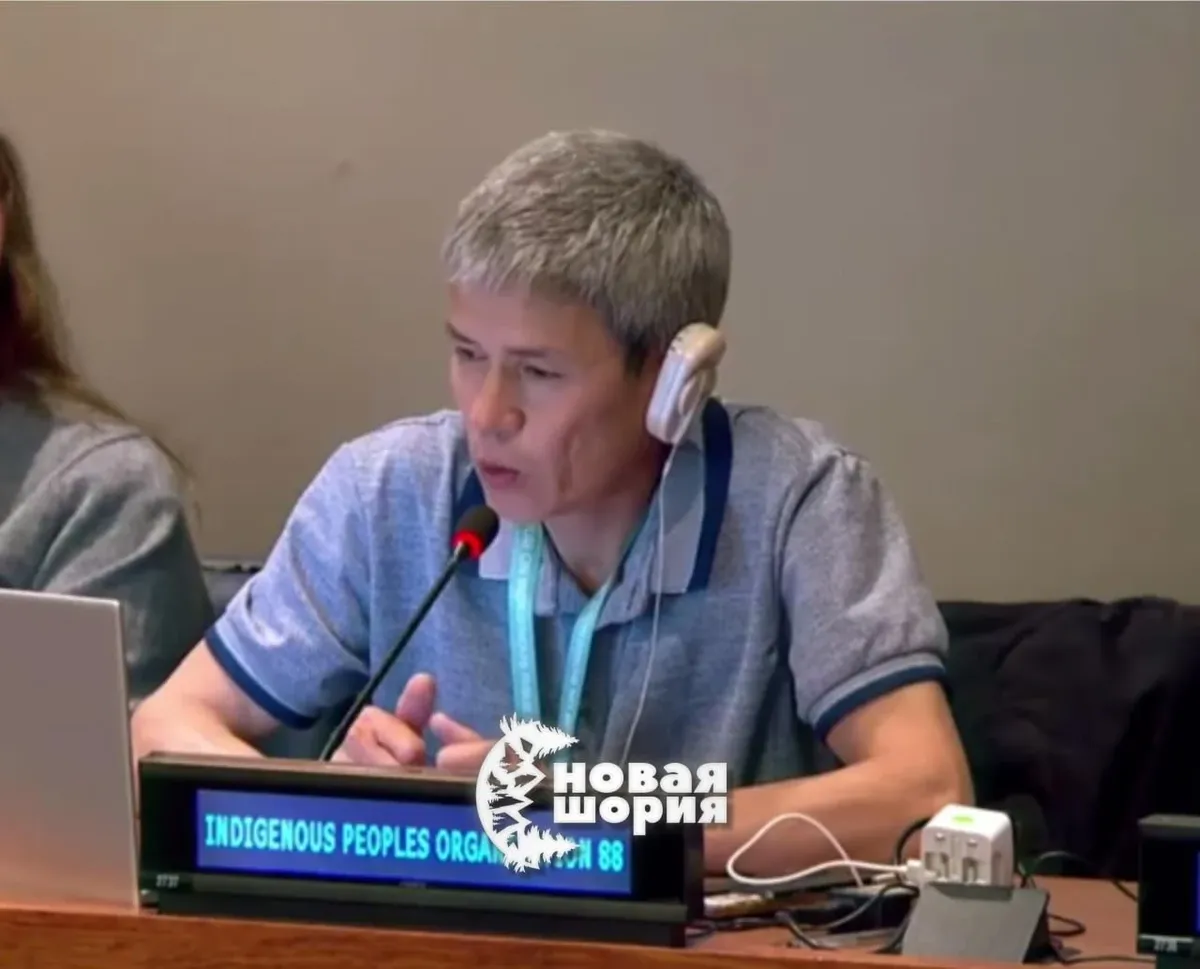
It is reliably known about the search and interrogation of Alexei Chispiyakov, a Shor activist from the city of Myski, Kemerovo Region. According to him, quoted by the Novaya Shoria telegram channel, he was taken at the exit of the house. They confiscated my computer and phones and took me away for questioning to the FSB.
The Shors (there are about 13 thousand of them in total) live mainly in the Kemerovo region, Khakassia, the Altai Republic, as well as in the Altai and Krasnoyarsk territories.
In the case of Chispiyakov, the persecution may be indirectly related to his harsh speech at the UN Forum of Indigenous Peoples last April. There he called the Russian Federation’s policy towards the Shors “a policy of division and pitting”. “It saddens me to listen to a representative of our country’s government today talking about our rights and the concept of sustainable development. I would like him to tell what goals this concept has achieved for my people. I think none. Our relatives are fined for fish caught for personal consumption; in the hunting grounds where our ancestors hunted for centuries, today we are allowed to hunt only for money. Our pensioners, who collected firewood in taiga villages, are forced through the courts to pay huge sums for this,” Alexey said then.
This picture is typical for any indigenous people. Numerous benefits often remain on paper, and the right to use them has to be fought in the courts. Sami Andrei Danilov defended his right to traditional hunting right up to the Constitutional Court. In the Murmansk region he was refused on the pretext of living in the city and not in the tundra.
Moreover, “benefits” are not really benefits. This is not a discount, not a discount, not an exception to the rule made out of pity for disappearing tribes.
This is a tiny and not at all equivalent compensation for the fact that the lands of the peoples of the North, Siberia and the Far East are now being used by the state. This is a way to preserve identity. Don't disappear completely.
But the state understands this in its own way. And arranges something like reservations. Those who want to live in their own way outside their borders are deprived of guarantees and benefits. At the end of the year, many indigenous communities were hit with multimillion-dollar land taxes. Previously, they did not pay it, but in 2024 changes were made to the Tax Code. Now only those areas that are located in places of traditional residence and economic activity of indigenous peoples are exempt from assessments. It would seem logical, but the list of these “traditional places” compiled by officials is narrow and strange; for example, in Yakutia, only populated areas were included, but the tundra, where the indigenous people actually live, was not included.
As a result, according to statistics from the Yakutia Tax Service, out of 37 community land plots, only four are now exempt from tax. The rest must pay several million a year for reindeer pastures—an impossible sum.
The pastures are huge: the deer is a nomadic animal, it is constantly moving. It turns out that “economic activity” affects hundreds of hectares.
Problems must be resolved with the participation of large organizations created in the interests of the people. But in reality, these organizations have long been nationalized. Like the Council of Representatives in the Murmansk Region or the Federal Association of Indigenous Peoples of the North, Siberia and the Far East of the Russian Federation (RAIPON). It was when its politics became loyalist that alternative indigenous organizations began to emerge. They have now been cleared.
During interrogation, Alexey Chispiyakov was asked about possible connections with the informal all-Russian network of activists “Aborigine Forum”**, which the authorities declared an “extremist organization.” True, the Forum announced its dissolution long ago and does not exist.
However, Russian authorities believe that his activities continue, and that he is a structural element of the non-existent “Anti-Russian Separatist Movement”**, which the Supreme Court in the person of Judge Nefedov declared extremist last summer - following the non-existent “International LGBT Movement”**. Then the Russian Ministry of Justice declared 55 national organizations extremist at once - as divisions of this very “anti-Russian separatist movement.” The Aboriginal Forum was among them. Almost all independent and inconvenient NGOs that defended the rights of indigenous peoples suspended their activities.
It was obvious that now the focus of the security forces would be on the “aboriginals.” And it’s even clear why. This, of course, is not about decolonizing slogans, which are not broadcast by all national activists. We are talking about more pressing things.
The persecution of indigenous people is as logical as the persecution of environmental organizations. It was they who most of all prevented industrial companies from uncontrollably developing resources on the lands of traditional residence. On their ancestral lands.
These lands contain coal, platinum, gold, apatite, iron, nickel, oil and gas - all the country's strategic raw materials. I have never heard any intention from activists to oppose the state, but always an offer to negotiate a partnership with it. After all, if they just give everything away, they will disappear. It’s like this everywhere in the world—we have to negotiate about railroads on pastures or the construction of a dam on a salmon river. But that’s what the state is for, to conduct a dialogue with citizens. After all, national activists are the same citizens of Russia as those who persecute them.
Since 2022, activists have been systematically squeezed out of the country. This gives results. One can compare, for example, the pre-Economy campaign against the development of the Fedorova Tundra platinum deposit on the Kola Peninsula, which after criticism slowed down greatly and lost a major investor, and the zero resonance around the development of the neighboring Kolmozerskoye deposit, which is now underway. Now no one is bothering you. If the head of state publicly invites the head of another state to participate in the mining of rare earth metals in Russia, and at the same time the indigenous people at the UN protest against these developments, embarrassment may occur. And so - silence.
The possible trigger is also clear. On the eve of the searches, the composition of the platform for the Russian opposition in PACE began to be discussed; it became known about a quota for indigenous people, whom some immediately began to call decolonizers. Public statements in this vein by some eloquent figures of the left opposition (they say that all the “indigenous” dream of the collapse of Russia), I am afraid, only intensified the attack of the security forces on the activists who were inside the country. On December 18 - the day after the searches - the Basmanny Court of Moscow arrested for two months a representative of the Selkups - the indigenous people of Western Siberia - Daria Egereva.
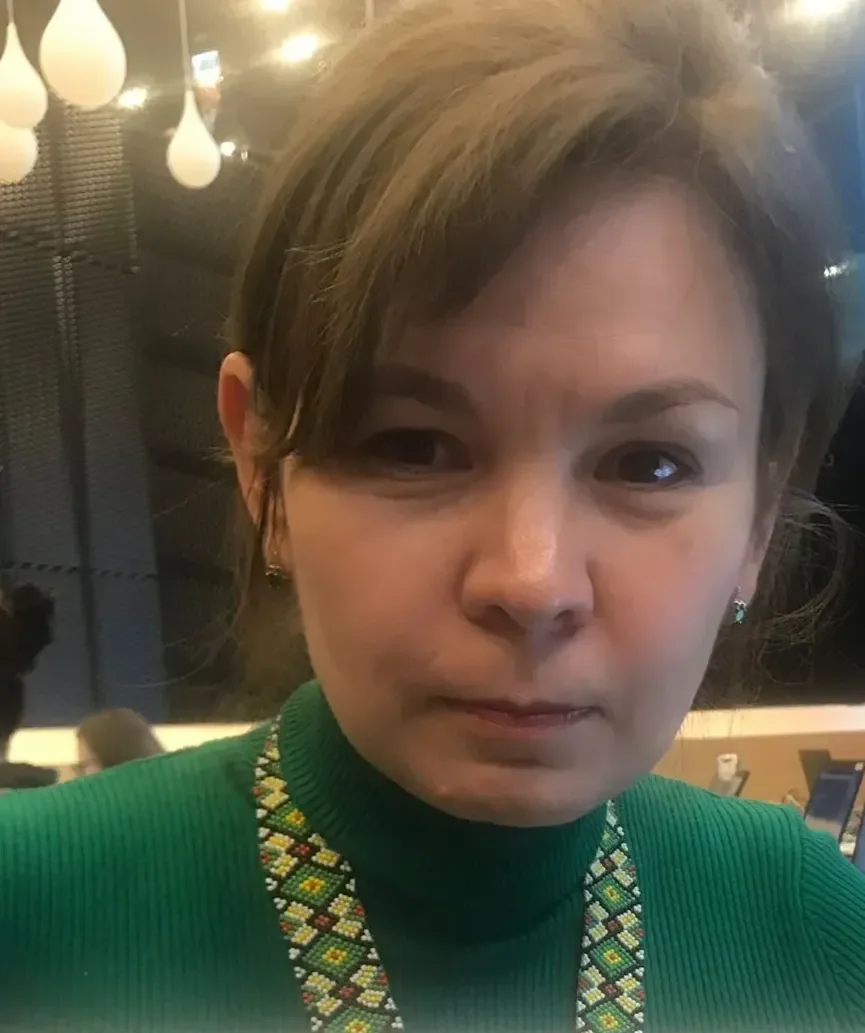
Daria is co-chair of the International Indigenous Forum on Climate Change. She is suspected of participating in the activities of a terrorist organization (Part 2 of Article 205.5 of the Criminal Code). Daria is in jail.
The International Committee of Indigenous Peoples of Russia** reports that on December 17, another human rights activist was detained in Moscow on similar charges. His name is not mentioned.
These events coincidentally coincided with important cultural history with indigenous peoples in Europe. In Finland, the report of the Saami Truth and Reconciliation Commission was released, which impartially outlined cases of unfair treatment of indigenous people and evidence of assimilation policies. Such commissions previously worked in both Sweden and Norway. Finland was the last to officially admit that it limited the indigenous people in using their native language and preserving their own culture, in particular, in boarding schools, where children of tundra dwellers were forcibly placed, used the lands of the Sami for their own economic interests, and members of the community, who had poor command of the Finnish language and were mainly engaged in agriculture and livestock breeding, could not effectively defend their rights.
In Sweden it was cooler - the Racial Institute worked there, skulls were measured, proving the “inferiority” of the indigenous people. In Norway, people were systematically forced to drink, and they were forbidden to speak their native language. It ended not long ago, several decades ago.
In November, the Norwegian Parliament issued a formal apology to Norway's indigenous peoples. This was previously done by King Harald V. The repentance is based on the findings of the national reconciliation commission. When they were published, a 30-hour continuous broadcast of the report was broadcast on radio. This was the Norwegian "return of names".
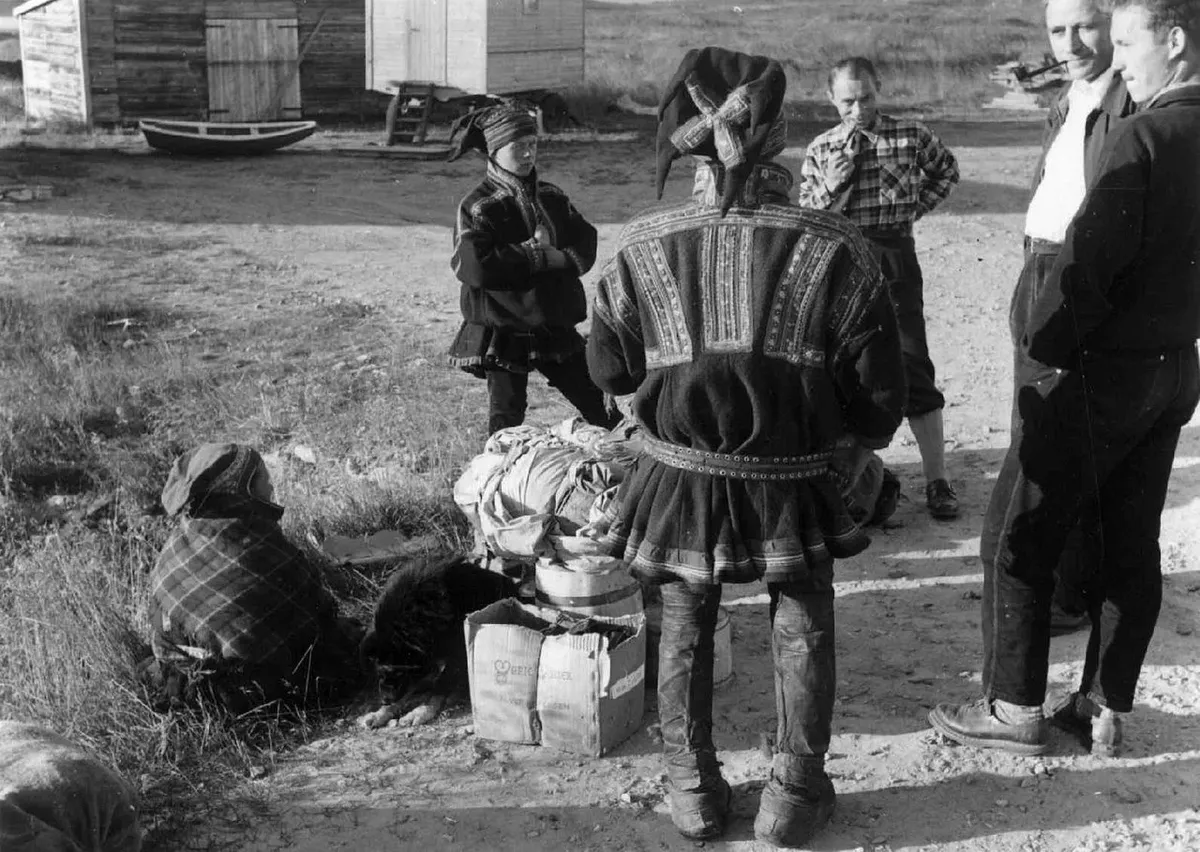
In Russia, skulls have never been measured. But there is no reconciliation. The boarding schools are still operating. The lands are going to industrialists. Now they have started planting. And this has already happened. During the years of the Great Terror on the Kola Peninsula, 118 out of 2,000 Sami were repressed, more than half of those arrested died in captivity or were shot. Many were rehabilitated during the Soviet era - the charges were so absurd, the cases were so crudely put together. The largest of these absurdly fabricated criminal cases—the “Sami conspiracy”—was classified again in 2015.
There have been terrible, shameful episodes in the history of all states. In the fall, the ballet Láhppon / Lost - “Lost” - was staged in Oslo. It's about a riot in the village of Kautokeino. In the 19th century, the Sami there rebelled against the policy of alcoholization. The tavern was destroyed. They demanded respect. The instigators were later executed.
A very modern, unusual, edgy performance. I had a full house, soldier out. Ambiguous criticism in newspapers. Isn't it too metaphorical? Aren't there a lot of meanings? Was there catharsis?
And I thought: that’s it. In the capital of a country that has been destroying small people for centuries, a ballet about how this people survived is being performed on the royal stage to a full house. Ballet-accusation. Sentence. This is catharsis.
Now Kautokeino is the world center of Sami culture.
...After the search, Valentina Sovkina published a retelling of the Sami legend about the “black vezhniki”. This is not a specific people, but an allegorical image of the forces that deprive the world of light and balance. According to legend, they built a huge fence to block the Sun from the Sami people. The world has plunged into darkness. Valentina added: “From a mythological point of view, it really feels like a phase where darkness takes over. But the myth has the main thing! In our legends, the time of the black men is never the end. This is a test.
The darkness comes not because it is stronger, but because people have forgotten to keep the light on. The sun returns only when it is expected and called.”